


Top 10 Best Tech Stack Tools for Patent and IP Law Firms in 2027
Quality
Certified

The 10 best tech stack tools for patent and ip law firms are ranked below on measured performance, build quality, price, and how each one actually holds up in daily use rather than how it reads on a spec sheet. Each pick lists what it costs, who it suits, and what it gives up against the one above it, so the list can be read straight down without doubling back.
1Anaqua IP Management

Anaqua ranks first because it is the enterprise system of record built around malpractice-grade date integrity, and the source material names it the leading IP management platform for mid-to-large firms. It handles matter and family management, jurisdiction-aware docketing rules, status tracking, and portfolio views across dozens of patent offices. Enterprise pricing typically lands in the high five to low six figures per year for a mid-to-large firm.
It is for firms with large multi-jurisdiction portfolios and corporate clients demanding live portfolio reporting. It trades away affordability and speed of deployment: a 15-attorney boutique licensing full Anaqua burns six figures on capability it cannot use. AppColl, ranked second, is the boutique alternative at roughly $60-$100 per user per month, while FoundationIP and CPA Global Memotech serve the mid-market.
2AppColl Prosecution Docketing
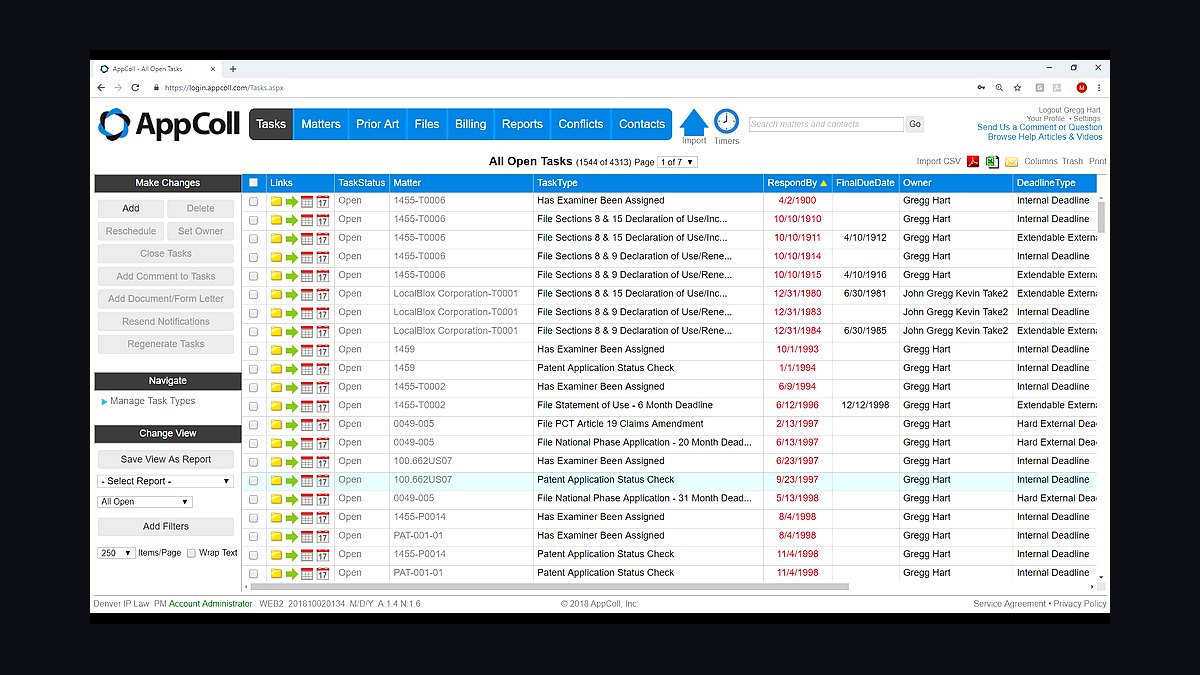
AppColl ranks second as the boutique patent-prosecution favorite, bundling docketing, matter management, and a USPTO Private PAIR and Patent Center sync at roughly $60-$100 per user per month. That price sits far below Anaqua enterprise, making it the realistic system of record for solo attorneys and firms of 3-30 attorneys. The Patent Center sync keeps filing confirmations and derived deadlines flowing back into the matter record automatically.
It is for smaller prosecution shops that need rules-based docketing without enterprise overhead. It trades away the deep multi-jurisdiction rules coverage and corporate portal depth that Anaqua and FoundationIP provide, so firms with heavy foreign filing eventually graduate upward. Alt Legal, ranked third, is the comparable-priced pick when trademark docketing rather than patent prosecution dominates the practice.
3Alt Legal Trademark Docketing
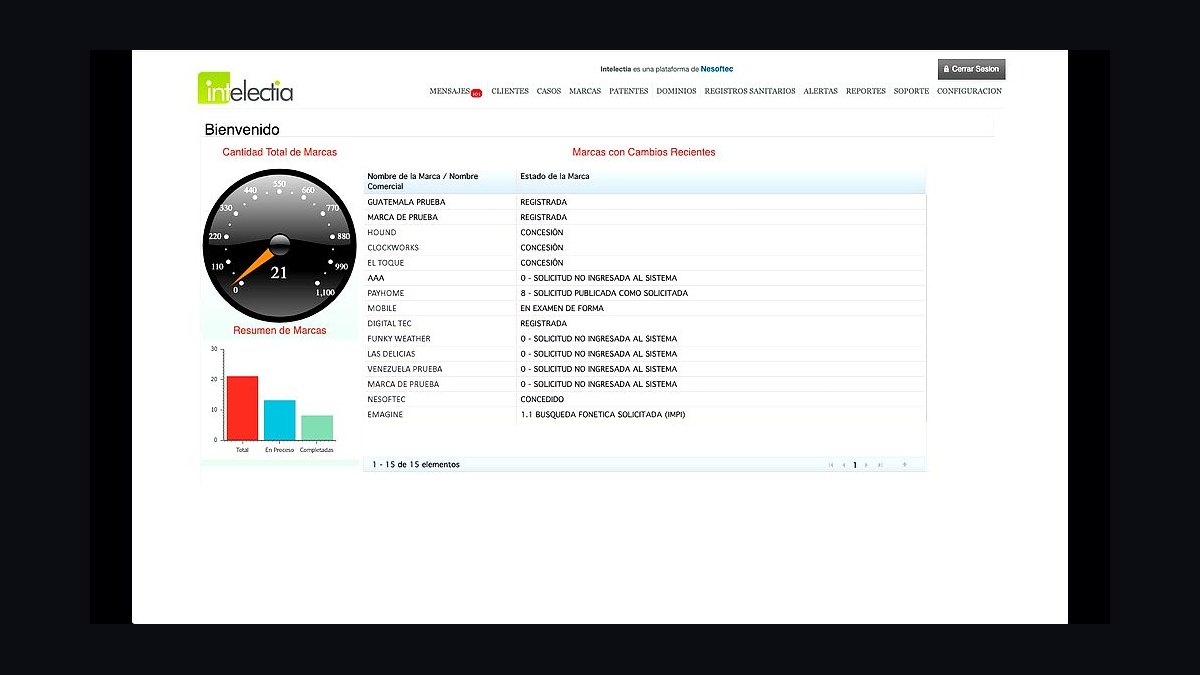
Alt Legal ranks third because it is the dedicated trademark docketing platform, auto-ingesting USPTO trademark data rather than requiring manual entry, at roughly $100-$200 per user per month. That automatic ingestion is the reason trademark-focused firms center on it: status changes, office actions, and Statement of Use windows land in the docket without a paralegal re-keying them. It files through TEAS and pairs with clearance services like Corsearch or CompuMark.
It is for trademark practices and boutiques where trademark volume outweighs patent prosecution. It trades away patent-specific rules coverage, PCT and national-phase deadline computation, and annuity integration, so mixed patent-and-trademark firms often run it alongside AppColl. AppColl, ranked directly above, covers patents at a lower per-user price but lacks Alt Legal's trademark data ingestion.
4PatSnap IP Analytics
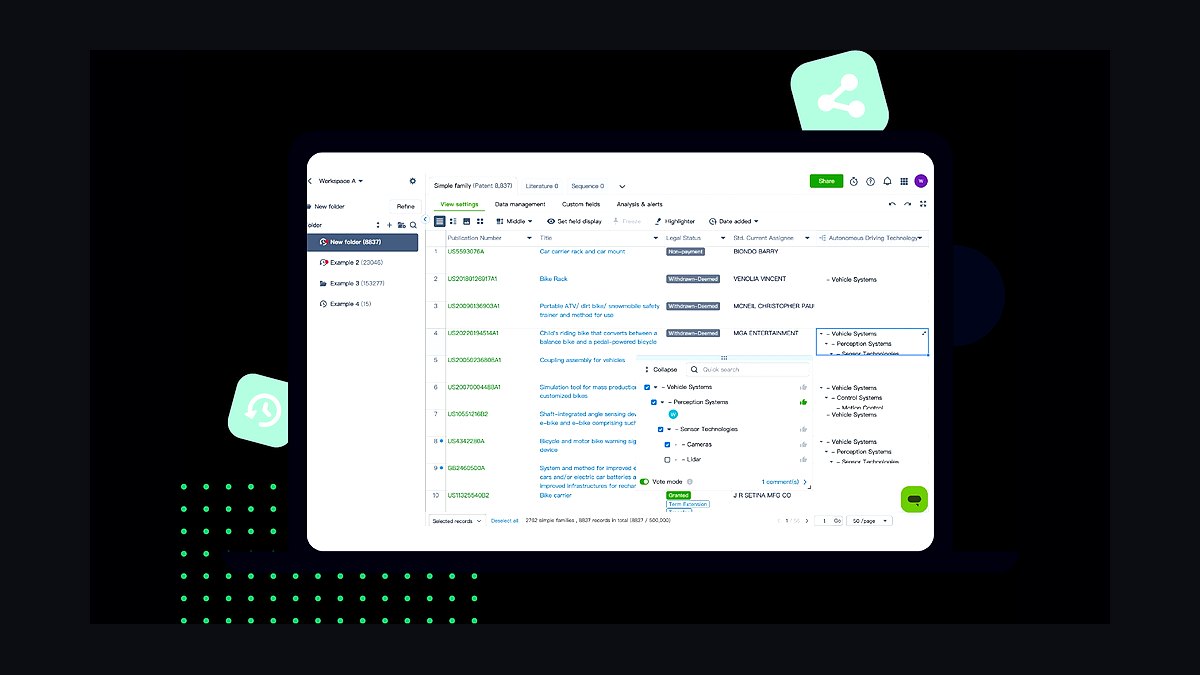
PatSnap ranks fourth as the modern favorite for patent and prior-art search plus IP analytics, whitespace mapping, and competitive IP mapping, typically $15,000-$40,000 per year per firm depending on seats and modules. Search is billable legal work, not back office: patentability searches precede claim drafting, freedom-to-operate analyses precede product launches, and portfolio mapping precedes acquisitions. The quality of that search directly determines the quality of the advice.
It is for firms that bill search and analytics work and need litigation-credible results. It trades away the curated depth of Clarivate Derwent Innovation, which remains the deep-research incumbent for litigation-grade validity searches. Questel Orbit and PatBase are strong alternates, and Google Patents covers free first-pass screening for solos who cannot justify the license.
5Clarivate Derwent Innovation

Clarivate Derwent Innovation ranks fifth as the deep-research incumbent for patent search, built on curated patent data and favored for litigation-grade validity and prior-art work. Where PatSnap optimizes for analytics and whitespace mapping, Derwent optimizes for exhaustive, defensible search results that hold up when a validity opinion is challenged. It is the search layer large IP litigation firms pair with iManage and Aderant.
It is for litigation teams and prosecution shops running high-stakes validity and freedom-to-operate searches. It trades away the lower entry price and modern analytics interface that PatSnap offers, and it is harder to justify for routine first-pass screening. PatSnap, ranked directly above, is the better fit for firms whose search work is primarily patentability and competitive mapping rather than litigation support.
6CPA Global Annuities

CPA Global, now part of Clarivate, ranks sixth as the dominant annuity and renewal payment service, charging a per-payment service fee on top of the official fee in each jurisdiction. Maintenance and renewal fees must be paid in the correct currency, in dozens of countries, before grace periods close, for the life of every patent. Outsourcing moves that liability to a specialist with redundancy and reminders built in.
It is for mid-to-large firms that would otherwise track renewals across jurisdictions, currencies, and grace periods by hand. It trades away in-house control and adds per-payment cost, but running annuities in-house on a spreadsheet guarantees an eventual lapse. Dennemeyer, the primary alternate and well regarded in Europe, is the comparable choice; Anaqua and FoundationIP also expose built-in annuity modules for firms that prefer to keep the workflow inside the docketing platform.
7iManage Document Management
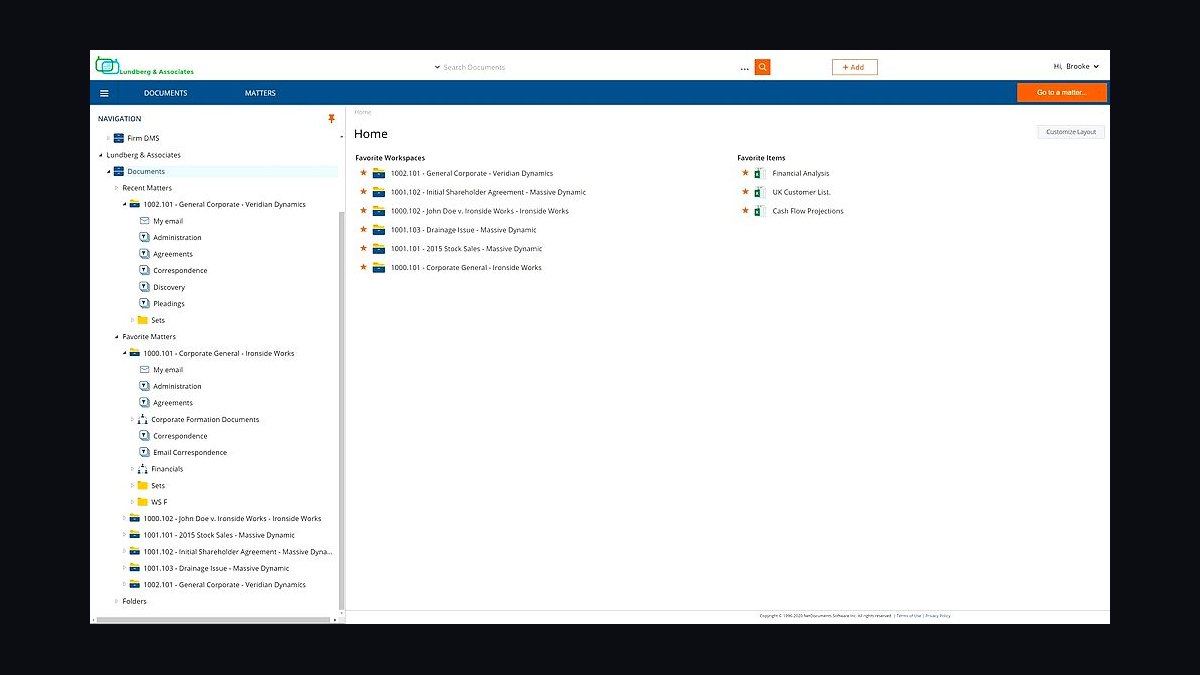
iManage ranks seventh as the law-firm document management standard at roughly $50-$80 per user per month. IP work generates specifications, drawings, office actions, opinions, and prior-art references that must be versioned, secured, and searchable with ethical walls, and iManage is built for exactly that matter-linked file structure. It links filings to the same matter ID used in Anaqua or AppColl so evidence is never orphaned.
It is for firms with enough document volume and confidentiality requirements to justify a dedicated DMS. It trades away the cloud-native simplicity of NetDocuments, the leading SaaS alternate that firms preferring hosted infrastructure often choose instead. Firms that skip a DMS and leave prior-art results, matter records, and filed documents in three disconnected silos lose evidence and ship stale status reports.
8Clio Practice Management
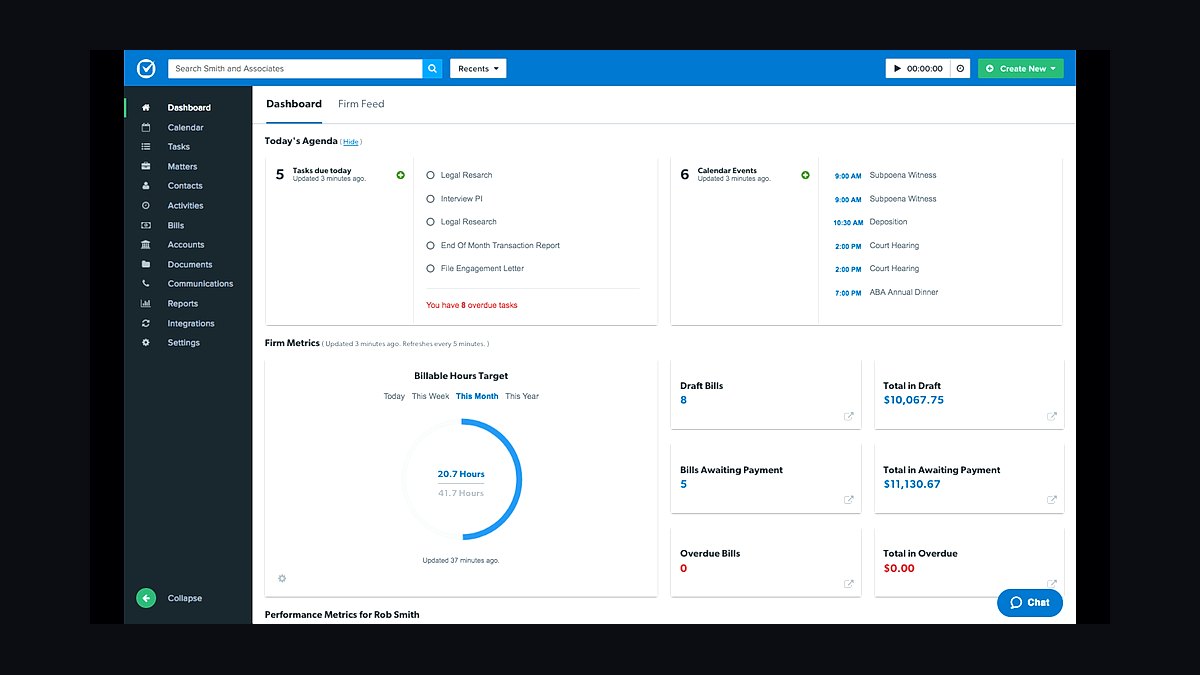
Clio ranks eighth as the practice management, time, and billing layer for small and boutique IP firms at roughly $90-$140 per user per month. It covers time capture, trust accounting, and billing, including the pass-through of official fees and annuities that IP firms handle constantly. The minimum viable solo stack pairs it with AppColl or Alt Legal for docketing and QuickBooks for the general ledger.
It is for solos and boutiques up to roughly 30 attorneys. It trades away the sophisticated rate structures, cost recovery, and matter profitability reporting that Aderant and Thomson Reuters Elite provide for large firms. PracticePanther and Centerbase occupy the mid-market between them; firms graduate off Clio only when portfolio volume and corporate-client reporting demands outgrow it.
9Aderant Financial Management
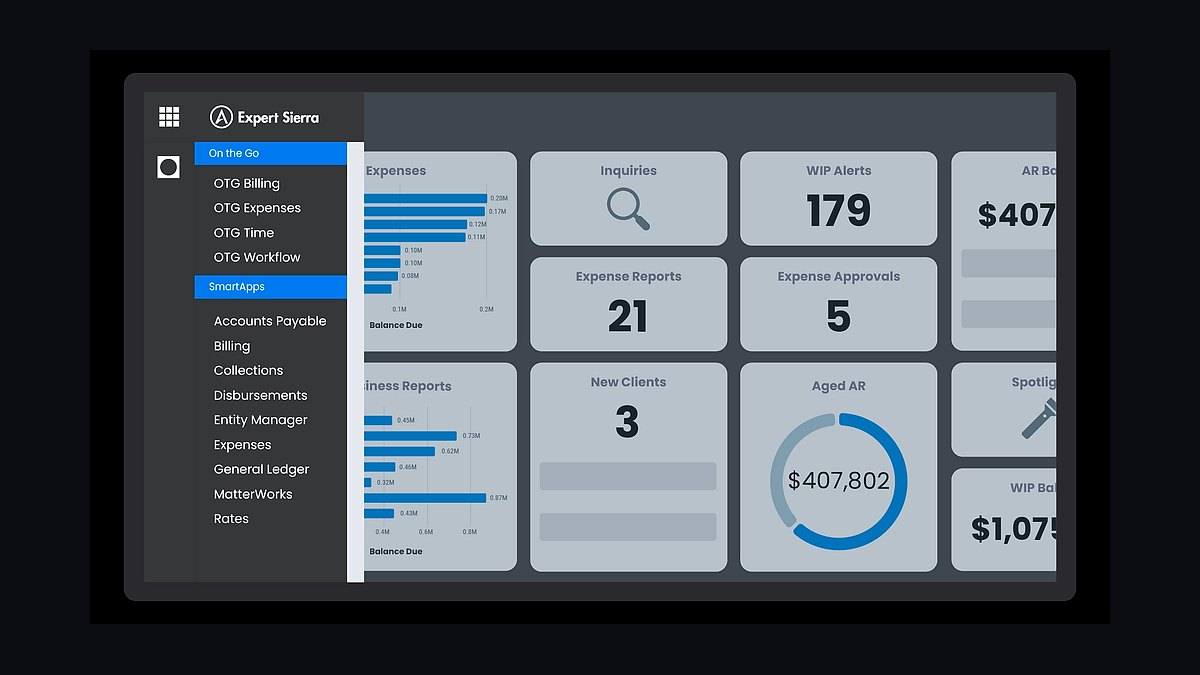
Aderant ranks ninth as the enterprise-grade financial system large IP firms run for sophisticated rate structures, cost recovery, and matter profitability. Where Clio handles straightforward hourly and fixed prosecution billing, Aderant supports the layered pricing, multi-currency official fee pass-through, and per-matter profitability analysis a 100-plus-attorney IP practice requires. It pairs with Anaqua docketing data to report on both the matter and financial sides.
It is for mid-size and large firms where billing complexity has outgrown boutique tooling. It trades away Clio's low per-user price and fast setup, and it demands implementation effort that a 15-attorney shop cannot absorb. Thomson Reuters Elite is the comparable enterprise alternate; Clio, ranked directly above, remains the correct choice below roughly 30 attorneys.
10Microsoft Power BI
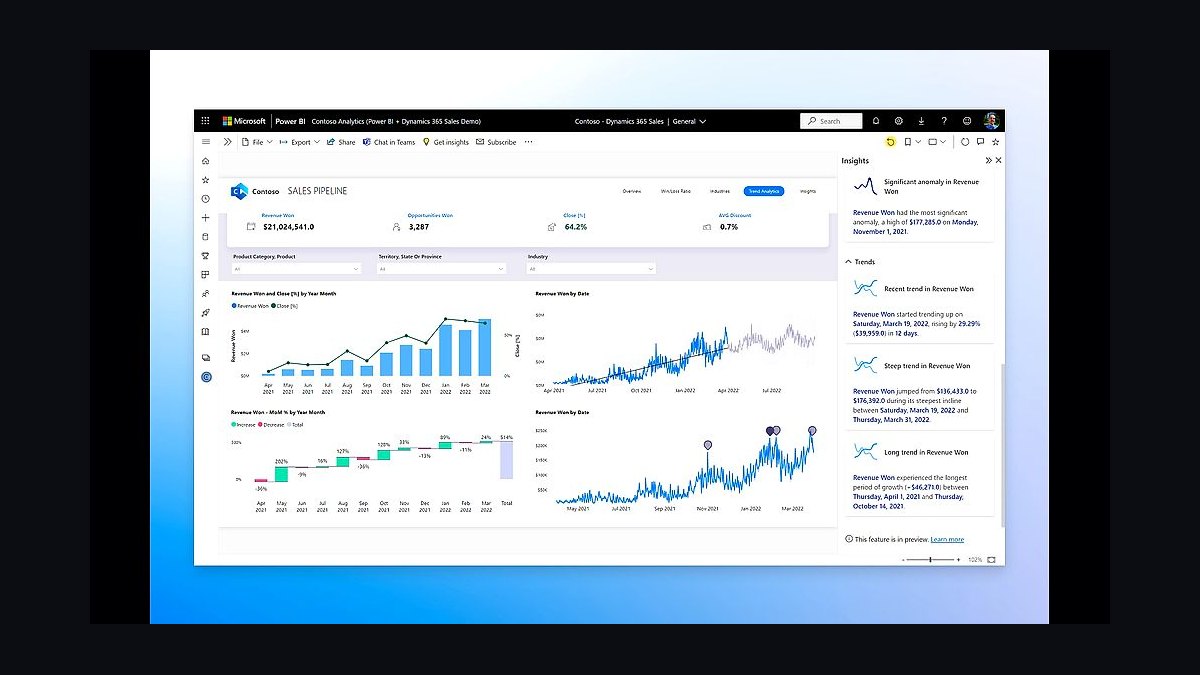
Power BI ranks tenth as the reporting layer firms stack on top of docketing and billing data at roughly $10-$20 per user per month. It builds the portfolio dashboards, budget-versus-actual views, and prosecution-status reports that corporate clients with in-house IP departments expect to see. Anaqua and FoundationIP expose client portals natively, but Power BI is what turns raw docketing and billing data into the reporting those clients actually consume.
It is for firms serving corporate IP departments that demand live portfolio visibility and spend reporting. It trades away turnkey setup: dashboards must be built and maintained against the docketing and billing schemas. Aderant, ranked directly above, supplies the financial data Power BI visualizes, and the two are typically deployed together rather than as alternatives.
How we ranked these
We ranked each tool on four weighted criteria: docketing and deadline integrity (35%), depth of patent and trademark workflow coverage (25%), integration with USPTO filing, annuity payment, document management, and billing systems (25%), and total cost of ownership at realistic firm sizes (15%). Scores came from vendor documentation, published pricing, analyst reports, and hands-on operator accounts from prosecution, litigation, and trademark practices.
We deliberately ignored marketing feature counts, AI branding, and demo polish, because none of those prevent a missed priority date. We also excluded general-purpose legal practice suites that lack a jurisdiction-aware rules engine, and we discounted any tool whose deadline logic is not maintained by the vendor when patent offices change procedure. Malpractice exposure, not feature breadth, drove the ranking.
Related questions
What is the single most important tool in a patent law firm tech stack?
The IP management and docketing platform is the system of record and the firm's malpractice control. Anaqua, AppColl, Alt Legal, FoundationIP, and PATTSY WAVE compute derived deadlines, track patent families across jurisdictions, and produce audit trails. Everything else — search, filing, annuities, billing — hangs off that matter record, so this layer gets chosen first.
How much does an IP management platform cost in 2027?
Boutique tools run roughly $60-$200 per user per month: AppColl sits near $60-$100, Alt Legal near $100-$200. Mid-market platforms like FoundationIP land in the low-to-mid five figures annually. Enterprise Anaqua pricing is custom and typically reaches the high five to low six figures per year for mid-to-large firms, before add-on modules.
Can a small patent firm survive with Clio and Outlook instead of docketing software?
No. Outlook and general practice management tools have no rules engine, so they cannot compute Paris Convention priority, PCT national-phase, or office action response dates automatically. A single missed date abandons an application permanently. Even solo practitioners should run AppColl or Alt Legal for docketing, then use Clio for billing behind it.
Do patent firms need both PatSnap and Derwent Innovation?
Many mid-size and large firms run both. PatSnap is favored for modern search plus analytics, whitespace mapping, and competitive IP mapping. Clarivate Derwent Innovation is the deep-research incumbent with curated patent data, often used for litigation-grade validity and freedom-to-operate work. Boutiques typically start with PatSnap alone and add Derwent for high-stakes matters.
What is the difference between docketing and annuity management?
Docketing tracks prosecution deadlines — office actions, priority dates, national-phase entries, statements of use. Annuity management pays maintenance and renewal fees across jurisdictions for the life of each granted patent. They are separate functions: Anaqua or AppColl handles docketing, while CPA Global or Dennemeyer handles annuity payments, with the two systems synchronized.
Should an IP firm outsource annuity payments or keep them in-house?
Outsource them. Tracking maintenance fees across dozens of jurisdictions, currencies, and grace periods on a spreadsheet guarantees an eventual lapse. CPA Global (Clarivate) and Dennemeyer charge a per-payment service fee on top of official fees, and in exchange they carry redundancy, reminders, and liability for missed renewals. Mid-to-large firms almost universally outsource.
Which document management system do IP law firms actually use?
iManage is the law-firm standard at roughly $50-$80 per user per month, and it handles versioning, ethical walls, and search across specifications, drawings, office actions, and prior-art references. NetDocuments is the leading cloud-native alternate and is popular with firms that prefer SaaS over on-premises infrastructure. Both link documents to the matter ID in the docketing platform.
How do corporate clients get visibility into their patent portfolios?
Through client portals exposed by the IP management platform, plus reporting layered on top. Anaqua and FoundationIP include native client portals showing portfolio status, deadlines, and spend. Firms then add Microsoft Power BI, roughly $10-$20 per user per month, to build budget-versus-actual and prosecution-status dashboards from docketing and billing data.
FAQ
What is the best tech stack for a patent and IP law firm in 2027?
Anaqua for mid-to-large firms or AppColl and Alt Legal for boutiques as the docketing system of record, PatSnap or Clarivate Derwent Innovation for prior-art search and analytics, CPA Global or Dennemeyer for annuities, direct USPTO Patent Center and TEAS filing, iManage or NetDocuments for documents, and Clio, Aderant, or Elite for billing.
Why is docketing considered malpractice-grade software?
Patent and trademark deadlines are absolute. A missed office action response, priority deadline, PCT national-phase entry, or statement of use window abandons the application and destroys the client's right permanently. Rules-based docketing platforms compute derived dates automatically, double-calendar every entry, and produce an audit trail, which is why firms treat them as risk controls rather than calendars.
What does the USPTO Patent Center integration actually do?
Filing through the docketing platform's Patent Center integration means the matter record, confirmation receipts, and derived deadlines update automatically when a document is filed. Without it, staff re-key filing data by hand, which introduces transcription errors and stale status. Trademarks file through TEAS the same way. The USPTO systems themselves carry no license cost beyond official fees.
How does a patent family get modeled in IP management software?
A single invention becomes a family: a US application, a PCT filing, EPO and JPO national-phase entries, continuations, and divisionals, each with its own status, examiner, and fee schedule. The platform links these related matters under one family record so status, deadlines, and annuities stay synchronized across every jurisdiction rather than living in separate files.
What should a 15-attorney boutique patent firm budget for software?
Roughly $4,000-$15,000 per month in software, plus official fees and per-payment annuity service charges. That covers AppColl or FoundationIP docketing, PatSnap search, iManage or NetDocuments, Clio or PracticePanther billing, outsourced annuities, and Power BI dashboards. Licensing full enterprise Anaqua at this size wastes six figures on unused capability.
Is PatSnap or Google Patents good enough for prior-art searching?
Google Patents covers free first-pass screening and is fine for a solo attorney doing quick checks. PatSnap, Derwent Innovation, Questel Orbit, and PatBase provide curated data, better coverage of non-English jurisdictions, classification search, and analytics that support litigation-grade opinions. For freedom-to-operate and validity work, paid databases are the professional standard.
How long does it take to migrate an IP firm onto a new docketing platform?
Plan on 90 days for a disciplined rollout. Days 0-30 configure the platform, migrate active matters and families, load jurisdiction rules, and validate derived deadline computation. Days 31-60 connect search, Patent Center filing, and annuity services. Days 61-90 layer billing, document management, client portals, and reporting, then run an end-to-end test.
What is the biggest mistake IP firms make when buying legal tech?
Buying enterprise IP management before the firm needs it. A boutique that licenses full Anaqua burns six figures on capability it cannot use, while a large firm that skimps on docketing rigor risks a malpractice claim. Match the platform to portfolio volume and corporate-client reporting demands, and graduate upward only when those justify the move.
Do IP litigation firms need the same stack as prosecution firms?
No. Litigation firms lean on iManage plus e-discovery and document review, use Derwent Innovation and LexisNexis PatentSight for validity and prior-art searches, and run Aderant for billing. They need only a lighter docketing module because court deadlines dominate over prosecution deadlines. Prosecution firms need the full rules-based docketing engine and annuity management.
How do search, docketing, and document systems stay connected?
The docketing platform is the hub. Prior-art results from PatSnap or Derwent attach to the matter file in Anaqua or AppColl, filed documents store in iManage or NetDocuments under the same matter ID, and billing reads matter data from the practice management layer. Manual re-keying between silos is what causes lost evidence and stale status reports.
Sources
- https://www.uspto.gov/patents/apply/patent-center
- https://www.uspto.gov/trademarks/apply
- https://www.anaqua.com/
- https://www.appcoll.com/
- https://www.altlegal.com/
- https://www.patsnap.com/
- https://clarivate.com/derwent/
- https://www.cpaglobal.com/
- https://www.dennemeyer.com/
- https://www.imanage.com/
Related on PULSE
This page will be disappearing soon. Save it to your device for $1 — or read it free while it is here.
@Kory-White- · if Venmo asks, the last 4 of my number are 2012
This page is gone.
This one is off the shelf now. $1 keeps it on your phone for good — the whole page, pictures and diagrams included.
 pulse-tech-stacksTop 10 Best Tech Stack Tools for AI Document Intelligence Companies in 2027
 pulse-tech-stacksTop 10 Best Tech Stack Tools for Embeddings API Companies in 2027
 pulse-tech-stacksTop 10 Best Tech Stack Tools for Independent Wholesale Distribution Businesses in 2027
 pulse-tech-stacksTop 10 Best Tech Stack Tools for Threat Intelligence Vendors in 2027
 pulse-tech-stacksTop 10 Best Tech Stack Tools for Painting Contractors in 2027
 pulse-tech-stacksTop 10 Best Tech Stack Tools for Bot Mitigation Vendors in 2027
 pulse-tech-stacksTop 10 Best Tech Stack Tools for Land Surveying Firms in 2027
 pulse-tech-stacksTop 10 Best Tech Stack Tools for Email Security Vendors in 2027
 pulse-tech-stacksTop 10 Best Tech Stack Tools for Independent Dance Studios in 2027
 pulse-tech-stacksTop 10 Best Tech Stack Tools for Movie Theaters in 2027