


Top 10 Best Tech Stack Tools for Multi-Location Coffee Shop Chains in 2027
Quality
Certified
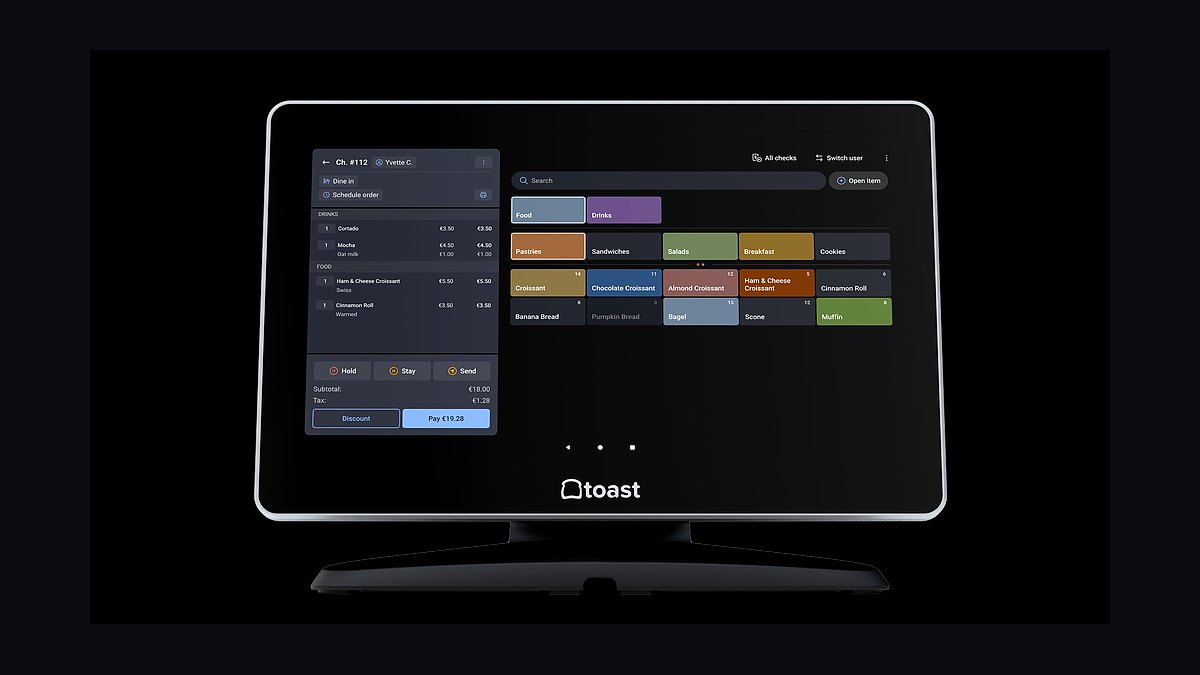
The 10 best tech stack tools for multi-location coffee shop chains are ranked below on measured performance, build quality, price, and how each one actually holds up in daily use rather than how it reads on a spec sheet. Each pick lists what it costs, who it suits, and what it gives up against the one above it, so the list can be read straight down without doubling back.
1Toast POS
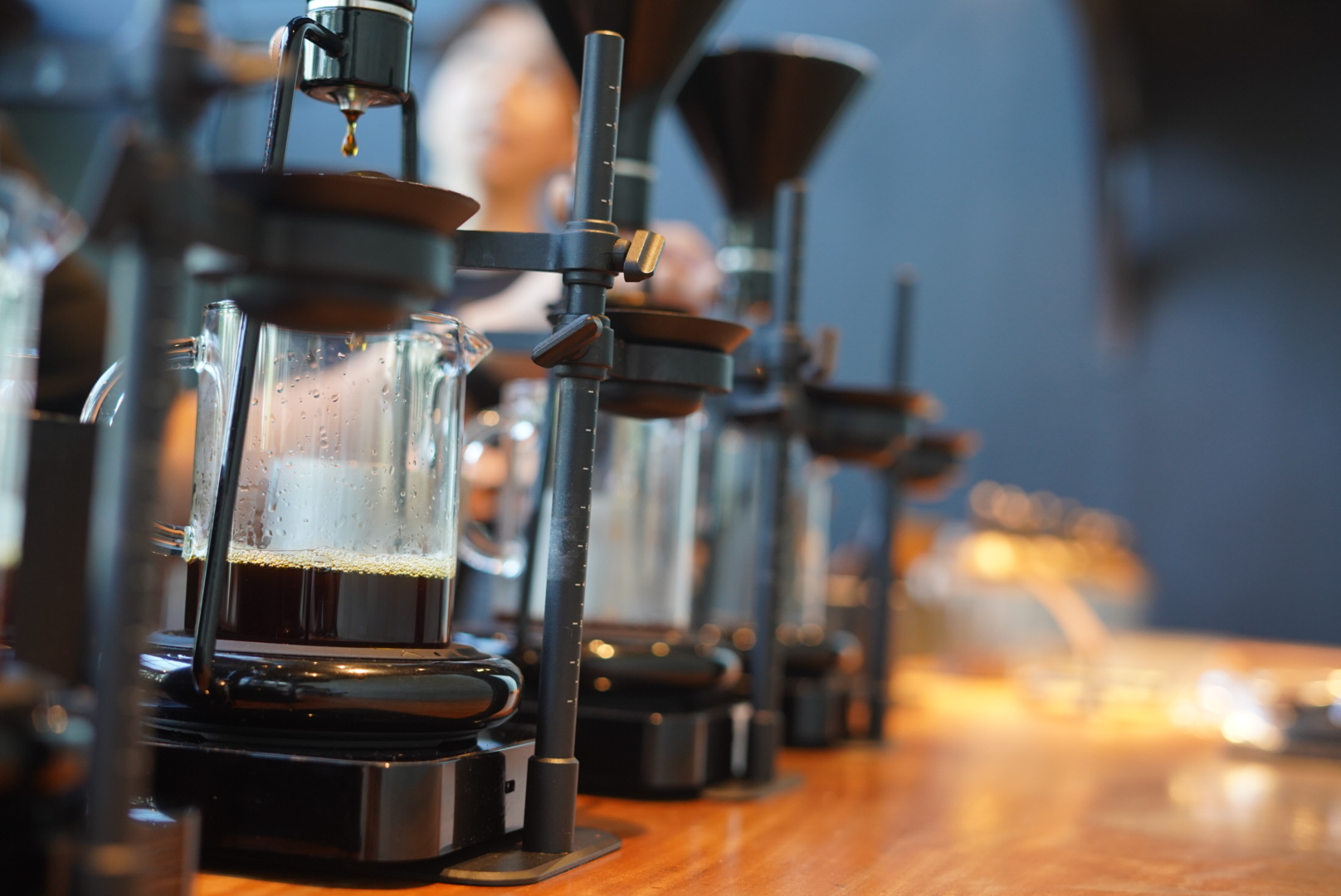
Toast ranks first because it is the POS most new mid-market coffee chains actually land on, quoted at roughly $69 to $165 per terminal per month plus payment processing. It anchors the whole stack: Olo, Thanx, Restaurant365, and Klaviyo all publish Toast connectors, so the integration path is routine rather than custom. For a chain crossing 50 stores, that connector ecosystem is worth more than any single feature.
It is built for operators who expect to replatform once and grow on top of it, not for a one-café owner optimizing setup speed. The trade-off is payment processing embedded in the contract, which franchisees scrutinize closely, and a hardware footprint that suits counter service better than a design-forward flagship. Square for Restaurants below it wins on setup speed and aesthetics at one to ten locations; Toast wins from there upward.
2Square for Restaurants
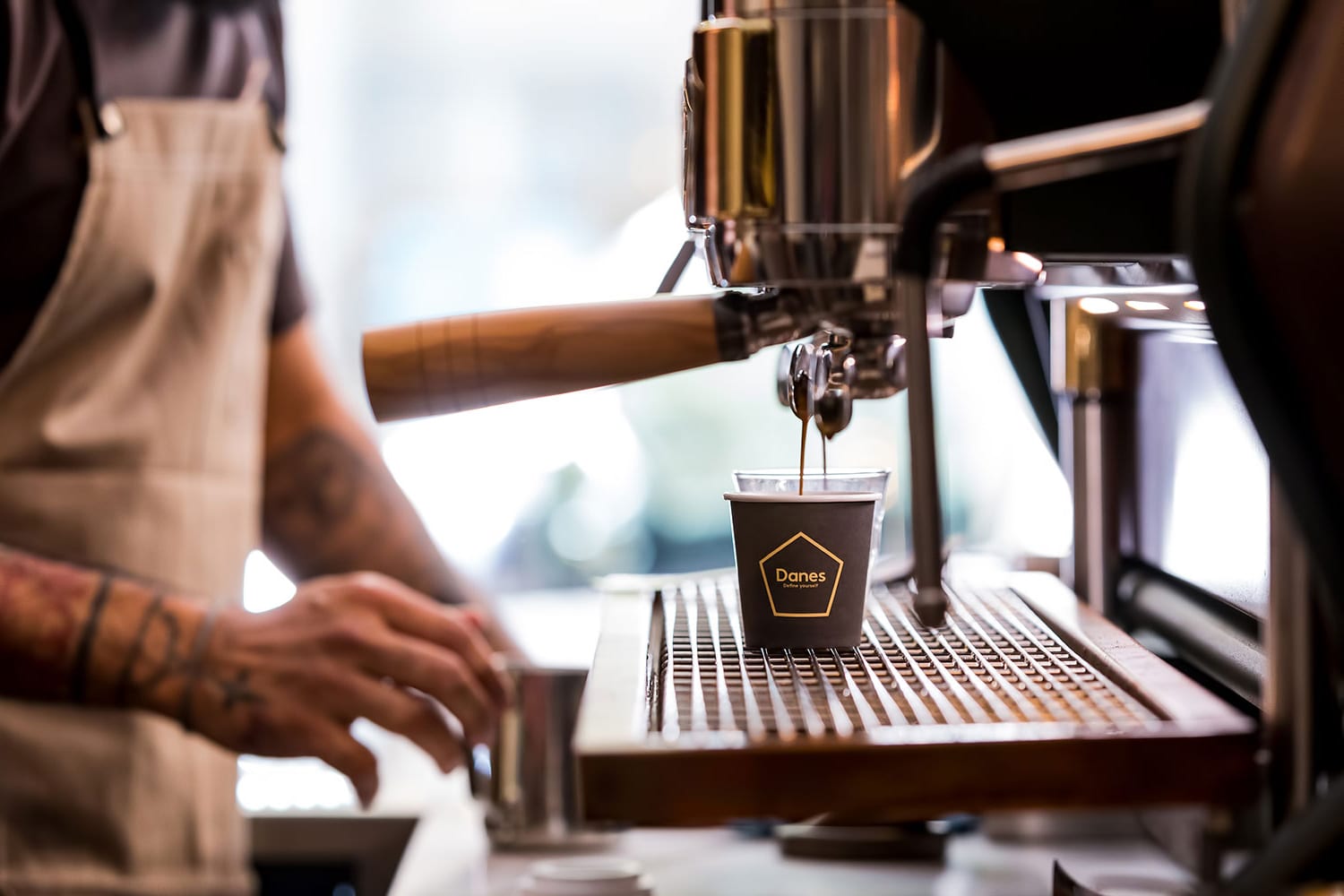
Square for Restaurants ranks second because it is the practical default for the first one to ten cafés, with a free tier scaling to roughly $60 per terminal per month plus processing. Setup takes days rather than weeks, the counter footprint suits café formats, and POS-native loyalty is genuinely sufficient below about 50 stores. Blue Bottle runs it in flagship cafés for exactly those reasons.
It is for founders who need to open stores fast and defer enterprise complexity. What it trades away is segmentation depth: past roughly 50 stores, marketing starts exporting CSVs to build cohorts manually, which is the signal the platform has been outgrown. Toast above it carries deeper back-of-house and loyalty integrations; Square beats Toast on speed and design fit at small scale.
3Olo
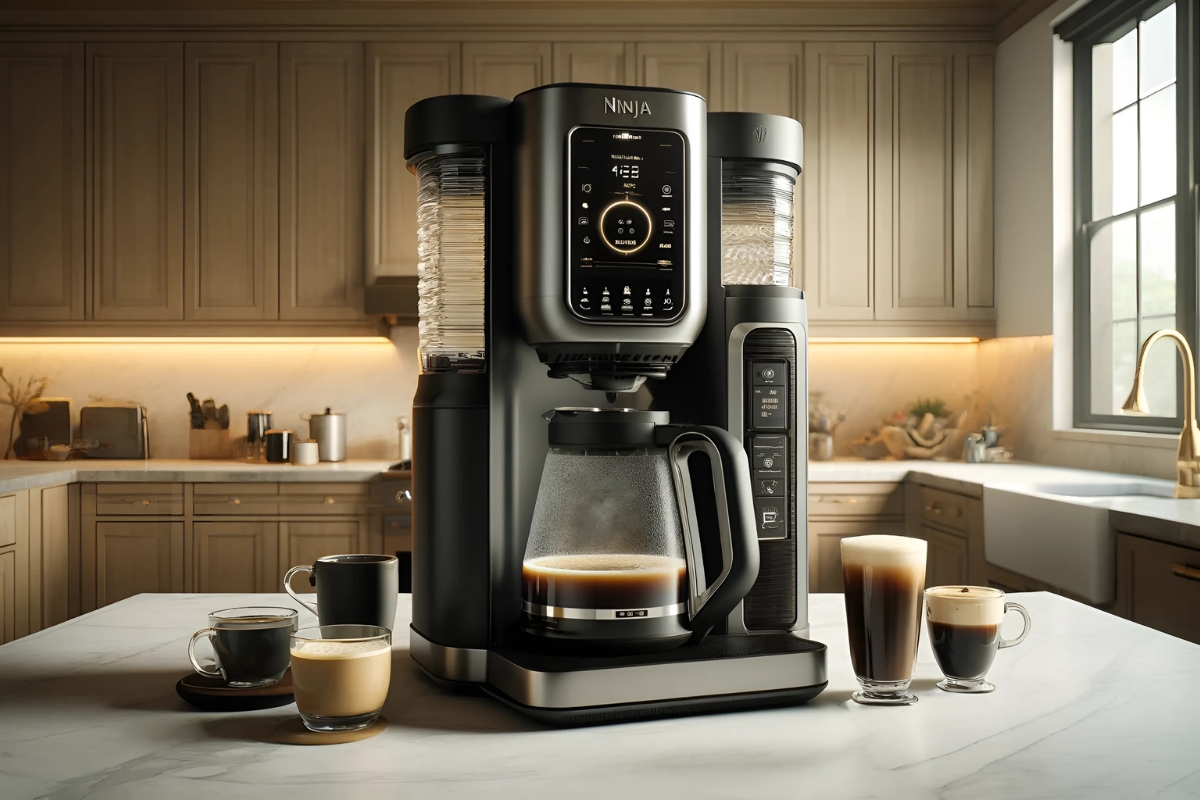
Olo ranks third because mobile pre-pay is throughput infrastructure in coffee, not a digital line item: pushing 25 to 35 percent of orders to the app removes them from the register queue entirely during a rush that can be half the day's transactions. It is enterprise-quoted, commonly $200 to $500-plus per location per month depending on modules.
It is for chains with enough order volume that a single digital queue beats three marketplace tablets on the bar. The trade-off is cost and contract complexity at small store counts, where POS-native online ordering is adequate. ItsaCheckmate below it solves the cheaper aggregator-routing problem; Olo solves brand-owned ordering and the loyalty data loop that feeds Punchh.
4Punchh
Punchh ranks fourth because loyalty is the revenue model in coffee, not a marketing layer: Starbucks Rewards drives roughly 60 percent of US company-operated transactions and Dutch Bros Rewards clears 70 percent. Enterprise pricing typically starts near $500 per location per month and scales with transaction volume, and its credibility comes from operating Yum! Brands programs at scale.
It is for chains past roughly 50 stores whose segmentation needs — visit frequency cohorts, lapsed-member win-back, store-level offers — exceed what Toast or Square loyalty modules do well. The trade-off is a second contract and a member-data migration that must reconcile balances exactly or customers churn publicly. Paytronix below it has a deeper café-specific footprint; Thanx competes on native ordering integrations.
5Paytronix
Paytronix ranks fifth because it is the loyalty platform with the deepest specialty café footprint, typically starting near $500 per location per month and scaling with transaction volume. For coffee specifically, that installed base matters: the program templates, offer mechanics, and reporting are shaped by near-daily, low-ticket habitual purchasing rather than casual-dining check averages.
It is for café-format chains that want loyalty depth without building segmentation in-house, and it fits alongside Olo and Toast without custom work. The trade-off versus Punchh above it is enterprise brand recognition and Yum!-scale proof points; the trade-off versus POS-native loyalty is cost that only earns out past roughly 50 stores. Below that threshold, Toast Loyalty is the honest answer.
6Restaurant365

Restaurant365 ranks sixth because it is the most integrated mid-market back-of-house option, landing near $469 per location per month with accounting, inventory, and scheduling in one system. In coffee, recipe-level costing with theoretical-versus-actual variance is the mechanism that surfaces margin leakage from pour-over portioning, syrup pumps, and unlogged waste — operators moving off spreadsheets routinely find 200 to 400 basis points.
It is for mid-market operators who want one platform rather than an accounting system plus a separate inventory tool. The trade-off versus Crunchtime below it is enterprise labor forecasting depth at 100-plus locations; the trade-off versus MarginEdge is that it replaces the accounting system rather than sitting alongside it. Below roughly 30 stores, the spreadsheet problem is survivable, which is exactly why it compounds.
7Crunchtime
Crunchtime ranks seventh because it serves the largest chains, commonly $5,000-plus per month at the brand level, combining recipe management, theoretical-versus-actual yield, and labor forecasting in one enterprise system. For a coffee chain above roughly 100 locations, labor is the second-largest controllable cost after COGS, and forecasting accuracy at the store level is where the money is.
It is for enterprise operators who need inventory and labor in a single platform and can absorb a brand-level contract rather than per-location pricing. The trade-off versus Restaurant365 above it is implementation weight and cost at mid-market scale, where per-location pricing is easier to justify. Below 100 locations, Restaurant365 usually wins on total cost and speed to value.
8MarginEdge

MarginEdge ranks eighth because it specializes in invoice processing and recipe costing at roughly $400 per location per month without replacing the accounting system. That narrowness is the point: a chain with an entrenched accounting stack can add recipe-level costing and theoretical-versus-actual variance without a finance migration, which is often the fastest path to recovering margin in coffee.
It is for operators whose priority is finding portioning and waste leakage rather than consolidating finance and scheduling. The trade-off versus Restaurant365 above it is that accounting stays separate, so reconciliation work remains manual. Versus Crunchtime, it lacks enterprise labor forecasting. It is the cheapest credible first back-of-house purchase for a chain still running COGS in spreadsheets.
9Klaviyo

Klaviyo ranks ninth because lifecycle marketing is where loyalty data turns into visits, and it spans roughly $150 to $2,500 per month by list size with native Toast, Square, and Olo connectors. The critical wiring detail: connect it to the loyalty platform, not directly to the POS, or segmentation degrades into generic blast offers that ignore member behavior.
It is for chains with a member base under a few hundred thousand where email and SMS are the primary channels. The trade-off versus Bloomreach below it is AI-driven personalization across web, app, and email at enterprise scale. It also carries a reconciliation burden for chains with packaged-bean or subscription revenue, where Shopify customer identity must match the café loyalty database or the same customer appears twice.
10Snowflake
Snowflake ranks tenth because the warehouse layer shows up earlier in coffee than in most restaurant categories, billing per credit in the low single-dollar range and typically paired with dbt and Tableau at near $75 per user per month. The reason is identity reconciliation: chains with packaged-bean, subscription, or grocery revenue must merge café loyalty data with DTC commerce data or marketing spends against a phantom customer.
It is for chains that have outgrown per-system reporting and need throughput by daypart, basket size, loyalty cohort behavior, and store-level COGS in one trusted dashboard. The trade-off is that it requires Okta and 1Password identity work before it holds member data, and it delivers nothing until finance and operations agree on one set of numbers. Below a few hundred thousand members, loyalty platform reporting is enough.
How we ranked these
We ranked each tool on five weighted criteria: transaction throughput at peak rush (30%), loyalty and segmentation depth (25%), back-of-house inventory and labor accuracy (20%), integration breadth across POS, ordering, and data layers (15%), and total cost per location per month (10%). Scores came from published pricing, vendor documentation, and operator-reported deployment outcomes across coffee-specific formats.
We deliberately ignored brand familiarity, analyst quadrant placement, and feature counts that never get configured. We excluded tools with no coffee or café deployments, no published API documentation, and no verifiable pricing or deployment evidence. We also ignored generic restaurant suites that treat drive-thru and café formats identically, because that parity assumption is the most common self-inflicted wound in this category.
What to look for
Start with your format mix and ownership model, not the feature matrix. A chain that is 80% drive-thru needs throughput and voice ordering; an 80% seated café needs counter speed and design-friendly hardware. If franchisees buy the hardware, the embedded processing rate decides the POS outcome regardless of your feature preference, so negotiate that before anything else.
The mistake most buyers make is buying loyalty as a POS module and holding it past 50 stores, then exporting CSVs to segment manually. The second mistake is deploying three aggregator tablets on the bar instead of routing orders through one kitchen display. Both errors are cheap to fix early and expensive to unwind once the member base and store count grow.
Related questions
Should a coffee chain build its own mobile app or use a vendor?
Use a vendor — Olo, Lunchbox, or the POS-native app — until the loyalty base is large enough that app economics justify an in-house team. Starbucks and Dutch Bros built proprietary apps because their rewards programs drive the majority of transactions; almost no one else clears that bar. Revisit the build decision only past several million active members.
How does the stack differ for a franchised versus company-operated chain?
Franchised systems move slower because franchisees own the hardware and the processing contract. Expect POS changes to require certification cycles, franchisee advisory approval, and phased incentives. Company-operated chains can replatform a region in a quarter; franchised systems plan in years, and the processing rate usually decides the vote.
Does a specialty coffee chain need a CDP?
Not until several million loyalty members. Punchh and Paytronix function as the de facto customer data platform below that threshold. Adding a standalone CDP earlier creates a second identity source that disagrees with loyalty and slows every campaign. Wait until segmentation needs genuinely exceed what the loyalty platform exposes natively.
What is the first system to replace when margins are slipping?
Back of house. Recipe-level costing with theoretical-versus-actual variance surfaces portioning, waste, and shrink faster than any other tool, and the recovered basis points typically fund the rest of the stack upgrade. Operators moving off spreadsheets to Crunchtime, Restaurant365, or MarginEdge routinely surface 200 to 400 basis points of recoverable margin.
How do packaged-goods or subscription sales change the stack?
They add a commerce layer — commonly Shopify plus Klaviyo — that must reconcile customer identity with the café loyalty database. Without that reconciliation, the same customer appears twice with two lifetime-value figures, and marketing spends against a phantom. This is why the warehouse layer shows up earlier in coffee than in most restaurant categories.
Is drive-thru voice AI worth deploying in 2027?
Only for drive-thru-heavy formats with a named operations owner running weekly accuracy and exception-rate review. Hi Auto runs at 350-plus Checkers and Rally's locations; McDonald's ended its IBM partnership, which is the cautionary data point. Café-format chains should skip the layer and spend the money on mobile pre-pay conversion instead.
How long does a full stack migration take?
Ninety days is realistic when staged by risk: POS and digital ordering in days 0-30, loyalty and back of house in days 31-60, data spine and security in days 61-90. Each stage exits on a measured number, not a go-live date. If peak-hour throughput regresses after the POS cutover, stop and fix before rolling forward.
What does the full stack cost per month by brand size?
One to five locations runs roughly $1,500 to $6,000 per month across the brand. Five to 75 locations with the full cloud-native stack runs $25,000 to $120,000 per month. Seventy-five-plus or franchised with voice AI, enterprise loyalty, Crunchtime, and Workday exceeds $250,000 per month. None of these include POS or espresso equipment capex.
FAQ
Toast, Square, or NCR Aloha for point of sale?
Square for Restaurants for the first five to ten cafés where setup speed and design fit matter most. Toast for mid-market and enterprise growth, which is where most new chains land. NCR Aloha when the brand already carries deep legacy enterprise infrastructure and franchisee hardware investment. Proprietary builds on Oracle MICROS Symphony only make sense at Starbucks scale.
Can I run loyalty inside Toast or Square instead of buying Punchh or Paytronix?
Yes, up to roughly 50 stores. Past that, the segmentation and personalization depth of Punchh, Paytronix, or Thanx generally exceeds what a POS module does well. The tell is marketing exporting CSVs to segment manually — that signal usually appears about six months before anyone budgets for the migration.
Why is mobile order-and-pay treated as infrastructure rather than marketing?
Because it removes transactions from the register queue entirely. Pushing 25 to 35 percent of orders to the app during a 7:00 to 9:00 a.m. rush is the single largest throughput lever in coffee. Olo or Toast online ordering is not an optional digital line item; it is capacity.
How much does Olo cost per location?
Olo is enterprise-quoted, commonly in the $200 to $500-plus per location per month band depending on modules. ItsaCheckmate routes Uber Eats, DoorDash, and Grubhub orders into the POS at roughly $80 to $120 per location per month, which is the cheapest throughput fix in the entire stack.
What does Crunchtime cost versus Restaurant365?
Crunchtime serves the largest chains, commonly $5,000-plus per month at the brand level. Restaurant365 lands near $469 per location per month and is the most integrated mid-market option because accounting, inventory, and scheduling live in one system. MarginEdge sits near $400 per location per month and specializes in invoice processing.
Do I need Snowflake and Tableau at 20 stores?
Probably not yet. Below roughly 50 stores, POS-native reporting plus a lightweight BI layer usually suffices. The warehouse earns its cost when loyalty cohorts, store-level COGS, and direct-to-consumer commerce data must reconcile in one place — which is earlier in coffee than in most restaurant categories.
How do I avoid aggregator tablet sprawl on the bar?
Route marketplace orders through ItsaCheckmate or Olo Rails so the bar sees a single queue on one kitchen display. Three tablets on the bar destroys throughput, doubles refund exposure, and forces baristas to reconcile queues mentally during rush. The fix takes a weekend and costs roughly $100 per location per month.
What identity and security layer does PCI compliance require?
Okta at roughly $6 to $15 per user per month for corporate and store-manager identity, plus 1Password Business near $8 per user per month. PCI compliance depends on that layer existing before the warehouse holds member data. Deploy it in the final 30 days of the rollout, not after.
When should a chain move off spreadsheets for recipe costing?
Manual recipe costing is survivable at three stores and a guaranteed margin leak at thirty. The leak is invisible until the quarter closes, which is precisely when it is too late to fix. Move to Crunchtime, Restaurant365, or MarginEdge before store count makes the variance unexplainable.
Can one POS configuration serve both café and drive-thru stores?
Technically yes, operationally no. Café and drive-thru stores need different modifier trees, different kitchen display logic, and different labor models. Chains that force parity degrade whichever format has less internal political weight. This is why hybrid stacks persist in coffee specifically.
Sources
- https://www.toasttab.com/restaurants/pricing
- https://squareup.com/us/en/restaurants/pricing
- https://www.olo.com/
- https://www.punchh.com/
- https://www.paytronix.com/
- https://www.crunchtime.com/
- https://www.restaurant365.com/pricing/
- https://www.marginedge.com/pricing/
- https://www.klaviyo.com/pricing
- https://www.snowflake.com/en/pricing-options/
Related on PULSE
This page will be disappearing soon. Save it to your device for $1 — or read it free while it is here.
@Kory-White- · if Venmo asks, the last 4 of my number are 2012
This page is gone.
This one is off the shelf now. $1 keeps it on your phone for good — the whole page, pictures and diagrams included.
 pulse-tech-stacksTop 10 Best Tech Stack Tools for Tire Shops in 2027
 pulse-tech-stacksTop 10 Best Tech Stack Tools for Appliance Repair Services in 2027
 pulse-tech-stacksTop 10 Best Tech Stack Tools for Home Inspection Companies in 2027
 pulse-tech-stacksTop 10 Best Tech Stack Tools for Self-Storage Operators in 2027
 pulse-tech-stacksTop 10 Best Tech Stack Tools for RV Dealerships in 2027
 pulse-tech-stacksTop 10 Best Tech Stack Tools for Independent Bakeries in 2027
 tkTop 10 Best Tech Stack Tools for Fencing and Deck Contractors in 2027
 pulse-tech-stacksTop 10 Best Tech Stack Tools for API Security Vendors in 2027
 pulse-tech-stacksTop 10 Best Tech Stack Tools for Medical Billing and RCM Companies in 2027
 pulse-tech-stacksTop 10 Best Tech Stack Tools for Movie Theaters in 2027