


Top 10 Best Tech Stack Tools for AI Safety and Red Team Service Providers in 2027
Quality
Certified
The 10 best tech stack tools for ai safety and red team service providers are ranked below on measured performance, build quality, price, and how each one actually holds up in daily use rather than how it reads on a spec sheet. Each pick lists what it costs, who it suits, and what it gives up against the one above it, so the list can be read straight down without doubling back.
1UK AISI Inspect
UK AISI Inspect ranks first because it has become the default open-source orchestration layer for AI safety evaluations, letting red team firms run capability, safety, and alignment suites against many models through one harness. It ships with a solver/scorer architecture, supports sandboxed tool use, and is maintained by the UK AI Safety Institute, so new eval categories arrive as upstream updates rather than bespoke builds.
It is built for research teams that need reproducible, auditable eval runs across OpenAI, Anthropic, Google, and self-hosted models. The trade-off is that Inspect is an orchestration skeleton, not an attack corpus: jailbreak libraries, harm scenarios, and CBRN probes must be layered on top. Compared with lm-evaluation-harness below it, Inspect is more agentic and safety-oriented, less benchmark-scoreboard oriented.
2EleutherAI lm-evaluation-harness
EleutherAI lm-evaluation-harness ranks second for breadth of benchmark coverage, providing standardized implementations of MMLU, GPQA, MATH, HumanEval, TruthfulQA, BBH, and AGIEval that red team firms cite as capability baselines. Its task registry, few-shot configuration, and model backends make cross-lab comparisons reproducible, and it is the reference implementation most published eval numbers are generated with.
It suits firms that need defensible capability numbers alongside adversarial testing, especially when clients ask how a model compares to frontier baselines. It trades away safety-specific tooling: harm classification, jailbreak generation, and multi-turn attack chains are not native. Against UK AISI Inspect above, it is stronger on static benchmarks and weaker on agentic, tool-use, and safety-scenario evaluation.
3HarmBench
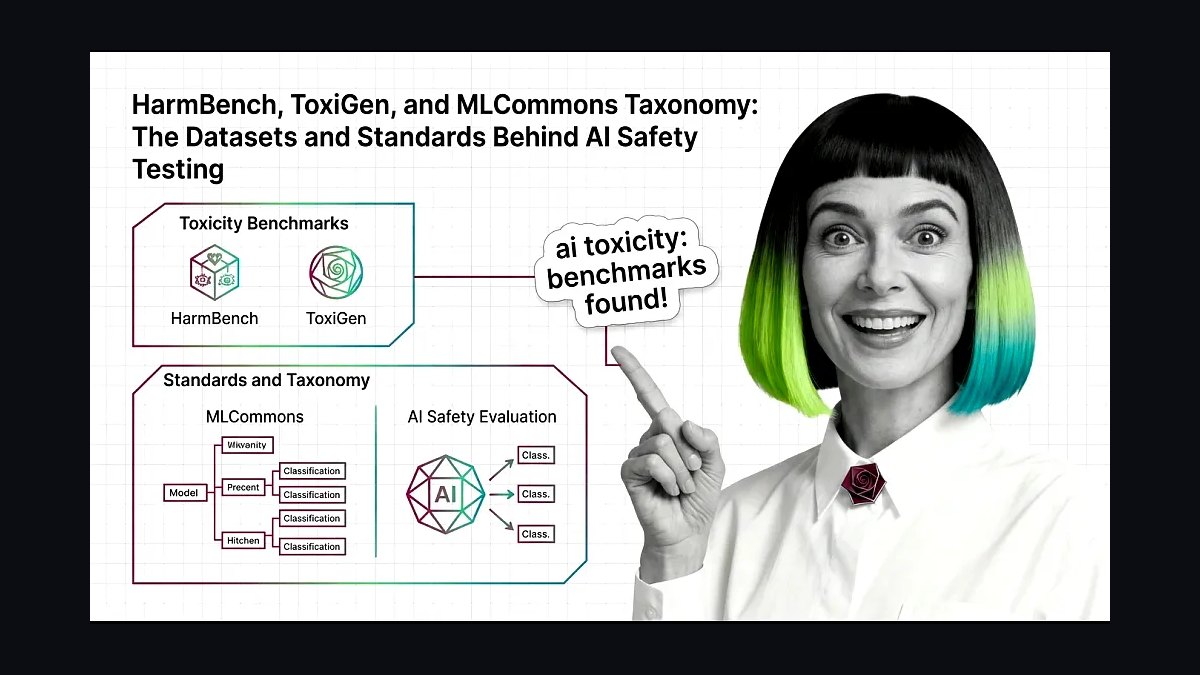
HarmBench ranks third as the standardized red-teaming benchmark for measuring whether attacks actually elicit harmful behavior, covering 400-plus behaviors across chemical, biological, cyber, and illegal-activity categories with a trained classifier for automated scoring. It enables apples-to-apples comparison of attack methods like GCG, PAIR, and AutoDAN against defended and undefended models.
It is aimed at researchers who need quantitative attack-success rates rather than anecdotal jailbreaks. The trade-off is scope: HarmBench measures harm elicitation, not alignment, bias, or privacy leakage, so it complements rather than replaces broader eval suites. Against lm-evaluation-harness above, it is narrower but far more adversarial, and it pairs naturally with JailbreakBench below.
4JailbreakBench

JailbreakBench ranks fourth for reproducible jailbreak evaluation, offering 100 curated harmful behaviors, 100 benign behaviors for over-refusal testing, and a leaderboard of attack success rates across models including GPT, Claude, and Llama variants. Its artifacts are versioned and its judge is standardized, which matters when findings must survive client scrutiny or regulatory review.
It is for red teamers who need a fast, defensible jailbreak baseline before moving to proprietary corpora. It trades away frontier-specific coverage: pre-release models are not in the public leaderboard, and novel multi-turn attacks are out of scope. Compared with HarmBench above, it is smaller and more jailbreak-focused, while WildJailbreak below adds scale and realism.
5WildJailbreak
WildJailbreak ranks fifth for scale and realism, providing roughly 262,000 adversarial and benign prompt pairs drawn from in-the-wild jailbreak patterns, including evasion, obfuscation, and role-play variants. It was released by AI2 with the WildTeaming methodology, giving red team firms a large corpus for both attack generation and safety-training evaluation.
It is aimed at teams that need volume and diversity rather than a curated leaderboard, and it works well as a training and stress-test set for guardrail vendors. The trade-off is noise: automated labeling means some prompts are benign or ambiguous, requiring filtering. Against JailbreakBench above, it is far larger but less standardized, so it is best used alongside, not instead of, curated benchmarks.
6Weights & Biases
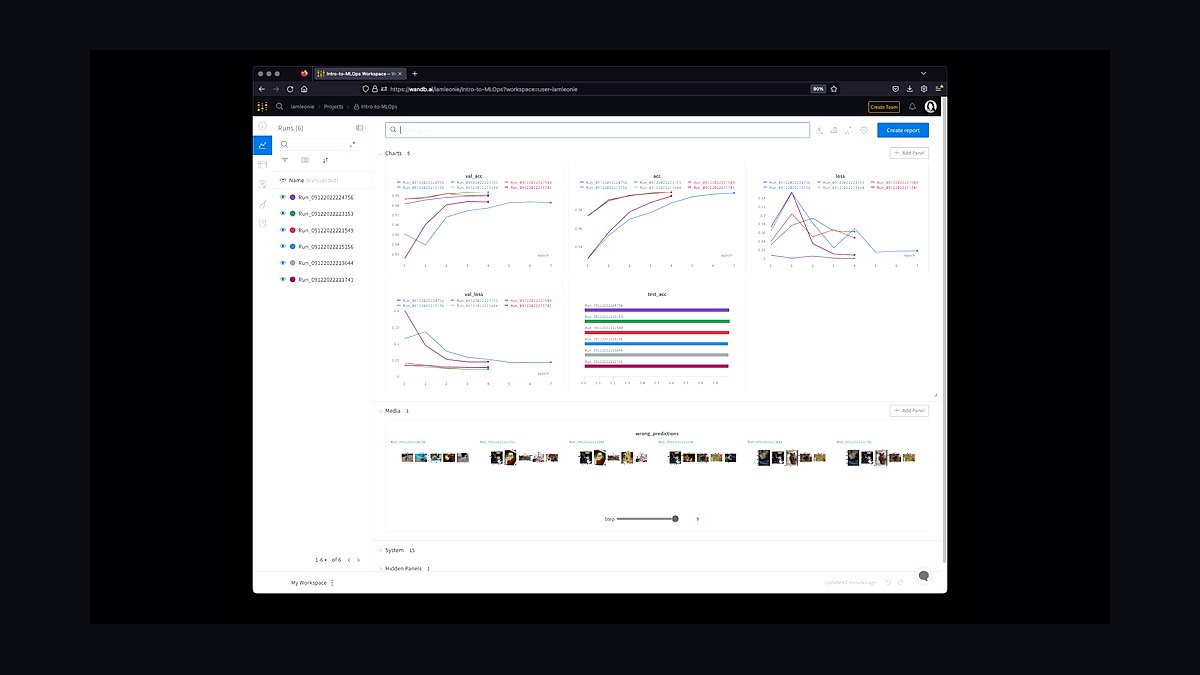
Weights & Biases ranks sixth as the experiment-tracking backbone for eval-heavy research, logging runs, prompts, model outputs, and scores across thousands of red-team trials so results are comparable and reproducible. Its W&B Weave product adds LLM-specific tracing for multi-turn agent evaluations, and artifact versioning keeps attack corpora and eval datasets pinned to specific runs.
It is for research teams running continuous evals who need to answer which prompt, model version, and decoding setting produced a finding. It trades away eval content: it tracks experiments but supplies no benchmarks or attacks. Compared with MLflow below, W&B is more polished and LLM-oriented, with less self-hosted flexibility for air-gapped government work.
7MLflow
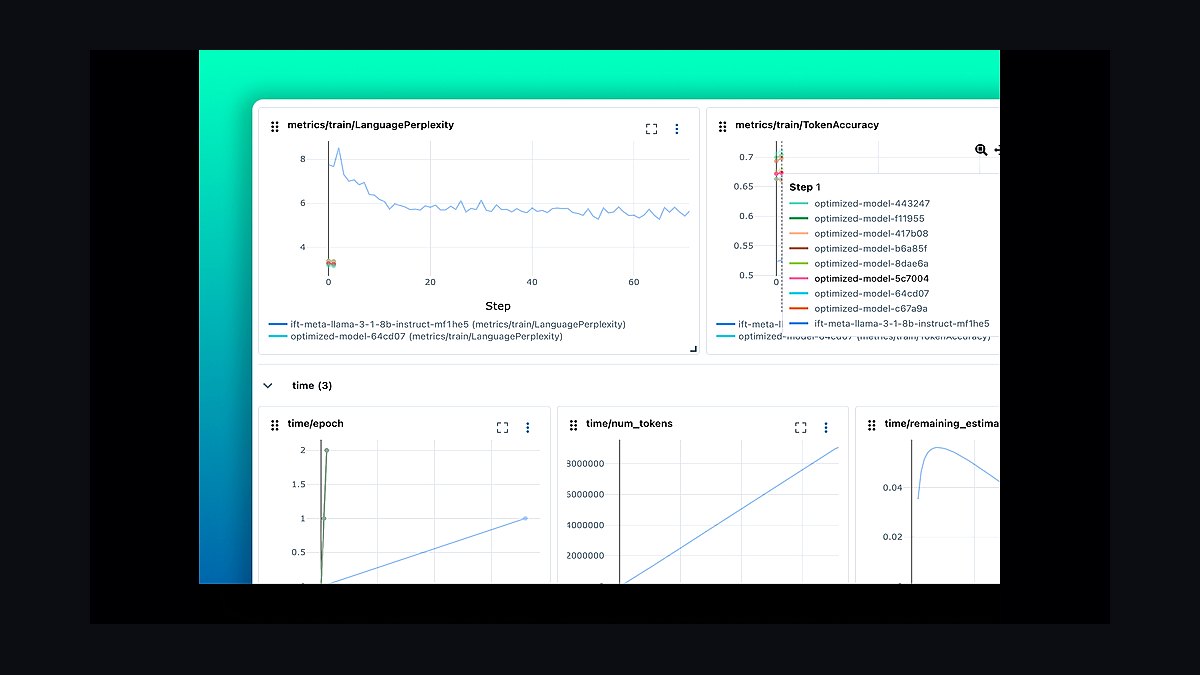
MLflow ranks seventh as the open-source experiment-tracking and model-registry option for firms that need to self-host eval infrastructure, including air-gapped environments for government or classified AI safety work. Its tracking API, model registry, and evaluation module integrate with existing Python eval pipelines, and it carries no per-seat licensing cost.
It suits teams with platform engineers who want control over data residency and cost, particularly those serving US AISI or defense-adjacent clients. The trade-off is operational overhead: you run the server, storage, and upgrades yourself. Against Weights & Biases above, MLflow is cheaper and more deployable in restricted environments but lacks Weave-style LLM tracing and polished collaboration features.
8PlexTrac
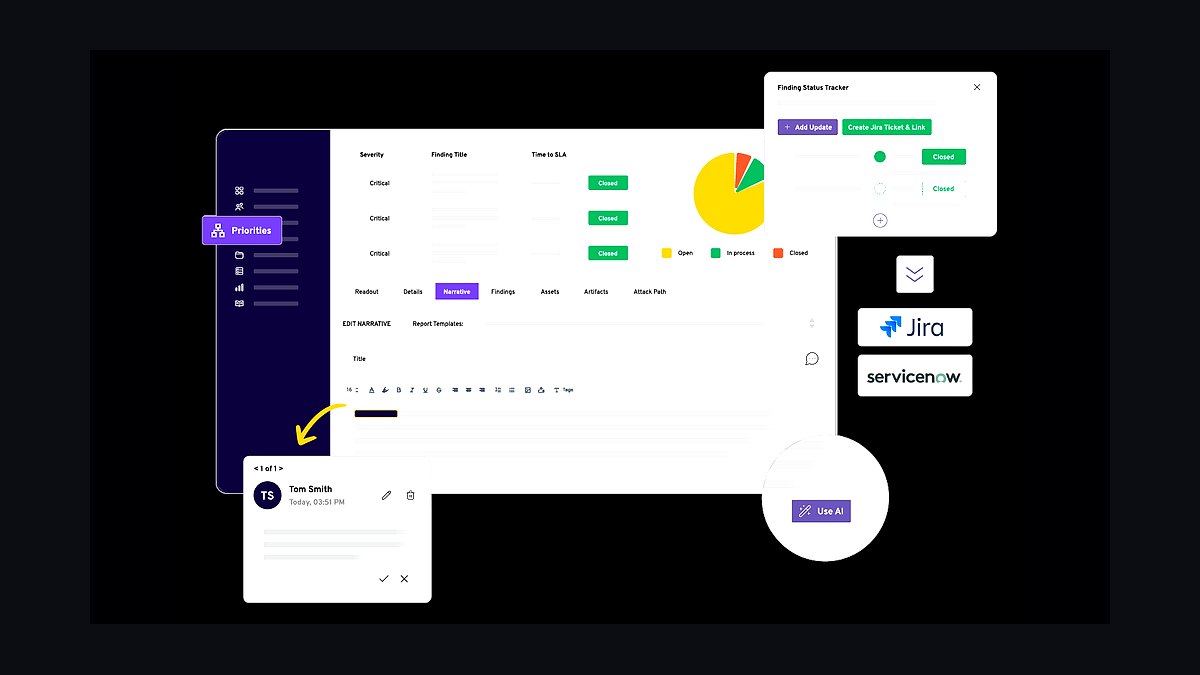
PlexTrac ranks eighth as the findings-management and reporting platform that turns scattered eval results into client-ready deliverables, with templates, severity mapping, and remediation tracking borrowed from traditional pentest workflows. Pricing typically runs in the $15K-$50K per year range depending on users and modules, and it integrates with Jira for engineering handoff.
It is for firms whose bottleneck is reporting and client communication rather than attack generation, especially those billing $50K-$5M engagements. It trades away AI-specific semantics: harm taxonomies, model-version tracking, and eval-run linkage are not native. Compared with AttackForge below, PlexTrac is more reporting-centric, while AttackForge leans into project and retest workflow.
9AttackForge
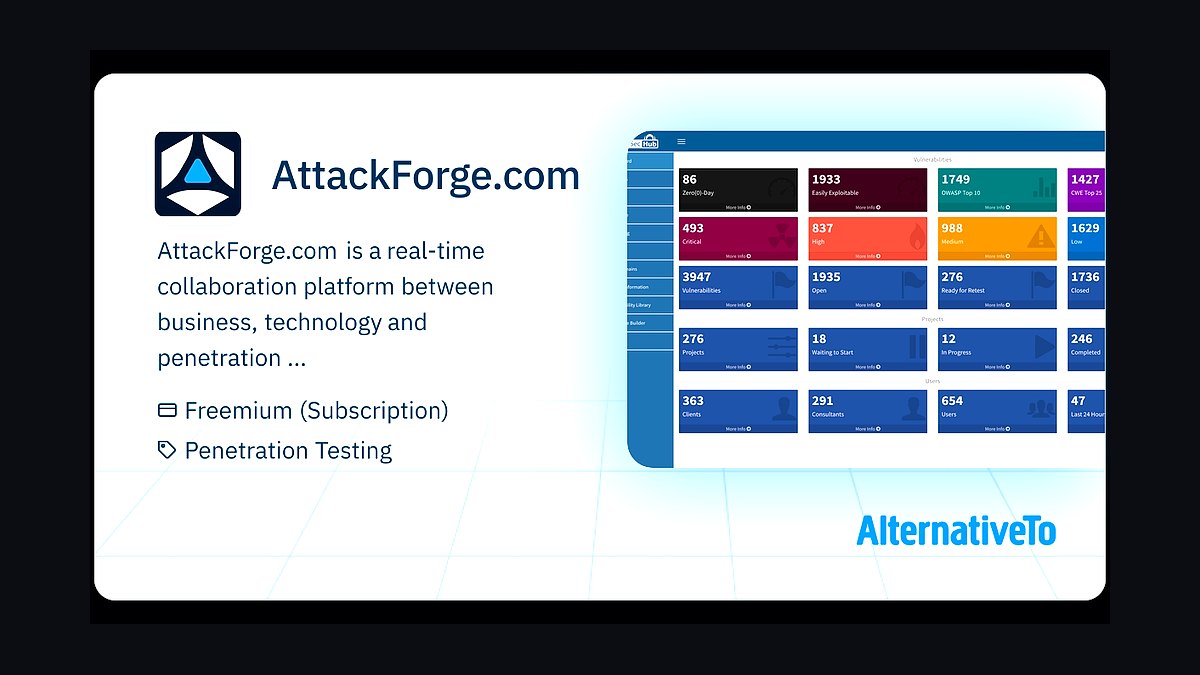
AttackForge ranks ninth as an alternative engagement platform focused on project workflow, evidence capture, and retesting, with self-hosted and cloud options and per-project pricing that suits smaller AI red team firms. It supports custom vulnerability libraries, which firms can map to AI-specific harm categories and OWASP LLM Top 10 findings.
It is for teams that need structured project management across concurrent engagements without PlexTrac's reporting emphasis. The trade-off is ecosystem size: fewer integrations and templates than PlexTrac, so more configuration is required. Against PlexTrac above, AttackForge is often cheaper at low volume but less polished for executive-facing deliverable generation.
10Vanta
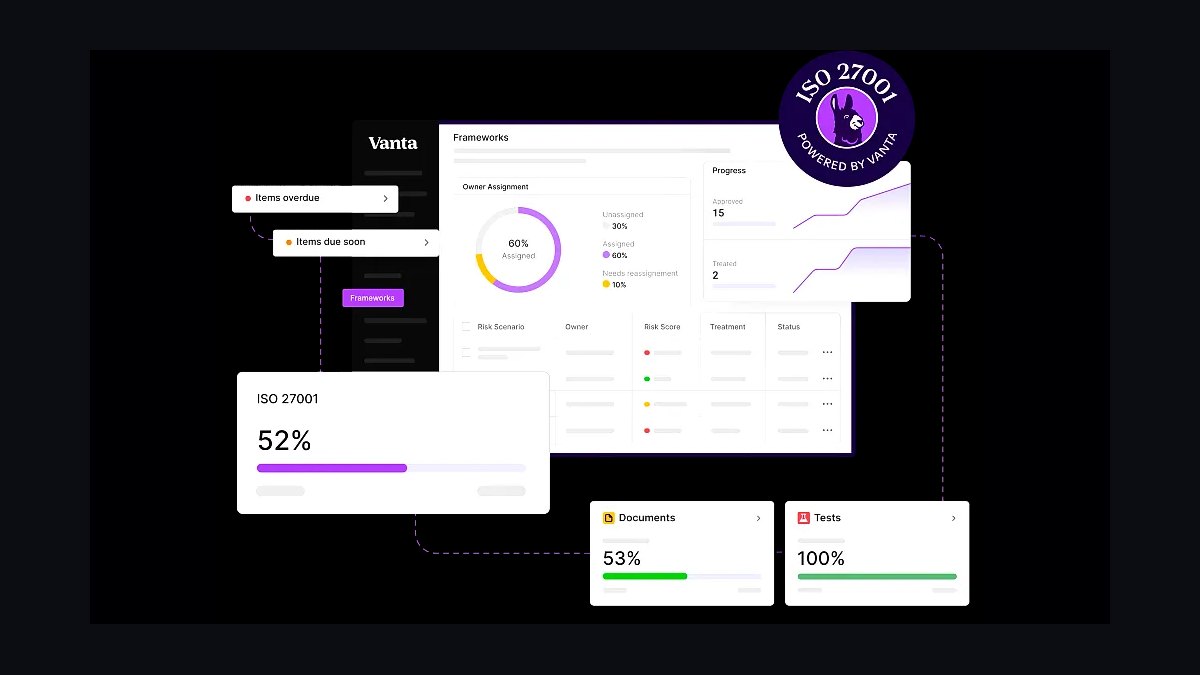
Vanta ranks tenth as the compliance automation layer that keeps SOC 2, ISO 27001, and increasingly ISO 42001 evidence collection continuous, which matters when AI lab and enterprise buyers require vendor security review before granting model access. Pricing commonly falls in the $15K-$50K per year band, with automated control monitoring and auditor workflows.
It is for firms that need audit readiness without a dedicated compliance hire, particularly those pursuing frontier lab partnerships that gate on security posture. It trades away depth: ISO 42001 and EU AI Act coverage is newer and less mature than SOC 2. Compared with Drata below, Vanta has broader brand recognition with enterprise procurement teams but similar core capability.
How we ranked these
We ranked tools by weighting four factors: evaluation coverage across capability, safety, alignment, robustness, bias, privacy, and CBRN/cyber/autonomy domains; depth of adversarial attack corpora and automated jailbreak generation; breadth of frontier and open-model API access; and engagement workflow maturity for findings, reporting, and billing. Weightings favored tools with published benchmarks, active maintenance, and adoption by named AI safety organizations rather than vendor marketing claims or analyst quadrant placement.
We deliberately ignored list price, seat-count minimums, and bundled feature breadth, because AI safety firms bill $300–$2,000 per researcher hour and tooling cost is a rounding error against utilization. We also excluded vendor lock-in scores, since multi-provider abstraction layers neutralize most lock-in. Finally, we ignored Gartner and Forrester positioning, because no analyst firm yet covers AI red-team tooling with credible primary research.
Related questions
Why does an AI safety firm need both capability and safety evaluations?
Capability evals like MMLU, GPQA, MATH, and HumanEval establish what a model can do; safety evals like HarmBench, AdvBench, and JailbreakBench establish where it fails under adversarial pressure. Frontier labs and regulators want both, because a model that scores well on capability but poorly on refusal robustness is a deployment risk. Firms that only run one category lose half the engagement scope.
How does UK AISI Inspect compare to EleutherAI's lm-evaluation-harness?
Inspect is a full evaluation orchestration framework with agentic scaffolds, tool use, and multi-turn support, maintained by the UK AI Safety Institute. lm-evaluation-harness is a benchmark runner with broad static-task coverage and deep community adoption. Most firms use Inspect for novel safety scenarios and lm-evaluation-harness for standardized capability benchmarks, running both behind a shared results store.
What makes a proprietary jailbreak corpus defensible IP?
Public corpora like AdvBench, HarmBench, and JailbreakBench are known to model providers, who train against them. A proprietary corpus stays valuable only if it is continuously refreshed with novel multi-turn chains, tool-use attacks, and prompt-injection variants that have not appeared in published literature. Firms that treat a static corpus as IP lose differentiation within two model release cycles.
Do AI red-team firms need their own GPUs or can they rent?
Renting wins for almost every firm below 100 researchers. CoreWeave, Lambda Labs, Crusoe, RunPod, Vast.ai, and Modal all offer on-demand capacity at rates that beat owned hardware unless utilization exceeds roughly 70 percent sustained. Owned clusters only make sense for firms running continuous pre-deployment evaluation pipelines against frontier models at scale.
How should a firm structure contracts for frontier lab red-team engagements?
Use Ironclad or DocuSign CLM with templates covering NDA, research access agreement, responsible disclosure protocol, and breach-counsel privilege where findings could expose lab liability. Engagements typically run 30–180 days with milestone billing. The mistake is using a generic MSA; frontier labs require disclosure windows, publication review, and indemnification terms that standard consulting paper does not address.
What compliance certifications actually matter for AI safety service providers?
SOC 2 Type II and ISO 27001 are table stakes for enterprise AI deployments. ISO 42001, the AI management system standard, is increasingly requested by EU customers preparing for AI Act obligations. FedRAMP matters only if you sell to US federal agencies or their contractors. CMMC applies to defense-adjacent work. Vanta, Drata, and Hyperproof all automate evidence collection across these frameworks.
How do AI safety consultancies price engagements?
Most bill hourly by researcher seniority, roughly $300–$2,000 per hour, with senior alignment or CBRN specialists at the top of the range. Fixed-fee scopes are common for standardized capability evaluations. Retainers work for labs wanting continuous pre-release coverage. BigTime and Kantata handle time tracking and utilization reporting; Deltek Vantagepoint fits larger firms with government contracts.
What is the biggest operational risk for a growing AI red-team firm?
Researcher turnover. Senior AI safety researchers command $500K–$1M+ at frontier labs, and when one leaves they take undocumented attack methodology and lab relationships. Mitigate with equity or partnership structures, documented institutional knowledge, and multi-lab access portfolios so no single departure severs a critical research relationship. Compensation alone rarely retains top talent against lab offers.
FAQ
What is the best evaluation framework for AI safety red teaming in 2027?
UK AISI Inspect is the closest thing to a standard, with agentic scaffolds, tool-use support, and multi-turn evaluation. EleutherAI's lm-evaluation-harness remains the benchmark runner of choice for static capability tasks. Most serious firms run Inspect for novel safety scenarios and lm-evaluation-harness for standardized benchmarks, storing results in a shared warehouse for cross-model comparison.
How do firms get pre-deployment access to frontier models?
Through research partnerships built on publication record, academic credibility, government safety institute affiliations, and a demonstrated responsible disclosure history. Anthropic, OpenAI, and Google grant access selectively, usually after one to three years of relationship development. New firms without lab relationships cannot evaluate pre-release models and are limited to public API versions.
Which adversarial attack corpora should a red-team firm license or build?
Start with public corpora: AdvBench, HarmBench, JailbreakBench, and WildJailbreak for jailbreak and harm coverage. Add automated attack generators like GCG, AutoDAN, and PAIR. Then invest in proprietary multi-turn chains, tool-use attacks, and indirect prompt injection sets. The proprietary layer is what stays defensible once public corpora are trained against by model providers.
Is AI safety red teaming a services business or a software business?
Both models work. Services firms like Trail of Bits, NCC Group, and Apollo Research bill $300–$2,000 per researcher hour with high margins and no recurring revenue. Tooling vendors like Lakera, Robust Intelligence, Hidden Layer, and Patronus AI sell runtime guardrails and detection as SaaS. Many firms run both, using services to fund research and tooling to build recurring revenue.
How does the EU AI Act change what AI safety firms must deliver?
The AI Act requires conformity assessment evidence for high-risk systems, including risk management documentation, data governance records, and post-market monitoring. Firms serving EU customers must produce evaluation reports mapped to AI Act articles, not just technical findings. ISO 42001 certification helps demonstrate the management system the Act expects, and demand for both is rising through 2027.
What sales stack fits a firm selling to frontier labs and enterprises?
Salesforce Sales Cloud with custom objects for buyer type, engagement scope, and regulatory driver, plus Clari for forecasting and Gong for call intelligence. Deals run $50K–$5M ACV over 30–180 days. HubSpot Enterprise works below roughly $15M ARR. The mistake is treating a frontier lab research partnership and a Fortune 500 deployment review as the same sales motion.
How much should a boutique AI red-team firm budget for tooling?
Roughly $20K–$60K per month covers AWS or GCP infrastructure, rented GPU compute, open-source eval frameworks, Hugging Face, HubSpot or Salesforce Starter, DocuSign, BigTime, QuickBooks, and Vanta for SOC 2. Growth-stage firms at 30–100 researchers should plan $100K–$400K monthly. Major consultancies with proprietary research and lab partnerships run $500K–$3M monthly.
What is the difference between AI safety evaluation and AI red teaming?
Evaluation measures model behavior against defined benchmarks and scenarios, producing quantitative scores across capability, safety, alignment, and robustness categories. Red teaming actively searches for failures using adversarial prompts, automated attacks, and multi-turn chains. Evaluation tells you where a model stands; red teaming finds where it breaks. Mature engagements deliver both, with findings mapped to remediation guidance.
How do firms differentiate from internal safety teams at AI labs?
Independence is the core value: third-party evaluation carries credibility that internal teams cannot claim, especially for regulatory submissions and public safety cases. Cross-lab perspective is second, since firms see failure patterns across multiple providers. Specialty depth in CBRN, cyberweapon, or autonomy evaluation is third. Speed of response to emerging threat classes rounds out the pitch.
What does a 90-day implementation plan look like for a new AI safety firm?
Days 1–30: stand up Inspect and lm-evaluation-harness, establish API access across OpenAI, Anthropic, Google, xAI, Mistral, Cohere, Bedrock, and Azure OpenAI. Days 31–60: deploy PlexTrac or AttackForge, Ironclad, Salesforce with Clari and Gong, BigTime, QuickBooks, and Vanta for SOC 2. Days 61–90: formalize lab research partnerships and begin ISO 42001 evidence collection.
Sources
- https://www.nist.gov/artificial-intelligence
- https://www.gov.uk/government/organisations/ai-safety-institute
- https://inspect.aisi.org.uk/
- https://www.anthropic.com/research
- https://openai.com/safety/
- https://metr.org/
- https://www.apolloresearch.ai/
- https://arxiv.org/abs/2402.04249
- https://www.eleuther.ai/projects/lm-evaluation-harness
- https://artificialintelligenceact.eu/
Related on PULSE
This page will be disappearing soon. Save it to your device for $1 — or read it free while it is here.
@Kory-White- · if Venmo asks, the last 4 of my number are 2012
This page is gone.
This one is off the shelf now. $1 keeps it on your phone for good — the whole page, pictures and diagrams included.
 pulse-tech-stacksTop 10 Best Tech Stack Tools for HOA and Community Association Management Companies in 2027
 pulse-tech-stacksTop 10 Best Tech Stack Tools for Independent Landscaping Companies in 2027
 pulse-tech-stacksTop 10 Best Tech Stack Tools for Tire Shops in 2027
 pulse-tech-stacksTop 10 Best Tech Stack Tools for Independent Roofing Contractors in 2027
 pulse-tech-stacksTop 10 Best Tech Stack Tools for Medical Billing and RCM Companies in 2027
 pulse-tech-stacksTop 10 Best Tech Stack Tools for AI Translation API Companies in 2027
 pulse-tech-stacksTop 10 Best Tech Stack Tools for Independent Dance Studios in 2027
 pulse-tech-stacksTop 10 Best Tech Stack Tools for Plumbing Contractors in 2027
 pulse-tech-stacksTop 10 Best Tech Stack Tools for Data Loss Prevention (DLP) Software Vendors in 2027
 pulse-tech-stacksTop 10 Best Tech Stack Tools for Land Surveying Firms in 2027