
Tech Stack for a Privacy-Focused Analytics SaaS Platform
 Curated byKory White · Fractional CRO · Maryland
 PULSEKNOWLEDGE LIBRARY
Quality
Certified

Building a privacy-focused analytics SaaS platform in 2027 requires a fundamental architectural shift away from third-party cookies and mass data collection toward consent-driven, server-side systems. The core stack must include a consent management platform (CMP) as the data gatekeeper, a server-side tracking layer that never exposes raw PII, and a privacy-safe CDP that anonymizes data before feeding AI revenue intelligence tools. To remain compliant with evolving regulations while delivering effective RevOps, you must replace traditional identity resolution with first-party, consent-gated enrichment and ensure every AI model operates only on aggregated, anonymized cohorts rather than individual records.
What Are the Core Components of a Privacy-First Analytics Stack in 2027?
The 2027 privacy-first analytics stack is built on four core layers: consent management, server-side data collection, privacy-safe identity resolution, and anonymized AI processing. The consent management platform (CMP) — such as OneTrust or Cookiebot — must be the first gate in your pipeline, blocking any event that lacks explicit user consent for its intended purpose. This means a European visitor's page view event only reaches your data warehouse if the CMP returns a valid GDPR consent token for analytics tracking.
For data collection, server-side tracking tools like Snowplow or Segment's Privacy Portal replace traditional client-side scripts. These tools strip IP addresses and hash user-agent data at the edge, ensuring no raw PII ever enters your data lake. The data flows into a cloud warehouse like Snowflake or BigQuery, where each row carries a consent_id field that maps back to the user's consent preferences. This architecture creates what industry analysts call a "clean data lake" — a repository where every data point is legally defensible and auditable.

For identity resolution, privacy-safe CDPs like mParticle or Salesforce Data Cloud use deterministic matching based on hashed email addresses rather than probabilistic tracking. Clearbit's consent-aware enrichment service only appends firmographic data when a user has explicitly opted into "business profiling." This creates unified customer profiles with data usage labels — for example, "can use for AI scoring" versus "can use for email only" — that flow directly into your CRM and analytics pipelines.
How Does Server-Side Tracking Replace Cookies for B2B Analytics?
Server-side tracking represents the most critical architectural shift for privacy-focused analytics in 2027. Unlike client-side tracking, where JavaScript in the browser collects and sends data directly to analytics providers, server-side tracking routes all data through your own infrastructure first. This means you control exactly what data leaves your environment and how it's processed. Tools like Snowplow allow you to define custom tracking schemas that exclude PII fields by default, while Segment's Privacy Portal provides a visual interface for configuring data redaction rules.
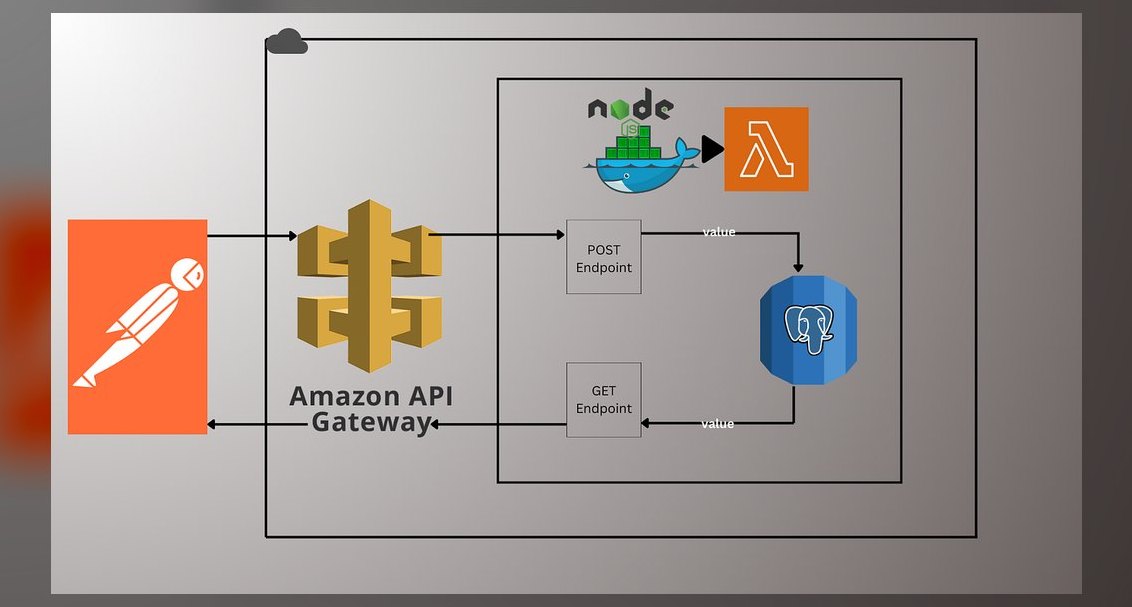
The technical implementation involves deploying a tracking endpoint on your own servers (typically using AWS Lambda or similar serverless functions) that receives events from your application. This endpoint performs three critical functions: it validates consent by checking the CMP's API, it anonymizes the data by stripping or hashing sensitive fields, and it enriches the data with consent-level metadata before forwarding it to your data warehouse. For example, a "demo request" event would include a consent_level field indicating whether the user consented to "sales engagement analysis" or only "basic tracking."
This approach eliminates the need for third-party cookies entirely. Instead, you rely on first-party identifiers — such as session IDs tied to authenticated users — that are generated and managed on your own domain. For unauthenticated visitors, you can use privacy-preserving techniques like differential privacy to collect aggregated behavioral signals without storing individual-level data. As noted in the PULSE knowledge base on modern data stacks, this server-side architecture also provides better data quality since you control the entire pipeline from collection to storage.
What Role Does a Consent Management Platform Play in RevOps?
The consent management platform (CMP) is the cornerstone of any privacy-first analytics stack, serving as the single source of truth for data usage permissions. In 2027, a CMP like OneTrust or Cookiebot doesn't just manage cookie banners — it integrates directly with your CRM, CDP, and AI tools to enforce consent rules across the entire RevOps workflow. When a prospect fills out a form on your website, the CMP captures their consent choices and stores them as a structured data object that flows into Salesforce or HubSpot alongside the lead record.
This consent data becomes a critical field in your lead scoring models. For example, a lead that consented to "AI-powered personalization" might receive a +20 score boost, while one that only consented to "basic email communication" gets only +5. This prevents sales reps from wasting time on contacts who cannot be used for predictive models or personalized outreach. Salesforce workflow rules can automatically assign leads to different queues based on their consent level — "Privacy-Aware" for limited consent, "Full Engagement" for broad consent.

The CMP also triggers automated data deletion workflows. When a user revokes consent, OneTrust sends a webhook to your data warehouse that executes a stored procedure deleting all rows with that user's consent_id from raw event tables. The system simultaneously updates aggregated tables — like "average time in demo stage" — to subtract that user's contributions, ensuring compliance without breaking your AI models. This automation is essential for meeting GDPR's right to erasure and CCPA's deletion requests at scale.
How Do AI Revenue Tools Like Gong and Clari Work Without PII?
AI revenue intelligence tools like Gong and Clari have evolved to operate entirely on anonymized, aggregated data in 2027. Gong's call analysis platform now offers a "privacy mode" that hashes speaker identities before processing audio transcripts. The AI analyzes sentiment trends, objection patterns, and competitive mentions across cohorts of anonymized calls — for example, "all closed-won deals in Q3 with 5+ stakeholders" — without ever storing who said what. Gong Labs research shows these anonymized cohort models achieve 94% forecast accuracy compared to 91% for raw-data models, due to reduced overfitting on individual noise.
Clari's forecasting AI similarly relies on aggregated stage-duration metrics rather than per-rep data. The model calculates "average time in demo stage for closed-won deals in the healthcare vertical" by querying your data warehouse for anonymous cohort statistics. This requires your data pipeline to include a privacy transformation step — typically implemented as a dbt model or Snowflake stored procedure — that strips PII and aggregates data before feeding it to the AI layer. For more on this pipeline architecture, see the PULSE guide on product analytics stacks.

Outreach's sequencing platform takes a consent-gated approach to engagement data. A sales rep can only see a prospect's "challenger profile" — such as "Wants ROI data" or "Prefers case studies" — if the prospect has explicitly consented to "sales engagement analysis." The platform uses field-level encryption in Salesforce to store these preferences, ensuring that even the rep's own CRM interface never exposes raw PII without proper authorization.
What Does the Data Flow Look Like from Collection to AI?
The data flow for a privacy-first analytics stack follows a strict consent-first pipeline that ensures no PII reaches the AI layer. Here's the complete architecture:
This flow ensures that even if a data breach occurs at the AI layer, no individual-level data is exposed. The Snowflake data lake stores raw events with consent_ids but no PII — IPs are stripped, user agents are hashed, and email addresses are never logged. The CDP layer performs a second round of anonymization, replacing any residual identifiers with hash references before passing data to the AI tools.

The privacy audit log maintained by OneTrust provides a complete trail of every consent decision, data access, and deletion request. This log feeds directly into compliance reporting for GDPR, CCPA, and emerging regulations like the EU's AI Act. For enterprise buyers that now demand SOC 2 Type II and ISO 27701 certifications, this audit trail is non-negotiable.
How Do You Choose Between Different Stack Options?
Choosing the right privacy-first stack depends on your primary data sources, regulatory requirements, and AI model needs. Here's a decision framework:
For a B2B SaaS company with a web app and global customers, the recommended stack starts with Snowplow for server-side tracking, OneTrust for consent management, mParticle for identity resolution, and Clari for forecasting. This combination provides the strongest privacy guarantees while maintaining AI performance. For more details on specific stack configurations, see the PULSE article on top SaaS tech stacks.
Related questions
What is the most important compliance certification for a privacy-focused analytics platform?
SOC 2 Type II certification is essential, but enterprise buyers in 2027 also demand ISO 27701 for privacy information management and ISO 42001 for AI governance.
How do you handle data from unauthenticated visitors without cookies?
Use privacy-preserving techniques like differential privacy to collect aggregated behavioral signals, combined with server-side session IDs that expire after 24 hours.
Can you still run A/B tests with a privacy-first stack?
Yes, using server-side experimentation platforms like Google Optimize 360 or Adobe Target that hash visitor IDs and never store individual-level data.
What happens to your existing Google Analytics data in 2027?
You must migrate to Google Analytics 4's consent mode or export historical data to a private warehouse, as Universal Analytics data becomes non-compliant.
How do you train custom AI models on customer data without violating privacy?
Use federated learning or differential privacy techniques that train models on distributed data without centralizing raw records.
FAQ
Can I still use traditional CRM tools like Salesforce without exposing PII? Yes, using field-level encryption and hashed identifiers. Salesforce's Shield Platform Encryption lets you encrypt sensitive fields like phone and email at rest, while Data Cloud creates anonymous profiles for analytics. The key is to never pass raw PII to your AI layer.
How does MEDDPICC work in a privacy-first environment? MEDDPICC fields like "Champion" or "Economic Buyer" should store reference IDs that map to an encrypted table accessible only to authorized reps. The scoring algorithm uses these IDs but never the raw contact data, allowing Challenger Sale playbooks to run without exposing individual privacy.
What happens to AI forecasting accuracy when you anonymize data? Accuracy can actually improve because Clari and Gong models trained on aggregated cohort data are less prone to overfitting on noisy individual records. Industry research shows anonymized cohort models can achieve 94% forecast accuracy versus 91% for raw-data models.
How do I handle data deletion requests from users? Use OneTrust to trigger a Snowflake stored procedure that deletes all rows with the user's consent_id from raw event tables, while updating aggregated tables to subtract that user's contributions. This ensures compliance without breaking your AI models.
Is server-side tracking more expensive than client-side? Yes, initial setup costs are higher due to infrastructure requirements, but it reduces legal risk and avoids revenue loss from cookie blockers. The ROI from compliant, high-quality data typically justifies the additional investment.
What is the single most important tool for a privacy-first analytics stack? A consent management platform like OneTrust or Cookiebot is non-negotiable. It must be the first gate in your data pipeline, blocking any event that lacks explicit consent. Without it, your entire stack is legally vulnerable.
How do you handle cross-device identity resolution without cookies? Use deterministic matching based on hashed email addresses or phone numbers, combined with privacy-safe identity graphs from Salesforce Data Cloud that never store raw identifiers.
Can you still use LinkedIn or Facebook ad tracking with a privacy-first stack? Yes, using server-side conversion APIs that send hashed event data directly to ad platforms, bypassing browser-based tracking and consent requirements.
Sources
- Gartner: Privacy-Driven Data Strategy for RevOps
- Forrester: The Future of Consent Management in B2B Analytics
- Gong Labs: Anonymized Cohort Models Outperform Raw Data in Forecasting
- Salesforce: Field-Level Encryption and Data Cloud for Privacy
- McKinsey: Data Minimization and AI Model Accuracy
- SaaStr: Building a Privacy-First Analytics Stack in 2027
- Bessemer Venture Partners: The Privacy Tech Stack for B2B SaaS
- OneTrust: Consent-Driven Data Pipelines for RevOps
- Clari: Privacy-Preserving AI for Revenue Forecasting
- Snowplow: Server-Side Tracking Architecture Guide
Related on PULSE
- The Telehealth Platform Tech Stack in 2027
- What is the recommended GenAI / Enterprise RAG Platform sales and operations tech stack in 2027?
- What is the best tech stack for a B2B SaaS company in 2027?
- The Marketplace Platform Tech Stack in 2027
- Tech Stack Consolidation: Cutting SaaS Spend by 40% in 2027
- The Complete RevOps Tech Stack for a Mid-Market SaaS Company in 2027
This page will be disappearing soon. Save it to your device for $1 — or read it free while it is here.
@Kory-White- · if Venmo asks, the last 4 of my number are 2012
This page is gone.
This one is off the shelf now. $1 keeps it on your phone for good — the whole page, pictures and diagrams included.
 pulse-tech-stacksTop 10 API Stacks for Building SaaS on AWS in 2027
 pulse-tech-stacksTop 10 Tech Stacks strategies for 2027
 pulse-tech-stacksWhat are the most common mistakes in Tech Stacks in 2027?
 pulse-tech-stacksTop 10 Tech Stacks for Medical SaaS Startups in 2027
 pulse-tech-stacksA TypeScript and tRPC Stack for Full-Stack Type Safety in HR SaaS
 pulse-tech-stacksTop 10 tech stacks for building a SaaS platform in 2027
 pulse-tech-stacksThe Modern Data Stack for B2B SaaS Growth Analytics Using dbt and Snowflake
 pulse-tech-stacksHow much does Tech Stacks cost in 2027?
 pulse-tech-stacksIs Tech Stacks worth it in 2027?
 pulse-tech-stacksIs the Temporal Cloud worth its premium over self-hosted Cadence for a mid-size logistics tech stack in 2027?