


What is the best tech stack for a multi-unit restaurant group compared to a standalone fine-dining establishment in 2027?
Quality
Certified

A multi-unit restaurant group needs a cloud POS with centralized menu and price management, consolidated reporting, enterprise labor scheduling, and above-store inventory — integration breadth beats per-location polish. A standalone fine-dining establishment needs reservation-driven guest data, coursing-aware ticket flow, and tight cost control on a small footprint. Same categories, opposite optimization targets.
The two kitchens that make the choice concrete
Picture two operators shopping for technology in the same quarter. The first runs eleven fast-casual bowls-and-burritos locations across two metro areas, roughly $2.1M average unit volume each, 60–70% off-premise, and a corporate office of nine people including one person who "does the systems." The second runs a single 62-seat tasting-menu establishment doing two turns a night, five nights a week, at a $195 per-person food price and a beverage attach rate that pushes checks past $300. Both operators are asking the same question — what should we run in 2027? — and almost none of the same answers are correct for both.
The multi-unit group's core pain is *divergence*. Location 4 has a different price on the same chicken bowl than location 9 because a manager fat-fingered it during a promo. The catering menu exists in the POS at three stores and the online ordering platform at eleven. Nobody can answer "what did we sell in aggregate last Tuesday by daypart" without exporting eleven CSVs. Labor law compliance differs by jurisdiction, so the same scheduling rules can't apply everywhere. Every one of those is a *data governance* problem wearing a restaurant costume, and the technology that solves it is the technology that pushes one authoritative record down to many endpoints and pulls many endpoints' events back into one warehouse.
The standalone fine-dining establishment's core pain is *margin density on a fixed seat count*. It cannot grow by opening more units this year; it grows by seating the right guests, at the right time, with the right spend, and by not throwing away expensive protein. Its 62 seats × 2 turns × 5 nights is roughly 620 covers a week, and the difference between 88% and 96% seat utilization is real money at a $300 check. Its technology has to answer: who is this guest, what did they drink last time, are they allergic to shellfish, is the 7:45 four-top going to no-show, and did the halibut cost us 34% or 41% this week. Notice that "push a price change to eleven stores" appears nowhere on that list.

That divergence in pain is why the stack question can't be answered with a single vendor name. When these two operators are compared side by side, the multi-unit group is buying *consistency and consolidation*; the standalone establishment is buying *guest intelligence and precision*. Both will end up with a POS, a payments processor, a scheduling tool, an inventory system, an accounting integration, and some form of guest-facing ordering or reservations. The weighting of the spend, the selection criteria, and the failure modes are almost inverted.
One more framing that helps before getting into mechanics: think about who administers the system after go-live. The multi-unit group has, or should have, a dedicated systems owner at the support center — that person can absorb configuration complexity in exchange for control. The standalone establishment's administrator is usually the general manager or the chef-owner, working between service periods. A stack that requires four hours a week of back-office configuration is a rounding error for the group and a genuine tax on the establishment. Admin burden is a real selection criterion, not a soft one.
How a multi-unit stack actually moves data
The mechanism that separates an enterprise-capable restaurant stack from a good single-store one is hierarchy: a corporate/region/store object model with inheritance and overrides. In a properly configured multi-unit system, a menu item is defined once at the enterprise level with a default price, default modifiers, default tax mapping, and default recipe. A region can override the price. A store can be allowed — or explicitly not allowed — to 86 the item or adjust its own price. Change management flows downhill on a schedule; sales, labor punches, and inventory counts flow uphill continuously.

That "downhill config, uphill events" pattern is what to look for in every product demo. Ask the vendor to show you: how do I change one price at 40 locations, schedule it for 3 a.m. Tuesday, exclude three locations, and see confirmation that all 37 applied? If the answer involves logging into each store, the product is a single-store POS with a reporting portal bolted on, and it will fail you at unit 15.
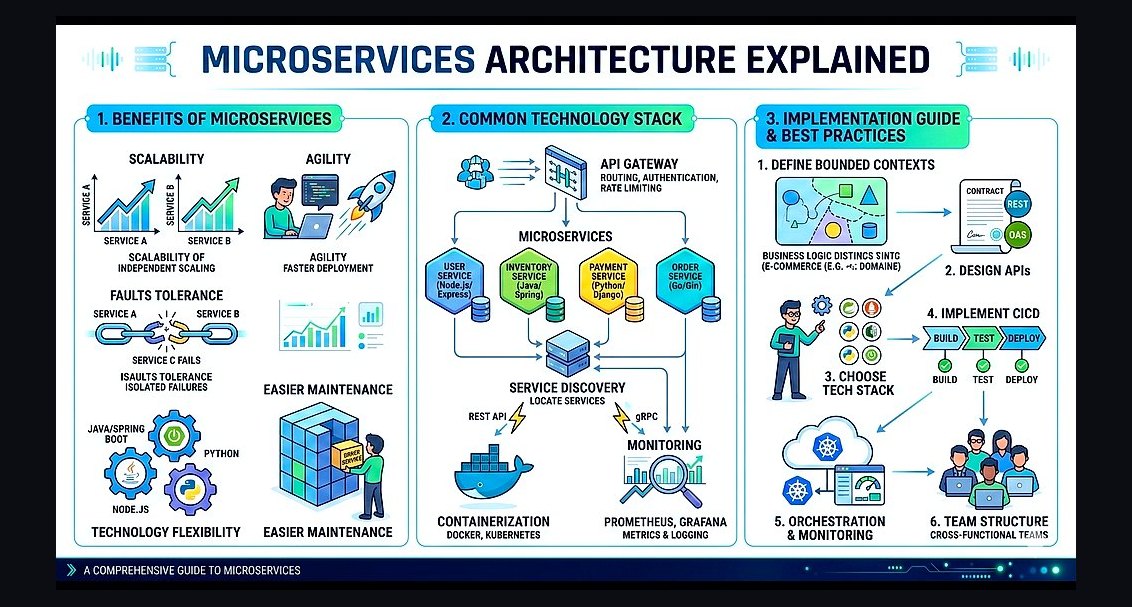
The diagram above is the shape you are buying. Everything hard about multi-unit technology lives in the arrows, not the boxes. Three arrows deserve specific attention.
Digital channels into the kitchen. By 2027, a group with meaningful off-premise volume should treat third-party marketplace orders as first-class POS transactions, injected directly into the same ticket stream and kitchen display as in-house orders. The alternative — a stack of tablets on the pass, each with its own beeping and its own menu that nobody remembers to 86 — is a labor and accuracy tax that scales linearly with units. Order aggregation is not a luxury at eleven locations; it is the difference between one menu update and four.
Store events into the warehouse. Consolidated reporting inside the POS vendor's portal is fine until you need to join sales against labor against inventory against a marketing calendar. The practical pattern for a group above roughly 15–25 units is to land POS, labor, and inventory data into a warehouse and report from there, because vendor-native reporting will always be shaped around that vendor's data. Below that size, native consolidated reporting plus a spreadsheet habit usually wins on cost and effort.
Inventory back up to enterprise. Theoretical food cost (what the recipes say you should have used) versus actual food cost (what the counts say you did use) is the single most valuable multi-unit metric, because variance is comparable across stores. Store 6 running 3.5 points of variance while the fleet runs 1.2 is an operations conversation you can only have if recipes are centrally defined and counts are consistently taken.

For the standalone establishment, most of this machinery is overhead. There is no region layer, no downhill push, no cross-store variance. The equivalent mechanism is a *guest* record that persists across reservations, dining history, spend, preferences, and allergies — and reaches the floor as a note on the ticket rather than a report in a portal. The plumbing that matters is reservations → guest profile → POS check → post-meal spend attribution, so that the maître d' knows the 8 p.m. deuce is a fourth visit with a documented Burgundy preference before they walk in.
Real numbers: what each stack costs and where the money goes
Restaurant technology pricing shifts constantly and varies by negotiation, so treat the following as the structure of the spend rather than a quote. Every number below should be validated against current vendor pricing pages before you build a budget.
Payment processing dominates. For most operators, card processing costs more than every software subscription combined. At an effective rate in the low-to-mid 2% range on card volume, a $2.1M unit is spending in the tens of thousands of dollars a year on acceptance alone, and an eleven-unit group is spending a number that justifies a dedicated negotiation. This is why "free POS hardware" bundled with processing is rarely free — the hardware cost is amortized into the rate. The correct evaluation compares total effective rate (all fees ÷ total card volume) across bundles, not headline software price. A tenth of a point on $20M+ in group card volume is worth more than most software line items.
Software subscriptions scale per terminal and per module. Expect POS to be priced per terminal or per station per month, with additional per-module charges for online ordering, kitchen display, loyalty, gift, inventory, and enterprise reporting. The practical consequence is that a five-terminal high-volume location costs several times what a two-terminal location costs on the same platform, and that module sprawl is where budgets get away from groups. Audit annually: it is common to find a group paying for a loyalty module that two locations use and nine ignore.

Labor tooling is priced per employee. Scheduling and workforce platforms typically charge per active employee per month, which means a group with 400 employees across eleven units is on a fundamentally different cost curve than an establishment with 38. This flips the usual assumption — the multi-unit group's labor software bill is not eleven times the standalone's, it is closer to ten to twelve times because headcount scales with units, while the standalone's per-employee cost may be higher because it lacks volume leverage.
Third-party marketplace commissions are the largest single variable. Marketplace delivery commissions in the 15–30% range on order subtotal, depending on tier and whether you use your own drivers, are the biggest lever on off-premise economics. A group doing 25% of revenue through marketplaces is running a meaningfully different P&L than one doing 5%. The technology decision that follows: invest in first-party ordering and a loyalty mechanism that converts marketplace customers to direct, because the incremental margin on a direct order versus a marketplace order is often larger than any software savings you will ever negotiate.
Implementation is the hidden line. Menu build, recipe build, hardware installation, network readiness, and training run into real money and real weeks. For a multi-unit rollout, budget the menu and recipe build *once* and the install *per store*, and plan on a pilot store running the new stack for at least four to six weeks before the fleet rollout begins. Groups that skip the pilot discover configuration mistakes at eleven sites simultaneously.
Where the standalone establishment's money goes instead. Reservation platform subscriptions, typically a base monthly fee plus per-cover charges on network-sourced bookings, are the notable recurring line. Those per-cover fees are worth modeling carefully: a platform that sources genuinely incremental covers pays for itself, and one that charges you for guests who would have called you anyway does not. The other meaningful spend is on inventory and recipe costing, because a fine-dining establishment's食 cost management is about expensive, perishable, low-yield ingredients — a whole fish with a 55% yield and a three-day shelf life demands far more precise tracking than a case of tortillas.

Rough proportions to sanity-check your own budget. Technology spend for a restaurant business typically lands in the low single digits as a percentage of revenue when you exclude payment processing, and processing itself commonly runs a couple of points of card volume. If your software line is approaching double digits as a percentage of revenue, something is misconfigured, over-moduled, or you are far below the volume the platform was priced for. If it is effectively zero, you are almost certainly paying for it elsewhere in labor, waste, and undetected variance.
Trade-offs: one suite versus best-of-breed, and where each breaks
The central architectural decision for both operators is the same question with different right answers: buy one vendor's integrated suite, or assemble best-of-breed components connected by integrations?
The suite case. One vendor for POS, online ordering, kitchen display, loyalty, and payments means the data joins natively, support has one throat to choke, and nobody at your support center is debugging a webhook at 11 p.m. on a Friday. For a growing group without a dedicated systems person, and for essentially every standalone establishment, this is usually the right default. The cost is that the suite's weakest module becomes your ceiling — if its inventory module is thin, your food cost discipline is thin.
The best-of-breed case. Above a certain scale, the group's needs in one category outgrow what any generalist suite offers. Inventory and purchasing is the most common breakaway: a group with commissary production, vendor contracts, and multi-location transfers needs a purpose-built system, not a POS module. Labor is the second most common, especially when predictive scheduling ordinances and multi-jurisdiction compliance enter the picture. The cost is integration ownership — every API change, every field mapping, every silent sync failure becomes an internal responsibility.

The hybrid that most groups actually land on. POS + payments + kitchen display + first-party ordering from one vendor, because those must be tightly coupled and low-latency. Inventory, labor, accounting, and BI as separate specialists connected to the POS by supported integrations. This concentrates real-time dependencies in one system and pushes the batch-tolerant systems out to specialists. It is not architecturally elegant, but it matches where the failure costs actually are: a POS-to-KDS integration failing means the kitchen stops; a POS-to-accounting integration failing means someone reconciles late.
How the standalone fine-dining establishment's trade-off differs. Its non-negotiable coupling is reservations ↔ POS ↔ guest profile, not POS ↔ KDS ↔ online ordering. It should optimize the front-of-house data loop and accept a simpler back-of-house. It also has a legitimate reason to accept a *less* integrated stack than a group would: at one site, with one GM, a manual weekly export is a twenty-minute task rather than an eleven-store coordination problem. Manual process is a viable substitute for integration at n=1 and an obviously terrible one at n=40.
A trade-off both operators underrate: offline resilience. Ask every vendor what happens when the internet drops mid-service. Can terminals continue taking orders and cards offline, queue them, and reconcile on reconnect? For the group, this is a fleet-wide risk-management question — one ISP outage should never stop a store from serving. For the establishment, one dead Saturday during a network outage at a $300 check average is a five-figure evening. Offline mode is a headline feature that is frequently partial in practice; test it in the pilot by physically unplugging the router.
Contract structure is a trade-off too. Multi-year commitments in exchange for hardware credits and rate reductions are common and can be genuinely good deals for a stable group. They are worse for a standalone establishment whose concept might evolve, and they are worst for a group in the middle of a growth phase where the unit economics and the required feature set are both still moving. Negotiate an exit or a downgrade path before you need one.
Pitfalls that break rollouts, and how to avoid each

Rolling out to every unit at once. The single most expensive mistake a multi-unit group makes. Configuration errors, menu mapping mistakes, and training gaps all replicate perfectly. Run one pilot store for a full four to six weeks including a month-end close, fix everything the pilot surfaces, then roll in waves of two to four stores with the same install team. The team gets faster each wave and carries fixes forward.
Treating the menu build as a data-entry task. Menu and recipe configuration is the highest-leverage work in the entire project and it is routinely handed to whoever is available. Wrong tax mapping produces filing problems. Wrong modifier structure produces wrong tickets in the kitchen for years. Wrong recipe yields produce food cost numbers nobody trusts, which produces a fleet that ignores food cost reporting entirely. Staff this with your best operator, not your most available one.
Letting store managers create items. The permission model is a governance decision disguised as a settings screen. If a store manager can create a new menu item, within a year your enterprise reporting has "Chkn Bowl," "Chicken Bowl," and "CHX BOWL LG" as three separate items and your fleet comparisons are fiction. Lock item creation at the enterprise level; give stores 86-ing and quantity controls only. This is the pitfall that most directly caused the divergence problem described at the top.
Ignoring network and hardware readiness. A new POS on an old flat network with consumer-grade Wi-Fi will be blamed for problems it did not cause. Budget for a business-grade router, segmented networks separating payment terminals from guest Wi-Fi, wired connections to fixed stations, and adequate access-point coverage in the kitchen where handhelds and KDS live. Do this before the software install, not after the complaints.
Skipping the payment reconciliation test. Before go-live, run a full day of transactions in the pilot and reconcile POS sales → processor deposits → bank → accounting to the cent. Do it again after month-end close. Discrepancies found in a pilot are a configuration fix; discrepancies found in month four across eleven stores are a forensic project.

Assuming integrations are bidirectional and real-time. Read the actual integration documentation, not the logo on the partners page. Many integrations are one-way, nightly, or sync a subset of fields. "Integrates with your accounting system" can mean a nightly journal entry summary, which may be exactly what you want — but you should know that before you build a process assuming live data.
For the standalone establishment specifically: over-buying enterprise features. A single fine-dining room does not need multi-location inventory transfers, franchise royalty reporting, or regional pricing hierarchies, and paying for an enterprise tier to get one feature is a common and avoidable error. The failure mode is a system so configurable that the GM spends Sunday mornings in the admin panel instead of on the floor. Buy for the operation you run.
For the standalone establishment: neglecting the guest data loop. The counterpart error is under-buying on the one axis that matters. If reservation notes, allergy flags, visit counts, and spend history do not reach the service team before the guest sits down, the establishment is competing on food alone against rooms that also compete on recognition. Make sure the reservation platform and POS actually exchange data, and that someone owns keeping guest notes clean — dirty guest data is worse than no guest data because the team stops trusting it.
Both: no owner, no cadence. The systems that decay are the ones nobody owns. Name a person responsible for the stack, give them a monthly review of unused modules, integration health, effective processing rate, and permission drift, and a quarterly conversation about whether the architecture still fits the business. A group that adds four units and never revisits its permission model has already lost the consistency it bought the system for.
Related questions
Does a two-location operator need enterprise features yet?

Usually not the full hierarchy, but do turn on centralized item creation and consolidated reporting from day one. The habit matters more than the feature at two units, and retrofitting governance at unit eight is far harder than starting with it.
Should a fine-dining room use a handheld ordering device?
It depends on service style. Handhelds speed casual and high-turn service, but in a coursed tasting-menu establishment the server's attention and the pacing conversation with the kitchen matter more than transmission speed. Many rooms use a discreet station instead.
How long should a multi-unit POS migration take?
Plan on a four-to-six-week pilot, then waves of two to four stores. A ten-to-fifteen-unit group commonly spends three to six months end to end including menu build, hardware, network work, and training — compressing it is where rollouts fail.
What single metric best compares stores in a group?
Theoretical versus actual food cost variance, because it normalizes across different volumes and menus. Pair it with labor as a percentage of sales by daypart. Both require centrally defined recipes and consistent counts to be meaningful.
Is it worth building first-party online ordering?
If marketplace volume is material, yes — the commission difference between a direct order and a marketplace order typically dwarfs any software subscription. Treat marketplaces as customer acquisition and your own channel as retention.
FAQ
What is the single biggest difference between a multi-unit stack and a standalone one?
Centralized configuration control. The multi-unit group's stack must define menus, prices, recipes, and permissions once and enforce them everywhere, with reporting that rolls up cleanly. A standalone establishment has no divergence problem to solve, so it should spend that budget and complexity allowance on guest data and cost precision instead.

How many locations before enterprise features become necessary?
There is no hard line, but the pain usually becomes acute somewhere between five and ten units, when no single person can hold every store's configuration in their head anymore. Turn on centralized item creation and consolidated reporting well before that — at two or three units — because governance is cheap to start and expensive to retrofit.
Should the group and a fine-dining concept under the same ownership run different systems?
Often yes, and that is fine. A group that operates both fast-casual units and a flagship fine-dining establishment can reasonably run different POS platforms in each, provided both feed the same accounting system and the same reporting layer. Forcing one platform across radically different service models usually compromises both.
What is the most common cause of bad food cost numbers?
Recipes that were built once and never updated as vendors, pack sizes, and menu items changed. The system reports confidently on stale data, the numbers stop matching reality, and the team quietly stops using them. Schedule a recipe and cost review at a fixed cadence and treat it as operational maintenance, not a project.
How should payment processing be evaluated?
By effective rate — total processing fees divided by total card volume over a real month — not by the advertised percentage. Bundled hardware, "free" terminals, and per-transaction fees all land in that number. For a group with meaningful volume, this is the highest-dollar negotiation in the entire technology stack.
What should be tested before signing anything?
Offline mode with the network physically disconnected, a full reconciliation from POS to bank to ledger, a price change pushed to a subset of locations, and a permission test proving a store manager cannot create menu items. If a vendor cannot demonstrate all four in a sandbox, that is your answer.
Sources
- https://www.nist.gov/cyberframework
- https://www.pcisecuritystandards.org/
- https://www.dol.gov/agencies/whd/flsa
- https://www.fda.gov/food/retail-food-protection/fda-food-code
- https://www.sba.gov/business-guide/manage-your-business
- https://www.irs.gov/businesses/small-businesses-self-employed/restaurants-and-bars
- https://www.bls.gov/iag/tgs/iag722.htm
- https://www.ftc.gov/business-guidance
Related on PULSE
- How to structure above-store reporting for a growing restaurant group
- Theoretical vs. actual food cost: building variance reporting that operators trust
- First-party ordering vs. marketplace delivery: modeling the true margin difference
- Permission models for multi-location operations: what store managers should and shouldn't control
- Choosing between an integrated suite and best-of-breed components
- Pilot-then-wave rollout planning for multi-site system migrations
This page will be disappearing soon. Save it to your device for $1 — or read it free while it is here.
@Kory-White- · if Venmo asks, the last 4 of my number are 2012
This page is gone.
This one is off the shelf now. $1 keeps it on your phone for good — the whole page, pictures and diagrams included.
 pulse-tech-stacksTop 10 Best Tech Stack Tools for Nonprofit Organizations in 2027
 pulse-tech-stacksTop 10 Best Tech Stack Tools for Property Management Companies in 2027
 pulse-tech-stacksWhat is the best tech stack for a med spa or aesthetics clinic in 2027?
 pulse-tech-stacksTop 10 Best Tech Stack Tools for Flooring Contractors in 2027
 pulse-tech-stacksTop 10 Best Tech Stack Tools for AI Code Review Companies in 2027
 pulse-tech-stacksTop 10 Best Tech Stack Tools for AV and Smart Home Installers in 2027
 pulse-tech-stacksTop 10 Best Tech Stack Tools for Photography Studios in 2027
 pulse-tech-stacksWhat is the best tech stack for a data center or colocation operator in 2027?
 pulse-tech-stacksTop 10 Best Tech Stack Tools for Pet Insurance Carriers in 2027
 tkTop 10 Best Tech Stack Tools for Lawn Care and Landscaping Companies in 2027