


Top 10 Best Tech Stack Tools for Distribution & Wholesale Businesses in 2027
Quality
Certified
The 10 best tech stack tools for distribution & wholesale businesses are ranked below on measured performance, build quality, price, and how each one actually holds up in daily use rather than how it reads on a spec sheet. Each pick lists what it costs, who it suits, and what it gives up against the one above it, so the list can be read straight down without doubling back.
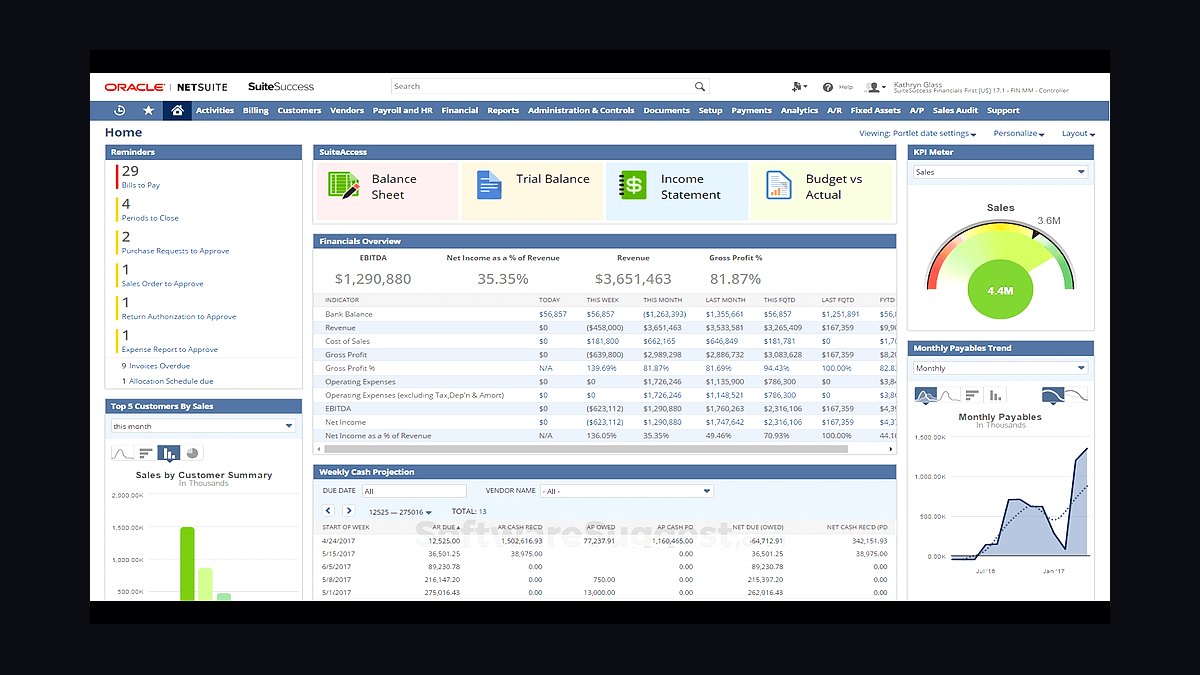
1Oracle NetSuite

Oracle NetSuite ranks first because it is the most widely deployed cloud ERP for mid-market wholesale distributors, with native multi-warehouse inventory, landed cost, and tiered customer pricing in one system of record. Licensing typically runs $100–$400 per user per month depending on modules, and implementation commonly lands between one and three times first-year license cost. It scales from a single location past $100 million in revenue without re-platforming.
It suits distributors with complex pricing rules, multiple entities, or international suppliers who need consolidated financials. The trade-off is cost and implementation time: a focused rollout takes three to six months, and heavier customization slows it further. Compared with Microsoft Dynamics 365 Business Central directly below, NetSuite carries higher licensing but deeper native distribution functionality out of the box.
2Microsoft Dynamics 365 Business Central

Microsoft Dynamics 365 Business Central ranks second for distributors already standardized on Microsoft 365, because it embeds ERP data directly into Excel, Teams, and Power BI without custom connectors. It handles multi-warehouse inventory, lot and serial tracking, and landed cost calculation natively. Per-user licensing sits below NetSuite's typical range, and the Power Platform lowers integration cost for teams without dedicated developers.
It fits mid-market distributors between roughly $10 million and $100 million in revenue that want familiar Microsoft tooling. The trade-off is that advanced warehouse execution still requires a bolt-on WMS, and very high SKU counts can strain native performance. Compared with Oracle NetSuite above, it costs less and integrates better with Microsoft environments but offers shallower native distribution depth.
3Epicor Prophet 21

Epicor Prophet 21 ranks third because it is purpose-built for wholesale distribution rather than adapted from general manufacturing or retail ERP. It ships with native counter sales, kitting, bill-of-materials support, and supplier rebate tracking that generic platforms require customization to match. Deployment is available on-premise or hosted, and it handles industrial parts and electrical distribution workflows that trip up broader ERP suites.
It suits established industrial, electrical, and plumbing distributors with complex kitting and branch operations. The trade-off is a dated interface and a smaller integration ecosystem than NetSuite or Business Central, which slows connections to modern ecommerce and BI tools. Compared with Microsoft Dynamics 365 Business Central above, it offers deeper distribution-specific features but weaker native Microsoft integration.
4Infor CloudSuite Distribution

Infor CloudSuite Distribution ranks fourth for larger distributors that need multi-entity consolidation, complex pricing matrices, and warehouse automation integration at enterprise scale. It is built on Infor OS with embedded analytics and AI, and it connects natively to Infor's WMS and supply chain planning modules. It handles high transaction volumes across many branches and currencies without the performance ceiling smaller ERPs hit.
It suits distributors above roughly $100 million in revenue running multiple divisions or countries. The trade-off is implementation cost and timeline: full rollouts routinely exceed nine months and require dedicated internal project ownership. Compared with Epicor Prophet 21 above, it scales further and integrates better with warehouse automation but costs substantially more and takes longer to go live.
5Acumatica Cloud ERP
Acumatica Cloud ERP ranks fifth because its consumption-based licensing avoids per-user fees, which keeps cost predictable as distributor headcount grows across warehouse, sales, and finance teams. It includes native distribution editions with inventory, purchasing, and CRM modules, plus an open API for connecting WMS and EDI layers. Implementation is typically faster than NetSuite or Infor at comparable scope.
It suits growing distributors between $10 million and $75 million in revenue that want mid-market depth without enterprise pricing. The trade-off is a smaller partner network and fewer prebuilt EDI connectors, so integration work often falls to third-party providers. Compared with Infor CloudSuite Distribution above, it costs far less and deploys faster but supports fewer complex multi-entity and multi-currency scenarios.
6SPS Commerce

SPS Commerce ranks sixth because it is the managed EDI layer most big-box and grocery retailers require distributors to connect through, handling 850 purchase orders, 856 advance ship notices, and 810 invoices without in-house mapping. Onboarding a single retail trading partner typically takes four to eight weeks covering mapping, testing, and certification. Pricing runs per trading-partner connection or per document transaction.
It suits any distributor pursuing or holding a major retail or grocery account, since compliance is a condition of doing business. The trade-off is recurring per-transaction cost that scales with order volume, and limited flexibility for non-standard document formats. Compared with Acumatica Cloud ERP above, it solves a different layer entirely: Acumatica owns transactions, while SPS Commerce translates them for retail partners.
7TrueCommerce

TrueCommerce ranks seventh as a managed EDI and B2B integration provider with strong grocery, retail, and industrial coverage, offering document mapping, testing, and ongoing spec maintenance as retailers update requirements. It bundles EDI with product information management and supplier enablement, which reduces the number of vendors a distributor must coordinate. Pricing is typically per trading partner plus transaction volume.
It suits mid-market distributors that need EDI compliance but lack internal mapping staff, particularly in food and grocery where document specs change frequently. The trade-off is less brand recognition among the largest retailers than SPS Commerce, which can slow partner approval. Compared with SPS Commerce above, it offers broader bundled modules but a narrower footprint in big-box retail onboarding.
8Cin7 Core

Cin7 Core ranks eighth because it delivers inventory, order management, and light manufacturing in one platform at a price point smaller wholesalers can absorb, with implementation measured in weeks rather than months. It supports multi-warehouse stock, barcode scanning, and B2B ordering, and it connects to common accounting systems and sales channels through prebuilt integrations. Monthly cost sits well below mid-market ERP licensing.
It suits single-location or two-location wholesalers under roughly $10 million in revenue with straightforward inventory. The trade-off is shallow support for landed cost, tiered pricing, and complex lot tracking, which forces manual workarounds as the business scales. Compared with TrueCommerce above, it addresses the inventory and order layer rather than EDI, so most users eventually add a separate EDI provider.
9Fishbowl Inventory
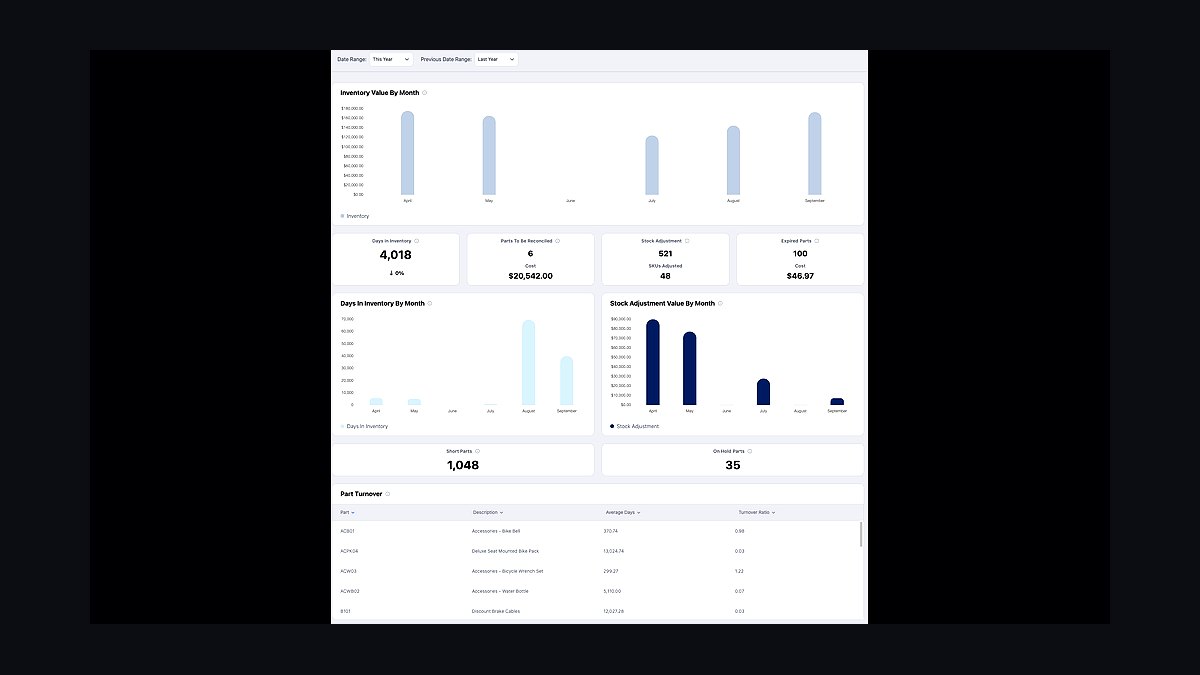
Fishbowl Inventory ranks ninth because it gives small and mid-size distributors real inventory control, including multi-location stock, barcode scanning, and work orders, at a fraction of cloud ERP cost. It integrates directly with QuickBooks for accounting, which lets businesses keep familiar financials while replacing spreadsheet inventory tracking. Licensing is available as a one-time purchase or subscription.
It suits distributors between $2 million and $20 million in revenue that have outgrown QuickBooks inventory but cannot justify full ERP implementation. The trade-off is limited native EDI, no true landed cost calculation, and an on-premise heritage that complicates remote warehouse access. Compared with Cin7 Core above, it offers deeper work-order support but weaker native ecommerce and B2B portal integration.
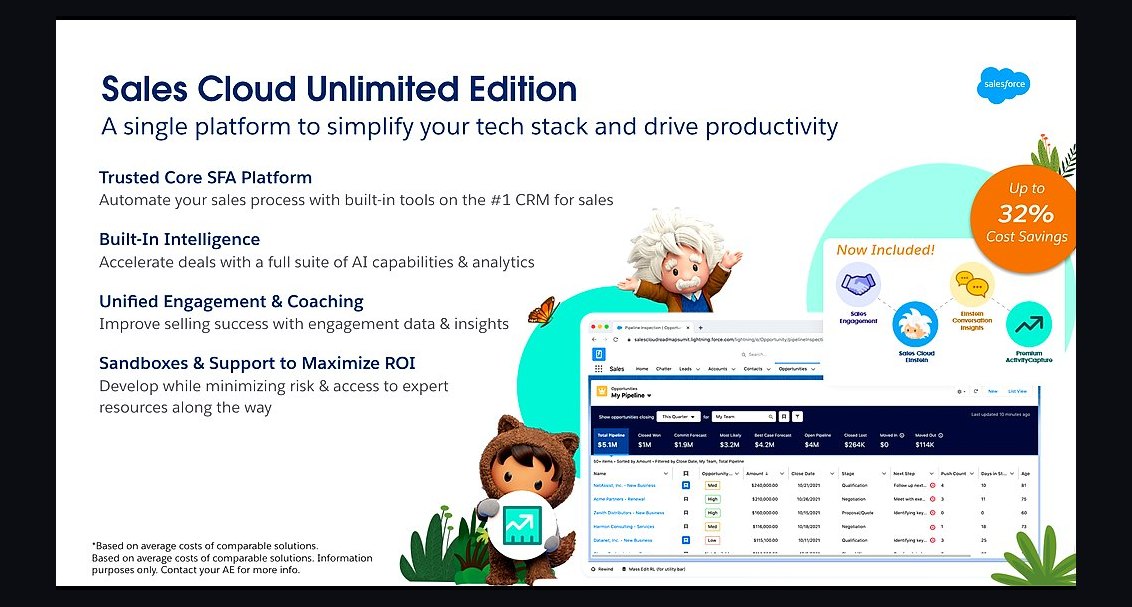
10Salesforce Sales Cloud
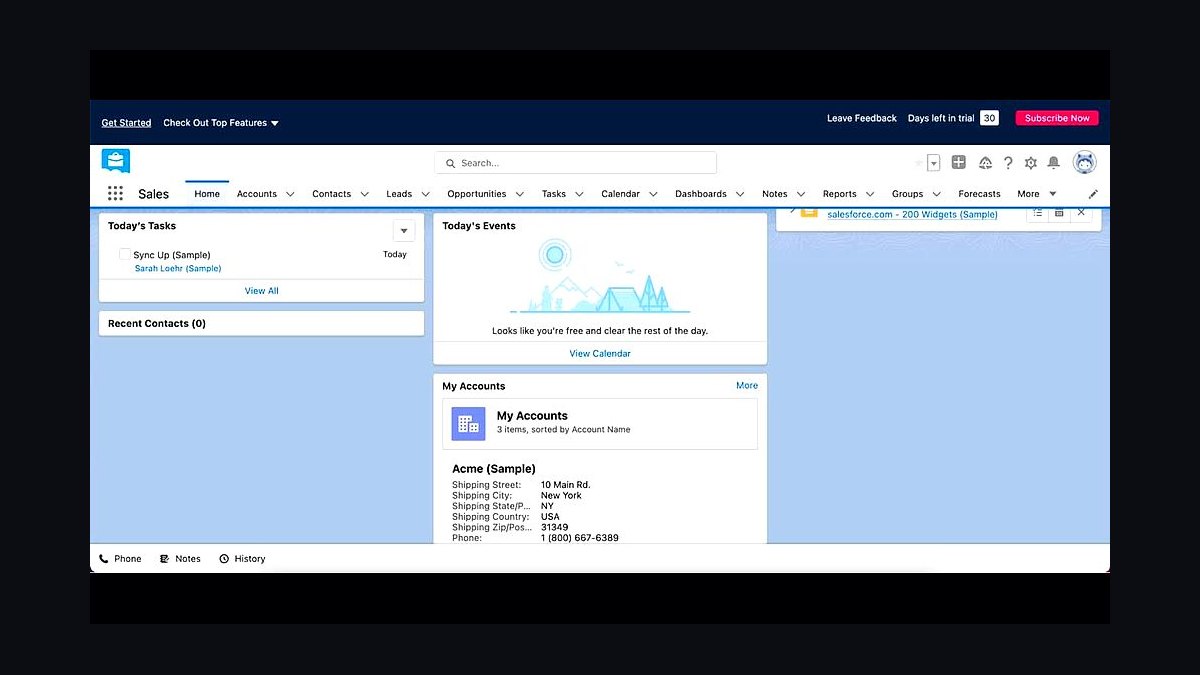
Salesforce Sales Cloud ranks tenth because it gives wholesale distributors a CRM layer that captures customer buying patterns, quote history, and reorder timing once ERP and EDI data are clean. It integrates with NetSuite, Business Central, and Acumatica through AppExchange connectors, letting sales teams see order history without logging into the ERP. Per-user licensing starts at the lower tiers and scales with automation and analytics needs.
It suits distributors with field or inside sales teams managing dozens to hundreds of repeat accounts where reorder timing drives revenue. The trade-off is cost per seat and configuration effort, and it delivers no inventory, order, or warehouse function on its own. Compared with Fishbowl Inventory above, it addresses the customer relationship layer rather than stock control, so it complements rather than replaces the picks above it.
How we ranked these
We ranked tools on distribution-specific fit: multi-warehouse inventory visibility, lot and serial tracking, landed-cost calculation, tiered and contract pricing, EDI document support (850/810/856), and native WMS depth. Weighting favored total cost of ownership over three years, implementation timeline realism, and integration breadth, since disconnected systems erode wholesale margins fastest. Vendor scale, analyst presence, and documented mid-market deployments carried moderate weight; feature checklists alone did not.
We deliberately ignored brand recognition, marketing spend, and generic small-business accounting features that do not apply to wholesale. We excluded retail POS platforms, consumer ecommerce builders, and tools lacking purchase-order or multi-location inventory logic. We also discounted vendor-published ROI claims and awards, because they are unverifiable and rarely reflect a distributor's actual freight, duty, and chargeback reality. Pricing was treated as a range, not a ranking factor.
What to look for
What matters most is whether the platform already encodes your category's rules: expiration and lot tracking for food, kitting and BOM for industrial parts, chargeback handling for grocery. Then check EDI readiness with your specific retail partners, because onboarding a big-box account is a compliance gate, not a feature. Integration depth and a named implementation partner in your region usually outweigh a lower license price.
The mistake most buyers make is choosing software by demo polish or peer brand familiarity, then discovering mid-implementation that native WMS is too shallow or landed cost is missing. A close second is budgeting licenses but not integration middleware, EDI mapping, or a part-time systems administrator. Finally, skipping data cleanup before migration just moves duplicate SKUs and stale pricing into more expensive software.
Related questions
What ERP is best for a small distribution company?
For companies under $10 million in revenue, Acumatica, Cin7 Core, and Microsoft Dynamics 365 Business Central are commonly chosen for lower implementation cost and distribution-specific inventory features without full enterprise pricing. NetSuite and Epicor Prophet 21 become more attractive once multi-entity accounting, complex pricing, or heavy EDI volume enters the picture.
Do wholesale businesses need a separate WMS from their ERP?
Only once pick volume, multiple warehouses, or complex pick paths make the ERP's native inventory module too shallow. Many smaller distributors run adequately on ERP-native inventory alone. Add a dedicated WMS when labor tracking, directed putaway, or barcode-driven picking becomes a bottleneck the ERP cannot resolve without customization.
How long does EDI onboarding take with a new retail partner?
EDI onboarding with a single retail trading partner typically takes four to eight weeks, covering document mapping, test transactions, and certification before live orders flow. Grocery and big-box partners often require longer testing windows and chargeback compliance checks. Budget additional time for each additional partner and for ongoing spec changes.
Is a B2B ecommerce portal worth it for a wholesale distributor?
Yes for distributors with many repeat-order customers, because self-service reordering cuts phone and email order entry costs. It is only worth launching after inventory accuracy is reliable enough to prevent oversells and cancelled orders. Launching a portal against inaccurate stock damages the customer relationships it was meant to strengthen.
Can a wholesale business run on QuickBooks alone?
QuickBooks can work for very small, single-location wholesalers with simple inventory, but it lacks multi-warehouse tracking, landed cost, and tiered pricing. Most businesses outgrow it once they add a second location or a major retail account. At that point, migrating to a distribution-specific ERP is usually cheaper than bolting add-ons onto QuickBooks.
What is the difference between ERP and WMS in a distribution stack?
ERP manages business transactions such as orders, invoices, purchasing, and accounting. WMS manages the physical warehouse operation, including picking, packing, bin locations, and labor. Larger distributors run both, connected through an integration layer, because neither system performs the other's job well at scale.
How much should a distribution company budget for a new software stack?
Budgets vary by size and module count, but first-year total cost of ownership commonly runs from the low tens of thousands for a lightweight platform to several hundred thousand for a full mid-market ERP plus WMS and EDI rollout. Implementation typically costs one to three times first-year license fees.
Should a distributor build custom software instead of buying an ERP?
Custom-built software is rarely worth it for core ERP or WMS functions, since established platforms already encode decades of distribution-specific workflow. Custom development is better reserved for a genuinely unique competitive process, not standard order-to-cash operations. Maintaining custom code through tax, EDI, and carrier changes gets expensive fast.
FAQ
What is the minimum software stack a distribution business needs to operate?
At minimum, a distributor needs accounting or ERP software to manage purchase orders, sales orders, and inventory in one place, plus some form of barcode or lot tracking once SKU count grows past a few hundred items. Everything else, including WMS, EDI, and CRM, layers on as volume and complexity increase.
What software do big-box retailers require distributors to use?
Big-box and grocery retailers generally require EDI compliance for documents like the 850 purchase order, 856 advance ship notice, and 810 invoice, rather than mandating a specific internal system. Distributors therefore need an EDI-capable stack, not a particular brand of software, to hold those accounts.
How does landed cost calculation work inside a distribution ERP?
Landed cost rolls freight, duty, brokerage, and insurance into the unit cost of imported or inbound goods, so margin reporting reflects true cost rather than product cost alone. Distribution-specific ERPs automate this allocation across shipments and SKUs; generic accounting platforms usually require manual journal entries that drift out of date.
What KPIs should a wholesale distributor track monthly?
Common monthly metrics include gross margin by customer and SKU, inventory turns, fill rate, order accuracy, days sales outstanding, and freight cost as a percentage of revenue. Tracking these inside the ERP rather than spreadsheets keeps the numbers consistent and lets managers catch margin erosion within weeks instead of quarters.
How do EDI requirements differ between grocery and industrial retail partners?
Grocery partners typically demand tighter delivery windows, pallet and label specifications, and chargeback enforcement, so EDI accuracy matters more. Industrial retail partners often focus on advance ship notices and invoice matching. Both require 850, 856, and 810 documents, but testing rigor and compliance penalties differ significantly.
What CRM works best for B2B wholesale sales teams?
Wholesale teams generally do best with a CRM that integrates natively with the ERP, so quotes, pricing, and order history live in one place. HubSpot and Salesforce are common, but the deciding factor is integration depth with your ERP, not the CRM brand. Disconnected CRMs force reps back into spreadsheets.
How should a distributor price freight into customer invoices?
Most distributors either build freight into delivered pricing by customer class or pass it through as a separate line tied to carrier rates. The ERP should support both models and apply them consistently, because ad hoc freight decisions quietly destroy margin and create disputes when customers audit invoices.
What is the ROI timeline for implementing a WMS?
Most mid-market distributors see WMS payback within twelve to twenty-four months, driven by higher pick accuracy, reduced labor per order, and fewer mis-shipments. Payback depends heavily on pre-implementation inventory accuracy; a WMS deployed against bad data automates errors rather than eliminating them.
When should a distributor move from a lightweight platform to a mid-market ERP?
The trigger is usually a second warehouse, lot or serial tracking for compliance, tiered pricing across dozens of accounts, or a major retail EDI program. These requirements scatter across spreadsheets on lightweight platforms. Moving before the workarounds harden avoids a costly re-platform eighteen months later.
How much does EDI software cost for a wholesale distributor?
Managed EDI providers typically charge per trading-partner connection or per document transaction, often with a monthly platform fee. Costs scale with partner count and document volume, which makes managed EDI more predictable than building in-house mapping. Budget separately for onboarding and testing each new retail partner.
Sources
- https://www.netsuite.com/portal/resource/articles/erp/distribution-erp.shtml
- https://www.oracle.com/erp/what-is-erp/
- https://www.gartner.com/en/information-technology/glossary/erp-enterprise-resource-planning
- https://www.epicor.com/en-us/erp-software/prophet-21/
- https://www.microsoft.com/en-us/dynamics-365/products/business-central
- https://www.spscommerce.com/resources/what-is-edi/
- https://www.truecommerce.com/resources/what-is-edi
- https://www.g2.com/categories/distribution-erp
- https://www.softwareadvice.com/inventory-management/distribution-comparison/
Related on PULSE
This page will be disappearing soon. Save it to your device for $1 — or read it free while it is here.
@Kory-White- · if Venmo asks, the last 4 of my number are 2012
This page is gone.
This one is off the shelf now. $1 keeps it on your phone for good — the whole page, pictures and diagrams included.
 pulse-tech-stacksTop 10 Best Tech Stack Tools for Tire Shops in 2027
 pulse-tech-stacksTop 10 Best Tech Stack Tools for Staffing Agencies in 2027
 pulse-tech-stacksTop 10 Best Tech Stack Tools for Independent Bakeries in 2027
 pulse-tech-stacksTop 10 Best Tech Stack Tools for Software Development Agencies in 2027
 pulse-tech-stacksTop 10 Best Tech Stack Tools for Hair Salons in 2027
 pulse-tech-stacksTop 10 Best Tech Stack Tools for AI Legal Tech Companies in 2027
 pulse-tech-stacksTop 10 Best Tech Stack Tools for B2B SaaS Companies in 2027
 pulse-tech-stacksTop 10 Best Tech Stack Tools for Tree Services in 2027
 pulse-tech-stacksTop 10 Best Tech Stack Tools for Garden Centers and Nurseries in 2027
 pulse-tech-stacksTop 10 Best Tech Stack Tools for Small Pest Control Companies in 2027