

Best Cellular and Wireless Carrier in Hawaii in 2027
 Curated byKory White · Fractional CRO · Maryland
Quality
Certified
For most people in Hawaii in 2027, T-Mobile is the best overall cellular and wireless carrier — it pairs the widest mid-band 5G footprint across Oahu, Maui, Kauai, and the Big Island with unlimited plans starting near $50/month. Verizon wins for rural and remote reliability on Molokai, Lanai, and the Big Island interior, at a higher price.
The outcome you should expect
The honest outcome of switching carriers in Hawaii is not "better everywhere." It is "better in the specific places you spend your hours," and those places are unusually decisive here because the state's terrain does more damage to a signal than almost anywhere else in the country. Hawaii is not one coverage market. It is a chain of volcanic islands where a single ridge can drop a strong mid-band 5G signal to nothing in under a mile of driving, and where the populated coastal ring around each island behaves like a completely different network from the interior.
So set expectations in terms of a coverage profile rather than a winner. If your week is Honolulu, Pearl City, Kapolei, Kahului, Kihei, Lihue, Kailua-Kona, and Hilo — the urban and suburban cores — you should expect fast, consistently usable mid-band 5G from T-Mobile, with real-world downloads commonly landing in the low-to-mid hundreds of Mbps and latency low enough that video calls, cloud CRM tools, and streaming all behave like mainland service. If your week includes Hana, Volcano, Waipio Valley, upcountry Molokai, Lanai outside Lanai City, or the Hamakua Coast, you should expect the ranking to invert: Verizon's LTE footprint plus low-band 5G is what actually keeps a call up, even when the throughput number on a speed test looks unimpressive.
The practical outcome to plan for is a two-tier result. Tier one is peak experience — how fast the network feels when you have bars. Tier two is floor experience — what happens when you have one bar in a valley and need to send a photo, hit a dispatch app, or make an emergency call. Most people buy on tier one and then suffer on tier two. In Hawaii, tier two is what determines whether you like your carrier a year later.
You should also expect a price outcome that is roughly flat across the big three at the flagship tier, somewhere in the $50–$80/month range for a single unlimited line before autopay discounts, taxes, and device financing. The meaningful savings live one layer down, in cable-bundled MVNOs and prepaid brands riding the same towers. That is where a household can cut a bill by 30–50% without changing which radio network their phone actually touches — which is the single most underused lever in this market.
Finally, expect that the answer is not permanent. Carrier rankings in island markets move when a single tower site, a fiber backhaul upgrade, or a spectrum deployment lands. A ranking that is correct in early 2027 can be wrong for your specific valley by late 2027. Treat this as a decision framework with a current answer attached, not as a fact you memorize.
What drives that outcome
Four forces decide who wins a given address in Hawaii, and they interact in ways that mainland coverage advice does not prepare you for.
Spectrum band, not brand. The frequency a carrier uses is the single largest driver. Low-band spectrum travels far and penetrates terrain and building walls, but carries modest throughput. Mid-band is the sweet spot — it carries real capacity and still propagates a few miles under good conditions. High-band millimeter wave delivers extraordinary peak speeds over a block or two and is effectively irrelevant outside dense urban cores like Waikiki and downtown Honolulu. T-Mobile's advantage in Hawaii is fundamentally a mid-band deployment advantage. Verizon's advantage in remote areas is fundamentally a low-band and LTE-site-density advantage. Once you think in bands rather than logos, the map stops being confusing.
Terrain and line of sight. A ridge is an absolute obstruction to mid-band. This is why "98% of populated areas covered" and "no service at my house" can both be true — population is concentrated on the coastal ring where towers sit, and the interior valleys that hold a few thousand people are radio shadows. Kalihi Valley, Waipio, Hana's back road, and the Saddle Road corridor's side spurs each demonstrate this. Elevation cuts both ways: a house upcountry on Haleakala with a clear ocean-facing view can pull a strong signal from a tower ten miles away, while a house a hundred feet lower on the wrong side of the slope gets nothing.
Backhaul and capacity. A tower is only as good as the fiber or microwave link feeding it. Island backhaul is expensive, and inter-island capacity ultimately rides submarine cable. This is why speeds degrade in predictable patterns — a resort corridor at 4pm on a cruise-ship day, a stadium event, a Kona festival weekend. Congestion, not coverage, is the more common cause of "my service got bad" complaints in urban Hawaii. Premium-data allotments on unlimited plans exist precisely to ration this: once you exceed your plan's premium tier, you get deprioritized behind other customers during congestion, which feels identical to bad coverage but is not.
Roaming and network-of-record. Many brands are not networks. An MVNO buys wholesale access to a host network, so a cable-branded plan riding Verizon delivers Verizon's coverage, sometimes with a lower priority tier. This matters enormously in Hawaii because the cheapest path to the best rural coverage is frequently a resold plan, not the flagship one. Conversely, a niche regional carrier operating its own rural sites may beat the nationals in one specific district and be entirely absent on another island.

Benchmarks and realistic ranges
Numbers help only when you know which number you are reading. Here are the ranges that hold up in island conditions, and how to interpret them.
Urban download throughput. In Honolulu, Kahului, and Lihue town centers, expect flagship mid-band 5G to land somewhere in the 150–250 Mbps range on a typical weekday, with bursts higher and dips lower during peak. Anything above roughly 100 Mbps is functionally indistinguishable for phone use — it streams 4K, uploads photos instantly, and runs video conferencing without stress. Chasing a headline gigabit number in a millimeter-wave hotspot is entertainment, not a purchasing criterion.
Rural download throughput. In Hana, Volcano, the Hamakua Coast, and rural Molokai, plan for 10–50 Mbps on a good day and single digits in the worst pockets. The important benchmark rurally is not speed, it is *uplink and call stability*. A 6 Mbps connection that never drops beats a 40 Mbps connection that vanishes twice per drive.
Latency. Expect roughly 20–50 ms on a healthy 5G connection in urban Hawaii, with rural LTE running higher. Because a meaningful share of internet destinations are on the mainland or overseas, add transpacific transit time for anything not cached locally. This is why a Hawaii connection can post an excellent local speed test and still feel slightly sluggish loading a mainland-hosted web app — the bottleneck is distance, not your carrier.
Price ranges. Single-line flagship unlimited plans across the major carriers cluster in the $50–$80/month band before taxes and fees, with autopay typically required for the advertised rate. Multi-line family pricing drops the per-line cost substantially — four lines commonly land in the $120–$160/month total range, which is where the real value is. Cable-bundled MVNO plans for existing home-internet customers frequently run in the $30–$50/month per-line range on the same host network. Prepaid brands sit in a similar band but with tighter video resolution caps and hotspot throttles.
Premium data allotments. Flagship plans typically bundle somewhere in the 30–100 GB range of premium (non-deprioritized) data, with mid-tier plans lower. If you regularly stream on cellular, tether a laptop, or work from a truck, this number matters more than the headline speed. Under about 15 GB/month of actual usage, the allotment is irrelevant and you are overpaying for it.
Hotspot. Flagship plans generally include a meaningful high-speed hotspot bucket before dropping to a slow fallback; cheaper plans cap hotspot throughput outright, often low enough that it is unusable for real work. If tethering is part of your job — field service, real estate showings, contractors moving between job sites on Oahu — treat hotspot allowance as a primary spec, not a footnote.
A useful adjacent benchmark: fixed wireless. In parts of Hawaii, 5G home internet delivered over the same cellular network competes directly with cable and DSL, typically in the $40–$70/month range with no contract. Where mid-band coverage is strong, it is a legitimate primary connection; where it is not, it is a poor substitute. The diagnostic is the same one you use for phone service — check the band and the congestion profile at your exact address, not the island.
Risks, edge cases, and failure modes
The coverage map is a model, not a measurement. Every carrier map is a propagation prediction, smoothed and generalized. In flat states that model is roughly right. In Hawaii, the terrain resolution required to be accurate is finer than the map's resolution, so maps systematically overstate coverage in valleys and understate it on ridges. Never switch on the strength of a map alone.
Deprioritization masquerading as bad coverage. If service is great at 10am and unusable at 6pm in the same spot with the same bars, you are congested and deprioritized, not uncovered. The fix is a higher premium-data tier or a different host network, not a new phone. Diagnose by checking bars and network type alongside the speed test — full bars plus slow speeds equals congestion; low bars plus slow speeds equals coverage.
Band mismatch on older or imported phones. A phone bought overseas, or an older model, may lack the specific bands a carrier relies on locally. The device will show service and still underperform badly. Check band support against the carrier's requirements before assuming the network is at fault. This trips up visitors and new residents constantly.
Inter-island travel and the ocean gap. Coverage between islands is not continuous. On a ferry, small-plane hop, or boat trip, expect to lose service in the channel and regain it approaching the next island. Do not plan on connectivity mid-channel. Download maps, boarding passes, and anything work-critical before departure — this is the single most common avoidable failure for people new to island life.
Emergency and resilience considerations. Hawaii's hazard profile — hurricanes, flooding, wildfire, tsunami, volcanic activity — means the failure mode that matters most is the one during an outage. Towers run on backup power for a limited window; extended grid failure degrades service progressively. Practical mitigations: keep satellite-based emergency messaging enabled on a compatible phone, keep a charged battery bank, know which nearby location holds signal, and if your household depends on connectivity for medical or work reasons, consider two lines on two different host networks. Redundancy across networks is worth more than an upgrade within one network.
MVNO limitations that show up only under stress. Resold plans typically sit at a lower priority tier than the host carrier's own postpaid customers. Under normal conditions this is invisible. During a stadium event, a festival, or a disaster surge, the MVNO line degrades first. If the line is a backup for emergencies, buy it on the host network directly.
Contract and device-financing lock-in. The largest real switching cost is usually not the plan, it is the remaining balance on a financed device and the promotional credits that vanish if you leave early. Multi-year credits are effectively a soft contract. Calculate the total remaining obligation before treating a switch as free.
Business and multi-site edge cases. Organizations running field teams across islands face a different calculus than consumers. Priority service tiers for public safety and certain government or first-responder roles exist and materially change reliability during congestion. Fleet and dispatch operations should evaluate per-route coverage along actual driving paths rather than by island, because a route that crosses a saddle or a windward valley will have a predictable dead segment that needs an offline-capable app design.

Vacation-rental and hospitality edge cases. Property managers relying on cellular for smart locks, cameras, and thermostats at remote properties should assume the weakest tier of service, not the average. A device that reconnects poorly after a brief outage will generate support calls forever. Choose the network with the best floor at that address, and prefer hardware that tolerates intermittent connectivity.
A practical rollout plan
Switching carriers well is a two-week process, not an afternoon. Here is the sequence that avoids regret.
Step one — map your actual life, not your island. Write down the six to ten places you genuinely spend time: home, work, the school, the gym, the trailhead, the in-laws upcountry, the commute route. Coverage at those coordinates is the only thing that matters. An island-level ranking is a starting hypothesis.
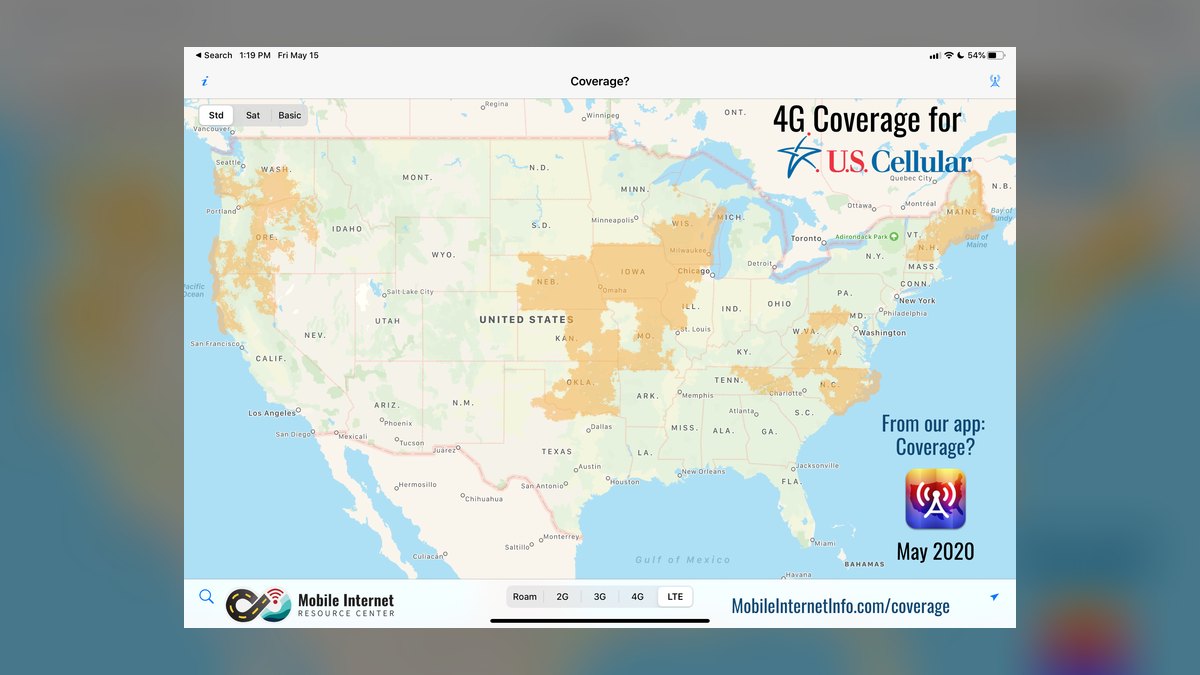
Step two — check maps as a filter, then verify. Pull up each carrier's official coverage map and enter exact addresses, not ZIP codes. Use the maps to eliminate obviously bad options, not to pick a winner. Cross-reference with independent crowd-sourced coverage and speed data, which reflects measured device experience rather than predicted propagation.
Step three — ask locally. Neighbors on your street, in your valley, on your block are the highest-quality data source available and it costs nothing. Neighborhood groups, local forums, and simply asking coworkers who live nearby will surface dead zones no map shows.
Step four — trial before you port. Use a free or cheap trial line — most major carriers offer a way to test their network on a compatible phone via eSIM without touching your existing number. Run it for a week through your real routine, including the commute and the weekend trip. Record where it fails. This step alone prevents the majority of bad switches.
Step five — verify device compatibility. Confirm your phone supports the bands the new carrier depends on locally, and that it supports the voice-over-LTE and Wi-Fi calling features you will rely on. Wi-Fi calling deserves special attention in Hawaii: a home with weak cellular but solid home internet can be entirely fixed by Wi-Fi calling, which turns a coverage problem into a non-problem.
Step six — price the whole household, not the line. Run the numbers three ways: flagship postpaid, multi-line family, and cable-bundled MVNO on the same host network. Include taxes, fees, autopay requirements, activation charges, and any remaining device balance. The gap between the naive choice and the optimized one is often several hundred dollars a year.
Step seven — port during business hours, keep the old line alive. Never cancel the old service yourself; porting the number pulls it over automatically, and canceling first can strand the number. Port on a weekday morning when support is staffed. Keep the old SIM in a drawer until you have confirmed calls, texts, two-factor codes, and voicemail all work on the new line.
Step eight — validate over 30 days, then decide. Most carriers have a short return or trial window. Use it deliberately: test the valley, test the commute, test peak-hour congestion downtown, test a call from the one place you always lose service. If it fails your floor test, reverse the decision inside the window rather than living with it.
Related questions
Does the best carrier differ by island?
Yes, materially. Oahu's dense coverage makes most carriers acceptable, so price and plan features decide. Maui and Kauai split between strong coastal service and weak interior. The Big Island's size and terrain create the widest gaps, and Molokai and Lanai reward whichever network has the most local sites.
Is a cheaper MVNO worth it if it uses the same towers?
Usually yes for typical users. You get the host network's coverage at a lower price. The trade-offs are lower priority during congestion, tighter video resolution and hotspot caps, and thinner customer support. For a primary emergency line, buy directly from the host network instead.
Will my mainland plan work in Hawaii without extra charges?
Hawaii is a U.S. state, so major postpaid plans include it in domestic coverage at no surcharge. Some budget prepaid and international plans have quirks. Confirm before you travel, and check whether your specific plan's hotspot and premium-data terms differ.
Does 5G actually matter, or is LTE enough?
For most phone use, well-provisioned LTE is sufficient. 5G matters when you need capacity — crowded areas, tethering, large uploads, or a 5G home-internet product. In rural Hawaii, LTE reliability beats 5G speed nearly every time, so do not let a 5G badge drive the decision.
What should I do if no carrier covers my house?
Lean on Wi-Fi calling over home internet, which fixes indoor coverage completely when broadband exists. Where broadband does not, evaluate satellite messaging for emergencies, a cellular signal booster if a usable outdoor signal exists nearby, and a second line on a different network for redundancy.
FAQ
How do I check coverage for my exact address rather than my island?
Enter the full street address into each carrier's official coverage map instead of a ZIP code, then cross-reference with independent crowd-sourced measurement data. Maps are propagation predictions and overstate valley coverage in Hawaii, so treat them as a filter and confirm with a real trial line or a neighbor's experience before porting.
Why is my service fast in the morning and terrible in the evening?
That is congestion and deprioritization, not coverage. When many devices share a tower, customers on lower-priority tiers get throttled behind others. Full signal bars plus slow speeds is the signature. Fix it with a plan carrying a larger premium-data allotment, or move to a host network with more local capacity.
Should I pick a plan based on speed or on reliability?
Reliability, in almost every Hawaii scenario. Above roughly 100 Mbps, extra speed is imperceptible on a phone. A connection that holds a call through a valley or on a windward road is worth far more than a higher peak number in a place you already have good service.
Is 5G home internet a real alternative to cable in Hawaii?
Where mid-band coverage is strong and congestion is manageable, yes — it is competitive on price with no contract and installs in minutes. Where coverage is marginal, it will disappoint. Test it at your address during evening peak hours before canceling an existing wired connection.
What is the single best way to cut a Hawaii wireless bill?
Move the household to multi-line pricing, or to an MVNO riding the same host network. Per-line cost drops sharply with additional lines, and cable-bundled plans for existing home-internet subscribers routinely undercut flagship pricing while delivering the identical radio network underneath.
What should I do about connectivity during a hurricane or extended outage?
Assume degraded service. Keep a charged battery bank, enable satellite emergency messaging if your phone supports it, download offline maps in advance, and identify a nearby location that historically holds signal. Households dependent on connectivity should keep two lines on two different networks for redundancy.
Sources
- FCC National Broadband Map — mobile coverage by address
- Ookla Speedtest — network performance data and reports
- T-Mobile coverage map
- Verizon coverage map
- AT&T wireless coverage map
- FCC consumer guide to wireless service
- Consumer Reports cell phone service buying guide
- PCMag wireless carrier coverage and speed testing
- Hawaii Emergency Management Agency preparedness resources
- FirstNet public safety network overview
Related on PULSE
This page will be disappearing soon. Save it to your device for $1 — or read it free while it is here.
@Kory-White- · if Venmo asks, the last 4 of my number are 2012
This page is gone.
This one is off the shelf now. $1 keeps it on your phone for good — the whole page, pictures and diagrams included.
 telcoWhat is the best backup option if my home internet goes down in 2027?
 telcoAT&T vs T-Mobile: which is better in 2027?
 telcoHow does international roaming work and how do I avoid huge bills in 2027?
 telcoBest Cellular and Wireless Carrier in Boise in 2027
 telcoIs a prepaid carrier as good as Verizon, AT&T, or T-Mobile in 2027?
 telcoBest Carriers for Rural Coverage in 2027
 telcoIs carrier phone insurance worth it in 2027?
 telcoHow does mobile hotspot and tethering work in 2027?
 telcoHow do I test a carrier's coverage before fully switching in 2027?
 telcoWhy are taxes and fees so high on my phone bill in 2027?