


Best Satellite Internet Providers in 2027
Quality
Certified
Starlink is the best satellite internet provider in 2027 for most households, combining low-Earth-orbit speeds up to 220 Mbps with latency under 25 ms and coverage spanning 60+ countries. HughesNet Fusion is the strongest budget alternative, pairing geostationary satellite service with cellular backhaul for households in reliable 4G/5G zones that don't need gaming-grade responsiveness or heavy data allowances.
The Two Paths: Low-Earth-Orbit vs Geostationary-Hybrid Satellite Internet
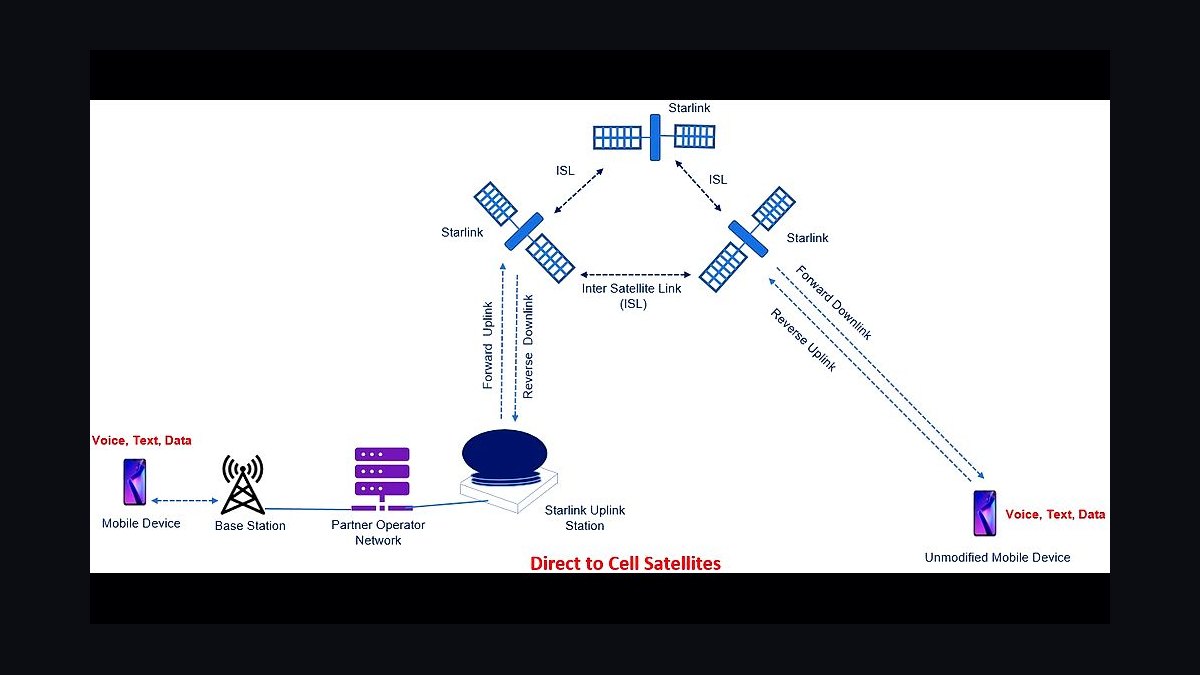
Every satellite internet decision in 2027 collapses into a choice between two architectures, and understanding which bucket a provider falls into tells you almost everything about what to expect before you look at a single price tag. The first path is low-Earth-orbit (LEO), where thousands of small satellites orbit roughly 500–600 km above the earth and hand data between each other and ground stations in milliseconds. Starlink, Amazon's Project Kuiper, and OneWeb (now under Eutelsat Group) all live here. Because the satellites are close to the ground, round-trip latency sits in the 15–30 ms range — close enough to fiber that video calls, cloud-based point-of-sale systems, and even competitive gaming are usable. The tradeoff is capital intensity: LEO constellations need thousands of satellites to maintain continuous coverage, which is why only a handful of companies with deep-pocketed backers (SpaceX, Amazon, Eutelsat) have managed to field one at scale.
The second path is geostationary (GEO), where a much smaller number of satellites sit in a fixed orbital slot roughly 35,786 km above the equator. HughesNet and Viasat built their businesses on this model, and in 2027 both have evolved it rather than abandoned it. HughesNet's Fusion plans blend a GEO satellite link with terrestrial 4G/5G backhaul, so routine browsing and short requests ride the faster cellular path while bulk downloads fall back to satellite. Viasat's ViaSat-4 constellation pushes the pure-GEO model further with high-capacity Ka-band spot beams, delivering 100–150 Mbps to suburban-fringe and rural customers who need multiple simultaneous streams more than they need low latency. GEO's physics mean a single round trip has to cover roughly 71,000 km of vertical distance, so latency lands in the 50–80 ms range for hybrid designs and can run far higher on legacy GEO-only service — HughesNet's non-Fusion legacy plan still posts 600–700 ms, which rules out anything interactive.

A useful way to frame the choice for a business evaluating options for a remote office, a field crew, or a work-from-home policy: LEO is the right default whenever the workload is interactive (video calls, VPN-tunneled applications, real-time dashboards), while GEO-hybrid is defensible whenever the workload is bursty and tolerant of delay (email, batch uploads, overnight syncs, point-of-sale settlement). Treating satellite internet procurement the same way you'd treat any other vendor selection — mapping workload characteristics to the provider's underlying architecture before comparing price — avoids the most common mistake buyers make, which is choosing on sticker price alone and discovering the latency problem only after a video call drops in the field.
How to Decide Between Them
The decision tree above collapses to three questions a buyer should answer in order, and most of the regret in satellite purchases comes from skipping straight to price before answering the first one. Question one is whether the workload is latency-sensitive. If the use case includes video conferencing, VoIP, VPN-based remote access, or any real-time application, LEO is not a preference — it is close to a requirement, because GEO's orbital distance imposes a latency floor that no amount of spending removes. Question two, asked only once LEO is confirmed as the right family, is budget and mobility: a fixed residential or office location with steady usage favors the standard Starlink or Kuiper plan, while a mobile or seasonal use case (an RV, a construction site that moves, a seasonal rental) favors a portable plan like Starlink Mini, which trades some peak speed for a smaller dish and lower power draw.

Question three only matters once latency sensitivity has ruled out LEO. If a site already has decent cellular coverage nearby, a hybrid plan like HughesNet Fusion captures most of the benefit of terrestrial speed at a fraction of LEO pricing, because the hybrid architecture automatically offloads routine traffic to the cellular link and reserves satellite capacity for overflow. If cellular coverage is weak or absent and the household needs multiple simultaneous streams (several people working or streaming at once), Viasat's higher-capacity spot beams and more generous soft-cap data policy outperform HughesNet's harder caps. Legacy GEO-only service remains the last-resort branch — appropriate only when the budget genuinely cannot stretch past $40–50 a month and the only use case is email and light browsing, because 600+ ms latency makes anything else unworkable regardless of advertised download speed.
The Numbers Behind Each Option
The headline speed number on a provider's homepage is the least useful figure for comparison, because it rarely reflects the number that determines whether a household or business is actually satisfied: effective throughput during peak hours, latency under load, and what happens after the data allowance is exhausted. Starlink's residential plan runs $120/month with a $599 hardware fee, delivering 50–220 Mbps download and 10–25 Mbps upload with latency consistently under 25 ms; its Priority plan steps up to $250/month for 40 GB of prioritized data that resists the congestion Starlink itself reports in-app during oversubscribed peak windows. A mobile-oriented Starlink Mini plan runs $150/month with a $299 hardware fee, delivering 25–100 Mbps with 50 GB of priority data before falling back to a still-usable 5–20 Mbps deprioritized tier.
HughesNet Fusion starts at $49.99/month for 15 GB of high-speed data and scales to $149.99/month for 100 GB, with 25–100 Mbps download, 3–10 Mbps upload, and 50–80 ms latency. Its Fair Access Policy throttles speeds to 1–3 Mbps once the allowance is exhausted, which is the single most important number to communicate to a household used to unlimited terrestrial broadband — a 100 GB cap disappears quickly under video calls and streaming combined. The HT3000 modem carries a $99.99 install fee and a two-year lease commitment. HughesNet's non-Fusion legacy GEO plan is the cheapest satellite option on the market at $39.99/month, but the combination of a 10 GB cap and 600–700 ms latency confines it to email and the lightest possible browsing.
Viasat's ViaSat-4 plans range from $69.99/month for 50 GB to $199.99/month for 300 GB, with 100–150 Mbps download, 5–10 Mbps upload, and 40–60 ms latency — fast enough for video calls but not for competitive gaming. Its Unlimited Data option at $149.99/month deprioritizes rather than hard-caps traffic past 150 GB, which in practice means slower but uninterrupted service rather than a wall. Amazon's Project Kuiper, newer to the consumer market, charges $99/month for 100 GB (a $299 terminal) or $199/month for a 1 TB Pro tier, with 100–400 Mbps download, 20–50 Mbps upload, and sub-20 ms latency thanks to optical inter-satellite links that route traffic between satellites before touching the ground — but availability is still confined to roughly 30°N–45°N latitude, so it is not yet a nationwide option. OneWeb's enterprise-first consumer resale pricing ($150–300/month through carriers like AT&T) reflects its focus on business and government customers rather than households, and buyers should expect a reseller relationship rather than direct self-install.
Rolling Out Satellite Internet: Implementation and Sequencing
Rolling out satellite internet, whether for a single rural household or a business provisioning connectivity for a remote site, follows a sequence that is easy to shortcut and expensive to get wrong. The first and most commonly skipped step is confirming coverage against two independent sources rather than one: the FCC's National Broadband Map gives a regulatory baseline, but each provider's own coverage checker (entered with the exact installation ZIP code or coordinates, not a nearby city) reflects real-time cell congestion and satellite beam allocation that the FCC map does not capture. A site can show "covered" on the FCC map and still land on a waitlist or a congested cell on the provider's own checker.
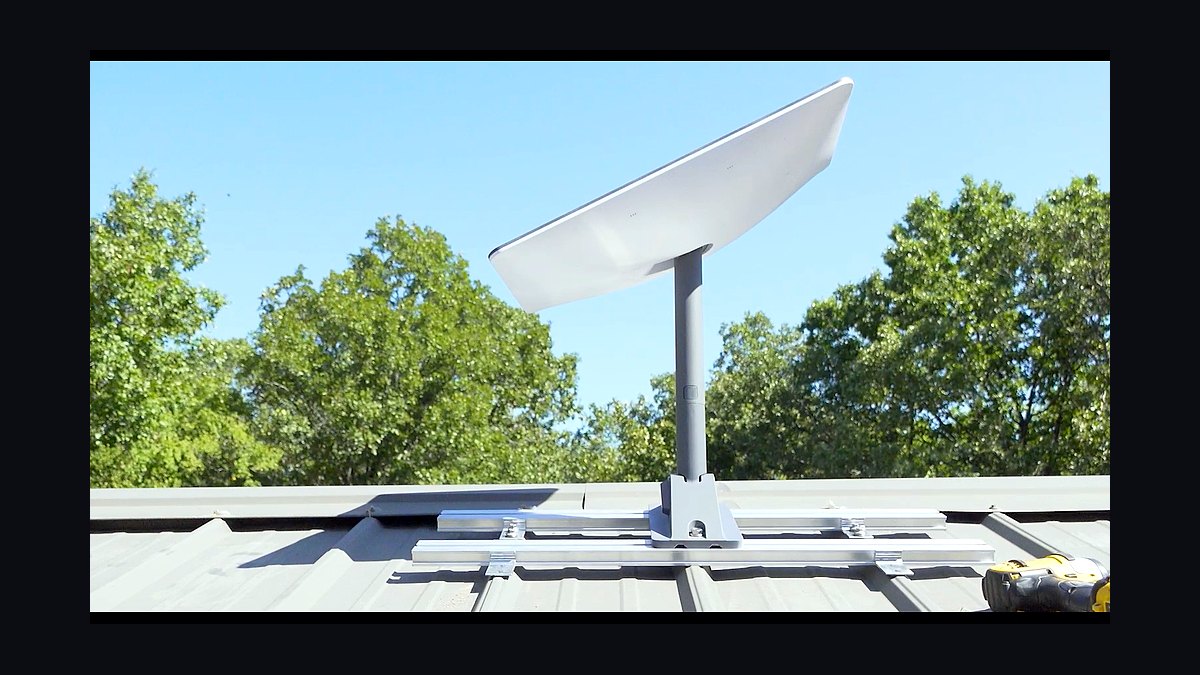
Once coverage is confirmed, hardware ordering and the site survey should happen together rather than sequentially, because the dish or terminal's physical placement determines whether the advertised speeds are achievable at all. LEO dishes need a wide, unobstructed view of the sky in multiple directions since the satellites they talk to are constantly moving overhead; GEO dishes need one fixed, unobstructed line of sight toward the satellite's equatorial position, which a tree canopy or a neighboring rooftop can block in ways that aren't obvious from the ground. Businesses provisioning multiple remote sites should budget for a professional site survey rather than relying on self-install guidance, because a marginal mounting location is the single most common root cause of "my speeds don't match what I paid for" support tickets across every provider in this category.

After installation, the test that actually matters is a peak-hour speed and latency test, not a 3 a.m. test when the local cell is empty — LEO congestion and GEO Fair Access throttling both show up disproportionately during evening hours when everyone in a coverage cell is online simultaneously. If peak-hour performance meets the workload's requirements, the final step for any business-critical deployment is building a failover path: pairing the satellite link with a cellular hotspot or a secondary ISP so a single outage doesn't take down the only connection to a remote site, mirroring the same redundancy logic IT teams already apply to terrestrial circuits. If peak-hour performance falls short, the fix is rarely a different plan from the same provider — it's usually the architecture decision from the section above needing revisiting, moving from GEO to LEO or from a fixed dish to a mobile-rated terminal with a cleaner sky view.
Related questions
Is satellite internet fast enough for 4K streaming in 2027?
Yes for LEO providers — Starlink and Kuiper handle 4K on multiple devices simultaneously. HughesNet Fusion and Viasat support single-stream 4K reliably. Legacy GEO-only plans cannot sustain it due to low caps and high latency.
Can satellite internet replace a business's primary connection?
For latency-tolerant workloads, yes — especially LEO options with sub-30 ms latency. For call centers, VoIP-heavy operations, or anything requiring guaranteed uptime, pair it with a terrestrial or cellular failover rather than relying on satellite alone.
Does weather affect satellite internet reliability?
LEO systems are less affected by rain fade than GEO systems because signals travel a shorter path through the atmosphere. Heavy snow accumulation on a dish can still cause brief outages on any provider regardless of orbit type.
How much data do I actually need for a household of four?
A household running video calls, streaming, and remote work typically needs 300–500 GB/month. That rules out most GEO hard-cap plans under 100 GB and points toward Starlink's uncapped-with-deprioritization model or Viasat's Unlimited Data tier.
FAQ
What is the cheapest satellite internet option in 2027? HughesNet's legacy GEO plan at $39.99/month for 10 GB is the lowest entry price in the market. HughesNet Fusion starts at $49.99/month with better performance. Both trade affordability for either a hard data cap or very high latency.
What is the best satellite internet provider for rural areas overall? Starlink is the best overall choice for most rural households due to its combination of global coverage, 50–220 Mbps speeds, and sub-25 ms latency. HughesNet Fusion is the better fit specifically for budget-conscious households with decent nearby cellular coverage.
Can I use satellite internet for competitive gaming? Starlink and Kuiper, both LEO providers with latency under 25 ms, support competitive gaming reliably. Viasat and HughesNet's latency (40–80 ms) makes casual gaming workable but is noticeable in fast-twitch competitive titles.
Are there hard data caps on satellite internet plans in 2027? It varies by provider and architecture. HughesNet Fusion enforces hard caps of 15–100 GB with throttling after. Starlink and Viasat use soft caps — deprioritization during congestion rather than a hard cutoff — which is generally friendlier for heavy households.
How do I check whether satellite internet is available at my address? Check both the FCC's National Broadband Map and the specific provider's own coverage tool (Starlink.com, HughesNet.com, Viasat.com) using your exact address or coordinates, since cell-level congestion can differ from the regulatory coverage map.
Is a mobile or portable satellite plan different from a standard home plan? Yes — portable options like Starlink Mini use a smaller, lower-power dish rated for travel and typically cap "priority" data lower than a home plan (50 GB vs. unlimited-with-deprioritization), trading some peak speed for portability and lower power draw.
Sources
- Starlink Official Plans and Pricing
- HughesNet Fusion Specs and Coverage
- Viasat Coverage and Plans
- Amazon Project Kuiper Overview
- T-Mobile Home Internet with Starlink Direct-to-Cell
- Xplore Satellite Internet (Canada)
- AST SpaceMobile Direct-to-Phone
- FCC National Broadband Map
- Ookla Speedtest Global Index
Related on PULSE
This page will be disappearing soon. Save it to your device for $1 — or read it free while it is here.
@Kory-White- · if Venmo asks, the last 4 of my number are 2012
This page is gone.
This one is off the shelf now. $1 keeps it on your phone for good — the whole page, pictures and diagrams included.
 telcoBest Cellular and Wireless Carrier in Minneapolis in 2027
 telcoDo I need a separate plan line for a smartwatch in 2027?
 telcoBest Cellular and Wireless Carrier in Montgomery in 2027
 telcoBest Value Cell Phone Carriers in 2027
 telcoAre phone trade-in deals actually worth it in 2027?
 telcoBest Cellular and Wireless Carrier in Richmond in 2027
 telcoBest Cellular and Wireless Carrier in Hartford in 2027
 telcoBest Cellular and Wireless Carrier in Omaha in 2027
 telcoIs US Mobile worth it in 2027?
 telcoBest Cellular and Wireless Carrier in Denver in 2027