
How Many Employees Should I Schedule Each Shift at My Go-Kart Track?
 Curated byKory White · Fractional CRO · Maryland
 PULSEKNOWLEDGE LIBRARY
Quality
Certified
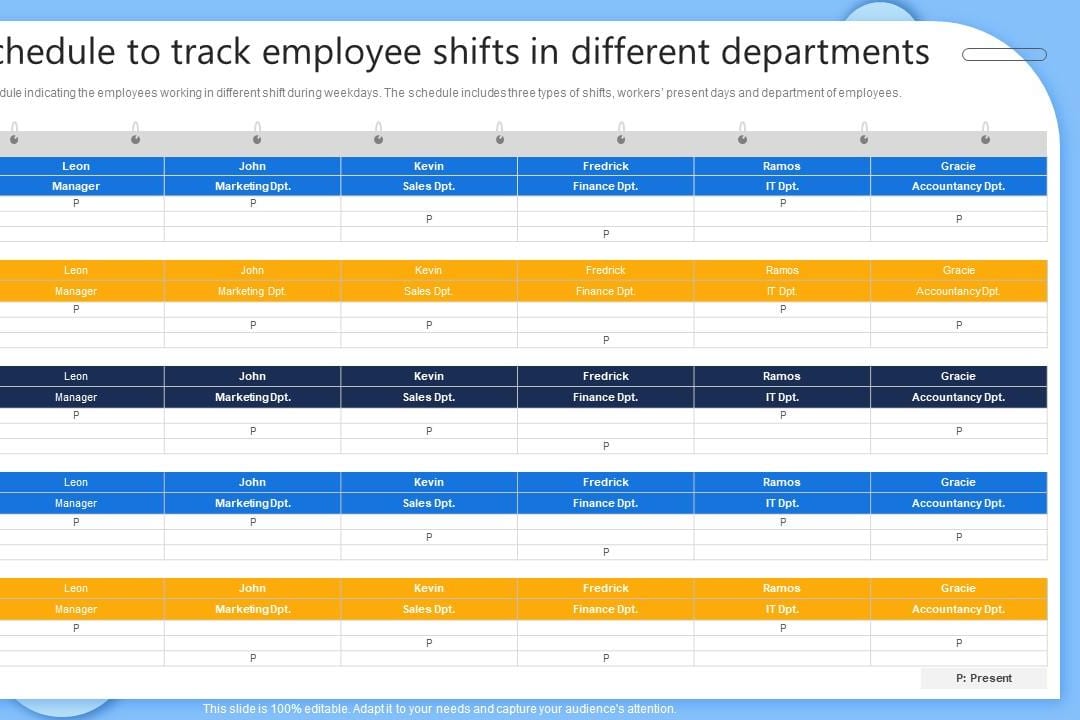
Divide each shift's average gross profit by your per-employee gross-profit target. Most go-kart tracks set that target near $175 per shift. A weekday afternoon clearing $525 needs three employees; a Saturday peak clearing $1,750 needs ten. Run that division across every daypart, then place the headcount where your register timestamps show real traffic.
The job this schedule math is actually hired to do
The wall calendar most track owners inherit is a copy of last week, which was a copy of the week before, which traces back to a guess somebody made during the first season. It survives because nobody has ever been asked to defend it. The scheduling method described here exists to replace that inheritance with one defensible line of arithmetic, and its real job is narrower than "make a schedule" — it is to answer a single question in ink: *what does this specific shift, on this specific day, at this specific hour, earn, and how many people does that earning support?*
Start with the number everything hangs on. Get leadership in a room and settle on the gross profit one ordinary employee should generate during one ordinary shift, serving an ordinary crowd, at ordinary hustle. For most go-kart tracks that lands around $175 per shift. The word "ordinary" is doing heavy lifting there — this is not a stretch goal handed down from a spreadsheet, it is the floor a competent person clears without heroics. Say it out loud to the whole crew so nobody can later claim they never heard it: at this track, if you clock in, take care of a normal number of guests, and give normal service, you should throw off no less than $175 a shift in gross profit.

The people worth keeping do not limp to $175 and coast. They hit it doing plain work and then go hunting the next dollar — the second race heat, the arrive-and-drive upsell, the birthday party package, the return punch card, the walk-up who was only going to run one race until somebody at the counter made the three-race bundle sound like a bargain. One number, one yardstick, applied to leadership, to you, and to every marshal on the tarmac alike.
Then go to the receipts. Pull actual trailing three-to-six-month gross profit, sliced by day of week and by daypart, because a Tuesday at 2 p.m. and a Saturday at 5 p.m. are two completely different businesses operating under one roof with one insurance policy. To compute gross profit for a given shift, take the sales for that exact day and daypart, then strip out the direct costs that shift consumes: kart fuel or charging, tire and brake wear, replacement parts, and cost of goods on any concessions or merchandise that moved. What's left is what the shift actually contributed.
The division does the rest. A sleepy weekday afternoon clearing $525 in gross profit divides to three employees. A Saturday evening rush clearing $1,750 divides to ten. Repeat for all fourteen or twenty dayparts in your week and the staffing plan writes itself — no "we've always run four," no manager quietly slotting in his friends, no gut feel. Gross profit over target, in ink.
What makes the method durable is that scale never changes it. A single outdoor quarter-mile track, a two-site family-entertainment group, and a nine-location regional chain all run the identical division. You swap in each venue's own shift averages and the arithmetic handles the rest. That portability is why the same logic shows up almost unchanged in single-store retail, multi-unit restaurant groups, and mattress chains — anywhere labor is the largest controllable cost and demand arrives in waves rather than a flat line.

How it fits the RevOps stack
Scheduling looks like an HR chore until you notice it sits directly on top of your revenue data and directly upstream of your margin. That makes it a RevOps problem wearing a timekeeping costume. The data flows in a specific order, and breaking the order is where most tracks go wrong.
Read that loop from the bottom up and the value becomes obvious. The variance step at the end is what keeps the target honest. If you scheduled three people against a projected $525 and the shift actually cleared $700, the $175 target held and you left money on the table by understaffing the counter. If it cleared $380, either the target is wrong for that daypart or something operational broke — a kart down, a rain delay, a lane closed for repair.

Upstream, the POS is the single most important integration you own. Every downstream number inherits its accuracy from what the register captured. If your party bookings live in one system, walk-up races in another, and the snack window rings through a third, you cannot compute gross profit by daypart without stitching them, and the schedule inherits the mess. Consolidating those revenue streams into one reportable ledger is usually the highest-leverage fix a track can make before touching scheduling software at all.
Downstream, the schedule feeds payroll, and payroll feeds your P&L. Labor as a percentage of sales becomes the summary metric leadership actually watches. The division method is not competing with that percentage — it produces it. Set the per-employee target correctly and your labor percentage lands where it should automatically, because you defined it by construction rather than chasing it after the fact.
There is one more connection worth naming. The same demand curve that drives staffing drives marketing spend and pricing. If your Wednesday 2 p.m. daypart clears $525 and your Saturday 5 p.m. clears $1,750, the correct response is not only to staff differently but to consider whether Wednesday afternoon deserves a promotional rate, a school-group outreach push, or a corporate-team-building pitch. Scheduling exposes the soft spots in your week; what you do about those soft spots is a revenue decision, not a labor one.
What the per-employee target should be, and how to set it
The $175 figure is a common landing spot, not a law. Most tracks reasonably operate somewhere between $150 and $200 per employee per shift, and where you land depends on structural facts about your operation rather than ambition.

Push the target higher when your revenue per guest is higher. A track with a full arcade, a party room booked most weekends, and a real food menu generates far more gross profit per staff hour than a bare outdoor oval with a vending machine. Push it lower when a meaningful share of your headcount is non-revenue-facing — a mechanic who spends the shift in the shop rebuilding a kart engine contributes real value but does not generate gross profit the way a counter closer does. If you are counting that mechanic in the headcount, your effective per-employee target must come down, or you should exclude fixed maintenance roles from the division entirely and treat them as overhead.
That exclusion decision matters more than the number itself. Decide once, write it down, and stay consistent: does the division cover *all* clocked employees, or only the variable, guest-facing crew? Both are defensible. Mixing them month to month is not, because your trailing averages stop meaning anything.
Seasonality deserves a deliberate policy. An outdoor track in a four-season climate might see gross profit per daypart swing by a factor of four between February and July. You have two clean options. Either keep one annual target and let headcount swing wildly with the season — which is honest and simple — or set a seasonal target that runs slightly lower in the shoulder months, acknowledging that you are choosing to carry a little coverage through the slow stretch to keep good people on the roster for summer. That second choice costs money on purpose and should be made on purpose. What you must not do is quietly drift the target downward every slow week until it means nothing.

Rolling averages handle ordinary noise. Use three to six months so a freak thunderstorm, a single giant corporate buyout, or a week when the school calendar shifted does not warp the picture. Shorter windows overreact; longer windows go stale, especially if you changed race pricing or added an attraction.
Revisit quarterly at minimum, and immediately whenever something structural moves: a price change on race packages, a new attraction opening, a competitor opening or closing within your draw radius, or the swing into or out of your busy season. The point of the whole exercise is keeping the target welded to reality, and a target you set eighteen months ago describes a track that no longer exists.
One caution on cost inputs. Gross profit is only as good as your direct-cost accounting. Tracks routinely undercount kart maintenance because it arrives as lumpy quarterly expenses rather than per-race costs. Amortize it: take annual tire, brake, engine, and battery spend, divide by annual races run, and carry that as a per-race direct cost. Skip it and every shift looks more profitable than it is, which means every shift looks like it supports more people than it does.
How to evaluate scheduling tools and shortlist them
Every scheduling platform on the market will print you a grid with names in boxes. The dividing line is whether the grid is anchored to your gross-profit math or merely filled with whoever asked for hours. A tool that cannot read your sales curve leaves you guessing, and guessing is exactly what puts four marshals on a rained-out Wednesday and three on a birthday-party Saturday.

Start with the method, not the app. Settle on the per-employee target and run one month of the division by hand — a plain spreadsheet listing gross profit by day and daypart carries you the entire way. Software only earns its keep by doing that division faster and cleaner across fourteen or twenty dayparts without the copy-paste errors that creep in when you do it manually. Proving the method on paper first means you evaluate tools against a known-good answer instead of hoping the software knows something you don't.
Match the pricing model to your roster shape. Per-location pricing wins when you carry a deep bench of part-timers and summer hires, because a twenty-five-person seasonal roster on per-user pricing gets expensive fast. Per-user pricing wins when each shift runs a lean, stable, year-round crew. Run the actual arithmetic with your own headcount rather than comparing sticker prices — the same tool can be the cheapest or the most expensive option depending purely on how many names are on your roster.
Demand a POS connection if you want coverage auto-suggested. The more capable platforms accept a live sales feed and propose staffing against projected revenue, which is the closest thing available to the gross-profit method running on autopilot. Lighter tools make you bring the headcount yourself. Neither is wrong; know which you are buying. If you are supplying the numbers anyway, paying for a forecasting engine you won't feed is waste.

Weigh compliance by footprint. A single track in one jurisdiction with a small crew has modest exposure. The moment you cross a state line, open in a city with predictive-scheduling ordinances, or start managing minors under state youth-employment hour restrictions — which is nearly guaranteed at a go-kart track — built-in labor-law guardrails stop being a luxury. Break enforcement, overtime warnings, and minor-hour limits are cheap to automate and expensive to get wrong.
Test the crew-facing side, not just the manager view. The schedule that never reaches the crew's phones is a document, not a plan. Shift swaps, availability windows, mobile punch-in, and push reminders determine whether Saturday's ten bodies actually show up. Hand the app to two of your youngest marshals during a trial and watch whether they can request off without asking a manager. If they can't, you will still be fielding text messages.
Use a free tier to prove it before you sign. Most platforms offer either a genuinely free single-location tier or a trial long enough to run a full month. Use it. Confirm the division holds against your track's actual receipts, then decide whether the execution features justify recurring cost. Tools worth naming here — When I Work, Homebase, Deputy, 7shifts, Sling, Connecteam, Workforce.com, HotSchedules, Shiftboard — span from free-for-one-location up through enterprise custom quotes, and pricing changes often enough that you should check current terms directly rather than trusting any list, including this one.
A decision framework for choosing your approach
The choice is less about features than about which constraint is actually binding on your operation. Walk it in order.

The first branch is the one people skip and the one that matters most. If you cannot pull gross profit by daypart, no scheduling tool will rescue you — you will simply automate a guess. Fixing POS reporting is unglamorous and it is the prerequisite.
The second branch is pure arithmetic. Count your roster at peak season, not today. A track that runs eight people in March and twenty-eight in July should price against twenty-eight, because that is when the bill hurts.
The third branch is about honesty regarding your own habits. Automated demand forecasting only pays off if you actually maintain the integration and trust the output. Owners who override the suggestion every week are paying for a feature they have decided not to use.

The fourth branch scales with exposure. One site, one state, adult-heavy crew: compliance tooling is optional. Multiple sites, minors on the roster, or a predictive-scheduling ordinance in your city: it becomes the deciding factor, because a single wage-and-hour claim costs more than years of software.
Worth noting where the framework's edges are. It assumes labor is your dominant controllable cost and demand is genuinely uneven across the week — both true for essentially every go-kart track, and equally true for bowling centers, roller rinks, trampoline parks, mini-golf, and family entertainment centers generally. It holds up less well for operations with hard minimum-coverage rules that override economics. If safety policy requires two certified marshals per open lane regardless of revenue, that floor wins and the division only tells you when to staff *above* it.
Where the method breaks and what to do about it
Three failure modes show up repeatedly, and each has a specific fix.
The safety floor beats the math. On a genuinely dead Tuesday clearing $200 in gross profit, the division says roughly one employee. But you cannot run a track with one person — somebody has to be on the tarmac while somebody else is at the counter, and a solo employee cannot respond to an incident on the track and manage the front simultaneously. Set an absolute minimum coverage number per open configuration and treat the division as governing everything above that floor. If the floor costs you money on Tuesdays, the real answer is not to thin the crew below safe levels; it is to close early, close that daypart entirely, or fill it with league play, school groups, or corporate bookings that raise the daypart's gross profit to where it supports the required staff.

Roles are not interchangeable. Ten bodies is not a schedule. The division gives you a count; converting that count into a working shift means deciding how many go to the track versus the counter versus the party room versus the pit. A rough shape that holds at most tracks: as headcount grows, counter and party-room staff grow roughly with transaction volume, while pit and marshal coverage grows with the number of lanes and heats running. Build a standing role template for each headcount level — what three people do, what six do, what ten do — so the manager filling the grid is not re-solving that problem every week.
Averages hide bimodal days. A Saturday that averages $1,750 might really be a $900 morning and a $2,600 evening jammed together. Averaging across too wide a daypart produces a headcount that is wrong in both directions at once — overstaffed at eleven, drowning at six. Cut dayparts finer wherever the register shows a sharp inflection. Most tracks need at least three blocks on weekend days and two on weekdays, and after-school hours usually deserve their own block because the wave crests hard right after the bell.
A fourth issue is subtler. The method is backward-looking by construction; it staffs today from the last three to six months. That is exactly right for ordinary weeks and exactly wrong for known events. Layer a manual override on top: local school breaks, holiday weekends, a competing venue's closure, a large advance party booking, or a forecast washout for an outdoor track. Keep the override log — reviewing which overrides proved correct is how you learn whether your instincts beat your averages, and most owners discover they are right about school breaks and wrong about weather.
Related questions
Can I use this formula for teenage and seasonal employees?
Yes. The division is keyed to gross profit per shift, not to who is working or what their status is. A sixteen-year-old summer marshal and a year-round shift lead count identically. Just ensure the target honestly reflects the average output you expect from whoever actually stands on that shift.
What if my gross profit swings wildly week to week?
Swings are normal for a track, since weather, school calendars, and local events all yank the numbers. Use a rolling three-to-six-month average to flatten spikes and dead spots. You can nudge the per-employee target slightly for a clearly seasonal stretch, as long as the division method itself stays unchanged.
Do I need software to run this?
No. A spreadsheet listing gross profit by day and daypart carries you the whole way. Software earns its keep by running the division across every shift at once, which removes the manual math and the copy-paste errors that appear when you calculate fourteen or twenty dayparts by hand each week.
Does this work for a bowling center or trampoline park?
Yes — the method transfers to any venue where labor is the dominant controllable cost and demand arrives in waves. Swap in that venue's own direct costs (lane maintenance, pad replacement, cost of goods) and its own dayparts. The arithmetic and the per-employee target logic are identical.
How does this change if I open a second location?
It doesn't change the math, only the inputs. Each site runs its own division against its own trailing averages, because a second track in a different neighborhood will have a different demand curve. Shared roles like a roving mechanic should be treated as overhead, not counted in either site's division.
FAQ
What's the single most important number to establish first?
The gross-profit-per-employee target for an average shift — for most go-kart tracks somewhere between $150 and $200, commonly $175. That figure is the floor for how much profit one person should help generate, and the entire schedule is built by dividing each shift's average gross profit by it. Skip this step and every scheduling tool is just a prettier way to guess.
How exactly do I calculate gross profit for a specific shift?
Take three to six months of sales for that exact day and daypart, subtract the direct costs the shift consumes — kart fuel or charging, amortized tire and parts wear, and cost of goods on concessions and merchandise — then average what remains. A weekday afternoon commonly lands in the $500-$600 range while a Saturday peak can run several times that.
Should the division include managers and mechanics?
Decide once and stay consistent. Many tracks exclude fixed roles like a shop mechanic or salaried manager, treat them as overhead, and run the division only on variable guest-facing crew. That keeps the target clean. If you include them instead, your per-employee target must come down accordingly, because those roles don't generate gross profit directly.
What if the math says fewer people than I can safely run?
The safety floor wins, always. Set a hard minimum coverage level per open configuration and let the division govern only what you staff above that floor. If a daypart consistently can't support its safe minimum, the correct fix is closing that block or filling it with leagues, school groups, or corporate bookings — not thinning the crew.
How often should I revisit the per-shift numbers?
Quarterly at minimum, and immediately whenever something structural moves: a race-package price change, a new attraction, a competitor opening or closing nearby, or the swing into or out of peak season. The whole point is keeping the target grounded in current reality so the schedule stays welded to where revenue actually shows up.
Does this replace watching labor as a percentage of sales?
No — it produces that percentage rather than competing with it. If you set the per-employee target correctly and staff to the division, labor percentage lands where it should by construction. Keep watching it as your summary check; a persistent gap between expected and actual means either the target is stale or something operational is breaking on the floor.
Sources
- https://www.bls.gov/ooh/ — U.S. Bureau of Labor Statistics Occupational Outlook Handbook, wage and staffing benchmarks for amusement and recreation attendants.
- https://www.dol.gov/agencies/whd/youthrules — U.S. Department of Labor YouthRules, federal hour and occupation limits for employees under 18.
- https://www.dol.gov/agencies/whd/flsa — U.S. Department of Labor Fair Labor Standards Act overview, overtime and recordkeeping requirements.
- https://www.sba.gov/business-guide/manage-your-business/hire-manage-employees — U.S. Small Business Administration guidance on hiring and managing employees.
- https://www.iaapa.org/ — International Association of Amusement Parks and Attractions, industry operations and safety resources.
- https://www.osha.gov/amusement-parks — OSHA amusement park and attraction worker safety guidance.
- https://www.irs.gov/businesses/small-businesses-self-employed — IRS small business center, cost of goods sold and gross profit definitions.
- https://www.score.org/ — SCORE small business mentoring resources, including labor cost and scheduling templates.
Related on PULSE
- [How Do I Know Where, When, and How Many People to Schedule at Each of My Multi-Unit Retail Locations?](/knowledge/tl0001)
- [How Do I Figure Out How Many People to Schedule Each Day and at What Times for My Single Store?](/knowledge/tl0002)
- [How Do I Know How Many Cooks and Servers to Schedule Each Shift at My Pizza Restaurant?](/knowledge/tl0003)
- [How Many Salespeople Should I Schedule Each Day on My Furniture Store Floor?](/knowledge/tl0004)
- [How Do I Decide How Many Reps to Schedule at Each Store in My Mattress Retail Chain?](/knowledge/tl0005)
This page will be disappearing soon. Save it to your device for $1 — or read it free while it is here.
@Kory-White- · if Venmo asks, the last 4 of my number are 2012
 pulse-toolsWhere do I find a fractional CRO who can build an outbound sales playbook from scratch in 2027?
 pulse-toolsHow do I calculate the ROI of hiring a fractional CRO versus building an in-house sales team in 2027?
 pulse-toolsHow do I evaluate a fractional CRO's cultural fit with my leadership team in 2027?
 pulse-toolsHow Do I Score My Recruiters on Placements and Margin?
 pulse-toolsHow Many Sales Reps Do I Need to Hire for My Steel Building Construction Company?
 pulse-toolsHow do I estimate the total cost of hiring a fractional CRO once onboarding and tooling are included in 2027?
 pulse-toolsWhere do I find a fractional CRO with experience in hostile board takeovers in 2027?
 pulse-toolsHow do I structure a 30-60-90 day onboarding plan for a fractional CRO in 2027?
 pulse-toolsHow Do I Score My Restaurant Staff on Upsells and Attachment?
 pulse-toolsHow Do I Get My Leasing Agents to Hit Occupancy and Rate?