
Should I Hire a Fractional CRO If My Last Two Sales Hires Failed?
 Curated byKory White · Fractional CRO · Maryland
 PULSEKNOWLEDGE LIBRARY
Quality
Certified

Yes — but hire the diagnosis, not the seat. Two failed sales hires almost always signal a systemic problem: an unclear ICP, impossible quotas, no repeatable process, or founder interference. A fractional CRO buys senior judgment on a short, cancellable contract to find the root cause before you spend another year and another salary guessing.
Signals you actually need this
The strongest signal is not that two people failed — it's that they failed the *same way*. Pull up both exits and write down the failure mode in one sentence each. If the sentences rhyme ("ramped slowly, never built pipeline, left at month seven"), you are looking at a system, not a personnel streak. If they diverge sharply — one was a hunter who couldn't manage, one was a manager who couldn't sell — you may genuinely have had two bad matches to the same badly-written job description, which is still a system problem, just an upstream one.
Second signal: you cannot describe your sales motion to a stranger in ninety seconds. Try it out loud. Who buys, what triggers the buy, how long it takes from first touch to signature, what percentage of qualified opportunities close, and what a rep must do in week one to be on track. If you stall on any of those, every leader you hire has to invent the answer themselves, at their own risk, while you evaluate them against a standard that exists only in your head. That's an unwinnable job, and good candidates smell it in the second interview — which is part of why you keep hiring the ones who don't.
Third signal: the quota was set by the board deck, not by the funnel math. Take your average deal size, your realistic win rate, and your actual sales cycle length measured from opportunity creation to closed-won — not from the day you *hoped* it started. Multiply forward. If a fully ramped rep cannot mathematically hit the number with a full pipeline and a good quarter, your last two hires were fired for failing an arithmetic test you wrote wrong. This is the single most common finding in a post-mortem and the one founders resist hardest, because admitting it means the failures were authored internally.
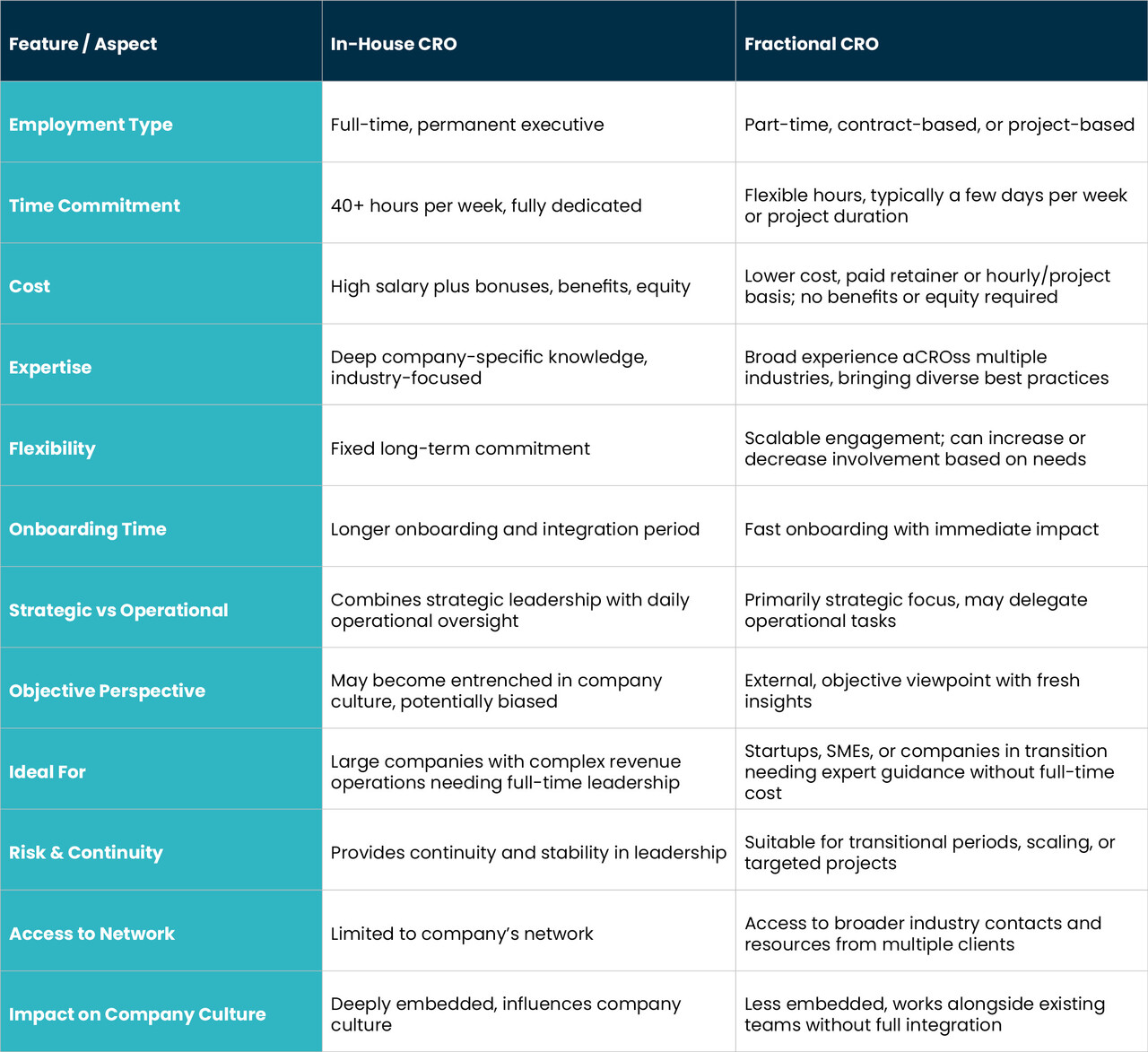
Fourth signal: your CRM cannot answer basic questions. If nobody can tell you win rate by source, by segment, or by rep without a two-day spreadsheet exercise, then you never actually evaluated your last two hires — you evaluated your feelings about them. A fractional CRO's first real deliverable is usually not strategy at all; it's making the pipeline legible enough that the next performance conversation is about numbers instead of vibes.
Fifth signal, and the uncomfortable one: you keep showing up in deals. Founder-led selling is an asset at seed stage and a liability the moment you hire someone to replace it. If you joined the demo, overrode the discount, texted the champion directly, or held the customer relationship personally, your sales leader was never the sales leader. They were a coordinator with a VP title. Ask your last two hires' peers — not the hires themselves — whether the role had real authority. The answers tend to be blunt.

There's an adjacent version of all this worth naming: sometimes the failures cluster in marketing or RevOps rather than sales leadership. If reps are hitting activity targets and losing on price or fit, that's a positioning problem. If reps are hitting activity targets against an empty top-of-funnel, that's a demand-gen problem wearing a sales costume. Both get blamed on the VP of Sales, and both survive their firing. The point of a diagnostic is to name which of these you actually have before you underwrite a third salary against it.
What good looks like versus what bad looks like
A good fractional engagement starts with a fixed-scope diagnostic and a written deliverable. Four to six weeks, no team management, no deal-closing, no title on the org chart yet. The output is a report you can read in twenty minutes: pipeline quality by source, a win/loss analysis with actual customer language pulled from call recordings or interviews, an honest skill assessment of each rep, a CRM and process gap list, and a pricing sanity check. Three to five prioritized recommendations, ranked by impact and effort. Crucially, it should include a clear "hire a full-time leader / don't hire yet / hire a different role" recommendation, with the reasoning attached.
A bad engagement starts on Monday with the fractional CRO running your pipeline review. It feels productive — someone senior is finally holding the meeting — and it produces almost nothing durable, because they're improvising against the same unmapped terrain your last two hires drowned in. Six months later you've paid for an expensive interim manager and you still don't know why the machine doesn't work.
Good looks like measurable phase-two goals with numbers and dates: cut average sales cycle by fifteen days, lift stage-two-to-stage-three conversion by ten points, get every open opportunity to have a next step and a close date. Bad looks like "improve sales culture," "install a winning mindset," or "professionalize the org" — objectives nobody can fail.
Good looks like coaching your existing reps for a defined period before recommending any replacement. If a fractional CRO wants to fire your team in week two, they're clearing the board so the eventual results are attributable to them, and you'll pay recruiting fees to test their theory. Bad also looks like the opposite extreme — protecting everyone indefinitely to avoid conflict. The honest middle is a documented thirty- to sixty-day improvement plan per rep with observable criteria, applied evenly.
Good looks like handoff artifacts that survive the engagement: a hiring scorecard derived from the diagnostic, a written qualification framework, dashboards you can run yourself, an onboarding plan for the next full-time leader, and documentation of stage definitions and handoffs. Bad looks like all the knowledge living in one contractor's head, which quietly makes you dependent on renewing.
One more contrast worth internalizing: a good fractional CRO tells you things that cost them money. "Your product isn't ready for a sales team." "You need a demand-gen hire before another closer." "You should not renew me past phase two." A bad one finds an expanding scope of work in every conversation. When you're interviewing, ask directly for a time they told a client not to hire them, and what happened next. The specificity of the answer tells you almost everything.
Real cost and ROI ranges
Price the alternatives honestly, because the comparison is what makes the decision obvious. A failed full-time sales leader costs you far more than the prorated salary. Add employer taxes and benefits on top of base. Add the recruiting fee — contingency search is typically a percentage of first-year cash compensation, and retained search is billed in installments whether or not the hire works out. Add severance, which for an executive is rarely less than a month and often several. Add the equity you granted and the cap-table cleanup if any of it vested.
Then add the part that dwarfs all of it: the dead time. Executive search commonly runs two to four months. Ramp for a sales leader in a complex B2B motion runs another two quarters before their decisions show up in closed revenue. Recognizing failure and acting on it takes another quarter, because nobody fires an executive at the first bad month. That's roughly a year of your revenue function operating below capacity per attempt — and you've now done it twice. The compounding cost isn't the salary; it's two years of pipeline you never built, in a market that didn't wait for you.

There are second-order costs that don't appear on any P&L line. Every executive exit is visible on LinkedIn, and strong candidates check tenure history before they take a first call. Two short stints in the same seat makes your role a harder sell, which narrows your candidate pool exactly when you need it widest. Internally, reps read leadership churn as instability and start taking recruiter calls. Customers notice when their account owner changes twice and commitments made under the last regime quietly evaporate.
Against that, a fractional engagement is priced as a monthly retainer scaled to days of commitment — typically some number of days per month rather than full-time presence, with the diagnostic phase priced lighter than the intervention phase. Get the day rate, the committed days, and the invoicing cadence in writing, and structure it in phases so the first check buys information rather than a year of exposure. The critical financial property is not that it's cheaper per month; it's that the commitment is short and the exit is clean. A thirty-day termination clause converts a year-long bet into a month-long one.

Model the ROI on three separate lines rather than one. First, cost avoidance: what a third failed hire would have cost, fully loaded, times the probability you'd have repeated the mistake — which after two identical failures is not small. Second, revenue impact: pipeline created, stage conversion improvement, cycle length reduction, win rate change. Set the baseline in week one, before anything changes, or you'll argue about attribution later. Third, durable assets: the scorecard, the dashboards, the documented process, the qualification framework. These keep paying after the engagement ends and are the reason a diagnostic-first structure beats an interim-manager structure even at identical cost.
The break-even math is usually simple enough to do on a napkin. If the engagement prevents one repeat failure, it pays for itself several times over on cost avoidance alone, before any revenue improvement. That asymmetry is the whole argument. You are not buying a cheaper executive — you're buying a much shorter feedback loop on an expensive decision you've already gotten wrong twice.
Two cost traps to avoid. First, scope creep dressed as momentum: an engagement that starts at eight days a month and drifts to full-time without a renegotiated contract is a full-time hire with worse governance and no equity alignment. Second, paying for strategy you can't execute. If the recommendations require a RevOps analyst, a marketing hire, and a new CRM instance, and you can't fund any of them, you bought a document. Ask up front what the recommendations will assume about your budget and headcount.

How it plugs into your workflow
Sequence matters more than the org chart. Weeks one through four are read-only. The fractional CRO gets CRM access, call recordings, your last four board decks, and a list of closed-won, closed-lost, and stalled deals from the trailing twelve months. They interview every rep, your CS or account management lead, your marketing or demand-gen owner, and three to five customers — including at least one you lost. They do not run pipeline reviews yet, do not attend deals, and do not make personnel calls. The output is the written report and the hire/don't-hire recommendation. You have a real decision point here, and the contract should let you stop.
Weeks five through twelve are intervention, and it should be narrow. Pick the top two or three recommendations and nothing else. Typically that's a rebuilt qualification framework with stage exit criteria, a weekly forecast cadence with actual inspection, and a fix to whichever end of the funnel is broken. This is where a fractional leader earns the title: they run the pipeline review, they coach on live deals, and they enforce data hygiene, which nobody enjoys and everybody needs. If your RevOps function is one overloaded person or a spreadsheet, this phase is also where the reporting layer gets built well enough to survive the handoff.
Months four through six are transition. The fractional CRO writes the job description for your full-time leader based on what the diagnostic actually found — not the generic VP of Sales posting that produced your last two hires. They build the scorecard: the specific competencies, the deal-size and cycle-length experience band, the stage-of-company fit. They sit in on interviews as a second technical read, which is enormously valuable because they can ask operational questions you can't yet. They write the ninety-day onboarding plan, hand over the dashboards and playbooks, and taper out.

The founder-interface question deserves explicit treatment, because it's where these engagements most often break. Write down, before week one, which decisions are yours and which are theirs: pricing exceptions, discount authority, hiring and firing, headcount, roadmap escalations, and access to your top ten accounts. If you're not willing to cede real authority, say so plainly and hire a coach or an advisor instead — the title mismatch is what killed the last two.
Adjacent functions get touched whether you plan for it or not. Marketing will be asked to change what a qualified lead means, which changes their reported numbers, which changes how their performance looks — expect friction and get ahead of it. Customer success will be asked for expansion and churn data that may not exist cleanly. Finance will be asked to re-cut the comp plan, and if the plan changes mid-year you need a written bridge so reps don't feel robbed. Product will hear loss reasons they'd rather not hear. Warn all four before week one; a diagnostic that surprises the leadership team gets litigated instead of acted on.
There's also a real exit condition worth naming: if the diagnostic says your problem is upstream of sales — pricing, positioning, product gaps, or a market that isn't converting for anyone — the correct move is to stop after phase one. That's not a failed engagement; that's the cheapest possible answer to an expensive question. The founders who get burned are the ones who commit to six months before knowing which problem they have.

Vetting, contracts, and the alternatives worth considering
Stage fit beats logo prestige every time. A leader who took a company from early traction to eight figures of ARR operates in a fundamentally different mode than one who managed a large team inside an established org — the second one is used to inheriting a machine, a budget, and a brand, and may be genuinely lost building the first version of any of it. Ask directly which range they've operated in and what they built from zero versus inherited.
Ask for a reference from an engagement that went badly. Anyone can produce a happy client. The tell is whether they can describe a failure specifically — what they misread, when they noticed, what they'd do differently — without blaming the client for all of it. Ask to see a redacted diagnostic deliverable from a prior engagement. If they have a repeatable methodology, this exists. If they don't, you'll spend month one funding them to invent one.

Verify operational fluency in your actual stack. They should be able to open your CRM and run a pipeline review without a tutorial, read conversation-intelligence recordings, and interpret whatever forecasting tooling you use. They don't need certifications; they need to not be a bottleneck. And ask a scenario question drawn from your own history — "the founder jumps into a deal review and reverses a rep's discount decision in front of the team; what do you do?" — because the answer reveals whether they can navigate your politics or will simply add to them.
On contract terms: insist on a thirty-day termination clause, phase-specific deliverables tied to payment, written confidentiality, and a non-compete scoped to your immediate competitors rather than your whole industry. Avoid long notice periods and avoid prepaying for unused months. Cash retainers are standard; equity is occasionally used as partial compensation at early stage, and if you go that route, vest it over the engagement with performance conditions rather than granting it up front.
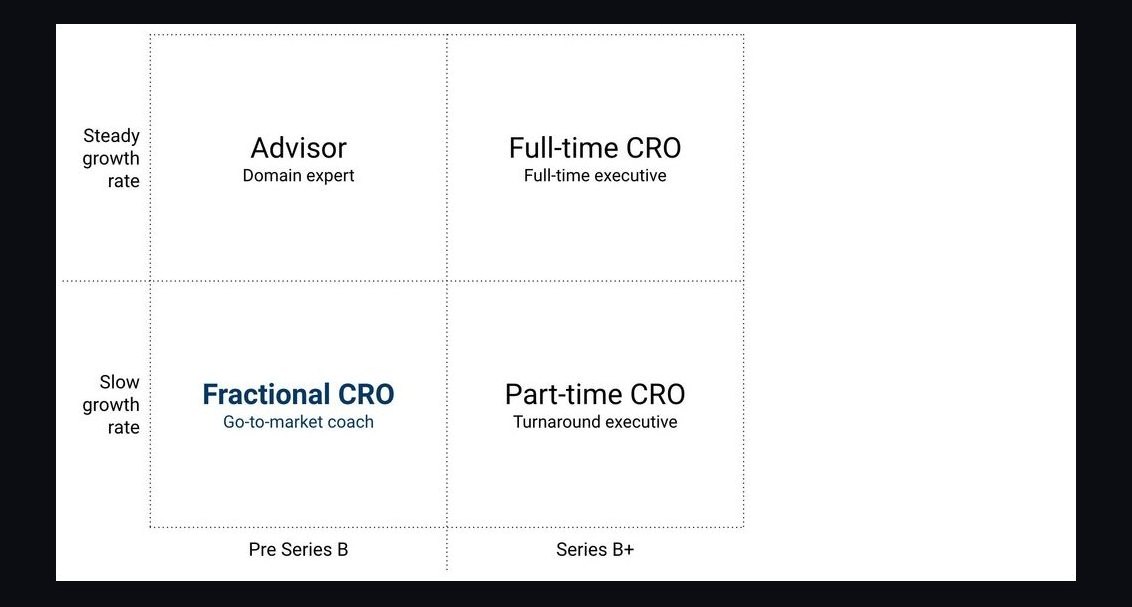
Finally, know when the answer is a different role entirely. If you're pre-traction with a handful of customers, a founder-selling coach a few hours a week keeps you in the driver's seat and costs a fraction of an executive retainer. If your reps lack fundamentals rather than direction, a focused enablement engagement over four to eight weeks is the cheaper fix. If loss reasons cluster on price and fit, run structured customer discovery interviews before you touch sales leadership. And if your pipeline is simply empty, a demand-gen or RevOps hire will move revenue more than any closer will. The test is whether you can state, in one sentence with a number and a date, what you want to be true in ninety days. If you can't write that sentence, you're not ready to hire anyone — fractional, full-time, or otherwise.
Related questions
How do I tell whether my process is broken or my salespeople are?
Look at loss reasons across the team over two quarters. If multiple reps lose for the same reason, it's the process, the pricing, or the fit. If one rep loses uniquely while peers succeed on the same lead source and segment, it's the person.
What should I demand in a fractional CRO contract?
A thirty-day termination clause, deliverables tied to each phase's payment, written confidentiality, and a narrowly-scoped non-compete. Avoid long notice periods, prepaid unused months, and any auto-renewal that isn't opt-in. Phase one should be independently cancellable.
Can a fractional CRO actually help me hire the full-time leader later?
Yes, and it's often the highest-value deliverable. They translate diagnostic findings into a hiring scorecard, rewrite the job description around what's actually broken, act as a second technical interviewer, and build the ninety-day onboarding plan the last two hires never got.
Should I fix demand generation before hiring another sales leader?
If reps hit activity targets against a thin top-of-funnel, yes. No closer fixes an empty pipeline, and hiring one guarantees a third failure. Diagnose lead volume and quality first; a demand-gen or RevOps hire may be the higher-leverage move.
How much authority should I actually hand over?
Write it down before week one: discount limits, hiring and firing, headcount, pricing exceptions, and access to top accounts. Ambiguity here is the most common cause of failed sales leadership tenures, fractional or full-time.
FAQ
What exactly is a fractional CRO? A part-time, executive-level revenue leader working under contract — typically a set number of days per month over a defined term. Unlike a consultant who delivers a report and leaves, a fractional CRO takes operational ownership: running the pipeline review, coaching reps, and being accountable for named outcomes during the engagement.
How is this different from hiring a sales consultant? A consultant diagnoses and recommends. A fractional CRO diagnoses, then stays to execute the recommendations with your team, inside your systems, against measurable targets. The practical difference shows up in accountability — a consultant's engagement ends at the report, while a fractional leader's is judged on whether the numbers moved.
Will a fractional CRO fix our hiring problem for future sales roles? Indirectly, and that's usually the point. By auditing the process, quota math, onboarding, and performance criteria first, they surface what the last two hires were actually missing — then encode it in a scorecard so your next full-time hire is evaluated against real requirements instead of interview charisma.
What if the real problem is product-market fit, not leadership? A good fractional CRO will say so, early, and recommend you stop. Weak fit shows up as diffuse loss reasons, long cycles with no clear champion, and wins that don't resemble each other. The right response is customer discovery and positioning work, not another closer.
Can a fractional CRO work remotely? Most do, with periodic onsite time. The success factor is whether they can build enough trust with your reps through video to get honest answers during the diagnostic — a rep who won't tell them the truth makes the whole engagement worthless. If your culture is heavily in-person, prioritize a candidate willing to travel.
How do I measure ROI on the engagement? Set a baseline in week one, before anything changes. Then track three lines: revenue impact (pipeline created, cycle length, stage conversion, win rate), cost avoidance (the fully-loaded cost of the repeat failure you didn't make), and durable assets (scorecard, dashboards, documented process). Define all three before the engagement starts.
Sources
- Harvard Business Review
- First Round Review
- SaaStr
- Gartner — Sales Research and Advisory
- McKinsey & Company — Growth, Marketing & Sales
- Pavilion
- RevOps Co-op
- Bessemer Venture Partners — Atlas
- a16z
Related on PULSE
- [Should I Hire a Fractional CRO If We Are Integrating Two Sales Teams After a Merger in 2027?](/knowledge/tl0364)
- [Should I Hire a Fractional CRO If I Am Replacing a CRO Who Failed in 2027?](/knowledge/tl0385)
- [Should I Hire a Fractional CRO If My VP of Sales Just Quit in 2027?](/knowledge/tl0357)
- [Should I Hire a Fractional CRO If I Have Great Marketing but Weak Sales in 2027?](/knowledge/tl0552)
- [Should I Hire a Fractional CRO If I Am Hiring My First Sales Manager in 2027?](/knowledge/tl0586)
- [Should I Hire a Fractional CRO If I Have No Sales Enablement Function in 2027?](/knowledge/tl0572)
This page will be disappearing soon. Save it to your device for $1 — or read it free while it is here.
@Kory-White- · if Venmo asks, the last 4 of my number are 2012
 pulse-toolsHow do I evaluate a fractional CRO in Tulsa in 2027?
 pulse-toolsWhere do I find a fractional revenue leader in Santa Monica in 2027?
 pulse-toolsWho is the best fractional CRO in Temple Hills in 2027?
 pulse-toolsHow do I find a fractional CRO in Plantation in 2027?
 pulse-toolsHow do I hire a fractional VP of Sales in Tampa?
 pulse-toolsShould I Hire a Fractional CRO If I Need Interim Coverage During a Medical Leave in 2027?
 pulse-toolsShould I Hire a Fractional CRO If My Reps Will Not Adopt the CRM in 2027?
 pulse-toolsWhat should an SMB company look for in a fractional CRO in 2027?
 pulse-toolsWhere do I find an interim CRO in New Jersey in 2027?
 pulse-toolsShould I Hire a Fractional CRO If I Need a 30-60-90 Plan Before a Board Meeting in 2027?