
What does a fractional CRO actually do?
 Curated byKory White · Fractional CRO · Maryland
 PULSEKNOWLEDGE LIBRARY
Quality
Certified
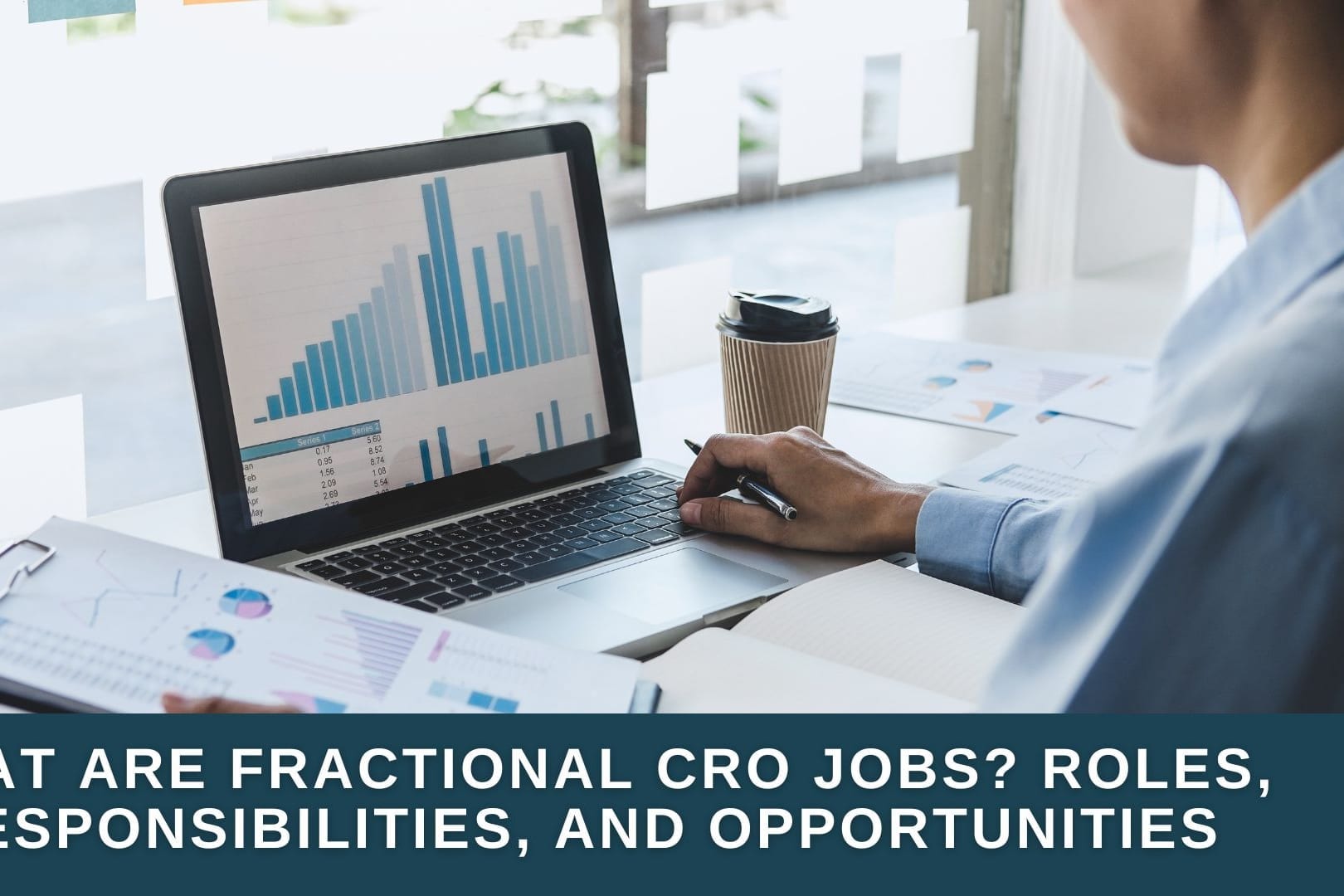
A fractional CRO is a senior revenue leader hired part-time — typically two to three days a week for six to twelve months — to own pipeline, forecast, and go-to-market alignment. They diagnose why revenue stalled, rebuild the systems that produce it, coach the team to run those systems, and hand off a documented machine before exiting.
The job a fractional CRO is actually hired to do
Nobody wakes up on a quiet Tuesday and decides to bring in a fractional CRO. The call gets made in a specific kind of week: the board asks why the forecast missed by 30% for the third straight quarter, or the one rep who knew how to close the enterprise segment resigns and takes the working motion with them, or a founder finally admits that the "sales process" is a Slack channel and a spreadsheet with their own name on every row.
What the fractional CRO is hired to do, stripped of the LinkedIn framing, is convert tribal revenue knowledge into a system that survives the departure of any one person — including themselves. That breaks into four concrete jobs.
Job one: produce a real diagnosis, not a vibe. The first thirty days are deliberately hands-off on change and aggressive on evidence. The operator pulls two years of closed-won and closed-lost records, sits in on live deal reviews without commenting, shadows discovery calls, reads the comp plan line by line, and interviews every rep individually. What comes out is a ranked list of what is genuinely broken, and it is almost never what the founder guessed. Common findings: a forecast built on rep optimism rather than defined stage exit criteria; a lead-to-opportunity conversion rate nobody has ever calculated; a quota set by dividing the board's number by headcount instead of by demonstrated capacity per rep; a proposal stage where 40% of deals go to die because no one owns the follow-up.
Job two: rebuild the load-bearing systems in impact order. Days 31 through 60 are where fixes land. The forecast gets rebuilt around stage gates with written exit criteria and a commit-versus-best-case discipline the team runs weekly. One or two conversion leaks get sealed — usually the marketing-to-sales handoff or a stalled late-stage step. Quota and comp get re-anchored to observed capacity. A lightweight RevOps reporting layer goes into the CRM so the numbers stop living in a founder's spreadsheet and start living where everyone can see them.

Job three: build the bench. Days 61 through 90 are about making the operator redundant. They coach the reps and the frontline manager who will outlast the engagement, install a weekly forecast cadence a VP of Sales can run alone, and document the playbooks so institutional memory stays in the building.
Job four: engineer their own exit. Day 90 should be a handoff, not a cliff — a revenue system that runs unattended, plus a written recommendation on whether to renew, promote internally, or open a full-time search.
The adjacent version of this role is worth naming, because buyers confuse them constantly. A fractional VP of Sales owns quota attainment and rep management; a fractional CMO owns demand generation and positioning; a RevOps consultant owns systems and data hygiene. The CRO sits above all three and is accountable for the number itself across new business, expansion, and retention. If what you actually need is Salesforce cleaned up and a working attribution model, you want the RevOps consultant at a third of the cost.

Where the role sits in the RevOps stack
A fractional CRO is not a tool, but they are absolutely a layer in the stack, and they fail when the layers below them are missing. The practical order of operations matters: data quality feeds reporting, reporting feeds forecast, forecast feeds strategy. An operator who arrives to find no reliable CRM data will spend the first six weeks doing RevOps hygiene work instead of revenue leadership, and you will have paid executive rates for a data-cleanup project.
In tooling terms, the operator typically lands on top of a CRM (Salesforce or HubSpot in most mid-market cases), a sales engagement platform for sequencing, some form of conversation intelligence for call review, and whatever BI or native dashboarding produces the weekly numbers. A competent fractional CRO does not need to be a Salesforce admin, but they must be able to navigate the instance, read a report, and specify exactly what they need built. If they can only talk strategy and have to route every dashboard request through an agency, you have hired a strategist rather than an operator, and the engagement will move at the speed of your slowest vendor.
The downstream effects are the part buyers underestimate. Changing stage definitions changes every historical conversion rate, which changes the comp plan's assumptions, which changes what the marketing team believes an MQL is worth. A good operator sequences those changes and communicates each one; a poor one changes stage names in week two and spends the rest of the quarter explaining why the dashboards broke.
There is also an upstream dependency nobody puts in the contract: finance. Quota, comp, and forecast all touch the model the CFO or fractional CFO maintains. Engagements go sideways when the CRO promises a bookings ramp the finance model never accounted for, or when comp changes blow a hole in the opex plan. Get the two in the same room in week one.

Pricing, engagement models, and what you are actually buying
Pricing varies widely by market, vertical, and seniority, so treat any single number you read as a data point rather than a benchmark. What is stable is the *structure* of the deal, and structure is where you either protect yourself or expose yourself.
The retainer model is the most common: a fixed monthly fee for a committed number of days per week, usually two or three, on a six- to twelve-month term. This is the right shape for a genuine rebuild, because the operator has enough continuity to see changes land. Insist that "days per week" is defined in hours in the contract — a floor of roughly 20 dedicated hours a week is the line between a leader and a very expensive advisor with six other clients.
The project or sprint model is a fixed scope over a fixed window: build a forecast model, rebuild the comp plan, run a 90-day diagnostic. Cheaper, cleaner to evaluate, and appropriate when you know exactly what is broken. The risk is that the operator has no incentive to care what happens in month four.
The advisory retainer is a lighter ongoing arrangement — a few hours a month, usually after a heavier engagement ends. It works as a handoff cushion. It does not work as a substitute for leadership, and founders who downgrade to advisory before the internal bench is ready almost always regress.

Equity or variable components show up more often at the early end, where cash is tight. Be careful here: a fractional operator with meaningful equity and three days a week has different incentives than a full-timer with the same equity and five, and vesting schedules built for employees rarely map cleanly onto a twelve-month engagement. If you go this route, tie any variable component to metrics the operator genuinely controls — pipeline coverage, forecast accuracy, sales-cycle time — not to a revenue number that depends on product delivery and market conditions.
Run the comparison honestly. A full-time CRO's base compensation typically lands in the 180K–300K range in the US mid-market, before equity, benefits, payroll taxes, recruiting fees, and a ramp period that realistically runs 90 days before they produce anything. The fractional model is dramatically cheaper across a short window and carries almost no termination risk. But the arithmetic flips if the engagement quietly stretches past twelve months with no handoff plan. At that point you are paying a premium day rate for what has become a permanent part-time executive, and a full-time hire is the better economics.
One more line item people forget: the cost of the change itself. A comp plan rebuild can trigger rep attrition. A pipeline purge can make the number look worse before it looks better — expect a reported-pipeline drop of 20–40% when a real qualification bar goes in, because a chunk of what was on the board was never real. Budget the emotional and board-communication cost of that quarter, not just the retainer.

How to evaluate and shortlist candidates
The single most common hiring failure is buying a stage mismatch. A leader who took a horizontal SaaS company from 5M to 20M ARR with an inbound-heavy motion may be genuinely lost inside a 2M professional-services business running on referrals and relationships. Pattern-matching is the whole value of the role, and patterns are stage-specific and motion-specific.
Ask for case studies at your exact stage, vertical, and motion. Not "I've worked with SaaS companies" — "I took a 3M ARR vertical SaaS company with a 45-day sales cycle from founder-led to a three-rep team." Then ask for the reference from that engagement and actually call it.
Demand a sample 90-day plan written for your company. Give them your public information, an hour of your time, and ask what they would look at first. A polished generic template is a tell that you are their side project. A plan that names your specific likely failure points — even if some of the guesses are wrong — tells you they can think.
Push hard on failure stories. Every operator with real reps has engagements that cratered. "I've never had one go badly" means either they are lying or they have done three of these. How they diagnose their own miss is more predictive than their trophy case. Listen for whether they blame the client.

Confirm they can work inside your stack. Screen-share the CRM. Ask them to build a report live, or at minimum walk through what they would change about your pipeline stages while looking at the actual instance. The gap between "I'm familiar with Salesforce" and being able to operate in it is enormous.
Test their willingness to say no. Ask what they would refuse to do in the first 60 days. An operator who says "I wouldn't touch comp until I've read twelve months of individual performance and talked to every rep" understands the blast radius. One who promises a comp overhaul in week three is a risk.
Check the client load. Four concurrent clients at two days each is arithmetically impossible to do well. Ask directly how many engagements they are running and what their exit dates are.

Finally, verify the authority question before signing, not after. A revenue leader with no real control over pipeline, comp, and headcount is an advisor being billed as an executive. If the founder intends to personally approve every deal over 5K or quietly reverse comp changes, the engagement is dead on arrival and both parties should know it in the interview.
The failure modes and the contract language that defuses them
Speed and borrowed expertise carry failure modes a full-time hire does not. Name them before you sign; most are cheap to defuse.
The tourist. A part-time leader treating you as one of six clients will not invest the cultural capital to learn your buyers or why your last comp change blew up. They ship a cookie-cutter process that hummed elsewhere and quietly alienates the customers who trusted you. *Defuse it:* contract the hours floor, and in the interview ask for a specific time they abandoned a proven method because it clashed with a company's culture.
Knowledge walking out the door. Months of context, relationships, and undocumented judgment can leave with the operator. *Defuse it:* write documentation into the contract as a deliverable with named artifacts — pipeline-review cadence, forecast methodology, deal-review templates, comp rationale, key account status. Require bi-weekly transfer sessions with the founder or VP of Sales, and reserve the final month for handoff rather than shiny new initiatives.

Founder dependency. Some founders use the role to avoid the permanent work of building a sales culture and end the engagement no more capable than they started. *Defuse it:* make self-obsolescence the stated goal, with exit criteria in writing — a named internal leader who runs the weekly forecast, closes without CRO involvement, and holds pipeline hygiene. If the operator is still indispensable at month twelve, the engagement failed on its own terms.
Comp and morale damage. A leader who redraws commission without understanding its history can gut your best reps overnight. *Defuse it:* no comp change before every rep interview and twelve months of individual performance analysis. Phase changes in with a grandfather clause for in-flight deals, and require the rationale delivered live, never dropped in an email.
Over-engineering. An operator whose last home was a 100M company may bolt on machinery built for that scale — twelve-stage pipelines, layered approval gates, heavy automation — that suffocates a nimble 5M team. *Defuse it:* mandate a minimum-viable-process rule. No more than three new processes in the first 60 days, each running 30 days before the next lands. If the team cannot hold a process without the CRO hovering, it is too heavy.
Contractual guardrails worth the legal spend: a non-solicit clause barring the operator from recruiting your people for twelve months post-engagement; explicit IP ownership so every playbook and template built on your dime belongs to you; a 30-day mutual notice period with a written handover checklist; and proof of professional-liability coverage, in case advice touching comp compliance or pipeline representation draws legal fire.

The buyer decision framework
Fit is decided by three variables: stage, trend direction, and how genuinely willing the founder is to hand over the pipeline keys.
The profile that consistently works is a company that has earned the right to scale. You know who buys and why, churn is controlled, referenceable customers exist — but the go-to-market motion still lives in the founder's head. There is a concrete, time-boxed goal: double net-new ARR inside a year, break into a second vertical, or convert a hero-driven sales floor into something a board would recognize as a process. Team size of roughly 5–20 with a founder who can still absorb operational load is the comfortable band.
The profile that reliably fails inverts each of those. Still pivoting the ICP or bleeding logos at 8–10% monthly churn? The retainer goes to bailing water out of a boat with a hole in it — fix the product. Below roughly 500K ARR, the founder should still be closing and the math never clears. On the other end, a 50-rep floor with 12-month enterprise cycles and procurement committees needs someone in the building five days a week; a two-day leader creates a vacuum rather than filling one.

Instrument the engagement from day one. Leading indicators, read monthly: new qualified pipeline generation, targeting roughly 3–5x monthly quota in fresh pipeline; forecast accuracy, which should land within 10% of actuals by month three (still off by 20%+ means stage discipline never took); selling-time ratio, where 60% or better means reps are freed from admin; deal cycle time, where a 10–20% cut in first-meeting-to-close inside 90 days signals the qualification bar is working; and win rate by segment and deal size, where flat rates after 60 days suggest the methodology or ICP is still wrong.
Lagging indicators, read quarterly: net-new bookings growth quarter over quarter, with the growth *rate* itself lifting; CAC payback shortening; net revenue retention ticking up if the expansion and churn work is real; and anonymous rep sentiment, where a morale drop usually means the operator is too aggressive or too absent.
Transition to full-time when you clear roughly 10M ARR and 15+ reps, when the playbook is repeatable enough that an internal leader runs it unaided, or when a Series A or B raise means investors expect a permanent, board-accountable revenue owner. The best signal is a good operator telling you it is time before you have to ask.
End without a full-time hire when the company chooses profit over expansion, when the founder decides to keep revenue close and lead it themselves, or — soberly — when changes are not sticking after six months and the team reverts the moment attention drifts.
Related questions
How is a fractional CRO different from a sales consultant?
A consultant recommends; a fractional CRO decides and is accountable for the number. The CRO holds line authority over pipeline, comp, and often headcount, sits in your leadership meetings, and carries the forecast to the board. A consultant delivers a deck and leaves.
Can a fractional CRO manage a sales team directly?
Yes, and most do — running weekly forecast calls, one-on-ones with reps, and deal reviews. But at two days a week they should be managing through a frontline manager wherever one exists. Direct management of more than roughly eight reps part-time is not realistic.
What happens to the engagement if we get acquired or raise?
Both events typically end or reshape it. Acquirers usually install their own revenue leadership; institutional investors expect a permanent, board-accountable CRO. Build a 30-day mutual notice clause and an IP ownership term so the playbooks stay with the company either way.
Do fractional CROs work outside of software?
Regularly. Professional services, manufacturing distribution, healthcare services, and agencies all hire them. The mechanics — pipeline coverage, forecast discipline, comp design — travel well. What does not travel is buyer knowledge, so vertical experience matters more outside SaaS, not less.
FAQ
What is a fractional CRO?
A fractional Chief Revenue Officer is a senior revenue operator who runs your go-to-market function part-time or on a fixed-term contract. They carry strategic authority across sales, marketing alignment, and customer success — the whole revenue arc — without the salary, equity, or permanence of a full-time executive.
How is a fractional CRO different from a full-time CRO?
The mandate is identical — pipeline, forecast, team performance, GTM strategy — but the time footprint is compressed and the emphasis shifts toward systems. A fractional CRO builds repeatable machinery your team can run rather than personally managing every deal in perpetuity, and is measured on whether the machine survives their exit.
When should a company hire one?
The strongest trigger is a growth inflection or a revenue plateau in the rough 1M–10M ARR band, where founder-led selling is buckling but a full-time CRO would be premature. It is also a clean fit for covering the gap between a departing sales leader and a permanent replacement.
What does the first 90 days look like?
Month one is pure diagnosis — pipeline, forecast accuracy, win/loss patterns, comp, and GTM motion, with no changes yet. Months two and three are the rebuild: forecast discipline, funnel leaks, quota and comp re-anchored to capacity, and RevOps reporting installed. Day 90 delivers a documented system.
What metrics do they own?
Pipeline coverage, forecast accuracy, sales productivity, and net-new revenue growth, plus the tooling and cross-functional alignment underneath them. It is the full CRO scorecard on a compressed clock, instrumented so the numbers survive the handoff.
How long does an engagement typically last?
Most run three to six months for a focused transformation, or until a full-time hire is onboarded and ramped. Some convert into a lighter advisory retainer once the heavy build is done, but a healthy engagement always has a written handoff plan rather than open-ended dependency.
Sources
- https://hbr.org/ — Harvard Business Review, research on interim and part-time executive leadership and revenue-organization design.
- https://www.saastr.com/ — practitioner benchmarks on CRO scope, pipeline-coverage ratios, and GTM scaling in the early-growth ARR band.
- https://www.bvp.com/atlas/state-of-the-cloud — Bessemer Venture Partners efficiency benchmarks including CAC payback and net revenue retention.
- https://www.gartner.com/en/sales — Gartner for Sales frameworks on sales-force productivity, forecast methodology, and RevOps maturity.
- https://www.bls.gov/ooh/management/top-executives.htm — U.S. Bureau of Labor Statistics occupational and compensation context for top executive roles.
- https://www.mckinsey.com/capabilities/growth-marketing-and-sales/our-insights — McKinsey research on commercial excellence and go-to-market operating models.
- https://www.salesforce.com/resources/research-reports/state-of-sales/ — Salesforce State of Sales, data on seller time allocation and sales productivity.
- https://openviewpartners.com/blog/ — OpenView Partners writing on SaaS growth benchmarks and go-to-market efficiency.
Related on PULSE
- [What should an SMB company look for in a fractional CRO?](/knowledge/tl11523)
- [Is there a fractional CRO available near me?](/knowledge/tl11886)
- [Who is the best fractional Chief Revenue Officer for a mid-market company?](/knowledge/tl20960)
- [How do you build a forecast a board will actually trust?](/knowledge/tl12062)
- [When should a founder stop being the primary closer?](/knowledge/tl16754)
This page will be disappearing soon. Save it to your device for $1 — or read it free while it is here.
@Kory-White- · if Venmo asks, the last 4 of my number are 2012
This page is gone.
This one is off the shelf now. $1 keeps it on your phone for good — the whole page, pictures and diagrams included.
 tlHow do I structure a fractional CRO's compensation and equity package for an early-stage startup in 2027?
 pulse-toolsHow Many Sales Reps Do I Need to Hire for My Septic Service Company?
 pulse-toolsWhere do I find a fractional CRO for a hospitality and restaurant group in 2027?
 pulse-toolsHow do I find a fractional CRO who can also cover interim VP of Sales duties in 2027?
 pulse-toolsHow Many Recruiters Do I Need to Hire for My Staffing Agency to Hit Its Placement Goal?
 pulse-toolsWhere do I find a fractional CRO who specializes in post-merger integration for a company going through M&A in 2027?
 pulse-toolsHow do I determine the right equity or profit-sharing structure for a fractional CRO in 2027?
 pulse-toolsHow do I evaluate a fractional CRO's fit with my existing sales tech stack in 2027?
 pulse-toolsHow Many Brokers Do I Need to Hire for My Commercial Real Estate Firm?
 pulse-toolsHow Many Employees Should I Schedule Each Day at My Grocery Store?