

What Is the Average Cost of Living in a Small Town in 2027?
 Curated byKory White · Fractional CRO · Maryland
Quality
Certified

A typical U.S. small town in 2027 runs roughly $2,800–$4,200 a month for a two-person household, or about $34,000–$50,000 a year. Housing absorbs $900–$1,600 of that, transportation $700–$1,100 because driving is unavoidable, groceries $650–$900, and healthcare $500–$900 — the line that most often erases the savings.
What "average cost of living" actually measures in a small town
The phrase "average cost of living" hides more than it reveals, and nowhere more than in a town of 4,000 people. National cost-of-living indexes are built from urban market baskets — the Bureau of Labor Statistics' Consumer Price Index is literally sampled from metropolitan and larger urban areas, and the Council for Community and Economic Research's COLI index covers participating cities that volunteer data. Small towns are frequently absent from both. When a relocation calculator tells you Smallville, population 3,200, is "18% cheaper than the national average," that number is usually interpolated from the nearest metro or from county-level housing data, not measured on the ground.
What the average is genuinely composed of, in rough order of size for a small-town household in 2027:
- Housing — rent or mortgage principal, interest, taxes, insurance. In small towns this is the single biggest source of savings versus a metro, often 35–55% lower than a large-city equivalent.
- Transportation — the single biggest source of *hidden cost*. A small town almost never has usable transit, so household vehicle count rises, annual miles rise, and both insurance and maintenance follow.
- Food — groceries at a small-format store or a regional chain typically run 5–15% above a metro supercritical-mass supermarket, because volume discounts and distribution density are absent.
- Healthcare — premiums on the individual ACA marketplace vary enormously by rating area, and rural rating areas frequently carry *higher* premiums with *fewer* participating insurers.
- Utilities — highly regional. Rural electric cooperatives and propane heat behave very differently from a municipal utility in a dense metro.
- Insurance (property + auto) — rising fastest of all the lines in the 2020s, and in wildfire, hail, wind, and flood-exposed regions the increase can outpace every saving housing gave you.

The practical consequence is that the "average" is a poor planning tool and the *composition* is the useful one. Two towns with identical median home prices can differ by $700 a month in real outlay because one sits 12 minutes from a regional hospital and a Costco and the other sits 70 minutes from both. When people say small-town living was cheaper than they expected or more expensive than they expected, they are almost always describing transportation, healthcare access, and insurance — not rent.
There's a second measurement trap: *median household income* in small towns is usually well below the national median, and local prices partially track local wages. So a town can be genuinely 20% cheaper on paper while feeling no cheaper at all to someone earning a local wage. The arbitrage only exists for someone importing outside income — remote work, a pension, investment income, or a business serving customers elsewhere. That distinction drives most of the disappointment in small-town relocation stories.
How to build a real number for a specific town
Averages are a starting hypothesis. The number you actually plan against comes from a bottom-up build for one named town, using live local quotes rather than national indexes. The sequence below takes about four to six hours of work and is far more accurate than any calculator.

Step 1 — Housing, at the address level. Pull 90 days of actual closed sales and current rentals, not the Zillow "average." In a town with 40 transactions a year, a single estate sale skews the median. Look at what's physically comparable to what you'd occupy.
Step 2 — The tax bill, not the tax rate. County assessor sites publish the actual current bill for the actual parcel. This matters enormously: effective property tax rates vary from roughly 0.3% of value in parts of the Southeast and Mountain West to well over 2% in parts of the Northeast and Midwest. On a $250,000 house that's a swing of $350+ per month — larger than most people's expected savings.
Step 3 — Insurance quotes at the address. Do not estimate. Call or run online quotes with the actual street address. Wind pools, wildfire scoring, hail history, and distance-to-fire-station all price into it. In some coastal and wildfire-exposed small towns, premiums have doubled or worse since 2020, and in some markets the only available carrier is a state-backed insurer of last resort.
Step 4 — Drive the actual routes. Open a map and measure: house to grocery, house to work or the nearest coworking/broadband anchor, house to K-12, house to the nearest emergency room, house to the nearest airport, house to the nearest big-box or Costco. Multiply the realistic weekly repetitions by IRS-style all-in per-mile costs. Most households discover 4,000–9,000 extra annual miles they hadn't budgeted.
Step 5 — Price health coverage in that county. Marketplace premiums are set by county-level rating area. Run the actual plan list for the actual county, at your actual ages. Then check which hospitals and specialists are in-network and how far they are. A cheap premium with a 90-minute drive to any in-network specialist is not cheap.

Step 6 — Get the real utility history. Utilities will tell a prospective buyer the 12-month usage history for an address. In a poorly insulated 1940s farmhouse heated with propane, winter can run $400–$600 a month. In a well-built home on a rural electric co-op, it might run $180. Same town, triple the bill.
Step 7 — Add the lines people forget. Internet (rural fixed wireless or satellite often costs more for less), septic pumping every 3–5 years, well maintenance, propane tank rental, trash service that is not municipal, snow removal, and — critically — trades labor. Plumbers and electricians in thin markets often charge metro-level rates with a travel surcharge, because there are three of them and they're all booked.
Step 8 — Sum, then add 15%. Small-town budgets fail on lumpy, infrequent, large expenses: a well pump, a roof after a hail event, a transmission when you're putting 22,000 miles a year on a vehicle. Build the buffer in from the start.
Costs, timelines, and typical ranges
The following ranges reflect the general shape of a small-town budget in 2027 for a two-person household. Treat them as a hypothesis to be replaced by local quotes, not as a forecast for any specific place.
Housing: $900–$1,600/month all-in. Rent for a modest two- or three-bedroom in a small town frequently sits in the $850–$1,400 range in much of the Midwest, Plains, and rural South, and considerably higher in small towns near recreation amenities, university towns, and anywhere within commuting reach of a growing metro. On the ownership side, a $200,000–$300,000 house at 2020s-era mortgage rates carries roughly $1,300–$2,100 in principal and interest alone before taxes and insurance — which is why the "cheap small town house" often doesn't produce a cheap monthly payment. Cash buyers and people carrying equity from a metro sale see the real advantage here; first-time buyers financing at market rates often do not.

Transportation: $700–$1,100/month. This is where small-town math turns. Assume two vehicles rather than one, and 12,000–20,000 miles per vehicle per year instead of the 8,000–11,000 typical of a transit-served city household. At all-in per-mile costs (fuel, maintenance, tires, depreciation, insurance) that most published estimates place in the 60–75 cents range for an average sedan, 15,000 miles is roughly $9,000–$11,000 per vehicle per year. Two vehicles clears $18,000 annually before you've bought a plane ticket. Households that keep one vehicle and telework aggressively can cut this nearly in half — it's the single most controllable line in the budget.
Groceries: $650–$900/month. USDA publishes monthly food-at-home cost plans by age and sex at four spending levels; a two-adult household on the "low-cost" plan lands in the mid-hundreds. Small-town reality adds a premium: fewer stores, less competition, longer supply lines. The workaround people actually use is a monthly stock-up run to a metro warehouse club, which is real savings but consumes a tank of gas and half a Saturday — an honest budget books both sides of that trade.
Healthcare: $500–$900/month for a pre-Medicare couple. Unsubsidized marketplace premiums for two adults in their 50s can exceed $1,500/month in some rating areas; subsidies at moderate incomes bring that down sharply, which is why *income structure* matters more than location for this line. Add deductibles, and add the travel cost of specialist care. Rural hospital closures over the past decade have lengthened drives to emergency and specialty care in many regions — this is a genuine cost and a genuine risk, not a lifestyle footnote.

Utilities: $250–$500/month. Electric, water/sewer or well/septic, heat, and trash. Propane and heating-oil regions swing hardest seasonally. Rural electric cooperatives sometimes price below investor-owned utilities and sometimes above, depending on the co-op's generation mix and debt.
Internet: $70–$150/month. Fiber has reached many small towns via federal broadband programs, but coverage is uneven; where it hasn't, fixed wireless or low-earth-orbit satellite fills the gap at higher cost and with hardware fees. For anyone working remotely, verify the actual serviceable address before committing — coverage maps overstate.
Property + auto insurance: $200–$600/month combined. The fastest-rising line of the decade in exposed regions. Get real quotes.
Timelines. Budget 60–120 days from decision to move for a rental, and 90–180 days for a purchase in a thin market where inventory is sparse and appraisals take longer. Expect the first year to run 10–20% above your steady-state estimate: setup costs, a vehicle better suited to the roads, tools, winter gear, and the discovery expenses of a house you didn't grow up with.
Where households get the math wrong
They compare rent to rent and stop. The headline is always housing, because housing is where small towns win by the widest margin. But housing is one line of six or seven, and it's the only line that reliably goes down. Everything else is a coin flip or a loss.
They price gas and ignore per-mile total cost. Fuel is maybe a third of what a mile costs. Depreciation, tires, brakes, and insurance make up the rest, and they scale with miles just as surely as fuel does. Adding 8,000 miles a year isn't a $600 gas increase, it's closer to a $5,000 total increase.

They assume rural means cheap insurance. Sometimes it's the reverse. Fire protection class, distance to a hydrant, roof age, and catastrophe exposure drive homeowner premiums, and thin small-town markets have fewer carriers competing. Auto liability can also run higher where medical transport is expensive and roads are rural two-lanes at speed.
**They underestimate the cost of *access*.** Every service you can't get locally becomes a drive: the orthodontist, the specialist, the airport, the parts store, the specific school program. Individually each is minor; annually, four to six of these can add $3,000–$6,000 in vehicle cost and dozens of unpaid hours.
They forget local labor scarcity. In a town with two plumbers, the price of a plumber is not a small-town price. Trades, HVAC, tree work, and auto repair frequently cost metro rates plus travel, and the wait is measured in weeks. Anyone buying an older house should assume higher maintenance spend, not lower.
They ignore income compression. If the plan is to take a local job, model the local wage, not the current one. Small-town cost savings and small-town wage discounts frequently cancel out. The arbitrage requires imported income. This is the single largest predictor of whether a move improves or worsens household finances.
They plan around the good month. People visit in September, when the weather is perfect and the drive is pleasant. Visit in February with the roads iced, or in August at peak humidity or wildfire smoke, and both the utility bill and the psychological cost look different.
They skip the exit math. Thin markets are illiquid in both directions. The house that was cheap to buy may sit for nine months when you need to sell, and price discovery is brutal when there are four comparable sales a year. Budget for the possibility that the move is reversible only slowly.
Choosing between small-town profiles
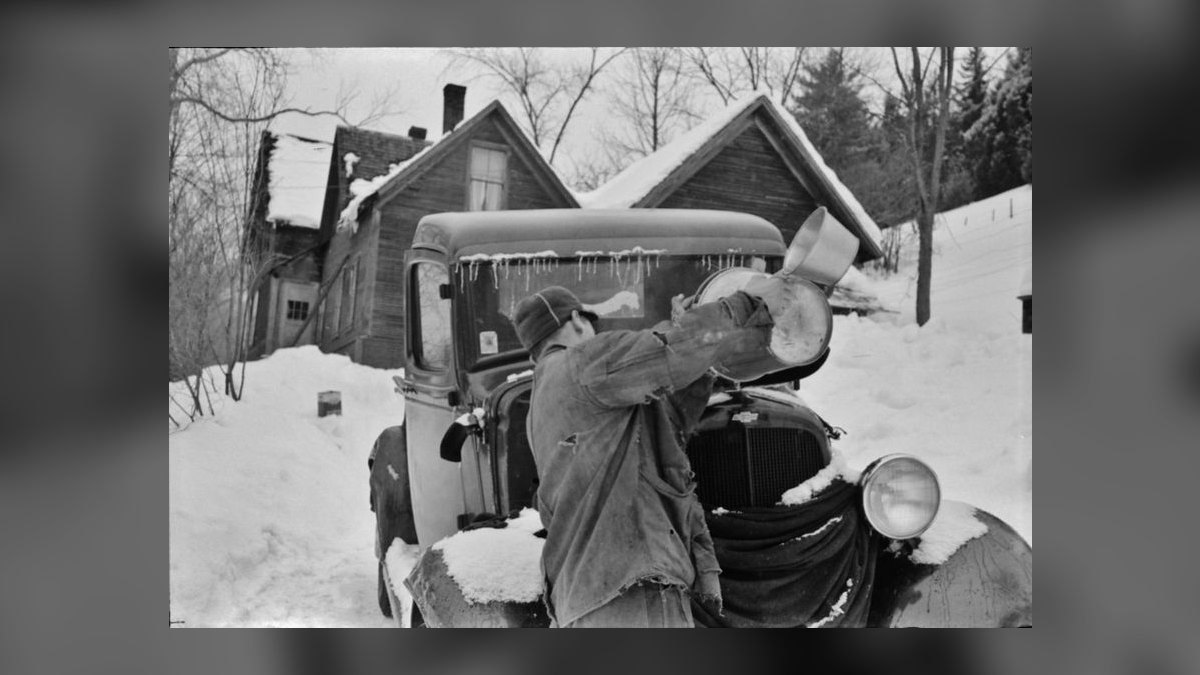
Not all small towns are the same cost animal. Four rough profiles cover most of what's actually out there, and the right choice depends on where your income comes from and what services you'll need.
The satellite town — 30 to 60 minutes outside a metro. Housing is meaningfully cheaper than the metro but not cheap in absolute terms, and it appreciates with the metro. Healthcare, airports, and big-box retail stay accessible. Transportation costs are high because of the commute, unless you're remote. Best fit for someone who wants small-town texture without access risk, and who can absorb a higher housing line.
The interior heartland town — genuinely rural, an hour or more from anything large. The cheapest housing in the country lives here, sometimes dramatically so. The trade is access: long drives for healthcare, retail, and air travel, thinner broadband, thinner labor markets, and thinner resale liquidity. Best fit for imported income, low healthcare needs, and high tolerance for distance.
The recreation town — mountains, lakes, coast, ski, or trail-adjacent. Beware. These carry metro-level housing costs on small-town service infrastructure, because second-home and short-term-rental demand bids up housing without adding year-round wage base or year-round services. Insurance is often catastrophe-exposed. The cost-of-living calculator says "small town"; the housing market says "resort."
The college town — small population, disproportionate services. A university brings healthcare, culture, broadband, restaurants, an airport shuttle, and a stable employer. Housing is bid up by students and staff, so it's more expensive than the surrounding county, but the services-per-dollar ratio is often the best available in the small-town category. Rental markets follow the academic calendar, which is worth knowing before you sign anything in July.

A fifth pattern worth naming: the reviving mill or rail town. Older housing stock at very low prices, real character, and often a deliberate local incentive program. The costs land in deferred maintenance — knob-and-tube wiring, failing sewer laterals, asbestos, and roofs. The purchase price is the smallest number in the transaction. Anyone considering this profile should get a thorough inspection and price the full rehabilitation before making an offer, not after.
Across all five, the same three questions decide the outcome: where does the income come from, how far is the healthcare, and what does insurance actually quote at that address.
Related questions
Is it actually cheaper to live in a small town than a city?
Usually yes on housing, often no overall. Housing may drop 35–55%, but transportation, insurance, healthcare access, and trades labor frequently rise. Net savings are real for households with imported income and modest healthcare needs, and can vanish entirely for households taking a local wage.
What is the biggest hidden cost of small-town living?
Transportation, by a wide margin. Two vehicles, 12,000–20,000 miles each per year, at 60–75 cents all-in per mile, routinely runs $18,000–$22,000 annually. Healthcare access is second: the drive to specialist care is a real, recurring, unbudgeted expense.
How much income do you need to live comfortably in a small town in 2027?

For a two-person household, roughly $50,000–$65,000 gross covers a $34,000–$50,000 all-in cost of living with retirement savings and a buffer. Households with children, older housing stock, or pre-Medicare healthcare should model $75,000+.
Do property taxes offset small-town housing savings?
Sometimes completely. Effective rates range from roughly 0.3% to over 2% of value depending on state and district. On a $250,000 home that's a $350+ monthly swing — enough to erase the housing advantage. Always pull the actual parcel's tax bill, never the state average.
Are small-town utility bills lower?
Not reliably. Rural electric cooperative rates vary widely, propane and heating-oil heat are expensive and seasonal, and older housing stock is poorly insulated. Request the address's 12-month usage history before assuming savings.
FAQ
What is the average cost of living in a small town in 2027?
Roughly $2,800–$4,200 per month, or $34,000–$50,000 annually, for a two-person household — with housing at $900–$1,600, transportation at $700–$1,100, groceries at $650–$900, healthcare at $500–$900, and utilities at $250–$500. Regional variation is enormous; the Northeast and Mountain West run well above these ranges, and the interior Midwest, Plains, and rural South well below.
Which line item varies the most between small towns?
Property insurance and property taxes, followed by healthcare premiums. Two towns with identical home prices can differ by $500–$800 monthly on these three lines alone, driven by catastrophe exposure, local millage rates, and county marketplace rating areas. These are also the three easiest lines to get a real quote for before you commit.

Does remote work change the small-town cost equation?
Fundamentally. Remote work is what makes the arbitrage real — you import a metro-scale wage into a lower-cost housing market, and you also eliminate the commute that would otherwise be the largest hidden cost. Without imported income, local wages typically compress in rough proportion to local prices, and the net advantage largely disappears.
How reliable are online cost-of-living calculators for small towns?
Directionally useful, specifically unreliable. Most are interpolated from metro-area or county-level data because the federal Consumer Price Index samples urban areas and the main city index relies on volunteer participating cities. Use a calculator to shortlist, then build a bottom-up budget from actual local quotes before deciding anything.
What should someone budget for the first year of a small-town move?
Plan on 10–20% above steady state. First-year costs include a vehicle better suited to local roads and weather, tools and equipment, winter or storm preparation, higher-than-expected maintenance on unfamiliar housing stock, and the discovery expenses of a property whose quirks you haven't met yet. Carry a 15% buffer past that for lumpy repairs.
Is buying or renting better in a small town?
Rent first for six to twelve months if you possibly can. Small-town housing markets are thin and illiquid, meaning a purchase you regret can take many months to unwind at a price you'd accept. Renting through one full winter and one full summer surfaces the utility bills, the drives, and the community fit before you're committed.
Sources
- https://www.bls.gov/cpi/ — U.S. Bureau of Labor Statistics, Consumer Price Index (sampling scope and market basket methodology)
- https://www.bls.gov/cex/ — BLS Consumer Expenditure Surveys, household spending by category
- https://www.fns.usda.gov/cnpp/usda-food-plans-cost-food-monthly-reports — USDA monthly food-at-home cost plans
- https://www.healthcare.gov/ — ACA marketplace plans and premiums by county rating area
- https://www.kff.org/health-costs/ — KFF research on health insurance premiums and rural coverage
- https://www.census.gov/programs-surveys/acs — U.S. Census American Community Survey (local income, housing, commuting data)
- https://www.irs.gov/tax-professionals/standard-mileage-rates — IRS standard mileage rates (vehicle operating cost benchmark)
- https://www.eia.gov/ — U.S. Energy Information Administration, residential energy and heating fuel prices
- https://www.ers.usda.gov/topics/rural-economy-population/ — USDA Economic Research Service, rural economy and population data
- https://www.fcc.gov/broadbanddata — FCC National Broadband Map, address-level service availability
Related on PULSE
- Remote work relocation: how to model an income-to-cost-of-living arbitrage
- Rural broadband availability and what it costs to work remotely from a small town
- Property tax rates by state: the line item that erases housing savings
- Homeowners insurance in catastrophe-exposed markets: what changed and what to expect
- Buying an older house: budgeting deferred maintenance before you make an offer
- One-car households: how to cut the largest hidden cost of rural living
This page will be disappearing soon. Save it to your device for $1 — or read it free while it is here.
@Kory-White- · if Venmo asks, the last 4 of my number are 2012
This page is gone.
This one is off the shelf now. $1 keeps it on your phone for good — the whole page, pictures and diagrams included.
 pulse-townsTop 10 Best Suburbs of Phoenix in 2027
 pulse-recentTop 10 Retirement Towns in Ohio in 2027
 pulse-townsTop 10 Best Towns to Live in Vermont in 2027
 pulse-recentWhat Is the Average Home Price in a Suburb in 2027?
 pulse-towns10 Best Small Towns to Retire in 2027 (Affordable, Walkable, Charming)
 pulse-townsTop 10 Best Towns to Live in New England in 2027
 pulse-townsTop 10 Best Suburbs of Dallas in 2027
 pulse-townsTop 10 Best Suburbs of Columbus in 2027
 pulse-townsTop 10 Best Ski Towns in America in 2027
 pulse-recentHow Much Does It Cost to Live in a Suburb in 2027?