
The 10 Best AI Tools for Writing Movie Scripts in 2027
 Curated byKory White · Fractional CRO · Maryland
 PULSEKNOWLEDGE LIBRARY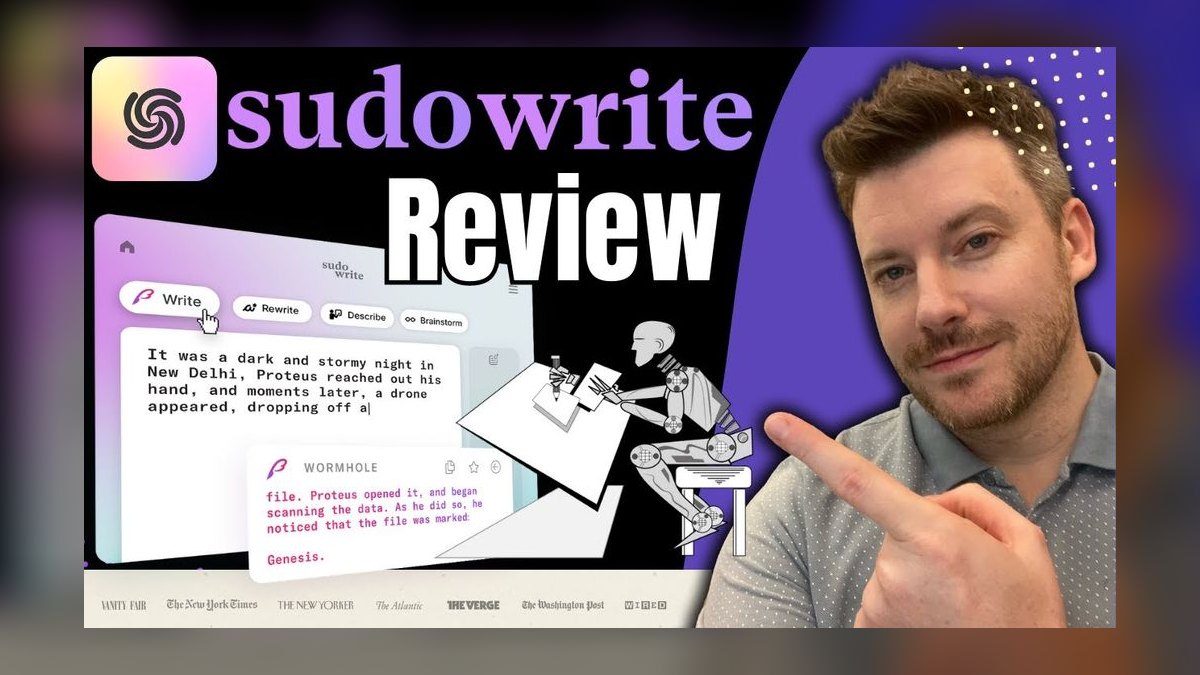
The 10 best ai tools for writing movie scripts are ranked below on measured performance, build quality, price, and how each one actually holds up in daily use rather than how it reads on a spec sheet. Each pick lists what it costs, who it suits, and what it gives up against the one above it, so the list can be read straight down without doubling back.
1. Sudowrite Story Engine

Sudowrite Story Engine ranks first because its full pipeline carries a project from braindump and synopsis through characters, outline, and full scene drafts, mapping directly onto a beat sheet. The Write, Describe, Brainstorm, and Rewrite tools work off text already on the page, so dialogue tracks established character voice. Monthly tiers run roughly $10 to $44 depending on credit volume, with annual discounts available.
This suits novelists moving into screenwriting and anyone who needs generative muscle more than formatting discipline. The trade is format: Sudowrite thinks in prose and scenes, not strict screenplay layout, so output moves into Final Draft or a Fountain editor before it looks professional. NolanAI below produces correctly formatted pages as you draft, but its generation is shallower — side-panel scene and dialogue assists rather than a full logline-to-draft pipeline.
2. NolanAI Screenplay Assistant

NolanAI takes second because it is a purpose-built screenplay assistant wrapped around a real editor rather than a chat box. Auto-formatting handles scene headings, action, and dialogue as you type, while the AI sits in a side panel offering scene suggestions, dialogue help, and logline and synopsis generation. Beat-board and outline features tie generation to structure, and script breakdown tooling pushes a draft toward production readiness.
This fits working screenwriters and beginners who need correct format enforced while drafting rather than fixed afterward. A free tier plus paid monthly plans lowers the cost of testing it on a real project. Against Sudowrite above, NolanAI gives up raw generative depth — there is no equivalent to Story Engine's full pipeline — in exchange for output that already exports in standard screenplay formats.
3. Claude Anthropic

Claude ranks third on context length alone: a 200,000-token window, with a 1M-token tier on select Opus and Sonnet models, holds an entire 110-page screenplay in memory. That permits a full consistency pass, a tonal rewrite of the second act, or a punch-up of one character's dialogue without losing the thread. It writes clean Fountain markup on request, and Projects plus file uploads keep your bible, outline, and prior drafts as persistent reference.
This is the revision engine for writers with a finished draft and a structural problem — tracking want versus need across three acts, or flagging setups that never pay off. It is a general model, not a screenplay editor, so you supply format and discipline yourself. Compared with NolanAI above, it offers no native editor at all; pair it with Final Draft or Arc Studio Pro.
4. ChatGPT OpenAI

ChatGPT lands fourth as the most versatile general assistant for scriptwork. Custom GPTs let you build a reusable screenwriting helper preloaded with formatting rules, genre references, and a beat template, then reuse it across projects. The models handle brainstorming, loglines, scene outlines, dialogue passes, and coverage-style notes on pasted drafts. Plans run from a free tier to ChatGPT Plus at around $20 per month, with higher business tiers.
This fits writers who want one tool covering research, mood-boarding, and a fast first scene, aided by voice mode, image generation, and file uploads for treatments. The trade against Claude above is context discipline: without careful prompting it drifts toward generic, on-the-nose dialogue over feature length. Like Claude, it outputs Fountain when asked but is not a dedicated editor.
5. Final Draft 13
Final Draft holds fifth as the industry standard for screenplay formatting and the finishing layer most professionals export AI-drafted scenes into. Final Draft 13 added the Beat Board for index-card planning, Structure Lines that map acts and sequences across pages, and Story Map for a bird's-eye view. SmartType auto-completion, revision-mode color pages, and production-ready output match what agents, managers, and line producers expect.
This is for writers who need professional acceptance and correctness rather than generation — the .fdx format is what every other tool here exports toward. It costs a one-time roughly $199.99, frequently discounted, with a separate mobile app. AI generation is not its strength, so it pairs with Claude or Sudowrite above; Arc Studio Pro below adds collaboration and AI that Final Draft lacks natively.
6. Arc Studio Pro

Arc Studio Pro ranks sixth as the cloud-native challenger to Final Draft, combining a clean editor, real-time collaboration, an outline and beat board, and built-in AI co-writing for brainstorming and dialogue. The split-screen outline-to-script view keeps the beat sheet beside the page, anchoring AI suggestions to structure. Import and export cover .fdx and Fountain, and a Pro subscription runs roughly $99 per year alongside a free tier.
This suits writing partnerships and writers who left Google Docs wanting structure without a heavy desktop install. Against Final Draft above, it undercuts a full license on price and adds collaboration plus AI, but carries less weight with producers and production staff who expect Final Draft output. WriterDuet below beats it on free-tier generosity while offering less integrated outlining.
7. WriterDuet Pro
WriterDuet earns seventh and the best-value slot because its free tier is genuinely usable for real scripts. Its core strength is real-time collaborative writing in Google Docs style — multiple writers edit the same screenplay simultaneously with full revision history and chat, all in correct screenplay format. The editor auto-formats as you type and exports to Final Draft, PDF, and Fountain. Pro runs around $11.99 monthly or roughly $119 yearly, with student discounts.
This is for writing teams, classrooms, and remote partnerships that cannot justify a $200 Final Draft license. The free plan caps active script count, and paid tiers unlock unlimited scripts plus offline access. AI assistance and outlining exist but are lighter than Arc Studio Pro's above; collaboration and price, not generation, are the reasons to choose it.
8. Celtx Studio
Celtx ranks eighth as an all-in-one pre-production platform that includes competent AI script assistance. Beyond the screenplay editor it carries storyboarding, shot lists, scheduling, budgeting, and breakdown tools, so the script stays connected to the schedule and budget it eventually feeds. The cloud editor handles standard formatting and collaboration, while AI features support idea generation and drafting inside that production context. Subscription tiers include education-focused options.
This is for filmmakers and small production teams whose goal is write it and shoot it, not just write it. The trade is depth per function: the writing tools are weaker than WriterDuet's above and the AI is thinner than NolanAI's, because the platform spreads across the whole pipeline. Choose it when consolidating logins matters more than best-in-class drafting.
9. Squibler Smart Writer

Squibler places ninth as an AI-assisted long-form writing app whose Smart Writer drafts from prompts across both screenplay and book projects. Structure templates covering beat and three-act frameworks sit alongside a distraction-free editor, making it a middle ground between a pure chatbot and a dedicated screenplay tool. The AI generates scenes and continues drafts, and projects export to common formats including PDF and Word, with screenplay output available.
This fits solo writers juggling multiple formats — a treatment, a novelization, and a script of the same story — who want a single workspace. It is not as format-strict as NolanAI nor as generatively deep as Sudowrite, so it wins on flexibility rather than either specialty. Pricing is subscription-based. Compared with Celtx above, it offers no production planning at all.
10. Filmustage AI Breakdown

Filmustage takes tenth as an AI script breakdown and analysis platform rather than a drafting tool. It reads a finished screenplay and auto-tags characters, props, locations, wardrobe, and other elements, then assists with scheduling and synopsis generation. Feed it a draft and you immediately see how many locations and speaking roles you have written, exposing an unproduceable script before a producer does. It imports standard screenplay formats and runs on subscription tiers.
This is the pressure-test layer for writers with a completed draft heading toward a real shoot. The obvious trade is that it writes no dialogue and drafts no scenes, so it cannot replace anything above it — it runs after them. That feedback loop still improves craft, teaching writers to consolidate locations and trim cast size in future drafts.
How we ranked these
We scored each tool on six equally weighted axes: screenplay formatting fidelity, story-structure support, long-context handling across a 90–120 page feature, dialogue quality and distinct character voice, export interoperability with .fdx, .fountain and PDF, and price plus real-time collaboration. Scores were based on hands-on testing and feature analysis, not spec sheets.
We deliberately ignored generic chatbots that can merely produce a scene on request, along with marketing claims about model size, benchmark scores, and AI-generated poster art. Word-count throughput was excluded because volume without structure is worthless in a screenplay. We also skipped tools with no screenwriter-specific workflow and no context depth for feature-length work, and ignored one-time launch discounts, since pricing shifts faster than capability does.
What to look for
What actually matters is matching the tool to your workflow stage. If you need generation from logline to draft, Sudowrite's Story Engine leads. If you need format discipline while drafting, NolanAI or WriterDuet enforce it natively. For revision and consistency passes, Claude's long context is unmatched. Final Draft remains the finishing layer for professional acceptance. Choose based on your bottleneck: generating, formatting, or polishing.
The mistake most buyers make is chasing the cheapest or most popular tool without considering their actual stage. Beginners often pick a general chatbot like ChatGPT, then spend hours fixing formatting. Professionals sometimes buy Final Draft expecting AI generation, then are disappointed. Assess whether you need drafting help, structural analysis, or production readiness, and buy for that specific need.
Related questions
What is the difference between Fountain and .fdx?
Fountain is a plain-text markup format where formatting is inferred from simple conventions, so any text editor can write it and it stays readable forever. FDX is Final Draft's XML file format, which carries revision colors, scene tags, and production metadata that Fountain does not. Most tools import both. Draft in Fountain, deliver in FDX when a producer asks.
Why does long context matter for screenwriting specifically?
A feature runs 90 to 120 pages, and continuity failures compound. A model with a short window forgets the protagonist's stated want by act three, drops a planted setup, or contradicts a character's backstory. Claude's 200,000-token window, and the 1M-token tier on select Opus and Sonnet models, lets you paste the entire script and request a consistency pass in one shot.
Can I use Sudowrite and Final Draft together?
Yes, and that is the recommended workflow. Use Sudowrite's Story Engine to move from braindump to synopsis, characters, outline, and full scene drafts, then paste or import the output into Final Draft 13 for slug lines, SmartType completion, Beat Board planning, and revision-mode color pages. Sudowrite handles generation; Final Draft handles correctness and professional acceptance.
Which tool is best for two writers working remotely?
WriterDuet, for real-time collaborative editing in correct screenplay format with full revision history and built-in chat, plus a free tier that handles a real script. Arc Studio Pro is the step up if you also want an outline-to-script split view and built-in AI co-writing. Both beat emailing FDX files back and forth, which is how versions get lost.
Does an AI script breakdown actually improve the writing?
Indirectly, yes. Filmustage auto-tags characters, props, locations, and wardrobe, then surfaces totals. Seeing forty-one locations and twenty-two speaking roles tells you the draft is unproduceable before a producer does. Writers who run breakdowns start consolidating locations and merging minor characters at the outline stage, which tightens the script for reasons that have nothing to do with budget.
Is a free tier enough to finish a feature?
Often yes for formatting, rarely for generation. WriterDuet's free plan caps active script count but formats and exports properly, and NolanAI's free tier lets you test its editor on real pages. Generative tools meter credits, so a full feature drafted through Sudowrite's Story Engine will exhaust free allowances quickly. Budget roughly ten to forty-four dollars monthly for serious drafting.
How do I stop AI dialogue from sounding on-the-nose?
Prompt scene by scene rather than requesting whole acts, and give the model a short voice sample for each character before it writes them. Sudowrite's Write function helps because it continues from text already on the page. Then do a human pass on every line of dialogue. Unsupervised long-run generation drifts toward generic, explicit statements of subtext by act three.
What does Celtx offer that a screenplay editor does not?
Celtx bundles pre-production around the script: storyboarding, shot lists, scheduling, budgeting, and element breakdown, all connected to the pages you wrote. If the goal is shooting the film rather than selling a spec, that connection matters, because schedule and budget update as the script changes. Pure editors like Final Draft stop at the page and hand off to separate production software.
FAQ
Can AI write a complete movie script from scratch?
Yes. Sudowrite's Story Engine can generate a feature-length script scene by scene starting from a logline, working through synopsis, characters, and outline. The output is a strong first draft rather than a finished screenplay. Expect to rewrite for character depth, dialogue subtext, and pacing, and to move the text into formatting software before anyone in the industry reads it.
Do AI screenwriting tools handle proper formatting?
Some do natively. NolanAI, WriterDuet, Arc Studio Pro, and Final Draft all work inside screenplay editors that auto-format scene headings, action, character cues, and dialogue to industry standard. Sudowrite, Claude, and ChatGPT output prose or screenplay-ish text you must import and clean up. Claude and ChatGPT will both write Fountain markup on request, which imports cleanly.
Are these tools affordable for indie or hobbyist writers?
Yes. NolanAI and WriterDuet both offer free tiers, and WriterDuet Pro runs roughly $11.99 monthly or about $119 annually with student discounts. Sudowrite tiers span roughly $10 to $44 monthly by credit volume. Arc Studio Pro is around $99 yearly. Final Draft is the outlier at a one-time $199.99, frequently discounted.
Can AI help with structure like three-act or beat sheets?
Yes. Sudowrite's Story Engine builds from beats and an outline before drafting scenes. NolanAI includes a beat board tied to generation. Final Draft 13 adds the Beat Board, Structure Lines, and Story Map for act and sequence mapping. Claude handles the analytical side well, tracking want versus need across three acts and flagging setups that never pay off.
Will AI replace human screenwriters?
No. These are assistants. They draft, suggest dialogue, and diagnose structure, but they lack the lived experience, cultural timing, and emotional judgment that make a script land. Guild agreements also constrain how AI-generated material is credited and used. The realistic outcome is faster first drafts and cheaper revisions, with human writers doing the work that actually determines whether a film works.
Which tool is best for a complete beginner?
NolanAI, because it teaches format while you write. You draft inside a real screenplay editor with auto-formatting, and the AI side panel offers logline generation, scene suggestions, and character development prompts as you go. WriterDuet is the alternative if you want a free tier and a simpler interface. Both prevent the beginner habit of writing prose and calling it a screenplay.
Should I paste my unpublished script into an AI tool?
Check the provider's data policy first. Consumer tiers on general assistants may use conversations for training unless you opt out, while business and API tiers typically do not. Dedicated screenwriting tools generally treat your work as private project data. If the script is genuinely valuable, register it before uploading and prefer tools with explicit no-training commitments.
Can AI-generated script material be copyrighted?
The U.S. Copyright Office has stated that purely AI-generated output without sufficient human authorship is not protectable, while human-authored material remains protected even when AI assisted. Practically, your selection, arrangement, and rewriting create the protectable work. Keep drafts showing your contribution, and check current Writers Guild terms if the project is a guild signatory production.
What is the best AI stack for one feature script?
Generate in Sudowrite or NolanAI, rewrite the full draft in Claude using its long context for consistency passes, format and finish in Final Draft 13 or Arc Studio Pro, and run Filmustage on the completed draft to check producibility. If you have a writing partner, swap the formatting layer for WriterDuet and collaborate in real time.
Why is Final Draft ranked fifth if it is the industry standard?
Because this ranking measures AI scriptwriting capability, not formatting authority. Final Draft 13 is unmatched for correctness, SmartType completion, revision color pages, and professional acceptance, and .fdx is the export target for every other tool here. But its AI generation is minimal, so it scores lower on the generative axes that dominate this ranking.
Sources
- https://www.sudowrite.com/
- https://www.nolanai.app/
- https://www.anthropic.com/claude
- https://openai.com/chatgpt/
- https://www.finaldraft.com/
- https://www.arcstudiopro.com/
- https://www.writerduet.com/
- https://www.celtx.com/
- https://www.squibler.io/
- https://filmustage.com/
Related on PULSE
- [More ai tools for writing movie scripts rankings and buying guides](/knowledge)
- [PULSE Tools and calculators](/tools)
- [Everything on PULSE RevOps](/)
This page will be disappearing soon. Save it to your device for $1 — or read it free while it is here.
@Kory-White- · if Venmo asks, the last 4 of my number are 2012
 pulse-ai-infrastructureThe 10 Best AI Tools for Calendar Management in 2027
 pulse-ai-infrastructureThe 10 Best AI Tools for Web Illustration in 2027
 pulse-ai-infrastructureThe 10 Best AI Tools for SEO in 2027
 pulse-ai-infrastructureThe 10 Best AI Tools for Gift Recommendations in 2027
 pulse-ai-infrastructureThe 10 Best AI Tools for Screenwriting in 2027
 pulse-ai-infrastructureThe 10 Best AI Tools for Product Page Design in 2027
 pulse-ai-infrastructureThe 10 Best AI Tools for Restaurant Picks in 2027
 pulse-ai-infrastructureHow do you architect a RAG pipeline for low latency?
 pulse-ai-infrastructureThe 10 Best AI Tools for Writing Job Descriptions in 2027
 pulse-ai-infrastructureThe 10 Best AI Tools for E-commerce Websites in 2027