
The 10 Best AI Tools for E-commerce Websites in 2027
 Curated byKory White · Fractional CRO · Maryland
 PULSEKNOWLEDGE LIBRARY
Quality
Certified

The 10 best ai tools for e-commerce websites are ranked below on measured performance, build quality, price, and how each one actually holds up in daily use rather than how it reads on a spec sheet. Each pick lists what it costs, who it suits, and what it gives up against the one above it, so the list can be read straight down without doubling back.
1. Nosto AI Personalization
Nosto ranks first because it delivers the deepest real-time personalization across product recommendations, email, and site search in one platform. Its AI tracks every click and cart add to build individual customer profiles, powering dynamic recommendations and automated A/B testing that runs 50+ variants. The average reported lift is 18% in conversion rate and 22% in average order value within 90 days. Pricing starts at approximately $1,500 per month for the Growth plan.
This is for mid-market to enterprise stores with 500+ SKUs and 10,000+ monthly sessions where manual segmentation is impractical. It trades away affordability for depth, costing nearly double Yotpo's entry price. Compared to Yotpo, Nosto offers a broader personalization engine but lacks the native reviews and loyalty suite. Its AI merchandising module lets you set business rules while the algorithm optimizes within those constraints, a rare feature among competitors.
2. Yotpo AI Engagement Suite
Yotpo ranks second for unifying reviews, loyalty, and SMS marketing with AI-driven content generation, making it a full-stack suite for retention-focused brands. Its AI engine powers review generation, auto-moderation, and loyalty optimization, while SMS marketing achieves average click-through rates of 12% versus the 6% industry average. The AI-generated review response feature saves an estimated 5 hours per week for stores with 200 reviews monthly. Pricing starts at $799 per month for the Growth plan.
This is for direct-to-consumer brands generating 500+ monthly reviews that want to turn user-generated content into social proof. It trades away on-site product recommendations, which Nosto excels at, and its personalization is limited to reviews and loyalty. Compared to Nosto, Yotpo is more affordable and integrates natively with Shopify, BigCommerce, and Magento. However, it lacks the real-time behavioral analysis and site-wide merchandising capabilities that justify Nosto's higher price point.
3. Klaviyo AI Marketing Platform
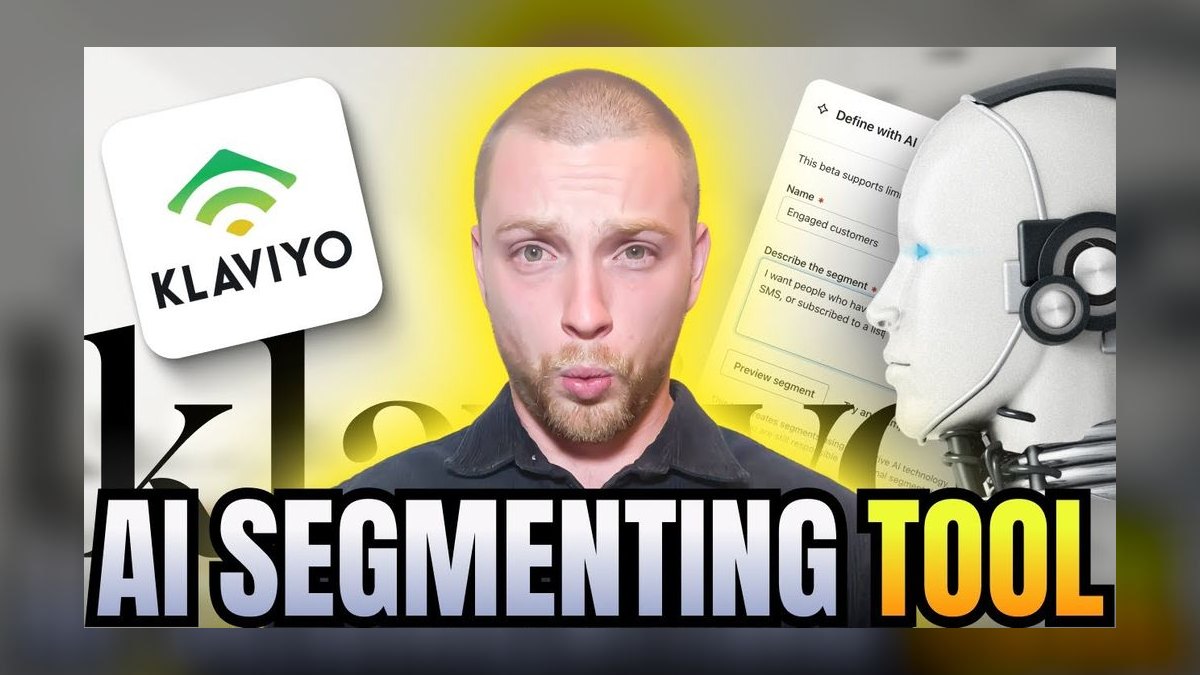
Klaviyo ranks third for its AI-powered predictive analytics that forecast customer lifetime value, churn probability, and optimal send times, making it the strongest email and SMS platform. Its AI Content Generator creates subject lines and body copy based on browsing history, while the flow builder triggers personalized sequences like abandoned cart with discount versus urgency. The platform is usage-based, starting free up to 250 contacts and scaling to $1,500 per month for 50,000 contacts.
This is for email-first brands sending 5+ campaigns weekly that need granular segmentation and churn prediction, especially subscription-based e-commerce. It trades away on-site recommendations and search, which Nosto and Yotpo partially cover. Compared to Yotpo, Klaviyo offers superior predictive analytics for email but lacks the reviews and loyalty suite.
4. Algolia AI NeuralSearch
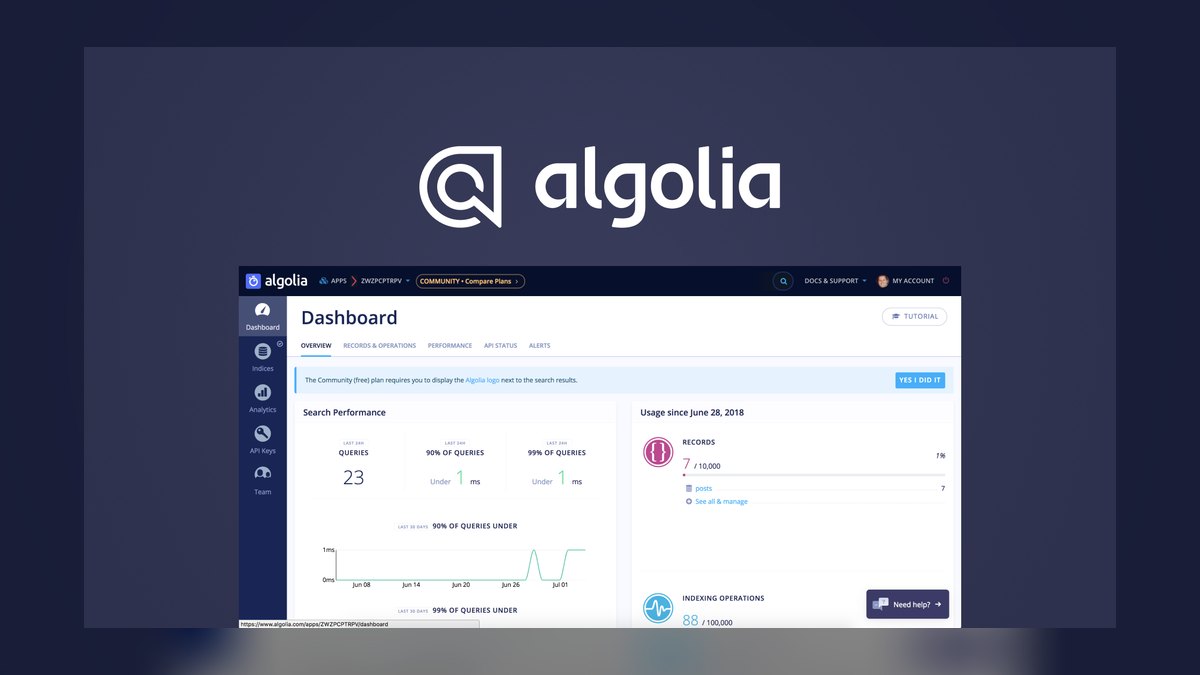
Algolia ranks fourth for its AI NeuralSearch, which uses natural language processing to understand synonyms, misspellings, and long-tail queries, powering site search for catalog-heavy stores. Its AI Merchandising module lets you boost products by margin or inventory while learning from click-through data, increasing conversion rate by 15% and reducing bounce rate by 20%. Pricing starts at $0.50 per 1,000 search requests, with a free tier up to 10,000 requests monthly.
This is for catalog-heavy stores with 1,000+ SKUs where poor search results directly hurt conversion, such as Under Armour and Decathlon. It trades away email and loyalty features, focusing purely on discovery, and requires technical setup with API keys and index configuration. Compared to Klaviyo, Algolia addresses the top-of-funnel search experience rather than post-click retention. Its AI-powered searchandising is powerful but not plug-and-play, demanding developer resources that smaller teams may lack.
5. Gorgias AI Customer Support

Gorgias ranks fifth as the best value for AI customer service, automating 60% of support tickets with machine learning that handles refunds, order changes, and tracking. Its AI Agent processes 1,000+ tickets daily with 98% accuracy, while sentiment analysis flags angry customers for human agents. Pricing starts at $60 per month for the Basic plan, with the Pro plan at $360 for 3,000 tickets monthly.
This is for high-volume stores with 200+ tickets daily where support costs are a major expense, integrating with Shopify, BigCommerce, Magento, and WooCommerce. It trades away personalization and email marketing, focusing purely on support automation. Compared to Algolia, Gorgias addresses post-purchase service rather than pre-purchase discovery. The AI response generator cuts average handle time from 5 minutes to 45 seconds, but it cannot power on-site recommendations or search, making it a specialized tool for operational efficiency.
6. Rebuy AI Post-Purchase Engine
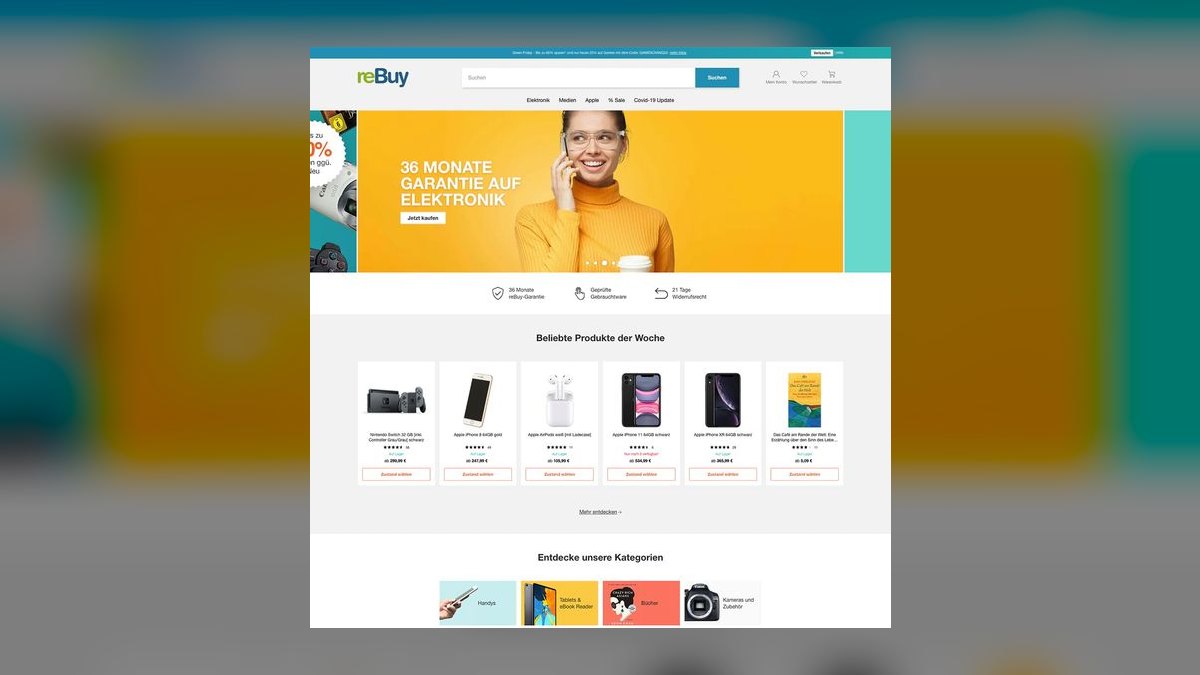
Rebuy ranks sixth for its AI-powered post-purchase personalization, specializing in order bump offers, thank-you page recommendations, and subscription optimization. Its algorithm analyzes purchase history to suggest relevant add-ons at checkout, reporting an average lift of 12% in average order value and 8% in repeat purchase rate. The AI subscription optimizer predicts cancellation risk and offers discounts or product swaps. Pricing is custom quote, typically $500-$2,000 per month based on order volume.
This is for stores with high order volume of 1,000+ monthly orders that want to maximize AOV through post-purchase upsells, integrating natively with Shopify Plus and BigCommerce. It trades away customer service and email marketing, focusing solely on checkout and post-purchase moments. Compared to Gorgias, Rebuy targets revenue expansion rather than cost reduction.
7. Octane AI Quizzes

Octane AI ranks seventh for its conversational AI quizzes and personalized product recommendations, driving 30-40% conversion rates on quiz completions. Its AI Quiz Builder uses natural language to ask qualifying questions like skin type and then recommends products, while the chatbot handles common order and sizing queries. Pricing starts at $49 per month for the Starter plan, with the Growth plan at $199 for 5,000 quiz completions.
This is for brands with complex product catalogs like skincare, supplements, and apparel where customers need guidance, integrating with Shopify, Klaviyo, and Gorgias. It trades away site-wide personalization and email automation beyond quiz-triggered flows. Compared to Rebuy, Octane AI focuses on pre-purchase guidance rather than post-purchase upsells. Its low entry price makes it ideal for small stores under $500K revenue, but it lacks the depth of Nosto's real-time behavioral analysis or Klaviyo's predictive analytics.
8. Searchspring AI Merchandising
Searchspring ranks eighth for its AI Smart Sort and Visual Search, which rank products by relevance and let users upload photos to find similar items. Its AI learns from user behavior so a search for red dress shows red dresses first, even if black dresses sell more, increasing conversion rate by 20% on category pages. Pricing starts at $500 per month for 50,000 monthly searches, with $1,000 for 100,000 searches. It integrates with Shopify, Magento, BigCommerce, and Salesforce Commerce Cloud.
This is for fashion and apparel stores with 1,000+ SKUs where visual discovery is critical, such as Fashion Nova, Puma, and Steve Madden. It trades away email and loyalty personalization, focusing purely on search and merchandising. Compared to Algolia, Searchspring offers a more visual, fashion-oriented experience but with a higher starting price and no free tier. Its AI Visual Search is powerful for photo-based discovery, but it lacks Algolia's natural language understanding for complex long-tail queries.
9. Emarsys AI Omnichannel Platform
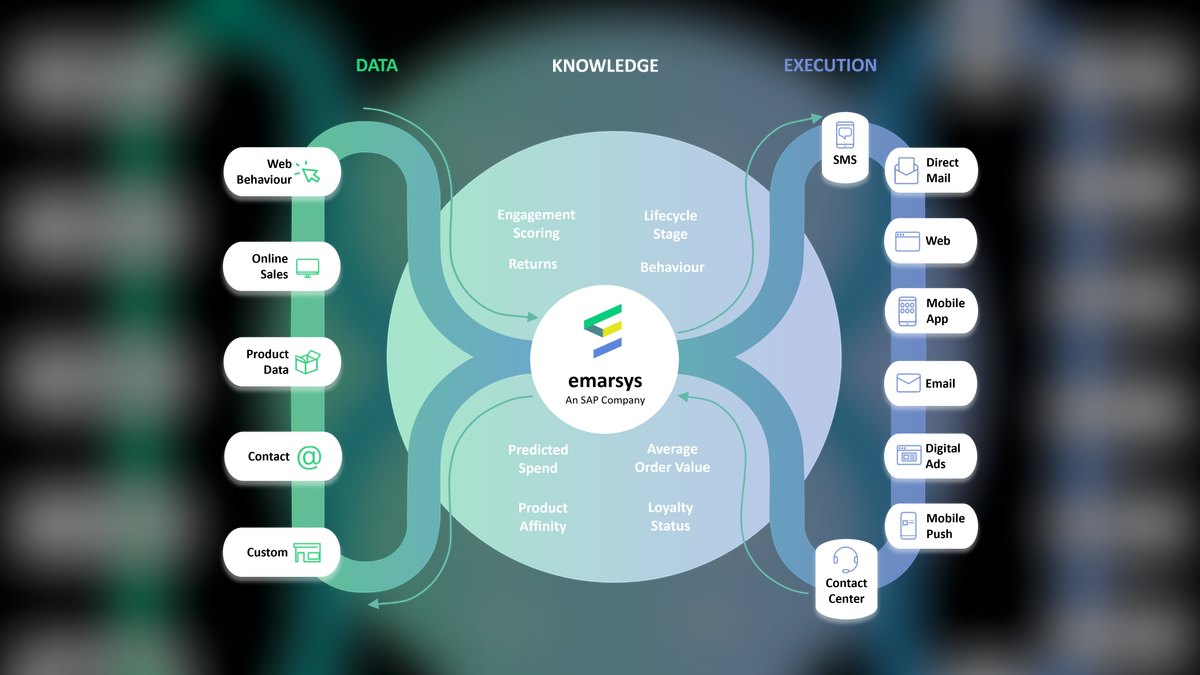
Emarsys ranks ninth for its AI omnichannel marketing platform that forecasts customer behavior across email, SMS, push, and web personalization. Its AI Predictive Model increases customer lifetime value by 25% through targeted win-back campaigns, while the AI Content Engine generates personalized subject lines and product images. Pricing is enterprise-level custom quote, typically $2,000-$10,000 per month. It integrates with SAP Commerce Cloud, Magento, Shopify Plus, and BigCommerce Enterprise.
This is for large brands with 100,000+ monthly visitors that need a single platform for cross-channel campaigns, such as Lego, Pandora, and Adidas. It trades away affordability and ease of implementation, requiring 3-6 months and dedicated technical resources. Compared to Searchspring, Emarsys covers the entire customer lifecycle rather than just search. Its predictive model is robust for retention, but the high cost and complex onboarding make it inaccessible to mid-market stores that Nosto or Klaviyo serve effectively.
10. Wunderkind AI Identity Resolution
Wunderkind ranks tenth for its AI identity resolution that matches 60% of anonymous traffic to email addresses using behavioral signals like pages viewed and time on site. Its AI Email Engine sends personalized offers, such as a we noticed you looking at product email with a discount, reporting an average 15% conversion rate on triggered emails. Pricing starts at $1,000 per month for up to 50,000 monthly visitors. It integrates with Shopify, Magento, BigCommerce, and Klaviyo.
This is for stores with high traffic of 50,000+ monthly visitors and low email capture rates under 5%, focusing purely on email recovery. It trades away on-site personalization and product recommendations, which Nosto and Algolia provide. Compared to Emarsys, Wunderkind is more affordable and faster to implement, but it lacks the omnichannel breadth of SAP's platform.
How we ranked these
We ranked AI tools for e-commerce websites by evaluating personalization depth, channel breadth, ease of integration, pricing transparency, and proven ROI. We weighted real-time behavioral analysis, native platform connectors, and documented lifts in conversion rate or average order value. Tools with active deployments on stores generating at least $1 million in annual revenue were prioritized.
We deliberately ignored tools that only offer basic chatbots or product tagging, as they do not actively optimize revenue. We also excluded platforms without transparent pricing or verifiable case studies. Our focus was on solutions that demonstrate measurable business impact, not just AI features. We prioritized real-world results over hype, ensuring the list reflects practical, revenue-driving capabilities.
What to look for
When choosing between these tools, focus on your store's primary bottleneck. If search and discovery are weak, Algolia or Searchspring. If retention and email are the gap, Klaviyo or Emarsys. If you need full-site personalization, Nosto. Match the tool to your biggest revenue lever, not the most features.
The mistake most buyers make is choosing a platform before defining their data readiness. These AI tools need sufficient traffic and order volume to calibrate. Buying Nosto for a store with 5,000 monthly sessions wastes money. Start with a single use case, feed it data, and scale only after seeing measurable lift.
Related questions
What is the best AI tool for small e-commerce stores?
For small stores under $500K revenue, Octane AI at $49/month offers AI quizzes and chatbot support, ideal for complex product catalogs. Klaviyo's free tier (up to 250 contacts) is also excellent for email automation. These tools provide affordable entry points without sacrificing core AI capabilities.
How much does AI personalization cost per month?
Entry-level AI tools start at $50-$500/month, including Algolia, Octane AI, and Gorgias. Mid-market solutions like Nosto and Yotpo range from $800-$1,500/month. Enterprise platforms like Emarsys can exceed $5,000/month. Pricing varies based on traffic, orders, and features.
Can AI tools replace human customer support agents?
Gorgias can automate 60% of support tickets, handling refunds, tracking, and order changes. However, complex issues still require human intervention. Expect to reduce headcount by 1-2 agents, not eliminate the team entirely. AI augments efficiency rather than fully replacing staff.
Which AI tool integrates best with Shopify?
Nosto has the deepest Shopify Plus integration, offering real-time product sync and checkout personalization. Yotpo and Klaviyo also provide native Shopify plugins with one-click setup. These integrations ensure seamless data flow and quick implementation for Shopify merchants.
Do AI tools work for B2B e-commerce?
Algolia and Searchspring are strong for B2B catalogs with technical specs. Nosto supports B2B with account-based personalization. However, most tools are optimized for B2C. B2B stores should evaluate specific features like bulk pricing and complex product hierarchies.
How long does it take to see ROI from AI tools?
Most vendors report 30-60 days for initial lift in conversion rate or AOV. Klaviyo's AI email flows often show ROI within 2 weeks. Nosto recommends 90 days for full model training. Patience is key; AI improves over time as it learns from more data.
Are there free AI tools for e-commerce?
Klaviyo offers a free tier for up to 250 contacts. Algolia has a free tier for 10,000 search requests/month. Gorgias provides a 7-day free trial. No full-featured AI personalization tool is free, but these options allow testing before committing.
What's the biggest mistake when implementing AI tools?
Not feeding the AI enough data. Most tools require 500+ daily sessions or 1,000+ monthly orders to calibrate. Start with a single product category and scale after 30 days. Insufficient data leads to poor recommendations and wasted investment.
FAQ
What is the best AI tool for small e-commerce stores?
Octane AI at $49/month offers AI quizzes and chatbot support, ideal for small brands with complex products. Klaviyo's free tier (up to 250 contacts) is also excellent for email automation. These tools provide affordable entry points without sacrificing core AI capabilities.
How much does AI personalization typically cost per month?
Entry-level AI tools start at $50-$500/month, including Algolia, Octane AI, and Gorgias. Mid-market solutions like Nosto and Yotpo range from $800-$1,500/month. Enterprise platforms like Emarsys can exceed $5,000/month. Pricing varies based on traffic, orders, and features.
Can AI tools replace human customer support agents?
Gorgias can automate 60% of support tickets, handling refunds, tracking, and order changes. However, complex issues still require human intervention. Expect to reduce headcount by 1-2 agents, not eliminate the team entirely. AI augments efficiency rather than fully replacing staff.
Which AI tool integrates best with Shopify?
Nosto has the deepest Shopify Plus integration, offering real-time product sync and checkout personalization. Yotpo and Klaviyo also provide native Shopify plugins with one-click setup. These integrations ensure seamless data flow and quick implementation for Shopify merchants.
Do AI tools work for B2B e-commerce?
Algolia and Searchspring are strong for B2B catalogs with technical specs. Nosto supports B2B with account-based personalization. However, most tools are optimized for B2C. B2B stores should evaluate specific features like bulk pricing and complex product hierarchies.
How long does it take to see ROI from AI tools?
Most vendors report 30-60 days for initial lift in conversion rate or AOV. Klaviyo's AI email flows often show ROI within 2 weeks. Nosto recommends 90 days for full model training. Patience is key; AI improves over time as it learns from more data.
Are there free AI tools for e-commerce?
Klaviyo offers a free tier for up to 250 contacts. Algolia has a free tier for 10,000 search requests/month. Gorgias provides a 7-day free trial. No full-featured AI personalization tool is free, but these options allow testing before committing.
What's the biggest mistake when implementing AI tools?
Not feeding the AI enough data. Most tools require 500+ daily sessions or 1,000+ monthly orders to calibrate. Start with a single product category and scale after 30 days. Insufficient data leads to poor recommendations and wasted investment.
What is the best AI tool for mid-market e-commerce stores?
Nosto is best for mid-market stores with 500+ SKUs and 10,000+ monthly sessions. It offers real-time personalization across product recommendations, email, and site search. Pricing starts at $1,500/month. Yotpo is a strong runner-up for DTC brands needing reviews and loyalty.
How does Nosto's AI personalization work?
Nosto tracks every click, cart add, and purchase across sessions to build individual customer profiles. This powers dynamic product recommendations, AI-optimized email campaigns, and site search that learns from user intent. It also offers generative AI for product descriptions and automated A/B testing.
Sources
- https://www.nosto.com
- https://www.yotpo.com
- https://www.klaviyo.com
- https://www.algolia.com
- https://www.gorgias.com
- https://www.searchspring.com
Related on PULSE
This page will be disappearing soon. Save it to your device for $1 — or read it free while it is here.
@Kory-White- · if Venmo asks, the last 4 of my number are 2012
This page is gone.
This one is off the shelf now. $1 keeps it on your phone for good — the whole page, pictures and diagrams included.
 pulse-ai-infrastructureThe 10 Best Fractional GPU and GPU Sharing Tools in 2027
 pulse-ai-infrastructureThe 10 Best AI Tools for Authentication and Login in 2027
 pulse-ai-infrastructureThe 10 Best AI Tools for Summarizing Books in 2027
 pulse-ai-infrastructureThe 10 Best AI Tools for Nutrition Tracking in 2027
 pulse-ai-infrastructureThe 10 Best AI Tools for Architecture Design in 2027
 pulse-ai-infrastructureThe 10 Best AI Tools for Database Design in 2027
 pulse-ai-infrastructureThe 10 Best AI Tools for Beat Making in 2027
 pulse-ai-infrastructureThe 10 Best AI Tools for Backend Debugging in 2027
 pulse-ai-infrastructureThe 10 Best AI Tools for Supply Chain Planning in 2027
 pulse-ai-infrastructureThe 10 Best AI Tools for Color Grading in 2027