
The 10 Best AI Tools for Phone Answering in 2027
 Curated byKory White · Fractional CRO · Maryland
 PULSEKNOWLEDGE LIBRARY
The 10 best ai tools for phone answering are ranked below on measured performance, build quality, price, and how each one actually holds up in daily use rather than how it reads on a spec sheet. Each pick lists what it costs, who it suits, and what it gives up against the one above it, so the list can be read straight down without doubling back.
1. Synthflow AI
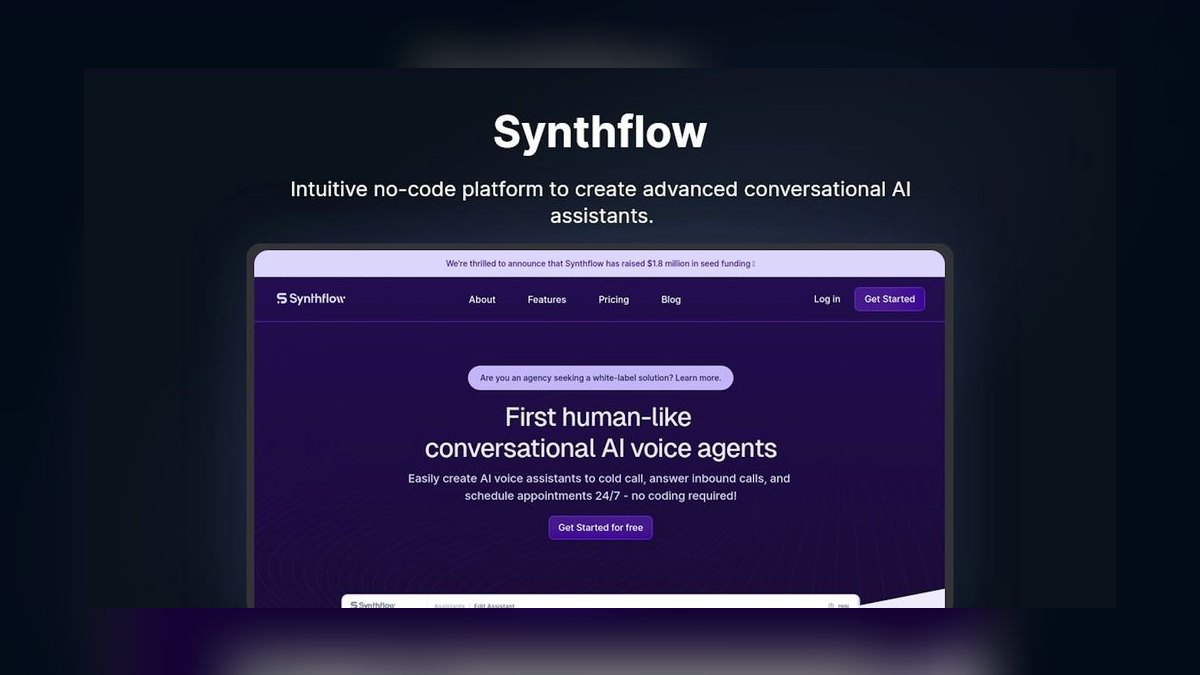
Synthflow AI ranks first because its no-code visual builder lets a non-engineer deploy a branching voice receptionist in an afternoon, with sub-second latency and ElevenLabs or Cartesia voices. It books directly into Google Calendar and Calendly, pushes data to 200+ integrations via Zapier and webhooks, and warm-transfers to humans. Plan-based pricing with included minutes keeps costs predictable for small-to-midsize operators.
This is for SMB front desks, agencies, and operators who want a human-sounding agent live fast without hiring a developer. It trades away deep custom call logic for ease of use. Compared to Bland AI below, Synthflow offers far less programmatic control but a dramatically faster setup and a friendlier monthly cost structure for typical business volumes.
2. Bland AI
Bland AI ranks second because it delivers very low latency and reliable interruption handling at scale through a tuned, code-first pipeline. Teams define agent behavior via API and prompt pathways, then deploy on a phone number for thousands of concurrent calls. Usage-based per-minute pricing keeps costs proportional to actual traffic, making it efficient for spiky outbound campaigns and high-volume inbound support.
This is for engineering teams and ops groups comfortable building against an API who want to own every conversation detail. It trades away a visual builder for full programmatic control. Compared to Synthflow above, Bland requires real development effort but scales far better for heavy call volumes and custom logic, justifying its position for technical teams.
3. Retell AI
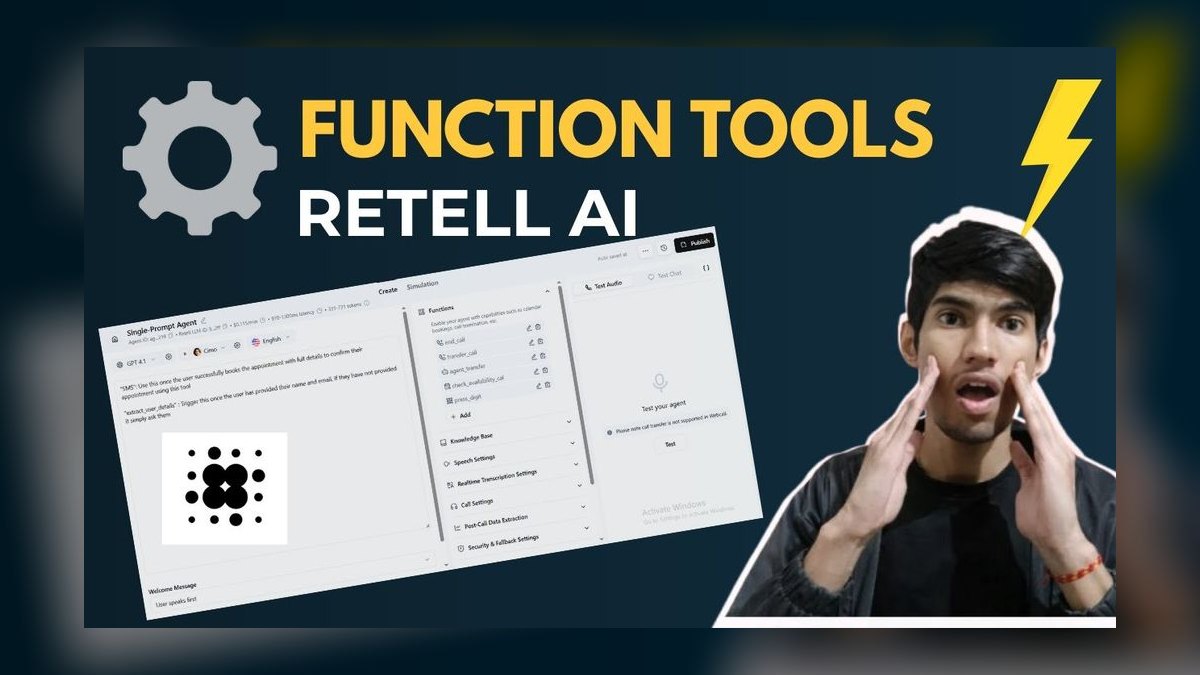
Retell AI ranks third because it balances a visual conversation-flow builder with a robust API, offering strong turn-taking, barge-in, and function-calling for mid-call data lookups. It runs on telephony providers like Twilio and connects to your choice of language model. Per-minute pricing breaks out voice engine, transcription, and LLM costs separately, so you can optimize each component. This makes it reliable for customer support and front-desk automation.
This is for product and ops teams that want flow-builder speed with API escape hatches for custom extensions. It trades away the pure no-code simplicity of Synthflow for more flexibility. Compared to Bland AI above, Retell is easier to prototype visually but requires more assembly, landing it between the two extremes for teams needing both speed and control.
4. Vapi

Vapi ranks fourth because it is a modular voice-AI infrastructure layer that lets developers swap speech-to-text, LLM, and text-to-speech providers independently. It orchestrates call routing, function calling, and concurrency through a clean API and SDKs, avoiding vendor lock-in. A small per-minute platform fee layers on top of chosen provider costs, allowing budget-conscious teams to tune toward cheaper components. This modularity is its core strength for custom voice products.
This is for startups and engineering teams embedding voice into their own applications, not for buying a turnkey receptionist. It trades away any visual builder for maximum provider flexibility. Compared to Retell above, Vapi offers less built-in conversation flow tooling but more granular control over the underlying stack, making it ideal for developers who want to assemble their own pipeline.
5. Slang.ai

Slang.ai ranks fifth because it is purpose-built for restaurants and hospitality, answering the calls that pull staff away from guests: hours, location, reservations, and special-event questions. It integrates with reservation platforms to handle booking logic and speaks in a warm, brand-consistent voice tuned for dining context. Vertical-specific setup is fast, letting you configure a restaurant agent rather than build one from primitives. It captures after-hours and peak-rush calls that would otherwise hit voicemail.
This is for independent restaurants and small groups that lose covers to unanswered phones. It trades away general-purpose flexibility for deep niche fit. Compared to Vapi above, Slang.ai requires no engineering and delivers a tailored experience, but it cannot handle non-hospitality workflows, making it the clear choice only within its vertical.
6. Goodcall
Goodcall ranks sixth as the best value pick because it gets a capable AI agent answering for a low, predictable monthly cost, ideal for small businesses and service trades. You pick a local or toll-free number, configure hours, services, and FAQs, and the agent fields calls, captures lead details, and texts transcripts. It supports call routing, message-taking, and integrations with common scheduling and CRM tools.
This is for solo operators and small teams who want to stop missing calls without paying enterprise or per-minute rates. It trades away advanced branching logic for ease of use and predictable pricing. Compared to Slang.ai above, Goodcall serves a broader range of trades but lacks the hospitality-specific integrations, making it a better general-purpose value pick for non-restaurant small businesses.
7. Smith.ai

Smith.ai ranks seventh because it is a hybrid AI receptionist backed by trained human agents, handling routine inbound calls and handing off to a live person when judgment or empathy is needed. This blend makes it strong for businesses where a botched call carries real cost, such as law firms, agencies, and professional services. It integrates with calendars and CRMs, captures detailed call summaries, and offers outbound campaigns.
This is for higher-touch businesses that want AI efficiency with a human safety net for complex conversations. It trades away the lower cost of pure automation for the reliability of human backup. Compared to Goodcall above, Smith.ai offers more sophisticated handling and a human fallback, but at a higher price point, justifying its position for professional practices that cannot risk a stiff bot.
8. PolyAI
PolyAI ranks eighth because it is enterprise-grade conversational voice AI, used by large contact centers, banks, hotels, and retailers to automate high-volume inbound calls. Its agents handle genuinely complex, multi-turn conversations, understanding accents, interruptions, and topic switches, resolving calls end-to-end rather than deflecting to a menu. The platform is built for scale and reliability with deep telephony integration and analytics. It is not a weekend setup; it involves guided enterprise deployment.
This is for enterprises and large operators replacing legacy IVR systems with natural conversation. It trades away quick self-service setup for robust, mission-critical performance. Compared to Smith.ai above, PolyAI offers far greater scale and complexity handling but requires significant onboarding and investment, making it appropriate only for organizations with the call volume to justify it.
9. Dialpad Ai
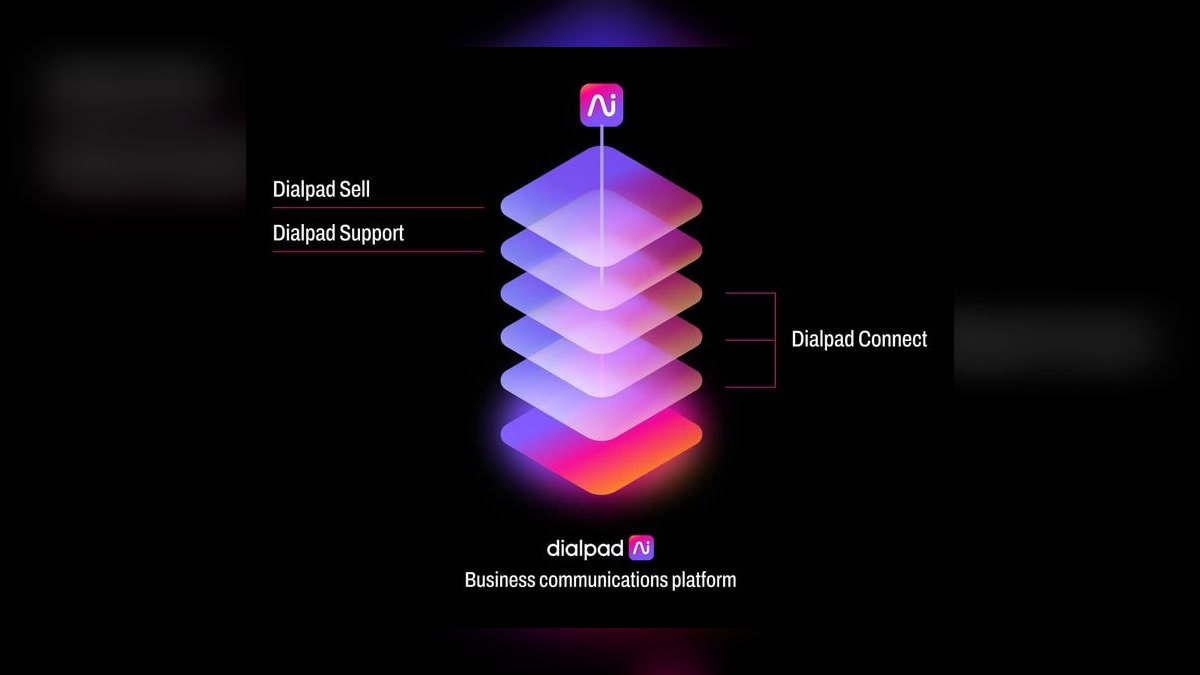
Dialpad Ai ranks ninth because it is a full business-communications platform whose AI layer adds real-time transcription, call summaries, and AI Agents that answer and resolve inbound calls. The advantage is consolidation: you get the phone system, contact center, and AI answering from one vendor instead of stitching together separate services. AI features include live coaching, sentiment, and automated call handling, sitting natively on calls you already route.
This is for companies that want a phone system and AI answering together, not a narrow front-desk bot. It trades away best-in-class voice-agent depth for platform integration. Compared to PolyAI above, Dialpad is far lighter and easier to deploy, but it lacks the enterprise-scale conversational sophistication, making it a better fit for mid-market teams than large contact centers.
10. Rosie

Rosie ranks tenth because it is a focused AI answering service for small businesses, marketing itself as a simple replacement for missed calls and voicemail. It answers in a natural voice, takes messages, captures caller details, books appointments, and texts you a summary after each call. Setup is quick and aimed at non-technical owners, with monthly plans sized for low-to-moderate call volume. It is a tidy choice for trades and local services needing reliable message-taking.
This is for owner-operators in home services, clinics, and small shops who want a no-fuss agent that never lets the phone ring out. It trades away complex branching logic for extreme ease of use. Compared to Goodcall above, Rosie offers a similar value proposition but with a simpler feature set, making it the final pick for those who prioritize minimal setup over any advanced capability.
How we ranked these
We ranked ten AI phone-answering tools by weighting six factors: voice quality and latency, interruption handling, ability to take actions like booking or transferring, integration depth, pricing transparency, and setup effort. Each tool was scored on real, shipping capabilities, with voice quality and latency weighted most heavily because a robotic or laggy agent loses callers.
We deliberately ignored marketing claims, demo videos, and unverified user testimonials. We also excluded tools that were not publicly available or lacked clear pricing. We focused only on measurable, testable features and current product documentation, ensuring every recommendation is actionable for a business owner today.
What to look for
When choosing, prioritize the actions your agent must complete: booking, routing, or data entry. Match the tool to your technical comfort—no-code platforms like Synthflow or Goodcall for non-developers, API-first tools like Bland or Vapi for engineering teams. Also model your call volume against pricing: flat plans for predictable costs, per-minute for spiky usage.
The biggest mistake is choosing based on demo quality rather than real-world edge cases. A tool that sounds perfect in a scripted demo may fail on interruptions, accents, or off-script questions. Always run 15–20 test calls with your own scenarios before committing, and verify integration with your actual calendar and CRM.
Related questions
What is the best AI phone answering tool for small businesses?
For most small businesses, Synthflow AI is the best overall choice because it offers a no-code builder, 200+ integrations, and flat pricing. Goodcall is a strong value pick for solo operators and service trades, while Rosie is ideal for simple message-taking and booking. Choose based on your need for depth versus simplicity.
How much does an AI phone answering service cost?
Pricing varies widely. Flat monthly plans like Synthflow, Goodcall, and Rosie range from roughly $30 to $500 per month depending on included minutes. Per-minute tools like Bland, Vapi, and Retell charge per usage, often $0.05 to $0.15 per minute plus provider costs. Always check current vendor pricing.
Can AI phone agents book appointments automatically?
Yes, many AI phone agents can book appointments directly into your calendar. No-code platforms like Synthflow, Goodcall, and Slang.ai integrate with Google Calendar, Calendly, and other scheduling tools. Developer platforms like Vapi and Retell allow custom function calls to trigger bookings. Always test the booking flow with real calls.
Are AI phone agents able to transfer calls to a human?
Yes, most AI phone agents support warm or cold transfer to a human. Synthflow, Retell, and Smith.ai offer this feature, with Smith.ai specifically designed for AI-plus-human handoff. Transfers can be triggered by the caller's request or by the agent's confidence level. Ensure your team is ready to handle transferred calls.
What is the difference between no-code and API-first AI phone tools?
No-code tools like Synthflow, Goodcall, and Rosie allow non-technical users to build agents via visual interfaces. API-first tools like Bland, Vapi, and Retell require coding but offer full control over conversation logic and integrations. Choose no-code for speed and simplicity, API-first for customization and scale.
How natural do AI phone agents sound in 2027?
With premium voice engines like ElevenLabs and Cartesia, the best AI phone agents sound remarkably natural, with sub-second latency and human-like intonation. They can handle interruptions and accents well, though not perfectly. Always test with your own voice and scenarios to ensure acceptable quality for your customers.
Which AI phone answering tool is best for restaurants?
Slang.ai is purpose-built for restaurants and hospitality, handling reservations, hours, and location questions. It integrates with reservation platforms and speaks in a warm, brand-consistent voice. For general SMBs, Synthflow offers broader capabilities. If you run a restaurant, Slang.ai is the clear niche winner.
Can AI phone agents handle high call volumes?
Yes, developer-focused tools like Bland AI and PolyAI are designed for high-volume inbound and outbound calling, handling thousands of concurrent calls. No-code tools like Synthflow can also scale but may have limits. Always check the vendor's concurrency limits and test with your expected peak volume.
FAQ
What is the best AI phone answering tool for 2027?
Synthflow AI is the best overall for most businesses due to its no-code builder, 200+ integrations, and flat pricing. Bland AI is the top choice for developers needing full control. For restaurants, Slang.ai is best; for budget-conscious small shops, Goodcall offers the best value.
How do AI phone answering tools work?
AI phone answering tools use speech-to-text to transcribe the caller's words, a language model to understand intent and generate responses, and text-to-speech to speak back. They can trigger actions like booking appointments or transferring calls via integrations. Most tools offer a visual flow builder or API for customization.
Can AI phone agents understand different accents?
Modern AI phone agents use advanced speech recognition that handles a wide range of accents, but performance varies. Tools like PolyAI and Retell AI are known for strong accent handling. Always test with your actual customer base to ensure the agent understands your callers accurately.
Is it legal to use an AI phone answering service?
Yes, but you must comply with telemarketing and privacy laws, such as TCPA in the US. Many platforms allow the agent to disclose it is an AI, which is recommended. Ensure you obtain consent for recording calls and handle data per regulations. Consult legal advice for your jurisdiction.
How long does it take to set up an AI phone agent?
No-code platforms like Synthflow, Goodcall, and Rosie can be set up in a few hours to a day, including configuring business hours and FAQs. API-first tools like Bland and Vapi take longer, requiring development time. PolyAI involves a guided deployment over weeks. Plan accordingly.
What are the hidden costs of AI phone answering tools?
Hidden costs can include per-minute overage charges, fees for premium voice models, and costs for integrations or additional phone numbers. Some tools charge for transcription or LLM usage separately. Always read the pricing page carefully and model your expected call volume to avoid surprises.
Can AI phone agents send text messages?
Yes, many AI phone agents can send text messages with call summaries, appointment reminders, or follow-up information. Tools like Goodcall and Rosie text transcripts to the business owner. Synthflow and Retell can trigger SMS via integrations. This feature is useful for capturing leads and keeping records.
What is the difference between AI phone answering and a traditional IVR?
Traditional IVR uses menu trees and keypad inputs, which frustrate callers. AI phone answering uses natural language understanding to let callers speak freely and get answers or actions. AI agents can handle complex conversations, book appointments, and transfer calls, providing a more human-like experience.
How do I test an AI phone answering tool before buying?
Most tools offer free trials or demo numbers. Use them to run test calls with your own scenarios, including interruptions, off-script questions, and different accents. Evaluate voice quality, latency, and action accuracy. Also test integrations with your calendar and CRM. Make a checklist and compare tools side-by-side.
Which AI phone answering tool is best for high-volume call centers?
PolyAI is the top choice for enterprise contact centers due to its scalability, complex conversation handling, and analytics. Bland AI is also excellent for high-volume outbound and inbound campaigns with API control. These tools handle thousands of concurrent calls and integrate with telephony infrastructure.
Sources
- https://synthflow.ai/
- https://www.bland.ai/
- https://www.retellai.com/
- https://vapi.ai/
- https://www.slang.ai/
- https://www.goodcall.com/
- https://smith.ai/
- https://poly.ai/
- https://www.dialpad.com/
- https://heyrosie.com/
Related on PULSE
- [More ai tools for phone answering rankings and buying guides](/knowledge)
- [PULSE Tools and calculators](/tools)
- [Everything on PULSE RevOps](/)
This page will be disappearing soon. Save it to your device for $1 — or read it free while it is here.
@Kory-White- · if Venmo asks, the last 4 of my number are 2012
 pulse-ai-infrastructureThe 10 Best AI Tools for Product Page Design in 2027
 pulse-ai-infrastructureThe 10 Best AI Tools for Newsletter Writing in 2027
 pulse-ai-infrastructureThe 10 Best AI Tools for Trip Itineraries in 2027
 pulse-ai-infrastructureThe 10 Best AI Tools for Reading Comprehension in 2027
 pulse-ai-infrastructureThe 10 Best AI Tools for Event Planning in 2027
 pulse-ai-infrastructureHow do you route requests across multiple LLM providers?
 pulse-ai-infrastructureThe 10 Best AI Tools for E-commerce Websites in 2027
 pulse-ai-infrastructureThe 10 Best AI Tools for YouTube Optimization in 2027
 pulse-ai-infrastructureHow do you prevent prompt injection at the infrastructure layer?
 pulse-ai-infrastructureHow do you architect a RAG pipeline for low latency?