

The 10 Best Edge AI Deployment Platforms in 2027
 Curated byKory White · Fractional CRO · Maryland
Quality
Certified
The 10 best edge ai deployment platforms are ranked below on measured performance, build quality, price, and how each one actually holds up in daily use rather than how it reads on a spec sheet. Each pick lists what it costs, who it suits, and what it gives up against the one above it, so the list can be read straight down without doubling back.
1. NVIDIA Jetson + TensorRT

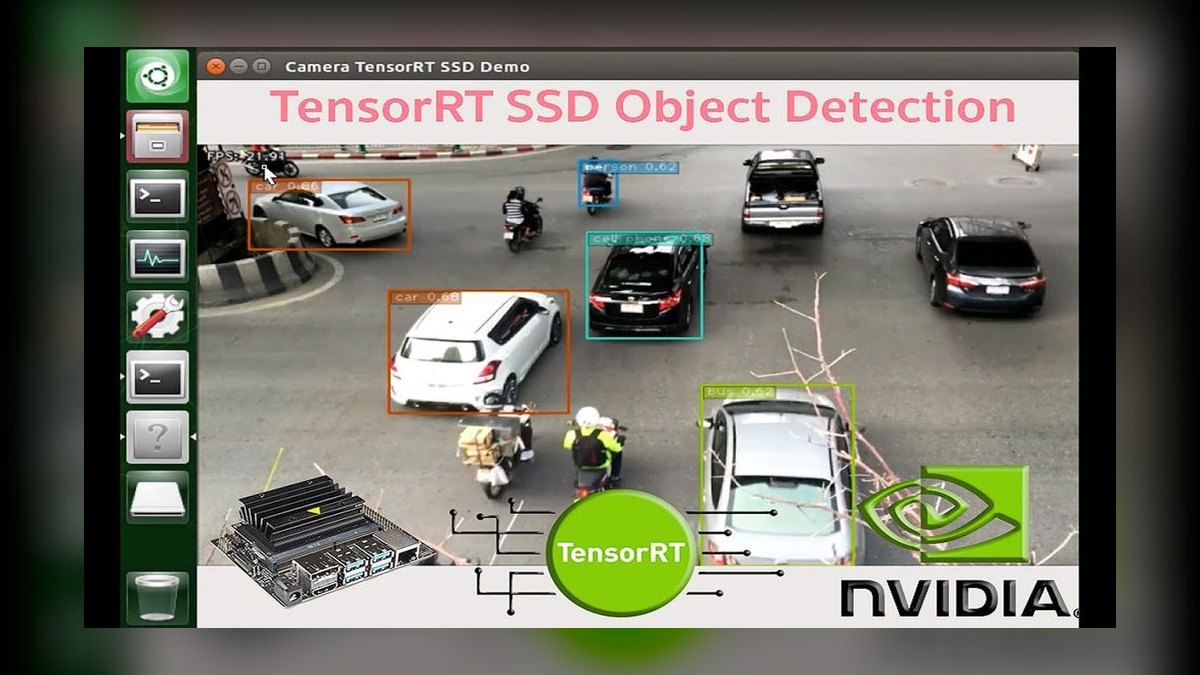
NVIDIA Jetson ranks first because no other platform pairs datacenter-class GPU compute with a production-proven software stack in a power envelope robots and cameras can carry. Jetson Orin modules scale from entry-level developer kits to industrial modules, and TensorRT handles quantization and kernel compilation for the target silicon. DeepStream builds multi-stream vision pipelines, TAO Toolkit covers transfer learning, and Triton Inference Server serves multiple models concurrently on one device.
This is for teams building vision, robotics, and high-compute edge systems where the compute budget allows an active GPU module. You pay for hardware and accept a wattage and thermal envelope no microcontroller platform demands, plus lock-in to CUDA. Against Edge Impulse directly below, Jetson targets the opposite end of the hardware range: watts and dollars per unit instead of kilobytes of RAM, with far more raw throughput.
2. Edge Impulse
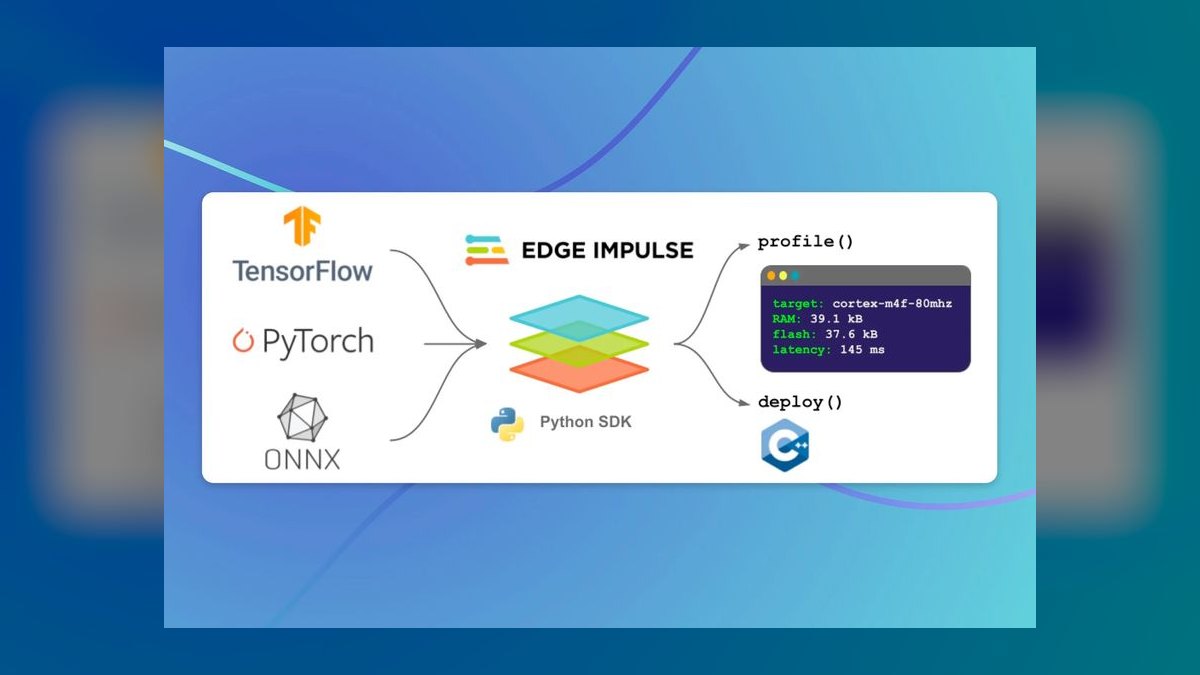
Edge Impulse ranks second on value because its free developer tier carries you from raw sensor data through labeling, model design, optimization, and deployment onto microcontrollers without embedded expertise. The EON compiler and post-training quantization squeeze models into kilobytes of RAM on Cortex-M and RISC-V class parts. Hardware support spans a wide catalog of low-cost boards, and the live classification dashboard surfaces model drift after deployment.
This suits sensor, audio, and anomaly-detection projects on battery-powered devices where a team lacks a dedicated embedded ML engineer. You trade away control over the training loop and accept a hosted workflow with tier caps on project time. Compared with the Jetson stack above, it targets far smaller silicon and lower unit cost, but cannot approach Jetson's throughput for multi-stream video.
3. LiteRT (TensorFlow Lite)
LiteRT ranks third because it is the default on-device runtime already shipping inside a very large share of Android applications. Google's converter handles post-training quantization down to INT8, and hardware delegates route execution to GPU, NNAPI, Core ML, or vendor NPUs without changing application code. TensorFlow Lite Micro extends the same format down to microcontrollers, and the whole runtime is free and open-source.
This is for mobile and embedded developers who need inference inside an app on Android, iOS, or embedded Linux. It is a runtime only: no fleet management, no over-the-air model delivery, and no training or monitoring layer, so you build that yourself. Unlike Edge Impulse above, it hands you components rather than a workflow, which means more integration work but no platform dependency.
4. ONNX Runtime

ONNX Runtime ranks fourth as the most portable option: one exported ONNX model runs across CPU, CUDA, TensorRT, OpenVINO, Core ML, and QNN through swappable execution providers. Train in PyTorch, TensorFlow, or scikit-learn, export once, and deploy the identical artifact to heterogeneous edge hardware. Optimized kernels and graph-level fusion keep performance competitive with vendor runtimes on most targets, and it is free and open-source.
This fits teams shipping one model to a fleet mixing several silicon vendors, or hedging against future hardware changes. Portability costs you the last increment of performance a vendor-native compiler extracts, and execution-provider coverage varies by operator. Compared with LiteRT above, it reaches more server and desktop-class hardware but has thinner mobile tooling and a smaller app-side ecosystem.
5. Intel OpenVINO
OpenVINO ranks fifth because it extracts the most performance from Intel silicon, which fills industrial PCs, gateways, and PC-class edge boxes. The toolkit bundles a model optimizer, post-training and training-aware quantization through NNCF, and a runtime tuned for Intel CPUs, integrated GPUs, NPUs, and VPUs. Model coverage is broad, the tooling is mature, and the entire toolkit is free and open-source.
This is for teams whose deployed fleet is already Intel-based — factory floor machines, kiosks, medical carts, retail systems. The payoff shrinks sharply off Intel hardware, so it is a poor default for mixed silicon. Against ONNX Runtime above, OpenVINO wins on Intel-specific throughput and quantization tooling but gives up the cross-vendor portability that makes ONNX the safer long-term bet.
6. Qualcomm AI Hub

Qualcomm AI Hub ranks sixth for reach: Snapdragon silicon ships in billions of phones and IoT devices, and AI Hub compiles, profiles, and optimizes models for the Hexagon NPU and Adreno GPU. A library of pre-optimized models covers common vision and language workloads, and profiling runs on real hardware rather than simulation. Developer access is free; the constraint is owning or targeting Snapdragon devices.
This is for mobile and IoT teams whose target hardware is already Snapdragon and who need power-efficient NPU inference rather than CPU fallback. It is single-vendor by design, so nothing transfers to Intel, NVIDIA, or Apple targets. Compared with OpenVINO above, it covers a much larger installed device count but a narrower hardware class — handsets and IoT modules instead of industrial PCs.
7. AWS IoT Greengrass
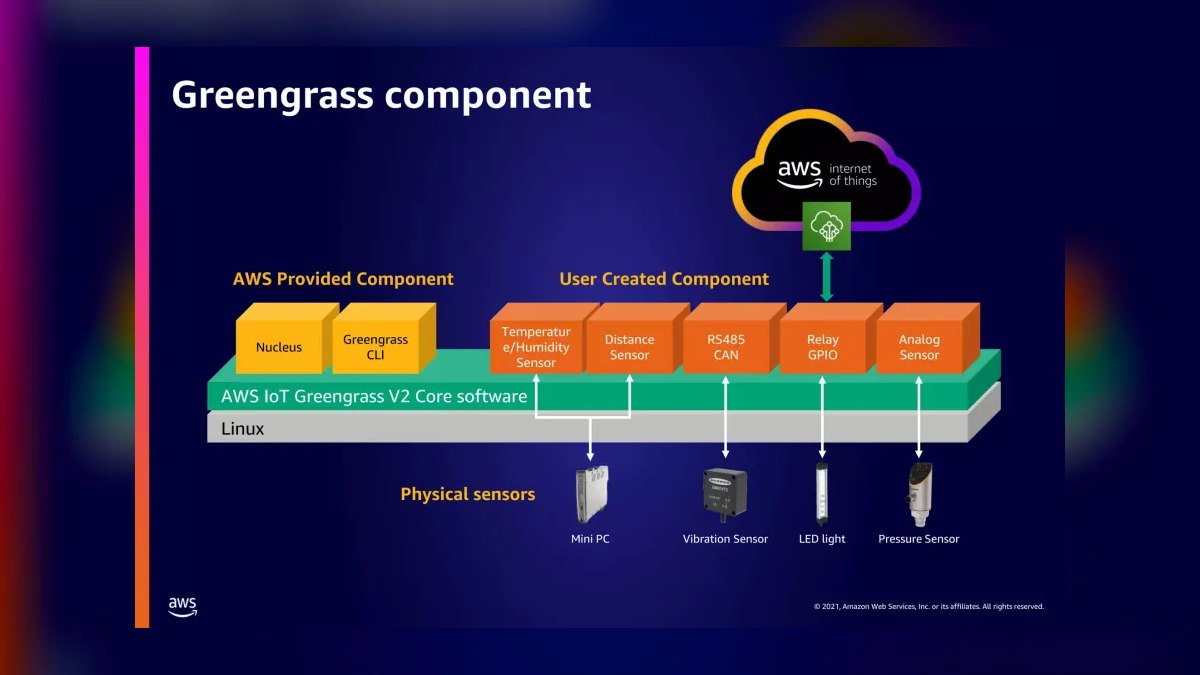
Greengrass ranks seventh because it solves operations rather than inference: secure over-the-air model delivery, device shadows, staged rollouts, and offline operation across large fleets. SageMaker handles training, Neo compiles models for target hardware, and Greengrass deploys them alongside Lambda functions and containers. The core runtime is free, with usage-based charges for the surrounding AWS services and fleet management.
This is for organizations already standardized on AWS that must update thousands of devices they cannot physically reach. It is not an optimization toolchain — you still pair it with a runtime like ONNX Runtime or LiteRT on the device. Against the runtime-first picks above, it adds the lifecycle layer they lack, at the cost of cloud dependency and per-device operating spend.
8. Azure IoT Edge
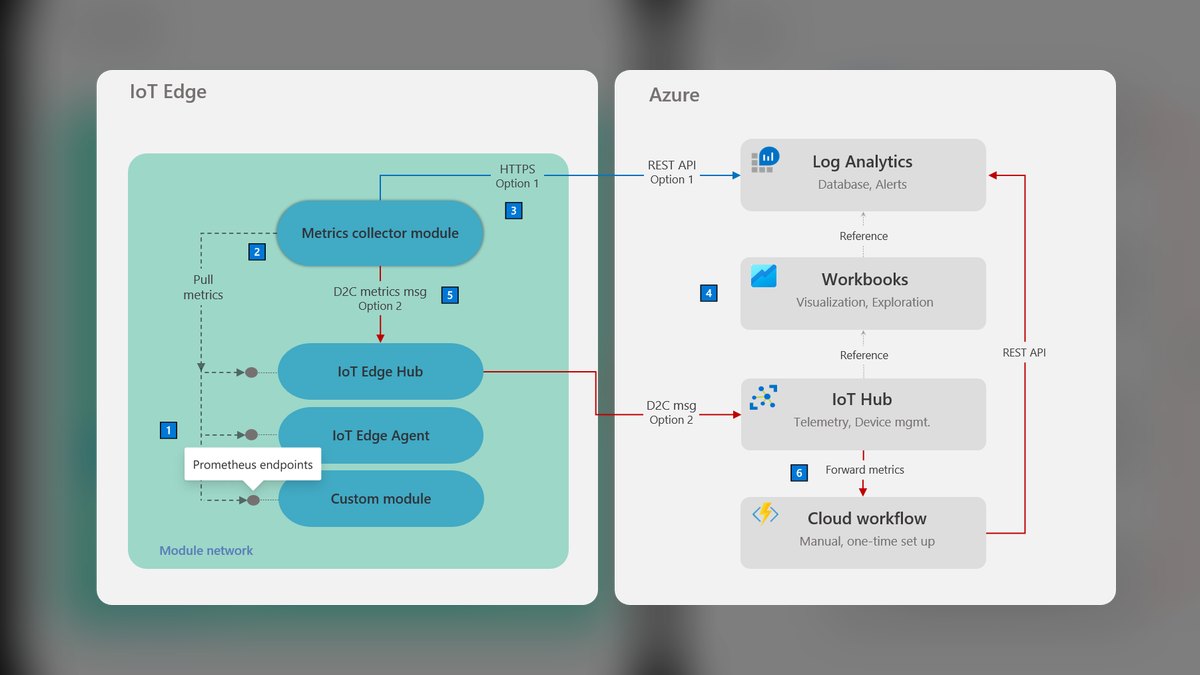
Azure IoT Edge ranks eighth by packaging AI workloads as containerized modules deployed and configured centrally through Azure IoT Hub. Module twins carry desired-state configuration, updates roll out over the air, and devices keep running while disconnected. Azure Machine Learning covers training and packaging upstream, and the container model means standard Docker tooling and existing CI pipelines transfer directly.
This fits enterprises already governed on Azure that need audited, containerized deployments rather than bare model files. Containers demand meaningfully more device memory and storage than a bare runtime, ruling out microcontroller-class hardware entirely. Compared with Greengrass above, it offers a cleaner container abstraction and tighter enterprise identity integration, but a smaller edge-device ecosystem and heavier per-device resource requirements.
9. Google Coral Edge TPU
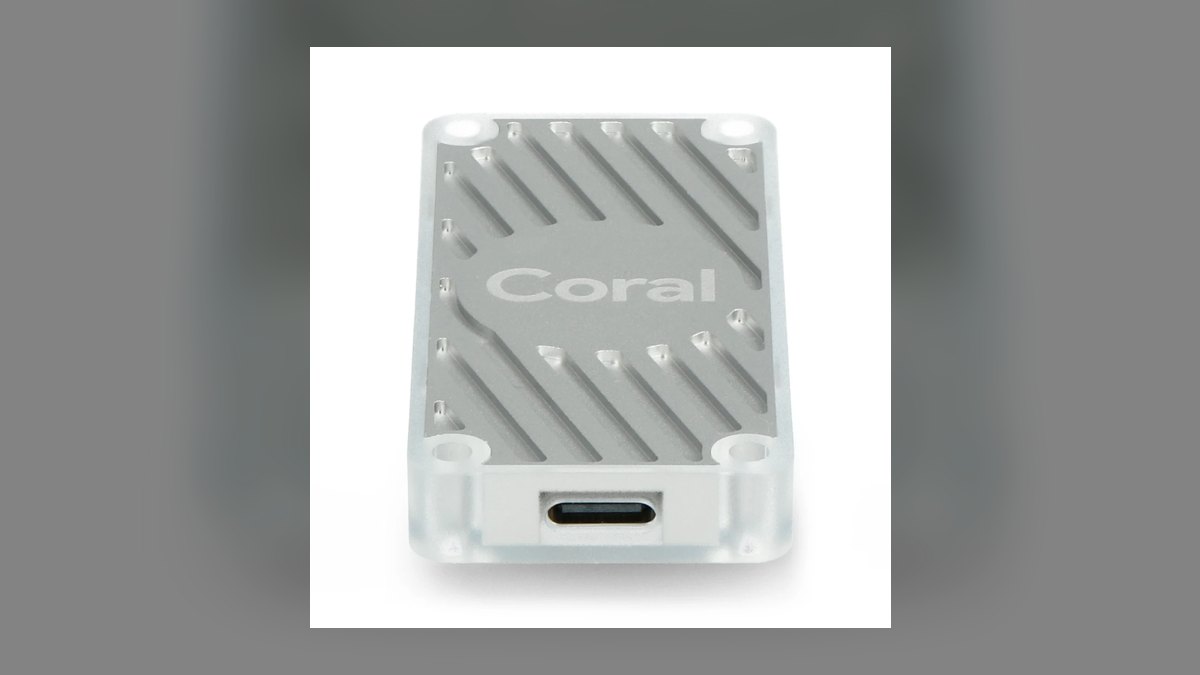
Coral ranks ninth on inference-per-watt: the Edge TPU runs quantized TensorFlow Lite models at high throughput on a very small power budget. Hardware comes as USB accelerators, developer boards, and solderable SoMs at low unit cost, and the Edge TPU compiler converts INT8-quantized TFLite models in one step. For continuous low-power vision and sensing, few options match the efficiency per dollar.
This is for always-on camera and sensor products where wattage and bill-of-materials cost dominate the design. The constraint is real: models must be fully INT8-quantized TFLite, unsupported operators fall back to CPU, and the memory ceiling is low. Against Jetson at the top of this list, Coral trades nearly all model flexibility and raw throughput for a fraction of the power draw and price.
10. Apache TVM
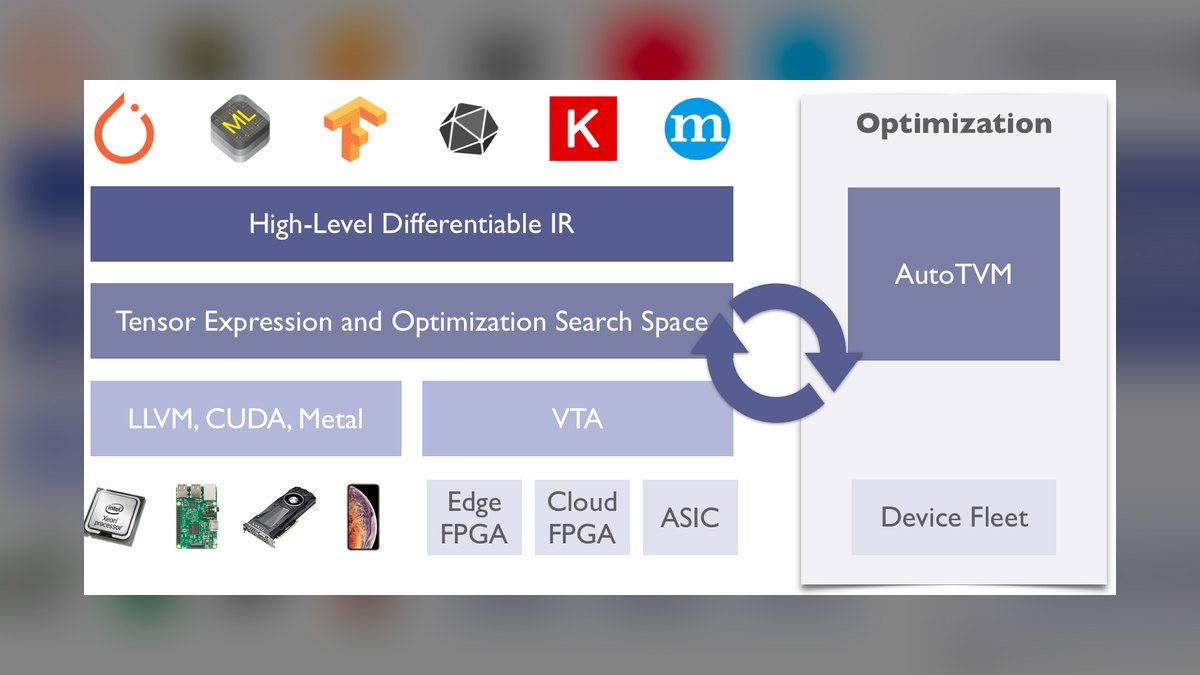
Apache TVM ranks tenth because it is a compiler stack, not a platform — maximum performance in exchange for maximum effort. It ingests models from any framework and generates optimized code for CPUs, GPUs, and specialized accelerators, with auto-tuning that searches schedules against the actual target hardware. On silicon no vendor runtime targets well, that search often beats hand-written kernels. It is free and open-source.
This is for teams with custom or unusual accelerators and engineers willing to run tuning jobs and debug generated code. There is no deployment layer, no fleet management, no monitoring, and no GUI — you build everything around it. Compared with Coral above, TVM imposes no hardware choice at all, but delivers nothing out of the box where Coral hands you a working accelerator and a one-command compiler.
How we ranked these
We scored each platform on five axes: hardware reach across MCUs, mobile SoCs, and edge GPUs; optimization toolchain depth including quantization, pruning, and target compilation; deployment and over-the-air update mechanics across a real fleet; measured runtime latency and inference-per-watt on target silicon; and day-two operations covering versioning, monitoring, drift detection, and device security. Deployment and operations carried extra weight because unreachable devices, not slow kernels, sink most edge programs.
We deliberately ignored benchmark leaderboard rankings run on developer kits, since driver versions and thermal headroom on production hardware rarely match. We ignored raw TOPS figures from vendor spec sheets, which correlate poorly with achieved throughput after quantization. We ignored GitHub star counts, conference presence, and analyst quadrant placement. We also skipped training-side features, since teams already own that stack before an edge deployment decision arrives.
What to look for
Your hardware target decides more than any feature comparison will. A Cortex-M4 with 256KB RAM and a Jetson Orin share almost no tooling, so pick the platform whose optimizer already emits code for your exact part number, then verify on production silicon rather than the devkit. After that, weigh OTA reliability: delta updates, staged rollouts, signed artifacts, and rollback matter more than a few milliseconds of inference latency you will never notice.
The common mistake is optimizing for prototype speed and discovering the operations bill later. Teams pick whatever gets a demo running in an afternoon, ship 500 devices, then find the free tier caps device count or charges per inference above a threshold. Model formats create the second trap — a vendor-only export locks you to that silicon. Prefer ONNX or TFLite intermediates, and price the fleet at target scale before committing.
Related questions
What is the difference between edge AI and cloud inference?
Cloud inference sends data to a remote GPU and returns a prediction, adding network round-trip latency and bandwidth cost. Edge AI runs the model on the device itself — a camera, phone, gateway, or vehicle — so results arrive in milliseconds, data never leaves the premises, and the system keeps working offline. The tradeoff is constrained memory and compute, which forces quantization and compilation.
Do I need a hardware accelerator for edge AI?
Not always. Modern CPUs with quantized INT8 models handle many sensor and audio workloads fine, and ONNX Runtime or OpenVINO extract respectable throughput from ordinary silicon. Accelerators earn their cost when you need real-time vision, multiple concurrent models, or tight power budgets. A Coral Edge TPU or Jetson module changes inference-per-watt by an order of magnitude for those workloads.
How much accuracy do you lose to quantization?
Post-training INT8 quantization typically costs one to three percentage points on well-behaved vision and audio models, sometimes less. Quantization-aware training recovers most of that gap at the cost of a retraining cycle. Aggressive 4-bit schemes on language models lose more but remain usable. Always measure on your own held-out data — published degradation figures come from ImageNet-class benchmarks, not your sensor stream.
Can one model deploy to several different edge targets?
Yes, and that is precisely what ONNX Runtime and Apache TVM exist for. Export once to ONNX, then let execution providers or the TVM compiler emit target-specific code for CUDA, TensorRT, OpenVINO, CoreML, or QNN. You still validate per target, since numerics and operator coverage differ. The alternative — a separate vendor toolchain per device family — multiplies maintenance across every model revision.
How do you detect model drift on devices you cannot reach?
Instrument confidence distributions and class balance on-device, then ship aggregate statistics rather than raw data back to the cloud. A shift in the confidence histogram usually precedes a measurable accuracy drop. Edge Impulse and DeepStream expose dashboards for this. Sample a small labeled subset periodically for ground truth, and treat any sustained distribution change as a trigger to retrain and roll out.
What does over-the-air model updating actually require?
Signed artifacts, a device identity system, delta transfer so you push kilobytes instead of megabytes, staged rollout to a canary cohort, health checks after install, and automatic rollback when checks fail. Devices must survive power loss mid-update. AWS IoT Greengrass and Azure IoT Edge provide this scaffolding; rolling your own is a multi-quarter project most teams underestimate badly.
Are large language models practical on edge hardware in 2027?
On capable devices, yes. Jetson-class GPUs and Snapdragon NPUs run multi-billion-parameter models quantized to 4-bit at usable token rates for assistants and summarization. Memory bandwidth, not raw compute, is the binding constraint. Microcontrollers remain out of reach and should run small task-specific models instead. Decide by measuring tokens per second against what your interaction actually tolerates.
How should you budget for a fleet of edge AI devices?
Count three lines: hardware unit cost, per-device management fees, and cloud egress for telemetry and updates. Managed fleet platforms commonly run between roughly $0.50 and $15 per device monthly, which dominates total cost past a few hundred units. Some platforms bill per inference above a free threshold, which scales badly for always-on vision. Model the bill at target fleet size before signing.
FAQ
Which edge AI platform is best overall in 2027?
NVIDIA Jetson paired with TensorRT, DeepStream, TAO, and Triton. The hardware spans developer kits to industrial modules at edge-appropriate power, and the software path from trained model to deployed inference is production-proven and unusually complete. It is the strongest choice for vision, robotics, and any workload that needs real GPU compute at the edge rather than microcontroller-scale inference.
What is the best value edge AI platform?
Edge Impulse. Its end-to-end workflow carries you from data collection and labeling through model design, EON-compiler optimization, and deployment onto microcontrollers with kilobytes of RAM — without deep embedded expertise. The free developer tier is generous enough for real prototyping, and hardware support spans a wide range of inexpensive boards. Paid enterprise plans handle fleet scale when you outgrow it.
What is the difference between a runtime and a deployment platform?
A runtime such as LiteRT, ONNX Runtime, or TensorRT executes the model on-device and nothing more. A deployment platform wraps that with the lifecycle: data and training, optimization, packaging, over-the-air delivery to a fleet, and monitoring. Real systems usually combine them — ONNX Runtime doing inference inside containers that AWS IoT Greengrass distributes and manages across devices.
Which platform should I choose for microcontrollers?
Edge Impulse for the full workflow, or LiteRT for Microcontrollers if you want just the runtime and already handle training yourself. Both target Cortex-M, RISC-V, and ESP32 class parts. Google Coral fits when you can add an Edge TPU and need vision throughput. The deciding factor is whether your model fits available RAM after INT8 quantization.
How do I pick between OpenVINO and ONNX Runtime?
If your fleet is Intel CPUs, integrated GPUs, or NPUs, OpenVINO extracts more performance because Intel tunes it for that silicon and ships NNCF for quantization. If you deploy the same model across mixed hardware, ONNX Runtime wins on portability through execution providers. Many teams use both — ONNX Runtime with the OpenVINO execution provider gets a reasonable amount of each.
What does Qualcomm AI Hub give me over LiteRT on Android?
Direct access to the Hexagon NPU with Qualcomm's own compiler and profiler, plus a library of pre-optimized models. LiteRT reaches the same silicon through delegates but usually leaves performance on the table. If your app targets Snapdragon specifically and inference speed or battery drain is a product requirement, AI Hub is worth the vendor-specific toolchain.
When do I need AWS IoT Greengrass or Azure IoT Edge?
When device count, not model complexity, is your hard problem. Both exist to manage fleets: secure OTA delivery, device identity, containerized modules, offline operation, and central configuration. Choose by existing cloud commitment rather than feature comparison — the integration with SageMaker or Azure ML is where the real leverage sits. Below roughly fifty devices, the overhead rarely pays for itself.
Why would I use Apache TVM instead of a vendor toolchain?
When your target silicon has no good vendor runtime, or when vendor defaults leave measurable performance unclaimed. TVM's auto-tuning searches schedules for your specific operators and hardware, sometimes beating hand-tuned libraries. The cost is expertise and tuning time. It is the power-user option for custom accelerators, heterogeneous fleets, and situations where a few milliseconds genuinely changes the product.
How do I avoid vendor lock-in with edge AI platforms?
Keep your model in a portable intermediate — ONNX or TFLite — and treat vendor compilation as a final build step rather than your source of truth. Store training code and datasets outside the platform. Verify you can export a deployable artifact before committing. Fleet management is stickier than inference, so evaluate migration cost there most carefully before signing multi-year terms.
What is the most common edge AI deployment failure?
A model that works on the developer kit and fails on production hardware. Driver versions differ, thermal throttling appears under a real enclosure, memory is tighter, and accelerator support varies by SKU. Test on the exact production part early, under realistic thermal and power conditions, before the design freezes. The second most common failure is OTA infrastructure that cannot roll back a bad model.
Sources
- https://developer.nvidia.com/embedded/jetson-modules
- https://docs.edgeimpulse.com/
- https://ai.google.dev/edge/litert
- https://onnxruntime.ai/docs/execution-providers/
- https://docs.openvino.ai/
- https://aihub.qualcomm.com/
- https://docs.aws.amazon.com/greengrass/
- https://learn.microsoft.com/en-us/azure/iot-edge/
- https://coral.ai/docs/
- https://tvm.apache.org/docs/
Related on PULSE
This page will be disappearing soon. Save it to your device for $1 — or read it free while it is here.
@Kory-White- · if Venmo asks, the last 4 of my number are 2012
This page is gone.
This one is off the shelf now. $1 keeps it on your phone for good — the whole page, pictures and diagrams included.
 pulse-ai-infrastructureThe 10 Best AI Tools for Color Grading in 2027
 pulse-ai-infrastructureThe 10 Best AI Tools for End-to-End Testing in 2027
 pulse-ai-infrastructureHow much does AI Infra cost in 2027?
 pulse-ai-infrastructureThe 10 Best AI Tools for Web Illustration in 2027
 pulse-ai-infrastructureThe 10 Best LLM Gateways in 2027
 pulse-ai-infrastructureThe 10 Best AI Tools for Concept Art in 2027
 pulse-ai-infrastructureWhat is confidential computing and why does it matter for AI in 2027?
 pulse-ai-infrastructureThe 10 Best AI Tools for Album Art in 2027
 pulse-ai-infrastructureThe 10 Best AI Observability Tools for RAG Pipelines in 2027
 pulse-ai-infrastructureThe 10 Best Distributed Training Frameworks in 2027