


The 10 Best AI Tools for Cloud Cost Optimization in 2027
Quality
Certified
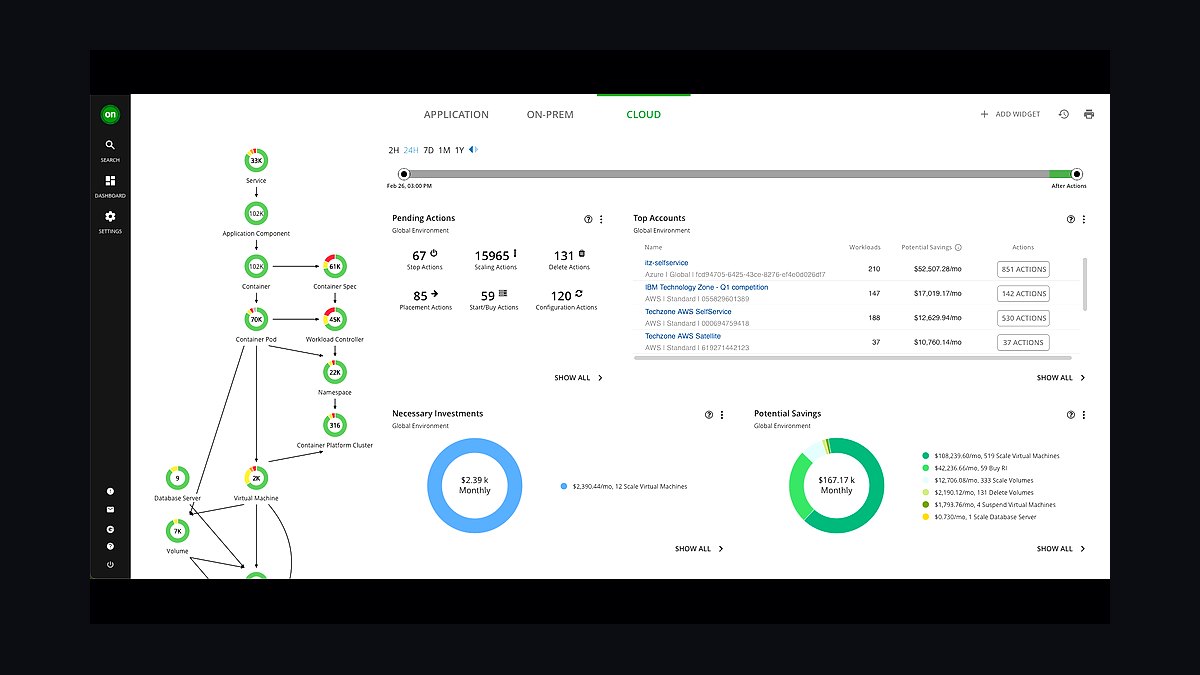
The 10 best ai tools for cloud cost optimization are ranked below on measured performance, build quality, price, and how each one actually holds up in daily use rather than how it reads on a spec sheet. Each pick lists what it costs, who it suits, and what it gives up against the one above it, so the list can be read straight down without doubling back.
1IBM Turbonomic
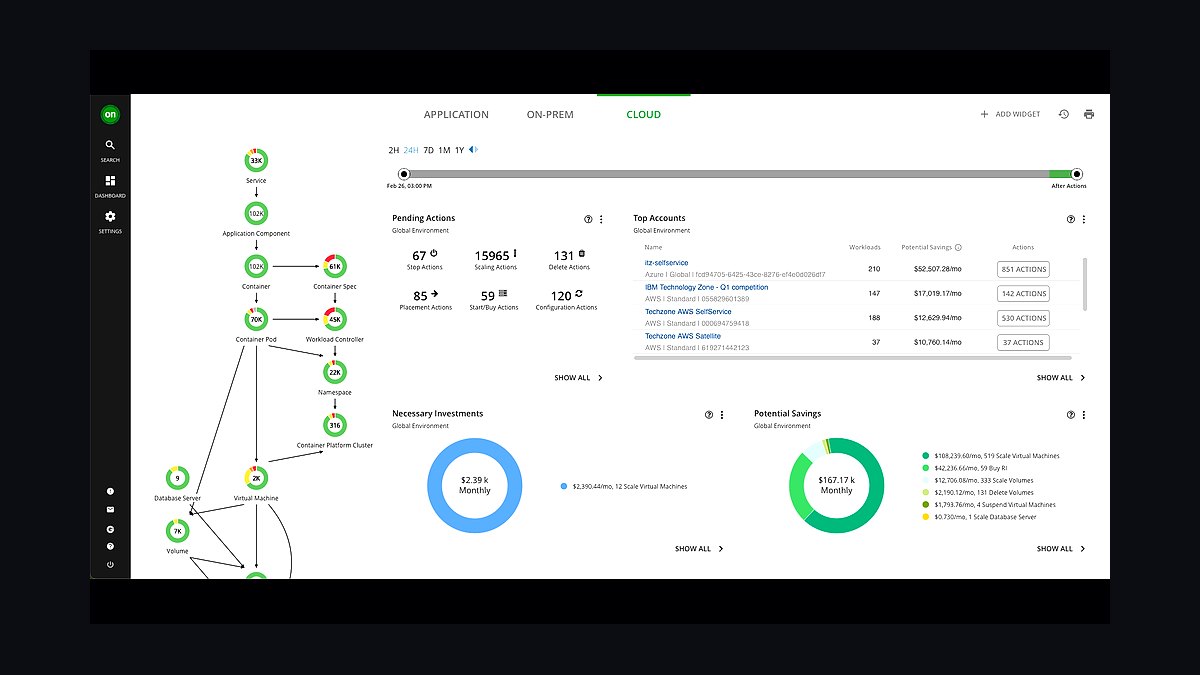
IBM Turbonomic ranks first because it acts autonomously rather than just reporting: its decision engine continuously models supply and demand across compute, storage, and network layers, then executes rightsizing, workload placement, and scaling actions in real time. Originally built by Turbonomic Inc. and acquired by IBM in 2021, it runs across AWS, Azure, GCP, VMware, and Kubernetes from one control plane, closing the loop between recommendation and action that most cost tools leave open.
It suits large enterprises with hybrid, multi-cloud estates and dedicated platform teams who can tune automation policies, not startups wanting a quick dashboard. The tradeoff is complexity and licensing cost scaled to infrastructure size. Compared to Apptio Cloudability below, Turbonomic optimizes live workload performance-per-dollar in real time, while Cloudability focuses on financial reporting and forecasting after the fact.
2ProsperOps
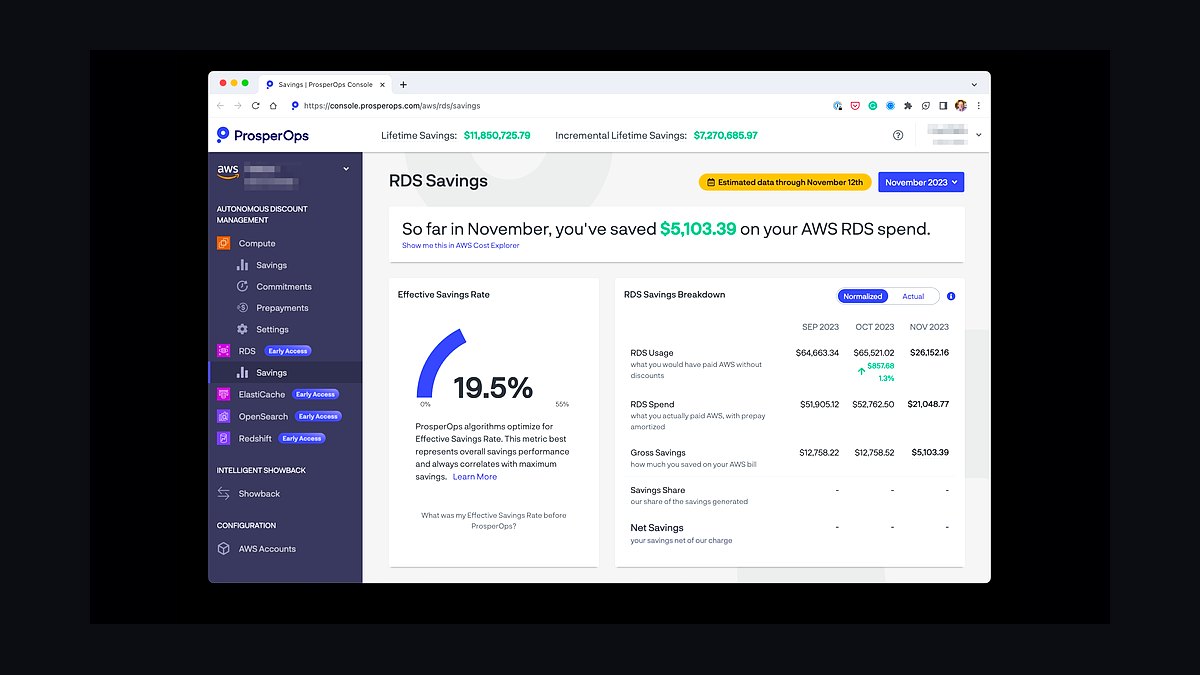
ProsperOps ranks second for narrowing its AI to one job and automating it completely: algorithmic management of AWS Savings Plans, Reserved Instances, and Azure Reservations, continuously rebalancing commitments as usage shifts. It requires no manual purchasing decisions once connected, and its model is built around a shared-savings pricing structure tied to the discount it generates, aligning incentives directly with realized cost reduction rather than seat licenses.
It's built for finance and FinOps teams that already have Turbonomic-style workload automation and just need commitment-based discounts handled autonomously. It doesn't touch rightsizing, storage, or Kubernetes efficiency, which limits its scope versus a full platform. Next to Turbonomic above, ProsperOps is narrower and purely financial-instrument focused, while Turbonomic reaches into infrastructure behavior itself.
3CAST AI
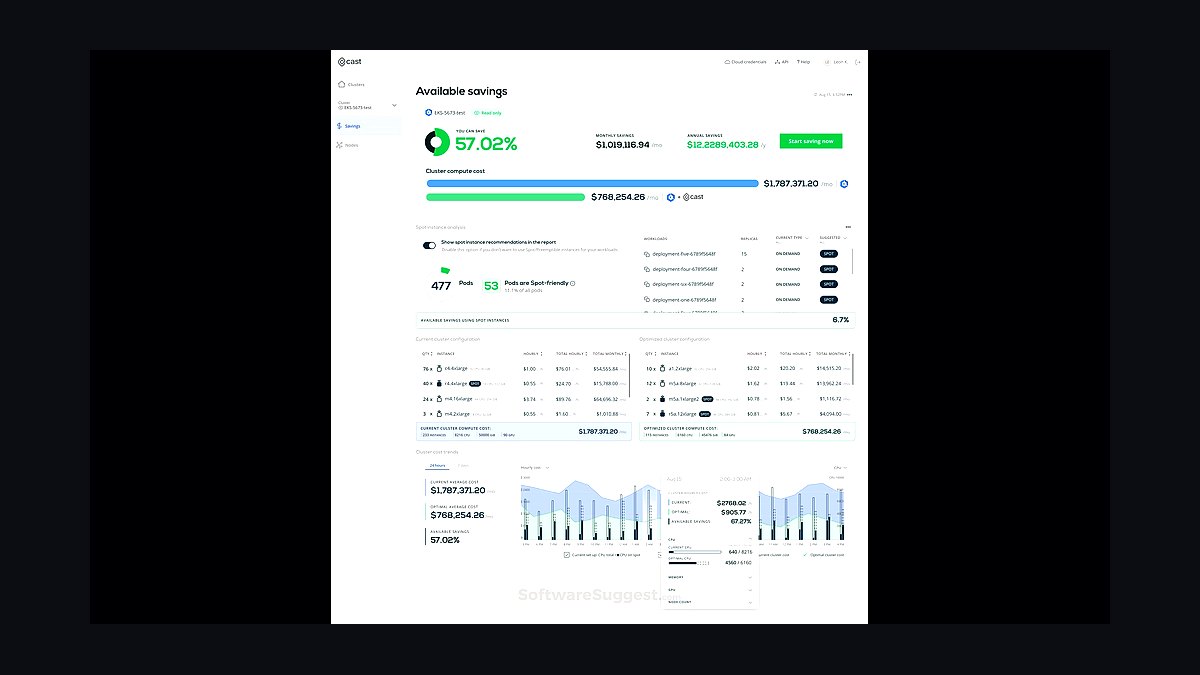
CAST AI ranks third for automating Kubernetes cost efficiency end to end: its engine continuously rightsizes pods and nodes, reschedules workloads onto cheaper instance types, and orchestrates spot-instance usage with automated fallback to on-demand when spot capacity is reclaimed. Y Combinator-backed and Kubernetes-native from the start, it connects to a cluster in minutes and reports both a cost baseline and the savings its automation subsequently produces.
It's aimed squarely at engineering teams running EKS, GKE, or AKS who want savings without hand-tuning autoscalers, not organizations running mostly VMs. It offers a free cost-visibility tier before automation is enabled. Compared to ProsperOps above, CAST AI optimizes compute architecture and scheduling directly, whereas ProsperOps only manages purchase commitments.
4Densify
Densify ranks fourth on the strength of its patented machine-learning core, which analyzes historical utilization patterns to generate rightsizing and instance-family recommendations across AWS, Azure, GCP, and Kubernetes without deploying agents on workloads. It has been developing resource-optimization analytics since well before "FinOps" was a category, giving it a long track record specifically in matching workload shape to instance type.
It fits organizations that want analyst-grade rightsizing recommendations feeding into existing change-management processes, rather than a tool that acts on its own. That makes it less hands-off than CAST AI above, which executes changes automatically; Densify instead informs the decision and leaves execution to the customer's own pipelines, a tradeoff some regulated teams prefer.
5Spot by NetApp
Spot by NetApp ranks fifth for its maturity in predictive spot-instance automation: Elastigroup forecasts spot market interruption risk and blends spot, reserved, and on-demand capacity automatically, while Ocean applies the same logic to Kubernetes node provisioning. NetApp acquired Spot.io in 2020, and the product's core differentiator is years of interruption-prediction data feeding its instance-selection algorithm across AWS, Azure, and GCP.
It's best for workloads that can tolerate spot interruptions and teams wanting deep compute-purchasing automation rather than storage or SaaS-license optimization. It doesn't cover the broad multi-cloud analytics that Densify above provides. Where Densify recommends sizing changes for humans to apply, Spot directly manages the underlying purchasing and instance mix in real time.
6Zesty
Zesty ranks sixth for automating cost decisions in categories most tools leave static: Zesty Disk dynamically resizes cloud block storage up and down with usage instead of leaving volumes over-provisioned, and Zesty Commitment Manager algorithmically matches Reserved Instance and Savings Plan coverage to actual hourly usage. Founded in Israel, it targets the specific waste pockets that broader platforms often only flag rather than fix.
It suits AWS-heavy teams wanting narrow, automated fixes in storage and commitment coverage without adopting a full FinOps suite. It doesn't provide the workload-placement automation Spot by NetApp offers above. Zesty is a set of point automations rather than a unified compute-optimization engine, trading breadth for depth in the areas it targets.
7nOps
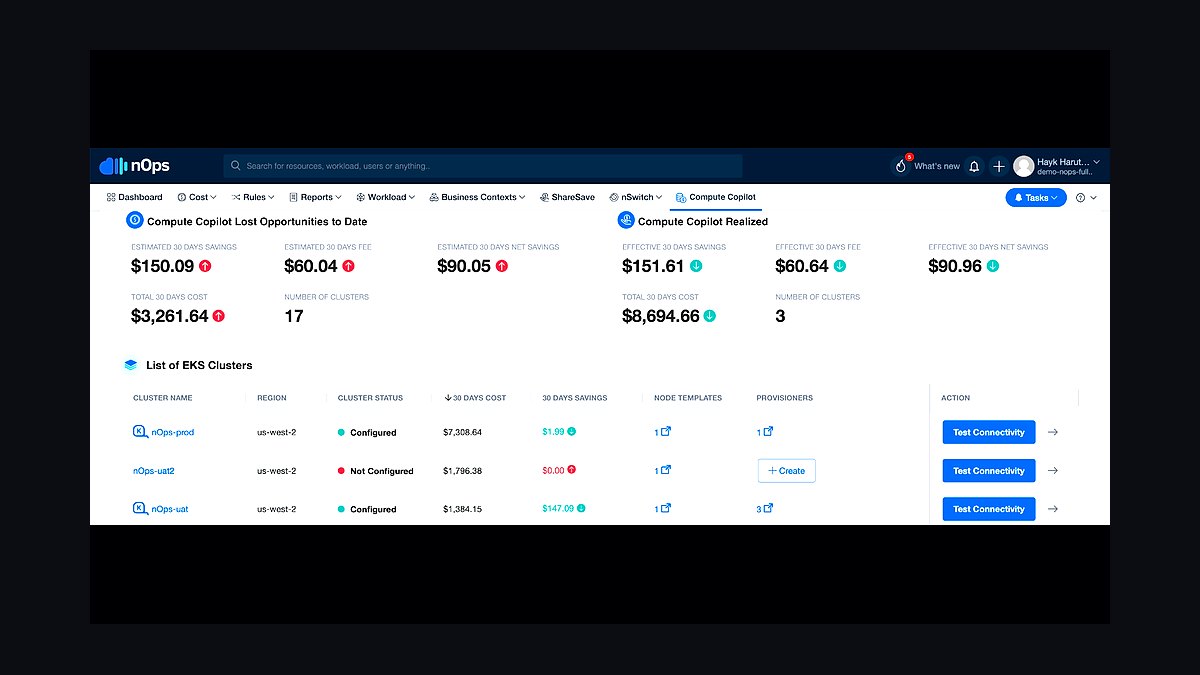
nOps ranks seventh for being purpose-built around AWS specifically, using its Compute Copilot to apply machine-learning-driven rightsizing and spot-instance automation while layering in AWS Well-Architected Framework compliance checks. As an AWS Advanced Technology Partner, it ties cost automation directly to AWS-native billing data and Cost and Usage Reports, giving finance teams granular, AWS-specific chargeback and forecasting alongside the automated savings actions.
It's a strong fit for organizations running entirely on AWS who want compliance and cost automation from one vendor, but it offers nothing for Azure or GCP estates. Compared to Zesty above, nOps bundles broader governance and reporting features, while Zesty stays narrowly focused on storage and commitment automation across categories.
8Apptio Cloudability
Apptio Cloudability ranks eighth as a financial-reporting-first platform: it ingests billing data across AWS, Azure, and GCP to produce forecasting, anomaly detection, and business-unit chargeback, using machine learning primarily to flag unusual spend patterns and predict future bills rather than to execute infrastructure changes. IBM acquired Apptio, Cloudability's parent, in 2023, folding it into IBM's broader FinOps and Turbonomic portfolio.
It's built for finance and FinOps practitioners needing audit-ready cost allocation and budget forecasting more than engineers needing automated remediation. Unlike nOps above, it doesn't take direct action on compute; it hands teams the analysis and expects manual or separately-tooled follow-through, making it a reporting layer rather than an optimization engine.
9Flexera One
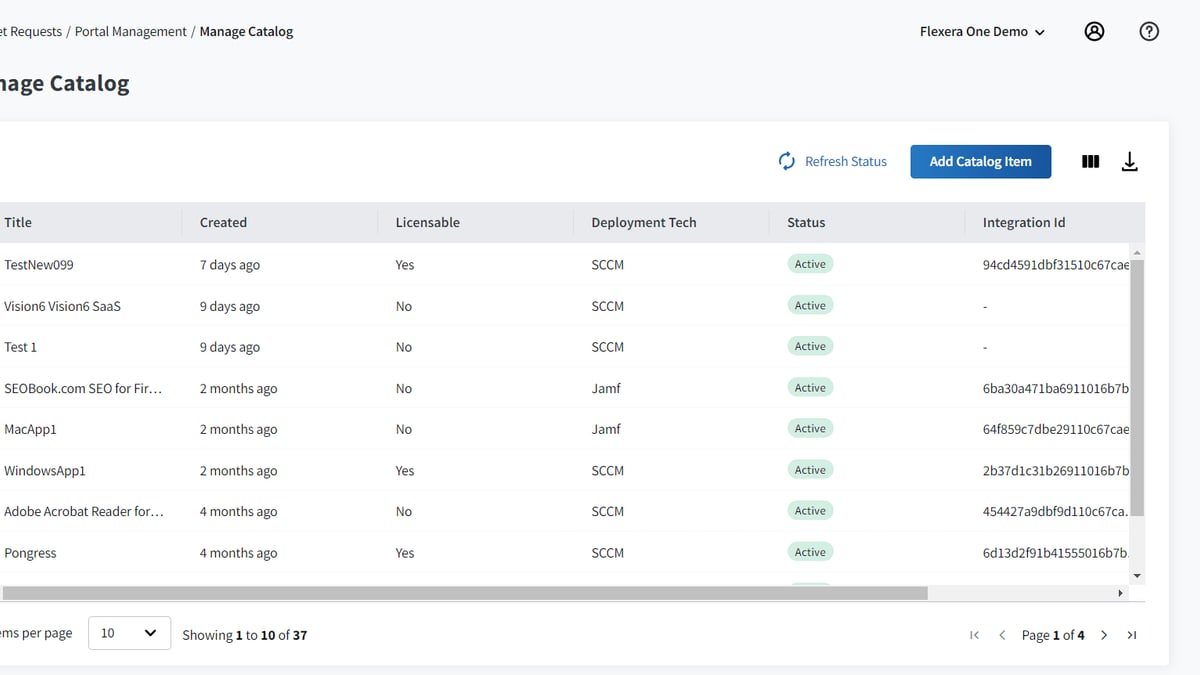
Flexera One ranks ninth for combining cloud cost management with broader IT asset management, a legacy that traces back to Flexera's 2018 acquisition of RightScale. Its predictive analytics forecast spend trends and flag underutilized resources across hybrid environments spanning public cloud and on-premises data centers, appealing to organizations that never fully left legacy infrastructure behind.
It fits enterprises needing unified visibility across cloud and traditional IT license spend in one platform, not cloud-native teams wanting deep automation. Its optimization actions lean more toward recommendations than the direct execution CAST AI or Spot by NetApp perform higher on this list. Against Apptio Cloudability above, Flexera adds on-prem asset tracking that Cloudability's cloud-only scope omits.
10Harness Cloud Cost Management
Harness Cloud Cost Management ranks tenth because its optimization module lives inside a broader CI/CD and software delivery platform rather than standing alone, using AutoStopping rules and ML-based recommendations to shut down idle non-production resources and rightsize workloads tied to deployment pipelines. Harness built the category through acquisitions consolidated into one delivery-plus-cost platform.
It's the right choice for teams already standardized on Harness for deployments who want cost control folded into that same workflow, not organizations seeking a dedicated best-of-breed FinOps tool. Its cost features are less mature than the purpose-built platforms above it on this list, trading specialization for the convenience of one vendor covering both delivery and spend.
How we ranked these
We weighted platforms on five factors: depth of automated remediation versus mere recommendations, native multi-cloud and Kubernetes coverage since most enterprises now run AWS, Azure, and GCP simultaneously, forecasting accuracy against actual invoice data rather than list pricing, integration friction with existing Terraform and CI/CD pipelines, and transparent, published pricing rather than opaque "contact sales" tiers. Tools that closed the loop from detection to safe, auditable action scored highest.
We deliberately ignored vendor marketing claims of proprietary AI models without disclosed methodology, since most cost anomalies are solvable with straightforward statistical baselining rather than exotic machine learning. We also excluded single-cloud-only tools, pure read-only dashboards with no remediation path, and products requiring lengthy professional-services onboarding before delivering measurable savings. Free-tier gimmicks with capped resource counts were noted but not scored favorably.
What to look for
What actually separates these tools is whether they close the loop: a platform that flags an oversized instance is worth little if an engineer still has to manually resize it weeks later. Prioritize tools that integrate with your IaC pipeline to apply rightsizing, scheduling, and commitment-purchase decisions automatically, with rollback safety. Also weigh how cleanly the tool reconciles its savings claims against your actual monthly invoice, not modeled list-price estimates.
The most common buyer mistake is selecting on anomaly-detection accuracy alone while underestimating the remediation labor still required afterward. Teams end up paying for a monitoring layer on top of unchanged headcount and workflows, with savings that look good in a demo but never materialize on the bill. Ask vendors for a reference customer's before/after invoice, not a dashboard screenshot.
Related questions
How much can AI cost optimization tools actually save on a cloud bill?
Realistic, sustained savings from automated rightsizing, scheduling, and commitment management typically land between 15% and 30% of compute spend, according to FinOps Foundation benchmarks. Higher figures usually come from one-time cleanup of long-neglected waste rather than ongoing optimization, so ask any vendor whether their quoted number is a first-month spike or a steady-state average.
Do these tools work across AWS, Azure, and GCP at once?
The strongest 2027-era tools normalize billing and usage data across all three major clouds plus Kubernetes clusters into one model, since most mid-size and large companies now run multi-cloud by default. Single-cloud tools still exist and can be cheaper, but they leave blind spots wherever workloads span providers or migrate between them.
Is Kubecost still relevant given newer AI-driven competitors?
Yes — Kubecost remains a strong open-source foundation for Kubernetes cost visibility and is frequently used as the data layer that newer AI optimization platforms build automated remediation on top of. Many enterprise buyers pair Kubecost's granular allocation data with a commercial layer that adds cross-cloud forecasting and automated action.
What's the difference between a FinOps platform and an AI cost optimization tool?
FinOps platforms like CloudHealth or Flexera focus on visibility, allocation, and governance workflows for finance and engineering collaboration. AI cost optimization tools layer automated, continuous remediation on top — resizing, scheduling, and purchasing decisions made without a human clicking approve each time. The best 2027 platforms increasingly blend both categories.
Can these tools cause outages by resizing resources automatically?
Poorly implemented automation can, which is why remediation should always run through staged rollouts, canary checks, and IaC-based rollback rather than direct API calls to production. Look for tools that integrate with your existing deployment pipeline and require explicit policy guardrails before any automated change touches a production workload.
How long does it take to see savings after implementation?
Tools with pre-built cloud provider integrations and no professional-services requirement typically surface actionable recommendations within the first week and measurable invoice impact within 60-90 days. Tools requiring custom onboarding or data warehouse setup often push meaningful savings out three to six months, which should factor into any ROI calculation.
Are reserved instance and commitment recommendations still valuable with spot and serverless growth?
Yes, though their share of total savings has shrunk as workloads shift toward serverless and spot-friendly architectures. Commitment optimization still matters for steady-state baseline compute, but the highest-value 2027 tools now weight spot-instance orchestration and serverless right-pricing more heavily than they did five years ago.
Do I still need a dedicated FinOps team if I buy one of these tools?
Most organizations still need at least one FinOps-literate owner to set policy guardrails, approve automation scope, and interpret exceptions the tool flags but won't act on autonomously, like business-critical workloads. The tools reduce day-to-day manual toil significantly but don't eliminate the need for someone accountable for cost governance decisions.
FAQ
What is cloud cost optimization software?
It's software that continuously analyzes cloud billing and usage data to identify waste — oversized instances, idle resources, unused commitments — and either recommends or automatically executes changes to reduce spend without degrading performance. Modern versions integrate directly with cloud provider APIs and infrastructure-as-code pipelines rather than just producing static reports.
Which cloud providers do these tools typically support?
Leading platforms support AWS, Azure, and Google Cloud natively, with growing coverage of Kubernetes and increasingly Oracle Cloud and multi-cloud Kubernetes distributions. Coverage depth varies significantly by provider within the same tool, so verify feature parity for your specific cloud rather than assuming equal support across all three.
How is AI actually used in these optimization tools?
Most apply statistical forecasting and anomaly detection to usage patterns to predict future spend and flag deviations, while some use reinforcement-learning-style models to recommend optimal instance sizing or commitment mixes. Be skeptical of vague "AI-powered" claims without published methodology — ask vendors to explain what specifically the model predicts and how accuracy is measured.
What's the typical pricing model for these tools?
Most charge either a percentage of managed cloud spend (commonly 2-5%) or a flat per-resource/per-node fee, with enterprise tiers often requiring custom quotes. Percentage-of-spend models can become expensive at scale, so compare total dollar cost against flat-fee alternatives once your cloud bill exceeds roughly $500,000 annually.
Can small companies benefit from these tools or are they enterprise-only?
Several vendors now offer self-serve, usage-based tiers aimed at startups and mid-size companies with cloud bills as low as $10,000-$50,000 per month. Below that threshold, the tooling cost may exceed the savings generated, so smaller teams often get more value from manual audits using free-tier native cloud cost tools first.
How do these tools handle Kubernetes cost allocation specifically?
They typically ingest cluster metrics to allocate shared node costs down to namespace, deployment, or team level, then apply the same rightsizing logic to pod resource requests and limits. This is one of the harder problems in cloud cost management because Kubernetes abstracts away the underlying instance economics that most billing data is built around.
What data access do I need to grant these tools?
Most require read access to your cloud billing/cost-explorer APIs at minimum, and read-write IAM permissions on compute resources if you want automated remediation rather than recommendations only. Review the specific IAM policy scope carefully — some tools request broader permissions than their actual feature set requires.
How do I measure ROI on a cloud cost optimization tool?
Compare your actual monthly cloud invoice trend for the 90 days before and after implementation, adjusted for any workload growth over that period, rather than relying on the tool's self-reported savings dashboard. Also factor in the subscription cost itself and any engineering time spent on integration and policy configuration.
Do these tools replace the need for good cloud architecture practices?
No — they optimize within whatever architecture you already have but can't fix fundamentally inefficient design choices like chatty microservices or unnecessarily duplicated data stores. Teams that combine the tooling with periodic architecture reviews see meaningfully better long-term results than those relying on optimization software alone.
What should I look for in a proof-of-concept before buying?
Request a POC scoped to a real subset of your production environment with read access to actual billing data, not a sandboxed demo account. Insist on seeing a before/after invoice comparison, not just projected savings estimates, and confirm the remediation actions proposed are ones your team is actually comfortable automating.
Sources
- https://www.finops.org/
- https://aws.amazon.com/aws-cost-management/
- https://cloud.google.com/cost-management
- https://azure.microsoft.com/en-us/products/cost-management
- https://www.gartner.com/en/information-technology/glossary/finops
- https://www.kubecost.com/
- https://www.flexera.com/products/flexera-one/cloud-cost-optimization
- https://www.cloudzero.com/
- https://www.vmware.com/products/cloud-infrastructure/cloudhealth
Related on PULSE
This page will be disappearing soon. Save it to your device for $1 — or read it free while it is here.
@Kory-White- · if Venmo asks, the last 4 of my number are 2012
This page is gone.
This one is off the shelf now. $1 keeps it on your phone for good — the whole page, pictures and diagrams included.
 pulse-recentThe 10 Best AI Tools for Cost Estimation in 2027
 pulse-recentThe 10 Best AI Chargeback and Showback Tools for Internal Team Billing in 2027
 pulse-recentThe 10 Best Multi-Tenant Isolation Strategies for AI Workloads in 2027
 pulse-recentThe 10 Best AI Infra Budget Allocation Frameworks in 2027
 pulse-recentThe 10 Best AI Tools for Federated Learning in 2027
 pulse-recentThe 10 Best AI Infrastructure Budgeting Methods in 2027
 pulse-recentThe 10 Best AI Cost Estimation Calculators in 2027
 pulse-recentWhat is continuous batching and how much more throughput does it give an LLM server in 2027?
 pulse-recentThe 10 Best AI Infra Cost Allocation Methods in 2027
 pulse-recentHow much can committed-use or reserved GPU cloud contracts save versus on-demand pricing for AI training in 2027?