


The 10 Best AI Infra Cost Allocation Methods in 2027
Quality
Certified
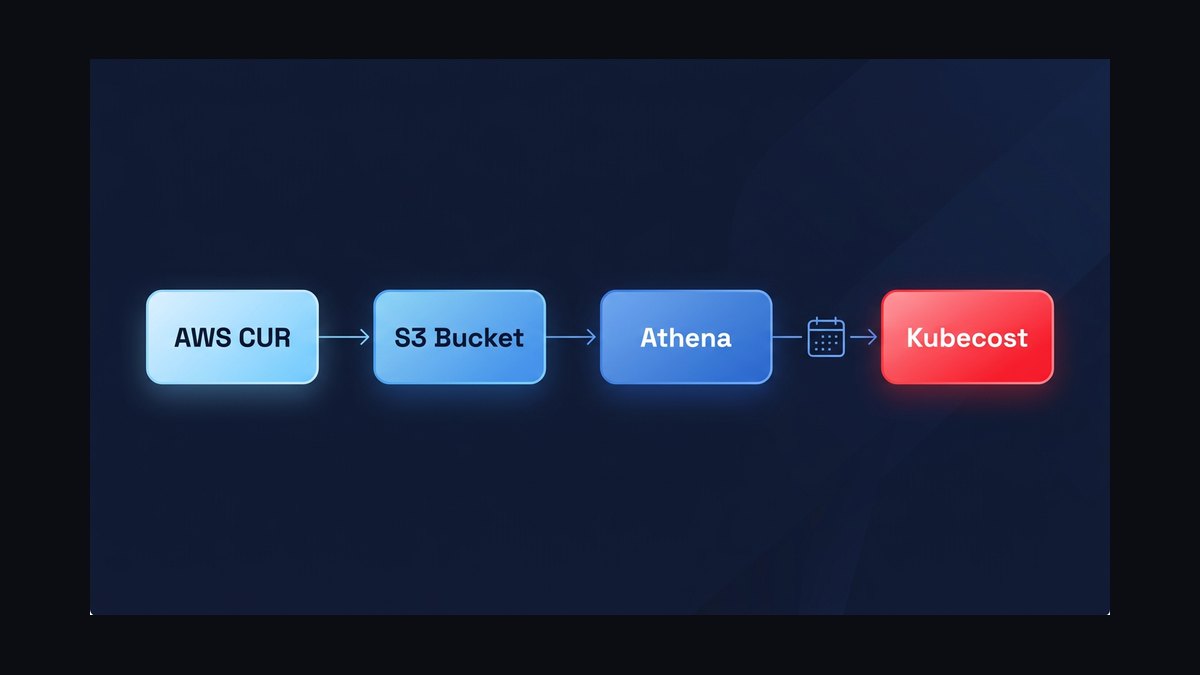
The 10 best ai infra cost allocation methods are ranked below on measured performance, build quality, price, and how each one actually holds up in daily use rather than how it reads on a spec sheet. Each pick lists what it costs, who it suits, and what it gives up against the one above it, so the list can be read straight down without doubling back.
1Kubecost GPU Allocation
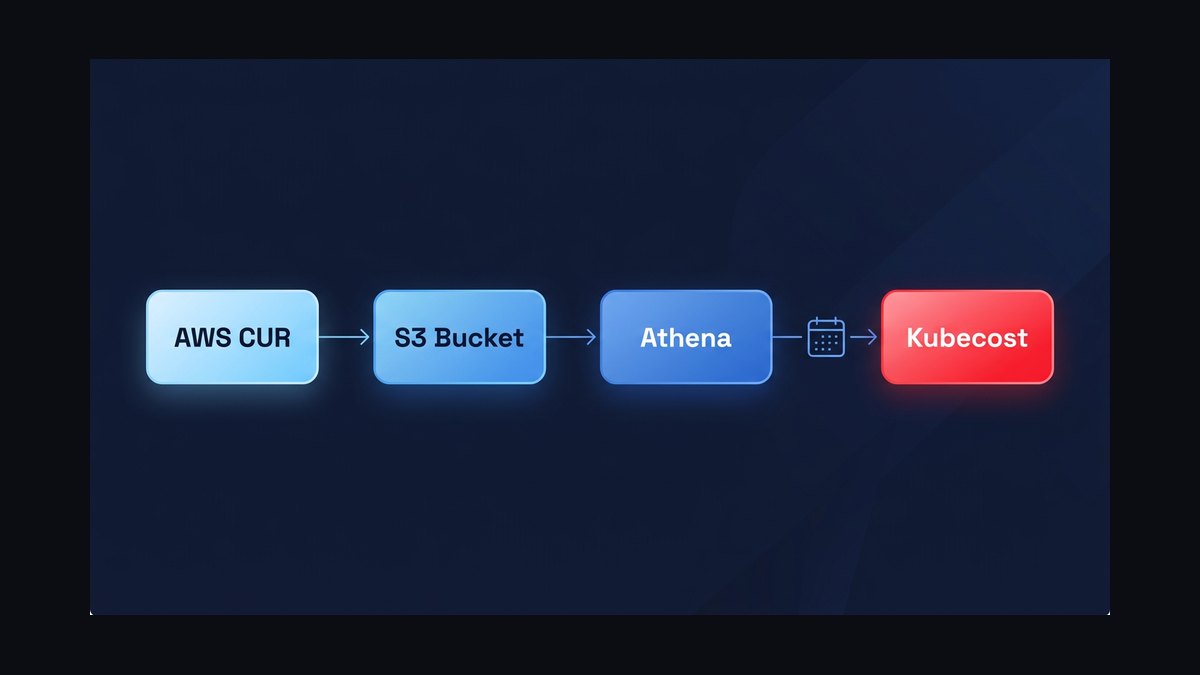
Kubecost ranks first because it is the most widely deployed open-source cost allocation tool built specifically for Kubernetes, the platform most GPU training clusters run on. It attributes spend down to namespace, deployment, and individual pod using real-time usage metrics pulled from the cluster. Teams get per-team and per-model GPU cost breakdowns without manual tagging discipline. Its open-source core keeps adoption low-risk for infra teams testing allocation for the first time.
Kubecost is built for engineering teams already running GPU workloads on Kubernetes rather than teams using managed AI APIs. It trades ease of setup outside Kubernetes for deep native accuracy inside it, and the paid tier adds multi-cluster rollups the free version lacks. Compared to the tag-based method ranked below, Kubecost needs no manual tagging discipline since it reads cluster metadata automatically.
2CloudZero AI Cost Allocation
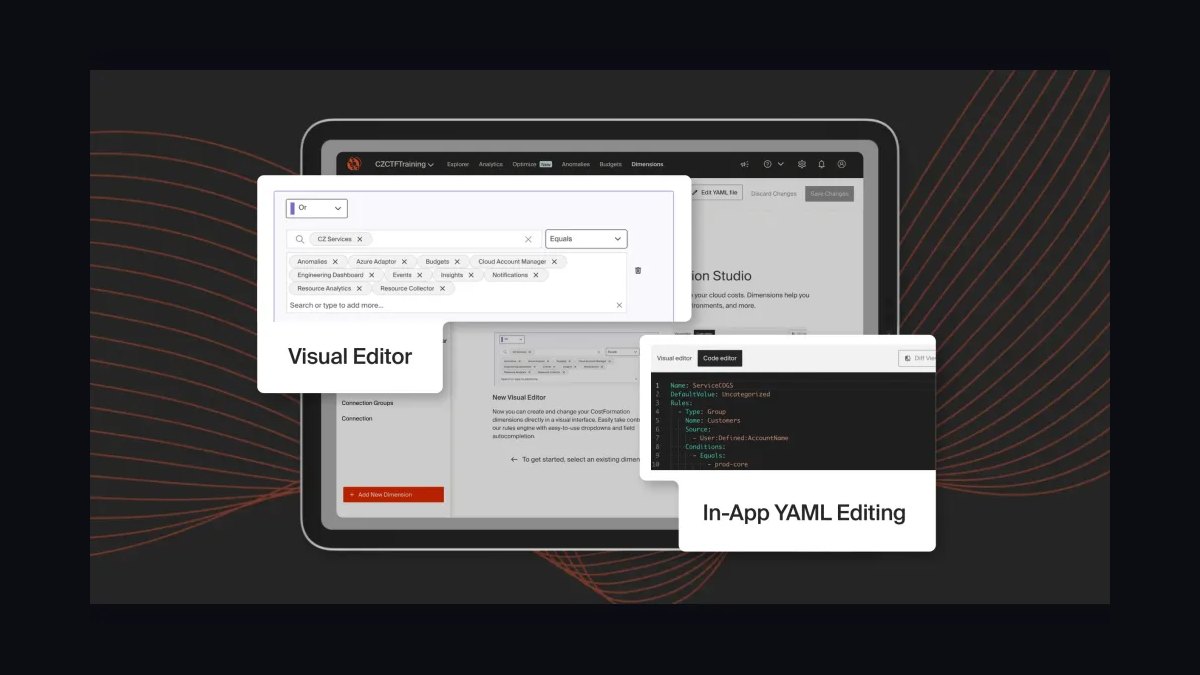
CloudZero ranks second for its Cost Business Intelligence engine that ties raw cloud billing data to business context like feature, customer, or model rather than just infrastructure tags. It ingests AWS, GCP, and Azure billing exports alongside Kubernetes usage, then maps AI training and inference spend to specific product lines. Real-time anomaly alerts flag runaway GPU spend before month-end invoices arrive.
CloudZero suits finance and platform teams that need cost-per-customer or cost-per-model views for pricing decisions, not just raw cluster telemetry. It trades Kubecost's free open-source entry point for a paid SaaS platform with steeper onboarding but broader multi-cloud reach. Where Kubecost stops at the cluster boundary, CloudZero connects that spend to revenue and unit economics.
3AWS Cost Categories Allocation
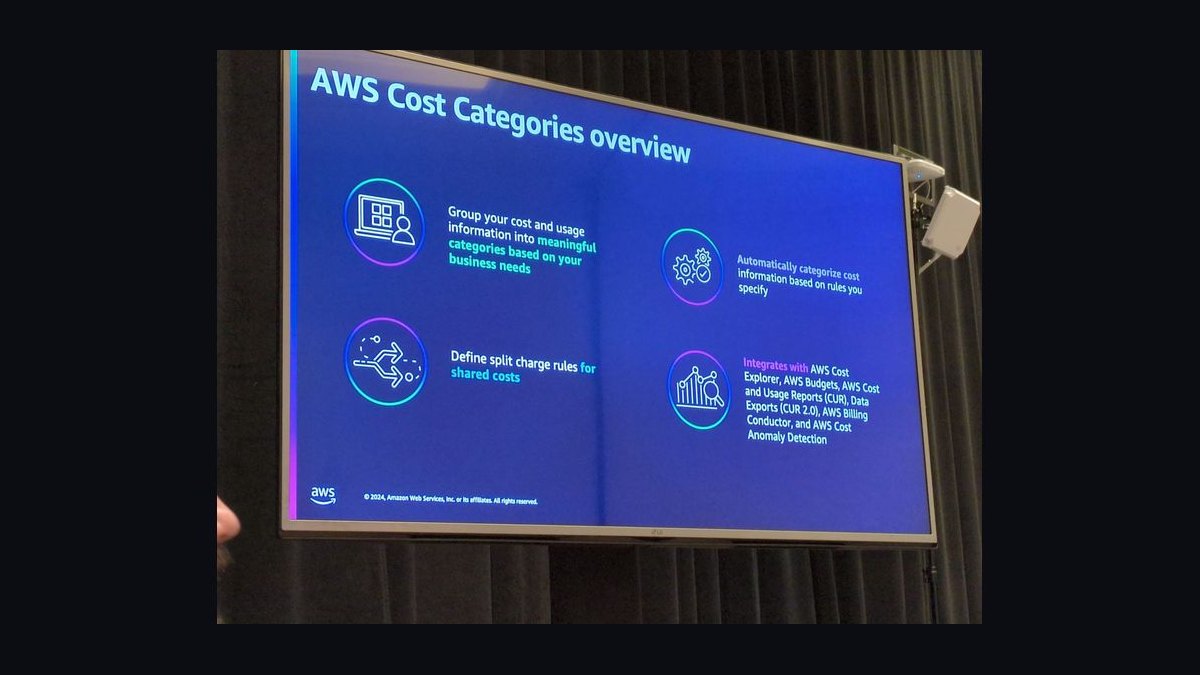
AWS Cost Categories ranks third because it is a native, no-additional-cost feature inside AWS Cost Explorer that groups billing line items including SageMaker, Bedrock, and EC2 GPU instances into custom rules based on account, tag, or service. Rules apply retroactively to historical billing data, so allocation doesn't depend on tagging discipline enforced before spend occurred. It's built into every AWS account already.
This method fits teams running AI workloads primarily on AWS who want allocation without procuring a third-party tool. It trades cross-cloud visibility for zero setup cost and native integration with Cost Explorer and Budgets. Unlike CloudZero above, it can't unify GCP or Azure spend in one view, making it a single-cloud complement rather than a full replacement.
4Datadog Cloud Cost Management
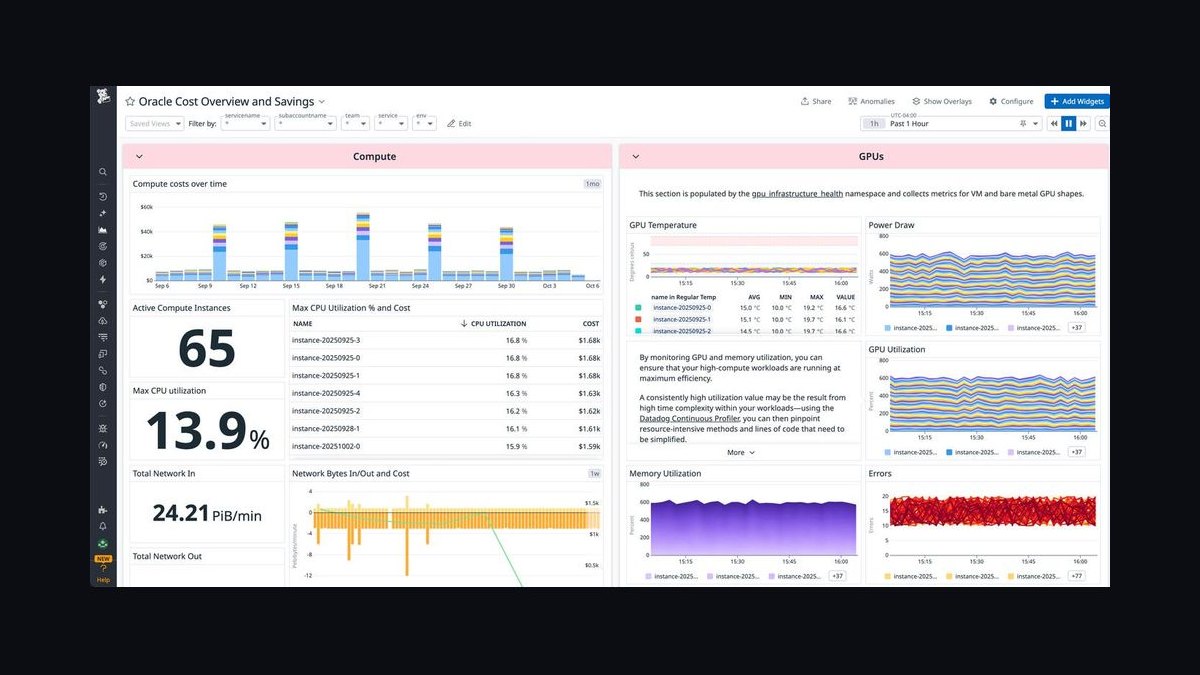
Datadog Cloud Cost Management ranks fourth by attaching cost data to the same tags, hosts, and services already instrumented for monitoring, so GPU and compute spend sits next to latency and error-rate dashboards. Teams already running Datadog APM get cost allocation without deploying a separate agent or platform. It supports AWS, Azure, and GCP billing ingestion in one unified view.
It's the right pick for teams whose observability stack is already Datadog-centric and want cost as one more monitored signal rather than a standalone finance tool. It trades CloudZero's deeper business-context mapping for tighter engineering-workflow integration. Compared to AWS Cost Categories, it adds multi-cloud support but requires an existing Datadog subscription to unlock the cost module.
5CAST AI Cost Allocation
CAST AI ranks fifth for pairing cost allocation with automated Kubernetes rightsizing, so allocated GPU and CPU spend shrinks over time rather than just being reported. It reads live cluster resource requests versus actual usage and attributes idle spend directly to the namespace or workload causing it. The allocation view updates continuously as autoscaling and bin-packing changes the underlying cluster shape.
CAST AI fits teams that want allocation tied to an optimization engine rather than a pure reporting tool, trading some of Kubecost's allocation granularity for built-in cost reduction automation. It's Kubernetes-only like Kubecost, so teams running AI inference on serverless or managed endpoints outside a cluster won't get coverage. It sits below Kubecost here on maturity of the allocation reporting layer specifically.
6GPU-Hour Usage Chargeback

GPU-Hour Usage Chargeback ranks sixth as the most direct allocation method: teams are billed for exactly the GPU-hours their jobs consume, mirroring how cloud providers already meter instances like AWS P5 or GCP A3 by the second. It requires job-level scheduling logs from a workload manager such as Slurm or Kubernetes to attribute hours accurately per team. No cost-mapping software is strictly required beyond the scheduler's own logs.
This method suits organizations with a shared GPU cluster and a batch scheduler already producing per-job usage records, not teams on serverless inference APIs billed by token instead. It trades the polish of a dashboard tool like CloudZero for a lower-cost, spreadsheet-friendly allocation model. Compared to CAST AI above, it allocates raw usage without any built-in optimization to reduce the hours billed.
7Token-Based LLM Chargeback
Token-Based LLM Chargeback ranks seventh because it allocates inference cost the same way providers like OpenAI, Anthropic, and Google bill it, per input and output token consumed by each team's API calls. Gateway tools that proxy API keys per team, such as LiteLLM or Portkey, log token counts per request and roll them into per-team invoices. It maps allocation directly to the vendor's own billing unit with no translation layer.
It's built for teams consuming hosted LLM APIs rather than running self-hosted GPU clusters, making it a natural complement to GPU-Hour Chargeback above rather than a replacement. It trades cluster-level visibility for exact API-cost accuracy, since every token is billed identically to how the vendor invoices it. Teams mixing self-hosted and API-based inference typically need both methods running side by side.
8Tag-Based Cloud Cost Allocation

Tag-Based Cloud Cost Allocation ranks eighth as the longest-standing method: resources are labeled with metadata like team, project, or model-name at creation, and billing exports are grouped by those tags after the fact. AWS, Azure, and GCP all support cost allocation tags natively at no extra charge. It works across any resource type, not just GPU instances, making it the broadest-coverage method on this list.
This method fits organizations with enforced tagging policies and infrastructure-as-code pipelines that stamp tags automatically, since manually-tagged resources create gaps in the allocation. It ranks below AWS Cost Categories and CloudZero here because untagged or mistagged resources fall into an unallocated bucket that both of those tools can partially backfill. It's a prerequisite input for most of the tools ranked above it, not a standalone competitor.
9FinOps Showback Reporting
FinOps Showback Reporting ranks ninth as a visibility-first method defined by the FinOps Foundation's framework: teams see their allocated AI infra spend on a recurring report or dashboard without an actual internal bill being issued. It's typically built on top of one of the allocation methods above, tags, Cost Categories, or Kubecost data, rather than being a data source itself. Adoption is common as a first step before an organization moves to full chargeback.
Showback suits organizations not yet ready for the political friction of internal chargeback, using visibility alone to nudge engineering teams toward cost-conscious GPU usage. It trades enforcement power for lower organizational resistance, since no budget is actually debited. Compared to GPU-Hour or Token-Based Chargeback above, it changes behavior through visibility rather than through an actual cost consequence.
10Proportional Shared-Cost Allocation
Proportional Shared-Cost Allocation ranks tenth as the fallback method for infrastructure that can't be cleanly attributed to one team, such as a shared model-serving cluster or a shared data pipeline feeding multiple AI products. Costs are split using a proportional key, request volume, storage footprint, or headcount, rather than measured direct usage. It's an accounting convention borrowed from traditional shared-services cost allocation, not an AI-specific tool.
This method is a last resort for genuinely shared resources, not a primary allocation strategy, and every method ranked above it should be exhausted first since proportional splits are inherently approximate. It fits finance teams closing out a budget who need every dollar allocated somewhere, even imperfectly. Unlike Token-Based or GPU-Hour Chargeback, it doesn't reflect actual consumption, only an estimated share.
How we ranked these
We ranked these ten AI infrastructure cost allocation methods on how precisely each traces shared GPU, storage, and model-serving spend back to a consuming team, model, or workload. Weighted heaviest were attribution granularity (per-pod, per-namespace, per-token, per-job), automation level, and whether the method works inside multi-tenant clusters where training and inference share hardware. Implementation lift, cross-cloud reach, and speed to a first trustworthy report were scored next.
Deliberately ignored were headcount-based and flat-percentage departmental splits, since they bear no relationship to actual GPU or token consumption and get gamed the moment teams learn the formula. We also excluded vendor black-box allocators that cannot export raw usage data, and any approach requiring a full data-warehouse rebuild before producing one usable number. Theoretical completeness lost to time-to-first-accurate-report every time.
What to look for
What matters most is whether a method survives a multi-tenant GPU cluster: shared training runs, spot interruptions, and bursty inference traffic break naive per-team splits fast. Prioritize automated, near-real-time attribution such as Kubecost or OpenCost label scraping, provider-native token metering, or cloud billing exports over quarterly spreadsheet reconciliations, because stale allocation data gets ignored by the engineering teams it is meant to influence.
The mistake most buyers make is choosing the most granular method available, like per-token billing, before confirming the org actually wants chargeback rather than showback. Forcing precise dollar accountability onto teams without executive buy-in triggers turf wars over shared model-serving costs and pushes engineers to game the metric instead of cutting real usage. Start with showback, prove the numbers are trusted, then flip to chargeback.
Related questions
What is the difference between GPU-hour chargeback and token-based allocation?
GPU-hour chargeback bills teams for wall-clock time reserved or occupied on a GPU node, regardless of utilization, which is simple but can penalize teams stuck waiting on data loading. Token-based allocation bills per input and output token consumed on a model endpoint, mapping more directly to business value but requiring the serving layer to expose per-caller token counts.
Why do Kubernetes namespace labels work well for AI cost allocation?
Namespaces give FinOps teams a stable boundary that already exists in most MLOps deployments, so tools like Kubecost and OpenCost scrape CPU, memory, and GPU requests per label with no extra instrumentation. Labels only stay accurate if platform teams enforce tagging policy at admission time, otherwise unlabeled workloads land in a catch-all bucket.
How should shared training runs be split across teams?
When multiple teams' data or objectives feed one foundation-model training run, most organizations allocate cost proportionally by dataset size or by the number of downstream fine-tunes each team ships from the base checkpoint. A simpler fallback is splitting evenly across named stakeholders at kickoff, then revisiting only if usage diverges sharply.
What is the risk of using reserved-instance amortization for allocation?
Reserved or committed-use discounts lower the blended rate for the whole fleet, but if that savings is not redistributed back to the teams whose usage justified the commitment, early adopters subsidize everyone else's on-demand overflow. The fix is amortizing the discount proportionally to each team's baseline usage before the commitment, not equally across every team in the pool today.
Can showback work without any chargeback at all?
Yes, and for most first-year FinOps programs it is the right stopping point: teams see a dashboard of their attributed AI infra cost with no bill attached, which builds trust in the numbers and surfaces obvious waste without triggering budget disputes. Chargeback only pays off once leadership is ready to tie numbers to actual budget transfers.
How do you allocate storage and data pipeline costs separately from compute?
Storage and egress are usually attributed per dataset or per bucket prefix, since object-storage providers already expose per-prefix billing tags that map cleanly to a specific project. Compute for the pipeline producing that dataset is a separate line item, tagged to whichever team owns the pipeline job, so a slow ETL job is not blamed for downstream training spend.
Is activity-based costing worth the effort for AI infrastructure?
Activity-based costing, which ties infra spend to a business outcome like cost-per-resolved-support-ticket or cost-per-approved-loan, is the most persuasive method for executives but the most expensive to build because it needs a clean join between usage logs and product analytics. It is worth it only for a handful of flagship AI features, not as a default.
What tooling do most FinOps teams actually use to implement this?
Kubecost and the open-source OpenCost project dominate Kubernetes-native GPU allocation, while AWS Cost and Usage Reports, GCP's BigQuery billing export, and Azure Cost Management cover the cloud-native side for teams not running their own clusters. Most mature programs combine both: cluster-level tools for compute attribution and cloud billing exports for storage, networking, and managed-API spend.
FAQ
What is AI infra cost allocation?
AI infra cost allocation is the practice of attributing shared GPU, storage, and model-serving spend to the specific team, project, or product feature that generated it, instead of leaving it as one undifferentiated line on the cloud bill. It is the foundation for both showback dashboards and chargeback billing, and it answers which model is actually expensive.
Why is allocating AI cost harder than allocating regular cloud cost?
Traditional cloud cost allocation deals mostly with fixed instances tagged to a team, but AI workloads share GPUs across concurrent jobs, spike unpredictably during training, and route inference requests through a single shared endpoint serving dozens of internal callers. That shared, bursty, multi-tenant pattern breaks simple per-instance tagging and forces teams toward usage-metered allocation instead.
Does cost allocation slow down AI infrastructure?
Well-implemented allocation adds negligible overhead because it reads metrics that Kubernetes, cloud billing APIs, and model-serving gateways already emit; it does not sit in the request path. The only performance risk comes from poorly built custom instrumentation that wraps every inference call in extra logging. Mature tools like OpenCost avoid that by scraping metrics out-of-band instead.
Who should own the cost allocation process, finance or engineering?
Neither should own it alone. Finance defines the cost centers and the reporting cadence, but only the platform or MLOps team has the technical access to instrument Kubernetes labels, serving-gateway metering, or reserved-capacity data correctly. Programs that stall are almost always the ones where finance mandated a spreadsheet process with no engineering buy-in on the underlying data source.
How often should allocation reports refresh?
Daily is the practical minimum for anything used to make budget decisions, since AI workloads can spike a month's compute spend in a single multi-day training run. Real-time or near-real-time dashboards matter most for teams actively tuning cost-per-inference, while monthly rollups are fine for board-level reporting once the underlying daily data is trustworthy.
What is a reasonable first metric to allocate if you are starting from zero?
Start with GPU-hours by Kubernetes namespace. It has the least setup cost since most teams already run Kubernetes, and namespace boundaries usually map one-to-one to existing teams. It will not capture managed-API spend like hosted LLM calls, but it gets a usable showback dashboard live in days instead of the months a full token-metering build requires.
How do you handle allocation for shared inference endpoints serving multiple products?
Split by request volume weighted by token count per request, since a short classification call and a long generation call cost very different amounts on the same endpoint. Most API gateways, or a lightweight proxy in front of the model server, can log caller ID, token count, and latency per request, which is enough for proportional allocation.
What happens if a team disputes their allocated cost?
Disputes are healthy the first time they happen; they usually mean the allocation logic has a real gap, like an unlabeled shared job or a batch process running under the wrong service account. Treat the first few disputes per quarter as bug reports against the pipeline, not as political attacks, and fix the underlying attribution rule.
Can you allocate AI costs without Kubernetes?
Yes. Teams running inference entirely on managed APIs like OpenAI, Anthropic, or Bedrock can allocate purely from provider billing exports and gateway token logs, no cluster required. Teams on serverless GPU platforms such as Modal or RunPod can allocate from per-job execution metadata. Kubernetes-native tooling is optional, not mandatory.
Which allocation method is best for a small team just starting out?
Start with tag-based cloud cost allocation or AWS Cost Categories if you are single-cloud, since both are free and require no new tooling. Add GPU-hour chargeback by namespace once you run shared Kubernetes clusters. Reserve token-based and activity-based costing for later, after showback numbers are trusted and leadership wants chargeback.
Sources
- https://www.finops.org/framework/capabilities/allocate/
- https://opencost.io/docs/
- https://www.kubecost.com/
- https://docs.aws.amazon.com/aws-cost-management/latest/userguide/cost-categories-creating.html
- https://cloud.google.com/billing/docs/how-to/export-data-bigquery
- https://learn.microsoft.com/en-us/azure/cost-management-billing/costs/
- https://docs.datadoghq.com/cloud_cost_management/
- https://cast.ai/
- https://docs.litellm.ai/docs/proxy/cost_tracking
- https://www.cloudzero.com/
Related on PULSE
This page will be disappearing soon. Save it to your device for $1 — or read it free while it is here.
@Kory-White- · if Venmo asks, the last 4 of my number are 2012
This page is gone.
This one is off the shelf now. $1 keeps it on your phone for good — the whole page, pictures and diagrams included.
 pulse-recentThe 10 Best AI Tools for Cost Estimation in 2027
 pulse-recentThe 10 Best AI Tools for Estimating GPU Reservation ROI in 2027
 pulse-recentThe 10 Best AI Infra Budget Templates for Enterprises in 2027
 pulse-recentThe 10 Best AI Infra Cost Forecasting Tools in 2027
 pulse-recentThe 10 Best AI Infrastructure Budgeting Methods in 2027
 pulse-recentThe 10 Best AI Infra Chargeback and Showback Tools in 2027
 pulse-recentThe 10 Best Sandboxed Code Execution Platforms for AI Agents in 2027
 pulse-recentThe 10 Best AI Tools for Batch Inference at Scale in 2027
 pulse-recentThe 10 Best AI Cost Estimation Calculators in 2027
 pulse-recentThe 10 Best AI Infra Cost per Token Benchmarks in 2027