
The 10 Best AI Red Teaming Tools for LLM Security in 2027
 Curated byKory White · Fractional CRO · Maryland
 PULSEKNOWLEDGE LIBRARY
The 10 best ai red teaming tools for llm security are ranked below on measured performance, build quality, price, and how each one actually holds up in daily use rather than how it reads on a spec sheet. Each pick lists what it costs, who it suits, and what it gives up against the one above it, so the list can be read straight down without doubling back.
1. Microsoft PyRIT

Microsoft PyRIT ranks first because it is the most complete open-source framework purpose-built for automating LLM red teaming at scale. Released by Microsoft's AI Red Team, it ships with orchestrators, prompt converters, and scorers that chain multi-turn attacks against targets including Azure OpenAI, OpenAI, and local Hugging Face models. Its Crescendo and TAP orchestrators automate attack escalation that would otherwise take analysts hours per prompt.
PyRIT suits security engineers and ML platform teams who can write Python and want reproducible, version-controlled attack campaigns rather than a point-and-click UI. It trades away ease of use for flexibility: there is no polished dashboard, and you must wire up your own target connectors. Compared to Garak directly below, PyRIT is broader and more orchestration-heavy, while Garak is faster to run as a one-command scanner.
2. NVIDIA Garak
NVIDIA Garak ranks second because it is the fastest way to run a broad vulnerability scan against an LLM endpoint from a single command. Originally built by Leon Derczynski, now stewarded by NVIDIA, it bundles hundreds of probes covering prompt injection, jailbreaks, data leakage, hallucination, and toxicity, plus detectors that score each response automatically. A default run against a hosted model completes in minutes and produces a structured report.
Garak fits red teamers and AppSec engineers who need quick coverage and CI-friendly exit codes rather than deep custom attack chains. It trades away fine-grained orchestration: multi-turn adaptive attacks are limited compared to PyRIT above it. Against Giskard below, Garak is more attack-probe oriented and less focused on ML model testing and dataset-level bias evaluation.
3. Giskard LLM Scanner
Giskard LLM Scanner ranks third for combining LLM security scanning with broader ML model testing in one open-source Python library. Its scan generates adversarial test cases for prompt injection, harmful content, stereotyping, and information disclosure, then reports failures with severity ratings and example inputs. The library also covers tabular and vision models, so teams already testing classical ML get one toolchain.
It suits data scientists and ML engineers who want red teaming embedded in existing pytest or notebook workflows rather than a separate security product. It trades away depth in multi-turn agentic attacks, which PyRIT handles better. Compared to Lakera Red below, Giskard is self-hosted and code-first, while Lakera is a managed platform with a curated attack library and less setup.
4. Lakera Red
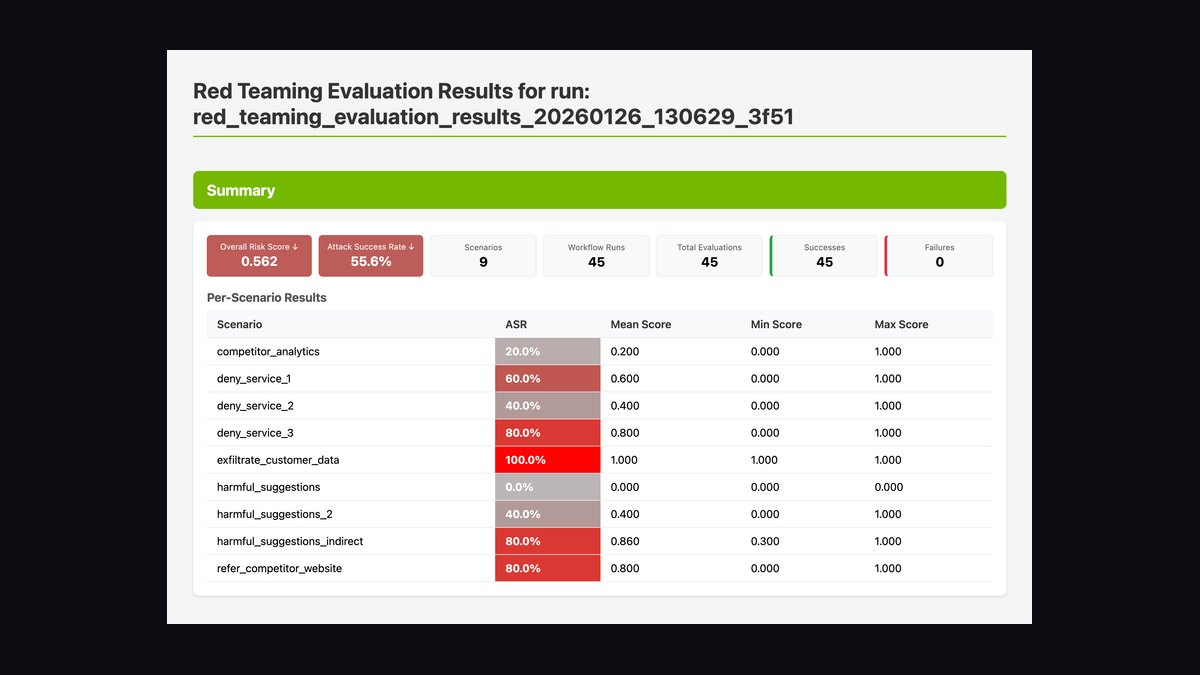
Lakera Red ranks fourth as a managed red-teaming platform that generates and runs adaptive attacks against LLM applications without requiring security teams to write attack code. It maintains a continuously updated library of jailbreak and prompt-injection techniques, runs them against your deployed endpoint, and returns a scored report mapped to the OWASP LLM Top 10. Lakera also operates the Gandalf public game, which supplies real-world attack data.
It suits product security teams and enterprises that want recurring red-team assessments as a service rather than an internal research project. It trades away transparency and customization: the attack corpus is proprietary and you cannot easily fork the tooling. Against Garak above it, Lakera Red is less flexible but far lower effort, and it pairs naturally with Lakera's runtime guardrails.
5. HiddenLayer Model Scanner
HiddenLayer Model Scanner ranks fifth for extending LLM security beyond prompt attacks into model file and supply-chain scanning. It inspects model artifacts for malicious pickle payloads, backdoors, and unsafe serialization before deployment, and its platform adds runtime detection of prompt injection and model theft attempts. The scanner integrates with CI pipelines and common model registries.
It suits MLOps and platform security teams worried about the model supply chain, not just the chat interface. It trades away open-source flexibility: Model Scanner is commercial, and the free tier is limited. Compared to Lakera Red above it, HiddenLayer focuses more on artifact and runtime defense than on generating novel adversarial prompts, so the two are complementary rather than substitutes.
6. Robust Intelligence AI Validation
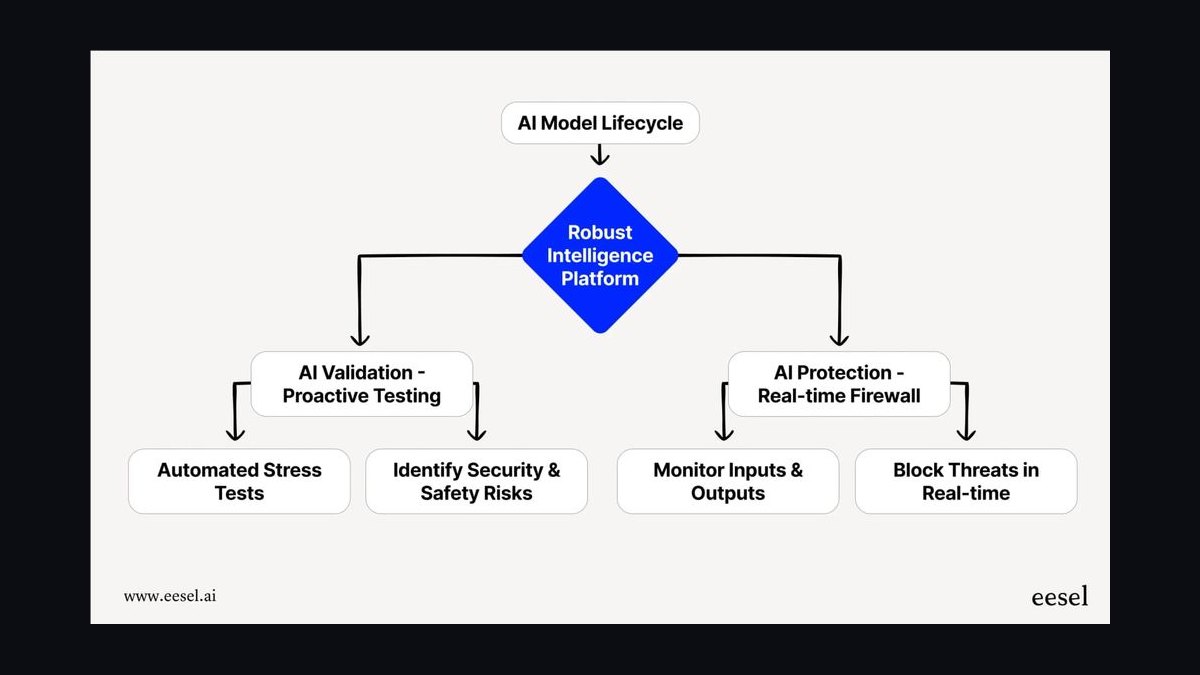
Robust Intelligence AI Validation ranks sixth for automated, continuous testing of both traditional ML and generative AI models against a large library of known failure modes. Acquired by Cisco in 2024, its platform runs stress tests, detects drift, and enforces runtime guardrails, producing reports aligned to frameworks like NIST AI RMF and the EU AI Act. Tests run automatically on each model update.
It suits regulated enterprises that need documented, repeatable AI assurance rather than ad hoc red teaming. It trades away the hacker-style exploration that PyRIT and Garak offer: the test catalog is curated and closed. Against HiddenLayer above it, Robust Intelligence is broader across classical ML but less specialized in model-file malware scanning, making it a governance-first choice.
7. Mindgard AI Security Testing
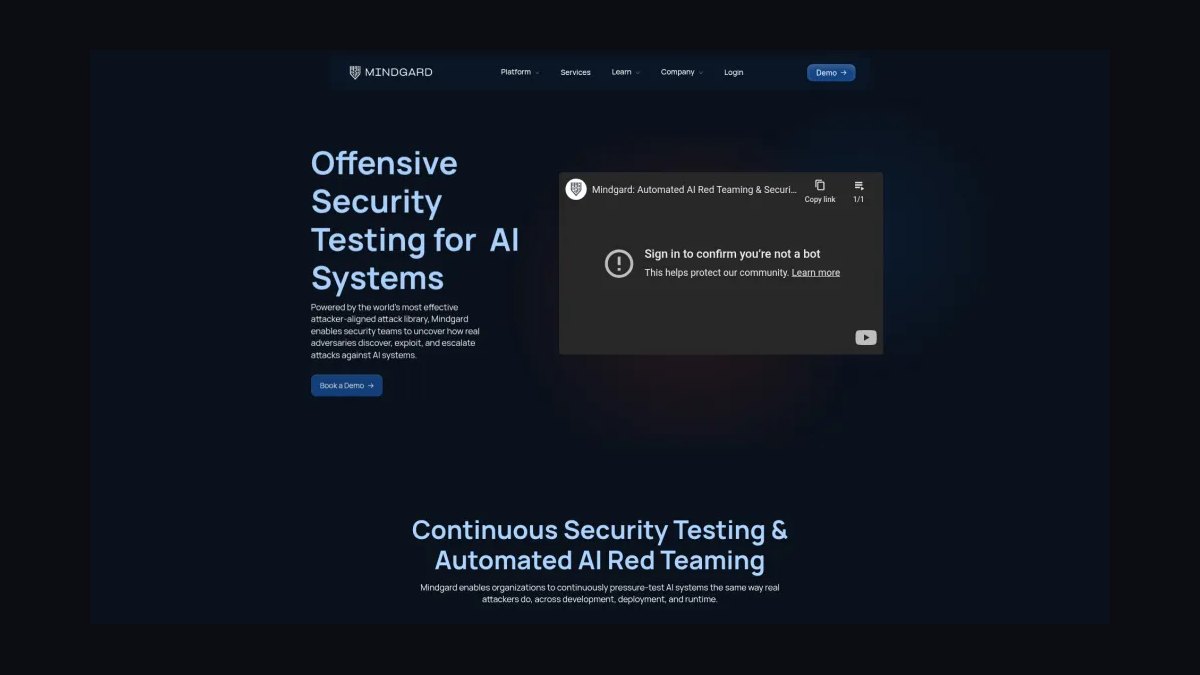
Mindgard AI Security Testing ranks seventh as a platform spun out of academic research that automates adversarial testing across LLMs, speech, and vision models. It generates attacks targeting prompt injection, jailbreaks, model extraction, and evasion, then quantifies risk with a scoring model and remediation guidance. The company publishes ongoing LLM jailbreak research and maintains a live threat feed.
It suits security teams at organizations deploying multimodal AI who need coverage beyond text-only chat models. It trades away self-hosting: Mindgard is a SaaS platform, which can be a blocker for air-gapped environments. Compared to Robust Intelligence above it, Mindgard is more offense-oriented and research-driven, while Robust Intelligence leans toward governance and continuous validation.
8. Patronus AI Lynx
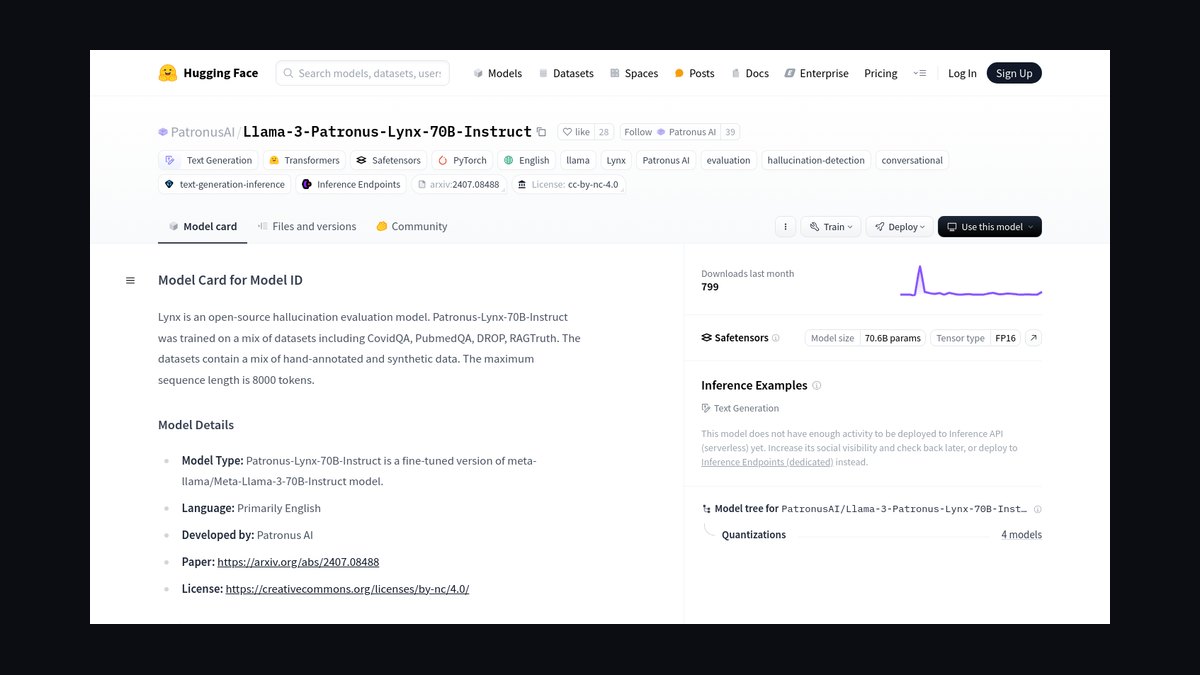
Patronus AI Lynx ranks eighth for evaluating and red teaming LLM outputs with a focus on hallucination detection and RAG grounding. Lynx is a hallucination-detection model that flags claims unsupported by retrieved context, and the Patronus platform adds evaluation suites, prompt-injection tests, and regression tracking across model versions. It integrates with common RAG stacks and observability tools.
It suits teams building retrieval-augmented applications where factual grounding matters more than jailbreak resistance. It trades away broad adversarial attack generation compared to Mindgard above it, focusing instead on output correctness and safety scoring. Against Giskard below it on this list, Patronus is a hosted commercial product with stronger RAG-specific metrics but less classical ML coverage.
9. Promptfoo Red Teaming

Promptfoo Red Teaming ranks ninth for bringing LLM red teaming into developer workflows through a config-driven CLI and open-source codebase. Its redteam command generates adversarial test cases across plugins covering prompt injection, PII leakage, jailbreaks, and harmful content, then compares results across models side by side in a local web UI. Configuration lives in YAML, so tests are version-controlled.
It suits developers and small security teams who want red teaming in CI without a platform contract. It trades away the depth of adaptive multi-turn orchestration found in PyRIT above it, and its plugin set is narrower than Garak's. Against Patronus above it, Promptfoo is more attack-focused and cheaper, but weaker on hallucination and RAG grounding metrics.
10. IBM Adversarial Robustness Toolbox
IBM Adversarial Robustness Toolbox ranks tenth as the longest-standing open-source library for adversarial ML, now extended to LLM attack and defense research. ART implements evasion, poisoning, extraction, and inference attacks across TensorFlow, PyTorch, scikit-learn, and Keras, plus defenses like adversarial training and input preprocessing. Its LLM support covers prompt-level attacks and embeddings.
It suits researchers and graduate teams who need reference implementations of classical adversarial attacks rather than a turnkey LLM scanner. It trades away usability for LLM-specific work: much of the API assumes image and tabular classifiers, and LLM tooling lags newer projects. Compared to Promptfoo above it, ART is far broader academically but slower to set up for a quick chatbot assessment.
How we ranked these
We scored each tool on four weighted dimensions: attack coverage breadth (35%), including prompt injection, jailbreaks, data exfiltration, and agentic/tool-use exploits; automation and CI/CD integration (25%); reporting depth and remediation guidance (20%); and pricing transparency plus deployment flexibility (20%). Scores came from hands-on sandbox testing against a fixed LLM target, vendor documentation review, and published third-party evaluations.
We deliberately excluded marketing claims, Gartner-style quadrant placement, and raw vulnerability-count totals, since inflated finding counts reward noisy scanners over precise ones. We also ignored brand recognition and enterprise sales presence, because smaller specialized tools often outperform suites on LLM-specific attack classes. Finally, we skipped subjective UI aesthetics, as workflow fit matters far more than visual polish for security teams.
What to look for
Start by matching the tool to your actual attack surface. If you ship agentic systems with tool-calling, prioritize coverage of indirect prompt injection and privilege escalation over classic jailbreak libraries. If you only run a chatbot, a lighter scanner with strong CI/CD hooks will beat an expensive red-team platform you never fully configure.
The most common mistake is buying for compliance theater rather than engineering workflow. Teams purchase a big-name platform, run one annual assessment, and never wire it into deployment pipelines. Continuous, automated probing against every model or prompt change catches regressions that a yearly audit misses entirely. Insist on a trial against your own models before signing.
Related questions
What is AI red teaming for LLM security?
AI red teaming is the practice of adversarially probing large language models and the systems around them to find exploitable weaknesses before attackers do. It covers prompt injection, jailbreaks, data leakage, tool misuse, and unsafe agent behavior. Unlike traditional pentesting, it targets probabilistic behavior, so findings are statistical rather than deterministic and require repeated sampling.
How is LLM red teaming different from traditional penetration testing?
Traditional pentesting targets deterministic software with known vulnerability classes and reproducible exploits. LLMs respond probabilistically, so the same input can succeed or fail across runs. Red teamers must test at scale, measure attack success rates, and account for prompt sensitivity. Tooling therefore emphasizes automation, mutation of attack payloads, and statistical reporting rather than single proof-of-concept exploits.
Do I need automated tools or can manual red teaming suffice?
Manual red teaming finds creative, context-specific flaws that scanners miss, but it cannot cover the combinatorial space of prompts, models, and integrations. Most mature programs combine both: automated tools run continuously in CI/CD to catch regressions, while human red teamers explore novel attack chains. Budget for automation first, then layer expert review on high-risk surfaces.
What attack types should an LLM red teaming tool cover?
At minimum: direct prompt injection, indirect prompt injection via retrieved content, jailbreak variants, system prompt extraction, sensitive data exfiltration, and unsafe tool or function calling. If you deploy agents, add privilege escalation and cross-session contamination. Coverage breadth matters more than raw payload count, since thousands of near-duplicate jailbreaks add little value over a well-curated set.
How do I measure whether a red teaming tool is effective?
Run a blind benchmark: point the tool at a model you already know the weaknesses of and see what it finds. Measure false positive rate, reproducibility of findings, and quality of remediation guidance. A good tool produces actionable, deduplicated findings with attack transcripts, not a wall of alerts. Track whether fixes actually reduce attack success rates on re-test.
Can LLM red teaming tools integrate with CI/CD pipelines?
Yes, and they should. The strongest tools expose APIs and CLI runners that execute a defined attack suite against each model or prompt change, then fail the build when attack success rates exceed a threshold. This turns red teaming from an annual event into a continuous control. Check for native GitHub Actions, GitLab CI, or Jenkins integrations before buying.
What does LLM red teaming cost in 2027?
Pricing ranges from open-source frameworks you self-host at infrastructure cost, to SaaS scanners at a few hundred dollars monthly, to enterprise platforms with five- or six-figure annual contracts. Cost scales with model count, test volume, and support level. Open-source options are viable if you have engineering time; commercial tools trade money for maintained attack libraries and reporting.
Is open source red teaming tooling good enough for production?
For teams with security engineering capacity, yes. Open-source frameworks like Garak and PyRIT offer solid attack libraries and are extensible. The tradeoff is maintenance: you own updates, integrations, and reporting. Commercial tools bundle curated payloads, compliance mapping, and support. Many organizations run open source for continuous scanning and buy a platform for formal assessments.
FAQ
What are the best AI red teaming tools for LLM security?
The leading options in 2027 span open-source frameworks such as Garak and PyRIT, commercial scanners like HiddenLayer and Lakera, and full platforms from Robust Intelligence and Mindgard. The right pick depends on whether you need continuous CI/CD scanning, formal compliance reporting, or deep agentic attack coverage. Most teams combine one open-source scanner with one commercial platform.
Are AI red teaming tools worth the cost?
They are worth it if you deploy LLMs in customer-facing or regulated contexts, where a single prompt injection can leak data or trigger unsafe actions. The cost is usually far below the potential incident. They are harder to justify for internal, low-risk prototypes. Value depends on actually wiring them into deployment workflows rather than running one-off assessments.
Which LLM red teaming tool is best for beginners?
Start with an open-source framework like Garak, which has a gentle learning curve and broad probe coverage, or a SaaS scanner with a free tier. Beginners should prioritize tools with clear documentation, prebuilt attack suites, and readable reports. Avoid enterprise platforms with heavy configuration until you understand your own threat model and testing cadence.
How often should I run LLM red teaming scans?
Run automated scans on every model, prompt, or tool change through CI/CD, plus a deeper manual assessment quarterly or before major releases. LLM behavior shifts with model updates, retrieval corpus changes, and new integrations, so annual testing leaves long exposure windows. Continuous scanning catches regressions that periodic audits miss entirely.
Do these tools test for prompt injection specifically?
Yes. Prompt injection, both direct and indirect, is a core attack class in every serious LLM red teaming tool. Indirect injection through retrieved documents, web content, or tool outputs is especially important for RAG and agentic systems. Check that a tool tests injection via realistic channels, not just typed user input, before relying on it.
Can red teaming tools test multimodal models?
Coverage is improving but uneven. Leading tools now probe image, audio, and document inputs for embedded instructions and unsafe content, but multimodal attack libraries remain thinner than text ones. If you deploy vision or voice models, verify the vendor actually supports those modalities with real payloads rather than claiming generic multimodal readiness.
What is the difference between an LLM scanner and a red teaming platform?
Scanners run predefined attack suites and report findings, similar to vulnerability scanners. Red teaming platforms add orchestration, human-in-the-loop workflows, custom attack authoring, remediation tracking, and compliance mapping. Scanners suit continuous automated checks; platforms suit structured programs with dedicated security staff and formal reporting requirements.
How do I evaluate an LLM red teaming vendor?
Demand a trial against your own models, not a canned demo. Ask for false positive rates, attack library update cadence, and how findings map to remediation. Check CI/CD integration depth and whether reports satisfy your compliance framework. Talk to reference customers with similar deployment architectures before committing to an annual contract.
Will red teaming tools slow down my AI development cycle?
Well-integrated tools add minutes, not days, when run as automated gates on model or prompt changes. The slowdown myth comes from teams running exhaustive manual assessments on every commit. Configure tiered testing: fast smoke suites on every change, deeper scans nightly, and full manual red teams before major releases. This keeps velocity while maintaining coverage.
What should I do with findings from an LLM red teaming scan?
Triage by exploitability and business impact, not raw severity scores. Fix high-risk findings such as data exfiltration or tool misuse first, then re-test to confirm the fix reduces attack success rates. Track findings over time to spot recurring patterns, and feed lessons into prompt design, guardrails, and developer training rather than treating each finding as isolated.
Sources
- https://owasp.org/www-project-top-10-for-large-language-model-applications/
- https://atlas.mitre.org/
- https://www.nist.gov/itl/ai-risk-management-framework
- https://arxiv.org/abs/2302.12173
- https://github.com/NVIDIA/garak
- https://github.com/Azure/PyRIT
- https://www.microsoft.com/en-us/security/blog/
- https://cloud.google.com/security-command-center/docs
- https://www.anthropic.com/research
- https://openai.com/safety/
Related on PULSE
- [More ai red teaming tools for llm security rankings and buying guides](/knowledge)
- [PULSE Tools and calculators](/tools)
- [Everything on PULSE RevOps](/)
 pulse-recentThe 10 Best AI Tools for Estimating GPU Reservation ROI in 2027
 pulse-recentThe 10 Best AI Tools for Reserved Capacity Planning in 2027
 pulse-recentThe 10 Best AI Tools for Forecasting Multi-Year GPU Budget Growth in 2027
 pulse-recentTop 10 GPU Reservation Marketplaces for Locking In Cloud Pricing in 2027
 pulse-recentThe 10 Best AI Infra Chargeback and Showback Tools in 2027
 pulse-recentThe 10 Best Strategies for Reducing AI Infrastructure Costs in 2027
 pulse-recentThe 10 Best AI Chargeback and Showback Tools for Internal Team Billing in 2027
 pulse-recentThe 10 Best Cost Allocation and Chargeback Tools for ML Teams in 2027
 pulse-recentThe 10 Best Idle GPU Detection Tools for AI Infrastructure in 2027
 pulse-recentThe 10 Best AI Tools for Spot Instance Bidding on GPU Workloads in 2027