 Pulse Reviews and Analysis
Top 10 Hang-On-Back Aquarium Filters 2027
 Curated by Kory White · Fractional CRO, CRO Syndicate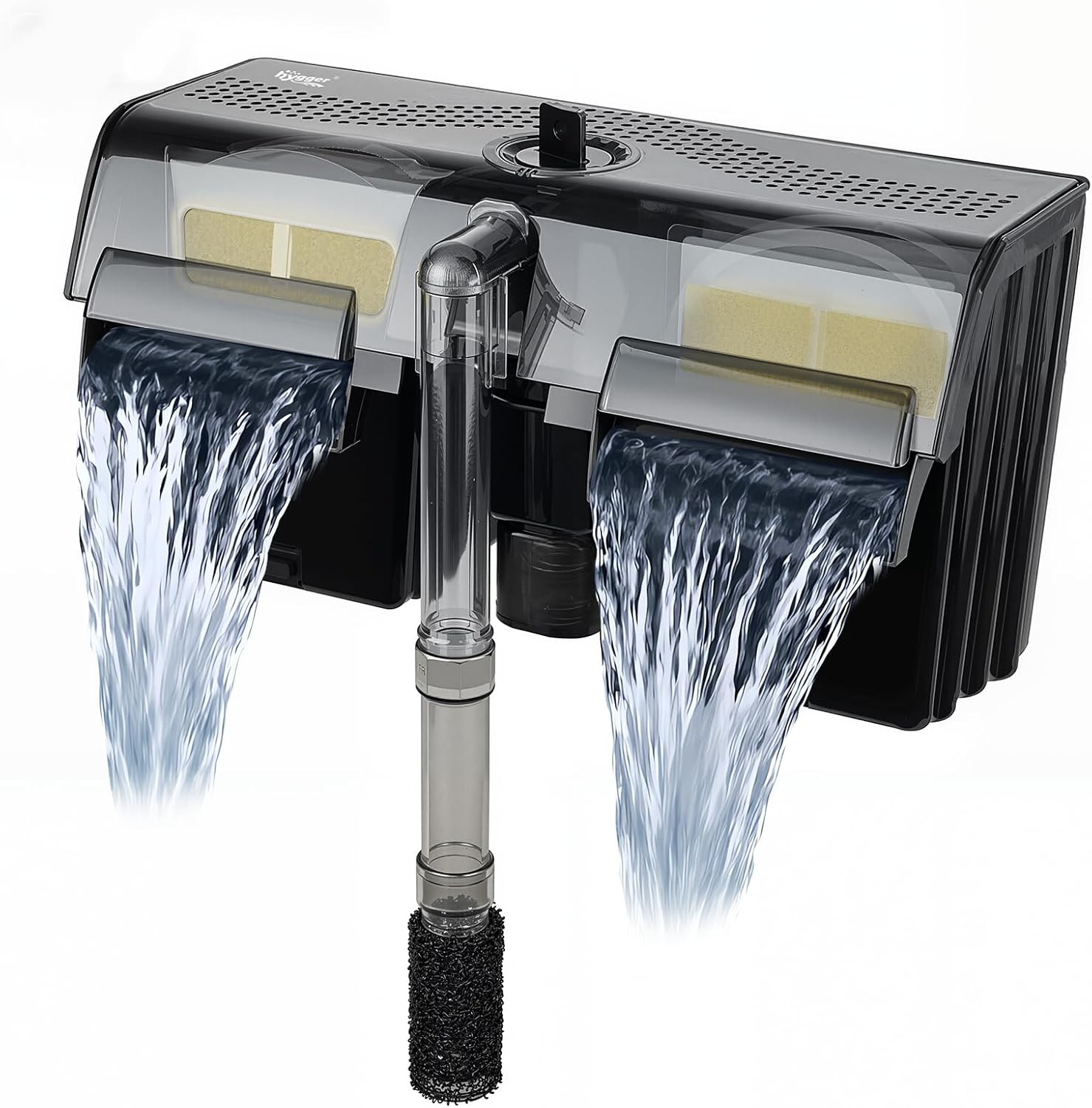
Top 10 Hang-On-Back Aquarium Filters 2027
A hang-on-back filter (HOB) clips onto the rim of a tank, draws water up an intake tube, runs it through media, and pours it back over a waterfall lip. For most freshwater keepers it is the easiest path to clean, oxygenated water without the plumbing of a canister filter or the noise of an air-driven sponge.
This guide judges the field on real flow rate (gallons per hour), media capacity, footprint behind the tank, priming behavior, motor noise, and long-term cost of replacement cartridges. The picks below suit beginners stocking a 10 to 55 gallon community tank, planted keepers who want gentle surface agitation, and intermediate hobbyists who refuse to fight a noisy pump every morning.
Prices are 2027 U.S. Street estimates and shift with retailer and tank size.
Direct Answer
The AquaClear 70 (Fluval) is our BEST OVERALL at roughly $55, thanks to a large refillable media basket, a flow-control dial, and a motor that runs for years. For shoppers who want reliable filtration on a budget, the Aqueon QuietFlow 20 at about $22 is our BEST VALUE.
Match the filter's rated gallons per hour to your tank and stocking, and rinse media in old tank water, never tap water, to protect the beneficial bacteria.
How We Ranked
- Flow rate (gph) — the engine of the filter; we want true turnover of 4 to 6 times tank volume per hour without blasting nano fish.
- Media capacity and type — refillable baskets that hold custom mechanical, biological, and chemical media beat disposable single-cartridge designs.
- Footprint and fit — slim bodies that sit behind a stand or inside a hood, and intakes that reach into shorter or taller tanks.
- Noise and reliability — a pump that stays quiet and self-primes after a power cut, with impellers that survive years of use.
- Running cost — the long-run price of cartridges, sponges, and impellers, not just the sticker price on the box.
1. AquaClear 70 (Fluval) 🏆 BEST OVERALL

The AquaClear 70, made by Fluval, is the filter most experienced keepers point newcomers toward, and for good reason. It is rated for tanks up to 70 gallons and pushes about 300 gph, but a smart flow-control dial lets you throttle it down to a trickle for shrimp or bettas.
Instead of a throwaway cartridge, it uses a deep open basket you fill with a foam block, BioMax ceramic rings, and activated carbon, so water actually dwells in contact with media rather than racing past it.
That large biological volume is why the AquaClear holds ammonia and nitrite at zero even on a heavily stocked community tank. The motor is quiet, self-primes after a power outage, and the impeller is cheap to replace if it ever wears. The only real catch is the waterfall return can splash on a low water line, easily fixed with a slightly higher fill.
- Price / Cost: ~$55
- Pros: Huge refillable media basket, adjustable flow, near-silent, parts widely stocked
- Cons: Bulky body, splash if water level drops, no built-in surface skimmer
Verdict: The benchmark HOB every other filter is measured against.
2. Aqueon QuietFlow 20 💎 BEST VALUE
The Aqueon QuietFlow 20 delivers the most filtration per dollar of anything here. Rated for 20 gallons at about 125 gph, it carries a dense dual-sided cartridge, a separate BioGrid plate for bacteria, and a small carbon insert, so it filters mechanically, biologically, and chemically out of the box.
A clever internal pump sits low and stays primed automatically, which means it restarts on its own after a power cut, a feature pricier units skip.
It runs genuinely quiet, the LED indicator tells you when the cartridge is clogging, and the slim body tucks behind most stands. The downside is the proprietary cartridge, which you will replace more often than refilling a basket, raising long-run cost a little.
- Price / Cost: ~$22
- Pros: Self-priming pump, true bio filtration, very quiet, cheap up front
- Cons: Proprietary cartridges add up, fixed flow, modest media volume
Verdict: The smartest cheap filter for a first 10 to 20 gallon tank.
3. Seachem Tidal 35
The Seachem Tidal 35 rethinks the HOB with a top-loading basket and a built-in surface skimmer that pulls the oily film off the water for better gas exchange. Rated to 35 gallons at roughly 130 gph, it features a flow-control knob and a maintenance-reminder dial.
The basket holds a large foam pad plus Matrix biomedia, giving it canister-like capacity in a hang-on body.
The self-priming pump is reliable and the skimmer is a real advantage for planted and betta tanks where surface scum builds up. Some units hum slightly until the impeller beds in, and the foam can need rinsing more often because the skimmer feeds it surface debris.
- Price / Cost: ~$38
- Pros: Surface skimmer, big top-load basket, adjustable flow, easy media access
- Cons: Occasional break-in hum, foam clogs faster, larger footprint
Verdict: The thinking keeper's HOB, especially for planted tanks.
4. Marineland Penguin 200 PRO

The Marineland Penguin 200 PRO is famous for its rotating BIO-Wheel, a textured drum that spins in the return flow and grows a thick film of nitrifying bacteria in the open air. Rated for 30 to 50 gallons at about 200 gph, it pairs a replaceable Rite-Size cartridge with that bio-wheel for strong, stable biological filtration that survives cartridge swaps.
It is a workhorse on community tanks and the new PRO version added an adjustable flow vent that earlier models lacked. The bio-wheel can stop spinning if it dries out or gums up, so it needs an occasional rinse, and the cartridges are proprietary.
- Price / Cost: ~$35
- Pros: Bio-wheel keeps bacteria through cartridge changes, strong flow, proven design
- Cons: Bio-wheel can stall, proprietary cartridges, slightly noisy splash
Verdict: A durable classic for standard 30 to 50 gallon community tanks.
5. Fluval C4 Power Filter

The Fluval C4 is a five-stage HOB that behaves more like a small canister. Rated for 40 to 70 gallons at about 264 gph, it layers two foam pads, carbon, C-nodes biomedia, and a trickle-through wet-dry chamber that exposes media to air for extra oxygen and bacterial growth.
A re-filtration knob lets you slow output without starving the media.
The wet-dry stage gives it biological muscle beyond its size, making it a strong pick for messier fish like cichlids or a stocked goldfish tank. It is one of the taller filters here, so confirm clearance behind a hood, and the multi-stage media costs more to replace fully.
- Price / Cost: ~$60
- Pros: Wet-dry bio stage, five media types, adjustable flow, robust pump
- Cons: Tall body, pricier media, more parts to clean
Verdict: Canister-grade biology in a hang-on shell for heavy bioloads.
6. Tetra Whisper IQ 30

The Tetra Whisper IQ 30 sells on silence, with a sound-shield design Tetra rates near 40 decibels. Built for 30 gallons at about 175 gph, it uses a Bio-Bag cartridge plus a dedicated bio-scrubber grid, and a bottom-mounted self-priming pump that restarts after outages without manual cup-filling.
It is a tidy, affordable choice for a bedroom or office tank where pump hum would otherwise annoy. Media volume is modest and the Bio-Bag cartridges are proprietary, so it is better suited to lightly stocked or planted setups than to a tank crammed with large fish.
- Price / Cost: ~$28
- Pros: Genuinely quiet, self-priming, slim, beginner-friendly
- Cons: Small media space, proprietary cartridges, fixed flow
Verdict: The quiet pick for a low-noise room tank.
7. AquaClear 30 (Fluval)

The AquaClear 30 shrinks the BEST OVERALL formula for smaller tanks. Rated for 10 to 30 gallons at about 150 gph with a flow dial that drops far lower, it shares the same refillable basket, foam, BioMax, and carbon stack. Throttled down, it is one of the gentlest filters you can run on a shrimp or betta tank while still moving real water.
Reliability mirrors its bigger sibling, with a quiet motor and cheap, easy-to-find parts. The intake is short, so check the depth on a tall nano, and shrimp keepers should add a sponge pre-filter to keep babies out of the intake.
- Price / Cost: ~$38
- Pros: Refillable media, very adjustable flow, quiet, low long-run cost
- Cons: Short intake, needs a pre-filter sponge for shrimp, splash on low level
Verdict: The right AquaClear for nano and shrimp tanks.
8. Penn-Plax Cascade 200

The Penn-Plax Cascade 200 is a budget HOB rated for 30 gallons at about 150 gph, with a flow-control knob and a roomy cartridge bay that accepts the included carbon cartridge plus a bio-sponge. For the money it offers more media room than many same-price rivals and a quiet, dependable pump.
It is a solid second filter or a no-frills primary for a community tank. You must prime it by hand at startup, the housing feels less refined than premium brands, and the cartridges are proprietary, but it filters honestly for the price.
- Price / Cost: ~$20
- Pros: Cheap, adjustable flow, generous cartridge bay, quiet
- Cons: Manual priming, basic build, proprietary cartridges
Verdict: A bargain backup or simple primary filter.
9. Aqueon QuietFlow 50

The Aqueon QuietFlow 50 scales the BEST VALUE design up for mid-size tanks, rated to 50 gallons at about 250 gph. It keeps the self-priming internal pump, the dual-sided cartridge, the separate BioGrid, and the clog indicator, delivering strong four-stage filtration on a stocked community or angelfish tank.
The automatic restart after a power cut is a genuine convenience at this size, and noise stays low. As with the smaller QuietFlow, the proprietary cartridge raises running cost over time, and the fixed flow can be brisk for timid fish until plants or hardscape break it up.
- Price / Cost: ~$33
- Pros: Self-priming, four-stage filtration, quiet, strong turnover
- Cons: Proprietary cartridges, fixed flow, can be brisk for nano fish
Verdict: A reliable mid-tank filter that restarts itself.
10. Hagen Fluval C3 Power Filter

The Fluval C3, from Hagen, brings the five-stage clip-on system down to 20 to 50 gallons at about 153 gph. It packs the same foam, carbon, C-nodes, and trickle wet-dry chamber as the C4, plus a flow knob and a handy clog indicator that tells you when the foam needs a rinse.
For a small but heavily fed tank it gives outsized biological capacity, making it a favorite for fancy goldfish or small cichlid setups. It is taller than basic HOBs, the layered media costs more to fully replace, and the trickle chamber needs an occasional clean to stay aerated.
- Price / Cost: ~$50
- Pros: Wet-dry bio stage, clog indicator, adjustable flow, compact for its power
- Cons: Tall body, pricier media, extra cleaning steps
Verdict: Big-filter biology for small high-bioload tanks.
How to Choose
What to Look For
Size the filter so it turns the whole tank over 4 to 6 times per hour; a 40 gallon tank wants a unit rated near 200 gph. Favor a refillable media basket over a single disposable cartridge, because it lets you add more biological media and skip recurring cartridge bills. Confirm the body and intake clearance behind your stand and inside the hood before buying, especially for tall multi-stage filters like the Fluval C-series.
On shrimp and fry tanks, slip a sponge pre-filter over the intake and turn the flow dial down. Always rinse foam and biomedia in old tank water, never under the tap, so chlorine does not wipe out the nitrifying bacteria that keep ammonia at zero.
FAQ
How many gallons per hour do I need for my tank? Aim for roughly four to six times your tank volume per hour. A 20 gallon tank wants about 100 to 125 gph, while a 55 gallon tank wants 250 to 300 gph. Heavily stocked or messy fish like goldfish and cichlids benefit from the higher end of that range, and a flow-control dial lets you tune it down for calmer species.
Are refillable filters better than cartridge filters? Generally yes for cost and performance. A refillable basket, like the one on the AquaClear and Seachem Tidal, holds more biological media and never forces you to throw away established bacteria. Cartridge filters such as the Marineland Penguin and Tetra Whisper are simpler but cost more over the years and lose some bacteria at each swap unless they have a bio-wheel or separate bio plate.
Will a hang-on-back filter work on a planted tank? It can, though many planted keepers run them at reduced flow to keep carbon dioxide from gassing off too fast. The Seachem Tidal's surface skimmer and the AquaClear's adjustable dial both help. Skip activated carbon if you dose liquid plant fertilizers, since carbon can strip them from the water.
How do I clean a hang-on-back filter without crashing my cycle? Rinse the foam and biomedia in a bucket of water you removed during a water change, never under the tap. Tap water chlorine kills the beneficial bacteria living on the media. Replace only one type of media at a time, and avoid scrubbing everything clean at once so your colony stays intact.
Bottom Line
For most freshwater keepers the AquaClear 70 (Fluval) is the BEST OVERALL hang-on-back filter, combining a large refillable basket, adjustable flow, and proven reliability at roughly $55. If budget rules the decision, the Aqueon QuietFlow 20 is the BEST VALUE, delivering true four-stage filtration and a self-priming pump for about $22.
Match the rated flow to your tank, choose a refillable basket where you can, and your filter will run quietly for years.
Sources
- Fluval — AquaClear and C-series product manuals and flow specifications
- Seachem — Tidal power filter documentation and Matrix biomedia notes
- Aqueon — QuietFlow product line specifications
- Marineland — Penguin PRO BIO-Wheel filter literature
- Aquarium Co-Op — hang-on-back filter setup and media guides
- Fishlore and r/Aquariums community filter comparison threads
*Keywords: Top 10 Hang-On-Back Aquarium Filters 2027 — review, reviews, rating, comparison, best of 2027.*