
Best automatic fish feeder for pelleted food that doesn't clog or overfeed?
 Curated byKory White · Fractional CRO · Maryland
 PULSEKNOWLEDGE LIBRARY
Quality
Certified
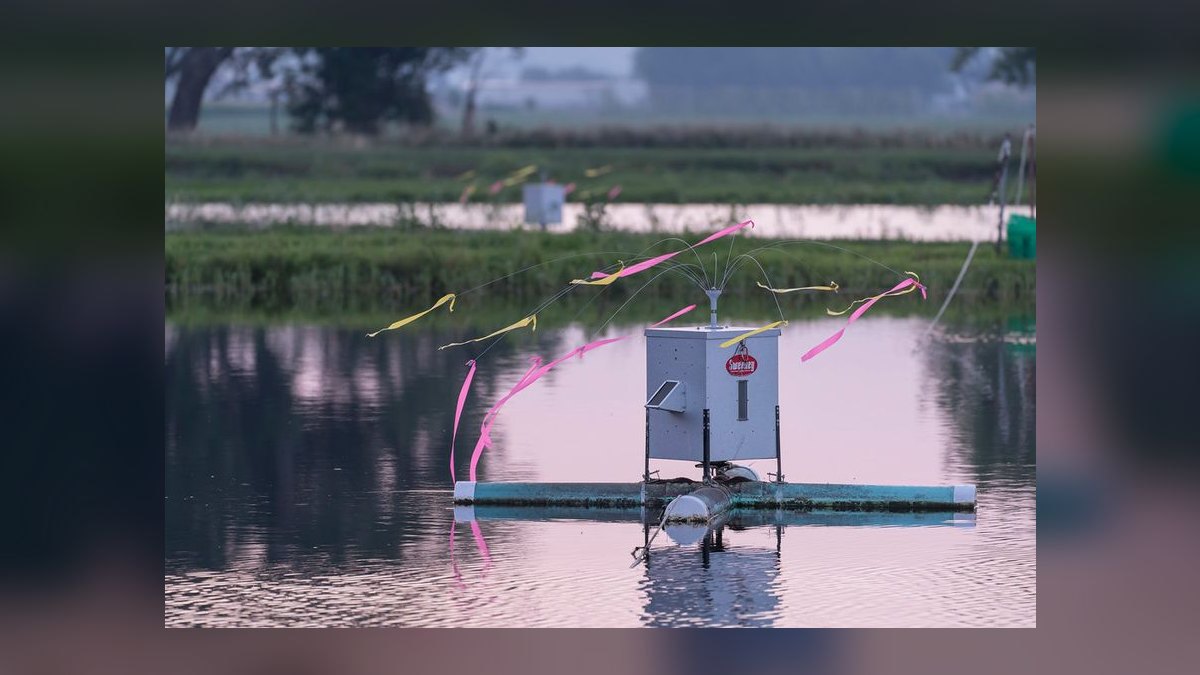
For pelleted food, choose a drum-style automatic feeder — a rotating barrel with an adjustable slot opening — over an auger or screw-type dispenser. Drums move pellets by gravity instead of compressing them through a narrow tube, so they rarely jam, and a fixed slot width caps how much drops per cycle, which is what actually prevents overfeeding.
Drum feeders versus auger feeders for pelleted food
The automatic feeder market splits cleanly into two dispensing mechanisms, and for pelleted food the difference between them is not a matter of taste — it determines whether the thing works at all after week three.
A drum feeder (sometimes called a barrel or rotary feeder) is a horizontal cylinder that holds the food. One end or one side of the cylinder has an adjustable opening, usually set by sliding a plastic collar to widen or narrow a slot. The motor rotates the drum once at the scheduled time, the opening passes the bottom of its arc, and whatever pellets happen to be sitting in front of that opening fall out. Nothing is pushed, squeezed, or forced. Pellets that don't fit through the slot simply stay in the drum and try again next rotation. This is the mechanism used by the Eheim EveryDay feeder, the Hydor Ekomixo, and most of the mid-range models sold in aquarium shops.
An auger feeder is a screw inside a tube. Food sits in a hopper above the screw; when the motor turns, the screw flights carry a measured volume of food along the tube and out the end. Augers are precise on paper — the volume per rotation is fixed by the geometry of the flight — and they're what you find inside most koi pond feeders and some budget aquarium units. The problem is that an auger works by *compression*. Food gets pinched between the flight and the tube wall. With flake or powder, that's fine; the material deforms and keeps moving. With a 3mm extruded pellet, the pellet either passes cleanly or it wedges, and once one wedges the flight behind it packs more pellets against it until the motor stalls or slips. Larger pellets, irregularly shaped sticks, and freeze-dried cubes all raise the jam rate.
There's a third category worth knowing about even though it rarely wins: the carousel or compartment feeder, a disc divided into wedge-shaped bins that you pre-load individually, rotating one bin over an opening per feeding. These essentially cannot clog and cannot overfeed, because you physically portion each meal yourself in advance. The trade-off is capacity — most hold seven to fourteen compartments, so they cover a vacation but not an ongoing schedule, and refilling them is more work than just feeding the fish. They're the right tool for a two-week trip and the wrong tool for permanent automation.
The practical ranking for pelleted food: drum first, carousel for short-term travel, auger only if you're feeding a pond with large floating pellets where the auger tube is wide enough that wedging isn't physically possible. Pond feeders often use augers successfully precisely because the tube diameter is several times the pellet diameter — the geometry that fails in a small aquarium unit works fine when scaled up.
Why pellets clog what flakes never do
Understanding the failure mode matters more than memorizing brand names, because it tells you which spec sheet numbers to actually read.
Pellets clog for three distinct reasons, and they compound.
Bridging. Granular material sitting in a hopper forms arches. Individual pellets lock against each other across the opening and support the weight of everything above, so nothing falls even though the hole is bigger than any single pellet. This is a well-documented behavior in bulk-solids handling — it's the same physics that makes a grain silo hang up. The rule of thumb from industrial hopper design is that an opening needs to be several times the largest particle dimension to reliably avoid arching; below roughly three to four particle diameters, bridging becomes common. Applied to your tank: if you're running 3mm pellets, a slot narrower than about 10mm will bridge sooner or later. Drum feeders fight bridging by *rotating* — the motion breaks arches mechanically every cycle. Static-hopper designs have no such help.
Moisture uptake. Aquarium fish food is hygroscopic. It's designed to absorb water quickly once it hits the tank, which means it also absorbs water vapor from the air above the tank, and the air directly above an aquarium is the most humid air in your house. Pellets that pick up moisture swell slightly, soften on the surface, and become tacky. Tacky pellets stick to each other and to the drum wall. This is the single most common cause of an automatic feeder that "worked fine for a month and then stopped." It's also why every good feeder design includes either a sealed hopper lid, a desiccant chamber, or an air vent connected to an aquarium air pump that pushes dry room air through the food chamber — that vent port on the back of a drum feeder is not decorative.
Dust and fines. Every bag of pellets contains broken fragments and powder. As the drum rotates, more fines are generated by pellets abrading against each other. That dust is finer, more hygroscopic, and more cohesive than whole pellets. It settles into the slot mechanism, absorbs moisture, and turns into a paste that glues the moving parts. A feeder that dispenses beautifully with fresh food from the top of a bag can gum up when you get to the bottom third of the same bag.
The design consequences are direct. A good pellet feeder has: a slot you can widen for larger food; a rotating rather than static dispensing action; a genuinely sealed lid; a vent port for an air line; and a drum that comes apart for cleaning without tools or with a single screw. Anything missing one of those is a feeder that will eventually need babysitting.
How to decide between them
The choice depends on four inputs you can determine in about five minutes: pellet size, tank size, how long the feeder needs to run unattended, and whether you have reliable mains power.
Start with pellet diameter, because it's the hard constraint. Measure it — don't trust the bag. Micro pellets for nano fish run under 1mm. Standard community tropical pellets are 1–2mm. Cichlid and goldfish pellets are commonly 3–4mm. Koi and large-cichlid sticks run 5mm and up. Under 1mm, almost any drum will dispense — your problem flips from clogging to *overfeeding*, because a slot narrow enough to meter micro pellets is very hard to set precisely. Over 4mm, you need to confirm the slot opens wide enough; many aquarium drums max out around 8–10mm, which is workable for 4mm pellets and marginal above that.
Then consider unattended duration. A drum feeder holds a fixed volume, so the calculation is straightforward: hopper capacity divided by daily consumption. A typical aquarium drum holds somewhere in the range of 50–100ml of food. If you're dispensing roughly 1ml per feeding twice a day, that's a month or more of runway — capacity is almost never the binding constraint for a normal tank. Capacity only matters for ponds and for very large stocked systems.

Power decides the backup question. If your feeder runs on mains power with no battery, a four-hour outage while you're away means missed feedings. Battery-only feeders sidestep this entirely and are generally the safer default; the maintenance cost is replacing cells every few months. Feeders with mains power plus battery backup are the belt-and-braces option.
One thing the flowchart can't capture: if your fish are sensitive to feeding *volume* rather than schedule — fancy goldfish prone to buoyancy issues, or a heavily stocked nano tank with thin water-quality margins — bias toward the carousel even at the cost of capacity. Pre-portioning removes the entire class of overfeeding risk. For a robust community tank with good filtration, a drum with a well-set slot is fine and far less work.
Numbers that actually matter when you calibrate
This is where most people get it wrong, because they set the feeder by eye and only discover the error when the water goes cloudy.
The feeding-volume baseline. The standard hobbyist guideline is to feed only what the fish consume in roughly two to three minutes, once or twice a day. That's behavioral, not volumetric, so you need to convert it. Do it manually first: for one week, feed by hand and note how much you use. Then measure that quantity. The easiest method is counting — for most community tanks with 1–2mm pellets, a feeding is somewhere in the range of a dozen to a few dozen pellets per handful of small fish. If you'd rather measure by volume, a kitchen scale that reads to 0.1g will get you there; a typical single feeding for a moderately stocked 20-gallon tank lands well under a gram.
Calibrating the slot. Fill the drum, hold a dry saucer under the outlet, and run manual test cycles. Most drum feeders have a manual-feed button for exactly this. Run five cycles and average — single cycles vary, because whether a pellet is sitting in front of the slot at the moment of rotation is partly chance. Count what came out. If it's 30 pellets and you want 12, narrow the slot and repeat. Expect to iterate three or four times. Budget ten minutes.
Expect real variance. Even a well-calibrated drum won't deliver identical portions. Run-to-run variation of ten to twenty percent is normal and is not a defect — it's a consequence of gravity-fed metering from a randomly packed bed of granular material. As the drum empties, the head of food above the slot decreases, and the amount delivered per cycle tends to drift downward. This is why you should calibrate at roughly the fill level you'll normally maintain, and why topping the drum off weekly gives more consistent results than running it from full to empty.
Set the schedule conservatively. Two feedings a day is a reasonable default for most tropical community fish. Some keepers prefer three smaller ones for growing fish or high-metabolism species. What you should *not* do is set a feeder to six feedings a day because it can. Every additional feeding is another opportunity for the portion to run high, and the errors accumulate as uneaten food on the substrate.
Skip days are fine. Healthy adult fish handle a fasting day without issue, and many experienced keepers deliberately skip one day a week. If your feeder supports it, a skip day gives the biological filter a break and gives you a clean weekly checkpoint.
Watch the water, not the feeder. The real feedback signal is your test kit. If ammonia or nitrite registers above zero in an established, cycled tank, you are overfeeding — reduce the portion by roughly a fifth and retest in three days. Rising nitrate faster than your water-change schedule accounts for, sudden algae growth, cloudy water, or visible uneaten pellets on the substrate two minutes after a feeding all point the same direction. Reduce first, ask questions later; underfeeding an adult fish for a week is harmless, overfeeding for a week can crash a tank.
Cost framing. Aquarium drum feeders occupy a modest price band — meaningfully more than a basic mechanical timer, meaningfully less than a canister filter. The relevant economics aren't the purchase price; they're the cost of failure. A jammed feeder over a two-week trip means fish that go unfed. A stuck-open or over-portioned feeder means a fouled tank, an ammonia spike, and potentially dead fish plus a week of remediation. Buying the better mechanism is cheap insurance against both.
Setting one up so it stays working
Installation is where most of the long-term reliability is won or lost, and it takes maybe fifteen minutes to do properly.
Height and position. Mount the outlet one to two inches above the water surface. Closer and humid air wicks straight into the drum; higher and pellets scatter, bounce off the rim, or land where the current sweeps them into the overflow or behind the rockwork. Position away from the filter outflow and away from any air stone or skimmer — surface agitation throws micro-droplets upward, and those droplets are what turn your dry pellets into paste. If you have a lid, feed through a dedicated port rather than leaving a large gap; open water below the feeder is the humidity source you're trying to avoid.
Use the vent. If the feeder has a vent port and you own an air pump, connect it. A trickle of room air through the food chamber is the single most effective anti-clumping measure available, and it costs nothing if a pump is already running. If there's no port and you live somewhere humid, put a food-safe desiccant sachet under the lid instead and replace it monthly.
Keep the food dry upstream. Store the bulk bag sealed, in a cupboard, away from the tank. Don't refill the drum by holding the bag over an open aquarium. Don't scoop with a wet hand or a wet spoon. Most feeder clogs originate in the storage bag, not the feeder.
Don't overfill. Filling the drum to capacity increases the weight of food pressing on the slot, which raises both the bridging risk and the per-cycle portion. Two-thirds full is a good working level and gives more consistent dispensing.
Run a live trial before you rely on it. Set the feeder up and let it run while you're home for a full week. Watch at least a few dispense cycles. Confirm the portion looks right in the water, confirm the fish clear it, and check your parameters at the end of the week. A feeder you've never watched operate is not a feeder you can leave for two weeks.
Maintenance cadence. Every two to four weeks, pull the drum, empty any remaining food, and rinse under warm water with a soft brush — no soap, no detergent residue anywhere near a fish tank. Dry it completely before refilling; a damp drum is a mold farm. Replace batteries on a schedule rather than waiting for a low indicator, because a weakening battery often manifests first as a slower or partial rotation, which quietly changes your portion size before it fails outright. In saltwater setups, wipe salt creep off the battery contacts and consider a light film of dielectric grease on the terminals — salt spray corrodes contacts faster than anything in a freshwater tank.
Adjacent problems the same thinking solves
The reasoning that picks a fish feeder transfers directly to several neighboring automation decisions, and treating them as one system usually produces a better tank.
Auto top-off and dosing. The same instinct that says "gravity over compression" applies to liquid dosing. Peristaltic dosing pumps are the liquid analogue of the auger — they squeeze tubing to move fluid — and they drift as the tubing fatigues, which is why serious reef keepers recalibrate them periodically rather than trusting the factory ml/min figure. The lesson generalizes: any device that meters a small quantity repeatedly needs periodic recalibration, not one-time setup.
Lighting and feeding timing. If your lights are on a timer, schedule feedings while the lights are on. Fish forage visually; food dispensed into a dark tank is more likely to reach the substrate uneaten, which is functionally overfeeding regardless of what the feeder dispensed. Offset the feed by at least an hour after lights-on and an hour before lights-off.
Filtration headroom is the real safety margin. An automatic feeder is only as safe as the biological filter absorbing its mistakes. A tank running at the edge of its bioload capacity has no buffer for a feeder that dispenses double one morning. Before automating, make sure the tank has slack — mature media, adequate flow, and a water-change schedule with margin. That's what turns a portioning error into a non-event instead of a fish kill.
Vacation planning beyond the feeder. The feeder solves one variable. A trip longer than a week also raises evaporation, temperature drift, and unnoticed equipment failure. Pairing the feeder with an auto top-off and a temperature alarm covers substantially more risk than the feeder alone. And if the trip is long, arranging one human check-in mid-trip is worth more than any additional device.
Ponds and outdoor systems. Everything scales differently outdoors. Pond feeders face rain, direct sun, and temperature swings that make moisture control much harder, and the pellets themselves are larger. Ponds also need seasonal feeding adjustment — as water temperature drops, koi metabolism slows and feeding should reduce sharply, which is a schedule change no basic timer makes for you. An automatic pond feeder left on a summer schedule into autumn is a classic way to foul a pond.
Quarantine and fry tanks are the exception. Do not automate feeding on a quarantine tank or a fry tank. Both need daily human observation — quarantine because you're watching for disease signs, fry because their food is often live or powdered and their tolerance for water-quality error is small. Automation is for stable, established display tanks, not for systems under active management.
Related questions
Can I use an automatic feeder with sinking pellets?
Yes. The mechanism doesn't care whether food floats — it dispenses into the water and physics takes over. The practical caution is that sinking pellets reaching the substrate uneaten are harder to spot, so verify consumption visually during your supervised trial week.
Will a flake feeder work if I switch to pellets?
Often poorly. Flake dispensers are frequently designed with narrow slots and gentle agitation suited to light, thin material. Pellets are denser and bridge more readily. Check that the slot opens wider than roughly three times your pellet diameter before assuming it transfers.
How long can a feeder run unattended?
Capacity is rarely the limit — a typical aquarium drum holds weeks of food. The real limit is moisture. In a humid room without a vent line or desiccant, clumping can start within two to three weeks even when the drum is still half full.
Do I need a feeder if I'm only away for a weekend?
No. Healthy adult fish handle two to three days without food comfortably. A feeder is worth it for trips beyond roughly four or five days, or for daily consistency when your own schedule is irregular.
What about vacation feeder blocks instead?
Gel and plaster blocks dissolve continuously and add minerals and organics to the water whether the fish eat them or not. They're a last resort for short trips. A properly calibrated automatic feeder is strictly better for anything longer than a few days.
FAQ
Why did my feeder work fine for a month and then stop dispensing?
Almost certainly moisture. The food absorbed humidity from the air above the tank, softened, and either stuck to the drum wall or bridged across the slot. Empty the drum, wash and fully dry it, refill with fresh dry food from a sealed bag, and connect the air vent or add a desiccant sachet. If it recurs quickly, raise the mounting height and check for surface agitation directly beneath the outlet.
How do I know if my automatic feeder is causing me to overfeed?
Test the water. In a cycled tank, any detectable ammonia or nitrite means excess organics are entering the system. Other signals: pellets visible on the substrate two minutes after a feeding, nitrate climbing faster than your water changes account for, sudden algae growth, or persistently cloudy water. Reduce the portion by about twenty percent and retest after three days.
Is a battery model or a mains-powered model better?
Battery-only models are the safer default for aquariums because they keep running through a power cut, which is exactly when you're most likely to be away. The trade-off is remembering to change cells — do it on a calendar, roughly every two to three months, rather than waiting for a low-battery indicator, since weak batteries change your portion size before they fail.
Can one feeder handle two different pellet sizes?
Not well simultaneously — a single slot setting can only be calibrated for one food. If you need to mix, either run two feeders, or use a carousel feeder where each compartment is loaded independently and you control exactly what each meal contains.
How often should the feeder actually be cleaned?
Every two to four weeks in a normal freshwater setup, more often in humid rooms or saltwater tanks. Disassemble the drum, rinse under warm water with a soft brush, never use soap, and let it dry completely before refilling. Pay particular attention to dust in the slot grooves — that fine powder absorbs moisture and forms the paste that jams the mechanism.
Should I still feed by hand sometimes?
Yes, and not just as a backup. Hand feeding is when you actually observe your fish — appetite changes, fin condition, behavior shifts. An automatic feeder that removes all daily contact with the tank removes your earliest disease warning system. Many keepers automate one feeding and hand-feed the other for exactly this reason.
Sources
- Eheim — feeding accessories
- Aquarium Co-Op — aquarium care and equipment guides
- Practical Fishkeeping
- Seriously Fish — species profiles and care parameters
- The Spruce Pets — aquarium fish feeding guidance
- Reef2Reef — reef aquarium equipment forums
- VCA Animal Hospitals — pet fish care
- Fluval — aquarium equipment and care resources
Related on PULSE
This page will be disappearing soon. Save it to your device for $1 — or read it free while it is here.
@Kory-White- · if Venmo asks, the last 4 of my number are 2012
This page is gone.
This one is off the shelf now. $1 keeps it on your phone for good — the whole page, pictures and diagrams included.
 pulse-aquariumsTop 10 Planted Aquarium Substrates Compared 2027
 pulse-aquariumsTop 10 Submersible Aquarium Heaters with External Controllers for Safety (2027)
 pulse-aquariumsCan I use reverse osmosis water for a freshwater community tank in 2026?
 pulse-aquariumsHow do I treat fin rot in freshwater fish without medication in 2026?
 pulse-aquariumsWhat is the best quiet canister filter for a 40-gallon breeder tank in a bedroom in 2026?
 pulse-aquariumsTop 10 Sand Sifting Cleaner Kits for Bare-Bottom Aquarium Maintenance (2027)
 pulse-aquariumsHow to set up a hospital tank for fin rot without medicating the main display in 2026?
 pulse-aquariumsHow to treat ich in a planted tank without harming invertebrates in 2026?
 pulse-aquariumsTop 10 Aquarium Backgrounds with 3D Rock Textures for Natural Tanks (2027)
 pulse-aquariumsTop 10 Planted Tank CO2 Regulators for Beginner Aquascapers in 2027