

What type of gravel is safe for goldfish that might eat it in 2027?
 Curated byKory White · Fractional CRO · Maryland
Quality
Certified
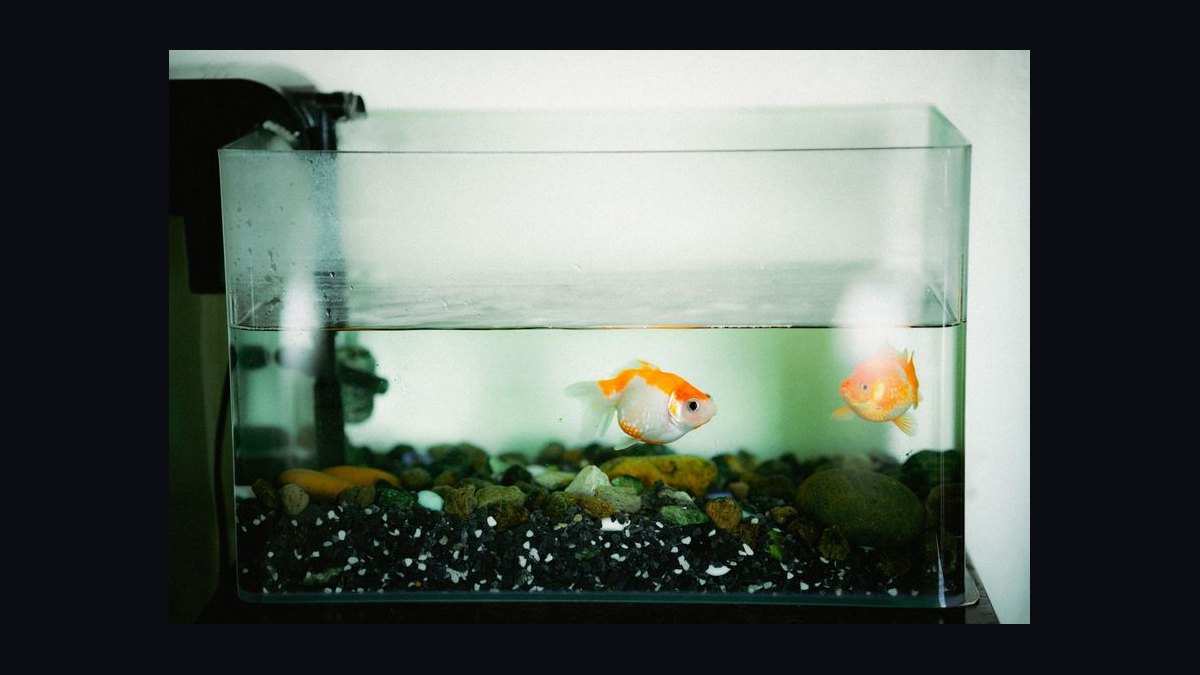
Safe goldfish gravel is smooth, rounded, chemically inert stone sized either too large to swallow (roughly 5 mm and up) or fine enough to pass harmlessly through the gut (sand under about 1 mm). The dangerous middle band is 2–4 mm — big enough to lodge in the mouth or gut, small enough to fit.
The two real options: oversize smooth gravel versus fine sand
Almost every goldfish substrate argument collapses into two viable camps, and the reason is anatomical rather than aesthetic. A goldfish has no stomach in the mammalian sense and no teeth at the front of its mouth — it has pharyngeal teeth set back in the throat. Its natural feeding behavior is to take a mouthful of substrate, work it against the roof of the mouth, sort the edible from the inedible, and spit the rest out. This is not a bug you can train out of a fish; it is how the animal eats. Any substrate you choose will end up inside a goldfish's mouth. The only question is what happens next.
Option A — oversize smooth gravel. Stones large enough that the fish physically cannot get them past the pharyngeal region. In practice that means a minimum dimension of about 5 mm for an adult common or comet, and considerably larger for a big fish. Many keepers go further and use 10–25 mm river pebbles or Mexican beach pebbles, which no goldfish will ever swallow. The fish still picks them up, still tumbles them, still drops them — but the size makes the swallow physically impossible. This is a hard mechanical barrier, and hard barriers beat behavioral hope every time.
Option B — fine sand. Grains under roughly 1 mm — pool filter sand, blasting-grade silica, or an inert aquarium sand. Here the logic inverts: the fish absolutely does ingest some of it, and that is fine. Grains this small pass through the digestive tract and exit with waste, the same way sand passes through a wild carp foraging in a river bottom. Sand also lets the fish express its natural sifting behavior, which is genuinely enriching. The trade-off is maintenance: sand compacts, holds waste on its surface rather than in it, and requires a different cleaning technique.
What sits between them is the danger zone. Standard pet-store aquarium gravel — the 2–4 mm colored stuff sold by the bag — is the single most common cause of gravel-related goldfish emergencies. It is exactly the size that fits into the mouth and then wedges. A stone stuck against the pharyngeal teeth or jammed in the throat causes the fish to gape, shake its head, rub on decor, and stop eating. If it passes further and lodges in the gut, you get an impaction: swollen abdomen, no defecation, buoyancy problems, and a fish that declines over days. Neither outcome is something you want to be managing at 11 p.m. with tweezers and a wet towel.
There is a third consideration that cuts across both options: chemical inertness. Whatever size you pick, the material must not dissolve into the water column. Crushed coral, aragonite, dolomite, and most "cichlid" substrates are calcium carbonate — they dissolve slowly and push pH and general hardness upward. Goldfish are tolerant of moderately hard, slightly alkaline water, so this is less catastrophic for them than for a soft-water tetra, but it removes your ability to control water chemistry and can drive pH into ranges where ammonia becomes far more toxic. Inert options — quartz, granite, basalt river rock, silica sand, and substrates explicitly labeled inert or pH-neutral — leave your water chemistry where your source water and your maintenance put it.
How to decide between them
The decision is driven by four variables: the size of the fish, the age of the fish, your filtration capacity, and how much maintenance labor you are actually willing to do each week. Be honest on the last one — a substrate that requires attention you will not give it is worse than a bare bottom.

Fish size and age. Juveniles under about 8 cm (3 inches) body length are the highest-risk group. Their mouths are small, so the gravel that fits is also the gravel that lodges, and they are more indiscriminate feeders. For a tank of young fish, sand or bare bottom is the conservative call. An adult fancy goldfish at 15 cm has a mouth wide enough that 5 mm gravel goes in easily — for that fish, you either go to 15 mm+ pebbles or drop to sand. There is no single number that works across the whole life of the animal, which is why many keepers change substrate once as the fish matures.
Filtration and bioload. Goldfish are among the heaviest waste producers in the freshwater hobby, and their waste is high in nitrogenous compounds relative to fish of similar mass. Chunky gravel with wide gaps traps solid waste below the surface where your siphon has to reach in and get it. Sand keeps waste on top where flow can move it to the filter intake. If your filtration is modest, sand plus decent surface flow is more forgiving. If you are running heavy canister filtration with good turnover and you vacuum weekly without fail, large pebbles are perfectly manageable.
Aquascaping goals. Rooted plants are difficult with goldfish regardless of substrate — the fish uproot and eat them — but if you are running potted or attached plants (anubias, java fern, crypts in pots), the substrate becomes purely decorative and the safety argument dominates. If you want a naturalistic river-bottom look, large smooth pebbles win. If you want the fish to display foraging behavior, sand wins.

A note on the middle option nobody mentions: you can layer. A base of sand with a scattered top layer of large river stones gives you sift-able substrate plus visual structure, and both components are individually safe. What you must not do is mix gravel sizes such that the small fraction is in the danger band — a bag labeled "3–8 mm" contains plenty of 3 mm stones.
Concrete numbers behind each option
Specifics matter more than principles here, so here are the figures worth writing down.
Size thresholds. The practical danger band is 2–4 mm. Standard bagged aquarium gravel is typically sold in the 2–5 mm range, which is why it is implicated so often. For a safe oversize choice, target a minimum dimension of 15 mm and prefer 20–25 mm for adult fish — this is the size of a large marble or small river pebble. For the sand route, target a grain size of 0.4–0.8 mm; pool filter sand is commonly graded around 0.45–0.55 mm, which sits right in the sweet spot. Play sand is finer and dustier and tends to compact more aggressively, which makes it the weaker of the two sand options despite being cheaper.

Depth. Sand should be shallow — 2 to 3 cm (about one inch) is plenty, and going past 5 cm invites anaerobic pockets where hydrogen sulfide can accumulate. Large pebbles can go deeper because water flows freely between them, but 3–5 cm is still sufficient and keeps the amount of trapped detritus manageable. Deeper substrate is not better; it is just more waste storage.
Rinsing. New substrate carries dust and fines. Rinse in batches in a bucket, agitating hard and pouring off the cloudy water, and expect 5–8 cycles for gravel and 10–15 for sand before the runoff is clear. Sand is dramatically worse in this respect — if you skip it, you will have a milky tank for days and a filter full of silt. Rinse with dechlorinated water if you are rinsing substrate that will go into an established tank; for a brand-new setup, tap water is fine since you will be dechlorinating the fill anyway.
Maintenance cadence. Goldfish tanks generally need a 25–40% water change weekly. With gravel, run the siphon into the bed and work section by section, covering roughly a quarter to a half of the footprint each session so you never strip the bacterial colony all at once. With sand, hover the siphon 2–3 cm above the surface and let the current lift detritus without sucking up grains; stir the sand bed lightly with a finger or a chopstick every 2–4 weeks to release trapped gas before it accumulates. Never turn over a deep, long-undisturbed sand bed all at once — releasing a large gas pocket into the water column at once is genuinely dangerous.

Cost. Pool filter sand is the cheapest safe option by a wide margin, sold in large bags at pool supply stores. Bulk river pebbles from a landscape supplier are the next cheapest, though they require careful sorting for sharp fragments and a thorough rinse. Branded aquarium substrates cost several times more per unit weight; what you buy with the premium is consistent grading, verified inertness, and no sorting labor. For a small tank the price difference is trivial; for a 200-litre goldfish tank it is not.
Failure timeline. A fish with a stone lodged in the mouth or pharynx usually shows symptoms within minutes to hours — head shaking, gaping, gill flaring, refusal of food, and rubbing against surfaces. A gut impaction develops over days: reduced or absent feces, a visibly distended abdomen, listing or sinking, and progressive loss of appetite. The first is often resolvable — a stone in the mouth can sometimes be dislodged by the fish itself or removed by a competent keeper or vet. The second is far harder to treat, which is exactly why the mechanical size barrier is the right defense rather than watchful waiting.

Testing what you already own
If you have substrate in hand — a leftover bag, something from a landscape yard, a used tank's contents — run it through this sequence before it touches the fish. Each test takes minutes and rules out a specific failure mode.
The vinegar test (carbonate content). Put a handful in a shallow dish and pour plain white vinegar over it. Watch closely for 60 seconds under good light. Fizzing, bubbling, or a faint hiss means carbonate — limestone, coral, aragonite, dolomite, or shell fragments. That substrate will raise pH and hardness continuously over the life of the tank. Note that a mixed bag can contain a small carbonate fraction; if only a few stones fizz, the batch is contaminated and the sensible move is to reject the batch rather than pick through it.
The size test (ingestion risk). Sift the substrate through a colander or mesh screen with roughly 5 mm openings. Anything that falls through is in or below the danger band for an adult goldfish. If more than a token fraction passes, do not use it. Measure with a caliper or a ruler against the smallest pieces, not the average ones — a mixed grade is only as safe as its smallest common stone.
The sharpness test (mechanical injury). Pour a generous handful into your palm and roll it around with real pressure, then run a piece firmly across the back of your hand. Anything that scratches, catches, or feels like broken glass is out. Crushed or fractured stone — quarried gravel, some lava rock, broken slate — has conchoidal edges that can cut mouth tissue and gill filaments. Tumbled river stone is smooth by definition and is the safer sourcing category.
The soak test (leaching). Fill a clean glass jar with substrate and dechlorinated water, seal it loosely, and leave it 48–72 hours at room temperature. Then check three things: pH and hardness against your untreated source water, any visible color tint in the water, and any oily film or odor. A pH shift beyond about 0.3 units means the substrate is chemically active. Color in the water means dyes or coatings are releasing — common with cheap coated gravels, where the epoxy shell chips during handling and exposes the dyed core.
The magnet test (metal contamination). Drag a strong magnet through dry substrate, particularly for landscape or industrial-sourced material. Ferrous fragments — from crushing machinery, from mixed construction aggregate — will stick. Metal in an aquarium rusts and can release ions that are toxic to fish and lethal to invertebrates. Any magnetic response means the batch has been through equipment that shed metal into it; reject it.

The wash-water test (fines). Rinse a cup of substrate and look at the runoff after five cycles. If it is still visibly cloudy, the material has a high fines content that will haze the tank and clog filter media. This is not a safety failure so much as a quality failure, but it predicts weeks of frustration.
If any test fails, do not compromise. Substrate is one of the cheapest components in the tank and one of the few that sits in direct, permanent contact with a bottom-dwelling fish. There is no scenario where saving a small amount on a questionable bag pays off — and the calculus does not change even for a keeper who thinks about revenue and cost efficiency in every other part of life. Failed substrate has plenty of uses outside the tank: pot drainage, path fill, planter topdressing.
Implementation and sequencing
Changing substrate in an occupied tank is a genuine disruption to the biological filter, so sequence it deliberately rather than doing it all in one afternoon.

Before you start. Confirm your filter is mature and that the majority of your nitrifying bacteria live in filter media, not substrate. In a tank with reasonable filtration, the media carries most of the colony and a substrate swap is survivable. If you are running a bare sponge or an undergravel setup where the bed *is* the filter, add supplementary filtration and run it for 3–4 weeks before touching the substrate.
Staging. Prepare the new substrate completely — rinsed, tested, and ready in buckets — before you remove anything. Have dechlorinated water at matched temperature ready for the refill. Have a holding container with tank water for the fish if you are doing a full swap.
Full swap versus partial swap. A full swap is faster and cleaner: net the fish into a holding tub of tank water with an airstone, siphon out most of the water, scoop the old substrate out completely, rinse the glass, add the new substrate, refill slowly against a plate or bowl to avoid a sandstorm, let it clear, then return the fish. Expect the whole operation to take one to two hours and plan for a cloudy tank for a day. A partial swap replaces a third of the footprint at a time over three sessions spaced a week apart, keeping more of the bed intact — gentler on the biology but three times the disruption events, and it leaves the fish exposed to the old unsafe substrate in the interim. If the old substrate is actively dangerous, do the full swap.
Post-change monitoring. Test ammonia and nitrite daily for 10–14 days. A minor cycle bump is normal; a spike above 0.25 ppm ammonia warrants an immediate water change and reduced feeding. Watch the fish specifically for substrate-related behavior: picking up and immediately spitting a stone is normal foraging, but repeated head shaking, gaping, or scraping is not. If a fish stops eating after a substrate change, look at the substrate first.
The bare-bottom fallback. If any of this feels like more risk than you want, a bare-bottom tank is a completely legitimate answer and not a compromise. It is what serious goldfish breeders overwhelmingly use. Waste is visible and siphons off in seconds, there is no ingestion risk whatsoever, and the fish do not appear to suffer for it. Add a few large smooth stones and some potted plants if the glass bottom bothers you visually. Many keepers who worry that their fish might eat substrate solve the problem permanently by simply not providing any.
Sourcing notes. Pool filter sand from a pool supply store, and inert quartz or river pebbles from a landscape yard, are both fine provided they pass the tests above. Do not use decorative stone that has been coated, sealed, or dyed. Do not use substrate from a beach or a stream without knowing what is upstream of it — road runoff, agricultural contamination, and shell fragments are all real problems. And never reuse substrate from a tank that had a disease outbreak without full sterilization, either by boiling in batches for 10–15 minutes or a 15-minute soak in a 1:9 bleach solution followed by rinsing until every trace of chlorine smell is gone and a heavy dechlorinator dose.
Related questions
Can a goldfish choke to death on gravel?
Yes. A stone lodged against the pharyngeal teeth or in the throat can block feeding and, in severe cases, obstruct water flow across the gills. Symptoms appear fast — gaping, head shaking, refusal of food. It is the most acute of the substrate risks and the reason size matters most.
Is colored or coated gravel safe?
Generally no. Coatings chip during handling and vacuuming, exposing dyed cores that can leach into the water. Beyond the chemistry question, most coated gravel is sold in the 2–4 mm range, which is the wrong size for goldfish regardless of what it is made of.
Do goldfish actually need substrate at all?
No. Bare-bottom tanks are common among experienced goldfish keepers and breeders. Fish show no measurable welfare deficit, waste removal becomes trivial, and ingestion risk drops to zero. Substrate is an aesthetic and enrichment choice, not a biological requirement.
How deep should the substrate layer be?
Sand: 2–3 cm, and never more than 5 cm. Large pebbles: 3–5 cm. Deeper beds trap more waste and, in sand, create anaerobic pockets where hydrogen sulfide builds up. Shallow beds are easier to clean and carry less risk.
Will my goldfish stop eating gravel as it grows?
Partly. Adults are less indiscriminate and their larger mouths handle stones more competently, but the sift-and-spit behavior never goes away — it is how the species feeds. Never assume maturity alone makes an unsafe substrate safe.
FAQ
What type of gravel is safe for goldfish that might eat it?
Smooth, rounded, chemically inert stone with a minimum dimension of roughly 15 mm — large river pebbles, tumbled quartz, or beach-pebble-style stone — because the fish physically cannot swallow it. The alternative safe answer is fine inert sand under 1 mm, which passes through the digestive tract without lodging. Avoid the 2–4 mm band entirely.
How do I know if my gravel is chemically inert?
Pour white vinegar over a handful and watch for a full minute. Fizzing means carbonate content, which will raise pH and hardness over time. Then soak a jar of it in dechlorinated water for 48–72 hours and compare pH and hardness against your untreated source water — a shift beyond about 0.3 pH units means the substrate is chemically active.
Is sand actually safer than gravel for goldfish?
For ingestion risk, yes — grains under 1 mm pass through without obstruction, and sifting sand is natural foraging behavior for the species. The trade-off is maintenance technique: sand needs surface siphoning rather than deep vacuuming, shallow depth to avoid anaerobic pockets, and gentle periodic stirring.
What size gravel is definitely too small?
Anything under about 5 mm for an adult goldfish, with 2–4 mm being the highest-risk band because it fits the mouth and then wedges. Standard bagged pet-store aquarium gravel usually falls in exactly this range, which is why it is the most common culprit in substrate-related problems.
How do I clean a sand bed without siphoning the sand away?
Hold the siphon 2–3 cm above the surface so the current lifts detritus while the heavier grains fall back. Pinch or kink the hose to modulate suction. Stir the bed lightly with a finger or chopstick every two to four weeks to release trapped gas, and never disturb a deep, long-settled bed all at once.
Can I reuse gravel from an old tank?
Only after sterilization and testing. Boil in batches for 10–15 minutes and cool fully, or soak 15 minutes in a 1:9 bleach solution and rinse until no chlorine odor remains, dosing dechlorinator heavily. Then run the size, vinegar, and sharpness tests — a used bag is still the wrong size if it was the wrong size originally.
Sources
- RSPCA — Goldfish care and welfare guidance
- PDSA — Goldfish care advice
- Merck Veterinary Manual — Ornamental fish husbandry
- VCA Animal Hospitals — Goldfish care
- Cornell University College of Veterinary Medicine — Aquatic animal health
- University of Florida IFAS Extension — Water quality in aquaria and ponds
- USGS — Particle size and sediment classification
- NOAA Fisheries — Aquaculture and water quality resources
Related on PULSE
This page will be disappearing soon. Save it to your device for $1 — or read it free while it is here.
@Kory-White- · if Venmo asks, the last 4 of my number are 2012
This page is gone.
This one is off the shelf now. $1 keeps it on your phone for good — the whole page, pictures and diagrams included.
 pulse-aquariumsHow to treat ich in a planted tank without harming invertebrates in 2026?
 pulse-aquariumsTop 10 Sand Sifting Cleaner Kits for Bare-Bottom Aquarium Maintenance (2027)
 pulse-aquariumsTop 10 Airline Tubing & Check Valve Kits for Multi-Tank Systems (2027)
 pulse-aquariumsWhat to do if my betta fish is lying on the bottom but still eating in 2026?
 pulse-aquariumsWhat are the signs of a healthy aquarium water cycle in 2026?
 pulse-aquariumsHow do I safely treat tap water for a shrimp-only nano aquarium in 2026?
 pulse-aquariumsHow to acclimate saltwater fish from the LFS without drip acclimation in 2027?
 pulse-aquariumsTop 10 Aquarium Glass Scrapers with Long Handles for Deep Tanks (2027)
 pulse-aquariumsBest LED lighting schedule for low-light aquatic plants like Java moss?
 pulse-aquariumsBest way to quarantine new plants to avoid snail infestation?