

What is the best way to control cyanobacteria without using chemicals in 2027?
 Curated byKory White · Fractional CRO · Maryland
Quality
Certified

Fix the conditions, not the slime. Cyanobacteria collapses when you physically siphon the mats out, raise circulation so no dead spots remain, cut the photoperiod to six or seven hours, export nutrients through frequent gravel-vacuumed water changes, and let fast-growing plants outcompete it. Chemicals become unnecessary once the tank stops feeding the bloom.
The outcome you should expect when you stop reaching for the bottle
Set the expectation correctly before you start, because the single biggest reason aquarists abandon a chemical-free approach is that they compare it against the wrong benchmark. An antibiotic like erythromycin knocks visible cyanobacteria mats down in roughly 48 to 72 hours. Nothing you do without chemicals will match that speed, and if you measure your progress against a three-day timeline you will conclude the method failed on day four and go buy the bottle.
The honest curve looks different. On a mild bloom — thin patches on the substrate front, a film on a few leaves, nothing thick enough to peel — expect visible reduction within five to seven days of daily siphoning plus a shortened photoperiod, and effective clearance in ten to fourteen days. On a moderate bloom that has colonized the substrate line and started climbing hardscape, plan on three to four weeks. On a heavy, sheeting bloom that reforms overnight after removal, four to six weeks is realistic, and a three-to-five-day blackout in the middle of that window usually becomes the turning point rather than an optional extra.
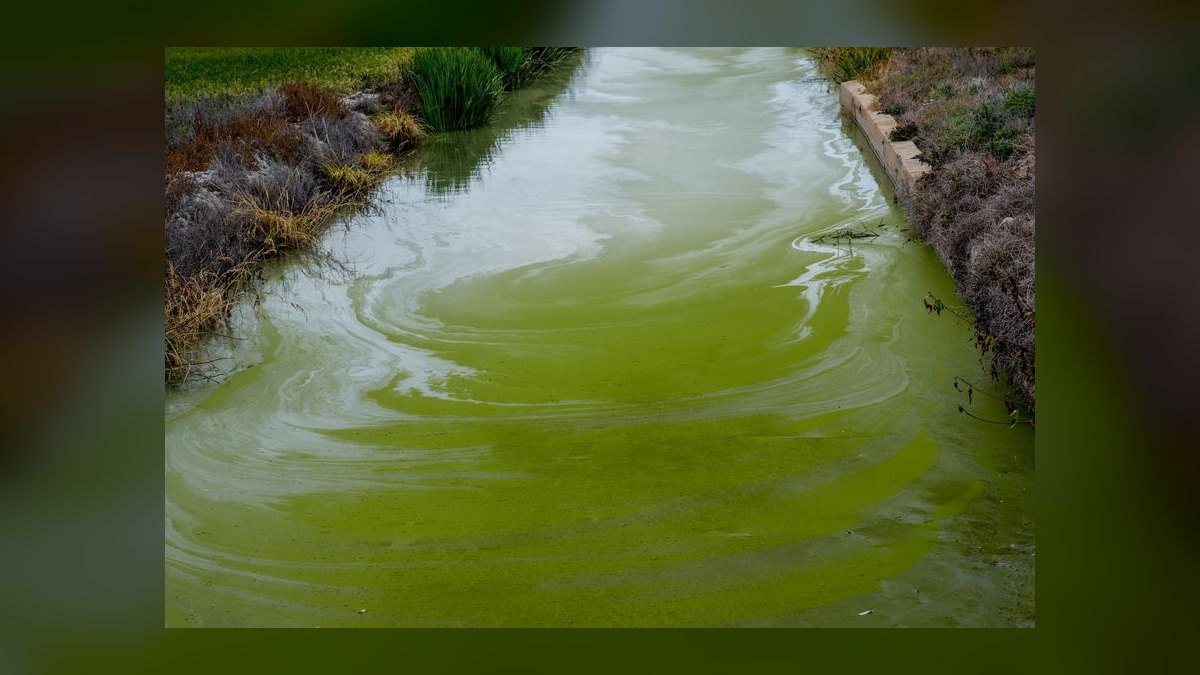
What you get in exchange for the slower timeline is the part nobody puts on the product label. Antibiotic treatments do not distinguish between cyanobacteria and the nitrifying bacteria colonizing your filter media, so a course of erythromycin frequently produces an ammonia or nitrite spike a week later — the tank essentially re-cycles while you are still congratulating yourself on the clear glass. Then the bloom returns, because the antibiotic never touched the nutrient load, the dead zone behind the driftwood, or the ten-hour light schedule that created the opening in the first place. Chemical treatment is symptom management with a side of collateral damage; the chemical-free route is a permanent shift in the tank's carrying capacity for that organism.
The second outcome worth naming is durability. When people report that cyanobacteria "came back worse," they nearly always treated chemically and changed nothing else. When someone fixes flow, feeding, photoperiod, and plant mass together, recurrence in the same tank is uncommon — and if it does return, it returns as a small patch in one identifiable spot, which is diagnostic information rather than a crisis. That patch is telling you exactly where your circulation still fails.
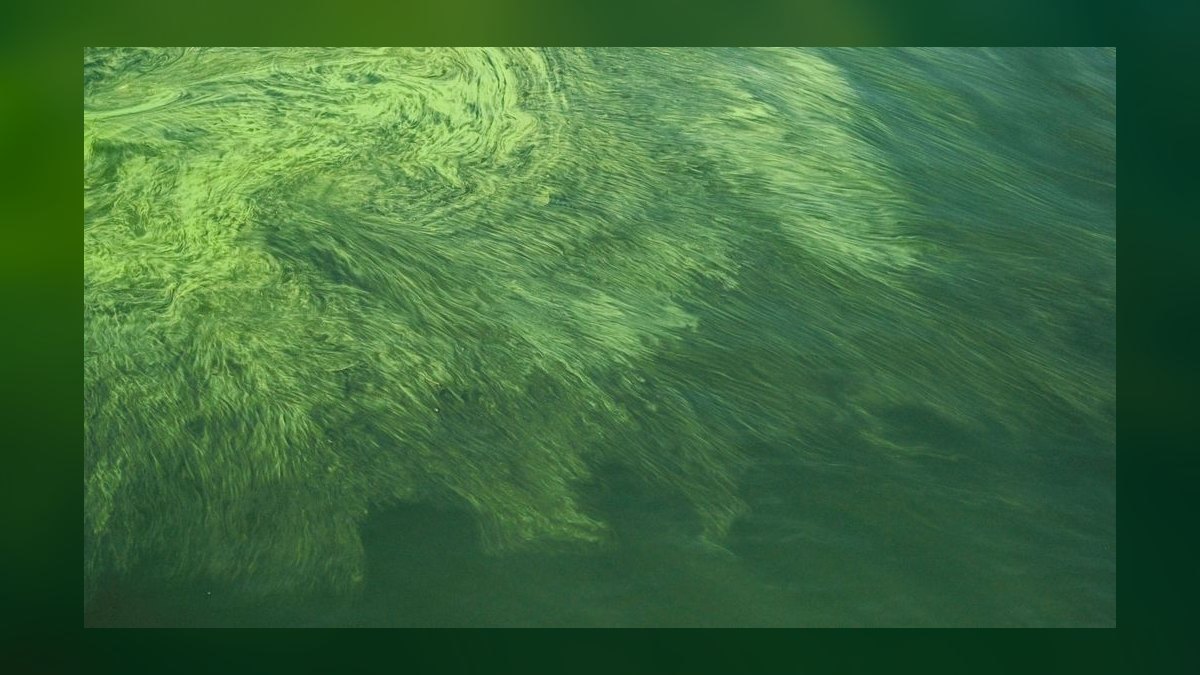
Third: the ancillary gains are real and they compound. The same changes that starve cyanobacteria — better circulation, less detritus, disciplined feeding, denser planting — reduce brown diatom films, improve plant coloration, stabilize pH swings from stagnant CO2 pockets, and lower the background organic load that fuels every other nuisance organism. You are not buying a cyanobacteria fix; you are buying a tank that is harder for anything opportunistic to colonize. This is the same logic behind integrated pest management in a greenhouse or a lake district's watershed nutrient program: remove the conditions and the organism has nowhere to land.
Set one more expectation up front — a smell. Dying cyanobacteria mats release a distinctly musty, earthy odor, and during heavy die-off oxygen demand rises sharply. Plan for extra surface agitation during the collapse phase, not after you notice fish at the surface.
What actually drives a cyanobacteria bloom
Cyanobacteria is not algae, and that distinction is the whole reason so many "algae control" tactics fail against it. It is a photosynthetic bacterium — an ancient prokaryote with no nucleus — and several of its capabilities have no algal equivalent. Most relevantly, many cyanobacteria genera fix atmospheric nitrogen. That single trait explains the most common frustration in the hobby: a tank reading zero nitrate that is nonetheless carpeted in blue-green slime. Starving nitrate does not starve cyanobacteria the way it starves green algae. If your entire plan is "keep nitrate at zero," you have handed cyanobacteria a competitive advantage over your plants, which absolutely do need nitrate.

Four conditions do the real driving.
Dissolved organics and the detritus reservoir. Uneaten food, fish waste, decaying leaves, and dead root material break down into a pool of dissolved organic compounds. Cyanobacteria exploits this far better than plants do. Critically, the reservoir lives in the top layer of substrate and in the low-flow corners, not in the water column — which is why your test kit can look clean while the front glass line is thick with mat.
Stagnation and localized anoxia. Cyanobacteria forms cohesive mats, and mats need calm water to establish. In a moving current the sheet cannot anchor. Where flow dies — behind rockwork, under the filter intake, in the front corners, beneath a broad Anubias leaf — detritus settles, bacterial decomposition consumes oxygen, and the microzone at the substrate surface goes low-oxygen. That microzone is prime cyanobacteria habitat, and it is invisible to any water test you can run.
Photoperiod length more than raw intensity. Cyanobacteria carries phycobilin accessory pigments that let it harvest light wavelengths plants use inefficiently, so it does well in dim conditions and in long ones. A ten-hour photoperiod on a tank with modest plant mass is a standing invitation. Duration is generally the more actionable lever than intensity for hobbyists.
Weak biological competition. A sparsely planted tank has vacant surface area and unclaimed nutrients. Cyanobacteria is a fast, opportunistic colonizer of exactly that vacancy. Dense, healthy, fast-growing plant mass takes the nutrients, takes the surface, shades the substrate, and in several documented cases releases allelopathic compounds that inhibit cyanobacterial growth directly.
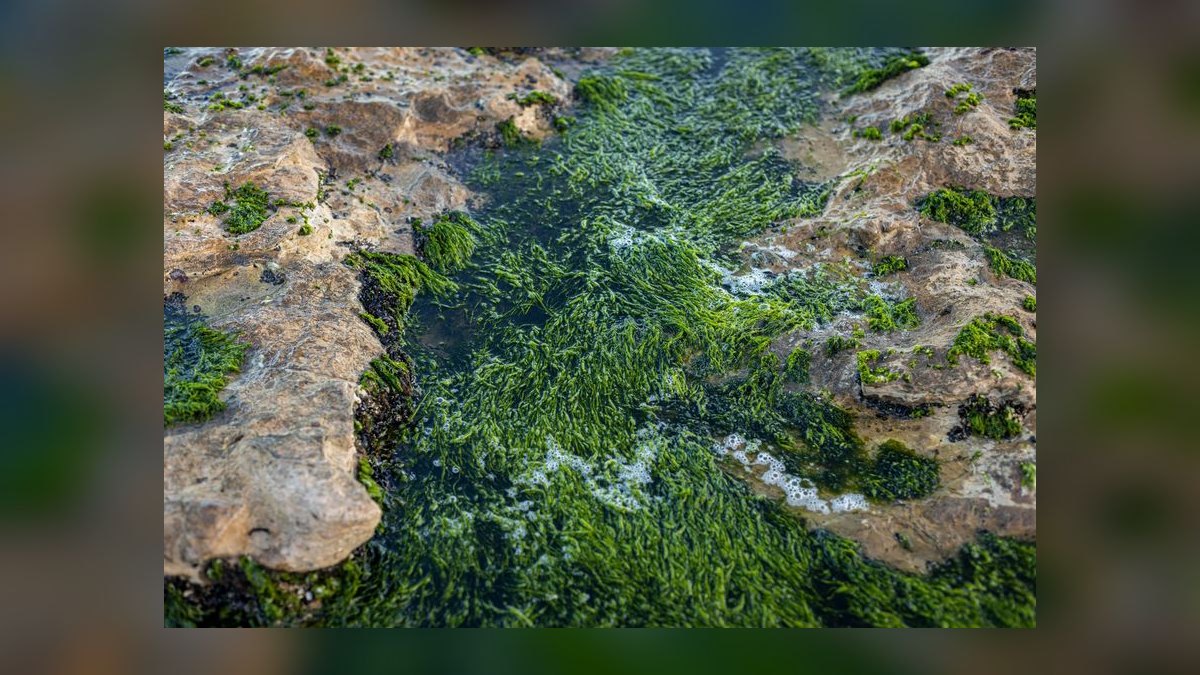
mermaid flowchart TD A["Day 1-2: Map dead spots, siphon all mats, 25-30% water change"] --> B["Set photoperiod to 6-7 hours on a timer"] B --> C["Day 3-7: Daily siphon, add or aim powerhead, cut feeding"] C --> D{"Mat reforming within 24h?"} D -->|"No"| E["Week 2: Heavy fast-growing plants + beneficial bacteria"] D -->|"Yes"| F["3-5 day blackout with extra aeration"] F --> G["Uncover, siphon dead mat, 30% water change"] G --> E E --> H["Week 3-4: Weekly changes, extend light 30 min at a time"] H --> I{"Any return in one specific spot?"} I -->|"Yes"| J["Local flow problem - reposition outflow there"] I -->|"No"| K["Maintenance posture: weekly vac, lean feeding, dense plants"] J --> K </parameter> </invoke>
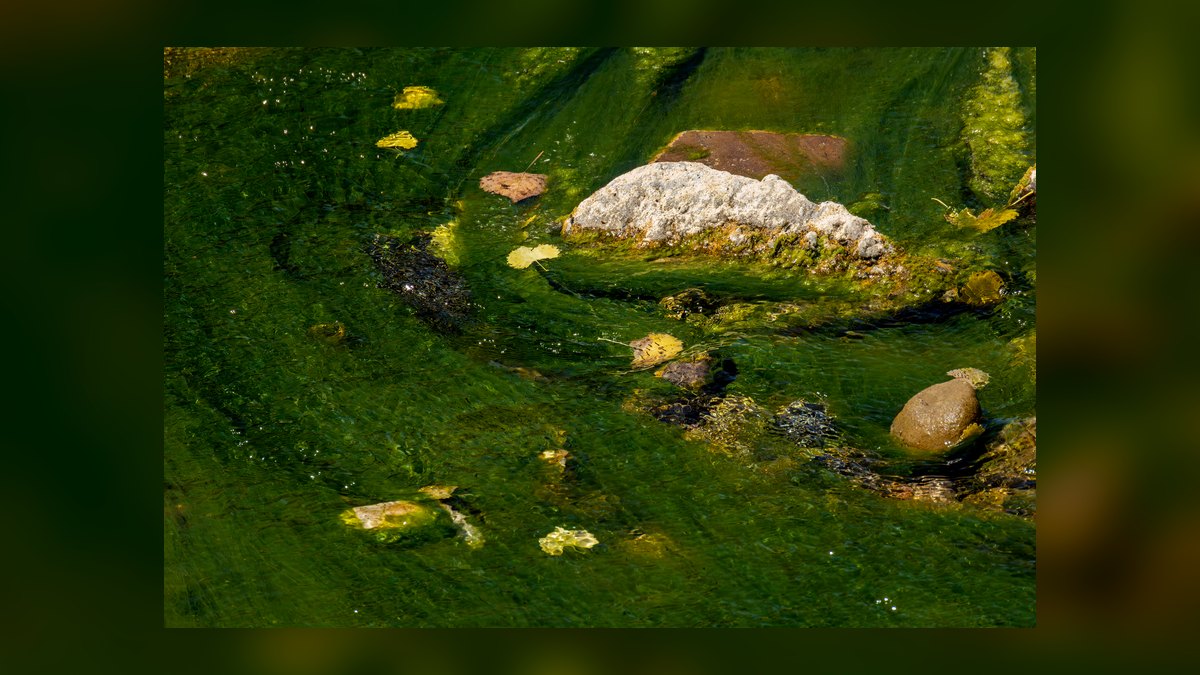
One adjacent note on scaling this thinking. The identical decision tree runs a garden pond, an outdoor stock tank, or a small ornamental water feature — circulate, shade, reduce nutrient input, plant competitively, remove biomass physically. Pond keepers use barley straw and aeration for exactly the reasons above. Municipal lake managers use hypolimnetic aeration and watershed phosphorus reduction. The tools scale up; the reasoning does not change. If you understand why this works in a 20-gallon tank, you understand why algaecide dosing is the last resort at every scale above it.
Related questions
Does hydrogen peroxide count as a chemical-free option?
No. Peroxide is a chemical oxidizer, even though it breaks down into water and oxygen. Spot dosing can kill mats quickly but risks invertebrates and filter bacteria, and it treats the symptom only. If the goal is genuinely chemical-free control, it is off the table.
Will a UV sterilizer clear cyanobacteria?
Only partially. UV kills free-floating organisms passing through the chamber, so it can limit water-column spread and new colonization. The attached benthic mats on your substrate and glass never enter the unit and remain untouched. Useful as prevention, ineffective as treatment.
Should I raise nitrate deliberately if it reads zero?
In a planted tank, usually yes. Many cyanobacteria fix atmospheric nitrogen, so zero nitrate handicaps your plants without handicapping the bloom. Bringing nitrate into a modest detectable range typically strengthens plant competition rather than feeding the problem.
How do I tell cyanobacteria from regular algae?
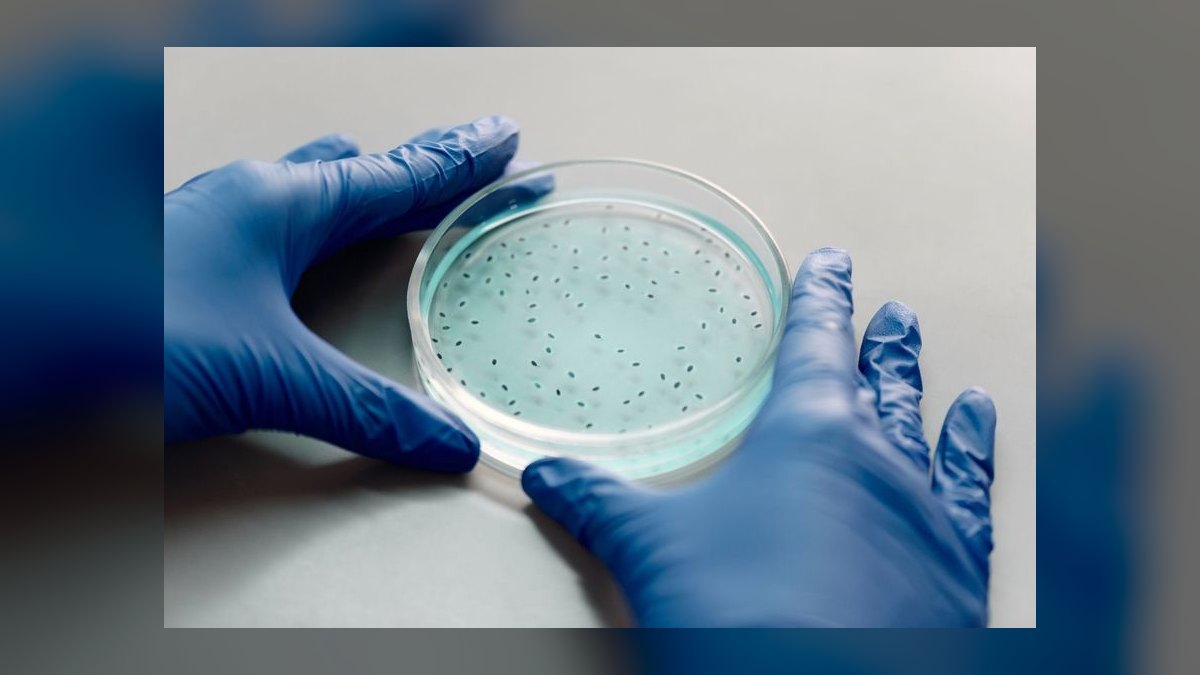
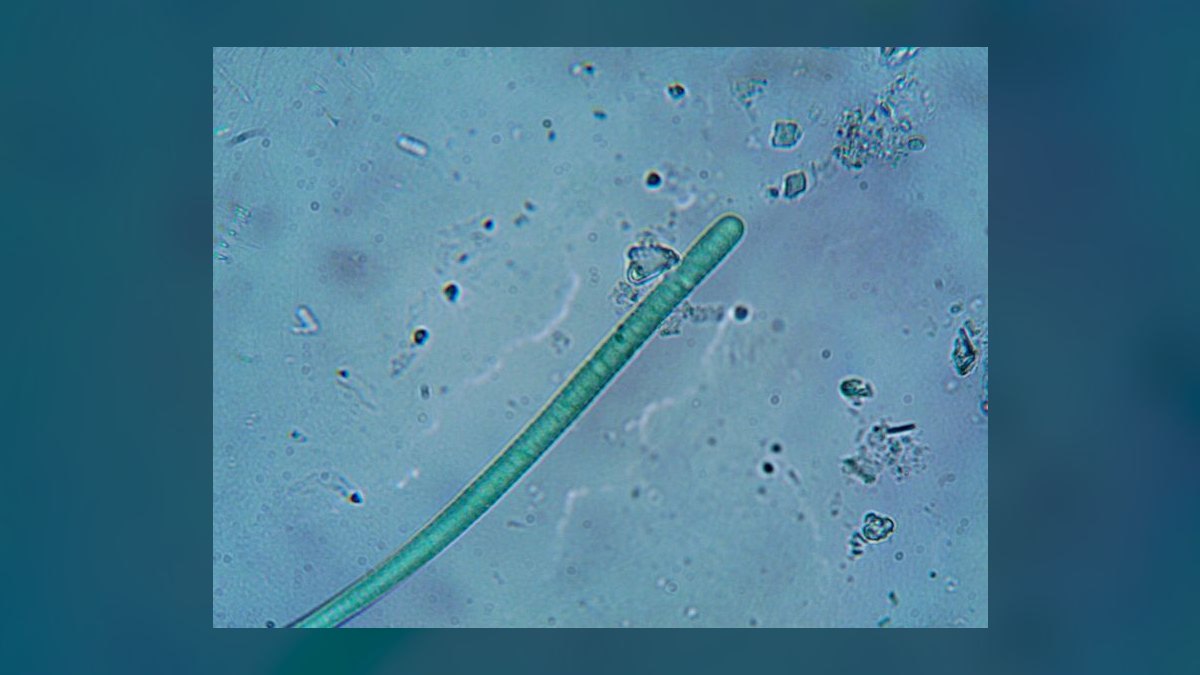
Texture and behavior. Cyanobacteria forms a slimy, cohesive sheet you can peel or siphon off in one piece, often blue-green, red, or blackish, with a distinct musty smell. True algae adheres as spots, threads, or fuzz and does not lift as a mat.
Do I need to remove my fish during a blackout?
Normally no. Fish handle three to five days of darkness fine and can skip feeding for that period without harm. The real concern is oxygen during die-off — increase surface agitation and run an air stone rather than relocating livestock.
FAQ
How long does chemical-free cyanobacteria control actually take?
Mild blooms typically show visible reduction in five to seven days and clear in about two weeks. Moderate blooms take three to four weeks. Heavy, fast-reforming blooms may need four to six weeks including a blackout. Judge progress at the three-week mark, not at day four — premature evaluation is the leading cause of people abandoning the approach and reaching for antibiotics.
Why does cyanobacteria keep returning after I remove it?
Because removal treats biomass, not cause. If flow, photoperiod, feeding, and detritus load stay unchanged, the surviving cells simply recolonize the same favorable microhabitat. Recurrence in one consistent spot is especially informative — it identifies a specific dead zone that still needs circulation work rather than another round of scrubbing.
Will a blackout hurt my plants?
Most established plants tolerate three to five days of darkness with some leaf loss and recover within a couple of weeks. Carpeting species, delicate stems, and recently planted tissue culture handle it worst. In tanks under three months old, prefer a shortened photoperiod plus aggressive manual removal over a full blackout.
Can shrimp or snails clear a cyanobacteria bloom on their own?
No. Amano shrimp, nerites, and some fish will graze thin films and help hold a corrected tank stable, but none of them can eat through an established sheeting mat. Treat cleanup crew as maintenance support after you have fixed conditions, never as the primary intervention.
Is cyanobacteria dangerous to me or my fish?
Some genera produce toxins, which is why lake advisories and dog warnings exist. In aquariums the risk is usually modest, but it rises during heavy die-off in a small volume. Export dead mat promptly, water change after major removal, keep aeration high during collapse, and wash your hands after tank work.
Does more filtration alone solve it?
Rarely. Filtration handles the water column; cyanobacteria lives at the substrate-water interface in low-flow zones. A larger filter that still leaves dead spots changes nothing. Distribution of flow across the substrate and corners matters far more than raw filter capacity or turnover rating.
Sources
- https://en.wikipedia.org/wiki/Cyanobacteria
- https://www.epa.gov/cyanohabs
- https://www.cdc.gov/harmful-algal-blooms/php/cyanobacteria/index.html
- https://oceanservice.noaa.gov/hazards/hab/
- https://www.usgs.gov/special-topics/harmful-algal-blooms
- https://www.who.int/teams/environment-climate-change-and-health/water-sanitation-and-health/water-safety-and-quality/harmful-algal-blooms
- https://www.aquariumcoop.com/blogs/aquarium
- https://www.practicalfishkeeping.co.uk/
Related on PULSE
- How do I remove brown diatom algae from aquarium glass without chemicals?
- Best way to cycle a new tank in 2027
- Best way to quarantine new plants to avoid snail infestation?
- Top 10 Algae Eaters for Planted Aquariums Without Eating Plants
- Top 10 Low-Tech Aquarium Plants That Thrive Without CO2
- How do I treat fin rot in freshwater fish without medication?
This page will be disappearing soon. Save it to your device for $1 — or read it free while it is here.
@Kory-White- · if Venmo asks, the last 4 of my number are 2012
This page is gone.
This one is off the shelf now. $1 keeps it on your phone for good — the whole page, pictures and diagrams included.
 pulse-aquariumsTop 10 Aquarium Wave Pump Brands in 2027
 pulse-aquariumsTop 10 Pleco Species for Freshwater Aquariums in 2027
 pulse-aquariumsHow do you lower pH in a freshwater aquarium naturally in 2027?
 pulse-aquariumsTop 10 Aquarium Driftwood Types for Aquascaping in 2027
 pulse-aquariumsTop 10 Aquarium Sand Substrates for Saltwater Tanks in 2027
 pulse-aquariumsTop 10 Planted Tank Substrates in 2027
 pulse-aquariumsTop 10 Clownfish Varieties for Saltwater Aquariums in 2027
 pulse-aquariumsBest auto feeder for vacation in 2027
 pulse-aquariumsHow do you keep aquarium plants from melting after planting in 2027?
 pulse-aquariumsTop 10 Sponge Filters for Shrimp Tanks in 2027