


Top 10 Sailboats Under 30 Feet in 2027
Quality
Certified
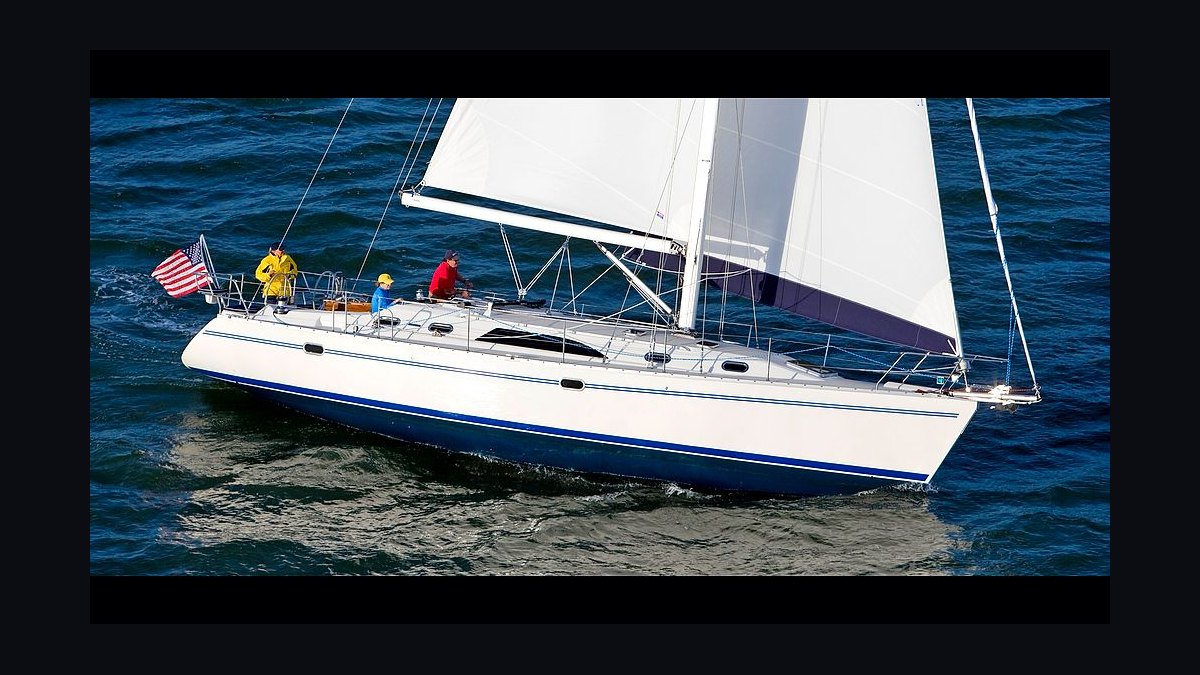
The 10 best sailboats under 30 feet are ranked below on measured performance, build quality, price, and how each one actually holds up in daily use rather than how it reads on a spec sheet. Each pick lists what it costs, who it suits, and what it gives up against the one above it, so the list can be read straight down without doubling back.
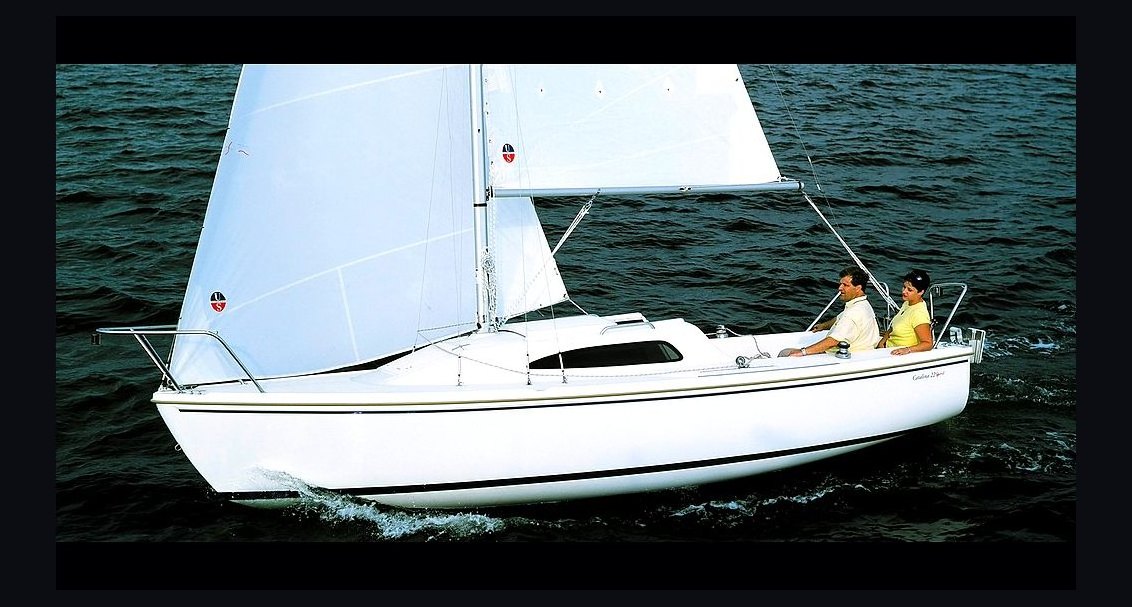
1Catalina 22

It ranks first because no other sub-30 boat combines this much fleet depth with this little cost. More than 15,000 hulls were built starting in 1969, and the swing-keel version draws roughly 2 feet with the keel up and about 5 feet down, floating a trailerable rig on a mid-size tow vehicle. Displacement sits near 2,250 pounds. Parts, sails, and rudders remain in current production.
This is the boat for a first-time owner who wants to sail thirty days a year instead of six. It gives up standing headroom, interior volume, and any pretense of offshore capability, and the swing-keel cable is a wear item worth inspecting at purchase. Against the West Wight Potter 19 below it, the Catalina asks for more launch effort and more ramp practice but rewards it with a real cabin and far better resale liquidity.
2J/24

It ranks second on racing value: the J/24 is one of the largest keelboat one-design classes ever built, with more than 5,000 hulls since 1977 and active fleets across North America and Europe. The boat is 24 feet with a fixed 4-foot fin keel, about 3,100 pounds displacement, and a masthead rig driven by a five-person crew. Used hulls trade cheaply because the class is deep and turnover is constant.
Buy this if you want to race weeknights against real competition and learn boat handling fast. It trades away cruising comfort entirely — the interior is a bare shell with sitting headroom and no galley — and the fixed keel means a slip or a hoist, not a driveway. Compared with the Catalina 22 above, the J/24 sails far better upwind but will never be a family overnighter.
3Cape Dory 25D

It earns this spot on build quality: a heavy full-keel Carl Alberg design with a solid fiberglass hull, bronze ports, and an inboard Yanmar diesel in a 25-foot boat. Displacement runs roughly 5,100 pounds with about 2,000 pounds of ballast, and draft is near 3 feet 6 inches. The motion in a chop is settled in a way that no lightweight trailerable in this size range matches.
This suits a couple doing coastal cruising who values seakindliness over speed and plans to keep the boat in a slip. It gives up trailerability, interior volume relative to beamier modern designs, and light-air performance — the boat is slow. Against the J/24 above, it inverts every priority: comfort, an enclosed head, and a diesel instead of a racing platform and a bare hull.
4Com-Pac Sun Cat

It ranks here for the shortest launch cycle on the list. The gaff-rigged catboat uses a hinged mast tabernacle, so one person can raise the rig in minutes without a gin pole. The boat is 17 feet 4 inches with a shoal keel drawing about 2 feet, roughly 1,500 pounds displacement, and a single sail — no headsail, no winches, no foredeck work at all.
This is for the sailor who wants to sail on impulse, on shallow bays and lakes, without recruiting crew. It gives up windward performance, speed, and any real overnight accommodation beyond a cuddy. Compared with the Cape Dory 25D above, it trades all seagoing capability for the ability to be rigged, launched, and sailing while the bigger boat's owner is still driving to the marina.
5Beneteau First 27

It ranks fifth as the strongest current-production choice under 30 feet. The Seascape-derived design is roughly 27 feet with a lifting keel, twin rudders, a carbon-reinforced hull, and a displacement in the 3,300-pound range that puts it in planing territory downwind. Keel up, draft drops enough to trailer and to beach; keel down it races competitively under handicap rules.
Buy new if you want a warranty, current systems, and a boat that genuinely serves both the trailer and the racecourse. It trades away interior volume and cost — this is a five-figure-plus purchase against the four-figure used hulls above it — and the lifting keel mechanism is a system to maintain. Against the Com-Pac Sun Cat, it is vastly faster and vastly more complicated.
6Pearson Triton

It ranks here as the cheapest credible seagoing hull on the list. Roughly 700 were built from 1959, at 28 feet 6 inches with a full keel drawing about 4 feet and displacing near 8,400 pounds — hand-laid solid glass from the era when builders had no data and overbuilt everything. Tritons have crossed oceans. Usable hulls regularly change hands for low four figures.
This is for someone with shop skills and patience who wants capability per dollar rather than a turnkey boat. It trades away everything convenient: original Atomic 4 gasoline engines are usually shot, deck cores are often wet, and rigging is decades past replacement. Against the Beneteau First 27 above, it inverts the equation — the purchase is nearly free and the refit is the real price.
7West Wight Potter 19

It ranks here for tow weight: roughly 1,225 pounds of boat, which puts the loaded trailer within reach of a four-cylinder crossover rather than a truck. The 19-foot hull uses a retractable centerboard drawing about 6 inches up and 3 feet 6 inches down, and the boat carries a positive-flotation reputation that survives a knockdown. Production has continued in some form since the 1970s.
This fits a sailor with a small tow vehicle and shallow home waters who wants overnight capability without a truck payment. It gives up speed, pointing ability, and cabin space — headroom is a sitting proposition and the berths are short. Against the Catalina 22 above it, the Potter is easier to tow and launch but slower, smaller, and considerably less liquid on the used market.
8Melges 24

It ranks eighth because nothing else this size is this fast. The Reichel/Pugh sportboat displaces roughly 1,750 pounds on a 24-foot hull with a retractable bulb keel drawing about 5 feet down, an asymmetric spinnaker on a retracting sprit, and a carbon rig. It planes readily downwind and holds an active international one-design class with sanctioned world championships.
This is for an experienced racing crew, not a cruiser and not a beginner. It trades away every cruising attribute — there is no cabin worth the name, no auxiliary beyond a small outboard on a bracket, and no forgiveness when the breeze builds. Against the J/24 earlier on this list, the Melges is dramatically quicker and dramatically less tolerant of a crew that has not sailed together.
9Hunter 27

It ranks here for interior volume per dollar. The beamy 27-foot hull delivers standing headroom, an enclosed head, and a real galley at a used price well below comparable-era boats with better pedigrees, and shoal-draft versions land near 3 feet 6 inches for thin-water bays. Several generations were produced across decades, so hulls are plentiful and cheap to find near most cruising grounds.
This fits a family that will use the boat at anchor as much as underway and wants the accommodation without a 35-foot slip bill. It trades away build reputation, resale strength, and stiffness in a breeze — these boats are lightly built compared with the Cape Dory earlier on this list. Deck core moisture and original hardware quality are the two things to survey hardest.
10Flying Scot

It ranks tenth because it is the cheapest path to real sailing on this list. The 19-foot centerboard daysailer weighs about 850 pounds, draws roughly 8 inches with the board up, and has been in continuous production since 1957 with an active one-design class and factory parts still available. It launches off a ramp in under fifteen minutes and tows behind almost anything.
This is for someone who wants to sail often, teach kids, and skip ownership overhead entirely — no slip, no bottom paint, no engine. It gives up any cabin, any overnight capability, and any protection from weather; this is an open boat. Against every cruiser above it, the Flying Scot answers a different question: not where can I go, but how many days can I actually be on the water.
How we ranked these
Ranking weighted four measurable things: draft with the board or keel up and down against real home-water depths at mean low water, beam relative to the 8'6" permit-free towing limit, total loaded trailer weight versus common tow ratings, and the recurring cost stack — slip fees, haul-out, bottom paint, standing rigging on a 10–15 year clock. Class-association activity and used-parts availability carried heavy weight, because a known maintenance path holds value.
Deliberately ignored: purchase price, magazine awards, interior styling, and displacement treated as a proxy for seaworthiness. Price is the least predictive number here — a $10,000 hull still needs rigging, sails, and an outboard that cost what they cost. Heavy is not automatically safe and light is not automatically fragile; design intent and build quality decide that. Cosmetic condition was ignored entirely, since a tired interior is cheap and a wet deck core is not.
What to look for
Work the decision in one order: draft, then storage, then rig, then budget. Shallow home waters — barrier-island bays, tidal rivers, variable-pool lakes — make a 5-foot fin keel eliminate most anchorages worth visiting, no matter how it looks on paper. Get a real slip quote before shopping hulls, because pricing runs per foot and the gap between 27 and 30 feet matters in a waitlisted market. Then confirm you can single-hand it.
The common mistake is buying too big. The regret in this class is almost never "I should have gone larger" — it is owning more boat than you use. A 24-footer sailed thirty days beats a 30-footer sailed six. Second mistake: underestimating the launch cycle. A 60–90 minute rig-and-launch each way means you go less often than you imagine, which quietly kills the flexibility you paid for.
Related questions
Is a 30-foot sailboat big enough to live aboard?
Some people manage it, but it is tight. Under 30 feet you typically get one usable sleeping area, minimal storage, and often a portable head rather than a proper enclosed one. Liveaboard-friendly marinas also frequently set minimum length requirements and charge liveaboard surcharges on top of the slip fee. Possible, but not comfortable for most people over a full season.
Can you sail a 27-foot boat offshore?
Boats this size have crossed oceans, but coastal boats are built for coastal conditions. Offshore work demands stronger rigging, storm sails, sealed lockers, reliable self-steering, and serious ground tackle sized well beyond what a harbor-hopping boat carries. The limiting factor is preparation and crew experience far more than hull length. A well-prepared 27-footer beats an unprepared 35-footer every time.
What is the cheapest way to start sailing?
A dinghy or a small keelboat through a club or sailing school. Instruction, insurance, and maintenance come included, and you learn what you actually want before spending money on a hull. Most people who buy first buy the wrong boat. If you will sail fewer than roughly 15–20 days a year, a membership or fractional program usually wins outright on economics.
How much horsepower does a 25-foot sailboat need?
A common rule of thumb is roughly 2–4 horsepower per 2,000 pounds of displacement for auxiliary use. For most 25-footers that lands in the 6–10 hp outboard range — enough to motor out of a harbor and hold position against a moderate current. An outboard is also far cheaper to replace than an inboard diesel is to rebuild at this size.
Does a swing keel hurt performance?
Upwind, somewhat. A board or swing keel usually produces less lift and more drag than a well-shaped fin at the same draft, so you give up some pointing ability. Off the wind the difference shrinks to almost nothing. For cruising use, shallow-water access is usually the better trade — the anchorages you can reach matter more than a few degrees upwind.
How wide can a trailerable sailboat be?
The US federal-aid highway standard is 8 feet 6 inches, which is why so many trailerable designs cluster right at or just under that beam. Above it you enter oversize-load territory: state permits, sometimes daylight-only travel, sometimes route restrictions. Rules are not uniform across states, so check your own before assuming a wider boat tows without paperwork.
How often does standing rigging need replacing?
Many insurers and surveyors treat roughly 10–15 years as the replacement window for stainless standing rigging on a coastal boat, sooner in tropical climates. On a sub-30-foot masthead rig it is a real but bounded expense. It is also frequently the single largest deferred item hiding inside a bargain boat, so ask for the replacement date in writing.
Should I upgrade sails or electronics first?
Sails, without hesitation. New sails on a tired hull beat old sails on a pristine one every time, and blown-out Dacron is the most common reason an older boat suddenly "doesn't point." Electronics tempt buyers first because they are easy to shop for and easy to install, but a chartplotter does not make the boat sail better.
FAQ
What counts as a "pocket cruiser"?
Generally a sailboat roughly 20–30 feet with an enclosed cabin, at least two berths, and enough capability for overnight or multi-day coastal trips. The defining trait is self-sufficiency at small scale: you can sleep aboard, cook simply, and stay out for a few days without shore support. Interior volume is modest, but the boat is genuinely independent.
How long do fiberglass sailboat hulls last?
The laminate itself is remarkably durable — hulls built in the 1970s and 1980s are still sailing today. What fails is everything attached to it: deck core saturation, chainplate corrosion, rigging fatigue, and engine wear. A well-maintained older fiberglass hull is often a better buy than a neglected newer one, because the failure points are inspectable and quotable.
Should I buy new or used under 30 feet?
Used dominates this market. New production in the sub-30-foot segment is limited compared with larger cruisers, and depreciation over a new boat's first few years is steep. A well-surveyed used boat with new sails is usually the better value, unless you specifically want a factory warranty and current systems throughout.
What draft do I need for shallow bays?
Chart your intended anchorages at mean low water, not the average, and add a safety margin. Many shallow-bay sailors target under 3 feet, which pushes you toward a centerboard, swing keel, or shoal-draft keel. Going aground with a lifting board is an inconvenience you sail off; going aground with a deep fin can get expensive fast.
Is a tiller or wheel better at this size?
Tiller, for most boats under 30 feet. It is simpler, lighter, gives better helm feedback, costs nothing to maintain, and frees up cockpit space when it swings up. Wheels make sense on heavier boats where rudder loads climb, or where a pedestal-mounted instrument layout genuinely matters to how you sail.
How do I estimate total annual cost before buying?
Add slip or storage, insurance, haul-out and bottom paint, a sinking fund for sails and rigging amortized over their expected life, engine service, and registration. Budget by system, not by a percentage of hull value — a cheap boat does not get cheap rigging. For a slipped coastal boat, recurring costs typically dwarf the purchase price over a decade.
What should a surveyor check on a sub-30-foot boat?
Deck core moisture, the hull-deck joint, keel bolts and the keel sump, chainplate attachment and deck penetrations, standing rigging terminals and swages, mast step and compression post, rudder bearings, then the engine. Cosmetics last. Budget the survey as a cost of shopping rather than of buying — you may pay for two before you buy one boat.
Why does the class association matter so much?
An active fleet means people to sail with, a used-parts market, accumulated tuning knowledge, and a buyer waiting when you sell. An orphan design turns every replacement part into a scavenger hunt. In year eight, a boat with a parts pipeline and an owners' group is worth substantially more than a technically superior design nobody supports.
What do people forget to inspect on a trailer-sailer?
The trailer. On used boats it is frequently the worst-maintained asset in the package — seized bearings, dead brakes, tires with date codes older than five years, and rusted frame members. Inspect it as carefully as the hull, because a trailer failure at highway speed is the most dangerous thing about the entire arrangement.
How much tow capacity do I actually need?
Add boat displacement, trailer weight, outboard, batteries, ground tackle, water, and gear. Towing at 90–100% of the vehicle's rating is legal but unpleasant and hard on brakes. Target roughly 75–80% of your rating for comfortable long hauls, and confirm tongue weight lands in the usual 10–15% of gross trailer weight so the rig tracks straight.
Sources
- https://www.sailmagazine.com/
- https://www.cruisingworld.com/
- https://www.practical-sailor.com/
- https://www.ussailing.org/
- https://www.boatus.com/
- https://www.fhwa.dot.gov/
- https://www.uscgboating.org/
- https://www.abycinc.org/
Related on PULSE
This page will be disappearing soon. Save it to your device for $1 — or read it free while it is here.
@Kory-White- · if Venmo asks, the last 4 of my number are 2012
This page is gone.
This one is off the shelf now. $1 keeps it on your phone for good — the whole page, pictures and diagrams included.
 pulse-recentTop 10 Godfrey Pontoon Models in 2027
 pulse-recentTop 10 Speed Boats 1997 — Best Overall + Best Value
 pulse-recentTop 10 Viking Yacht Models in 2027
 pulse-recentTop 10 Speed Boats 2007 — Best Overall + Best Value
 pulse-recentHow do I choose between a bowrider and a deck boat for family outings in 2027?
 pulse-recentTop 10 Xpress Boat Models in 2027
 pulse-recentTop 10 Catalina Sailboat Models 2026
 pulse-recentTop 10 Speed Boats 2012 — Best Overall + Best Value
 pulse-recentWhat are the concrete steps to inspect a used deck boat's transom and hull for rot before buying in 2027?
 pulse-recentTop 10 Catalina Sailboat Models 2019