


How do you properly set up an aluminum fishing boat for shallow water anchoring in 2027?
Quality
Certified
Anchoring an aluminum fishing boat properly in shallow water means matching tackle to a light hull: a shallow-water pole or stakeout pin in under 8 feet, a fluke or grapnel anchor sized one class up, 4–6 feet of chain, 7:1 scope, and a bow cleat backed with a plate — never a stern tie.
The outcome you should expect
A correctly rigged shallow-water anchoring system on a 14- to 20-foot aluminum boat should hold you within a boat length of your chosen spot in 15–20 knots of wind, set on the first drop the large majority of the time, and let one person deploy and retrieve without leaving the casting deck. That is the practical bar. If you are dragging on every third set, re-setting by hand, or walking to the bow to haul a rope every time you move 40 feet down a bank, the setup is wrong for the boat and the water — not the technique.
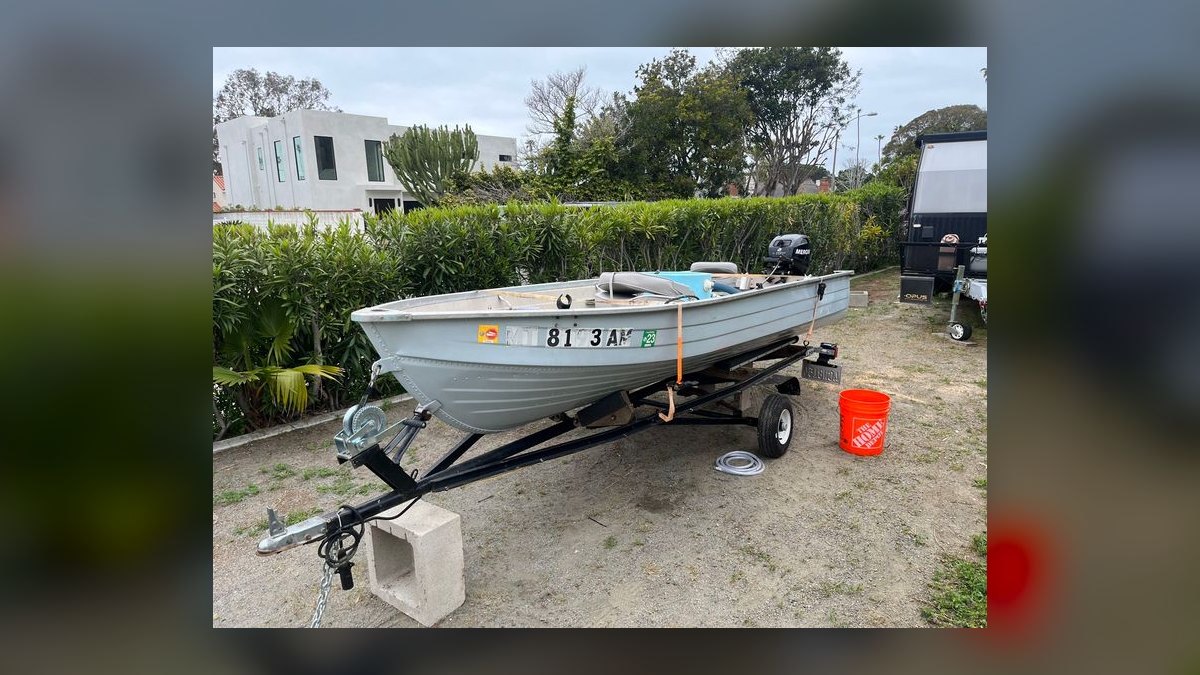
The specific outcome differs from a fiberglass bass boat because aluminum changes the physics in three ways. First, weight: a 16-foot riveted or welded aluminum hull with a 40–60 hp outboard typically runs 900–1,500 pounds loaded, versus 2,500–3,500 for a comparable glass bass boat. Less mass means less inertia resisting wind, so the boat swings faster and starts moving sooner when a gust hits. Second, freeboard-to-weight ratio: aluminum jon boats and modified-V hulls carry a lot of side area for their displacement, so they sail on the anchor line. A 16-foot jon in a crosswind behaves closer to a kite than a keelboat. Third, hull shape: flat and semi-V bottoms have almost no keel or deadrise to bite the water, so there is nothing resisting lateral slide. Combined, that means an aluminum boat needs *more* holding power per foot of length than its weight would suggest, and it needs the pull point forward or it will yaw badly.
The second outcome to expect is positional precision, not just holding. Shallow-water fishing — flats, backwater sloughs, timber, riprap edges, spawning beds — is usually about staying inside a 10- to 20-foot circle, sometimes tighter. A single anchor on rope lets a light aluminum hull swing through an arc 30–60 feet wide depending on scope and depth, which means you drift off the spot you came for. Anything that eliminates swing — a pole jammed in the bottom, two pins fore and aft, a bow anchor plus a stern tie in protected water — is worth more to you than raw holding force.
The third outcome is speed of cycling. On a productive shallow flat you may reposition 20 or 30 times in a morning. If each cycle costs 90 seconds of pulling wet rope and rinsing mud, you have burned 45 minutes of fishing time and soaked the deck. A good setup cycles in under 10 seconds. That is why stakeout poles and pole-mounted anchors dominate genuinely shallow water and why rope anchors are the backup, not the primary, in under 6 feet.
What drives that outcome
Holding power in shallow water is not mostly a function of the anchor. It is a function of scope, angle of pull, bottom type, and how much the hull sails. Get those right and a small anchor holds; get them wrong and a large anchor drags.
Scope is the dominant variable. Scope is the ratio of rode length to the vertical distance from the bow chock to the bottom. In 5 feet of water with a bow 2.5 feet above the surface, your vertical is 7.5 feet, not 5 — a mistake that quietly halves the scope people think they have. At 7:1 you need roughly 52 feet of rode out for that 5-foot spot. Under 3:1, most anchor types cannot rotate their flukes into the bottom at all because the pull is lifting the shank instead of dragging it. The practical shallow-water problem is that 7:1 in 4 feet of water means about 45 feet of rode, and 45 feet of rode means a very large swing circle. That tension — scope needed for holding versus swing you can tolerate — is the central trade-off of the whole setup, and it is why poles win in skinny water.
Chain converts vertical pull into horizontal pull. Four to six feet of 1/4-inch galvanized chain between anchor and rope weighs roughly 3–5 pounds and does two jobs: it keeps the shank flat on the bottom so the flukes dig, and it absorbs shock loading from chop that would otherwise pop the anchor loose. On a light aluminum hull that shock absorption matters more than on a heavy boat, because the boat snaps back against the rode faster. Skipping chain is the single most common reason a perfectly good fluke anchor will not set in sand.
Bottom type dictates anchor family. Sand and firm mud: a fluke (Danforth-style) anchor is unbeatable per pound. Soft silt: a fluke will plow — go heavier or use a pole. Rock, gravel, riprap, and timber: a grapnel or a river/mushroom-style anchor that hooks rather than digs, and accept that you may lose it. Hard clay and shell: fluke works but sets slowly. Grass: flukes bounce over the mat; a heavy grapnel or a pole is more honest.
Sailing at anchor is the aluminum-specific problem. When a light hull with high side area lies to a single bow anchor, it yaws left and right through 20–40 degrees, and each yaw puts a sideways jerk on the rode. Repeated enough, that jerk walks the anchor out. Two fixes: bring the pull point to the bow cleat only (never amidships or stern), and use a second point of contact — a stern stakeout pin, a second anchor set off the quarter, or a shallow-water pole — to stop rotation entirely.
Benchmarks and realistic ranges
These are the numbers to size against. Treat them as starting points and adjust up for exposure, current, and soft bottoms — never down.
Anchor weight by hull length (fluke type, protected shallow water, 15–20 knots). A 12–14 foot jon: 4–5 pound fluke. A 15–17 foot modified-V or jon: 8 pound fluke. An 18–20 foot deep-V aluminum: 8–13 pound fluke. Standard manufacturer charts size fluke anchors for boats by length, and the common guidance for boats up to about 20 feet lands in the 8-pound class for moderate conditions. The reason to go one size up on aluminum is the sailing problem described above: you are not paying for weight, you are paying for fluke area that resists the yaw-induced side loads. An 8-pound fluke costs roughly $30–60 in galvanized steel; the next size up is rarely more than $20 more. That is the cheapest insurance on the boat.
Rode length. Carry at least 100 feet on a boat that fishes 2–10 feet, and 150 feet if you also fish 15–25 feet. The math: 7:1 in 10 feet plus 3 feet of bow height is 91 feet. A 100-foot rode with 6 feet of chain leaves 94 feet of rope — barely enough. Rope diameter: 3/8-inch three-strand nylon for boats under 20 feet. Three-strand, not braid, because it stretches more (nylon three-strand stretches meaningfully under load) and that stretch is your shock absorber on a light hull. It also splices to chain easily and is cheap enough to cut and re-splice when it chafes.
Chain. 4–6 feet of 1/4-inch proof coil or BBB galvanized, shackled with a galvanized shackle whose pin is seized with stainless wire or a zip tie. Do not use stainless shackles against galvanized chain in salt — the galvanic pairing eats the zinc. Longer chain is better holding but worse handling: on a boat you cycle 20 times a morning, 6 feet is about the limit before it becomes a nuisance on the deck and a dent risk on an aluminum gunwale.
Stakeout poles. Fiberglass or composite poles in the 6-, 7-, and 8-foot lengths cover the practical range. A rule that works: pole length should be about twice your maximum fishing depth plus your freeboard, because a pole jammed straight down holds far less than one driven at a 30–45 degree angle. So a 7-foot pole is genuinely useful to about 2.5–3 feet of water, not 7. This is the most common disappointment with poles — people buy a 6-footer for 5-foot water and it will not hold. For 4–6 feet you want an 8- to 10-foot pole, and at that length storage on a 16-foot boat becomes a real design problem.
Holding conditions. Expect a well-set 8-pound fluke on 7:1 scope in firm sand to hold a 1,200-pound aluminum boat comfortably through 20 knots. In soft silt at 5:1, expect it to creep. In a 2-knot current on a river, expect to need materially more anchor or a second anchor — current load scales with the square of speed, so 2 knots is four times the force of 1 knot, and current pushes on the underwater profile while wind pushes on the topsides.
Cleat and hardware loads. This is where aluminum boats fail and glass boats do not. Anchor loads on a 16- to 20-foot boat in a blow are commonly cited in the several-hundred-pound range, and shock loads spike far above that. Aluminum sheet in a jon boat gunwale may be 0.080–0.125 inch. A cleat through-bolted into bare 0.080 aluminum with washers will eventually oval the holes and tear out. The fix is a backing plate: a piece of 1/8- to 1/4-inch aluminum or a marine-grade composite backer, 2–3 times the cleat footprint, through-bolted with stainless bolts, fender washers, and nylon-insert lock nuts. Bed everything in a marine sealant rated for below-waterline-adjacent hardware. Use isolation — a nylon or composite washer, or sealant film — between stainless fasteners and the aluminum hull, because stainless against aluminum in water is a galvanic couple that corrodes the aluminum.
Cycle time. A stakeout pin: 3–8 seconds. A pole-mounted shallow-water anchor with a cordless drill or electric actuator: 5–10 seconds, hands-free. A rope anchor in 5 feet: 40–90 seconds each way including rinsing. Multiply by 20 repositions to see why the fast options are worth the money on water you actually fish.
Risks, edge cases, and failure modes
Never anchor from the stern. This is the failure mode that kills people, and it is worse on a low-freeboard aluminum boat than on almost anything else. A stern-tied boat presents its transom to wind and current; the transom is the lowest point of freeboard, the motor well is there, and the rode holds the stern down while water climbs in. In current, a stern-anchored small boat can be pulled under in seconds. Every anchor line goes to the bow. If you need the stern held, it gets a *pin* or a *pole* that releases instantly under load, or a second anchor line rigged so it can be cut or thrown clear from the helm. Keep a knife at the console.
Riprap, timber, and rock eat anchors. In these bottoms, rig a trip line: attach a light line to the crown (the end opposite the shank eye) of the anchor, run it to a small float, and when the anchor fouls, pull the crown line to back it out the way it went in. Alternatively, shackle the rode to the crown and lash it to the shank eye with a zip tie or a light wire — under normal load the lash holds and the anchor pulls from the shank; when fouled, hard pull breaks the lash and the anchor comes out backwards. Cost: a 25-cent zip tie versus a $50 anchor.
Soft silt is the quiet failure. A fluke in loose silt appears to hold — the line goes tight, the boat stops — and then over 10 minutes you have moved 30 feet without noticing because there was no jerk, just a slow plow. The diagnostic is a landmark: pick two objects on shore that are in line with each other and check the alignment every few minutes. If they separate, you are moving. On silt, either go up two anchor sizes, set two anchors in a V off the bow, or accept a pole.
Grass mats and matted hydrilla prevent flukes from reaching the bottom at all. The anchor lies on top of the vegetation and slides. Poles punch through; anchors do not.
Galvanic corrosion is the aluminum-specific long-term failure. Stainless fasteners, brass or bronze hardware, and even a galvanized anchor left lying wet in an aluminum hull all sit higher on the galvanic series than aluminum, and in the presence of water — especially salt or brackish water — the aluminum becomes the sacrificial metal. Symptoms are white powdery corrosion and pitting around fastener heads. Prevention: isolate dissimilar metals with nylon washers or sealant, rinse the boat and anchor with fresh water after salt exposure, never store a wet anchor and chain loose on the floor of the hull, and use an anchor locker or a plastic tub with drain holes.
Chafe. Nylon rode running over a bow roller or a chock will saw itself under motion. On a light boat that bounces, chafe accelerates. Inspect the first 10 feet of rode every few trips; add a chafe sleeve or a length of split hose where it crosses the chock; re-splice or cut and re-tie annually if you fish hard.
Pole breakage. Fiberglass stakeout poles snap when the boat loads them sideways in current or when the operator uses them as a push pole against a rock. Composite poles cost more and flex more. Do not use a pin as a lever, and do not leave one jammed in the bottom while you run the trolling motor against it.
Wind against current is the condition that undoes everything. When wind and current oppose, the boat cycles: it lies to current, the wind swings it, the rode goes slack, the anchor breaks free, and the boat resets 20 feet downwind. There is no clever anchor answer here — the answers are a second anchor set to triangulate, a pin at each end, or moving to protected water.
Legal and courtesy edge cases. Some waters restrict anchoring in navigation channels, over submerged aquatic vegetation beds, or in designated no-anchor zones near seagrass. Check the state agency rules for the water you fish before pinning down on a flat.
A practical rollout plan
Do this in order. Each step is cheap enough to do in an afternoon and each one is testable before you move on.
Step one — audit the boat. Find your bow cleat. Look under it. If it is bolted through bare aluminum with only flat washers, that is your first job. Measure your typical fishing depth over a season: if 80 percent of it is under 4 feet, you are buying a pole system and a backup anchor. If it is 4–12 feet, you are buying a proper rode-and-fluke system with a pole as the shallow supplement.
Step two — fix the attachment point. Install or upgrade the bow cleat with a backing plate: 1/8-inch aluminum or composite, at least twice the cleat footprint, through-bolted with 1/4-inch or 5/16-inch stainless bolts, fender washers under the nuts, nylon-insert lock nuts, isolation washers or a sealant film between stainless and aluminum, and marine sealant in every hole. If the boat has a bow roller, confirm it is bolted to structure and not to a thin deck panel. Total cost is typically under $60 in hardware.
Step three — build the rode. 8-pound galvanized fluke anchor (or one class up if you fish current or soft bottoms), 5 feet of 1/4-inch galvanized chain, galvanized shackles at both ends with the pins seized, and 100–150 feet of 3/8-inch three-strand nylon eye-spliced to the chain. Whip or heat-seal the bitter end and — importantly — tie the bitter end to the boat. A rode that runs off the end and disappears is a $120 lesson.
Step four — add the shallow-water fast system. Pick the length honestly against your water: 8 feet or longer if you fish 3–5 feet, and buy two if you want to kill swing fore and aft. Mount pole holders where you can reach them from the casting deck, not the bow — the whole point is not walking. If budget allows, a shaft-style shallow-water anchor mounted on the transom jack plate or a bracket gives you hands-free deployment, but verify the transom or bracket is rated for the mounting loads before drilling into a light aluminum transom.
Step five — practice the sequence on a calm day. Approach the spot into the wind or current. Idle past your target by the length of scope you intend to deploy. Lower — do not throw — the anchor until it touches. Back down slowly while paying out rode to 7:1. Cleat off. Put the motor in reverse at low throttle for 10–15 seconds and watch a shore range: if the range holds, you are set; if it slides, you are dragging. Only after that do you pick up a rod.
Step six — verify and log. Keep a mental or written note of what held where. Sand at 7:1 with the 8-pounder — fine. That silt flat off the second point — plowed twice, use the pins. This is the difference between owning gear and having a system.
Related questions
What size anchor does a 16-foot aluminum jon boat need?
An 8-pound galvanized fluke covers most protected shallow water for a 15–17 foot aluminum hull. Go one size heavier if you fish current, soft silt, or open water where 20-plus knots is normal. Weight matters less than fluke area and correct scope.
Can you anchor an aluminum boat from the stern?
No. Stern anchoring in current or chop can pull the transom down and swamp a low-freeboard aluminum boat quickly. Anchor lines go to the bow. Use a stakeout pin or a quick-release line at the stern only to stop swing, with a knife within reach.
How much rope do you need to anchor in 5 feet of water?
About 50–55 feet at a 7:1 scope, measuring from the bow chock to the bottom — roughly 7.5 feet of vertical on a typical small boat, not the 5-foot depth reading. Less than 3:1 usually prevents the anchor from setting at all.
Are stakeout poles better than anchors in shallow water?
In under about 3 feet, yes — faster to deploy, no swing, no rope on deck. Above 4 feet a pole needs to be 8–10 feet long to hold at an angle, which gets awkward to store. Most boats carry both.
Why does my aluminum boat swing so much at anchor?
Light weight plus high side area and a flat or shallow-V bottom means wind moves the hull easily and nothing resists lateral slide. A single bow anchor lets it yaw. Adding a second point of contact — a stern pin or a second anchor — stops rotation.
FAQ
Do I really need chain between the anchor and the rope?
Yes, and it is the most commonly skipped component. Four to six feet of 1/4-inch galvanized chain keeps the anchor shank flat on the bottom so the flukes can rotate down and dig, and it absorbs shock loading from wave action. Without it, the pull comes at an upward angle and a fluke anchor will often skip across sand without ever setting, no matter how much rope you pay out. On a light aluminum hull, the shock-absorbing role matters more than on a heavy boat because the hull snaps back against the rode faster in chop.
What is the right scope for shallow water, and how do I measure it?
Aim for 7:1 in normal conditions and 10:1 if it is blowing. Critically, measure the vertical distance from your bow chock to the bottom, not the depth on your sonar. On a small boat that adds 2–3 feet. In 5 feet of water that means about 52 feet of rode, not 35. The practical consequence is a large swing circle, which is exactly why stakeout poles beat rope anchors in genuinely skinny water — a pole holds you in place with zero swing.
How do I stop losing anchors in rocks and timber?
Rig a trip line. Either run a light line from the anchor's crown to a small float so you can pull it out backwards when fouled, or shackle the rode to the crown and lash it forward to the shank eye with a zip tie — normal load pulls from the shank, a hard fouled pull breaks the tie and frees the anchor from the crown end. Also switch to a grapnel in rock and timber; a fluke anchor is designed to bury, and burying under a rock ledge is how it stays there.
Will stainless hardware corrode my aluminum hull?
It can, in water — especially salt or brackish. Stainless, brass, and bronze all sit above aluminum on the galvanic series, so the aluminum becomes the sacrificial metal and pits around the fastener. Use nylon or composite isolation washers, bed every fastener in marine sealant so water cannot bridge the metals, rinse with fresh water after salt exposure, and never store a wet galvanized anchor and chain loose on the hull floor where it sits against bare aluminum.
How do I know my anchor is actually set and not slowly dragging?
Back down on it. With the rode cleated at full scope, put the motor in reverse at low throttle for 10–15 seconds and watch two objects on shore that line up with each other. If that range stays aligned, you are set. If they separate, you are dragging. Repeat the check every few minutes on soft bottoms, where a plowing fluke feels exactly like a holding one — the boat stops, the line is tight, and you have still moved 30 feet.
What length stakeout pole should I buy?
Roughly twice your maximum fishing depth plus freeboard, because a pole driven at a 30–45 degree angle holds far better than one jammed straight down. A 7-foot pole is genuinely good to about 2.5–3 feet of water. If you routinely fish 4–6 feet, you need 8–10 feet of pole, and that becomes a real storage problem on a 16-foot boat — which is the point at which most anglers go back to a rope anchor for the deeper end of their range.
Sources
- https://www.boatus.org/study-guide/anchoring/technique/
- https://www.discoverboating.com/resources/how-to-anchor-a-boat
- https://www.boatus.com/expert-advice/expert-advice-archive/2019/june/how-to-anchor
- https://www.westmarine.com/west-advisor/how-to-choose-an-anchor.html
- https://www.uscgboating.org/recreational-boaters/
- https://www.nps.gov/subjects/boating/index.htm
- https://www.epa.gov/enforcement/clean-water-act-cwa-and-federal-facilities
- https://www.corrosionpedia.com/definition/1046/galvanic-corrosion
Related on PULSE
- How do you choose between a jon boat and a modified-V aluminum hull for shallow water?
- How do you properly install through-bolted deck hardware on a thin aluminum hull?
- How do you prevent galvanic corrosion on an aluminum boat in brackish water?
- How do you set up a trolling motor for spot-lock fishing on a small aluminum boat?
- How do you rig a bow casting deck on a 16-foot jon boat?
This page will be disappearing soon. Save it to your device for $1 — or read it free while it is here.
@Kory-White- · if Venmo asks, the last 4 of my number are 2012
This page is gone.
This one is off the shelf now. $1 keeps it on your phone for good — the whole page, pictures and diagrams included.
 pulse-boatsTop 10 Boats Under $40,000 2027
 pulse-boatsBest Used Cabin Cruiser Boats Under $10,000 in 2027 (Ranked)
 pulse-boatsTop 10 Boats for Puget Sound 2027
 pulse-boatsTop 10 Boats for New England 2027
 boatBest Boats for Shallow Water Fishing in 2027 (Ranked)
 pulse-boatsBest Used Ski Boats Under $50,000 in 2027 (Ranked)
 boatTop 10 Houseboat Models for Lake Living 2027
 pulse-boatsBest Used Cabin Cruiser Boats Under $50,000 in 2027 (Ranked)
 pulse-boatsBest Used Deck Boats Under $20,000 in 2027 (Ranked)
 pulse-boatsBest Grady-White Boat Models (Ranked) in 2027