
What Is Holdover Rent and How Do I Avoid the Penalty in 2027?
 Curated byKory White · Fractional CRO · Maryland
 PULSEKNOWLEDGE LIBRARY
Quality
Certified
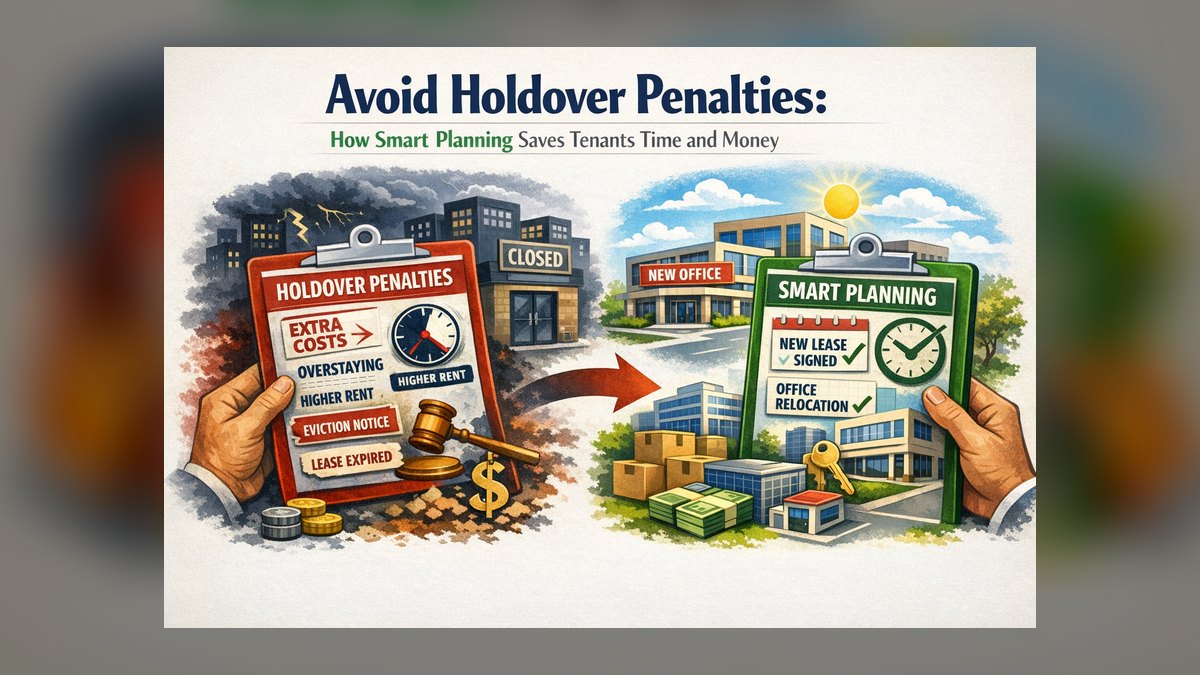
Holdover rent is the penalty rate you pay for staying past your lease's expiration — usually 150% to 200% of your last month's rent, sometimes plus the landlord's consequential damages. Avoid it by capping the multiplier at 125–150% with no consequential damages at signing, and by securing a contractual extension option so you control the runway.
What holdover rent actually costs
Holdover provisions exist for one reason: to push a tenant out fast so the landlord can re-lease the space. The standard landlord-form clause has three teeth, and each one is negotiable if you catch it before you sign.
The first tooth is the multiplier. In tenant-favorable markets, 150% of the prior rent is common; in landlord-favorable markets, 200% is the default ask. Some forms escalate on a schedule — 150% for the first month, then 200% for every month after. On a space paying $20,000 a month, a flat 200% clause converts your rent to $40,000 a month the day your term ends.

The second tooth is the partial-month rule. Holdover rent is almost always charged for any portion of a month, not prorated by the day. Stay three days into a new calendar month and you owe the entire holdover month. That single provision is why "we'll just be a couple weeks late" so often turns into two full penalty months on the invoice.
The third tooth — and the truly dangerous one — is consequential damages. The language reads something like: "Tenant shall be liable for all damages the Landlord suffers as a result of the holdover, including any claims asserted by a succeeding tenant." This is open-ended. If your overstay causes the landlord to lose the next tenant, you can be on the hook for that tenant's lost rent, the broker's commission, and the improvement allowance the landlord had promised. Tenant-rep brokers consistently warn that it is the consequential-damages exposure, not the multiplier, that produces the six-figure holdover disasters — because it ties your liability to a third-party lease you have never even seen.
The three clauses to fix at signing
Everything about holdover is easier to fix before the lease is signed than after the term has run. When the ink is wet you have all the leverage; once you are in holdover, the landlord has it. Three edits do most of the work.

Cap the multiplier. Push for language that reads: "Holdover rent shall be 125% of the rent in effect immediately prior to expiration." Treat 150% as a reasonable fallback compromise. Never sign an open 200% clause without a fight — it is a starting position, not a fixed market rate, and landlords expect it to be negotiated. If the landlord insists on an escalator, cap where it lands: 125% for the first 60 days, then no higher than 150%.
Strike consequential damages. This is the single most valuable edit in the whole clause. Replace the open-ended damages language with: "Tenant's holdover liability shall be limited to the holdover rent, and Tenant shall not be liable for consequential, special, or third-party damages arising from the holdover." That one sentence removes the catastrophic tail risk that turns a minor overstay into a lawsuit. If the landlord won't kill it outright, negotiate a carve-out so consequential damages only attach after a defined grace period — for example, they do not apply for the first 30 to 60 days of any holdover. That still protects you against a brief, honest overrun.

Define a priced grace window. Negotiate: "Tenant may hold over for up to 60 days at 100% of the prior rent before any holdover premium applies." This converts the holdover cliff into a real, priced bridge between leases. You know exactly what a short overrun costs, you can budget for it, and you are not depending on the landlord's mood the week your movers are running behind. A 30-to-90-day grace window at 100% to 125% of base rent is a very common negotiated outcome, especially when the landlord has no signed replacement tenant.
Control the runway so you never hold over
The best holdover defense is never needing one, and the tools for that live in the lease structure itself — not in the holdover clause. Build the timing controls in so that when your term ends, the decision to leave is yours to make on your schedule.
Start with a renewal or extension option: a contractual right to extend the lease for one to three years at a pre-agreed rent or at fair market value, exercisable with six to nine months' notice. This is your safety valve. If a new space isn't ready, you exercise the option and stay on ordinary terms rather than falling into penalty rent. Negotiate the notice window so it is long enough for the landlord but short enough that you are not forced to commit before you know your plans — 90 to 180 days is typical.

If your plans are genuinely fluid, negotiate an early-termination right instead. A clean early-out — with a defined fee, often the unamortized tenant-improvement allowance plus a few months' rent — beats an accidental, uncapped holdover every time, because the number is known in advance and you are exercising a right rather than breaching a term.
Finally, coordinate the dates on both ends. When you sign the new lease, push for a delayed rent-commencement date or a free fit-out period so the new space is built out and ready before the old lease ends. Overlapping a few weeks of double rent on known terms is far cheaper than a single week of 200% holdover, and it removes the pressure entirely. Give the construction schedule a real buffer — buildouts slip, permits slip, and the buffer is what keeps a slip from landing you in holdover.

Negotiating a holdover cap before you sign
The most effective way to avoid a painful holdover penalty is to cap it during the lease negotiation, before you ever sign. Most landlords open with a standard clause demanding 200% of base rent plus all operating expenses plus consequential damages. In a mid-sized office space, that structure can turn a two-week overstay into a $50,000 to $150,000 surprise once the full month, the NNN charges, and a next-tenant claim are stacked together.
Push back early and specifically. Propose a holdover rate of 125% to 150% of the last month's total rent — and be explicit that "total rent" means base rent plus all triple-net charges, because landlords will otherwise apply the multiplier to base rent and then add operating expenses on top. Pair the capped rate with a strict time limit, typically a 60-to-90-day maximum, after which the rate can escalate. You have still bought yourself a defined, survivable buffer window.
Then demand that holdover rent be the sole remedy. A clause stating that the holdover rent is the landlord's exclusive remedy for the overstay means they cannot also sue you for lost rent from a succeeding tenant or for other consequential damages. That one provision is the difference between a predictable line item and an open-ended liability.

When the landlord resists, frame the cap as mutual risk management rather than a loophole. A reasonable cap protects both parties: you avoid financial ruin from an honest scheduling miss, and the landlord still collects a healthy premium plus keeps the relationship intact for a renewal. Many landlords will land on 150% for 60 days once it is framed that way — it is a premium over market, not a giveaway, and it costs them nothing if you never hold over.
Using an extension option as your safety net
The smartest structural fix for holdover risk is an extension option baked into the original lease. It gives you the contractual right to stay beyond the initial term at a predetermined rent — often around 95% to 105% of the last year's rent — without ever triggering a holdover penalty. Negotiate for at least one three-to-six-month extension option that you can exercise with 30 to 60 days' notice before expiration. That short option is especially valuable when your timeline is uncertain because you are waiting on a new buildout or a renewal at another property.

Without an extension option you are at the landlord's mercy. They can demand market rent, which often runs 20% to 40% above your in-place rate, or simply refuse to let you stay at all if they have a new tenant lined up. If the landlord balks at a longer extension, ask instead for a short-term holdover right at a friendly rate — 30 to 90 days at 110% to 125% of base rent — which is dramatically cheaper than the standard penalty and still gives you a soft landing.
Document any of this in a formal lease amendment or addendum, never in an email. A written extension option is enforceable; a verbal "stay as long as you need" is worthless the moment the landlord sells the building, changes property managers, or finds a tenant who wants your space. And even if you never plan to use the option, holding it gives you leverage — you can trade it away for other concessions later if your plans firm up.
If you're already heading into holdover
When the calendar is against you and the buildout is behind, move fast and deliberately, because every day you delay adds to the running cost.

First, confirm the exact holdover rate in your lease — look for the clause titled "holdover" or "tenancy at sufferance." Know whether you are facing 125%, 150%, or 200%, and whether consequential damages are in play, before you open any conversation.
Second, open that conversation early — ideally 60 to 90 days out. A landlord who has no replacement tenant will often agree to a short, priced extension rather than force a fight, because a cooperative tenant paying a premium beats an empty space and a lawsuit. Send written notice stating your intended vacate date, and request written confirmation of the final holdover amount so there is no dispute later.

Third, document the next-tenant status. If the landlord has no signed succeeding lease, their consequential-damages claim has little real exposure behind it — that is genuine leverage for negotiating a reasonable rate. Offer to pay a fair multiple for the actual days you overstay, plus a modest flat administrative fee, in exchange for a written waiver of consequential damages.
Fourth, get any extension in writing. A verbal agreement does not override the written holdover clause if the landlord later changes course. And if you are billed at a punitive rate you believe is unenforceable as a penalty rather than a genuine estimate of damages, pay the undisputed base amount and reserve your rights on the disputed premium in writing rather than withholding everything.
Finally, never sign your next lease while still in holdover. The landlord across the table can use your overstay as leverage to force unfavorable terms. Get out cleanly first, then negotiate your new space from a position of strength. If the numbers are large, a one-hour consultation with a commercial lease attorney — typically a few hundred dollars — can easily pay for itself against a five-figure penalty.

Watch the auto-renewal trap
Some leases pair the holdover clause with an evergreen or auto-renewal provision: if you fail to give notice by a specified deadline, the lease automatically renews for another full term at the landlord's stated rate. This is a distinct trap from holdover, but it bites the same disorganized tenant, and it can be far more expensive because it locks you into years rather than months.
The defense is calendar discipline. Log every notice deadline in the lease at least 12 months out, with reminders stacked ahead of the actual date, so the window never closes on you by accident. Better still, address it at signing: strike the auto-renewal entirely, or shorten it so that a missed notice converts the lease to a month-to-month tenancy at a capped rate rather than a full multi-year renewal. Reading the notice-and-renewal mechanics with the same care you give the holdover multiplier is what keeps an administrative oversight from becoming a long-term financial commitment.
Related questions
Is holdover rent legally enforceable?
Generally yes — courts enforce a reasonable holdover premium as a bargained-for term. A multiplier so high it functions as a punitive penalty rather than a good-faith estimate of the landlord's damages can sometimes be challenged, but you should never count on a court rewriting your lease. Negotiate a defensible rate up front instead.
Does holdover rent include NNN and operating expenses?
Usually. Most holdover clauses apply the multiplier to "rent" defined as base rent plus all additional charges — triple-net, CAM, taxes, and insurance. Confirm the definition in your lease, because a 150% multiplier on total rent is meaningfully more than 150% on base rent alone. Nail the definition down at signing.
How is holdover different from a month-to-month tenancy?
A month-to-month tenancy is a mutually accepted arrangement, typically at or near the normal rent. Holdover is an unauthorized overstay charged at a penalty rate, and many leases let the landlord treat it as a tenancy at the landlord's option — meaning they can also evict you on short notice while still charging the premium.
Can the landlord evict me during holdover?
Yes. Once your term ends, you are a holdover tenant, and the landlord can typically begin eviction proceedings while simultaneously charging holdover rent. Some clauses let them convert your status to month-to-month and terminate on 30 days' notice — so you can be paying a penalty and facing removal at the same time.
FAQ
What exactly is holdover rent?
Holdover rent is the penalty rate you pay if you remain in a commercial space after your lease ends without a new agreement in place. It typically runs 150% to 200% of your last month's base rent, and in most leases the multiplier is applied to your total rent, including triple-net charges.
How long can a landlord charge holdover rent?
There is no universal limit — it can run from a few days to many months, depending on how long you stay. Some leases cap the holdover period at, say, six months before other remedies kick in; others let the landlord charge the premium indefinitely until you actually vacate the space.
Can I negotiate the holdover rent rate in my lease?
Yes. You can often negotiate the multiplier down from 200% to something like 125% or 150%, cap the holdover period at 30 to 60 days, and strike consequential damages. The time to do this is during the initial lease negotiation, not after you are already holding over and the leverage has shifted.
What happens if I leave a few days late by accident?
Even a few days can trigger the full holdover penalty, because most clauses charge for any portion of a month rather than prorating by the day. Some landlords enforce this strictly. Protect yourself by scheduling the move-out a week early and getting written confirmation of the exact vacate date.
Does holdover rent apply if I'm negotiating a renewal?
It can. If your existing term expires before the renewal is signed, you may owe holdover rent during the gap. To prevent that, ask for a short-term extension at the current rent while you finalize the renewal terms, and get the extension documented in writing before the old term lapses.
What's the best way to avoid holdover rent entirely?
Plan your move-out at least 60 days ahead, coordinate the timing with your landlord, and secure a written extension or renewal option if you need more runway. If you are staying long-term, sign the new lease before the old one ends — even a month of overlap on normal terms beats a single penalty month.
Sources
- https://www.jll.com/en-us/insights — JLL insights on lease negotiation and holdover provisions.
- https://www.cbre.com/insights — CBRE occupier and lease-risk management resources.
- https://www.cushmanwakefield.com/en/insights — Cushman & Wakefield on lease expiration and renewal strategy.
- https://www.naiop.org — NAIOP commercial real estate development association, lease provisions.
- https://www.boma.org — BOMA International, tenant lease negotiation issues.
- https://www.irem.org — IREM, commercial property lease administration guidance.
- https://www.nolo.com/legal-encyclopedia/commercial-real-estate-leases — Nolo, commercial lease and holdover basics.
- https://www.law.cornell.edu/wex/holdover_tenant — Cornell Legal Information Institute, holdover tenant definition.
Related on PULSE
- How Do I Avoid Construction Delays That Cost Me Rent?
- How Do I Avoid Overpaying for Permits and Expediting?
- How Do I Avoid the 'Controllable vs Uncontrollable' CAM Trap?
- How Do I Avoid Paying for Vacant-Space Costs in CAM?
- How Do I Avoid Getting Overcharged on Utilities in a Lease?
- How Do I Avoid Getting Screwed on a Ground-Up Build-to-Suit?
This page will be disappearing soon. Save it to your device for $1 — or read it free while it is here.
@Kory-White- · if Venmo asks, the last 4 of my number are 2012
This page is gone.
This one is off the shelf now. $1 keeps it on your phone for good — the whole page, pictures and diagrams included.
 buildoutsHow Do I Avoid Paying for Vacant-Space Costs in CAM in 2026?
 buildoutsHow Do I Get a Personal-Guarantee Burn-Down Schedule in 2026?
 buildoutsWhat Happens to My Lease in an Eminent Domain / Condemnation in 2026?
 buildoutsHow Do I Avoid a Bad Anchor-Tenant Situation in Retail in 2026?
 buildoutsHow Do I Negotiate Parking Ratios for My Business in 2026?
 buildoutsBase Building vs Tenant Work: What Am I Actually On the Hook For?
 buildoutsHow Do I Structure a Lease for a Franchise Location in 2026?
 buildoutsHow Do I Negotiate a Renewal Option That Protects My Rent in 2027?
 buildoutsHow Do I Structure a Lease With an Option to Purchase in 2026?
 buildoutsHow Do I Use Anchor-Tenant Leverage to Get a Better Lease in 2026?