
How Do I Budget a 3PL or Fulfillment Warehouse Buildout?
 Curated byKory White · Fractional CRO · Maryland
 PULSEKNOWLEDGE LIBRARY
Budgeting a 3PL or fulfillment warehouse buildout requires understanding that costs typically range from $20 to $55 per square foot, with the total heavily influenced by material handling equipment and building infrastructure. The most critical financial decision is selecting a modern Class A distribution shell with 36-foot clear height, ESFR fire suppression, adequate dock doors, and a level slab, as retrofitting these features is prohibitively expensive. Separating building improvements from material handling equipment in your budget maximizes tax efficiency and financing flexibility, potentially saving hundreds of thousands of dollars over the lease term.
The key to avoiding budget overruns is identifying hidden infrastructure costs like electrical upgrades, data backbone installation, and compressed air systems before signing the lease. A phased buildout strategy that matches capital expenditure to revenue ramp preserves cash flow and can save $240,000 to $480,000 in construction loan interest alone. Negotiating a comprehensive tenant improvement allowance with the landlord, including funding for building-specific items like ESFR upgrades, can significantly reduce your out-of-pocket costs.
What Are the Specific Cost Categories in a 3PL Warehouse Buildout?
A fulfillment buildout's cost stack diverges significantly from office or retail construction, with material handling systems and storage infrastructure dominating the budget. Understanding each category's typical cost range and what drives variability is essential for accurate budgeting and vendor negotiation.
Racking and storage systems represent the largest single line item, typically $8 to $25 per square foot. Selective pallet racking is the most economical option, while push-back, drive-in, pallet flow, and mezzanine systems cost more but significantly boost storage density. For a 150,000 SF facility, racking alone can range from $1.2 million to $3.75 million depending on system type and configuration. High-density systems like very narrow aisle (VNA) racking require specialized equipment and a flat slab, adding to both racking and infrastructure costs.
Material handling equipment (MHE) including conveyor, sortation, and pack stations is highly variable at $5 to $40 per square foot. A pure pallet-in/pallet-out 3PL with minimal automation might spend only $750,000 on conveyor, while a high-speed e-commerce fulfillment center with automated sortation and robotic depalletizers could exceed $6 million. The MHE category also includes forklifts, pallet jacks, and battery charging infrastructure, which should be budgeted separately from building improvements.
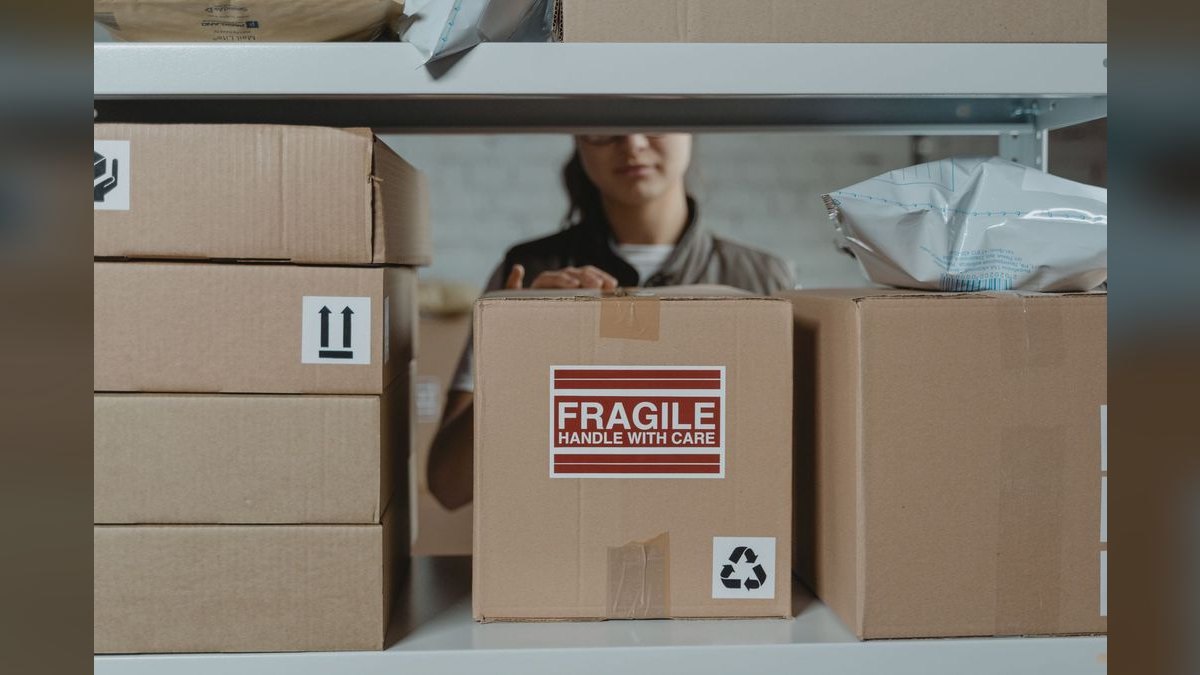
Lighting and electrical costs run $1.50 to $4 per square foot for LED high-bay fixtures with motion sensors. Modern Class A buildings often have adequate lighting, but older shells may require a complete retrofit that pays back in energy savings within 2-3 years. Electrical capacity upgrades for charging stations and automation equipment can add $0.50 to $1.20 per square foot, particularly in buildings with only 800-1,200 amp service.
Dock equipment costs $5,000 to $12,000 per dock position for levelers, seals or shelters, bumpers, and lights. A 30-dock building requires $150,000 to $360,000 if not already equipped. Additional costs include trailer restraints, dock lights, and vehicle wash stations for food-grade operations.
Office and admin fit-out runs $40 to $80 per square foot but typically covers only 5-10% of the total footprint. For a 150,000 SF facility with 10,000 SF of office space, this adds $400,000 to $800,000. Include break rooms, restrooms, and training rooms in this category.
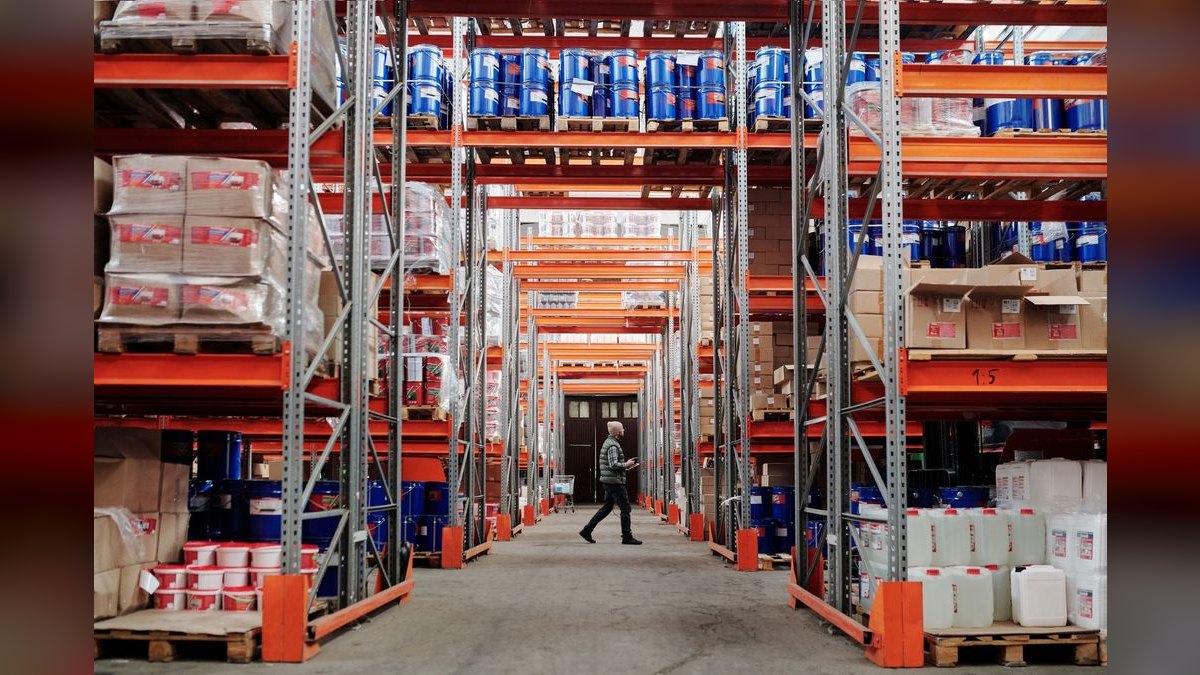
WMS, networking, and Wi-Fi costs $2 to $6 per square foot for warehouse-grade wireless coverage, scanners, and warehouse management system implementation. For a 150,000 SF facility, budget $300,000 to $900,000 for a full WMS deployment including integration with existing ERP systems.
How Do I Select the Right Building Shell to Minimize Buildout Costs?
The building shell determines 60% of your buildout costs before any work begins, making site selection the most important financial decision in the entire project. Modern Class A distribution buildings designed for logistics operations dramatically reduce capital requirements compared to retrofitting older industrial space.
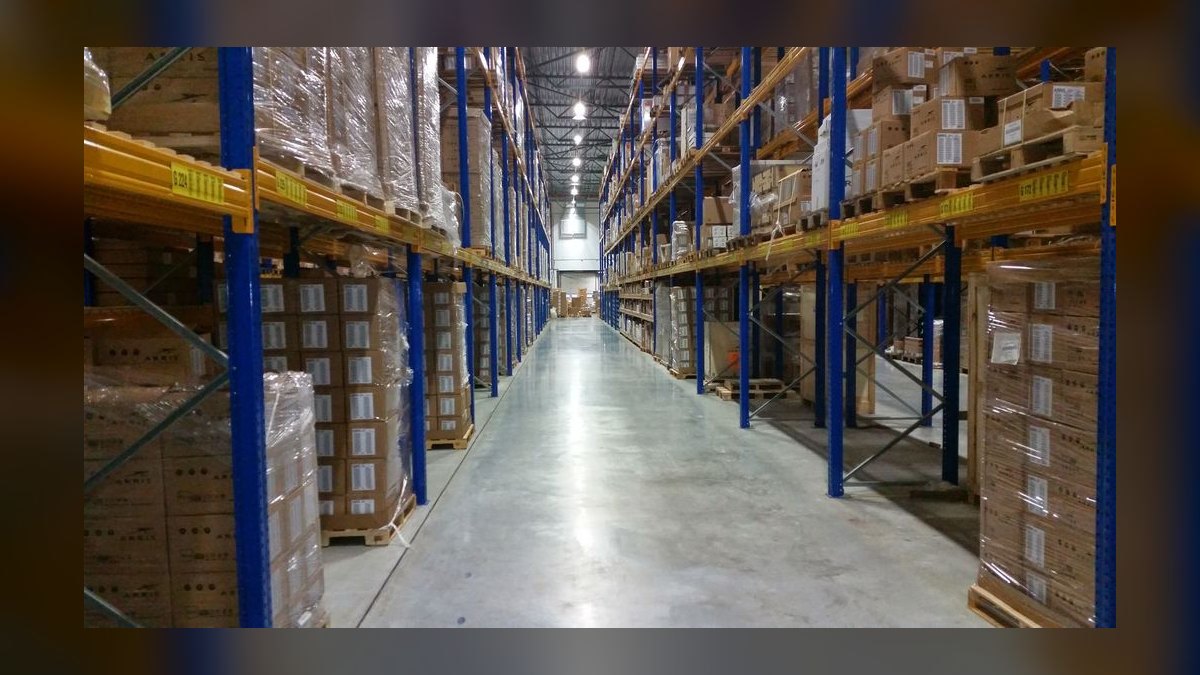
Clear height is the single most impactful specification. Modern Class A buildings offer 36 feet clear, allowing five to six levels of pallet racking and maximizing cubic storage capacity. Older buildings with 24-28 foot clear heights require mezzanines or additional square footage to achieve the same storage volume, increasing both construction costs and ongoing rent. You cannot add clear height to an existing building, so this specification must be non-negotiable.
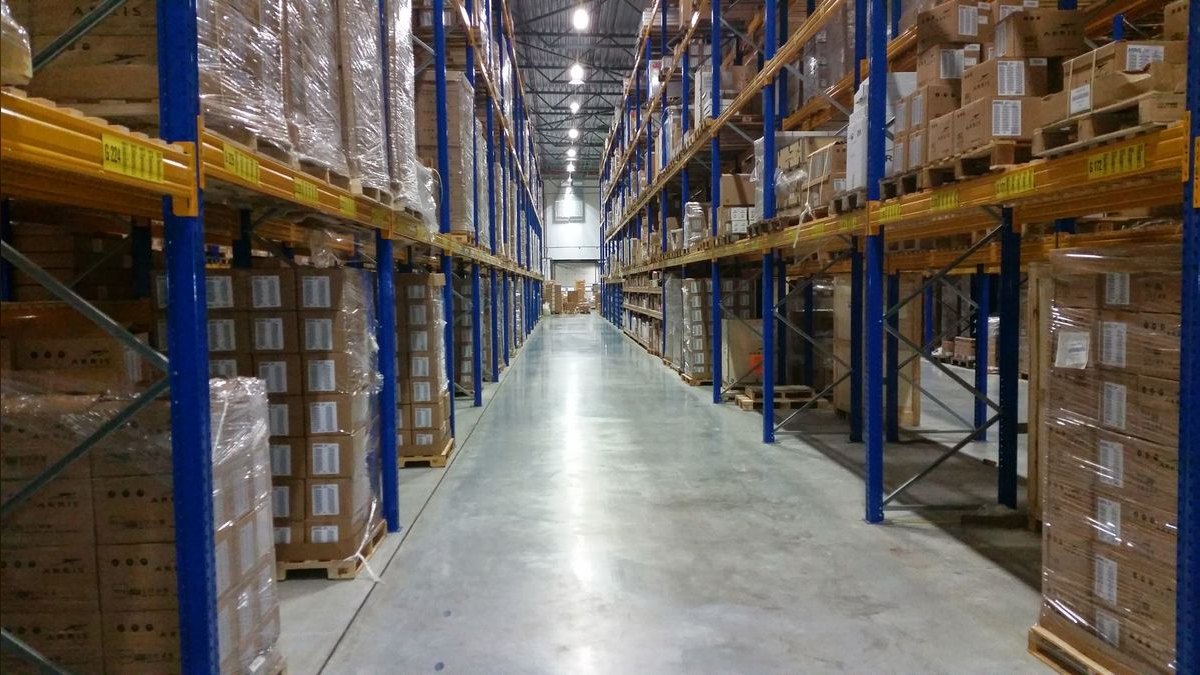
Floor slab flatness and levelness (FF/FL numbers) directly affects your ability to use high-density racking systems and automated equipment. Very narrow aisle (VNA) racking and automated guided vehicles (AGVs) require FF/FL numbers of 50/35 or higher. Re-leveling a slab costs $3 to $8 per square foot and can delay the project by 6-8 weeks. Always request a floor flatness report from the landlord and budget for slab grinding or patching if the numbers are marginal.
Dock door ratio and configuration should match your throughput model. A common benchmark is one dock door per 5,000 to 10,000 square feet of warehouse space. For a 150,000 SF facility, this means 15 to 30 dock positions. Confirm that dock heights match your fleet (48 inches for standard trailers, 52 inches for some refrigerated units) and that there is adequate trailer staging area and turning radius for 53-foot trailers.
Fire suppression system requirements are critical for high-pile storage. ESFR (Early Suppression Fast Response) sprinklers are mandatory for storage heights above 25 feet in most jurisdictions. Retrofitting ESFR into a building with standard sprinklers costs $3 to $8 per square foot and may require a new water main connection, which can add $100,000 to $500,000 depending on proximity to municipal water infrastructure. Verify ESFR capability in writing before signing the lease.
Power capacity for modern fulfillment operations often exceeds standard industrial shell specifications. A typical 150,000 SF building comes with 800-1,200 amps of 277/480V 3-phase service. A high-density automation operation with conveyor, sortation, and battery charging can require 2,500-4,000 amps. Upgrading service costs $80,000 to $180,000 and can take 12-16 weeks from the utility company. Request the existing electrical single-line diagram and a load letter from the landlord before making any commitments.
For more detailed guidance on negotiating industrial lease terms, see our guide on How Do I Negotiate an Industrial or Warehouse Lease?.
How Do I Phase the Buildout to Match Revenue Ramp?
Most 3PL operators make the mistake of building out the entire facility before the first pallet arrives, tying up capital in unused capacity. A smarter approach is a three-phase rollout that matches capital expenditure to revenue growth, preserving cash flow and reducing interest costs on construction financing.
Phase 1 (Months 1-4): Core infrastructure plus initial operational zone. Spend 40-50% of the total budget on electrical upgrades, ESFR system verification, slab repairs, and a fully equipped first zone covering 25-35% of the square footage. This zone should include 2-3 dock positions, 5,000-8,000 pallet positions in rack, a small conveyor loop, and a 1,500 SF packing station. For a 150,000 SF facility, this phase costs $1.2 million to $2.5 million and gets you operational within 90-120 days of lease commencement. You can start generating revenue while the rest of the building remains empty.
Phase 2 (Months 5-9): Expansion to 60-70% capacity. Once you have 3-4 months of throughput data, expand racking into the next zone, add 2-4 more dock doors with levelers, install the main sortation system, and build out the mezzanine for value-add services like kitting and labeling. Budget another 30-35% of total: $900,000 to $2.8 million. At this point, you should be handling 60-70% of projected daily order volume, with revenue covering most operating costs.
Phase 3 (Months 10-14): Final fit-out and automation. The last 20-25% of budget goes to high-speed automated equipment such as shuttle systems, robotic depalletizers, and auto-baggers, plus any cold storage needs, office buildout, and parking lot improvements. Cost: $600,000 to $1.9 million. By now, the operation is cash-flow positive from Phase 1 and Phase 2, so you can fund this phase from operating cash rather than drawing down the full construction loan.
Why phasing works: You avoid paying interest on $8 million of construction debt for 12 months while only using half the building. Typical construction loan interest at 8-10% on a $6 million draw saves $240,000 to $480,000 in carrying costs. Additionally, phasing allows you to refine your layout based on actual throughput data rather than theoretical projections.
What Hidden Infrastructure Costs Blow Up 3PL Buildout Budgets?
Beyond the obvious line items like racking and conveyor, three infrastructure categories routinely cause 20-40% overruns in 3PL buildouts if not identified during the site-survey phase. These costs are often overlooked because they fall outside the scope of standard tenant improvement allowances.
Electrical capacity upgrades are the most common hidden cost. A typical distribution shell comes with 800-1,200 amps of service, adequate for basic lighting and a few office outlets. A high-density fulfillment operation with automated sortation, mezzanine-level conveyors, and battery-charging stations can demand 2,500-4,000 amps. Upgrading a 277/480V 3-phase service from 1,200A to 3,000A runs $80,000 to $180,000 depending on transformer location and utility company lead times. Always request the existing electrical single-line diagram and a load letter from the landlord before signing.
Data and telecom backbone costs are frequently underestimated. Modern 3PLs rely on real-time WMS connectivity, voice-picking systems, and warehouse-wide Wi-Fi 6 coverage. Running CAT6a or fiber drops to 50-100 pick zones, installing PoE switches, and adding cellular DAS for carrier redundancy costs $15,000 to $45,000 for a 100,000 SF facility. Many tenants discover mid-buildout that the shell's fiber entry point is on the opposite side of the building from the MDF room, adding $8 to $12 per linear foot for trenching.
Compressed air systems are required for air-powered strapping tools, case erectors, or pneumatic sortation diverters. A 15-25 HP rotary screw system with dryer, receiver tank, and copper/aluminum distribution piping runs $25,000 to $60,000 installed. Retrofitting this after racking is in place triples labor costs because installers must work around storage systems.
Rule of thumb: Budget an additional $3 to $6 per square foot for these three hidden categories combined. If the building is pre-2000 construction, lean toward the high end—older shells almost always require electrical and data upgrades.
For more information on budgeting industrial space, see our guide on How Do I Budget a Warehouse or Industrial Buildout?.
How Do I Negotiate the Tenant Improvement Allowance?
The landlord's tenant improvement (TI) allowance is often the single largest source of funding for your buildout, but only if negotiated correctly. In the current industrial market (2024-2025), three specific tactics can significantly increase your effective allowance.
Tactic 1: Demand a hard cap plus overage structure. Most landlords offer a flat TI allowance, typically $15 to $25 per square foot. Instead, negotiate a base allowance of $18 to $22 per square foot plus a "TI overage pool" of $5 to $8 per square foot that you can access only if you sign a longer initial term of 7-10 years. This gives you $27 to $30 per square foot total without the landlord feeling like they gave away the farm. If you need $35 per square foot for a heavy automation buildout, ask for a tenant improvement loan from the landlord at 6-7% interest amortized over the lease term, which is cheaper than bank financing.
Tactic 2: Get the landlord to fund building-specific items. ESFR fire suppression upgrades, roof repairs, parking lot resurfacing, and HVAC replacements are landlord responsibilities in most industrial leases, but they often try to push them into your TI allowance. Before signing, get a structural engineer's report and a fire protection consultant's report. Then present the landlord with a list: "These $400,000 in fire system upgrades are your capital obligation per Section 9.2 of the lease." If they push back, offer to split the cost 50/50 in exchange for a 6-month rent abatement.
Tactic 3: Use the TI allowance buyout clause. Some landlords will let you take a lower TI allowance in exchange for lower base rent. For example, if the standard offer is $25 per square foot TI with $5.50 per square foot NNN rent, you can counter: "Give me $10 per square foot TI and $4.75 per square foot rent." This works well if you have cash on hand for the buildout and want to lower your fixed monthly nut. Run the math: $1.50 per square foot annual rent savings on 150,000 SF = $225,000 per year. Over a 7-year lease that's $1.575 million, more than the $15 per square foot TI you gave up ($2.25 million). Only do this if your buildout costs are under $15 per square foot (light racking, minimal automation).
For specific strategies on securing a larger TI allowance, see our guide on How Do I Negotiate a Tenant Improvement Allowance for a Warehouse?.
How Do I Structure the Lease to Protect My Equipment Investment?
The lease structure determines whether your racking and equipment remain your property or become the landlord's at the end of the term. Proper language protects your ability to finance equipment separately and take it with you when you move.
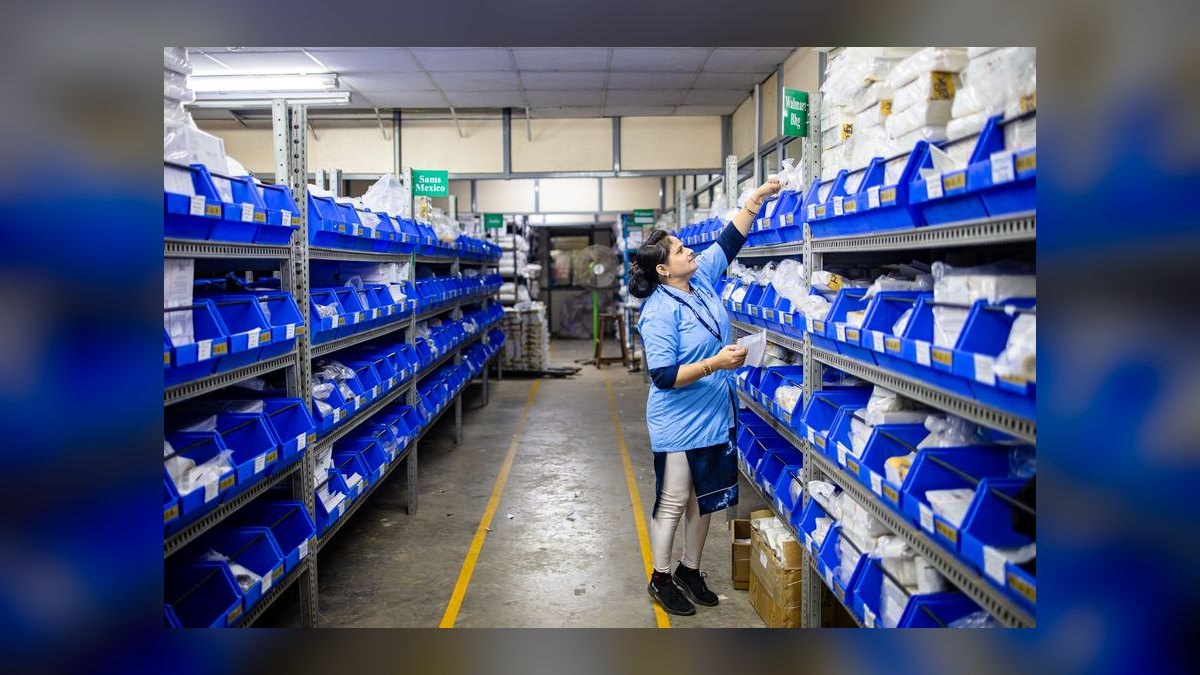
Make racking and equipment "trade fixtures" that you own and can remove at lease end. Spell out in the lease that racking, conveyor, and material handling equipment are your property, financeable, and removable at lease end. Without this language, a landlord may claim them as building fixtures that become part of the real estate, preventing you from financing them separately or depreciating them under Section 179.
Strike or cap the restoration clause. Anchor bolts in the slab, dock modifications, and electrical for charging stations can trigger a restoration bill of $100,000 or more at move-out. Cap your obligation to "broom-clean, normal wear and tear" and exclude approved improvements. Negotiate that any improvements funded by your TI allowance are considered landlord property and not subject to restoration.
Bid the general contractor and the racking/MHE vendors separately. Never let the GC mark up your racking 15-20% inside a turnkey number. Buy racking directly from the manufacturer/installer with three bids; let the GC handle building work only. This separation also makes it easier to finance equipment separately.
Related Questions
What is the typical timeline for a 3PL warehouse buildout?
Most projects take 4 to 8 months from design to completion, with simple racking-only layouts finishing in 3 months and highly automated facilities requiring 9 months or more due to conveyor installation and software integration.
How do I budget for cold storage in a 3PL facility?
Cold storage adds $50 to $150 per square foot for insulated panels, refrigeration systems, and specialized flooring, plus 30-50% higher ongoing energy costs compared to ambient warehouse space.
What is the difference between a TI allowance and a tenant improvement loan?
A TI allowance is free money from the landlord to fund buildout costs, while a tenant improvement loan is a loan from the landlord that you repay with interest over the lease term, typically at 6-8% interest.
Should I use a design-build contractor for my warehouse buildout?
Yes, design-build contracts reduce project risk by having a single entity responsible for both design and construction, typically saving 10-15% in total project cost and 4-8 weeks in schedule compared to design-bid-build.
How do I calculate the ROI of warehouse automation?
Calculate ROI by comparing labor savings (typically 30-50% reduction) and throughput increases (50-200%) against the capital cost of automation, which ranges from $500,000 to $5 million for a mid-size 3PL operation.
What permits are required for a warehouse buildout?
Typical permits include building permits for structural work, mechanical permits for HVAC, electrical permits for power upgrades, fire permits for sprinkler modifications, and sometimes zoning permits for increased truck traffic.
FAQ
What is the typical cost per square foot for a 3PL warehouse buildout? You can expect to spend between $20 and $55 per square foot for a buildout inside an existing shell. The wide range depends on mezzanine installation, conveyor systems, and specialized racking. Office space within the warehouse will cost more, often $60 to $100 per square foot.
How long does a warehouse buildout usually take? Most projects take 4 to 8 months from design to completion, depending on complexity and permitting. A simple layout with standard racking might finish in 3 months, while a highly automated facility with mezzanines and conveyors can take 9 months or more.
What are the biggest cost drivers in a fulfillment center buildout? The largest expenses are typically material handling systems (conveyors, sortation, automation), mezzanines, and electrical upgrades for high-density lighting and power. Floor coatings and dock equipment also add significant cost. Labor and steel prices can vary regionally, so get quotes from local contractors.
Do I need to budget for tenant improvement allowances from the landlord? Yes, many landlords offer a tenant improvement (TI) allowance, often ranging from $5 to $15 per square foot for warehouse space. Negotiate this upfront, as it can cover a portion of your buildout costs. If the allowance is low, you may need to fund the rest out of pocket.
Should I include contingency in my budget? Always set aside 10% to 20% of the total buildout cost as contingency. Unexpected issues like hidden structural problems, permit delays, or material price spikes are common. Without a buffer, you risk running out of funds mid-project.
How can I reduce costs without sacrificing functionality? Consider phased buildouts—start with essential racking and docks, then add automation later. Use standard pallet racking instead of custom systems, and choose energy-efficient LED lighting to lower long-term operating costs. Also, compare multiple general contractors to get competitive bids.
What happens to my racking and equipment at lease end? If you negotiate trade fixture language in the lease, racking, conveyor, and material handling equipment remain your property and can be removed or sold. Without this language, the landlord may claim them as building fixtures, preventing you from financing them separately.
How do I verify a building has adequate power for my operation? Request the existing electrical single-line diagram and a load letter from the landlord. Have an electrical engineer calculate your total load including conveyor, sortation, battery charging, and lighting. If the building has less than 2,000 amps of 277/480V service for a 150,000 SF facility, budget for an upgrade.
What fire suppression system do I need for high-pile storage? ESFR (Early Suppression Fast Response) sprinklers are mandatory for storage heights above 25 feet in most jurisdictions. Verify the building has ESFR or budget $3 to $8 per square foot for retrofitting, plus potential water main connection costs of $100,000 to $500,000.
Can I finance my material handling equipment separately from the buildout? Yes, racking, conveyor, and automation equipment can be financed as equipment loans or leases, typically at 6-10% interest over 5-7 years. This preserves your cash for building improvements and qualifies for Section 179 bonus depreciation.
Sources
- CBRE North America Industrial & Logistics Construction and Fit-Out Cost Guide
- JLL Industrial and Logistics Outlook & Fit-Out Cost Guides
- Cushman & Wakefield Industrial Construction Cost Reports
- NAIOP Distribution Building Design Standards
- RSMeans Building Construction Costs Data
- NFPA 13 Standard for the Installation of Sprinkler Systems
- MHI Material Handling Industry Benchmarks
- WERC Warehouse Design and Operations Benchmarks
- FM Global Property Loss Prevention Data Sheets for ESFR Sprinklers
- U.S. Department of Energy Warehouse Lighting Guidelines
Related on PULSE
- [How Do I Budget a Cold Storage Warehouse Buildout?](/knowledge/bo0194)
- [How Do I Budget a Warehouse or Industrial Buildout?](/knowledge/bo0055)
- [How much does a 10,000 sq ft cold storage warehouse buildout cost in 2027?](/knowledge/bo348)
- [How Do I Budget an Ambulatory Surgery Center Buildout?](/knowledge/bo0219)
- [How Do I Budget a Dry Cleaner Buildout?](/knowledge/bo0170)
- [How Do I Budget a Senior Living or Assisted Living Buildout?](/knowledge/bo0188)
This page will be disappearing soon. Save it to your device for $1 — or read it free while it is here.
@Kory-White- · if Venmo asks, the last 4 of my number are 2012
 buildoutsHow Do I Negotiate a Lease and Buildout for a Cigar or Hookah Lounge?
 buildoutsHow Do I Negotiate a Lease and Buildout for a Private or Charter School?
 buildoutsHow Do I Budget a Coffee Roastery Buildout?
 buildoutsHow Do I Budget a Bakery Buildout?
 buildoutsHow Do I Budget a Garden Center or Nursery Buildout?
 buildoutsHow Do I Budget a Vertical Farm or Indoor Ag Buildout?
 buildoutsHow Do I Budget a Chiropractic Clinic Buildout?
 buildoutsHow Do I Negotiate a Lease and Buildout for Cannabis Cultivation?
 buildoutsHow Do I Budget a Pet Grooming Buildout?
 buildoutsHow Do I Budget a Florist Shop With a Walk-In Cooler Buildout?