
How Do I Negotiate a Lease and Buildout for Cannabis Cultivation?
 Curated byKory White · Fractional CRO · Maryland
 PULSEKNOWLEDGE LIBRARY
Negotiate a cannabis cultivation lease around three protections: rent commencement tied to license issuance and certificate of occupancy, a personal guarantee capped near 12 months, and landlord-funded permanent infrastructure like electrical service upgrades. Your buildout capital — often $100–$300 per square foot — is the leverage that wins those terms.
The numbers you should expect
Walk into the negotiation knowing the four cost stacks that decide whether the deal works: rent, triple-net passthroughs, buildout capital, and operating energy. Getting any one of them wrong by 20% can erase the margin on a facility that otherwise pencils.
Base rent. Cannabis cultivation tenants routinely pay a "green premium" over plain industrial users — commonly $1.50 to $3.00 per square foot per month NNN where a comparable warehouse would lease at $0.50 to $1.00. That is roughly two to four times the standard industrial rate for the same shell. Landlords justify the spread by pointing to federal illegality, banking and insurance friction, limited licensed-zone supply, and the reality that a purpose-built grow is hard to re-tenant. Some of that premium is real risk pricing. A meaningful chunk of it is opportunism, and it shrinks when you can demonstrate capital, a credible license path, and a willingness to walk.
Triple-net expenses. On a NNN structure, expect CAM, taxes, and insurance to add roughly 20% to 40% on top of base rent. Cannabis leases frequently carry an extra line item — some flavor of "compliance," "security," or "monitoring" fee — that can add another $0.50 to $1.50 per square foot per month if you let it in unpriced. On a 20,000 square foot facility, a $1.00 per square foot per month unexamined passthrough is $240,000 a year. That is not a rounding error; it is a line worth a week of negotiation.
Buildout capital. A fully operational indoor cultivation facility typically runs $100 to $300 per square foot all-in, with the spread driven by whether the shell already has adequate power, whether you are single-tier or racked vertical, and how much automation you specify. Broken into components, plan on roughly: electrical service and distribution at $30–$60 per square foot; HVAC and dehumidification at $40–$80; lighting fixtures at $30–$50 per square foot of canopy; fertigation and irrigation at $10–$25; environmental controls and automation at $10–$20; and security, vaults, access control, and seed-to-sale compliance hardware at $15–$40. On top of that sits the utility-side service upgrade, which can independently run $150,000 to $750,000 depending on distance to adequate distribution, transformer sizing, and whether the utility requires you to fund line extension.
Operating energy. Cultivation uses on the order of three to five times more electricity per square foot than a typical industrial tenant. Lighting alone draws roughly 30 to 60 watts per square foot of canopy, and essentially every one of those watts arrives back as heat the mechanical system has to reject — cooling load commonly lands at another 30% to 50% on top of the lighting load. At commercial rates of roughly $0.10 to $0.20 per kilowatt-hour, energy is often the single largest controllable operating expense after labor.
Stack it together for a 10,000 square foot facility in a mid-priced market and total monthly occupancy — base rent, NNN, utilities, and amortized buildout — commonly lands in the $30,000 to $60,000 range. Run that math before you tour a single building, because it tells you the maximum rent your yield-per-square-foot can actually service. Every hour spent modeling the occupancy number is an hour you do not spend discovering it after signing.
What drives those numbers
The numbers above are not arbitrary. They are downstream of a small number of physical facts about growing plants indoors, and once you understand the chain, you can predict which buildings are cheap to convert and which are money pits before you spend anything on due diligence.
It starts with electricity. Indoor cultivation is fundamentally an electricity business that happens to grow plants. Your canopy square footage sets your lighting load. Your lighting load sets your heat load. Your heat load sets your HVAC tonnage. Your HVAC tonnage sets your electrical service requirement, which sets whether the existing panel is adequate or whether you are funding a six-figure utility upgrade. A building with 400 amps at 480V three-phase and a grow that needs 1,200 amps is not a $2 per square foot problem — it is a $400,000 problem wearing a lease's clothing.
Then humidity. A flowering room transpires an enormous volume of water — the plants push nearly all the irrigation water they take up back into the air. Dehumidification is not an HVAC accessory; it is a first-class system with its own load calculation and its own capital line. Under-size it and you get botrytis and powdery mildew, which do not reduce your yield by a few percent — they can take out an entire flowering room worth hundreds of thousands of dollars in a single cycle. This is the single most common place operators economize during buildout and the single most expensive place to be wrong.
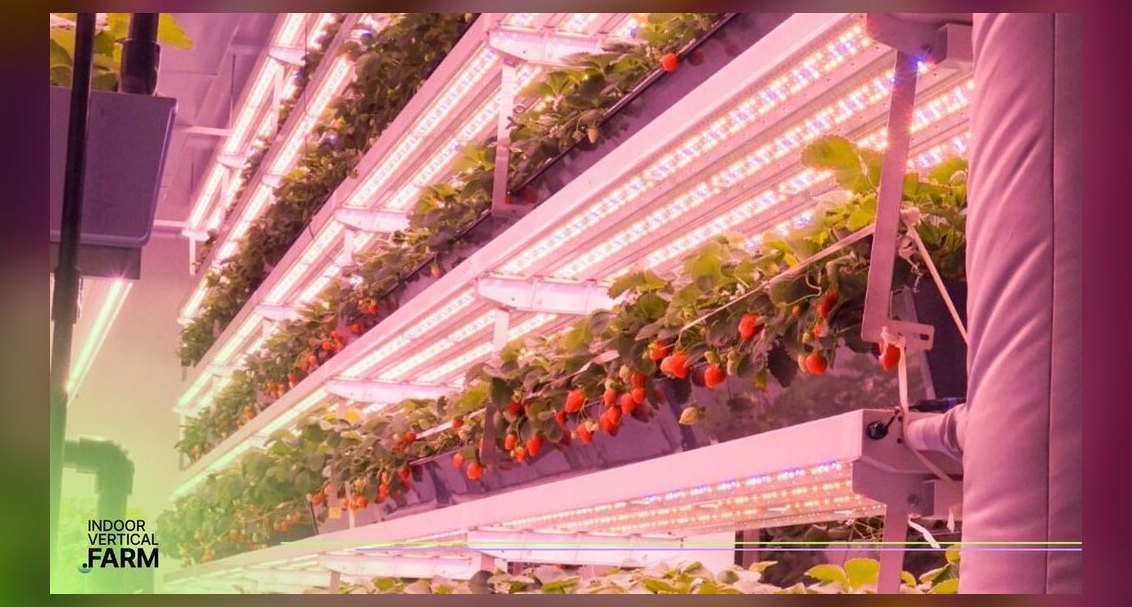
Then airflow and structure. Tiered or vertical racking can double or better your canopy per square foot on the same footprint, which is why it looks irresistible on a spreadsheet. But it adds concentrated structural load the slab and roof may not be rated for, and it demands even airflow between every tier. Under-designed inter-canopy airflow is the most common reason a high-tech room underperforms its projected yield — the top tier runs hot, the bottom tier runs stagnant and humid, and you get inconsistent quality out of a room you paid a premium to build.
Then water in and water out. A cultivation facility commonly needs 500 to 1,500 gallons per day for irrigation and washdown. That is a municipal supply-pressure question and a sewer-capacity question, and in some jurisdictions a discharge-permit question if you are running nutrient-laden runoff.
Read that chain backward and it becomes a building-selection checklist. Before you write a letter of intent, get three documents: a utility load letter stating available service at the meter, a structural report if you intend to rack, and written confirmation of water pressure and sewer capacity. Those three pieces of paper are the difference between a $100 per square foot conversion and a $300 one, and they cost a fraction of a single month's premium rent to obtain.
Lease, TI allowance, and negotiation levers
Your leverage in a cannabis cultivation negotiation is not that you are a desirable tenant in the abstract — the landlord knows your alternatives are limited by zoning. Your leverage is the capital you are about to permanently install in someone else's building. Nearly all of it stays when you leave. Negotiate from that fact.
Split the buildout by who keeps it. Draw a line between permanent base-building assets and removable tenant equipment, then push everything on the permanent side onto the landlord's ledger. The electrical service upgrade, the transformer, the main distribution panel, structural roof reinforcement, upgraded water service, and dock or life-safety work are all permanent improvements that survive your license, your business, and your tenancy. The landlord owns them forever and can market them to the next tenant. You fund the removable side: lighting fixtures, benches and racking, fertigation skids, environmental controllers, and portable dehumidification. This one framing shift can move $200,000 to $700,000 of capital from your balance sheet to theirs while costing the landlord an asset they get to keep.
Tenant improvement allowance. A realistic TI allowance for a cultivation buildout runs $30 to $80 per square foot, and in competitive markets a creditworthy tenant on a long term can pull toward $100. Landlords will open lower or at zero. Two things matter more than the headline number: whether the allowance is paid on progress draws or only on completion, and who holds the risk if the buildout exceeds budget. Progress draws against certified percentage-of-completion keep you from financing the landlord's contribution at your cost of capital for nine months. If the landlord will not increase the allowance, trade for free rent instead — three to six months of abatement during the buildout and licensing window is often easier for a landlord to approve than cash out the door, and it is worth real money when you are pre-revenue.
Rent commencement and the license contingency. This is the clause that decides whether a delay is an inconvenience or a bankruptcy. Rent must commence on the later of license issuance and certificate of occupancy, not on lease execution or delivery of possession. Attach a hard outside date — commonly 6 to 12 months — after which you can terminate without penalty if approvals have not landed. Without it, a state or municipal delay leaves you paying $20,000 to $60,000 a month for a building you cannot legally use. If the landlord insists on some rent during the pre-license period, negotiate it down to 30% to 50% of full rate rather than accepting the full number.
Cap the personal guarantee. A ten-year personal guarantee on a cannabis lease is not a negotiating point, it is a hazard. Federal illegality means your bank, your insurer, your payment processor, or the landlord's lender can each independently disrupt the business through no action of yours. Cap the guarantee at 12 months of rent and negotiate a burn-down — the guarantee reduces by a quarter for each year of on-time payment, extinguishing entirely after year four. If the landlord will not cap it, offer an increased security deposit or a letter of credit instead; both are bounded exposure, and a guarantee is not.
Cap and itemize the passthroughs. Demand an itemized schedule of every NNN component, an annual cap on increases in the controllable categories of 3% to 5%, and a written audit right with a reasonable look-back window. Explicitly exclude capital repairs to roof, structure, and base-building HVAC — those are landlord obligations that get quietly reclassified as "maintenance" in cannabis leases more often than in any other asset class. Kill undefined "compliance" or "security" fees outright, or price them to a specific enumerated service.
Utility clauses. Require a utility load letter confirming available service before you go hard, and specify the capacity in the lease itself — enough amperage to carry your designed lighting, HVAC, and dehumidification. Insist on a dedicated meter so you never fund a neighboring tenant's consumption; if the landlord will not sub-meter, convert to a fixed per-square-foot utility charge rather than a vague pro-rata share. Secure the right to penetrate the roof for exhaust and intake, with a restoration bond returned when you remove the equipment. Get advance written consent for odor control — carbon filtration or scrubbers — on a "shall not unreasonably withhold" standard, and make sure the lease does not make you liable for nuisance claims when you are compliant with the local ordinance.
Term, renewals, and exits. A three- to five-year term against $100 to $300 per square foot of buildout is a trap; you cannot amortize the investment. Target an initial term of 7 to 10 years with two or three five-year renewal options at defined escalations — 3% annually beats "then-prevailing market rate," which the landlord sets. Add a right of first refusal on adjacent space so expansion does not require a competitive bid against your own landlord. On the way out: a license-revocation termination right exercisable within 60 days if your license is suspended or revoked through no fault of your own; assignment and subletting rights on a reasonable-consent standard with a 30-day response window so you can sell the business to another licensee; a non-disturbance and attornment agreement from the lender so a sale or foreclosure cannot dislodge you; and an early-termination option after year five at a buyout of six to twelve months' rent. The nightmare scenario is a custom-built grow no other tenant can legally occupy, with you on the hook for the remaining term.
Sequencing the buildout
Order of operations matters more in a cannabis cultivation buildout than in almost any other commercial fit-out, because two long-lead items — the utility service upgrade and the license itself — can each independently run six months or longer, and both are outside your direct control.
Start the utility application before you sign. Service upgrades are queue-driven. The utility's engineering study, transformer procurement, and scheduling of the cut-over routinely take four to eight months, and in constrained service territories longer. Open that application during due diligence, contingent on the lease, so the queue clock runs in parallel with your permitting rather than after it. The same logic applies to any long-lead mechanical equipment: dehumidification units and purpose-built cultivation HVAC frequently carry multi-month lead times, and ordering them after permit approval adds that entire window to your rent-burning period.
Contract structure. Use a guaranteed maximum price contract, not cost-plus with an open ceiling. Cannabis contractors know tenants are working against a license deadline and that schedule pressure is the best leverage a contractor ever gets; change-order padding is routine. Retain an owner's representative with actual cultivation experience at roughly 3% to 5% of project cost — on a $2 million buildout that is $60,000 to $100,000 to have someone whose only job is scrutinizing draws, verifying percentage of completion, and pushing back on change orders. It pays for itself on the first two disputed COs. Reserve the right to approve or select the general contractor in the lease itself if the landlord is delivering any portion of the work, and attach milestone dates with a time-is-of-the-essence clause. Where the landlord is building, negotiate rent abatement as the remedy for landlord-caused delay — abatement is self-executing and does not require you to sue.
Commission before you plant. Run the rooms empty at full load for a full cycle's worth of environmental conditions before a single plant enters. Verify that dehumidification holds setpoint at design transpiration load, not at empty-room load — those are wildly different numbers, and a system that looks fine in a dry empty room will fail in week six of flower. Confirm airflow at every tier if you racked. Test the security and seed-to-sale systems against the state's actual inspection checklist. A failed state inspection does not just delay you a week; it can push you into a re-inspection queue measured in months while rent runs.
Build the schedule backward from rent commencement. Because rent starts at license plus certificate of occupancy, every week you compress between those two events is a week of premium rent you never pay. That argues for over-investing in permitting expediting and under-investing in construction schedule heroics — the permit and license timeline is the binding constraint in most jurisdictions, and shaving two weeks off drywall does not help if the license is four months out.
Related questions
How does a cultivation lease differ from a dispensary lease?
Cultivation negotiations center on power capacity, HVAC and dehumidification, water and sewer, and 7–10 year terms to amortize $100–$300 per square foot of buildout. Dispensary leases prioritize visibility, parking, and retail security, and can work on five-year terms with far lower tenant improvement requirements.
What is a fair tenant improvement allowance here?
Typically $30 to $80 per square foot, reaching toward $100 for a creditworthy tenant on a long term in a competitive market. If the landlord will not move the number, trade for three to six months of rent abatement during buildout and licensing instead — often easier to approve.
Can I sublease the space if the business fails?
Only if you negotiated for it upfront. Most subtenants must hold a valid license, and many leases restrict cannabis subletting entirely. Secure assignment and subletting rights on a reasonable-consent standard with a 30-day landlord response window before signing, not after you need it.
What insurance should I expect to carry?
General liability, property coverage on your improvements, workers' compensation, and often crop coverage. Premiums commonly run materially higher than standard industrial policies because of regulatory and federal-illegality risk. Some landlords additionally require environmental liability coverage; price all of it before finalizing your occupancy model.
How do I keep utility costs from surprising me?
Insist on a dedicated meter so you never subsidize neighboring tenants. If sub-metering is impossible, convert to a fixed per-square-foot charge instead of a pro-rata share. Then model consumption from your actual designed lighting and HVAC load rather than from the landlord's building averages.
FAQ
What is the single biggest mistake cultivators make in these negotiations?
Underestimating electrical capacity and who pays to fix it. Operators anchor on rent per square foot and discover after signing that the service upgrade is a six-figure line item. Have a licensed electrical engineer review the panel and pull a utility load letter before the lease goes hard.
What protects me if my license is delayed or denied?
A license contingency that ties rent commencement to license issuance plus certificate of occupancy, with a hard outside date of 6 to 12 months after which you can terminate without penalty. If the landlord insists on some pre-license rent, push it to 30% to 50% of the full rate.
Should I accept a personal guarantee?
A capped one, if you must. Twelve months of rent with a burn-down for on-time payment is defensible; a full-term guarantee on a federally illegal business is not. Offer a larger security deposit or a letter of credit as an alternative — both are bounded exposure in a way a guarantee never is.
How worried should I be about triple-net passthroughs?
Worried enough to itemize them. NNN commonly adds 20% to 40% over base rent, and cannabis leases often smuggle in undefined compliance or security fees worth another $0.50 to $1.50 per square foot monthly. Cap controllable increases at 3% to 5% annually, exclude capital repairs, and secure an annual audit right.
How should the construction contract be structured?
Guaranteed maximum price, with milestone dates and a time-is-of-the-essence clause, plus the right to approve the general contractor. Retain an owner's representative with cultivation experience at 3% to 5% of project cost. Schedule pressure against a license deadline is exactly the condition under which change orders multiply.
What happens if the landlord sells or loses the building?
Without a subordination, non-disturbance, and attornment agreement from the lender, a new owner or foreclosing lender can challenge your tenancy. That risk is amplified in this industry because relocating a licensed grow means re-permitting a new site. Get the non-disturbance agreement executed before you fund the buildout.
Sources
- CBRE Insights and Research
- JLL Trends and Insights
- Cushman & Wakefield Insights
- Resource Innovation Institute
- U.S. Energy Information Administration — Commercial Buildings Energy Consumption Survey
- ASHRAE Standards and Guidelines
- BOMA International
- National Cannabis Industry Association
- NAIOP Commercial Real Estate Development Association
- U.S. Small Business Administration — Leasing Business Space
Related on PULSE
- [Can I negotiate a lease that converts my buildout allowance into equity in the building?](/knowledge/bo0315)
- [How do I negotiate a lease that allows me to recoup buildout value upon sublease](/knowledge/bo0288)
- [How Do I Negotiate a Lease and Buildout for a Daycare?](/knowledge/bo0115)
- [How Do I Negotiate a Lease and Buildout for a Tattoo Studio?](/knowledge/bo0139)
- [How Do I Negotiate a Lease and Buildout for a Vape or Smoke Shop?](/knowledge/bo0211)
- [How Do I Negotiate a Lease and Buildout for a Private or Charter School?](/knowledge/bo0190)
This page will be disappearing soon. Save it to your device for $1 — or read it free while it is here.
@Kory-White- · if Venmo asks, the last 4 of my number are 2012
 buildoutsHow Do I Budget an Ice Cream or Gelato Shop Buildout?
 buildoutsHow Do I Budget a Church or Worship Space Buildout?
 buildoutsHow Do I Budget a Comedy Club or Live-Music Venue Buildout?
 buildoutsHow Do I Get a Right of First Refusal on the Space Next Door?
 buildoutsHow Do I Budget a Bakery Buildout?
 buildoutsHow Do I Budget an Orthodontics or Oral-Surgery Office Buildout?
 buildoutsHow Do I Negotiate a Lease and Buildout for a Cigar or Hookah Lounge?
 buildoutsHow Do I Budget a Coffee Roastery Buildout?
 buildoutsHow Do I Budget a Barbershop Buildout?
 buildoutsHow Do I Budget a Garden Center or Nursery Buildout?