
How Do I Budget a Church or Worship Space Buildout?
 Curated byKory White · Fractional CRO · Maryland
 PULSEKNOWLEDGE LIBRARY
Budget a church buildout at $50–$150 per square foot for a conversion of existing commercial space and $150–$350 per square foot for ground-up construction. Assembly Group A-3 code drives the premium — exits, sprinklers, accessibility. Confirm zoning before signing, push code upgrades onto the landlord, and hold 15–20% contingency.
The numbers you should expect
Start with a per-square-foot band, then adjust for what the specific building already has. A conversion of second-generation retail, warehouse, theater, or big-box space typically lands between $50 and $150 per square foot of hard construction cost. Ground-up worship facilities run $150 to $350 per square foot. Inside either band, the sanctuary itself is the expensive room — high ceilings, long structural spans, acoustical treatment, and platform infrastructure push the sanctuary alone toward $200–$400 per square foot even when the surrounding classrooms and offices come in far cheaper.
The gap between the low and high end of each band is not arbitrary. It is almost entirely explained by four variables: existing electrical service capacity, whether the building is already sprinklered, ceiling height and structural clear span, and how much of the shell the landlord funds. A former theater with a sprinkler system, a 400-amp service, a raked floor, and 20-foot ceilings might convert for $55 per square foot. The same square footage in a 1990s strip-center suite with a 200-amp panel, no sprinklers, an 11-foot drop ceiling, and a slab that has to be leveled will land at $140 per square foot for functionally the same finished result.
Build the budget in five buckets rather than one number. Hard construction is demolition, framing, drywall, MEP, finishes, and life-safety work — typically 60–70% of the total. Soft costs are architecture and engineering fees at 8–15% of construction cost, permit fees at roughly 1–3% of construction value, plan-review resubmittal time, and legal review of the lease. AVL and acoustics is its own bucket precisely because it is the line item most often folded into "finishes" and then blown through — plan $100,000 to well over $1,000,000 depending on ambition, plus $10–$40 per square foot for acoustical treatment in the worship room. Furniture, fixtures, and equipment covers seating, children's ministry furnishings, kitchen equipment, and signage. Contingency is 15–20% of the total project, not 15–20% of the construction line.
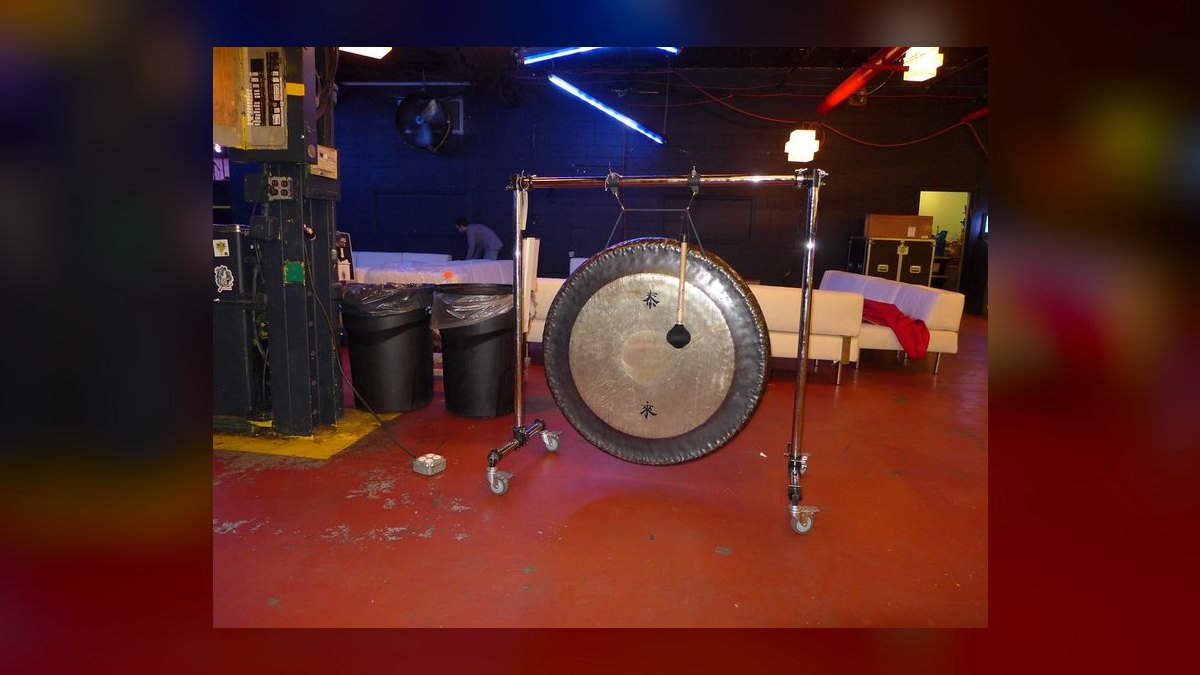
A worked example makes the arithmetic concrete. A congregation takes 6,000 square feet of former retail: 3,500 square feet of sanctuary, 1,500 square feet of children's and classroom space, 1,000 square feet of lobby, restrooms, and back-of-house. At $95 per square foot blended, hard construction is $570,000. Soft costs at 12% of construction add roughly $68,000. Entry-level AVL and acoustics run $130,000. FF&E — 250 chairs, kids' furniture, signage — is $45,000. Subtotal: $813,000. A 17% contingency adds $138,000, bringing the all-in Budget to roughly $951,000, or about $158 per square foot all-in on a $95-per-square-foot construction number. That spread between "construction cost" and "all-in cost" is where most church building committees lose control of the plan.
Two numbers deserve to be tracked separately from the beginning: cost per seat and cost per attendee. Divide all-in project cost by design seat count — in the example above, $951,000 across 250 seats is roughly $3,800 per seat. Then divide by realistic average attendance rather than design capacity. If the congregation actually averages 140 people, the real number is closer to $6,800 per attendee, and that is the figure a lender or a finance team should be underwriting against. Churches that Budget against design capacity rather than actual attendance consistently overbuild the Worship room and underbuild the children's space, which is the area that most reliably drives growth.
What drives those numbers
The single largest structural cost driver is occupancy classification. A room where people assemble for Worship is classified Assembly Group A-3 under the International Building Code. This is not a designation you can negotiate around, and it changes the cost of nearly every building system relative to a Business (Group B) office fit-out in the same shell.
Occupant load is where it starts. Assembly spaces are calculated on a far denser floor-area-per-person basis than offices — on the order of 7 square feet per person for fixed seating and 15 square feet per person for unfixed or standing arrangements, versus roughly 150 square feet per person for business occupancy. A 3,500-square-foot Worship room therefore does not house 23 people the way an equivalent office floor would; it houses several hundred. That occupant load number then cascades into every downstream requirement.
Egress is the first cascade. Higher occupant loads mean more exits, wider exits, and wider corridors. A space that would need two exits as an office may need four to six as an assembly room, and each added exit — door, frame, hardware, rated corridor construction, exterior stoop and landing if it discharges outside — runs $5,000 to $15,000. At occupant loads above the code threshold (commonly 50 for A occupancies, though local amendments vary), doors serving the assembly space require panic hardware, which cannot be swapped in later as a cheap upgrade because it often drives door and frame replacement. Illuminated exit signage and emergency egress lighting on battery or generator backup are mandatory throughout.
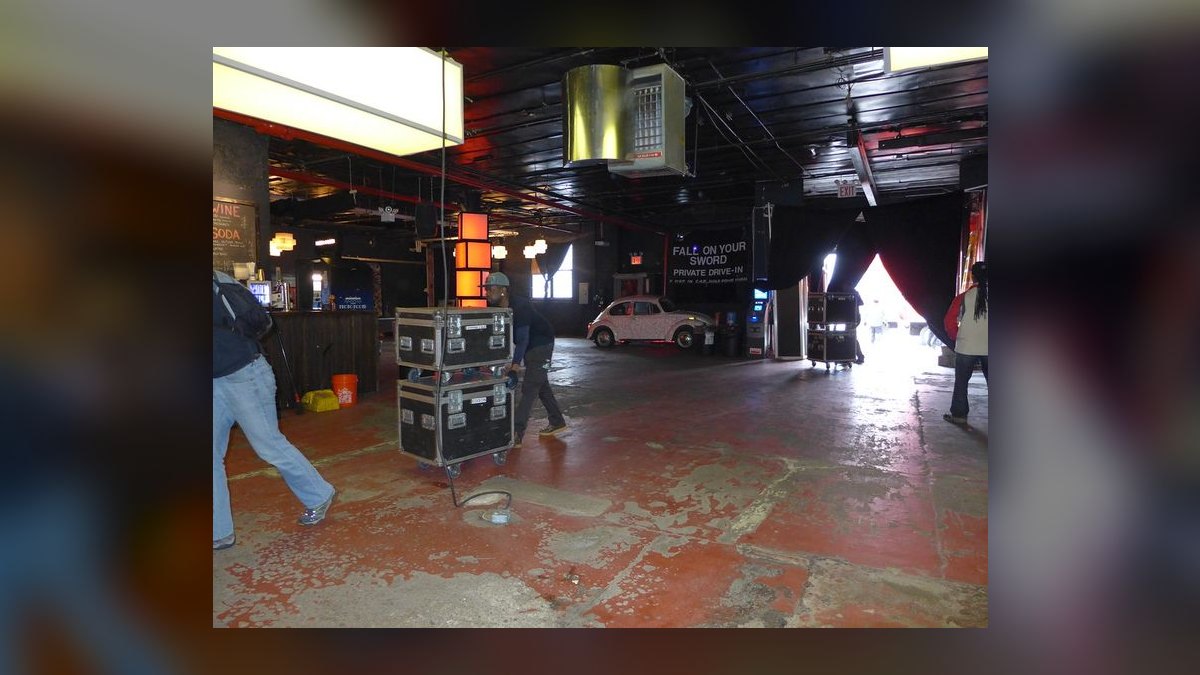
Sprinklers are the second cascade. Automatic sprinkler protection is commonly triggered for A-3 occupancies above a defined occupant load — frequently 300, though many jurisdictions amend downward — and a full system runs $3 to $7 per square foot. On a 10,000-square-foot buildout, that is $30,000 to $70,000 that a comparable office fit-out would never incur. If the building has no fire service lateral or the water supply is inadequate, add a fire pump and a new tap, which can add $40,000 to $100,000 and months of utility coordination.
Fire separation is the third. Assembly space adjacent to kitchens, storage, mechanical rooms, or educational occupancy requires rated assemblies between them — rated drywall construction, fire dampers in ductwork penetrating rated walls, rated door assemblies, and smoke barriers. Budget $5 to $15 per square foot for the separation work alone, and note that this cost is largely invisible in the finished space, which makes it politically hard to defend to a congregation that wants to see where the money went.
MEP capacity is the fourth and most frequently underestimated. A 200-amp service that comfortably runs a small commercial office will not run a modern Worship service. A sanctuary with a front-of-house sound system, a lighting rig, video projection or LED wall, and HVAC sized for a packed room commonly needs 400 to 800 amps. Panel and service upgrades run $15,000 to $50,000. If the utility must set a new transformer, add $10,000 to $30,000 and a 12- to 20-week lead time that will dictate your entire construction schedule regardless of how fast the contractor works. HVAC is a parallel problem: a warehouse with a single rooftop unit sized for a sparsely occupied space needs zoning, redesigned distribution, and additional tonnage to handle the sensible and latent load of hundreds of people plus stage lighting — $25,000 to $75,000 for a medium-sized sanctuary is typical.
Accessibility is the fifth. Accessible routes, accessible restroom counts, accessible seating locations dispersed through the seating area rather than clustered at the back, an accessible route to the platform if anyone will be on it, and compliant signage. In an older commercial building, the restroom rebuild alone frequently runs $25,000 to $60,000 because fixture counts for assembly occupancy are calculated against occupant load and are far higher than what the previous retail tenant needed.
Zoning sits upstream of all of it and can dwarf every construction number. Many retail and industrial zones do not permit assembly use by-right. If yours does not, you need a conditional use permit: $10,000 to $50,000 in application fees, legal notices, planning consultant time, and hearing costs, plus three to nine months of calendar. Some jurisdictions additionally require traffic, parking, or noise impact studies at $5,000 to $20,000 each. Parking is usually the binding constraint — assembly parking ratios commonly run one space per three to five seats, so a 300-seat room implies 60 to 100 spaces. A site with 40 spaces forces either a variance the neighbors may contest, a shared-parking agreement with an adjacent commercial owner whose peak hours differ from Sunday morning, or land acquisition at $50,000 to $200,000 per acre in typical suburban markets. Budget $5,000 to $15,000 for the parking study and variance application if the site is short.
Lease, TI allowance, and negotiation levers
The lease is where a church buildout Budget is actually won or lost, and it is negotiated before a single drawing exists. Every dollar of code-mandated work you can define as landlord base-building obligation is a dollar you do not raise, borrow, or divert from ministry.
Make zoning approval a condition, not an assumption. Write into the letter of intent and the lease a contingency permitting termination without penalty if assembly use is not approved, with a defined outside date — typically 90 to 180 days depending on whether a conditional use permit is required. Include permit issuance, not just zoning determination, so a favorable zoning letter followed by a fire marshal who demands an unaffordable second stair does not trap you in a 10-year obligation. Confirm the same for parking: the contingency should reference the specific approved space count you need.
Write a base-building definition into the lease. This is the highest-leverage paragraph in the document. Landlords routinely push sprinklers, egress improvements, accessibility upgrades, and service capacity onto tenant improvement allowance, which is the same as pushing them onto you. A well-drafted base-building definition puts structure, roof, exterior envelope, existing sprinkler mains, primary electrical service to the panel, and any code-mandated base-building upgrade triggered by the landlord's shell condition on the landlord's side of the line. On a mid-sized commercial space this is commonly worth $20 to $50 per square foot — on 6,000 square feet, $120,000 to $300,000.
Understand what a TI allowance actually is. A tenant improvement allowance is landlord capital amortized into rent, not free money. A $40-per-square-foot allowance on a 10-year term is roughly $4 per square foot per year of rent you are paying back, plus the landlord's return. Run the comparison honestly: a lower allowance with lower base rent may beat a rich allowance at a premium rent, particularly for a congregation that intends to stay long enough for the amortization to fully burn off. Also nail the mechanics — is the allowance disbursed on progress draws or as a single reimbursement at completion? A completion-only reimbursement means you finance the entire buildout yourself for six to twelve months, which is a working-capital problem no per-square-foot number captures. Confirm whether unused allowance converts to free rent; if it does, value-engineering scope back actually saves you money instead of forfeiting it.
Cap or eliminate the restoration clause. A standard commercial restoration clause requiring removal of all alterations at expiration is catastrophic for a Worship space. Platforms, baptistries, sloped floors, acoustical treatment, rigging points, structural reinforcement for AV, and a raised control booth are exactly the alterations that clause captures, and removing them can run six figures. Negotiate one of three outcomes, in order of preference: strike restoration entirely; limit it to specifically enumerated items agreed at lease signing; or cap total restoration liability at a fixed dollar figure. If the landlord insists on approval rights over alterations, require that any alteration they approve is deemed acceptable to remain at expiration — otherwise you can be forced to remove the very work they signed off on.
Negotiate free rent against the construction schedule, not the calendar. Ask for rent abatement running from lease commencement through certificate of occupancy plus a defined fit-up window, rather than a fixed number of months. Assembly permitting is unpredictable; a fixed six-month abatement evaporates if the conditional use hearing slips a quarter. Tie the rent commencement date to CO issuance where the landlord will accept it.
Get a right of first refusal on adjacent space. Growing congregations outgrow the room. A ROFR on the contiguous suite costs the landlord nothing to grant at signing and is expensive to acquire later.
On the construction side, the levers are different but equally concrete. Use a guaranteed maximum price contract rather than cost-plus with no ceiling, and require unit pricing for all major line items in the contract so you know what a change costs before you approve it rather than after. Require the contractor to carry specific allowances — rather than exclusions — for the items most likely to surprise: slab leveling, unforeseen conditions above the ceiling, and fire marshal-directed additions. An exclusion is a change order waiting to happen; an allowance is a number in the contract you can manage against.
Get itemized AVL bids with equipment, installation, programming, and commissioning as separate lines. Integrators bundle hardware at retail markup and bury labor inside the gear number. With line-item pricing you can competitively bid the equipment, supply some of it directly, and often save 10–20% without touching scope. Bring an AV and acoustics consultant into design rather than after — a $150,000 system in an untreated concrete box sounds worse than a $40,000 system in a properly treated room, and the treatment has to be designed alongside the HVAC and lighting, not added afterward.
Finally, be disciplined about volunteer labor. It is genuinely valuable for demolition, painting, cleanup, landscaping, and non-structural finish work, and a motivated congregation can save real money there. It is a trap for anything touching life safety: electrical, plumbing, structural, fire-rated assemblies, sprinkler work. Uninspected or improperly permitted volunteer work in those categories fails inspection, must be opened up and redone by a licensed trade, and costs roughly double what doing it right the first time would have. Define the volunteer scope in writing with the general contractor, including who is liable for schedule impact if volunteer work runs late — otherwise you have handed the contractor a free delay claim.
Sequencing the buildout
Sequencing is a budgeting decision as much as a schedule decision, because the order you build in determines when you need cash and when you can start generating giving from an active congregation. Most congregations should phase rather than build everything before the first service.
Phase one is the minimum legal, safe Worship room. Scope it to exactly what is required to gather people lawfully: full A-3 code compliance including egress, panic hardware, rated separations, and sprinklers if triggered; accessible restrooms at required fixture counts; adequate HVAC; basic finishes — sealed or carpeted floor, paint, and seating for 50–80% of eventual target capacity; and entry-level AVL that is intentionally modest. Resist the pull toward a signature sound and lighting package in phase one. In a 3,000–5,000-square-foot space, phase one typically runs $150,000 to $350,000 depending on how much the existing building already has, and construction takes roughly 8 to 12 weeks once permits are in hand. Note that permits, not construction, are usually the long pole.
Phase two is children's ministry and small-group space. Once services are running and giving is established, build out the classrooms and kids' areas. These are frequently Business or Educational occupancy rather than Assembly, which lowers the finish and life-safety burden, but they still require proper egress, rated separation from the Worship room, and durable child-safe materials. Budget $50 to $100 per square foot, or roughly $75,000 to $200,000 for a 1,500–2,000-square-foot wing. Six to twelve months after opening is a realistic window, funded from operating giving rather than the capital campaign. One caution: if the congregation is growing on families, phase two may need to move ahead of schedule — children's capacity constrains attendance growth faster than seat count does.
Phase three is everything that adds warmth rather than function. Lobby buildout with reception and seating runs $30,000 to $80,000. A commercial-grade sound and video upgrade for a 300-seat room is $60,000 to $150,000. Coffee service, offices, and fellowship hall finishes follow. Deferring these to year two or three lets you spend against demonstrated attendance rather than projected attendance, and avoids debt service that competes with staffing.
Within each phase, protect the schedule by ordering long-lead items the day the permit is issued rather than when the trade is ready to install. Electrical switchgear, rooftop HVAC units, utility transformers, and custom seating routinely carry 12- to 20-week lead times, and a transformer that has not been ordered will hold a certificate of occupancy hostage regardless of how finished the room looks. Ask the contractor for a written long-lead log at contract signing with order-by dates for each item.
Hold the contingency in a separate line that requires a named approver to release, and track it against a burn curve. If more than a third of the contingency is consumed before the project is a third complete, that is a signal to stop and re-scope rather than a rounding error. The most common way a church buildout ends over Budget is not a single catastrophe but a sequence of $8,000 changes approved individually without anyone tracking the cumulative draw against a fixed pool.
Related questions
Does a small congregation meeting in a leased suite still trigger Assembly classification?
Generally yes, once the gathering exceeds the occupant-load threshold your jurisdiction sets for A occupancies — often 50 people. Below that threshold some jurisdictions permit a Business classification, but confirm with the building official in writing before budgeting on that assumption.
Can we reduce cost by keeping the existing drop ceiling?
Sometimes, but it constrains the room. An 11-foot ceiling limits sightlines, projection throw, and acoustics, and often conflicts with sprinkler head placement and lighting positions. Removing it to expose structure can be cheaper than reworking it, though it exposes MEP that then needs to be organized and painted.
How much should we set aside for the first year of operating costs?
Separate from the buildout Budget entirely. Utilities in a high-ceiling assembly space, janitorial, insurance at assembly rates, and maintenance run meaningfully higher per square foot than office. Model twelve months of operating cost independently before committing the last of the construction contingency.
Is buying better than leasing for a church?
Purchasing eliminates restoration exposure and gives full control over alterations, but it front-loads capital and concentrates risk in one asset. Leasing preserves flexibility for congregations with uncertain growth trajectories. The zoning and A-3 code work is identical either way.
What is the realistic total timeline from signed lease to first service?
Six to eighteen months. Simple conversions of already-compliant commercial space can reach a first service in four to six months. A conditional use permit adds three to nine months before construction can even start.
FAQ
What is the typical cost per square foot for a church buildout?
Conversions of existing retail, theater, or warehouse space run $50 to $150 per square foot of hard construction cost. Ground-up construction runs $150 to $350 per square foot. The Worship room itself is the expensive component, often $200 to $400 per square foot due to ceiling height, structural spans, acoustics, and AVL infrastructure.
How much should we Budget for a conditional use permit?
Plan $10,000 to $50,000 in application fees, legal notices, planning consultant time, and hearing costs, plus three to nine months of calendar time. Traffic, parking, or noise studies, where required, add $5,000 to $20,000 each. Confirm before signing whether assembly use is permitted by-right, because by-right zoning eliminates this cost entirely.
What is the single biggest cost we can negotiate down?
Code-mandated upgrades pushed onto the landlord as base-building obligation — sprinklers, egress improvements, accessibility work, and primary electrical service. A well-drafted base-building definition in a commercial lease commonly shifts $20 to $50 per square foot off the tenant's side of the ledger, which on a mid-sized space is six figures.
Do we need an architect for an Assembly Group A-3 project?
Yes. Occupant-load calculation, egress design, rated separations, and accessibility compliance are all areas where an error discovered at inspection is expensive to correct. Architecture and engineering fees run 8 to 15% of construction cost and reliably pay for themselves in avoided rework and in plan sets that survive review without repeated resubmittal.
How much contingency is enough?
Fifteen to twenty percent of total project cost, not of the construction line alone. It covers fire marshal-directed additions, material price movement, unforeseen conditions above the ceiling or below the slab, and permitting delay. A $500,000 project without a contingency reliably becomes a $575,000 project funded from savings or debt rather than from the plan.
Can volunteer labor meaningfully reduce the Budget?
For demolition, painting, cleanup, landscaping, and non-structural finish work, yes — it can save real money. For electrical, plumbing, structural, fire-rated assemblies, and sprinkler work, no. That work must be performed by licensed trades under permit; uninspected volunteer work in those categories fails inspection and costs roughly double to redo correctly.
Sources
- International Code Council — International Building Code
- National Fire Protection Association — NFPA 101 Life Safety Code
- U.S. Access Board — ADA Accessibility Standards
- ADA.gov — Americans with Disabilities Act Standards for Accessible Design
- RSMeans by Gordian — Construction Cost Data
- BOMA International — Standards and Building Measurement
- NAIOP — Commercial Real Estate Development Research
- JLL — Occupier and Tenant Representation Research
- CBRE — Commercial Real Estate Research and Insights
Related on PULSE
- [How Do I Save on Buildout by Taking a Second-Generation Restaurant Space?](/knowledge/bo0233)
- [How Do I Avoid Getting Stuck Restoring the Space at Move-Out?](/knowledge/bo0061)
- [How Do I Sublease Excess Office Space I'm Not Using?](/knowledge/bo0090)
- [How Do I Sublease My Space to Cut My Rent?](/knowledge/bo0043)
- [How Do I Get a Right of First Refusal on the Space Next Door?](/knowledge/bo0051)
This page will be disappearing soon. Save it to your device for $1 — or read it free while it is here.
@Kory-White- · if Venmo asks, the last 4 of my number are 2012
 buildoutsHow Do I Negotiate a Lease and Buildout for a Vape or Smoke Shop?
 buildoutsHow Do I Budget a Veterinary Clinic Buildout?
 buildoutsHow Do I Budget a Trampoline Park Buildout?
 buildoutsHow Do I Budget a Brewery or Taproom Buildout?
 buildoutsHow Do I Negotiate a Lease and Buildout for a Pharmacy?
 buildoutsHow Do I Budget an IV Therapy or Wellness Clinic Buildout?
 buildoutsHow Do I Budget a Commissary or Shared Kitchen Buildout?
 buildoutsHow Do I Budget a VR Arcade or Laser Tag Buildout?
 buildoutsHow Do I Budget an Indoor Golf or Golf-Simulator Buildout?
 buildoutsHow Do I Budget a Call Center or BPO Office Buildout?