


What Percentage of My Total Buildout Budget Will the Landlord Actually Fund Through the TI Allowance in 2027?
Quality
Certified
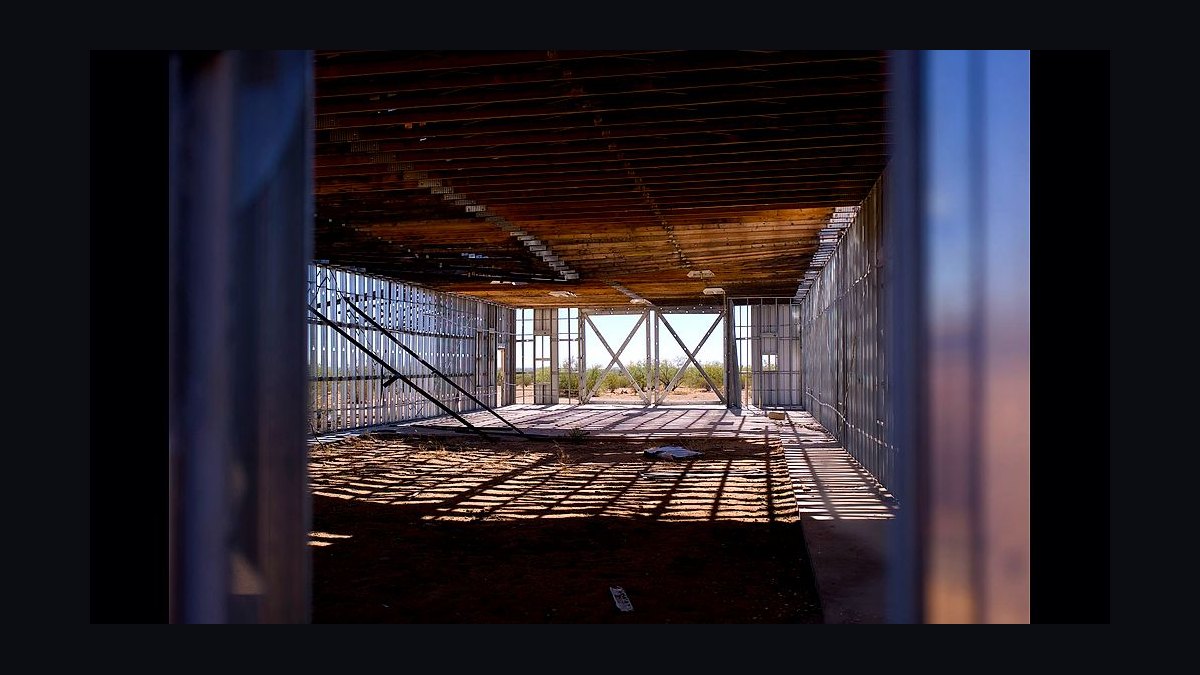
In 2027, a Landlord’s TI Allowance typically funds 10–30% of a tenant’s total Buildout budget for a standard commercial office lease, 15–40% for retail, and 5–20% for industrial or flex space. The exact Percentage depends on lease term, credit, market leverage, and whether the Allowance is paid as a flat per-square-foot figure or a reimbursement against documented hard costs.
The commercial deal in plain terms
A tenant improvement Allowance is a negotiated dollar amount the Landlord contributes toward the cost of making a commercial space ready for the tenant’s use. It is almost never a blank check. It is a defined pool of money, expressed either as a dollar-per-rentable-square-foot figure or as a lump sum, and it comes with conditions: approved plans, licensed contractors, lien waivers, and a deadline for substantial completion. The tenant signs the lease, fronts the construction cost, then submits draw requests or a single reimbursement package. The Landlord releases funds only after verifying the work is done and the paperwork is clean.
The reason the Percentage question matters is that tenants routinely confuse the Allowance with the total project cost. They are not the same number. A Buildout budget includes hard costs (demolition, framing, drywall, electrical, HVAC, plumbing, flooring, paint, millwork, lighting, fire sprinklers, low-voltage cabling) and soft costs (architectural fees, engineering, permits, project management, furniture, moving, IT, signage, and often a construction contingency). The Allowance is usually written to cover hard construction costs only, and sometimes only a subset of those. That gap is where the Percentage lands.
For a typical 2027 deal, think of the Allowance as the Landlord’s share of the construction line, not the whole budget. If a tenant’s all-in Buildout budget is $120 per square foot and the Allowance is $45 per square foot, the Landlord is funding roughly 37.5% of the construction portion but perhaps only 25–30% of the total budget once soft costs are added. That distinction is the single most common source of surprise at the first draw request.

Three structural facts drive the Percentage more than anything else. First, the Allowance is a negotiated term, not a market entitlement; it moves with leverage. Second, it is usually capped and defined by what it can be spent on. Third, it is almost always reimbursed after the fact, which means the tenant carries the cash-flow burden even when the Landlord is contractually obligated to pay. A tenant who understands those three facts can forecast the Percentage with reasonable accuracy before signing.
How the buildout process flows
The sequence below is the standard path from lease negotiation to final reimbursement. The Percentage the Landlord actually funds is determined in the first two steps and then protected or eroded by every step after.
The work letter is the controlling document. It defines the Allowance amount, the eligible cost categories, the draw schedule, the review timeline, the conditions for release, and what happens if the tenant overspends. A work letter that says “Landlord shall provide an Allowance of $50.00 per rentable square foot toward the cost of tenant improvements” sounds generous until the tenant reads the next paragraph and discovers that architectural fees, permits, and low-voltage cabling are excluded. Those exclusions can easily consume 15–25% of a project budget, which means the effective Percentage drops even though the headline number did not change.
Timing matters too. Most work letters require the tenant to submit the reimbursement package within a set window after substantial completion, often 60 to 120 days. Miss that window and the Landlord may have no obligation to pay. Some leases also require the tenant to spend the Allowance within a defined period, such as 12 months from lease commencement, or forfeit the unused balance. That forfeiture clause is why tenants should never assume the full Allowance will be drawn; if the project comes in under budget, the Landlord keeps the difference.
The draw structure varies. Smaller deals often use a single reimbursement at the end. Larger deals use progress draws tied to percentage of completion, each requiring a contractor’s application for payment, conditional lien waivers, and sometimes a title company endorsement. Progress draws reduce the tenant’s carrying cost but add administrative burden. A single reimbursement is simpler but forces the tenant to finance the entire Buildout from its own balance sheet until the end.
One more flow consideration: the Landlord’s review period. A work letter might give the Landlord 10 to 30 days to review each draw request. If the tenant’s package is incomplete, the clock restarts. In practice, tenants should assume two to three review cycles per draw and build that delay into their cash-flow model. The Percentage funded does not change, but the timing of when the tenant gets made whole does.
Costs per square foot, timelines, and ranges

To answer the Percentage question with real numbers, a tenant needs a realistic Buildout cost per square foot and a realistic Allowance per square foot for its asset class and market. The ranges below are planning figures, not quotes; actual costs vary by market, building condition, and scope.
For office space in 2027, a light cosmetic refresh (paint, carpet, minor electrical) runs roughly $25–$50 per square foot. A moderate Buildout with some demolition, new partitions, and updated finishes runs $60–$120 per square foot. A heavy Buildout with new HVAC distribution, extensive electrical, and high-end finishes can exceed $150–$250 per square foot. Allowances in office leases commonly land between $20 and $60 per square foot for standard deals, with higher figures for long-term leases or credit tenants. That puts the Landlord’s share of the construction cost at roughly 15–40% for moderate projects, and lower for heavy Buildouts because the Allowance rarely scales with the tenant’s finish level.
Retail tells a similar story with a wider spread. A vanilla-shell retail space may need $50–$100 per square foot of work, while a restaurant or medical buildout can run $150–$400 per square foot because of grease interceptors, hood systems, medical gas, and specialized electrical. Retail Allowances often range from $15 to $75 per square foot, and in strong markets with national credit tenants, they can reach $100 or more. The Percentage funded for a restaurant is frequently in the single digits to low teens because the tenant’s equipment and specialized systems are excluded from the Allowance.

Industrial and flex space is the most modest. A warehouse office buildout might cost $30–$80 per square foot, and Allowances commonly run $5–$25 per square foot. That puts the Landlord’s share at roughly 5–20%. Industrial tenants often accept a lower Allowance in exchange for lower rent and longer term, and many choose to self-fund improvements to keep the lease simple.
Timelines follow the money. A small office refresh can be permitted and built in 8–12 weeks. A moderate office Buildout typically takes 16–24 weeks from lease signing to certificate of occupancy, including design, permitting, and construction. A heavy or retail buildout can take 6–12 months. The Allowance reimbursement then adds another 30–90 days after substantial completion. Tenants should model the full cash cycle, not just the construction period, because the Percentage funded is only meaningful when paired with the date the funds actually arrive.
A practical example: a tenant leases 10,000 square feet of office space at an Allowance of $45 per square foot, or $450,000. The project bids at $95 per square foot for construction, or $950,000, plus $150,000 in soft costs, for a total Buildout budget of $1,100,000. The Landlord funds $450,000, which is 47% of construction but only 41% of the total budget. If the work letter excludes $80,000 of the construction cost (say, low-voltage and security), the eligible cost base drops to $870,000, and the Allowance still pays $450,000 — but the tenant’s out-of-pocket rises. If the project instead bids at $1,400,000, the same $450,000 Allowance covers 32% of the total. The Percentage is a ratio, and both the numerator and denominator move.
Where budgets and schedules slip
The Percentage the Landlord actually funds is almost always lower than the Percentage the tenant expected at signing. The gap comes from a predictable set of leaks.
The first leak is scope creep. The tenant adds a conference room, upgrades finishes, or discovers the building’s existing systems cannot support the intended use. Each addition raises the denominator while the Allowance stays fixed. A 10% scope increase on a $1,000,000 project cuts the Landlord’s Percentage by roughly 3–4 points.
The second leak is exclusions. Work letters routinely exclude architectural and engineering fees, permitting fees, project management, furniture, fixtures, equipment, moving costs, signage, and sometimes HVAC and electrical work beyond a base building standard. These excluded categories can represent 20–35% of a total Buildout budget. A tenant who reads only the Allowance number and not the eligible-cost schedule will overestimate the Landlord’s contribution by a wide margin.
The third leak is the base building condition. If the Landlord delivers the space in shell condition, the tenant pays for items the Allowance may not cover, such as sprinkler mains, restroom cores, or HVAC distribution. If the Landlord delivers a warm shell or turnkey condition, the Allowance goes further. The same dollar figure produces a very different Percentage depending on what the Landlord is obligated to deliver.
The fourth leak is change orders during construction. Unforeseen conditions — asbestos, structural issues, utility capacity — generate change orders that increase cost and delay completion. Most work letters do not increase the Allowance for change orders. The tenant absorbs them, and the Percentage falls.
The fifth leak is the reimbursement process itself. Incomplete draw packages, missing lien waivers, unapproved subcontractors, and expired deadlines all delay or reduce payment. A tenant that fails to submit a timely, complete package may forfeit part or all of the Allowance. This is not a market risk; it is an administrative risk the tenant controls.
The sixth leak is the unused-balance forfeiture. If the project comes in under budget, the tenant does not pocket the difference. The Landlord keeps it. So the realized Percentage is based on what was actually spent, not what was budgeted, and the tenant never receives more than the actual eligible cost.
Schedules slip for related reasons. Permit review in many jurisdictions takes 6–12 weeks and can stretch longer for change-of-use or restaurant projects. Long-lead items such as switchgear, rooftop units, and custom millwork can add 8–16 weeks. If the lease commencement date is fixed and the tenant cannot open on time, rent may still start, which effectively increases the tenant’s cost and lowers the Landlord’s relative contribution to the total occupancy cost.
The practical takeaway: model the Allowance as a fixed dollar amount, model the Buildout budget as a range with a contingency of 10–15%, and assume the Landlord’s Percentage will land at the low end of your estimate. A tenant who plans for 20% and receives 25% is pleasantly surprised; a tenant who plans for 40% and receives 22% has a financing problem.
Decision framework
The framework below helps a tenant decide how much of the Buildout to fund itself and how hard to push for a larger Allowance. The trade-off is rarely “more Allowance or nothing.” It is usually “more Allowance in exchange for higher rent, longer term, or stronger credit.”
The first decision is whether the gap is financeable. If the Allowance covers 25% and the tenant can fund the other 75% from operating cash or a construction loan, the deal can proceed. If not, the tenant has three levers: negotiate a larger Allowance, reduce the scope, or walk away. Negotiating a larger Allowance almost always costs something. The Landlord may agree to $60 per square foot instead of $40, but it will want a longer lease term, a higher base rent, or a personal guarantee. The tenant should calculate the net present value of that trade, not just the headline Allowance.
The second decision is scope discipline. Every dollar removed from the Buildout budget raises the Landlord’s Percentage without changing the Allowance. A tenant that trims $100,000 from a $1,000,000 project and keeps a $300,000 Allowance moves the Percentage from 30% to 33%. Scope discipline is often cheaper than negotiating.
The third decision is phasing. A tenant can build the essential space now and finish secondary areas later, using cash flow from operations. This reduces the initial Buildout budget and can raise the effective Percentage on phase one, though it may complicate the work letter if the Allowance has a single deadline.
The fourth decision is the draw schedule. A tenant should negotiate progress draws rather than a single reimbursement if the project is large, because carrying the full construction cost for six months is expensive. Progress draws tied to percentage of completion, with clear review timelines and deemed-approval language, reduce the tenant’s financing cost and make the Allowance more valuable in present-value terms.

The fifth decision is documentation. The tenant should confirm, in writing, the eligible cost categories, the required lien waivers, the approved contractor list, the draw submission deadlines, and the consequences of missing them. A work letter that is silent on these points favors the Landlord. A tenant that negotiates clarity gets paid faster and forfeits less.
Finally, the tenant should stress-test the Percentage under three scenarios: base case, 10% cost overrun, and 20% cost overrun. In each scenario, calculate the Landlord’s share and the tenant’s out-of-pocket. If the tenant can survive the 20% overrun case, the deal is robust. If not, the tenant needs a larger Allowance, a smaller scope, or a different space.
Related questions
Does the TI Allowance count toward rent?
No. The Allowance is a separate landlord contribution to construction cost. It is not rent abatement, and it does not reduce base rent. Some landlords recoup it through higher rent over the term, but the Allowance itself is not a rent credit.
Is the Allowance paid upfront or reimbursed?
Almost always reimbursed. Most landlords release funds after work is complete and documented, though larger deals may use progress draws. Tenants should plan to finance the Buildout themselves until reimbursement arrives.
What happens if the Buildout costs less than the Allowance?
The tenant usually does not keep the difference. Most work letters cap payment at actual eligible cost, and unused Allowance is forfeited. Confirm this in the work letter before signing.
Can the Allowance be used for furniture or equipment?
Rarely. Most work letters restrict the Allowance to permanent improvements and exclude furniture, fixtures, equipment, and moving costs. Some landlords allow a small portion for these items, but it must be negotiated.
Does a longer lease term increase the Allowance?
Generally yes. Landlords amortize the Allowance over the lease term, so a 10-year lease can support a larger Allowance than a 5-year lease. The increase is not linear, but term is one of the strongest levers a tenant has.
FAQ
What Percentage of my total Buildout budget will the Landlord actually fund through the TI Allowance in 2027? For most commercial leases in 2027, expect the Landlord to fund roughly 10–30% of the total Buildout budget in office, 15–40% in retail, and 5–20% in industrial. The Percentage is the Allowance divided by the all-in budget, including soft costs and exclusions. It is almost always lower than the Allowance divided by construction cost alone.
Why is the Percentage lower than the Allowance per square foot suggests? Because the Allowance is measured against a narrow eligible-cost base, while the total Buildout budget includes architectural fees, permits, project management, furniture, and other exclusions. A $45 per square foot Allowance on a $120 per square foot all-in budget is 37.5%, but if only $90 per square foot is eligible, the effective Percentage on the total is lower still.

Can I negotiate a higher Percentage? Yes, but it usually costs something. Landlords trade a larger Allowance for longer term, higher rent, stronger credit, or a personal guarantee. The tenant should compare the net present value of the added Allowance against the added rent or term, not just the headline number.
What is the biggest reason tenants receive less than expected? Scope creep and exclusions. The Allowance is fixed, but the Buildout budget grows as the tenant adds finishes, discovers base-building deficiencies, or pays for categories the work letter excludes. A 10–20% cost overrun can cut the Landlord’s Percentage by several points.
When does the Landlord actually pay the Allowance? After substantial completion and after the tenant submits a complete reimbursement package with contractor invoices, conditional lien waivers, and any required title endorsements. Review typically takes 10–30 days, and incomplete packages restart the clock. Progress draws are common on larger projects.
Should I accept a lower Allowance for lower rent? Sometimes. A tenant with strong cash flow may prefer lower rent and self-fund the Buildout, especially in industrial or flex space where Allowances are modest. The decision depends on the tenant’s cost of capital, the lease term, and how long the tenant expects to occupy the space.
Sources
- U.S. General Services Administration, leasing and tenant improvement guidance: https://www.gsa.gov/real-estate/real-estate-services/leasing
- Building Owners and Managers Association International, commercial real estate resources: https://www.boma.org
- NAIOP, commercial real estate development association research: https://www.naiop.org
- U.S. Small Business Administration, commercial lease and buildout guidance: https://www.sba.gov
- International Council of Shopping Centers, retail leasing resources: https://www.icsc.com
- Occupational Safety and Health Administration, construction standards: https://www.osha.gov
- U.S. Department of Energy, commercial building energy codes: https://www.energy.gov/eere/buildings
- American Institute of Architects, contract documents and design resources: https://www.aia.org
- Urban Land Institute, commercial development research: https://www.uli.org
Related on PULSE
- How to negotiate a tenant improvement allowance in a commercial lease
- What counts as an eligible cost under a TI work letter
- Comparing progress draws versus single reimbursement for buildout costs
- How lease term and credit affect landlord contributions
- Buildout contingency planning for office, retail, and industrial space
- When to self-fund improvements instead of negotiating a larger allowance
This page will be disappearing soon. Save it to your device for $1 — or read it free while it is here.
@Kory-White- · if Venmo asks, the last 4 of my number are 2012
This page is gone.
This one is off the shelf now. $1 keeps it on your phone for good — the whole page, pictures and diagrams included.
 buildoutsHow Do I Terminate a Lease After a Fire or Casualty in 2027?
 pulse-recentHow much should I ask for in a landlord buildout allowance in 2027?
 buildoutsHow Do I Get Out of a Personal Guarantee When I Sell My Business in 2027?
 buildoutsHow Do I Phase a Buildout to Spend Less Cash Up Front in 2027?
 pulse-recentHow much does a ground-up build-to-suit cost per square foot in 2027?
 buildoutsHow Do I Use Anchor-Tenant Leverage to Get a Better Lease in 2027?
 buildoutsShould I Use a Tenant-Rep Broker, and Who Pays Them in 2027?
 buildoutsHow Do I Get a Personal-Guarantee Burn-Down Schedule in 2027?
 buildoutsHow Do I Budget a Salon or Spa Buildout in 2027?
 pulse-recentHow do I budget a landlord-funded buildout when the TI allowance only covers half the cost in 2027?