
Best Cars for College Students in 2027
 Curated byKory White · Fractional CRO · Maryland
 PULSEKNOWLEDGE LIBRARY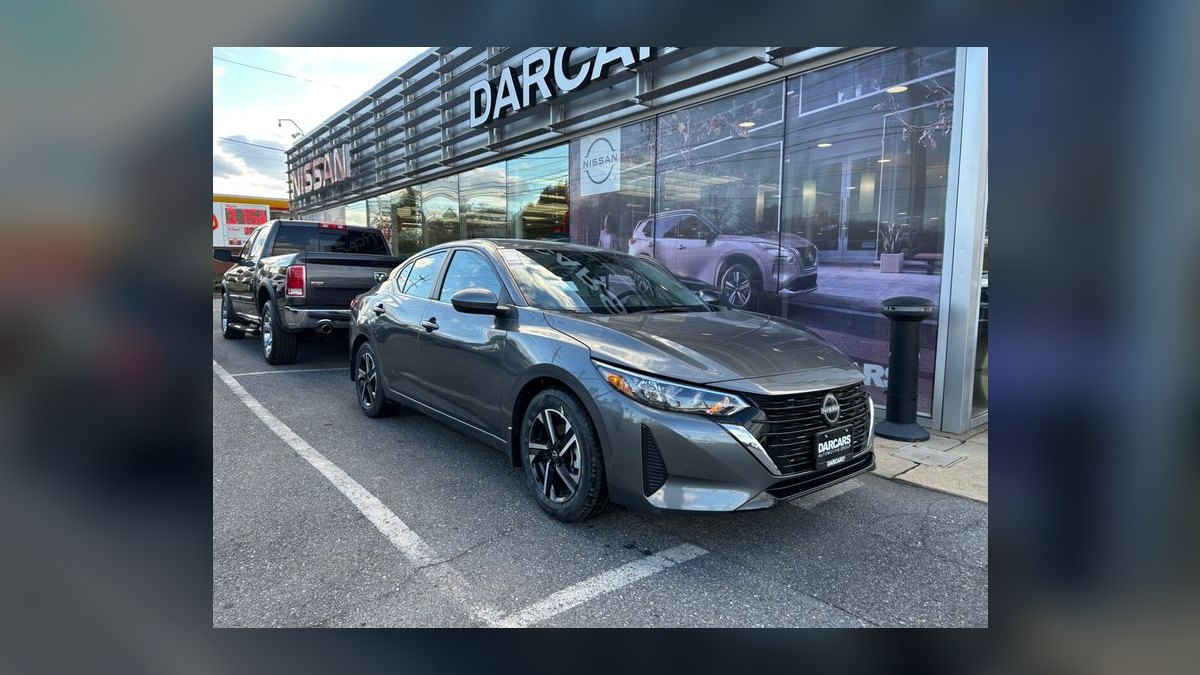
The best car for a college student in 2027 is a compact, high-mileage sedan with standard automatic emergency braking — the Honda Civic and Toyota Corolla lead on reliability and resale, while the Nissan Versa wins on price. Match the body style to your climate and parking, then budget insurance and fuel before the sticker.
The outcome you should expect
Buying well here is not about getting the flashiest car on campus. It is about landing on a vehicle whose total four-year cost stays predictable, because the failure mode that actually hurts students is not a bad purchase price — it is a surprise $1,800 transmission bill during finals week with no cushion to absorb it.
Set your expectation around total cost of ownership, not MSRP. A student driving 8,000–12,000 miles a year in a 34-mpg compact will spend roughly $900–$1,400 annually on fuel at typical pump prices. Insurance for a driver under 25 is usually the second-largest line item and frequently rivals or exceeds fuel — quotes in the $1,200–$2,400 range are common depending on state, and a good-student discount can shave a meaningful slice off that. Routine maintenance on a Civic, Corolla, or Elantra runs modest: oil changes, cabin filters, tires every 40,000–60,000 miles, brakes somewhere past 50,000.
The second outcome to expect is a graceful exit. Four years from now you will either sell the car, trade it, or drive it into a first job. Hondas, Toyotas, and Subarus hold value unusually well, which converts a purchase into something closer to a rental with equity at the end. A Civic bought around $25,400 and sold with normal miles four years later typically returns a far larger share of its price than a comparable domestic or luxury-badge alternative. That resale gap is real money — often thousands — and it is the single most underrated variable in a student car decision.

Third, expect the car to be boring in the best sense. A well-chosen student car should be invisible in your life: it starts, it parks, it gets you to the internship 90 minutes away, and it never becomes a topic of conversation. If you find yourself thinking about your car often, something has gone wrong.
What drives that outcome
Five variables do almost all the work, and they are not weighted equally.
Purchase price sets the floor but is the least predictive of satisfaction. The gap between the Versa at roughly $18,330 and the Civic at roughly $25,400 is about $7,000 — real, but often recovered on the back end through resale and lower repair frequency.

Reliability is where the money actually moves. A car that needs one unscheduled repair a year at $600 costs you $2,400 across a degree. A car that needs none costs you $0. This is why the Corolla and Civic dominate these lists despite not being the cheapest: the variance around their ownership cost is narrow.
Safety tech has quietly become table stakes. Standard automatic emergency braking now ships on cars at every price point in this segment, including the Versa. Honda Sensing and Toyota Safety Sense bundle adaptive cruise and lane keeping as standard equipment. For a driver in the highest-risk age bracket, insisting on these is not optional — and insurers sometimes price it in.

Fuel economy matters proportionally to how far your campus sits from home. A student 40 miles from campus burns fuel very differently from one who walks to class and drives twice a month. The Elantra's up-to-37 mpg combined is the efficiency leader among the mainstream picks; the Corolla and Versa sit around 35; the small crossovers (HR-V at 28, Crosstrek at 29, Trax and Soul near 30) trade several mpg for space and, in two cases, all-wheel drive.
Fit to environment is the variable people most often get wrong. Standard AWD and 8.7 inches of ground clearance on a Crosstrek is transformative in Vermont and pure dead weight in Phoenix. Tall boxy shapes like the Kia Soul swallow a dorm move that a low-trunk sedan physically cannot.
Benchmarks and realistic ranges
Here is what the 2027 field actually looks like at the entry end of the market, using representative starting MSRPs and EPA combined ratings.

Under $22,000. The Nissan Versa anchors the bottom at about $18,330 with 35 mpg combined and 40 mpg highway from a 122-hp 1.6-liter four. It is slow and plainly trimmed, and it still includes standard AEB, a touchscreen, and Apple CarPlay. The Kia Soul at roughly $21,085 trades mpg (about 30 combined from a 147-hp 2.0-liter) for boxy interior volume that behaves like a small SUV. The Chevrolet Trax around $21,495 offers a 137-hp 1.2-liter turbo three, about 30 mpg combined, a large touchscreen, and genuinely surprising rear-seat and cargo room for the price — front-wheel drive only.
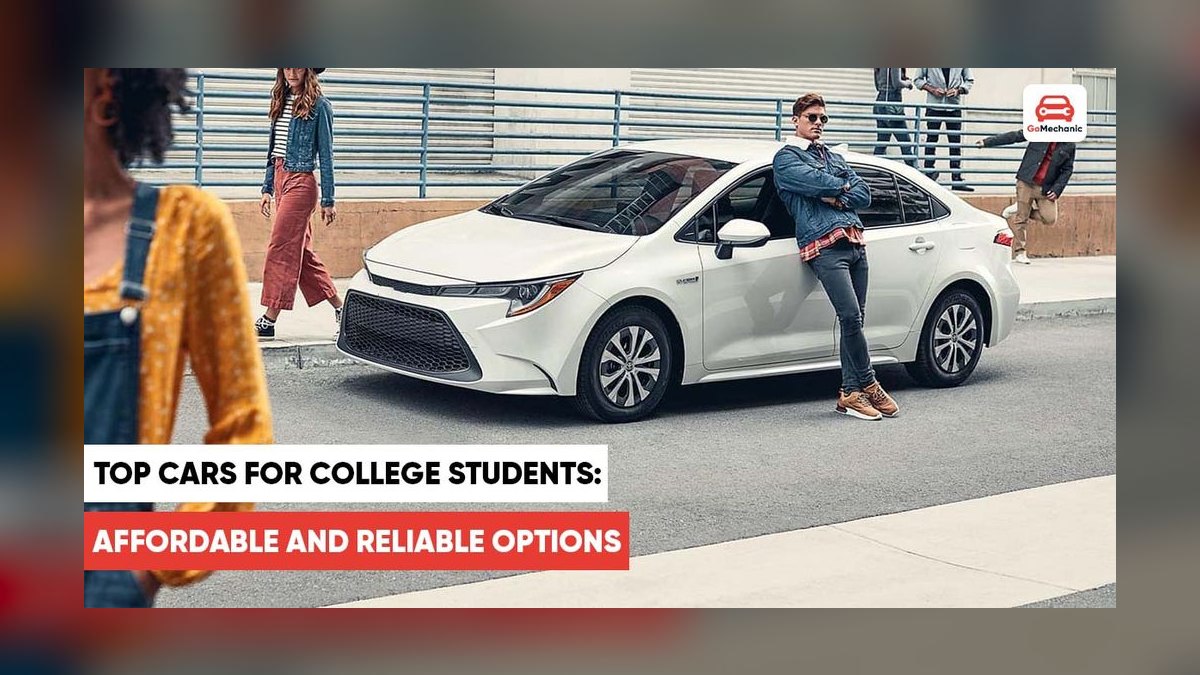
$22,000 to $24,000. The Hyundai Elantra near $22,125 delivers the segment's best efficiency at up to 37 mpg combined from a 147-hp 2.0-liter, plus a 10-year/100,000-mile powertrain warranty that materially de-risks the ownership window. The Kia K4, successor to the Forte, sits around $22,415 with 147 hp, up to 34 mpg combined, a large trunk, and Kia's long warranty. The Toyota Corolla at roughly $23,460 pairs a 169-hp 2.0-liter with up to 35 mpg combined, standard Toyota Safety Sense, and the lowest repair variance in the class.
$25,000 and up. The Honda Civic near $25,400 uses a 158-hp 2.0-liter (or an available 180-hp 1.5-liter turbo) for up to 34 mpg combined, an IIHS Top Safety Pick record, and a cabin that reads a class above its price. The Mazda3 around $25,470 brings a 191-hp 2.5-liter, about 31 mpg combined, available AWD, and the nicest interior in the segment. The Subaru Crosstrek at roughly $26,415 is the snow-country answer: 152-hp boxer four, about 29 mpg combined, standard AWD, standard EyeSight, and unusually strong resale. The Honda HR-V near $26,450 offers 158 hp, about 28 mpg combined, available AWD, and Civic-grade durability in a taller package.

The used lane. No new car in 2027 starts under $15,000. If that is your ceiling, a 2015–2020 Civic or Corolla in the $10,000–$18,000 band is the highest-probability outcome — both routinely pass 150,000 miles with only scheduled maintenance, and their fuel economy has aged well. Budget $400–$800 for a pre-purchase inspection and immediate deferred maintenance, and assume tires and brakes are due unless documented otherwise.
Running-cost benchmarks. Fuel at 10,000 miles a year: about $1,000 at 35 mpg, about $1,250 at 28 mpg — roughly a $250 annual delta between a Corolla and an HR-V. Insurance dominates that difference for most students. Registration, parking permits, and campus fees add $200–$700 a year at many schools and are frequently omitted from the budget entirely.
Risks, edge cases, and failure modes
The insurance ambush. The most common failure is signing for a car before pulling a real insurance quote. Rates for drivers under 25 vary by multiples across states and carriers, and the "sporty" trim of an otherwise sensible car can move the premium noticeably. Get bound quotes on your two finalists with your actual address and driving record before you commit. This one step prevents more student car regret than any other.

The AWD tax nobody needed. Buying all-wheel drive for a campus that gets two snow days a year costs you upfront price, several mpg, extra tire replacement cost, and additional drivetrain complexity — permanently. A set of proper winter tires on a front-wheel-drive Civic outperforms all-season tires on an AWD crossover in most conditions students actually face. AWD is worth it for genuine snow-belt, hill, or dirt-road duty; it is a poor trade otherwise.
Financing that outlives the degree. A 72- or 84-month loan makes a $26,000 car feel affordable and leaves you underwater for years. If the payment only works at 72 months, the correct move is a cheaper car, not a longer term. Being upside down at graduation — when relocation for a job is likely — is a genuinely bad position.
Buying too much car for the parking situation. Urban campuses with parallel-only street parking punish length brutally. Ticket and tow costs, plus the time tax of circling, accumulate. A Versa or Soul is far easier to live with than a crossover in that setting, and that constraint should outrank almost every spec-sheet preference.
Skipping the pre-purchase inspection on a used car. On a private-party used purchase, the inspection is the highest-return spend in the entire transaction. Salvage or flood history, a masked head gasket weep, or a CVT with a rebuild in its near future are all findable for a couple hundred dollars.
Deferred maintenance during exam season. The realistic failure pattern is not catastrophic: it is a warning light ignored for six weeks because midterms happened, turning a $90 fix into a $900 one. Build a simple calendar rule — oil at the interval, tires checked monthly, anything illuminated diagnosed within a week.
Edge case: the EV question. Electric cars can work for a student with reliable dedicated charging, either at home or a dependable on-campus station. Without that, apartment-lot charging roulette and long holiday drives make them a worse fit than an efficient gas compact. The upfront cost also typically lands well above these picks. If charging is genuinely solved for you, revisit it; if it is not, the answer is no.

Edge case: the shared or family car. If a parent is co-signing or the car will also serve the household, resale and reliability weight up further, and the calculus tilts toward the Civic, Corolla, or Crosstrek even at higher entry prices — the car has to survive multiple drivers and use cases.
A practical rollout plan
Treat the purchase like a short project with a fixed sequence rather than a weekend of browsing.
Week one — define the envelope. Write down the all-in monthly number you can carry, then work backward: payment plus insurance plus fuel plus a $60/month maintenance reserve. Whatever purchase price that supports is your real ceiling, and it is usually lower than the one in your head. Decide the body style from environment, not preference: snow and hills mean AWD, tight urban parking means small footprint, dorm moves and gear mean tall cargo.
Week two — shortlist exactly three. More than three and you will stall. Pull insurance quotes on all three before test-driving anything. Cross off any that come back materially higher than expected. Check the EPA rating at fueleconomy.gov and the crash-test results at IIHS and NHTSA directly rather than trusting a dealer sheet.
Week three — drive and inspect. Drive all three back to back on the same day if possible; comparison is far sharper than memory. Test the actual parking scenario you will live with. For used cars, book the pre-purchase inspection with an independent shop before any money moves.

Week four — negotiate and close. Negotiate the out-the-door price, not the monthly payment — the payment is where terms get stretched. Arrange financing through a credit union or bank in advance so the dealer's rate has to beat something. Decline the add-ons you do not need. Confirm the warranty terms in writing, especially with Hyundai and Kia's long powertrain coverage.
Ongoing — protect the asset. Keep every service record; documented maintenance is worth real money at resale. Rotate tires on schedule. Wash off road salt in winter climates. These habits compound, and they are the difference between a car that returns a strong chunk of its value at graduation and one that does not.
The same discipline generalizes well beyond cars. Any recurring-cost decision a student makes — housing, phone plan, subscriptions — responds to the same method: quantify the total cost across the full term, price the exit, and stress-test the worst month rather than the average one. Businesses run this exact calculation on fleet vehicles, where the goal is protecting revenue by keeping drivers on the road, and the framework transfers cleanly to a single car and a single owner.
Related questions
What is the cheapest new car available in 2027?
The Nissan Versa remains the entry point at roughly $18,330, with 35 mpg combined and standard automatic emergency braking. No new car in the U.S. market currently starts below $15,000, so tighter budgets have to move to the used market.
Should a student buy new or used?
Used wins on purchase price; new wins on warranty certainty and financing rates. A 2015–2020 Civic or Corolla at $10,000–$18,000 is the strongest used play. If a surprise $1,500 repair would be catastrophic for you, the new-car warranty is worth paying for.
Which of these is best for snow?
The Subaru Crosstrek, with standard all-wheel drive and 8.7 inches of ground clearance. The Honda HR-V with optional AWD is the runner-up. In milder winters, winter tires on a front-wheel-drive compact are the cheaper, often better answer.
How much does insurance actually cost for a student driver?
Commonly $1,200–$2,400 a year depending on state, age, record, and vehicle. Good-student discounts, staying on a parent's policy where permitted, and choosing a modest trim all reduce it. Always quote before you buy, never after.
Does a car with better mpg always cost less to run?
No. Fuel is often the smaller line item next to insurance and repairs for a student driver. A 37-mpg car with a costly repair history can easily cost more per year than a 30-mpg car that never breaks.
FAQ
What is the single best car for a college student in 2027?
The Honda Civic, at roughly $25,400, is the strongest all-around pick: up to 34 mpg combined, top crash-test scores, standard Honda Sensing driver-assist tech, a cabin that feels a class above its price, and resale value that returns a large share of the purchase price at graduation. It also carries into a first job without feeling like a student car.
What is the best budget option?
The Nissan Versa at about $18,330. It is the least expensive new car in the U.S. market, returns 35 mpg combined and 40 mpg highway, and still includes standard automatic emergency braking, a touchscreen, and Apple CarPlay. The engine is slow and the trim is plain, but nothing else delivers this combination of safety and efficiency at the price.
Are electric cars practical for college students in 2027?
Only if charging is genuinely solved. With reliable home or on-campus charging, an EV can work well and running costs drop. Without dedicated access, apartment-lot charging and long holiday drives become a recurring problem, and entry prices still sit above these gas picks. For most budget-focused students, an efficient compact is the safer choice.
How important are safety features on a student car?
Very. Drivers under 25 are the highest-risk group on the road, and standard automatic emergency braking plus adaptive cruise measurably reduce common crash types. Every car on this list includes AEB as standard equipment, so there is no price reason to skip it. Verify IIHS and NHTSA ratings for the specific model year and trim you are buying.
What should I budget beyond the purchase price?
Plan for insurance ($1,200–$2,400/yr for most students), fuel (roughly $900–$1,400/yr at typical mileage), routine maintenance (about $500–$800/yr), and campus parking permits and registration ($200–$700/yr). A $60/month maintenance reserve absorbs the ordinary surprises without derailing a semester.
Is a small SUV worth the extra cost over a sedan?
It depends entirely on your environment. A Kia Soul, Chevrolet Trax, Honda HR-V, or Subaru Crosstrek buys cargo height, a higher seating position, and — on two of them — all-wheel drive, at the cost of several mpg and, usually, a few thousand dollars. If you face real winters or move gear frequently, that trade pays off. If not, a compact sedan is cheaper to buy, fuel, and park.
Sources
- https://www.fueleconomy.gov/ — EPA Fuel Economy Guide, official combined and highway mpg ratings
- https://www.iihs.org/ratings — Insurance Institute for Highway Safety crash-test ratings and Top Safety Pick awards
- https://www.nhtsa.gov/ratings — NHTSA 5-Star Safety Ratings
- https://www.kbb.com/ — Kelley Blue Book pricing, resale value, and best-cars rankings
- https://www.edmunds.com/ — Edmunds pricing, cheapest new cars, and reliability coverage
- https://www.caranddriver.com/ — Car and Driver compact car and small SUV reviews
- https://www.consumerreports.org/cars/ — Consumer Reports reliability and owner-satisfaction data
- https://www.iihs.org/topics/teenagers — IIHS research on young and teen driver crash risk
- https://www.honda.com/ — Honda manufacturer specifications and MSRPs
- https://www.toyota.com/ — Toyota manufacturer specifications and MSRPs
Related on PULSE
- [Best Cars for College Students in 2027 (Ranked)](/knowledge/ca0894)
- [Best SUVs for College Students in 2027 (Ranked)](/knowledge/ca0895)
- [Best Trucks for College Students in 2027 (Ranked)](/knowledge/ca0896)
- [Best Sedans for College Students in 2027 (Ranked)](/knowledge/ca0897)
- [Best Crossovers for College Students in 2027 (Ranked)](/knowledge/ca0898)
- [Top 10 Performance Electric Cars in 2027](/knowledge/ca0993)
This page will be disappearing soon. Save it to your device for $1 — or read it free while it is here.
@Kory-White- · if Venmo asks, the last 4 of my number are 2012
 pulse-carsTop 10 Sports Cars 2027 — Best Overall + Best Value
 pulse-carsBest Used Crossovers Under $25,000 in 2027 (Ranked)
 pulse-carsBest Volkswagen Golf Generations (Ranked) in 2027
 pulse-carsBest EVs for Cold Weather in 2027
 pulse-carsBest Mazda RX-8 Model Years (Ranked) in 2027
 pulse-carsBest Used Off-Road SUVs Under $30,000 in 2027 (Ranked)
 pulse-carsBest Cadillac XT6 Model Years (Ranked) in 2027
 pulse-carsBest Ford EcoSport Model Years (Ranked) in 2027
 pulse-carsBest Used Hybrid Cars Under $40,000 in 2027 (Ranked)
 pulse-carsBest Hyundai Genesis Coupe Model Years (Ranked) in 2027