
Best Overlanding Vehicles in 2027
 Curated byKory White · Fractional CRO · Maryland
 PULSEKNOWLEDGE LIBRARY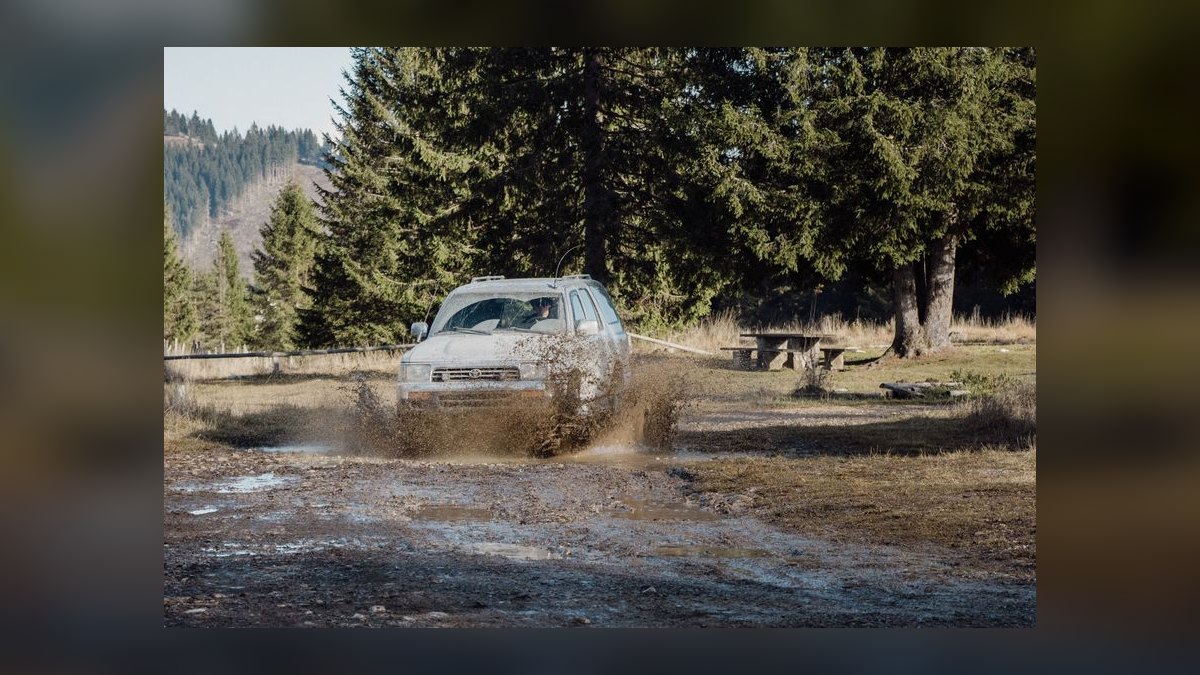
The best 2027 overlanding vehicle is the Toyota 4Runner (~$42,000), pairing body-on-frame durability, a two-speed transfer case, roughly 9 inches of clearance, and the deepest aftermarket available. The Jeep Wrangler Willys (~$36,000) is the value pick, delivering solid axles, available lockers, and 10.8 inches of clearance for less money.
The 4Runner and the Wrangler, compared head to head
These two vehicles get cross-shopped constantly, and buyers usually frame it as a price question when it is actually an architecture question. The 4Runner rides on Toyota's TNGA-F body-on-frame platform with an independent front suspension and a live rear axle. The Wrangler runs solid axles front and rear. That single difference cascades into everything else about how each rig behaves once the pavement ends.
Solid axles articulate further. When a Wrangler drops a front tire into a rut, the opposite wheel is pushed down by the same axle housing, keeping it planted. An independent front end cannot do that — each wheel moves alone, so a 4Runner lifts a tire sooner and leans harder on traction control and its locker to keep moving. On genuine rock crawling, the Wrangler wins outright. Its electronic sway-bar disconnect on Rubicon-grade trims, Tru-Lok differentials, and up to 10.8 inches of ground clearance give it hardware the 4Runner cannot match at any trim level.

The 4Runner's independent front end wins everywhere else, which for most overlanders is where the miles actually accumulate. Overlanding is not rock crawling. It is 400 miles of interstate, 90 miles of washboard forest service road, a river crossing, and a campsite. On that mix, the 4Runner is quieter, tracks straighter at 75 mph, and does not exhibit the steering wander that solid-axle geometry produces. Fatigue is a real safety variable on multi-day trips, and a vehicle that demands constant micro-corrections for eight hours costs you something.
The redesigned 4Runner offers an available electronic rear locker, Crawl Control, and — on TRD Pro and Trailhunter trims — a disconnecting front stabilizer bar that partially closes the articulation gap. The Trailhunter arrives from the factory with a lift, all-terrain tires, and an onboard air compressor, which is genuinely useful because airing tires back up after a sand or trail run is otherwise a 20-minute chore with a portable compressor.

The Wrangler's counter-argument is modularity. The top comes off, the doors come off, the windshield folds. No other production vehicle is designed to be disassembled by its owner in a driveway. That matters less for capability than it does for how people actually use these vehicles, and it explains why the Wrangler aftermarket is the only one that rivals Toyota's in depth.
Where the Wrangler gives ground is long-haul durability and resale predictability. Both platforms have long service histories, but Toyota's reputation for high-mileage reliability is the reason 4Runners hold value the way they do — and resale is a real financial input, not a bragging point. A rig that returns a larger share of its purchase price at trade-in changes the true cost of ownership more than a $6,000 MSRP gap does.

How to decide between them
Start with terrain, not budget. The decision tree below is the one most experienced overlanders run implicitly, and making it explicit prevents the most common expensive mistake: buying maximum rock-crawling hardware for trips that are 95% graded dirt road.
Work the tree honestly. The question "what terrain dominates your trips" should be answered from last year's actual trips, not from the trips you imagine taking. Most people overbuy capability and underbuy range, storage, and seat comfort — the three things that determine whether a trip is enjoyable.

The second branch — bed versus no bed — is more consequential than it looks. A pickup bed physically separates your fuel cans, water, recovery gear, and dirty equipment from the cabin you sleep and eat in. Trucks like the Tacoma TRD Pro (~$50,000, ~9.5 inches of clearance, electronic rear locker, FOX QS3 shocks) or the Jeep Gladiator (~$40,000, up to 11.1 inches, front and rear lockers, solid axles) buy you that separation. An SUV forces gear either onto the roof, which raises your center of gravity and hurts fuel economy, or into the cabin, which means living with the smell of jerry cans.
The third branch — highway miles — is where the Land Cruiser (~$57,900, 8.7 inches, full-time 4WD with a locking center diff) and the Lexus GX (~$65,000, up to 8.9 inches, Overtrail trim with a rear locker, disconnecting front stabilizer bar, 33-inch all-terrains, and a factory air compressor) earn their premium. The Land Cruiser's i-FORCE MAX hybrid produces 326 hp and 465 lb-ft while extending range between fills, which matters enormously in regions where the next station is 200 miles out. The GX's 3.4-liter twin-turbo V6 makes 349 hp and shares Toyota's underpinnings, so you get Land Cruiser durability in a substantially more comfortable cabin.

One branch the tree does not show, because it belongs to a different buyer entirely: the Subaru Outback Wilderness (~$40,000, 9.5 inches, X-Mode AWD, skid plates, all-terrain tires). It cannot crawl. It also cannot be beaten on fuel economy, cost, or how little it punishes you on the 400-mile approach drive. If your trips end at a trailhead rather than beyond one, the Wilderness is the rational choice and everything above is overkill.
The numbers that actually separate these rigs
Ground clearance is the spec everyone quotes and the one most often misread. Clearance is measured to the lowest fixed point, usually a differential housing — but what stops you on a trail is rarely the diff. It is the breakover angle over a crest, or the departure angle when a rear bumper catches on a ledge exit. A vehicle with 11.6 inches of clearance and a long rear overhang can hang up where a 9-inch rig with a short overhang walks away clean.

Useful 2027 reference points: the Ford Bronco Badlands four-door (~$48,000) reaches up to 11.6 inches with available front and rear lockers, an electronic sway-bar disconnect, and G.O.A.T. terrain modes; the Sasquatch package adds 35-inch tires, beadlock-capable wheels, and a factory lift. The Ford Ranger Raptor (~$56,000) sits around 10.7 inches with front and rear lockers, FOX Live Valve shocks, and a 3.0-liter twin-turbo V6 producing 405 hp — a rig tuned for speed over washboard and desert whoops rather than slow technical work. The Toyota Sequoia TRD Pro (~$78,000) offers only about 8.6 inches but carries three rows, FOX shocks, a rear locker, and an i-FORCE MAX V6 making 437 hp and 583 lb-ft.
Payload is the number that quietly ruins builds. Manufacturers publish payload as a single figure covering passengers, cargo, and everything bolted on. A steel front bumper, winch, rear bumper with tire carrier, drawer system, roof rack, rooftop tent, 20 gallons of water, and 10 gallons of fuel adds up fast — a fully outfitted mid-size rig can consume most of its rated payload before anyone sits down. Exceeding it degrades braking, accelerates suspension wear, and voids warranty arguments. Weigh your build at a public scale before a long trip; the number is almost always higher than the spreadsheet said.
Fuel range is the constraint that sets trip planning. A rig returning 16 mpg with a 19-gallon tank has roughly 300 miles of real range, and prudent practice keeps a 25% reserve, so plan for 225. That is why hybrid powertrains in the Land Cruiser, Tacoma, and Sequoia are strategically interesting: they extend range in exactly the low-speed, variable-load conditions where conventional engines are least efficient.
Aftermarket depth is not a soft factor — it is a hard cost input. When a platform has hundreds of suppliers building bumpers, drawers, and suspension for it, parts cost less, fit better, and are in stock. That competitive dynamic is the same one that drives revenue in any accessory market: high-volume platforms attract vendors, vendor competition compresses prices, and compressed prices attract more buyers to the platform. The 4Runner and Wrangler sit at the center of that flywheel, and a build on either will cost meaningfully less than the identical build on a low-volume chassis.
Building the rig: sequencing that saves money
The most expensive mistake in overlanding is not the vehicle purchase. It is buying components in the wrong order and replacing half of them within 18 months. Build sequence matters because each stage changes the requirements of the next.
The three-trip rule in the middle of that flow is the important part. Nearly every experienced overlander will tell you the build they designed on paper differed sharply from the build they needed after real use. Take the vehicle out stock, find out what genuinely limits you, then spend.
Order matters for concrete mechanical reasons. Tires change effective clearance and ride quality, so buying suspension before tires means tuning a suspension for the wrong load and diameter. Armor adds substantial weight at the extreme ends of the vehicle, so installing bumpers and a winch before suspension guarantees you will re-spring the front end afterward. Electrical is best done once — a dual-battery system, fridge circuit, and lighting all share a fuse block, and running that wiring twice is miserable work.
There is a broader lesson here that applies well outside vehicles: sequencing capital spend against verified need rather than anticipated need is how any operation avoids sunk cost. The same discipline that stops you from buying a $4,000 bumper before your third trip is the discipline that stops a business from buying tooling before demand is proven.
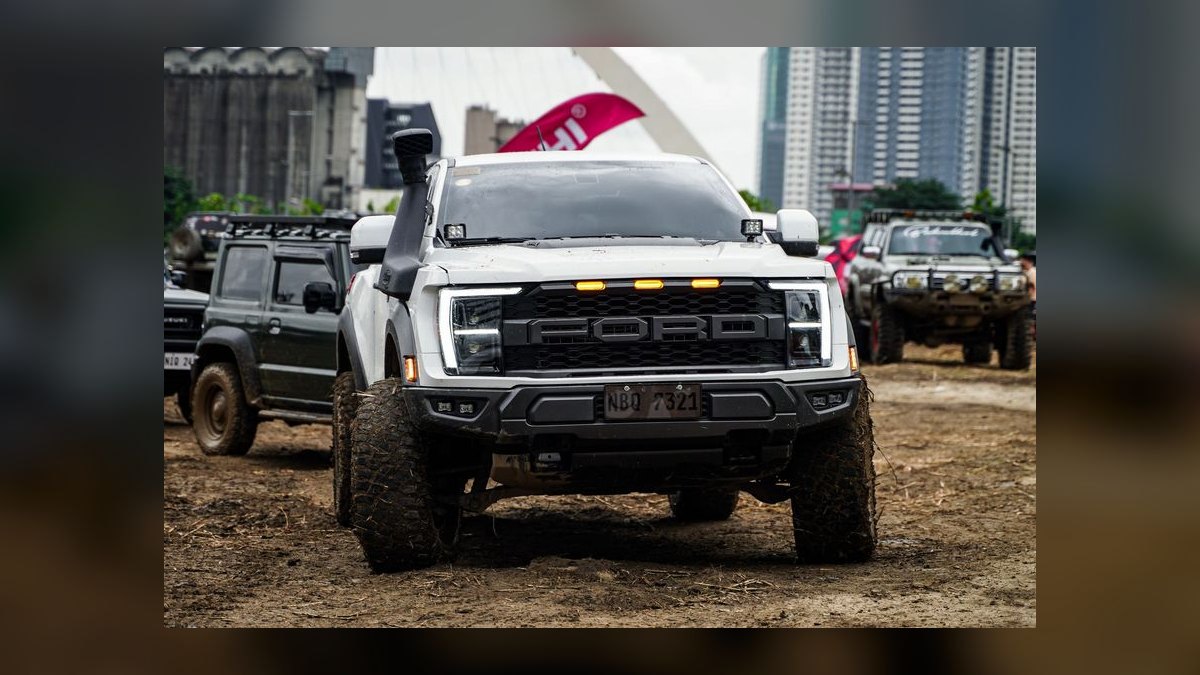
Budget realistically. A capable, self-sufficient build on a mid-size platform typically lands somewhere between $8,000 and $20,000 in accessories depending on how much fabrication you do yourself and whether you buy a rooftop tent or sleep inside. Factory overland trims — the 4Runner Trailhunter, the GX Overtrail, the Bronco Sasquatch — front-load some of that spend into the purchase price, often at a lower total cost than building the equivalent aftermarket, and with warranty coverage intact.
Finally, maintenance scales with use. Trail miles are harder than highway miles: differential fluid, wheel bearings, ball joints, and CV boots all wear faster under dust, water crossings, and articulation loads. Budget for shortened service intervals rather than manufacturer defaults, and carry the specific spares your platform is known to need. A vehicle 200 miles from pavement with a failed part you could have carried is the only real failure mode that matters.
Related questions
Is a used rig a better buy than a new one?
Often yes. A well-maintained previous-generation 4Runner or Wrangler can cost far less and already carry a partial build. The risk is inherited abuse — check for bent skid plates, differential fluid condition, and signs of water intrusion before buying.
Do you need a rooftop tent?
No. Rooftop tents raise your center of gravity, cut fuel economy, and add setup time. Sleeping inside an SUV with folded seats or in a ground tent is cheaper and often more comfortable. Roof tents make most sense where ground conditions are wet or hostile.
How much does a locking differential really matter?
A rear locker meaningfully expands what a vehicle can do on loose or uneven terrain. A front locker matters mainly on steep technical climbs. Modern brake-based traction control closes part of the gap, but a true locker is still decisively better when a wheel lifts.
What about diesel or electric overland vehicles?
Diesel remains popular abroad for torque and range but has limited availability in this class in North America. Electric platforms currently struggle with charging infrastructure far from towns, which is exactly where overlanding happens. Hybrids are the practical middle ground today.
FAQ
What is the best overall overlanding vehicle for 2027?
The Toyota 4Runner, starting around $42,000. It combines body-on-frame construction, a two-speed transfer case, roughly 9 inches of clearance, an available rear locker, and the deepest accessory aftermarket of any overland platform, which keeps build costs low and parts availability high.
Is the Jeep Wrangler Willys a good value?
Yes. Starting near $36,000, the Willys adds rock rails, a limited-slip rear differential, and all-terrain tires to an architecture with solid axles front and rear and up to 10.8 inches of clearance. No other new vehicle delivers this much genuine off-road hardware per dollar.
What ground clearance do I actually need?
Roughly 8 to 12 inches covers nearly all overland terrain. More important than the raw number are approach, departure, and breakover angles, plus where the lowest fixed point sits. A short-overhang vehicle with 9 inches frequently outperforms a long-overhang vehicle with 11.
Should I choose a truck or an SUV?
Choose a truck if you want gear separated from your living space and the ability to carry fuel, water, and recovery equipment in an open bed. Choose an SUV if you value a sealed, climate-controlled cargo area and better on-road manners over raw hauling flexibility.
Can an all-wheel-drive crossover work for overlanding?
For graded dirt, gravel, snow, and forest roads, yes — the Subaru Outback Wilderness with 9.5 inches of clearance and X-Mode handles that well at far lower cost and better fuel economy. It cannot handle rock ledges, deep ruts, or terrain requiring a low range.
How much should I budget beyond the vehicle?
Plan $8,000 to $20,000 for a genuinely self-sufficient build, depending on how much you fabricate yourself. Start with recovery gear and tires, take several real trips, then buy suspension, storage, power, and armor in that order based on what actually limited you.
Sources
- https://www.toyota.com/4runner/
- https://www.toyota.com/landcruiser/
- https://www.jeep.com/wrangler.html
- https://www.jeep.com/gladiator.html
- https://www.ford.com/suvs/bronco/
- https://www.lexus.com/models/GX
- https://www.subaru.com/vehicles/outback.html
- https://www.caranddriver.com/
- https://www.edmunds.com/
- https://www.kbb.com/
Related on PULSE
- [Top 10 Mid-Size SUVs 2027 — Best Overall + Best Value](/knowledge/ca0001)
- [Top 10 Mid-Size SUVs 2026 — Best Overall + Best Value](/knowledge/ca0002)
- [Top 10 Mid-Size SUVs 2025 — Best Overall + Best Value](/knowledge/ca0003)
- [Top 10 Full-Size Pickup Trucks 2027 — Best Overall + Best Value](/knowledge/ca0004)
- [Top 10 Full-Size Pickup Trucks 2026 — Best Overall + Best Value](/knowledge/ca0005)
This page will be disappearing soon. Save it to your device for $1 — or read it free while it is here.
@Kory-White- · if Venmo asks, the last 4 of my number are 2012
 pulse-carsTop 10 Hydrogen Cars 2027 — Best Overall + Best Value
 pulse-carsBest Used Coupes Under $40,000 in 2027 (Ranked)
 pulse-carsBest Mercedes-Benz CLA Model Years (Ranked) in 2027
 pulse-carsBest Chevrolet Equinox Model Years (Ranked) in 2027
 pulse-carsBest Ford Falcon Model Years (Ranked) in 2027
 pulse-carsWhat should you know before investing in Cars in 2027?
 pulse-carsBest Ford Escape Model Years (Ranked) in 2027
 pulse-carsBest Kia Optima and K5 Model Years (Ranked) in 2027
 pulse-carsTop 10 Sports Cars 2027 — Best Overall + Best Value
 pulse-carsBest Mazda RX-8 Model Years (Ranked) in 2027