
Best Electric SUVs Under $50,000 in 2027
 Curated byKory White · Fractional CRO · Maryland
 PULSEKNOWLEDGE LIBRARY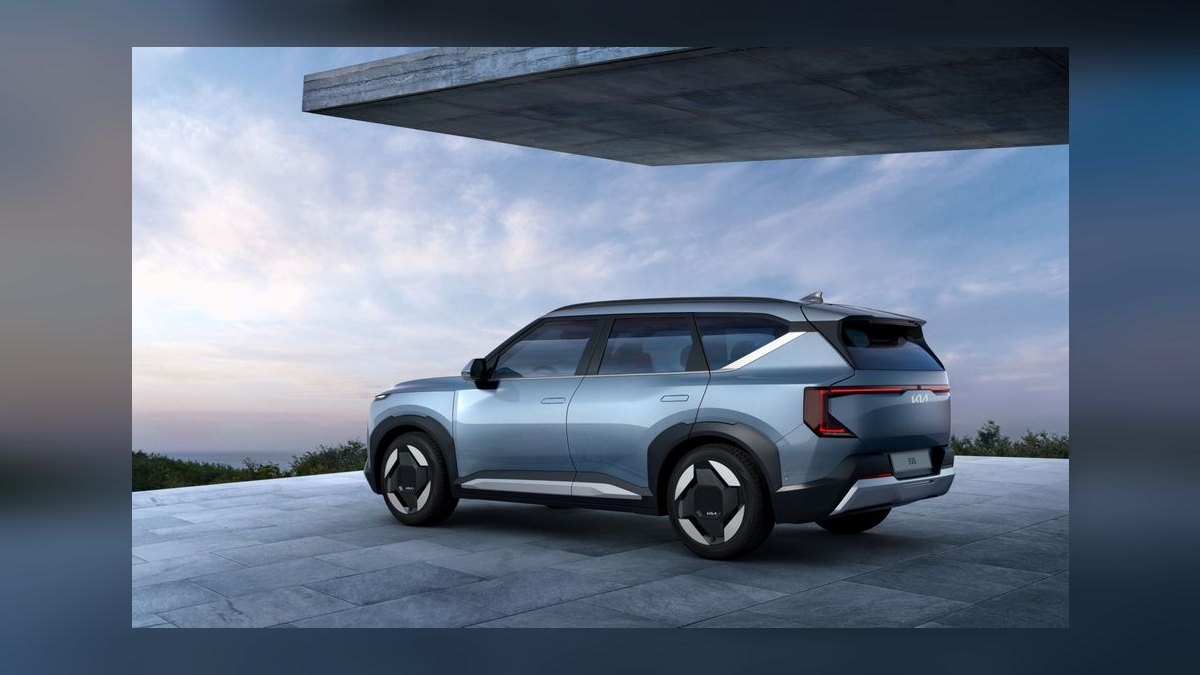
The best electric SUVs under $50,000 in 2027 center on the Hyundai Ioniq 5, with EPA-estimated range up to 318 miles, 800-volt fast charging, and pricing near $43,000. The Chevrolet Equinox EV is the value leader at roughly $34,000 with up to 319 miles. Every serious contender clears 250 miles.
What the sub-$50,000 electric SUV bracket actually buys you
This price band is where electric SUVs stopped being compromises. Three things converged: battery packs in the 75–100 kWh range became affordable enough to put behind mainstream badges, 800-volt architectures trickled down from luxury models, and EPA range figures crossed the 300-mile line at prices that used to buy 220 miles.
The practical floor is around $34,000 for a Chevrolet Equinox EV in front-drive form, which posts an EPA-estimated 319 miles from a roughly 85-kWh pack. The practical ceiling is around $46,000–$48,000, where the Subaru Solterra sits with standard all-wheel drive and roughly 285 miles, and where a rear-drive Kia EV9 Light Long Range can occasionally sneak in with three rows and roughly 300 miles from a 99-kWh pack — though most EV9 trims start closer to $56,000.
Between those poles sit the volume players. The Hyundai Ioniq 5 long-range rear-drive: up to 318 miles, about $43,000. The Kia EV6, mechanically its sibling on the same 800-volt platform: up to 310 miles, about $44,000. The Ford Mustang Mach-E extended-range rear-drive: up to 320 miles, about $40,000. The Tesla Model Y Long Range: above 320 miles, about $45,000. The Volkswagen ID.4: around 290 miles from roughly 82 kWh, about $39,000. The Toyota bZ long-range: around 290 miles, about $38,000. The Nissan Ariya long-range: around 289 miles, about $40,000.

What matters here is that range has become table stakes. Every vehicle listed clears 250 miles, and most clear 285. The differentiators have shifted downstream to charging speed, cabin packaging, software, and dealer experience. A buyer in 2027 is not choosing between "enough range" and "not enough range" — they are choosing between an 18-minute charging stop and a 35-minute one, between a flat-floor cabin and a transmission-tunnel hangover, between over-the-air updates and a service appointment.
The adjacent effect worth noting: this bracket is now large enough that fleet buyers, rideshare operators, and small-business owners are sourcing from it. A contractor buying three Equinox EVs at $34,000 each instead of three gas crossovers at $32,000 is making a total-cost-of-ownership bet, not a lifestyle one — and the maintenance math (roughly 30–50% lower over five years, no oil changes, no transmission fluid, minimal brake wear thanks to regeneration) is what closes that deal. Dealers who understand this are running different conversations than dealers still selling on monthly payment alone.
How to work the buying process, start to finish
The process that actually produces a good outcome is sequential, and skipping steps is where money leaks. Start by defining the use case honestly, not aspirationally: daily commute distance, how many road trips per year over 250 miles, whether you have home charging, and how many people ride in the back seat weekly.

Home charging is the single biggest fork. With a Level 2 charger, virtually every vehicle here works — you wake up full, and public charging speed barely matters. Without one, charging speed becomes the dominant spec, and the 800-volt cars (Ioniq 5, EV6) plus the Tesla Supercharger network move from "nice" to "necessary." A 10-to-80% stop takes roughly 18–25 minutes on a 350 kW charger for the Hyundai/Kia pair, versus roughly 30–40 minutes for slower-charging rivals. Repeated weekly, that gap is real time.
Next, shortlist to three vehicles maximum, then verify the exact configuration price rather than the advertised base. Trim walks in this segment are steep — a long-range battery, all-wheel drive, and a tow package can move a $40,000 sticker to $49,000 before destination. Confirm which specific battery and drive configuration produces the range figure you saw advertised, because the headline number is almost always the rear-drive long-range variant, not the dual-motor version most buyers actually order.
Then check incentive eligibility for that exact VIN configuration. Federal credit rules turn on battery sourcing and final assembly location, and eligibility shifts by model year and even by production batch. Verify against the current official list rather than the sales floor's memory. State and utility incentives stack separately and are frequently overlooked — some utilities rebate the Level 2 charger installation itself.
Finally, test-drive two finalists back to back on the same day. Seat comfort, software responsiveness, one-pedal driving calibration, and road noise vary far more than spec sheets suggest, and none of them show up in a range number.

Costs, timelines, and the numbers behind the sticker
The purchase price is the visible number; four others determine what you actually pay. First, the out-the-door figure: destination charges typically add roughly $1,300–$1,600, and dealer add-ons can pile on more. A $43,000 Ioniq 5 realistically lands in the mid-$40,000s before any incentive.
Second, home charging infrastructure. A Level 2 charger unit plus installation commonly runs several hundred to a couple thousand dollars depending on panel capacity and the run length from the panel to the parking spot. Older homes with 100-amp service sometimes need a panel upgrade, which is the expensive surprise. Get an electrician's quote before signing, not after — it can shift which vehicle makes sense, because a buyer stuck on Level 1 charging needs the fast-DC advantage more.
Third, energy cost. Home charging at residential rates is dramatically cheaper per mile than public DC fast charging, which is priced closer to gasoline in many markets. A household that charges 90% at home and 10% on the road has a very different running cost than one doing the reverse. This is why the "cheaper to run" claim is conditional, not universal.

Fourth, real-world range versus EPA. Expect a 20–30% haircut in cold weather or sustained highway speeds above 70 mph. A 318-mile EPA rating realistically means 200–250 usable miles in mixed winter conditions. Plan the purchase against the degraded number, not the sticker number, and the vehicle will never disappoint you.
Timelines: inventory availability varies sharply by model and region. Popular configurations of high-demand models can carry waits, while slower-selling trims sit on lots with incentives attached. The end-of-quarter and end-of-model-year windows remain the highest-leverage buying moments, particularly for models being refreshed.
On depreciation: electric SUVs have historically depreciated faster than comparable gas SUVs, which is painful for buyers and excellent for the used market. That is exactly why the adjacent used bracket — used electric SUVs under $50,000 — now contains vehicles that stickered well above that when new. A three-year-old premium electric SUV can land in the same budget as a new mainstream one, trading warranty coverage and current-generation charging speed for size and equipment.

Battery warranty is the safety net: federal requirements mandate substantial coverage, typically 8 years or 100,000 miles, and most manufacturers guarantee a minimum retained capacity over that period. Read the specific retention threshold, because it varies.
Where buyers and dealers get this wrong
The most common error is buying range you never use. A buyer who commutes 30 miles a day and takes two long road trips a year pays thousands extra for a long-range battery that spends 363 days a year at partial charge. The standard-range configuration of the same vehicle is often the better purchase, and the saved money funds the home charger with room left over.
The mirror-image error is buying too little charging speed. Charging speed, unlike range, cannot be worked around. A slow-charging vehicle with 320 miles of range is worse on a 600-mile trip than a fast-charging vehicle with 280, because the second one is back on the road while the first is still sitting.

Third mistake: treating the advertised base price as the real price. The base trim frequently has the small battery, the slow onboard charger, and the cloth seats. The configuration that produces the advertised range is a trim or two up. Always price the exact car.
Fourth: ignoring the charging connector question. The industry consolidated around a common fast-charging standard, and vehicles differ in whether they have the native port or need an adapter. An adapter works but adds friction at every stop. Confirm what the specific model year ships with.
Fifth, on the commercial side: dealers and sales teams frequently misread how electric SUVs affect revenue. Service departments built on oil changes and brake jobs see a smaller per-vehicle service revenue stream, but the offset shows up in higher-margin work — tires wear faster on heavier vehicles, and software and battery diagnostics become billable specialties. Dealers who rebuilt their service revenue model around this transition are doing fine; those who assumed volume would carry them are not. The same pattern shows up in fleet operations, where the maintenance savings are real but the depot charging capital expense is front-loaded and frequently underestimated in the first year's budget.

Sixth: skipping the cold-weather question in cold-weather markets. Heat pumps, battery preconditioning, and heated seats versus cabin heat all materially change winter range. A vehicle without a heat pump loses noticeably more in freezing conditions. If you live where it snows, this belongs on the shortlist criteria, alongside all-wheel drive.
Matching the vehicle to the buyer: a decision framework
Work the decision by dominant constraint rather than by overall ranking, because "best" is a function of what you need.
If maximum range per dollar is the constraint, the Chevrolet Equinox EV is the answer — roughly 319 miles for around $34,000 is the segment's best dollars-per-mile figure, and it leaves a meaningful chunk of a $50,000 budget unspent for the home charger, a set of winter tires, and the extended service plan.

If road-trip charging speed dominates, the 800-volt pair — Ioniq 5 and EV6 — lead on raw charging rate, while the Tesla Model Y leads on network density and route-planning integration. The honest trade: the Hyundai and Kia charge faster at a compatible 350 kW station; the Tesla is more likely to find a working station where you need one. Buyers who road-trip on well-covered corridors should favor charging rate; buyers who road-trip into thin coverage should favor network.
If all-weather capability dominates, the Subaru Solterra's standard all-wheel drive and light off-road ability at around $46,000 is the natural pick, with dual-motor versions of the mainstream models as the alternative.
If long-term dependability and service experience dominate, the Toyota bZ at around $38,000 leans on the broadest dealer network in the segment and a durability reputation, with roughly 290 miles of range that is now genuinely competitive rather than an apology.
If driving enjoyment dominates, the Mustang Mach-E and EV6 are the two to drive back to back; the Mach-E's extended-range rear-drive setup pairs roughly 320 miles with the segment's most engaging chassis at around $40,000.

If cabin calm dominates, the Nissan Ariya's hushed, well-finished interior at around $40,000 delivers a near-luxury feel at a mainstream price, and the Volkswagen ID.4 at around $39,000 offers the most composed highway ride with a large cargo area.
If seven seats are non-negotiable, the entry rear-drive Kia EV9 is the only real path under $50,000, and it requires finding that specific configuration.
Adjacent angles: used, hybrid, and the total-ownership picture
The under-$50,000 question does not end with new vehicles. The used electric SUV market has become the highest-value corner of this budget precisely because early depreciation was steep. A buyer willing to take a two-to-four-year-old vehicle can get a larger, better-equipped SUV for the same money — accepting some battery degradation, an older charging architecture, and less remaining warranty. The battery warranty transfers in most cases, which materially de-risks the purchase; verify the specific transfer terms and get a battery state-of-health report before buying.

Hybrids remain the honest alternative for a specific buyer: no home charging, frequent long trips into thin charging coverage, or extreme cold. A hybrid SUV in this budget gives up the running-cost advantage but eliminates the infrastructure dependency entirely. This is not a step backward — it is a different constraint set. Plug-in hybrids split the difference, covering typical daily commutes on electricity while keeping gasoline for the long haul, and they often qualify for smaller incentives.
Downstream, the ownership picture changes in ways buyers underestimate. Insurance premiums for electric SUVs frequently run higher, driven by battery replacement cost and repair complexity. Tires wear faster because of instant torque and higher curb weight — budget for replacement sooner than a comparable gas SUV. Against that, the maintenance ledger is genuinely lighter: no oil changes, no transmission service, no exhaust work, and brake pads that can last well past 100,000 miles thanks to regenerative braking doing most of the deceleration.
For anyone evaluating this as a business purchase rather than a personal one, run the full five-year model rather than the monthly payment: acquisition cost, depot or home charging capital, energy cost at your actual charge-location mix, insurance delta, tire cadence, maintenance savings, and residual value. That model is what determines whether an electric SUV improves the operation's economics or merely relocates the cost. In most well-utilized cases with home or depot charging, it improves them — but the answer is arithmetic, not ideology.
Related questions
Which electric SUV under $50,000 has the longest range?
The Ford Mustang Mach-E extended-range rear-drive and Tesla Model Y Long Range both sit around or above 320 miles EPA-estimated, with the Chevrolet Equinox EV at roughly 319 and the Hyundai Ioniq 5 at up to 318. The top four are effectively tied.
Is the Chevrolet Equinox EV really the best value?
On dollars-per-mile of range, yes. Roughly 319 miles for around $34,000 undercuts every rival by thousands while delivering a family-sized cabin. It charges more slowly than the 800-volt Hyundai and Kia models, which is the trade-off you accept for the price.
Do I need all-wheel drive on an electric SUV?
Only if you regularly face snow, ice, or unpaved surfaces. Dual-motor all-wheel drive costs money, adds weight, and reduces range. Rear-drive electric SUVs on proper winter tires handle most cold-weather conditions well, and winter tires matter more than drivetrain.
Can I get a three-row electric SUV under $50,000?
Only narrowly. The Kia EV9 in its entry rear-drive Light Long Range configuration can approach that ceiling with roughly 300 miles from a 99-kWh pack, but most EV9 trims start near $56,000. Finding that specific trim in inventory is the challenge.
How much does home charging installation cost?
A Level 2 charger plus installation typically runs from several hundred to a couple thousand dollars, depending on panel capacity and distance from the panel to the parking spot. Homes needing a service panel upgrade pay considerably more. Get a quote before purchasing.
FAQ
What is the real-world range like for these electric SUVs?
EPA estimates in this bracket run from roughly 250 to 320 miles, but real-world driving reduces that meaningfully. Cold weather and sustained highway speeds above 70 mph typically cost 20–30%. Most owners see 200–250 miles of usable range in mixed conditions, and planning around that lower figure prevents range anxiety entirely.
How long does public fast charging take?
On a 350 kW charger, the 800-volt Hyundai Ioniq 5 and Kia EV6 go from 10% to 80% in roughly 18–25 minutes. Vehicles on 400-volt architectures, including the Chevrolet Equinox EV, typically need 30–40 minutes for the same recovery. Charging above 80% slows dramatically on every vehicle here.
Do these SUVs qualify for federal tax credits?
Eligibility depends on battery component sourcing, critical mineral origin, and final assembly location, and it changes by model year and production batch. Some models in this bracket qualify for up to $7,500 while others do not. Verify the specific configuration against the current official list rather than relying on the sales floor.
How does maintenance cost compare to a gas SUV?
Electric SUVs generally cost roughly 30–50% less to maintain over five years. There are no oil changes, no transmission fluid service, and no exhaust system. Brake pads last far longer because regenerative braking handles most deceleration. Tires wear faster due to weight and torque, and insurance premiums often run higher.
Should I buy the long-range battery or the standard one?
If you have home charging and your daily driving is under 60 miles, the standard-range battery usually makes more sense. It costs less, weighs less, and charges faster to full. Buy the long-range pack if you lack home charging, tow regularly, or drive in sustained cold where range loss compounds.
Is a used electric SUV a better deal than a new one under $50,000?
Often, yes, on equipment-per-dollar. Steep early depreciation means a two-to-four-year-old premium electric SUV can land in the same budget as a new mainstream one. You trade current-generation charging speed and full warranty for size and features. Always get a battery state-of-health report first.
Sources
- https://www.fueleconomy.gov/
- https://www.caranddriver.com/
- https://www.motortrend.com/
- https://www.edmunds.com/
- https://www.kbb.com/
- https://www.consumerreports.org/cars/
- https://www.irs.gov/credits-deductions/credits-for-new-clean-vehicles-purchased-in-2023-or-after
- https://afdc.energy.gov/fuels/electricity-locations
- https://www.nhtsa.gov/
Related on PULSE
- [Best Used Electric SUVs Under $50,000 in 2027 (Ranked)](/knowledge/ca0972)
- [Best Used Electric Cars Under $50,000 in 2027 (Ranked)](/knowledge/ca0851)
- [Best Used Hybrid SUVs Under $50,000 in 2027 (Ranked)](/knowledge/ca0973)
- [Best Used Off-Road SUVs Under $50,000 in 2027 (Ranked)](/knowledge/ca0861)
- [Best Used Full-Size SUVs Under $50,000 in 2027 (Ranked)](/knowledge/ca0858)
- [Best Used Compact SUVs Under $50,000 in 2027 (Ranked)](/knowledge/ca0857)
This page will be disappearing soon. Save it to your device for $1 — or read it free while it is here.
@Kory-White- · if Venmo asks, the last 4 of my number are 2012
 pulse-carsTop 10 Electric Sedans 2024 — Best Overall + Best Value
 pulse-carsTop 10 Luxury Pickup Trucks 2026 — Best Overall + Best Value
 pulse-carsTop 10 Hybrid Minivans in 2027
 pulse-carsTop 10 Supercars 2027 — Best Overall + Best Value
 pulse-carsBest Honda Crosstour Model Years (Ranked) in 2027
 pulse-carsBest Used Coupes Under $40,000 in 2027 (Ranked)
 pulse-carsBest Acura NSX Generations (Ranked) in 2027
 pulse-carsBest Buick Regal Model Years (Ranked) in 2027
 pulse-carsBest Hyundai Ioniq 5 Model Years (Ranked) in 2027
 pulse-carsTop 10 Electric SUVs in 2027