
Best Used Mid-Size SUVs Under $15,000 for Off-Roading in the Rockies (2027)
 Curated byKory White · Fractional CRO · Maryland
 PULSEKNOWLEDGE LIBRARY
Quality
Certified
Under $15,000 in 2027, the best off-road-capable used mid-size SUVs for Rocky Mountain rural drivers are body-on-frame, low-range-equipped rigs: the 2005–2015 Toyota 4Runner, 2007–2015 Jeep Wrangler Unlimited, and 2011–2016 Jeep Grand Cherokee with Quadra-Trac II. Crossovers like the Subaru Forester handle snow-packed county roads but lack true low-range crawl capability.
Body-on-frame versus unibody: the split that actually matters at altitude
Every recommendation in this price band forks on one question, and it is not brand loyalty — it is whether the vehicle has a transfer case with a low range. That single component separates "all-wheel drive" from "four-wheel drive with mechanical advantage," and on a Rocky Mountain forest service road it is the difference between crawling a rock step at idle and slipping a clutch or cooking a CVT belt until it smells.
The body-on-frame group — Toyota 4Runner (4th gen 2003–2009, 5th gen 2010+), Jeep Wrangler Unlimited (JK, 2007–2018), Nissan Xterra (2005–2015), and to a lesser degree the Jeep Grand Cherokee WK/WK2 with the two-speed Quadra-Trac II or Quadra-Drive II transfer case — all carry a genuine low range, typically in the 2.48:1 to 4.0:1 reduction range. Multiply that by a first-gear ratio and an axle ratio and you get crawl ratios roughly between 20:1 and 45:1. A Wrangler Rubicon with the Rock-Trac case and 4.10 gears lands near the top of that band; a 4Runner SR5 with the part-time case sits closer to the bottom but is still enormously more capable than any crossover.
The unibody all-wheel-drive group — Subaru Forester and Outback, Toyota RAV4 AWD, Honda CR-V AWD, Ford Escape 4WD, Jeep Cherokee KL Trailhawk (the one genuine exception, with its 4:1 low-range crawl in the Active Drive Lock system) — has no low range in almost every case. What it does have is a reactive or proactive center coupling that shuffles torque front-to-rear, plus enough ground clearance to handle snow depth rather than rock height.
Here is the practical distinction rural Rocky Mountain drivers should internalize: AWD solves traction on a surface; 4WD-low solves geometry and torque multiplication over an obstacle. If your worst-case scenario is eight inches of unplowed snow on a graded county road at 7,000 feet, a Forester with proper winter tires beats a bald-tired 4Runner every single time. If your worst-case is a washed-out two-track up a drainage with baby-head rocks and a 20% grade in low-traction mud, the crossover simply cannot do it and will burn something expensive trying.
The regional reality in Colorado, Wyoming, Montana, Idaho, Utah, and New Mexico is that most rural drivers face both. They commute on plowed but icy state highways, then turn onto unmaintained roads that the county stops grading in October. That mixed duty cycle is why the 4Runner dominates this conversation: it is the only vehicle in the sub-$15,000 band that is simultaneously a competent low-range rock crawler, a livable daily driver, and a mechanically boring appliance you can get fixed in Craig, Colorado or Dillon, Montana without ordering parts from three states away.
One more structural note that gets ignored: frame rust is the silent killer, and it moves the whole conversation. A rust-free Arizona or New Mexico 4Runner with 190,000 miles is a better purchase than a Michigan or Ohio 4Runner with 120,000 miles. Mountain-state roads use magnesium chloride and sand rather than pure rock salt in many jurisdictions, which is less aggressive than Rust Belt salt but far from harmless — brake lines, fuel lines, and rear frame sections behind the wheels are the first casualties. Budget an hour under the vehicle with a flashlight and a small hammer before you talk price.
How to decide between them
The decision is not "which SUV is best" — it is "which failure mode can you least afford." Work through it honestly, because the wrong answer here costs either capability you needed or money you didn't need to spend.
Start with frequency of true off-pavement use. If you leave pavement fewer than a dozen times a year and the surfaces are graded dirt and snow, the low-range premium is dead weight — you are paying for a transfer case you never engage and eating 16–19 mpg to carry it. If you leave pavement weekly, run cattle, maintain fence line, haul firewood off a logging spur, or your driveway is a quarter mile of unmaintained grade that drifts shut, you need the frame vehicle and it is not close.
Second, weigh recovery isolation. This is the factor that flatlander buying advice ignores completely. In much of rural Wyoming and Montana, a stuck vehicle means either a 90-minute wait for a neighbor with a tractor or a tow bill in the $400–$900 range from a town an hour out, assuming cell coverage exists to call. Under those conditions, capability margin is insurance, not indulgence. Buy more than you think you need.
Third, consider who fixes it. A rural mountain town typically has one or two independent shops. Ask them what they see and what they can service. The answer, almost universally, is Toyota trucks, Jeep Wranglers, and domestic pickups. A used European SUV with a torque-vectoring rear differential and air suspension is a capable vehicle and a terrible rural purchase, because the one shop in town will decline the job and you will be trailering it to Denver or Salt Lake.
Fourth, be honest about altitude and powertrain. Naturally aspirated engines lose roughly 3% of their output per 1,000 feet of elevation gain. At 9,000 feet — a normal working elevation in the Colorado high country — a 4.0-liter V6 rated at 236 horsepower at sea level is delivering something in the neighborhood of 165–175 horsepower. That is fine for crawling, where torque multiplication does the work. It is noticeably strained when merging onto I-70 westbound with a loaded trailer. Turbocharged engines are largely immune to this loss because the compressor simply works harder, which is one legitimate argument for the turbo four-cylinder Forester XT or a turbo-diesel if one appears in budget.
Fifth, run the total-cost math, not the sticker math. A $13,000 4Runner that needs $2,000 of tires and deferred maintenance is a $15,000 vehicle. A $9,500 Grand Cherokee that needs a transfer case actuator, a set of control arms, and tires is also a $15,000 vehicle — but with more unknowns ahead of it. Price the vehicle at the number it costs to make it trail-ready and winter-ready, then compare.
The numbers behind each option
Real figures for the sub-$15,000 Rocky Mountain shopper in 2027. Treat every price as a wide band, because condition, rust, and mileage swing these enormously and mountain-state markets carry a genuine capability premium — a clean 4Runner sells for meaningfully more in Bozeman than in Phoenix.
Toyota 4Runner (4th generation, 2003–2009). This is the value sweet spot. Under $15,000 in 2027 you are typically shopping 4th-gen examples with 170,000–230,000 miles, or exceptionally high-mileage 5th-gens. The 4.0-liter 1GR-FE V6 makes 236–270 horsepower depending on year and is one of the most durable engines Toyota has built; 300,000 miles is a normal service life with fluid changes. EPA rates the V6 4WD around 16 city / 20 highway, and real-world mountain driving with all-terrain tires lands closer to 15–17 combined. Ground clearance is roughly 9 inches. Known issues: rear frame rust on salt-state cars, lower ball joints on early 4th-gens (a recall-adjacent known failure — verify replacement), and the 4.7-liter V8 variant's timing belt, which is a 90,000-mile service item costing $700–$1,200. Watch for the rear air suspension on X-REAS/Limited trims; when it fails, conversion to coils runs $800–$1,500.
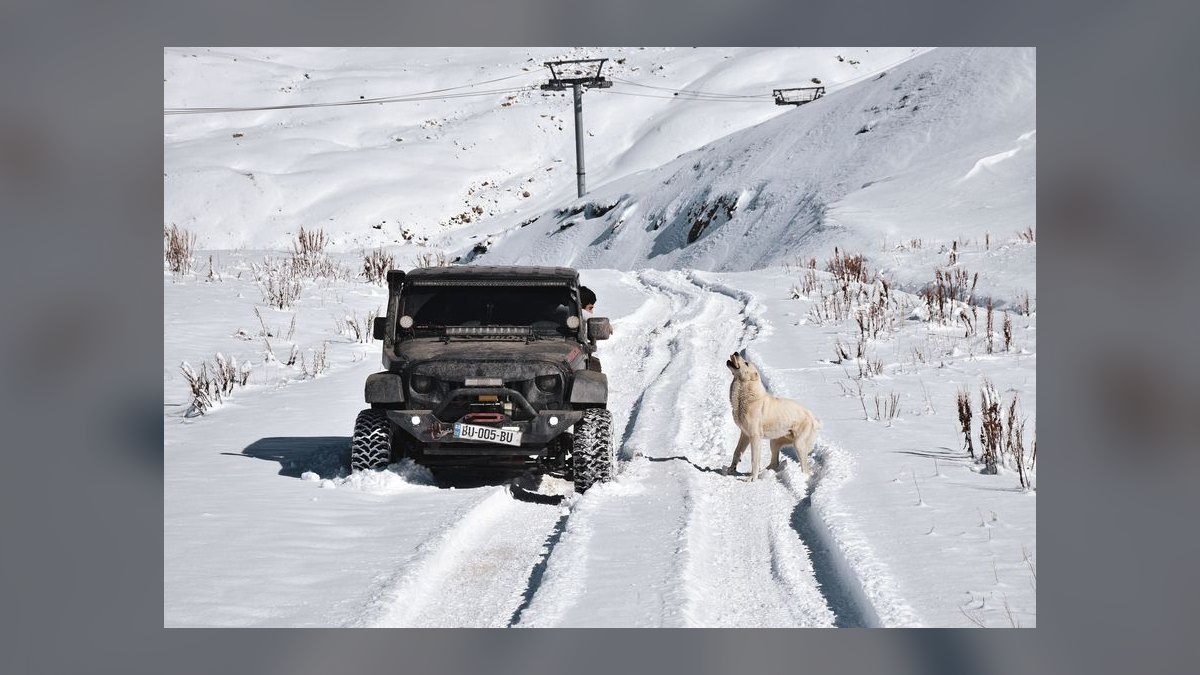
Jeep Wrangler Unlimited (JK, 2007–2018). Under $15,000 you are looking at 2007–2012 four-door JKs with the 3.8-liter V6 (202 horsepower, widely disliked but adequate at low speed) rather than the much better 3.6-liter Pentastar that arrived for 2012. EPA is roughly 15/19. The Rubicon trim adds front and rear electronic locking differentials, a disconnecting front sway bar, and a 4:1 transfer case — genuinely the most capable thing available at this money, though Rubicons command a $3,000–$5,000 premium and often land above budget in clean condition. Known issues: the 3.8's oil consumption, death wobble from worn track bar and steering damper bushings, and window-frame and floor-pan rust. Cargo and highway manners are the weak point; the Wrangler is loud, wanders on I-25 in crosswinds, and returns mediocre economy.
Jeep Grand Cherokee (WK 2005–2010, WK2 2011–2016). The cheapest genuine low-range option — $8,000–$14,000 buys a lot of Grand Cherokee. The WK2 with the 3.6 Pentastar and Quadra-Trac II gets a two-speed transfer case with a 2.72:1 low range; Quadra-Drive II adds an electronic limited-slip rear. EPA around 17/24 for the V6. It is far more comfortable on-highway than a Wrangler and more capable off-road than any crossover. Known issues: air suspension failure on Overland/Summit trims ($1,500–$3,000 to repair, or a coil conversion), the 5.7 Hemi's lifter and camshaft wear, TIPM electrical faults on WK-generation cars, and generally higher repair frequency than the Toyota. Buy the V6 with steel springs.
Nissan Xterra (2005–2015). Underrated and cheap — often $7,000–$12,000. The 4.0-liter VQ40DE makes 261 horsepower, and the Pro-4X adds a rear locker and skid plates. EPA roughly 15/20. Body-on-frame with real low range. Known issue: the notorious radiator-to-transmission-cooler cross-contamination on 2005–2010 automatics ("strawberry milkshake"), which destroys the transmission — verify the radiator has been replaced or the cooler bypassed with an external unit. That single check is worth more than the rest of the inspection.
Subaru Forester and Outback (2009–2016). $6,000–$13,000. No low range, but symmetrical AWD, 8.7 inches of clearance on the Outback, and outstanding snow behavior. EPA around 24/32 for the naturally aspirated 2.5. Known issues: head gaskets on the EJ25 (pre-2011 primarily), oil consumption on the FB25 (roughly 2011–2014), and CVT behavior on later models — a CVT replacement runs $4,000–$8,000, which can exceed the vehicle's value. For a rural driver whose off-pavement work is snow and graded gravel rather than rock, this is the smart, economical choice.
Toyota FJ Cruiser (2007–2014). Mechanically a 4Runner with worse visibility and better styling. Values have appreciated sharply and clean examples now sit above $15,000, but rough, high-mileage ones surface in budget. Same 4.0 V6, same durability, rear-locker option on Trail Teams trims.
Running costs to plan for, all models. A proper set of all-terrain tires in a common truck size runs $900–$1,400 installed. Full fluid service — differentials, transfer case, transmission, coolant, brake fluid — is $400–$800 at an independent shop and should be done immediately on any unknown-history purchase. Recovery equipment is not optional at altitude: a rated recovery strap, two rated shackles, a compact shovel, traction boards, and a compressor with a tire deflator run $250–$500 total and are the highest-value dollars in this entire budget. Insurance on an older body-on-frame SUV in a rural mountain county is typically lower than on a comparable crossover because collision values are low.
Buying sequence, inspection, and the first month of ownership
The order of operations matters more than the vehicle choice, and mountain-state buyers routinely get this backward — falling in love with a listing, then rationalizing a rusty frame.
Step one: search geography before you search model. The single highest-leverage move is expanding your search radius south and west. Arizona, New Mexico, eastern Washington, and southern Utah produce dry-climate vehicles with clean frames. A round-trip flight to Phoenix plus a one-way drive back to Colorado costs $400–$700 and routinely buys you a vehicle worth $2,000–$3,000 more than the equivalent local car. Search 500 miles out, not 50.
Step two: pre-screen by phone before you drive anywhere. Ask five questions. Has the frame ever been treated or does it show scaling rust? Does four-wheel drive engage in both high and low, and when was it last used? Has the timing belt or chain service been done, with a receipt? What tires are on it and how old are they by DOT date code? And why is it being sold? Any hesitation about the transfer case means the seller has never used it, which on a ten-year-old SUV means the actuator and vacuum lines may well be seized.
Step three: the mountain-specific pre-purchase inspection. A standard $150–$250 shop PPI is not sufficient here — it checks the things that matter in a city. Add these: frame scaling and perforation at the rear crossmember and behind the rear wheels; brake and fuel line corrosion; transfer case engagement in both 4-High and 4-Low, driven, on a loose surface, not just on a lift; differential fluid condition and any milky water intrusion from creek crossings; skid plate damage that indicates hard use; and heater core and blower function, because a heater failure at −20°F in the San Luis Valley is a safety event, not an inconvenience.
Step four: fix the safety-critical items before the fun items. Tires first, always. Then brakes and fluid. Then cooling system, including a pressure test — mountain grades punish marginal cooling systems, and a long descent from Loveland Pass with a tired transmission cooler will show you exactly where the weak point is. Suspension bushings and ball joints come next, because that's where the frame vehicles fail with age and it is the failure most likely to hurt someone.
Step five: the equipment layer that turns a capable vehicle into a safe one. Winter tires or a genuine three-peak-mountain-snowflake all-terrain matter more than the drivetrain — this is the point most buyers miss. Colorado's Traction Law and Passenger Vehicle Chain Law, in force on I-70 and other corridors during storms, require either 4WD/AWD with adequate tread depth or approved traction devices; drivers can be fined for blocking a roadway without compliant equipment. Carry chains or auto-socks even in a 4WD. Add a full-size spare on a matching wheel, because a compact spare on a mountain forest road is functionally useless. Keep a winter kit: sleeping bag, water, calories, headlamp, and a way to signal.
Step six: build competence before you build the vehicle. Practice engaging low range on a road you know. Learn where the differential and transfer case drain plugs are. Learn your approach and departure angles by looking at the vehicle, not by discovering them. The most common expensive failure in this segment is not mechanical — it is a driver in a genuinely capable truck who attacks an obstacle with momentum instead of crawling it, and bends a control arm or punches a hole in an oil pan that a skid plate would have deflected.
Adjacent scenarios worth planning for
The core question is which SUV to buy, but the decisions that surround it determine whether the purchase actually works.
If you tow. A 4Runner is rated around 5,000 pounds, a JK Wrangler Unlimited around 3,500, and a Grand Cherokee V6 around 6,200. At altitude, derate those numbers substantially in your own head — a trailer at the rating limit on a 7% grade at 10,000 feet is a transmission-temperature problem. If towing is regular, a used half-ton pickup is the honest answer and often costs the same money, though it gives up interior comfort and off-road agility.
If a second vehicle exists in the household. The smartest rural configuration is frequently a cheap capable truck plus an efficient commuter, rather than one expensive do-everything SUV. Two $8,000 vehicles beat one $15,000 vehicle for many mountain households: the capable rig handles storms and hauling, the economical one handles the 45-mile round trip to town at 32 mpg, and neither is a single point of failure when one is in the shop.

If you're commercially dependent on the vehicle. Ranch, guiding, trades, and wildfire-adjacent work change the calculus toward parts commonality and repairability over refinement. Standardize on one platform if you can. Two 4Runners in a fleet share tires, fluids, filters, and spare parts, and you can rob one to run the other during a bad week.
Insurance, registration, and the paperwork layer. Rural mountain counties often have lower registration costs on older vehicles, and liability-only coverage on a $12,000 body-on-frame SUV can run well under $70 a month. But confirm roadside-assistance coverage actually extends to unmaintained roads — most policies do not cover recovery from a road that isn't publicly maintained, which is precisely the road you'll be stuck on. A membership with off-road recovery coverage is worth pricing separately.
Fuel logistics. Rural mountain driving means long gaps between stations and occasional 87-octane-only availability. Every vehicle discussed here runs happily on regular, which is a quiet advantage over turbocharged premium-fuel alternatives. Plan range with a 50-mile reserve in winter; idling to stay warm while waiting out a closure burns fuel you assumed you had.
Related questions
Is a Subaru genuinely enough for Rocky Mountain winters?
For plowed highways, graded gravel, and moderate unplowed snow — yes, decisively, especially on winter tires. It falls short only where rocks, steep loose grades, or deep ruts demand low-range torque multiplication and ground clearance the Subaru does not have.
Do I need a locking differential?
Not for snow or gravel, where an open differential with good tires performs fine. Lockers matter on uneven rock and cross-axle situations where one wheel lifts. Rubicon and Pro-4X trims include them; most buyers in this band never miss one.
How many miles is too many on a 4Runner?
Mileage matters far less than rust and records on this platform. A rust-free 220,000-mile 4Runner with documented fluid service is a safer buy than a 130,000-mile salt-state example with a scaling frame and no paperwork.
Should I lift the vehicle?
Not initially. Tires deliver most of the real gain; a lift adds driveline angle wear, alters geometry, and often masks worn suspension. Drive it stock for a season, learn its limits, then decide whether a modest 2-inch lift solves an actual problem.
What about a used pickup instead?
Often the better buy if you haul more than you carry passengers. Half-ton 4WD trucks in this price band offer similar or better capability plus a bed, at the cost of interior space, weather protection for cargo, and parking-lot maneuverability.
FAQ
What is the single most capable used SUV under $15,000 for Rocky Mountain off-road use?
A Jeep Wrangler Unlimited Rubicon, if you can find one in budget — front and rear lockers, a disconnecting sway bar, and a 4:1 low range make it the most capable vehicle at this money. But Rubicons carry a steep premium and clean examples usually exceed $15,000. For most buyers the 4Runner is the better real-world answer because it combines strong capability with far better daily livability and lower repair frequency.
Does all-wheel drive help on ice?
Only for acceleration. AWD does nothing for braking or cornering grip on ice — those are entirely tire functions. Rocky Mountain drivers routinely overestimate drivetrain benefit and underestimate rubber. A front-wheel-drive car on studded winter tires stops shorter on ice than a 4WD truck on worn all-seasons, and that stopping distance is what determines outcomes on a mountain descent.
How much should I budget beyond the purchase price?
Plan $1,500 to $2,500 for a vehicle bought at unknown condition. That covers all-terrain or winter tires ($900–$1,400), a complete fluid service including differentials and transfer case ($400–$800), and a basic recovery kit ($250–$500). Buying a $13,000 vehicle and having nothing left for tires is the most common mistake in this budget.
Is rust really that important compared to mileage?
Yes, and it isn't close on body-on-frame vehicles. A perforated frame is not economically repairable and is a structural safety issue. Engines and transmissions are replaceable at known cost; frames effectively are not. Inspect the rear frame section, crossmembers, and brake and fuel lines before you evaluate anything else about the vehicle.
Can I do meaningful off-road driving with a stock vehicle?
Absolutely. The overwhelming majority of Rocky Mountain forest service roads, ranch two-tracks, and dispersed camping access are within reach of a stock low-range SUV on decent all-terrain tires. Modification is usually a response to a specific obstacle you've actually encountered, not a prerequisite for leaving pavement.
What should I avoid entirely in this price range?
Air suspension on Grand Cherokee Overland and Summit trims, unrepaired Xterra transmission-cooler contamination, high-mileage CVT crossovers, salvage or rebuilt titles on any body-on-frame vehicle, and anything with a scaling rear frame regardless of how good the rest looks or how attractive the price is.
Sources
- EPA Fuel Economy Data
- NHTSA Vehicle Safety and Recalls
- IIHS Vehicle Ratings
- Colorado Department of Transportation Traction Law
- Consumer Reports Used Cars
- Edmunds
- Kelley Blue Book
- Car and Driver
- U.S. Forest Service Motor Vehicle Use Maps
- Tire Rack Winter Tire Testing
Related on PULSE
- [Best Used Off-Road SUVs Under $15,000 in 2027 (Ranked)](/knowledge/ca0761)
- [Best Used Full-Size SUVs Under $15,000 in 2027 (Ranked)](/knowledge/ca0758)
- [Best Used Compact SUVs Under $15,000 in 2027 (Ranked)](/knowledge/ca0757)
- [Best Used Hybrid SUVs Under $15,000 in 2027 (Ranked)](/knowledge/ca0929)
- [Best Used Subcompact SUVs Under $15,000 in 2027 (Ranked)](/knowledge/ca0931)
- [Best Used Electric SUVs Under $15,000 in 2027 (Ranked)](/knowledge/ca0928)
This page will be disappearing soon. Save it to your device for $1 — or read it free while it is here.
@Kory-White- · if Venmo asks, the last 4 of my number are 2012
 pulse-carsTop 10 Electric SUVs in 2027
 pulse-carsTop 10 Hybrid Minivans in 2027
 pulse-carsBest Hyundai Ioniq 5 Model Years (Ranked) in 2027
 pulse-carsTop 10 Sports Cars 2027 — Best Overall + Best Value
 pulse-carsBest Volkswagen GTI Generations (Ranked) in 2027
 pulse-carsBest Audi A3 Model Years (Ranked) in 2027
 pulse-carsTop 10 Hot Hatchbacks 2027 — Best Overall + Best Value
 pulse-carsBest Audi TT Model Years (Ranked) in 2027
 pulse-carsBest Acura Models in 2027
 pulse-carsBest Used Wagons Under $40,000 in 2027 (Ranked)