
Top 5 Reliable Used Hybrid SUVs Under $15,000 in 2027 for the Pacific Northwest (Under 80k Miles)
 Curated byKory White · Fractional CRO · Maryland
 PULSEKNOWLEDGE LIBRARY
Quality
Certified
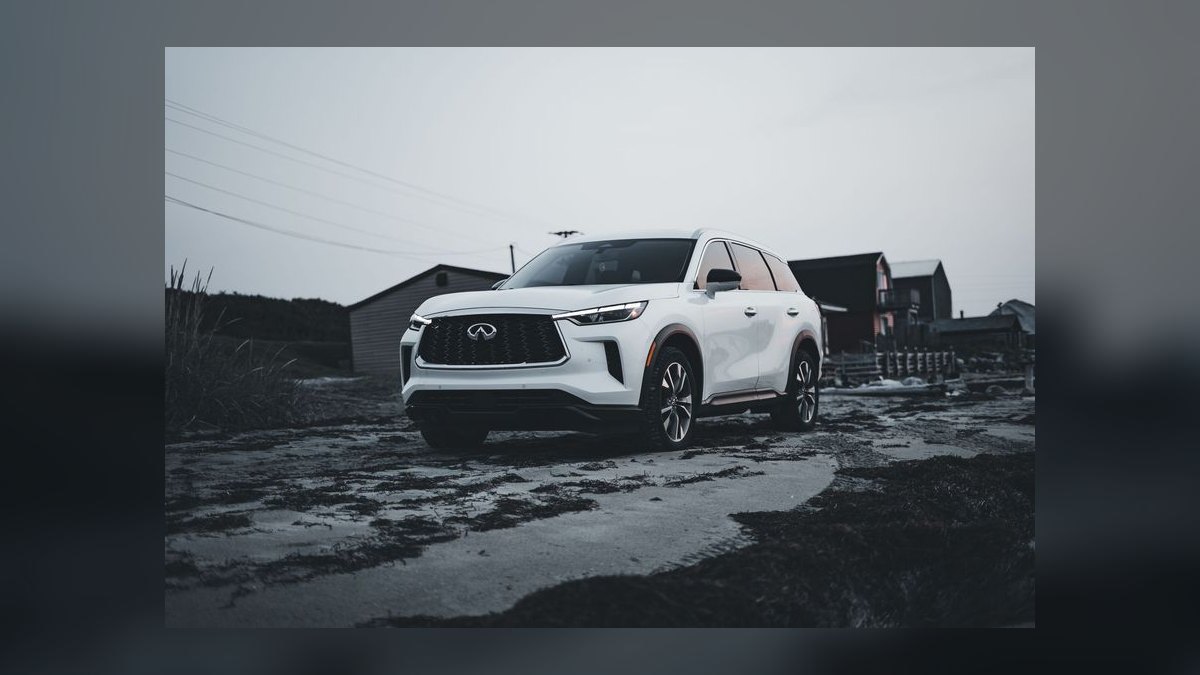
Under $15,000 with under 80,000 miles in the Pacific Northwest, the most reliable used hybrid SUVs are the Toyota Highlander Hybrid, Lexus RX 400h/450h, Ford Escape Hybrid, and early Toyota RAV4 Hybrid. Regional supply is strong because Washington and Oregon buy hybrids heavily, so listings are genuinely available near Seattle and Portland.
What a sub-$15,000, sub-80,000-mile hybrid SUV actually is in the Pacific Northwest
Start by naming the constraint honestly, because three filters are fighting each other. A $15,000 ceiling in 2027 buys an older vehicle. An 80,000-mile ceiling pushes toward a newer vehicle. Hybrid SUVs, as a category, did not exist in volume until the mid-2000s and did not go mainstream until the mid-2010s. When you stack all three filters, the intersection is narrow but real — and it is meaningfully wider in the Pacific Northwest than in most of the country.
The vehicles that satisfy all three conditions fall into two clusters. The first cluster is old-but-lightly-used: a Toyota Highlander Hybrid, Lexus RX 400h, or Ford Escape Hybrid from the late 2000s or early 2010s that spent its life as a second car and accumulated 5,000–7,000 miles a year instead of 13,500. These are 15-plus-year-old vehicles with genuinely low odometers. The second cluster is newer-but-at-the-ceiling: a mid-2010s Toyota RAV4 Hybrid, Nissan Rogue Hybrid, or Kia Niro (a crossover-shaped hybrid that many shoppers cross-shop against small SUVs) that has been driven normally and now sits right at or just under the mileage cap while the price has depreciated into range.
The word "reliable" needs a definition too, because it means something different for a hybrid than for a gas SUV. For a conventional used SUV, reliability is mostly about the transmission, the timing components, and rust. For a hybrid, the transmission risk largely disappears — Toyota's hybrid transaxle is a planetary power-split device with no clutch packs and no torque converter to wear out, which is exactly why high-mileage Toyota hybrids are common in taxi and rideshare fleets. What replaces it is battery risk, inverter-coolant-pump risk, and the risk of a specialty repair that a general shop will not touch. So "reliable" here means: proven powertrain architecture, a traction battery with a known replacement cost and a known aftermarket, and a local service ecosystem that can actually work on it.
That last point is where the Pacific Northwest matters more than shoppers expect. Region is not a footnote on this question; it is a real variable that changes both what is available and what it costs to own.
Three regional factors work in your favor. First, hybrid adoption in Washington and Oregon has run well above the national average for close to two decades, which means the used supply pool per capita is deeper than in, say, the Mountain West or the rural South. More listings means more chances to find the rare low-mileage example rather than settling. Second, the Pacific Northwest is not a salt state in the way the Midwest and Northeast are. Washington and Oregon lean on de-icer and sand on mountain passes rather than blanket road-salting of metro arterials, so a Seattle-area or Willamette Valley car of the same age typically shows dramatically less structural corrosion underneath than an equivalent Chicago or Buffalo car. On a 15-year-old vehicle, that difference is worth more than any option package. Third, the mild maritime climate — rarely below freezing, rarely above 90°F west of the Cascades — is close to ideal for nickel-metal-hydride and early lithium traction packs, which degrade fastest under sustained high heat. A Puget Sound hybrid battery has simply had an easier life than a Phoenix or Las Vegas one of the same age and mileage.
There are regional negatives, and you should price them in. Moisture and moss are relentless west of the Cascades: check sunroof drains, cowl drains, trunk and spare-well seals, and the hatch seal for standing water. Wet-climate cars often show early brake corrosion — though hybrids partly dodge this because regenerative braking means the friction brakes do far less work, which is why original pads at 90,000 miles are common on these cars, and why seized calipers from underuse are the more likely failure. And mountain-pass cars see chip seal, gravel, and occasional chains, so inspect the windshield, the underbody shields, and the wheel wells.
The step-by-step process for finding and vetting one
This is a hunt, not a purchase. The search plan below assumes six to ten weeks of patient looking, because the inventory you want is thin and moves fast when it appears.
Step one — set the geographic net wide. Do not search "Seattle." Search the corridor. Set a 150-mile radius from your home point and you will pull in Seattle, Tacoma, Olympia, Everett, and Bellingham from one anchor, or Portland, Salem, Eugene, and Vancouver from another. Widening to 250 miles adds Spokane, Yakima, the Tri-Cities, Bend, and Boise-adjacent listings. Note a real regional wrinkle: eastern Washington and central Oregon are drier and hotter with harder freezes, so a Spokane or Bend car is generally rust-clean but has had a slightly harder thermal life on the battery. Cross-border shopping into British Columbia is possible but adds import paperwork, so most buyers should stay domestic.
Step two — search by powertrain, not by nameplate. Every major listing site lets you filter fuel type to "hybrid." Do that first, then apply the price and mileage caps, then sort by mileage ascending rather than by price. Sorting by price surfaces the tired, high-mile, salvage-title cars. Sorting by mileage ascending surfaces the garage-kept second car that is exactly what your 80,000-mile filter is looking for.
Step three — save the search and let it run. Set email or push alerts on every platform. The good cars in this band are gone in 48 to 96 hours. If you are refreshing manually twice a week, you are structurally too slow. Alerts turn a six-week hunt into a manageable one.

Step four — triage the listing before you drive. Ask three questions by message: Does it have a clean title? Do you have service records? Has the traction battery ever been replaced or serviced? That third question is the hybrid-specific one, and the answer is useful either way — a replaced battery on a 2008 Highlander Hybrid is a selling point, not a warning.
Step five — pull the vehicle history report. You are looking for title branding, a consistent mileage progression, and — for the Pacific Northwest specifically — where the car actually lived. A "Seattle car" that shows five years registered in Minnesota is a Minnesota car with a Seattle address, and it should be inspected for rust accordingly.
Step six — hybrid-specific pre-purchase inspection. A generic $150 PPI is not enough. You want a shop that can read hybrid-system data, and you want three specific outputs: individual battery block voltages under load (not just "no codes"), the inverter coolant condition and pump function, and a live scan for stored hybrid-system codes. Seattle and Portland both have independent hybrid specialists — this is another regional advantage, since in many markets a Toyota dealer is your only option.
Step seven — drive it correctly. Test three things a normal test drive misses. Watch the battery state-of-charge gauge on a long grade: it should discharge on the climb and recharge on the descent through regen, and a pack that swings from full to empty within a mile is showing reduced capacity. Feel for regenerative-to-friction brake blending — a lurch at low speed suggests an actuator issue. And do an EV-mode crawl in a parking lot to confirm the electric side actually propels the car.
Step eight — negotiate against documented items, not vibes. Tires, brake service, a due coolant flush, and a battery cooling-fan cleaning are all real, quotable line items.
Costs, timelines, and the numbers that actually decide this
Purchase price is the smallest part of this decision. Here is what the full picture looks like.
The traction battery is the headline number. A replacement Toyota hybrid battery through a dealer generally runs in the low-to-mid four figures installed, with the aftermarket and reconditioned-pack market landing meaningfully lower. Independent hybrid shops in Seattle and Portland offer rebuilt and remanufactured packs, often with their own multi-year warranties. This is the single most important fact for a sub-$15,000 hybrid shopper, and it cuts in a reassuring direction: the worst-case hybrid-specific failure is a known, quotable, bounded repair with multiple competing vendors — not an open-ended mystery. Budget for it as a contingency on any pack that has never been serviced, and you can shop with confidence instead of fear.
Battery longevity is better than the internet suggests. Toyota's nickel-metal-hydride packs in the Highlander Hybrid, Prius, and RX 400h are the most road-proven hybrid batteries ever built, and examples well past 150,000 and 200,000 miles on original packs are common. Degradation shows up as reduced electric-only range and more frequent engine cycling long before it becomes a warning light. The maritime Northwest climate genuinely helps here — heat is the primary killer of these chemistries.
Fuel savings are real but should be modeled honestly. A Highlander Hybrid or RX 400h returns high-20s combined against roughly 18–20 for the equivalent non-hybrid V6 SUV. A RAV4 Hybrid lands in the high-30s. Over 12,000 miles a year, the gap between a high-30s hybrid and a mid-20s gas crossover is a few hundred gallons annually — meaningful, but not enough to justify overpaying by thousands for the hybrid badge. Where hybrids win decisively is stop-and-go: I-5 through Seattle, the Portland bridges, arterial commuting. If your driving is mostly open-highway I-90 or I-84, the hybrid advantage narrows sharply, since these systems shine at low speed and in regen-heavy traffic.
Brakes cost less than you think. Regenerative braking means friction pads on a hybrid often last two to three times as long as on a comparable gas SUV. It is genuinely normal to see original pads at high mileage. The offset is corrosion from underuse in a wet climate, so budget a caliper service rather than a full brake job.
Registration and taxes differ across the state line, and it matters. Washington charges sales tax on vehicle purchases and has historically applied additional fees to electrified vehicles to offset lost gas-tax revenue; Oregon charges no general sales tax but has its own vehicle privilege and use tax structure and title fees. Oregon also requires DEQ emissions testing in the Portland and Medford areas, while Washington ended its emissions program years ago. Verify current rates directly with the Washington Department of Licensing or Oregon DMV before you close, because these figures change and the difference across the Columbia River can be a four-figure swing on a $15,000 purchase. Note that you generally register where you live, not where you buy.
Timeline. Plan six to ten weeks. Expect to look at four to eight cars in person and to walk away from at least two after inspection. If you must buy in a week, you will overpay or compromise on the mileage cap — and of the three filters, mileage is the one worth holding firm on, since it is the one you cannot fix later.
Total three-year cost of ownership on a well-chosen example in this band typically lands in the range of the purchase price plus routine maintenance, one set of tires, and a modest contingency. The hybrids that blow that budget are the ones bought without a pre-purchase inspection.
Where buyers get this wrong
Mistake one: treating mileage as the sole proxy for condition. On a hybrid, a low-mileage car that sat is not automatically better. Traction batteries self-discharge and lose capacity when a vehicle sits unused for months, 12-volt auxiliary batteries die, brake calipers seize, and rubber degrades. A 60,000-mile hybrid driven regularly for twelve years is usually a healthier car than a 40,000-mile one that sat in a garage for four. Ask how the car has been used recently, not just how far it has gone.
Mistake two: assuming the 12-volt battery is a minor item. On Toyota hybrids the 12-volt auxiliary battery boots the entire system, and a weak one produces a spectacular cascade of unrelated-looking warning lights that shoppers misread as catastrophic hybrid failure. Some are odd, low-capacity units in unusual locations. Before you panic at a dash full of lights on a test drive, ask when the 12-volt was last replaced. This is one of the most common reasons a fundamentally sound hybrid gets listed cheap by a frustrated seller — and one of the best negotiating opportunities available to an informed buyer.
Mistake three: shopping the wrong SUVs. Some vehicles marketed as hybrid SUVs were mild-hybrid or belt-alternator-starter systems delivering marginal efficiency gains with their own dated-electronics complexity. Some early-2010s domestic two-mode hybrid SUVs were expensive, complex, and are now hard to service. Focus your search on the full-hybrid, power-split architectures with deep parts and knowledge ecosystems.
Mistake four: ignoring where the car spent its life. A car listed in Tacoma that lived seven years in Ohio carries Ohio's corrosion. Read the registration history on the report, not the seller's location. This inverts too — a genuinely lifelong Northwest car deserves a premium over an identical out-of-region example, and most private sellers do not price that in.
Mistake five: skipping the inspection because the car "seems fine." Hybrid systems are unusually good at masking degradation. The car drives normally right up until it does not, because the computer compensates for a weakening pack by cycling the engine more often. A block-level voltage test under load costs a fraction of what it saves.
Mistake six: over-indexing on AWD. Pacific Northwest shoppers routinely insist on all-wheel drive for two or three snow days a year in the lowlands. If you commute in Seattle or Portland and only visit passes occasionally, a front-drive hybrid on genuinely good all-season or winter tires outperforms an AWD vehicle on worn all-seasons, costs less, and returns better mileage. If you live in Snoqualmie, Bend, Leavenworth, or the Methow, AWD is a legitimate requirement — and worth noting that the Highlander Hybrid and RX 400h/450h use an electric rear motor for AWD rather than a driveshaft, so there is no transfer case or rear differential to service.
Mistake seven: buying sight-unseen from out of region to beat local pricing. Shipping costs, the inability to inspect, and the loss of local recourse usually erase the savings. Given that the Pacific Northwest has one of the deeper hybrid pools in the country, importing is rarely necessary.
A decision framework for choosing among the realistic candidates
Rather than ranking, match the vehicle to the use case. Here is how the realistic candidates sort.
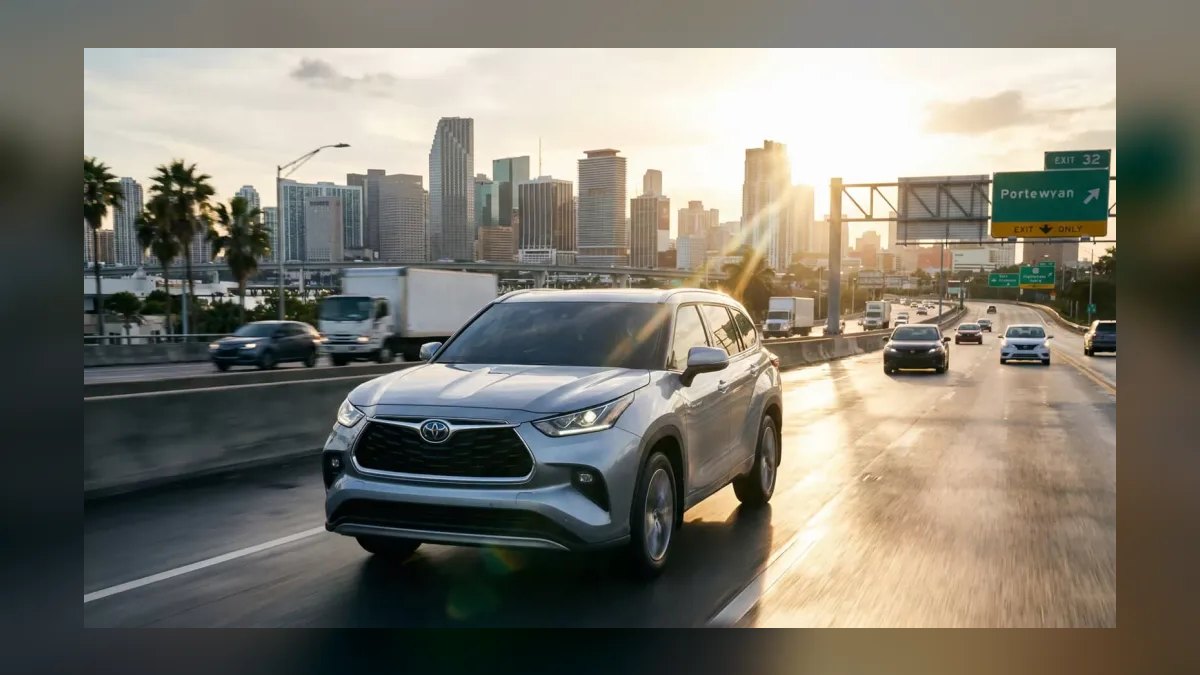
If maximum proven durability is the priority: the Toyota Highlander Hybrid. It uses the most road-tested hybrid architecture in existence, the electric AWD system has no traditional driveline to fail, and the model has three rows in many configurations. The trade-off is age — a sub-$15,000 example with under 80,000 miles will be from the late 2000s or early 2010s and will demand a genuinely low-use history to satisfy both caps at once.
If you want the same mechanicals with better materials: the Lexus RX 400h or RX 450h. It is a Highlander Hybrid underneath with a nicer interior, better sound insulation, and a used market that undervalues it because buyers fear luxury-badge repair costs. Those fears are largely misplaced on the hybrid drivetrain, though air suspension on some trims and dated navigation hardware are real considerations. This is frequently the value play in the Northwest, where these sold well when new and now sit deep in depreciation.
If fuel economy is the top objective: a mid-2010s Toyota RAV4 Hybrid, if you can find one at the price cap. It returns the best real-world numbers of the group and is a decade newer than the Highlander candidates, so safety equipment is far more modern. The catch is that RAV4 Hybrids hold value stubbornly, so a sub-$15,000 example will typically be pressing the 80,000-mile ceiling rather than sitting comfortably under it.
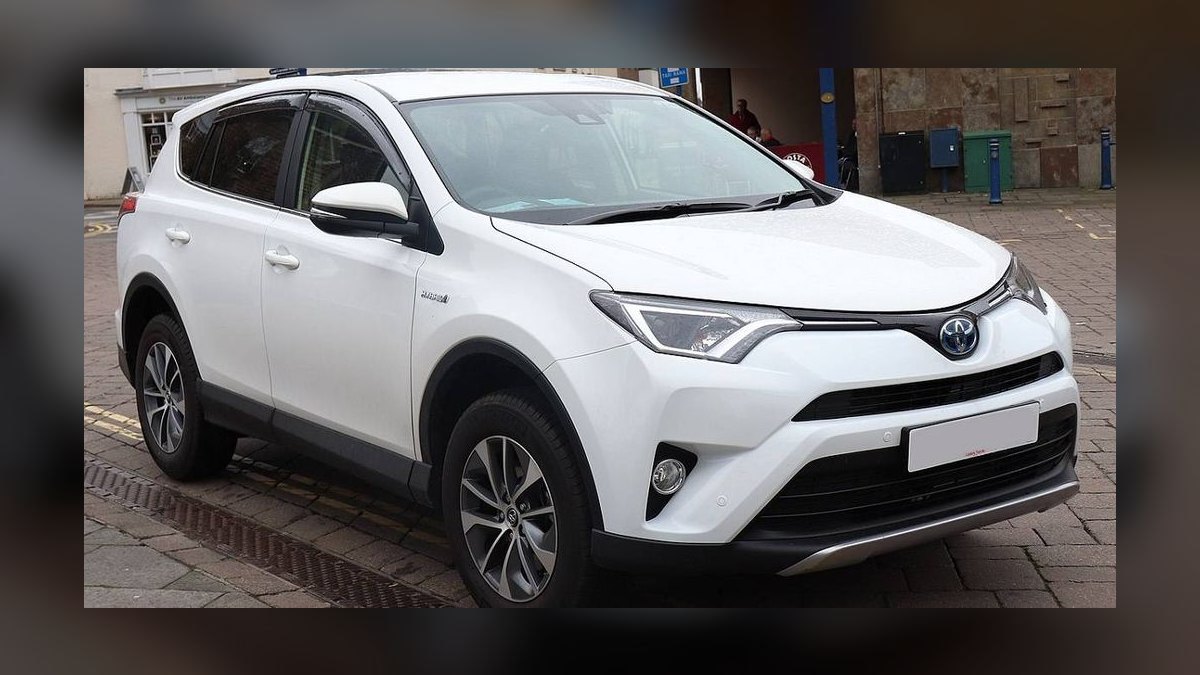
If budget is the binding constraint: the Ford Escape Hybrid. Early Escape Hybrids used a power-split architecture and served extensively as taxi fleets, which is a genuine durability signal. They are cheap now, which means your $15,000 can buy an unusually low-mileage one. Verify parts availability for hybrid-specific components on the oldest examples before committing.
If you want something newer and are flexible on body style: the Kia Niro. It is a hatchback-crossover rather than a true SUV, but it fits the same errands, is available in the Northwest, and its relative youth means better safety tech and a lower-risk battery. The Nissan Rogue Hybrid is worth a look for similar reasons, though it was a lower-volume model, so listings are thinner.
Two adjacent options deserve a mention because they often serve the same buyer better. A used Toyota Prius v — the wagon variant — offers most of a small SUV's cargo utility, better economy, and dramatically deeper supply at this price, and it is common in the Northwest. And if your real requirement is winter capability rather than fuel economy, a non-hybrid Subaru Forester or Outback under $15,000 with under 80,000 miles will be newer, easier to service in every small Northwest town, and cheaper to insure. Being honest about which requirement is actually load-bearing is the highest-leverage move in this entire process.
Related questions
Does a hybrid battery need replacing at a specific mileage?
No. Toyota hybrid packs routinely pass 150,000–200,000 miles on original components. Degradation is gradual — shorter electric range, more engine cycling — not a cliff. Judge by block-level voltage testing under load, not by odometer reading.
Is AWD necessary for Pacific Northwest winters?
West of the Cascades, usually not. Lowland Seattle and Portland see few snow days, and good tires matter more than driven wheels. If you live near a pass or east of the mountains, AWD is a reasonable requirement.
Do Washington and Oregon charge extra fees for hybrids?
Washington has applied additional registration fees to electrified vehicles to offset gas-tax revenue; Oregon has no general sales tax but its own vehicle tax and DEQ testing rules. Confirm current amounts with Washington DOL or Oregon DMV directly.
Should I expand my search beyond hybrid SUVs?
Often yes. A Prius v wagon delivers comparable cargo space with better economy and far deeper supply under $15,000. Body style is frequently a preference, not a requirement — test that assumption before narrowing.
How long will the search realistically take?
Six to ten weeks with saved-search alerts running across the Seattle–Portland corridor. Cars meeting all three filters appear a few times a month and sell within days, so alert speed matters more than search frequency.
FAQ
What is the single most reliable used hybrid SUV under $15,000 with under 80,000 miles?
The Toyota Highlander Hybrid, with the mechanically identical Lexus RX 400h/450h as its close sibling. Both use Toyota's power-split hybrid architecture — the most extensively road-proven hybrid drivetrain ever built, with no conventional automatic transmission to fail and an electric rear motor for AWD instead of a driveshaft and transfer case.
Why are hybrid SUVs more available in the Pacific Northwest than elsewhere?
Washington and Oregon adopted hybrids early and heavily, so the per-capita used pool is deeper than in most regions. That means more listings, more competition among sellers, and a better chance of finding the rare low-mileage example rather than settling for the first one you see.
How much should I budget beyond the purchase price?
Set aside funds for a hybrid-specific pre-purchase inspection, a set of tires, a 12-volt auxiliary battery, an inverter coolant service, and a contingency for the traction pack if it has never been serviced. Independent Seattle and Portland hybrid shops quote rebuilt packs well below dealer pricing.
Does the wet Northwest climate hurt a hybrid specifically?
Not the hybrid system — mild maritime temperatures are actually favorable for battery longevity, since heat is the primary degradation driver. The climate risks are shared with any car: sunroof and cowl drains, hatch seals, moss, and brake corrosion from regen-related underuse. Inspect those specifically.
Is a 15-year-old low-mileage hybrid better than a 10-year-old higher-mileage one?
Not automatically. Sitting unused degrades traction batteries, kills 12-volt batteries, and seizes calipers. A regularly driven 70,000-mile car often presents healthier than a garage-stored 40,000-mile one. Ask about recent usage patterns, not just the odometer.
Can a regular mechanic service these, or do I need a dealer?
Routine work — oil, brakes, suspension, tires — is ordinary and any shop can do it. Hybrid-specific diagnostics and pack work need a shop with the right equipment, and both Seattle and Portland have established independent hybrid specialists, which is a real regional advantage over markets where the dealer is the only option.
Sources
- EPA Fuel Economy — official MPG ratings by model year
- Consumer Reports — Used Cars
- IIHS Vehicle Ratings
- NHTSA Vehicle Safety and Recalls
- Kelley Blue Book
- Edmunds
- Washington State Department of Licensing — Vehicle Registration
- Oregon Driver and Motor Vehicle Services
- Oregon DEQ Vehicle Inspection Program
- RepairPal Reliability Ratings
Related on PULSE
- [Best Used Hybrid Cars Under $15,000 in 2027 (Ranked)](/knowledge/ca0752)
- [Best Used Subcompact SUVs Under $15,000 in 2027 (Ranked)](/knowledge/ca0931)
- [Best Used Electric SUVs Under $15,000 in 2027 (Ranked)](/knowledge/ca0928)
- [Best Used Mid-Size SUVs Under $15,000 in 2027 (Ranked)](/knowledge/ca0930)
- [Best Used Off-Road SUVs Under $15,000 in 2027 (Ranked)](/knowledge/ca0761)
- [Best Used Full-Size SUVs Under $15,000 in 2027 (Ranked)](/knowledge/ca0758)
This page will be disappearing soon. Save it to your device for $1 — or read it free while it is here.
@Kory-White- · if Venmo asks, the last 4 of my number are 2012
 pulse-carsBest Lexus RX Generations (Ranked) in 2027
 pulse-carsBest Kia Seltos Model Years (Ranked) in 2027
 pulse-carsBest Audi A3 Model Years (Ranked) in 2027
 pulse-carsTop 10 SUVs 2010 — Best Overall + Best Value
 pulse-carsTop 10 Sports Cars 1989 — Best Overall + Best Value
 pulse-carsBest Kia Optima and K5 Model Years (Ranked) in 2027
 pulse-carsTop 10 Hybrid Trucks 2027 — Best Overall + Best Value
 pulse-carsTop 10 Mid-Size Sedans 2027 — Best Overall + Best Value
 pulse-carsBest Honda Crosstour Model Years (Ranked) in 2027
 pulse-carsBest Audi Models in 2027