
What do professional car detailers do differently to get a showroom finish in 2027?
 Curated byKory White · Fractional CRO · Maryland
 PULSEKNOWLEDGE LIBRARY
Quality
Certified
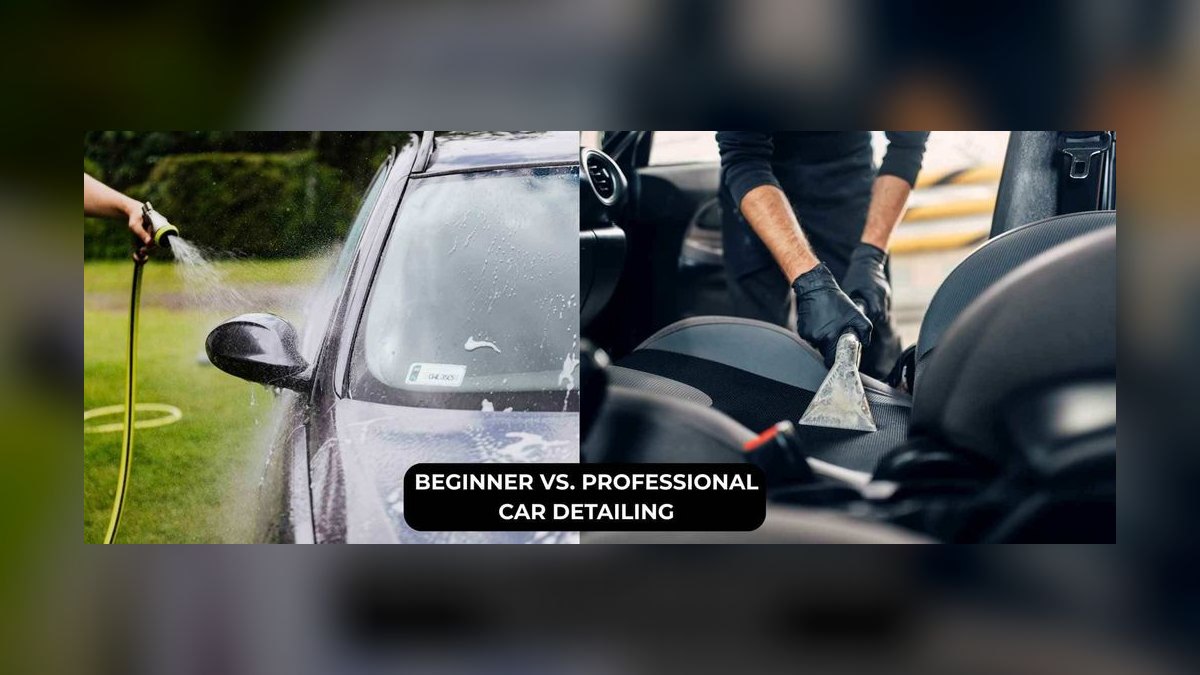
Professional detailers work by measurement, not feel: they wash with contact-minimizing chemistry, decontaminate iron and tar, then use a paint depth gauge and inspection lighting to plan correction. They cut and refine with matched pad-polish pairs, panel-wipe to verify true results, and seal with a coating in a controlled environment.
What separates a professional detail from a very good wash
The gap between an enthusiast wash and a professional showroom finish is not effort — it is sequencing, measurement, and the willingness to stop. An amateur reaches for a one-step all-in-one polish and hopes gloss appears. A professional starts by asking what the paint will tolerate, because every polishing pass consumes clear coat that never grows back.
Factory clear coat on most modern vehicles runs roughly 35 to 55 microns thick on top of base coat and primer, with total paint film thickness typically landing somewhere between 90 and 150 microns depending on the manufacturer and the panel. Aluminum hoods and plastic bumpers often read differently than steel doors on the same car. A professional puts a paint depth gauge on every panel before touching a machine, records the readings, and builds a correction plan around the thinnest panel — not the average.
That single habit is the largest behavioral difference. It converts detailing from a cosmetic craft into a subtractive manufacturing process with a hard budget. A heavy compounding step can remove somewhere in the range of 2 to 5 microns of clear in a single pass. Two aggressive passes on a panel already reading thin, and the operator is one mistake away from burning through to base coat — a repaint, not a polish.
The second separator is lighting. Sunlight is inconsistent and flattering. Professionals inspect under multiple color temperatures and angles: a high-CRI LED inspection light held nearly parallel to the panel to rake the surface, a cool white flood for overall haze, and often a lower-Kelvin warm source that reveals different defect classes. Swirls hide under one light and scream under another. Buffer trails, holograms, and micromarring from an unrefined finishing step are essentially invisible in a dim bay and obvious in a customer's driveway at 4pm.
The third separator is chemical discipline. Every polish leaves behind fillers, oils, and carrier residue that temporarily hide the very defects the operator is trying to remove. A professional panel-wipes with a dedicated IPA or surfactant-based inspection solution between correction stages, so the finish being evaluated is the actual finish. Skipping that step is how a car leaves looking perfect and returns after the first rain looking swirled.
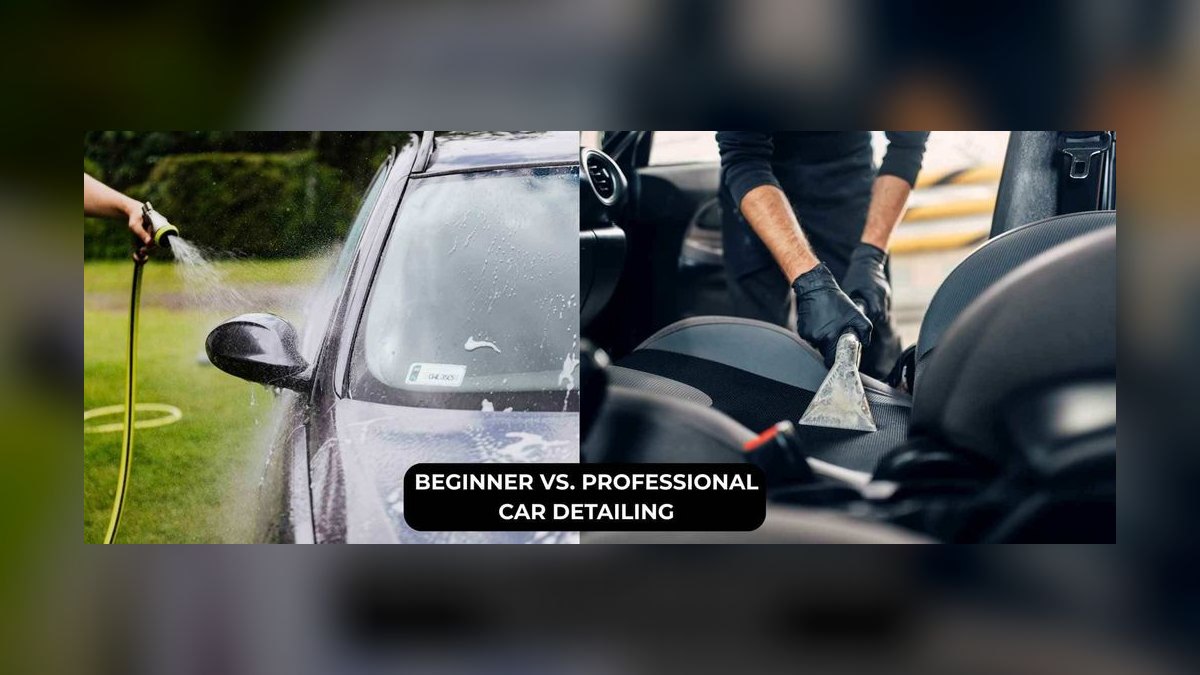
Adjacent trades run the same logic. Aircraft paint crews, marine gelcoat restorers, and architectural metal finishers all measure film build, work to a documented spec, and verify with instruments rather than eyesight. Detailing's professionalization over the last decade has essentially been the import of those habits into a consumer-facing service.
The process professionals actually run, in order
The order matters more than any individual product. Doing a correct step at the wrong time undoes the step before it.
Pre-inspection and documentation. Photos in raking light, paint depth readings logged per panel, existing damage noted — rock chips, prior repaint (a gauge reading of 200+ microns usually means bodywork), sanding scratches, failed coatings. This protects the shop and sets client expectations before a dollar is spent.
Contact-free chemical wash. A pH-neutral or mildly alkaline pre-soak foam dwells for several minutes to lift loose grit. High-pressure rinse follows. Only then does anything touch the paint, and when it does it is a fresh microfiber wash media with two buckets, grit guards, and frequent media changes. The majority of swirl marks on a daily-driven car were installed by its own washing, not by the road.
Decontamination, chemical before mechanical. An iron remover dissolves embedded brake dust — the purple bleeding effect is the chemistry reacting with ferrous particles. A dedicated tar solvent handles road tar and adhesive. Only after both does a clay bar or clay towel come out, and it comes out with heavy lubrication. Claying a car that still has iron and tar on it is just dragging abrasive particles across the clear.
Dry without dragging. Filtered forced air through panel gaps, mirrors, and badges first, then a large plush drying towel used to blot rather than wipe, often with a drying aid for lubrication.
Tape-off and prep. Trim, badges, rubber seals, and plastic edges get masked. Polish residue in textured trim is a nightmare to remove and screams amateur.
Test spot. This is the step enthusiasts skip and professionals never do. Pick one representative panel section, run the least aggressive combination expected to work — typically a light polish on a soft foam pad — inspect, and escalate only if needed. The test spot determines the pad and abrasive pairing for the entire vehicle. It answers the question "what is the minimum I can get away with" instead of "what is the maximum I can throw at it."
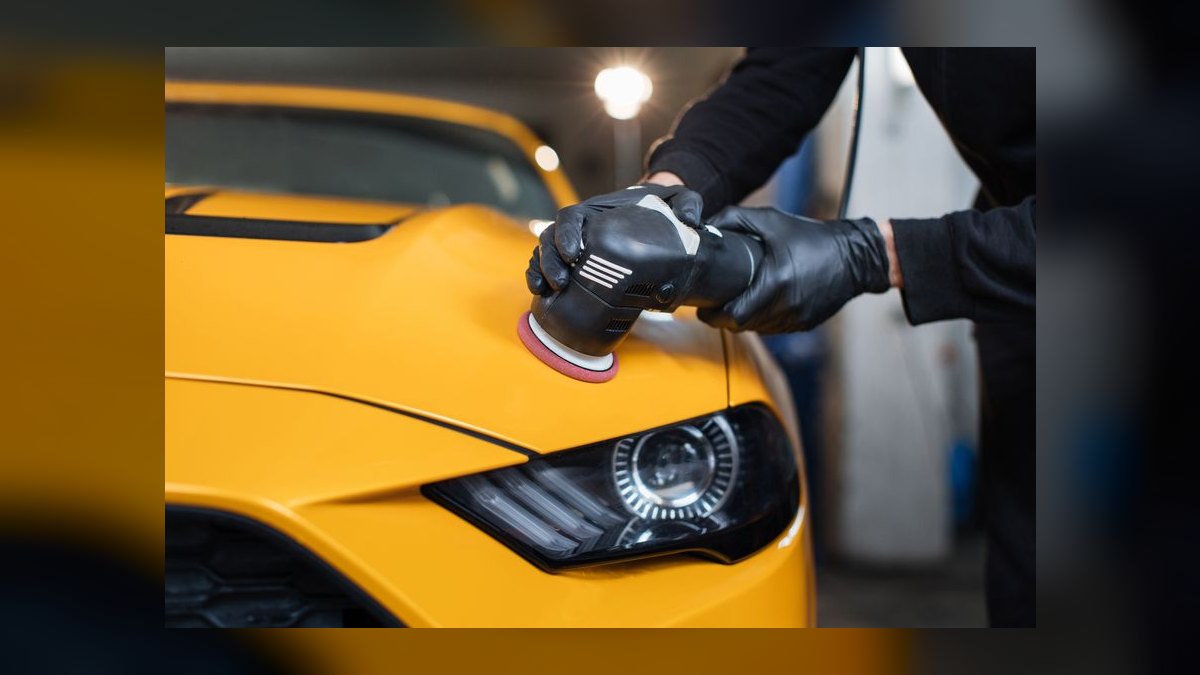
Compounding, then refining. Heavy defect removal with a cutting compound and a firmer pad, followed by a finishing polish on a soft pad to remove the haze the cutting step introduced. Modern diminishing-abrasive polishes let skilled operators one-step many soft-paint cars, but hard German clear often still needs two distinct stages.
Panel wipe and final inspection. Verify under multiple lights, on every panel, before any protection goes down.
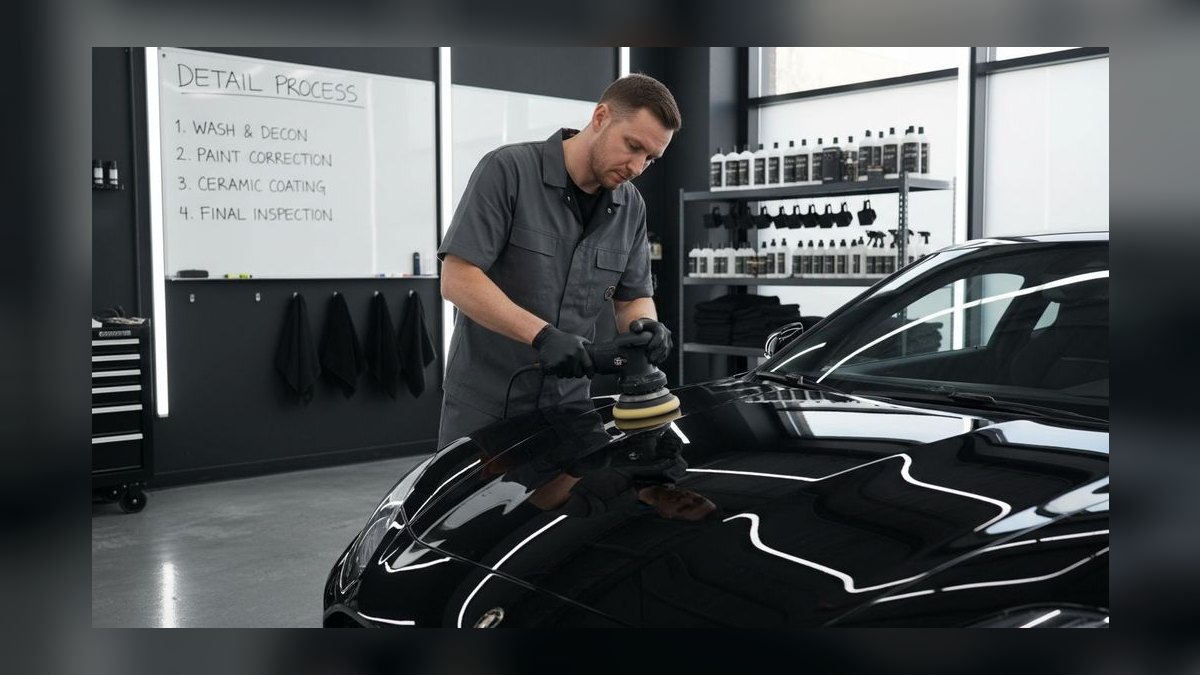
Protection. Coating, sealant, or wax depending on the client's budget and expectations, applied in a temperature- and humidity-controlled space.
What the environment and equipment actually contribute
A showroom finish is partly a building. Detailers who work outdoors in variable conditions are fighting physics the whole time, and the results show it.
Controlled temperature matters because polish behaves differently at 55°F than at 90°F. Cold polish is stiff and cuts poorly; hot panels flash the carriers off before the abrasives finish breaking down, leaving haze and dust. Most correction work happens comfortably in the 65 to 78°F range with the panel itself — not the room — within that band. Infrared thermometers are cheap and standard in serious shops for exactly this reason.
Humidity governs coating chemistry. Many ceramic coatings cure through a moisture-driven reaction, and both extremes cause problems: very low humidity slows cure and leaves the film soft and vulnerable, very high humidity can flash the surface too quickly and cause high spots that must be polished off and reapplied. Shops that coat regularly control humidity or at least measure it and schedule around it.
Lighting has already been covered as an inspection tool, but it is also a workflow tool. Overhead diffuse lighting for general work, plus mobile inspection lights on stands positioned to rake each panel as it is worked, means the operator sees the defect while the machine is still in hand rather than discovering it after the car is reassembled.
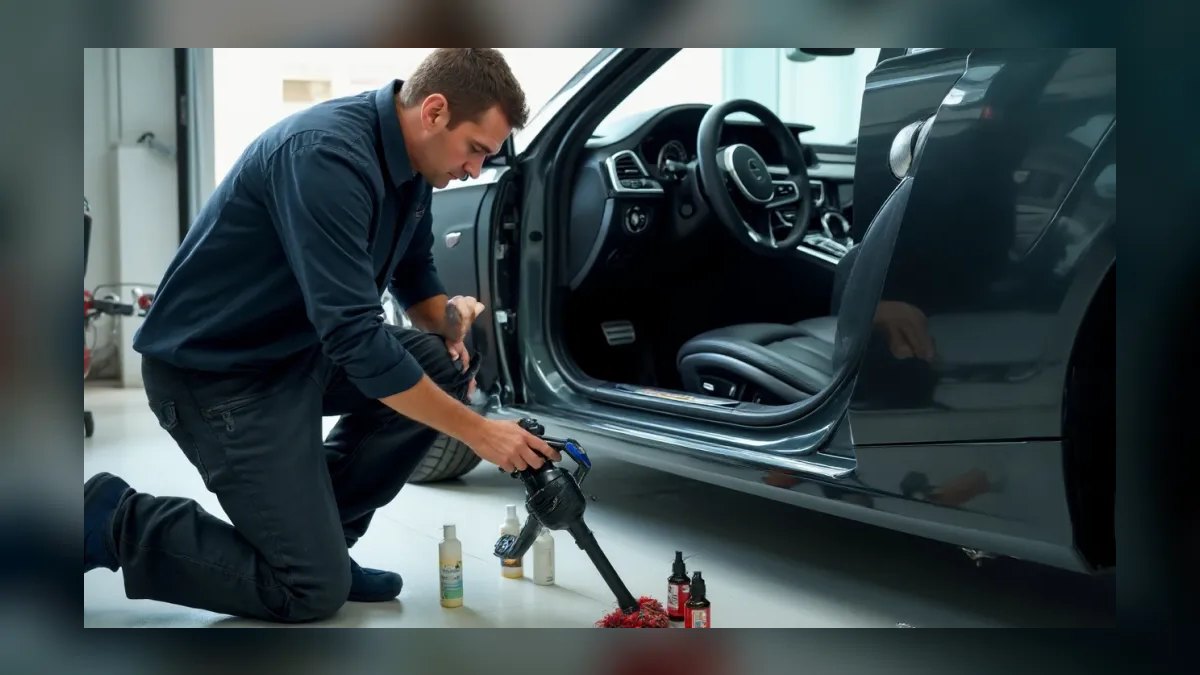
Filtration matters more than most people expect. A single piece of grit landing on a finishing pad turns a refinement pass into a defect-installation pass. Serious bays run positive-pressure air handling or at minimum keep the correction area physically separated from the wash bay, where overspray and airborne debris live.
Equipment differences are real but smaller than people assume. Modern long-throw dual-action polishers with 15 to 21mm orbits deliver most of the cutting speed that used to require a rotary, with dramatically less holograming risk. Rotaries still have a place — heavy sanding scratch removal, wet-sanded refinish work — but a skilled operator with a good DA and correct pad selection produces a finish indistinguishable to the eye. What separates professionals is pad inventory and pad hygiene: dozens of pads on hand, swapped every panel or two, cleaned with compressed air between sections, and retired when they glaze.
Consumables are the quiet budget line. A serious correction consumes microfiber towels by the dozen, and professionals launder them separately by category — polish removal towels never touch coating removal duty, and coating towels are usually single-use. Cross-contaminating a coating-removal towel with polish oils is a direct route to streaking and high spots.
Costs, timelines, and what a realistic quote looks like
Pricing varies enormously by market, so treat these as structural ranges rather than a rate card. The useful framing is hours, because labor is the dominant cost in every tier.
A maintenance detail — proper wash, decon, and a topper — is typically a 2 to 4 hour job. It restores gloss on already-corrected paint and is what keeps a coated car looking new.
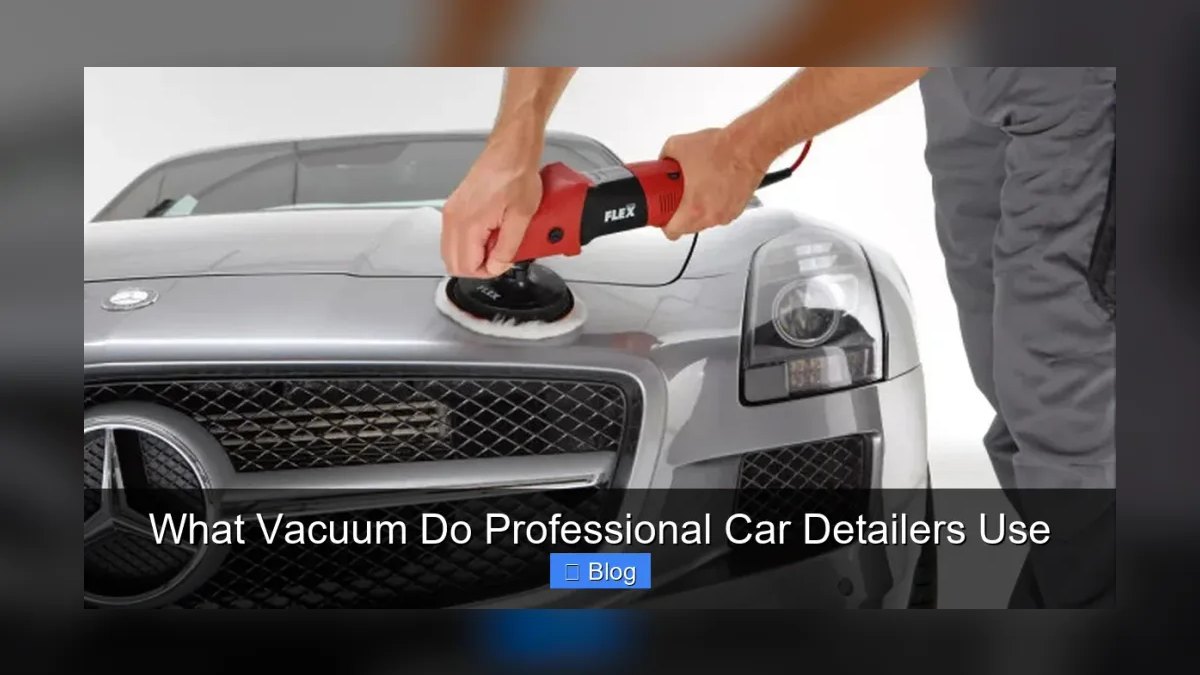
A one-step enhancement adds a single machine polishing stage. Expect 6 to 10 hours on a mid-size sedan. It removes a meaningful share of light swirls and dramatically improves gloss, but it will not touch deeper scratches. This is the highest value-per-dollar service for most daily drivers.
A two-step correction — compound plus refine — lands in the 12 to 20 hour range, sometimes more on a large SUV or a heavily neglected black car. Black and dark solid colors show everything and demand a finer finishing stage, which is why they cost more time.
A multi-stage or show-level correction, potentially including wet sanding of orange peel or isolated defects, can run 25 to 50+ hours. This is concours and high-end resale territory, and it is genuinely the point at which the paint's remaining thickness becomes the binding constraint rather than the budget.
Coating application adds time on top of correction: typically 2 to 5 hours of application depending on layers and coverage areas (wheels, glass, trim, interior), plus a cure window. Most consumer coatings want the vehicle kept dry for 12 to 24 hours, and many reach full hardness over 5 to 7 days. A shop that hands the keys back an hour after coating is skipping the part that makes the coating durable.

The trade-off worth understanding: correction is a one-time consumption of a finite resource, while protection is renewable. A car that receives light annual maintenance polishing rather than a full correction every few years will keep more clear coat over a decade. Professionals who think in terms of the vehicle's lifetime — not the invoice in front of them — actively talk clients out of aggressive correction when the paint does not support it.
Adjacent economics are instructive. Paint protection film shops face the same calculus in reverse: film prevents the damage that would otherwise require correction, so a PPF-plus-coating package on a new car front end often costs less over five years than repeated correction cycles on the same panels. Detailers who also sell film tend to present that math openly, because the client who understands the trade-off buys the better solution rather than the cheaper one.
Where people get it wrong
Treating the wash as the trivial part. Most swirls are wash-induced. A shop that corrects paint beautifully and then hands the client back a sponge and a bucket of dish soap has sold a service with a three-week lifespan. Professionals spend real time on the delivery walkthrough explaining maintenance wash technique, because their portfolio depends on how the car looks in six months.
Chasing 100% correction. Every scratch removable is not every scratch that should be removed. A rock chip or a deep key scratch that has broken through clear will not polish out, and attempting it just thins the surrounding area. The professional answer is honest: "that one stays, here's why."
Polishing without measuring. Covered above, but it deserves repeating because it is the single most expensive mistake in the trade. Burn-throughs are not repairable by polishing. They are a body shop bill.
Skipping the panel wipe. Filler-heavy polishes make bad work look good for about a week. Any shop delivering corrected cars without an inspection wipe is, at best, guessing.
Coating over an uncorrected or contaminated surface. A coating is optically transparent and locks in whatever is underneath it for its service life. Coating over swirls means living with those swirls for two years, or removing the coating to fix them. Prep is 80% of a coating job and application is 20%.
Ignoring high spots during coating. Coatings must be leveled within a working window measured in seconds to a couple of minutes depending on product and temperature. A missed high spot cures into a visible rainbow smear that must be polished off. Professionals work in small sections with good lighting specifically to catch these while they are still correctable.
Using the wrong towel for the wrong job. Coating removal towels loaded with polish residue cause streaking that gets misdiagnosed as a product failure.
Over-promising on durability. Coating marketing claims are aspirational. Real-world durability depends heavily on maintenance behavior, climate, and whether the car lives outdoors. A professional quotes a conservative expectation and explains the maintenance schedule that supports it.
Neglecting the parts nobody photographs. Door jambs, engine bay edges, exhaust tips, and glass. A showroom finish falls apart the moment someone opens a door and sees a dirty jamb. Glass in particular — polished and coated glass changes the perceived quality of the entire car because it is what the driver looks through every day.
Choosing the right service level for the car in front of you
The decision is not "how good can this look" but "what does this specific vehicle, owner, and paint condition justify." A framework beats a menu.
Start with paint thickness. If readings are consistently below roughly 90 microns total, or if any panel reads suspiciously thin, aggressive correction is off the table regardless of what the client wants. Enhancement or protection only.
Then assess defect depth. The fingernail test remains useful: if a nail catches in a scratch, it has likely broken the clear and will not fully polish out. Scratches that do not catch are usually within reach of a correction stage.
Then consider the car's job. A leased daily driver returning in eighteen months does not need a multi-stage correction. A car heading to auction, a show, or a long-term collection does. A new car with factory paint in good condition is the highest-return coating candidate in existence — minimal correction needed, decades of the car's life still ahead of it.
Finally, weigh owner behavior honestly. A client who runs automatic brushes weekly will swirl a corrected finish within a month. For that client, the professional recommendation is a durable coating plus a maintenance plan, not a correction they will destroy.
What is actually changing in the trade
Several shifts are reshaping how professional work gets done, and they compound.
Coating chemistry keeps improving incrementally. Graphene-infused and hybrid silica formulations are marketed heavily, and while the marketing outruns the measurable difference, the practical result is real: modern coatings are more forgiving to apply, more tolerant of a wider application window, and easier to maintain than early-generation products that punished any mistake.
Paint protection film has moved from niche to mainstream. Self-healing top coats on modern films mean light swirls disappear with heat, which fundamentally changes the maintenance conversation. Film plus coating on high-impact areas is now a standard recommendation rather than an exotic upsell, and detailers increasingly need to be competent in both trades or partner with someone who is.
Softer factory paint on many vehicles. As manufacturers moved to lower-VOC waterborne systems, some marques ended up with clear coats that mar easily. That changes technique: finer finishing polishes, softer pads, and more attention to wash-induced marring on cars that were fine a generation ago.
EV-specific considerations. Large aluminum panels, unusual panel gaps, and in some cases thinner or more variable factory finishes mean the gauge matters even more. Charge ports and sensor housings need masking care that a decade-old checklist does not mention.
Sensor and camera awareness. Modern vehicles carry radar behind badges, cameras in mirror housings and glass, and ultrasonic sensors in bumpers. Coatings and films applied over sensor windows can degrade performance. Professionals know which surfaces to avoid.
Mobile operations and water reclamation. Water restrictions in dry regions and municipal runoff rules have pushed rinseless and waterless wash chemistry from a compromise into a legitimate professional tool. A properly executed rinseless wash on a lightly soiled car is safer than a bad hose wash, and it lets mobile operators work in parking garages and office lots where a hose is impossible.
Documentation as a business asset. Shops increasingly deliver a written report: before-and-after photos, paint depth readings, products used, cure instructions, and a maintenance schedule. It justifies the price, reduces disputes, and functions as a warranty record — the same logic that made service records standard in every other vehicle trade.
Training and certification. Manufacturer certification programs for coating and film application have created a floor. They are marketing as much as education, but the effect on the median quality of installed work has been positive.
Related questions
How often should a coated car be polished?
Ideally never on a schedule — only when inspection shows defects worth removing. A well-maintained coated car may go two to four years between light polishing. Every polish removes clear coat, so treat it as a repair, not maintenance.
Is a rotary polisher still necessary?
Rarely for correction work. Long-throw dual-action polishers handle nearly all defect removal with far lower holograming risk. Rotaries remain useful for heavy wet-sanding refinement and refinish work where cutting speed on fresh, thick paint matters most.
Does a ceramic coating prevent scratches?
No. Coatings add chemical resistance, hydrophobicity, and some marring resistance, but they do not stop rock chips or deeper scratches. Paint protection film is the only product that meaningfully absorbs physical impact.
Why do black cars cost more to detail?
Dark solid colors show every swirl, hologram, and micromarring artifact that metallic finishes hide. That forces a more careful finishing stage, more inspection time, and often an extra refinement pass — real added labor hours, not a surcharge.
Can a showroom finish be achieved outdoors?
Correction can be done outdoors with care, but coating application really wants controlled temperature and humidity plus a dust-free cure window. Mobile operators typically schedule coatings for enclosed spaces such as a client's garage.
FAQ
How long does a full professional detail with correction and coating take?
For a mid-size vehicle needing a two-step correction plus a coating, plan on 15 to 25 hours of labor spread across two to three days, followed by a cure period before the car should see rain. Heavily neglected paint, large vehicles, and multi-stage work extend that considerably. Any shop promising a full correction and coating in a single afternoon is either skipping prep steps or defining "correction" very loosely.
Do I actually need a paint depth gauge, or is that overkill for one car?
For a single vehicle you own and intend to keep, it is genuinely useful insurance — it tells you whether the car has been repainted, whether any panel is thin from prior polishing, and how much room you have. For anyone polishing other people's cars, it is not optional. The cost of one burn-through vastly exceeds the cost of the tool.
What is the difference between correction and enhancement?
Enhancement is a single machine polishing stage aimed at improving gloss and removing a portion of light defects. Correction implies working to a target — typically removing the large majority of visible swirls and light scratches — which usually requires a cutting stage plus a refining stage. Enhancement optimizes for value; correction optimizes for result.
Why does my car look perfect at the shop and swirled a week later?
Two likely causes. First, filler-heavy polish residue that was never panel-wiped off masked defects that reappeared after washing or rain. Second, the maintenance wash reinstalled fresh swirls — automatic brush washes and dirty wash media undo correction quickly. A professional shop panel-wipes before delivery and explains the maintenance regimen precisely to prevent both.
Is professional decontamination different from just claying the car?
Yes, and the order is what makes it work. Chemical decontamination comes first: an iron remover dissolves embedded ferrous brake dust, then a solvent lifts tar and adhesive. Only after those does clay come out, and it is used with heavy lubrication to lift what chemistry could not. Claying a contaminated panel drags trapped particles across the clear coat and installs the exact scratches the process is meant to remove.
How do professionals decide when to stop correcting?
By balancing remaining paint thickness against diminishing visual return. Once readings approach the safe floor, or once the remaining defects are deep enough that removing them would consume disproportionate clear coat, the correct answer is to stop and protect. Experienced operators document what they left and explain why, rather than chasing perfection into a burn-through.
Sources
- https://www.iso.org/standard/64632.html
- https://www.astm.org/d7091-22.html
- https://www.epa.gov/npdes/stormwater-discharges-industrial-activities
- https://www.sae.org/standards/
- https://www.cdc.gov/niosh/topics/autobody/default.html
- https://www.osha.gov/autobody
- https://www.consumerreports.org/cars/car-maintenance/
- https://www.iihs.org/topics/advanced-driver-assistance
- https://www.energy.gov/eere/electricvehicles
- https://www.nist.gov/pml/owm
Related on PULSE
- [How much does a ceramic coating actually cost in 2027?](/knowledge.html)
- [Paint protection film vs ceramic coating: which is worth it?](/knowledge.html)
- [How to wash a car without installing swirl marks](/knowledge.html)
- [What does a mobile detailing business need to start?](/knowledge.html)
- [How do you price a detailing service profitably?](/knowledge.html)
This page will be disappearing soon. Save it to your device for $1 — or read it free while it is here.
@Kory-White- · if Venmo asks, the last 4 of my number are 2012
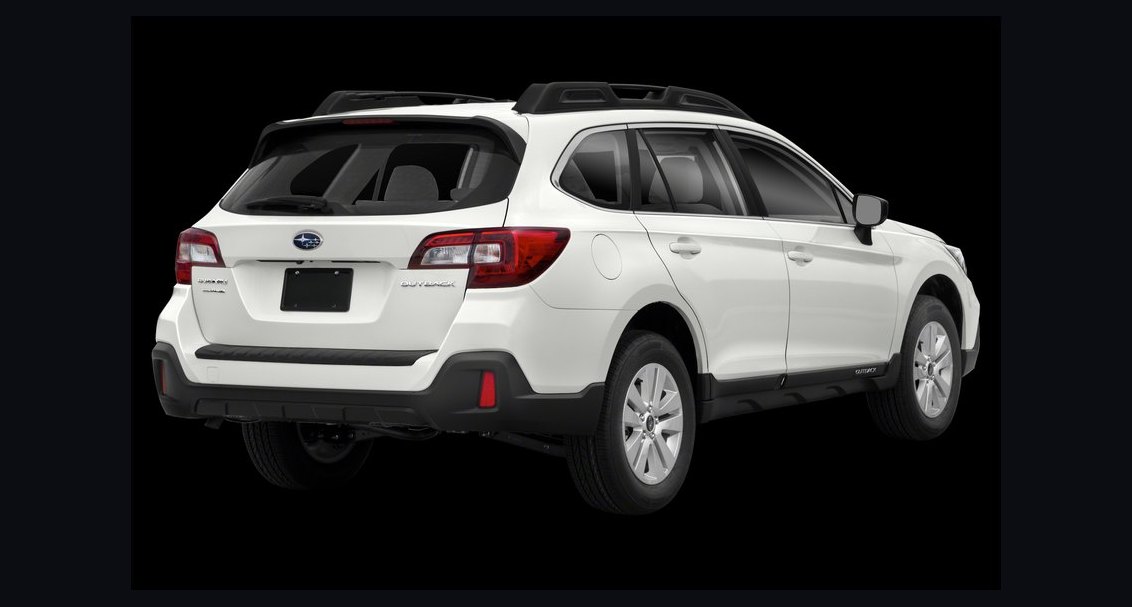 pulse-carsBest Used AWD Cars Under $20,000 in 2027 (Ranked)
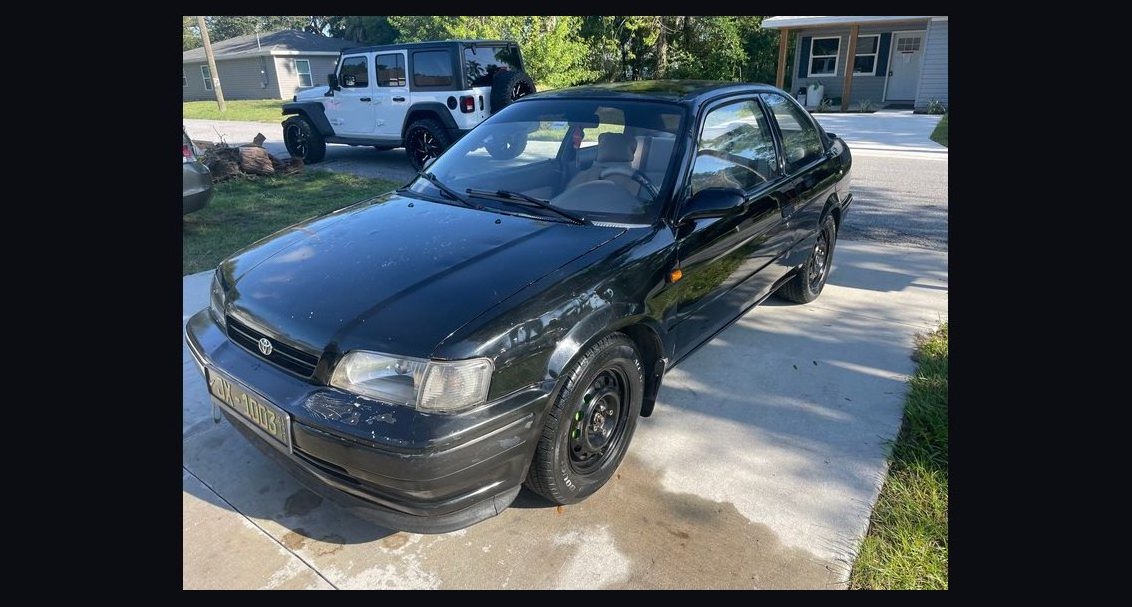 pulse-carsBest Toyota Tercel Model Years (Ranked) in 2027
 pulse-carsTop 10 SUVs 2000 — Best Overall + Best Value
 pulse-carsTop 10 Hot Hatchbacks 2027 — Best Overall + Best Value
 pulse-carsTop 10 Pickup Trucks 1969 — Best Overall + Best Value
 pulse-carsTop 10 Supercars 2027 — Best Overall + Best Value
 pulse-carsTop 10 Compact Cars 2027 — Best Overall + Best Value
 pulse-carsBest Chevrolet Equinox Model Years (Ranked) in 2027
 pulse-carsBest Mazda RX-8 Model Years (Ranked) in 2027
 pulse-carsTop 10 Electric SUVs in 2027