


How much does a 2017 McLaren 570S cost on the used market after fees?
Quality
Certified
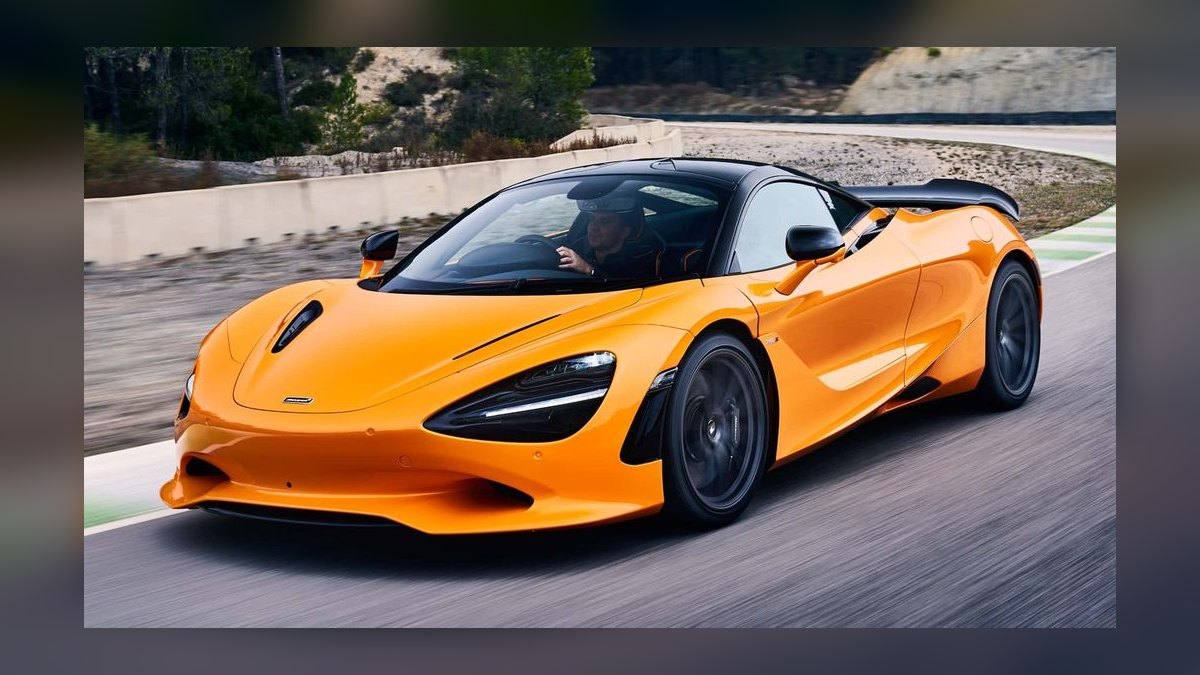
A used 2017 McLaren 570S typically trades between roughly $110,000 and $150,000 depending on mileage, color, options, and service history, with well-kept, low-mile examples at the top of that band. After sales tax, dealer or auction fees, a pre-purchase inspection, and title/registration, buyers should budget an extra 8-15% on top of the purchase price, pushing an all-in total closer to $125,000-$170,000 in most states.
What it is and why it matters
The McLaren 570S is the "entry point" model in McLaren's Sports Series lineup, built on the same carbon-fiber MonoCell tub architecture as the company's more expensive Super Series cars, but with a lower price of admission and slightly softer suspension tuning aimed at daily usability. For the 2017 model year specifically, buyers get McLaren's 3.8-liter twin-turbocharged V8 making 562 horsepower, a seven-speed dual-clutch transmission, and a curb weight under 3,200 pounds — a combination that made the 570S one of the quickest cars in its price class when new, with a 0-60 mph time in the low three-second range.
Understanding what a 2017 570S actually costs on the used market matters for a few practical reasons beyond curiosity. First, the car sits in an unusual depreciation pocket: it's old enough that the steepest first-owner depreciation curve has already happened, but young enough that it isn't yet treated as a collectible with values trending back upward the way some limited-run McLarens are. Second, "cost" for a car like this is never just the purchase price — McLaren ownership carries meaningfully higher insurance, maintenance, and repair costs than a mainstream sports car, so a buyer comparing listed prices without factoring in the full transaction and ownership stack will consistently underestimate what getting into and keeping one of these cars actually requires. Third, the used exotic market moves faster and less predictably than the mainstream used-car market — auction results, seasonal demand, and even color/spec preferences can shift asking prices by tens of thousands of dollars for cars that are otherwise mechanically identical.

For a shopper, dealer, or RevOps-adjacent analyst modeling depreciation curves in the luxury/exotic segment, the 570S is also a useful reference point precisely because McLaren's Sports Series was built in high enough volume (unlike limited-edition McLarens) that pricing data is relatively abundant and comparable across dozens of transactions rather than a handful of one-off sales. That makes the 2017 570S a good proxy for understanding how a modern carbon-tub supercar depreciates and re-stabilizes in year seven to nine of its life, which is roughly where a 2017 car sits as of 2024-2026.
The step-by-step process
Pricing out a used 2017 570S "after fees" is a sequential exercise, not a single lookup, because each step changes the number that follows it.

Step 1 — Establish a baseline from comparable sales. Pull recent closed sales (not just active listings) from auction sites and dealer inventories, filtering specifically for 2017 model-year cars to avoid mixing in later years with minor spec changes. Active asking prices run 5-15% above what cars actually sell for in this segment, so anchoring to closed transactions is essential.
Step 2 — Adjust for mileage and condition. A sub-5,000-mile garage-kept 570S commands a real premium over a 15,000-20,000-mile driver-used example; expect the spread between a low-mile and high-mile 2017 car to be $20,000-$40,000 even before options are considered.
Step 3 — Adjust for spec and history. Track Pack, upgraded wheels, carbon-ceramic brakes, and rare exterior colors add value; a documented accident history, a lapsed service record, or evidence of aftermarket tuning subtracts it, sometimes sharply.
Step 4 — Price the pre-purchase inspection. Before finalizing, a McLaren-specialist PPI (not a generic mechanic) typically costs $300-$600 and should check known 570S wear points: clutch actuation, IRIS infotainment glitches, and any prior accident repair to the carbon tub.

Step 5 — Layer on transaction fees. This includes sales tax (varies enormously by state), dealer documentation fees, title/registration, and — if bought at auction — a buyer's premium commonly around 5% of hammer price.
Step 6 — Add financing or warranty costs if applicable. An extended service contract, given McLaren's expensive parts and labor, is frequently recommended and can run into five figures for multi-year coverage.
Costs, timelines, and typical ranges
Breaking the "after fees" total into its components makes the math transparent rather than a single opaque number.
Purchase price band: As of the mid-2020s, a 2017 McLaren 570S in good, unmodified, accident-free condition with moderate mileage (roughly 8,000-15,000 miles) commonly sells in the $115,000-$140,000 range through dealers and reputable auction platforms. Exceptional low-mile examples with desirable colors and options can reach $150,000 or slightly above; higher-mileage or cosmetically flawed cars can dip toward $100,000 or a bit under.

Sales tax: This is often the single largest "fee" and varies from 0% in states like Oregon, Montana, and New Hampshire to 8-10%+ in parts of California, Washington, and other high-tax jurisdictions. On a $130,000 purchase, that's the difference between $0 and $13,000+ added to the total — easily the largest variable in the entire calculation.
Dealer or auction fees: Traditional dealer documentation fees typically run $200-$800 depending on the state. Auction platforms commonly popular for exotics charge a buyer's premium in the neighborhood of 4.5-5% of the hammer price, which on a $130,000 car adds roughly $5,850-$6,500.
Inspection and transport: A specialist PPI runs $300-$600. If the car isn't local, enclosed transport for a car in this value range typically costs $800-$2,000 depending on distance, since open-carrier transport is generally discouraged for exotics.
Title, registration, and luxury/personal property taxes: Typically a few hundred dollars, though a handful of states levy additional annual personal property tax on high-value vehicles that isn't a one-time "at purchase" fee but should be budgeted into year-one ownership cost.
Financing costs, if applicable: Exotic-car loans often carry slightly higher interest rates than mainstream auto loans and shorter typical terms (36-60 months), which increases the effective total cost if the buyer isn't paying cash.

Putting it together: On a $130,000 baseline purchase price, a buyer in a moderate sales-tax state (call it 6%) paying dealer/PPI fees but not going through auction should budget roughly $140,000-$145,000 all-in. A buyer in a high sales-tax state buying at auction with a buyer's premium could see the all-in number closer to $155,000-$165,000. Timeline-wise, sourcing comps, arranging a PPI, and closing a private-party or dealer transaction typically takes one to three weeks; auction purchases can close faster but require having financing and transport pre-arranged since possession timelines are compressed.
Where teams get it wrong
The most common mistake buyers and even seasoned car-market analysts make is comparing active asking prices instead of closed sales — exotic listings routinely sit 10-15% above what the car eventually transacts for, which inflates perceived market value and leads to overpaying or, on the sell side, unrealistic pricing expectations.
A second common error is treating "after fees" as synonymous with "after sales tax" only. Buyers frequently price out the tax and title work but forget the PPI, forget that a McLaren-specific inspection costs more than a generic one, and forget transport if the car isn't local — each of these is individually small but collectively can add $2,000-$4,000 that catches buyers off guard at closing.

A third mistake is ignoring how heavily spec and documented history swing price within the same model year. Two 2017 570S cars with similar mileage can differ by $20,000+ purely because one has a full documented service history at a McLaren dealer and the other has gaps, or because one carries a desirable color combination that the market is currently paying a premium for. Averaging "2017 570S price" without controlling for these variables produces a number that's directionally useful but can be wrong by tens of thousands of dollars for any specific car.
A fourth, more strategic mistake is underestimating post-purchase costs when budgeting the "true" cost of ownership. Because financing, insurance, and routine maintenance are not part of the one-time "after fees" purchase cost but arrive immediately afterward, some buyers compare the exotic's after-fees price favorably to a new luxury sedan without accounting for the fact that annual maintenance and insurance on a McLaren can run several times higher than a mainstream car — a service interval or clutch-related repair can run into five figures, and insurance premiums are correspondingly elevated given the replacement cost and repair complexity.

Finally, sellers and buyers alike sometimes anchor too heavily on the original MSRP as a reference point. A 2017 570S carried a base MSRP around $184,900 when new; treating current market value as a simple percentage discount off that number ignores nearly a decade of market-specific depreciation dynamics, options that don't hold value proportionally, and the fact that used exotic pricing is driven by current supply and demand for that specific spec, not by amortizing the original sticker.
Decision framework: when to choose what
Not every buyer needs the same purchase path, and the right one depends on priorities around price certainty, convenience, and risk tolerance.
A buyer who wants the lowest possible total after-fees cost and is comfortable doing legwork should lean toward a private-party purchase from an owner with full documented history, paired with an independent McLaren-specialist PPI — this path avoids dealer markup and buyer's premiums but requires more diligence and typically a longer closing timeline.
A buyer who values certainty, a service history the dealer stands behind, and possibly a certified pre-owned warranty should lean toward a franchised or specialist exotic dealer — the purchase price and doc fees will typically run somewhat higher than private party, but the reduced risk and available financing/warranty packages can offset that for a buyer who isn't an expert in the model.

A buyer comfortable with auction dynamics and looking for a wider selection of documented, professionally-photographed cars with transparent bidding history should consider a reputable online auction platform — accepting the buyer's premium in exchange for pricing transparency and a broad national inventory rather than a purely local search.
Related questions
How much did a McLaren 570S cost new in 2017?
The 2017 570S carried a base MSRP around $184,900 before options, destination charges, and any dealer market adjustment, with well-optioned cars often stickering well above $200,000.
Is a used McLaren 570S expensive to maintain?
Yes, relative to mainstream sports cars — routine service, tires, and any clutch or electronics work generally cost significantly more than a comparable Porsche or Corvette, so ownership cost extends well beyond the purchase price.
Does the McLaren 570S hold its value well?

It has depreciated substantially from its original MSRP over its first several years, though depreciation has moderated in more recent years as the model ages into a more stable, established used-market segment.
What's the difference between a 570S and a 570GT?
The 570GT is a more comfort-oriented variant with a glass hatch, softer suspension, and more luggage space, while the 570S is tuned more aggressively for performance; the two typically carry different used-market pricing.
FAQ
How much does a 2017 McLaren 570S cost on the used market? Most clean, moderate-mileage examples sell in the $115,000-$140,000 range, with exceptional low-mile cars reaching $150,000 and higher-mileage or flawed cars trading lower.
What fees should I budget on top of the purchase price? Plan for sales tax (the largest variable by state), a specialist PPI ($300-$600), title/registration, a dealer doc fee or auction buyer's premium, and transport if the car isn't local.

Is buying at auction cheaper than buying from a dealer? Not necessarily — auction buyer's premiums (commonly around 5%) can offset the lack of dealer markup, so the total after-fees cost is often similar; the real difference is selection and process, not guaranteed savings.
Why do two 2017 570S cars with similar mileage sell for very different prices? Spec (color, wheels, Track Pack, ceramic brakes), documented service history, and accident history all move price independently of mileage, sometimes by $20,000 or more.
Should I get an extended warranty on a used McLaren? Many buyers do, given how expensive McLaren parts and labor are; a multi-year extended service contract can cost into the five figures but meaningfully caps downside risk on major repairs.
Does the sales tax really make that much difference? Yes — on a $130,000 purchase, tax alone can range from $0 in a no-sales-tax state to well over $10,000 in a high-tax jurisdiction, making it the single largest swing factor in the total after-fees cost.
Sources
- https://www.hagerty.com/valuation-tools
- https://bringatrailer.com/mclaren/570s/
- https://www.caranddriver.com/mclaren/570s
- https://www.motor1.com/mclaren/570s/
- https://www.kbb.com/mclaren/570s/
- https://www.edmunds.com/mclaren/570s/
- https://cars.mclaren.com/us-en
- https://classic.com/m/mclaren/570s/
Related on PULSE
- How much does a 2018 McLaren 570S cost on the used market after fees?
- What is a used McLaren 720S worth today?
- How does exotic car depreciation compare to luxury sedan depreciation?
- What should a pre-purchase inspection on a supercar cost?
- Is buying a used supercar at auction cheaper than through a dealer?
- How much does it cost to insure a McLaren 570S?
This page will be disappearing soon. Save it to your device for $1 — or read it free while it is here.
@Kory-White- · if Venmo asks, the last 4 of my number are 2012
This page is gone.
This one is off the shelf now. $1 keeps it on your phone for good — the whole page, pictures and diagrams included.
 pulse-carsTop 10 SUVs 2005 — Best Overall + Best Value
 pulse-carsTop 10 Mid-Size Sedans 2026 — Best Overall + Best Value
 pulse-carsTop 10 Off-Road SUVs 2023 — Best Overall + Best Value
 pulse-carsBest Used Compact SUVs Under $15,000 in 2027 (Ranked)
 pulse-carsBest Cars for Dog Owners in 2027 (Ranked)
 pulse-carsBest Used Off-Road SUVs Under $10,000 in 2027 (Ranked)
 pulse-carsBest Used Off-Road SUVs Under $40,000 in 2027 (Ranked)
 pulse-carsBest Used Luxury Cars Under $40,000 in 2027 (Ranked)
 pulse-carsBest Cars for Families in 2027 (Ranked)
 pulse-recentTop 10 Supercars With the Quickest 0-60 MPH Times in 2027