


What does supercar paint protection film cost for full front or full body coverage in 2027?
Quality
Certified
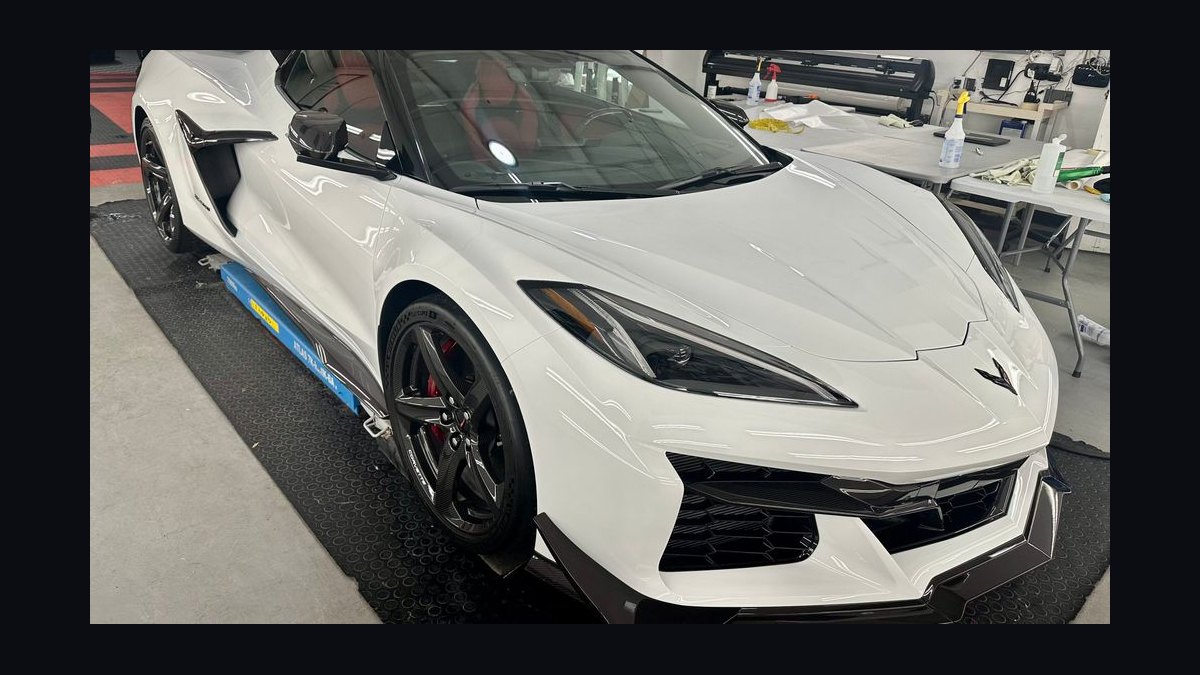
Supercar paint protection film typically costs $2,500–$4,500 for full front coverage and $7,000–$15,000+ for full body coverage, depending on vehicle size, film brand, installer skill, and whether paint correction is included. Full front usually covers bumper, hood, fenders, mirrors, and headlights; full body wraps every painted panel.
The outcome you should expect
When you budget for paint protection film on a supercar, the final invoice rarely lands at a single clean number. What you should expect is a range that narrows considerably once you decide three things: how much of the car gets covered, which film product goes on, and who installs it. A full front package on a mid-engine supercar — front bumper, full hood, front fenders, mirror caps, A-pillars, headlights, and often the leading edge of the roof — typically settles between $2,500 and $4,500 at a reputable shop. The same car done full body, meaning every painted surface plus often the carbon fiber trim, door cups, and rocker panels, usually runs $7,000 to $15,000 and can exceed $18,000 on limited-production cars with complex curves or matte finishes.
Those numbers assume a professional installation using a premium film such as XPEL Ultimate Plus, SunTek Ultra, or 3M Scotchgard Pro Series. They also assume the paint is in good condition. If the car needs paint correction before film goes on — swirl removal, scratch polishing, or worse, a resprayed panel that needs to cure — add $500 to $2,500 depending on severity. If the installer needs to disassemble bumpers, remove badges, or pull mirrors to wrap edges properly, labor climbs further.
What you are really buying at the top of that range is not just material. You are buying a pattern cut specifically for your model, an installer who has done that model before, a warranty that covers both film and labor, and a shop that will stand behind the work if a corner lifts or a rock strike punctures the film. The cheapest quote you get will almost always be the one that skips one of those four things.

It also helps to think in terms of cost per panel. A single front bumper on a supercar with aggressive aero and splitter cutouts can be $800 to $1,500 on its own because of the complexity. The hood might be $600 to $1,200. Front fenders $400 to $900 each. Once you add those up, the full front package price stops looking arbitrary and starts looking like arithmetic. Full body simply continues that arithmetic across every panel, which is why the jump from front to full body is so large — you are roughly tripling or quadrupling the surface area and the labor hours.
Finally, expect the quote to be time-sensitive. Film prices move with material costs, and installers raise rates as their calendars fill. A quote from six months ago is not a quote today. Get three written estimates within the same month if you are serious about comparing.
What drives that outcome
The price of supercar paint protection film is not random. It is the sum of several inputs, each of which you can influence. Understanding them lets you see why two shops quote the same car $3,000 apart.

The first driver is surface area and panel complexity. A full front on a Porsche 911 is not the same job as a full front on a Lamborghini Aventador. The Aventador has more aggressive angles, larger intakes, and panels that require the installer to stretch and relief-cut the film. Complexity adds labor hours, and labor is the largest line item on most invoices. A straightforward full front might take six to eight hours. A complex full body can take three to five days.
The second driver is film product. Premium films with self-healing topcoats, hydrophobic layers, and 10-year warranties cost the shop more per roll. That cost flows to you. A shop using a mid-tier film can quote lower, but you may trade away clarity, self-healing speed, or warranty length. For a supercar, most owners choose the premium tier because the paint underneath is worth far more than the film.
The third driver is installer skill and shop overhead. A certified installer who has completed manufacturer training and maintains a clean, dust-controlled bay charges more than a general tint shop that also does film on the side. That premium is not arbitrary. It reflects the risk of a bad install, which on a supercar can mean a repaint costing tens of thousands. You are paying for the probability that the job is done right the first time.
The fourth driver is prep work. Paint correction, decontamination, and panel wipe are not optional if you want the film to look good and adhere properly. Some shops bundle prep into the quote. Others list it separately. Always ask which it is. A quote that looks $800 cheaper may simply be excluding prep.

The fifth driver is geography. Labor rates in a major metro area are higher than in a smaller market. A full body install in Los Angeles or Miami will typically cost more than the same job in a mid-sized city, even with identical film and identical skill. That is not a rip-off. It is rent, insurance, and the cost of doing business in an expensive market.
The sixth driver is the car itself. Limited-production supercars with unusual curves, matte paint, or exposed carbon fiber require more care. Matte paint cannot be polished the same way gloss paint can, so prep is different. Exposed carbon fiber may need a different film or a different approach to avoid lifting at the weave edges. These are not upcharges for the sake of it. They are real differences in how the job must be done.
Benchmarks and realistic ranges
To make this concrete, here are the ranges you should expect to see when you collect quotes. These are based on common market pricing for premium film installed by reputable shops, and they will vary by region and vehicle.
Full front coverage, standard supercar: $2,500 to $4,500. This includes front bumper, full hood, front fenders, mirror caps, headlights, and often A-pillars and the leading edge of the roof. On a car with a simple nose, you may land near the bottom. On a car with a complex nose, splitter, and canards, you will land near the top.

Full front coverage, hypercar or limited-production: $4,500 to $7,000. The additional cost comes from panel complexity, the need for custom patterns, and the higher risk of a difficult install. Some shops will not quote these cars without seeing them in person.
Full body coverage, standard supercar: $7,000 to $15,000. This covers every painted panel, plus commonly the door cups, rocker panels, and sometimes the rear diffuser area. The spread reflects film choice, prep needs, and regional labor rates.
Full body coverage, hypercar or limited-production: $15,000 to $25,000+. At this level you are paying for a specialist who has done the model before, often with a waiting list. The film itself may be a small fraction of the total. Labor, risk, and expertise dominate.
Track package or partial coverage: $1,200 to $3,000. Some owners choose to cover only the areas most exposed to rock strikes — front bumper, hood, mirrors, and rockers — without doing the full front. This is a middle path that captures most of the protection for a lower price.
Add-ons you should expect to see quoted separately: paint correction ($500 to $2,500), ceramic coating over the film ($500 to $1,500), window film ($300 to $800), and PPF on interior carbon or door sills ($200 to $600). None of these are mandatory, but many owners bundle them because the car is already at the shop.
What you should not expect: a full body install for $4,000. If you see that quote, ask what film is being used, how many hours the installer is budgeting, and whether prep is included. Something is being left out. It may be film quality, it may be prep, or it may be the installer's experience. On a supercar, that is a risk you do not want to take.

It also helps to compare quotes on a per-panel basis. Ask each shop to break down the quote by panel. A shop that cannot or will not do this is either guessing or hiding something. A shop that can show you exactly what each panel costs is one you can trust to be transparent.
Risks, edge cases, and failure modes
The biggest risk with supercar paint protection film is not the film itself. It is a bad install. A poorly applied film can trap dust, lift at edges, stretch unevenly, or discolor. On a supercar, fixing a bad install often means removing the film and starting over, which can cost as much as the original job. In rare cases, improper removal can damage the paint underneath. This is why installer selection matters more than film brand.
The second risk is unrealistic expectations about what film can do. Paint protection film is sacrificial. It absorbs rock strikes, bug splatter, and light abrasion so your paint does not have to. It is not armor. A large rock at highway speed can still puncture the film and mark the paint beneath. A deep scrape against a curb will still damage the panel. Film reduces the probability of damage. It does not eliminate it.

The third risk is warranty confusion. Most premium films carry a manufacturer warranty against yellowing, cracking, and delamination. That warranty typically does not cover labor to remove and reinstall the film, and it does not cover damage from accidents or misuse. Some shops offer their own labor warranty on top. Ask specifically what is covered and for how long. A 10-year film warranty with a 1-year labor warranty is very different from a 10-year film warranty with a 10-year labor warranty.
The fourth risk is matte or satin paint. Matte finishes cannot be polished, and some films will change the appearance of matte paint by adding gloss. If your supercar has a matte finish, you need a film designed for matte surfaces, and you need an installer who has worked with it. This is a smaller pool of shops, and the price reflects that.
The fifth risk is edge lifting. Film is wrapped around panel edges, but on complex curves the installer may need to make relief cuts. If those cuts are not sealed properly, edges can lift over time, especially with pressure washing. Ask your installer how they handle edges and what you should do if an edge lifts. A good shop will fix it under warranty. A bad one will blame you.
The sixth risk is the "cheap now, expensive later" trap. A low quote often means a less experienced installer, a lower-grade film, or skipped prep. Any of those can lead to premature failure. On a $300,000 car, saving $1,500 on film is not a saving if it means the film fails in two years and you pay to have it removed and redone.
A practical rollout plan

If you are ready to move forward, here is a plan that keeps you in control of the process and the budget.
Step one: decide your coverage level. Full front is the most common choice for supercars because it protects the areas most exposed to rock strikes and road debris. Full body is for owners who want maximum protection and are willing to pay for it. There is no wrong answer, but be honest about how you use the car. A garage queen that sees occasional canyon drives has different needs than a daily-driven supercar.
Step two: shortlist three shops. Look for shops that specialize in supercars, have a clean and dust-controlled install bay, and can show you examples of their work on your model or similar models. Ask for references. Ask how long they have been installing film. Ask what film brands they carry and why.
Step three: get written quotes. Each quote should break down coverage by panel, list the film product, state whether prep is included, and specify the warranty terms. If a quote is vague, ask for clarification before comparing it to others.
Step four: ask about prep. Paint correction is not always necessary, but it should be assessed. If the shop says your paint is perfect and skips prep entirely, ask how they verified that. A good shop will inspect under proper lighting and tell you honestly what the paint needs.
Step five: schedule the install. Expect the car to be at the shop for one to five days depending on coverage. Full front is usually a one-day job. Full body can take a week. Plan accordingly.

Step six: inspect the work before you pay. Look at edges, corners, and complex curves. Check for dust under the film, lifted edges, and uneven stretch marks. Ask the installer to walk you through the job and point out anything you should watch. A good shop will do this without being asked.
Step seven: follow the aftercare instructions. Do not wash the car for at least a week after install. Avoid pressure washing near edges. Use a pH-neutral soap. If an edge lifts, call the shop. Do not try to fix it yourself.
Related questions
How long does paint protection film last on a supercar?
Premium film with a self-healing topcoat typically lasts 7 to 10 years with proper care. Garage-kept cars in mild climates often reach the upper end. Cars parked outside in intense sun may see yellowing or degradation sooner. Manufacturer warranties usually cover 5 to 10 years.
Can I install paint protection film myself to save money?
You can buy precut kits, but installing film on a supercar without experience is risky. Complex curves, edge wrapping, and dust control are difficult to get right. A failed DIY install can cost more to remove and redo than a professional job would have cost originally.
Does full body PPF increase resale value?
It can help preserve the paint, which matters on a supercar where original paint is part of the value. A buyer may pay more for a car with intact, film-protected paint. However, you rarely recoup the full cost of the film in resale. Think of it as protection, not an investment.
What is the difference between full front and full body coverage?

Full front covers the bumper, hood, fenders, mirrors, headlights, and often A-pillars. Full body covers every painted panel plus commonly door cups, rockers, and trim. Full front addresses the areas most exposed to rock strikes. Full body addresses everything.
Is paint protection film worth it on a supercar?
For most supercar owners, yes. The cost of a respray on a supercar can be $10,000 to $50,000 or more depending on the paint and panels involved. Film at $2,500 to $15,000 is a fraction of that, and it preserves original paint, which matters for resale and for peace of mind.
FAQ
How much does full front PPF cost on a supercar? Full front coverage on a supercar typically costs $2,500 to $4,500 installed. This includes the front bumper, full hood, front fenders, mirror caps, headlights, and often A-pillars. Complex noses and limited-production models can push the price higher. Regional labor rates also affect the total.
How much does full body PPF cost on a supercar? Full body coverage typically runs $7,000 to $15,000 on a standard supercar and $15,000 to $25,000 or more on hypercars or limited-production models. The price depends on film product, panel complexity, prep work, and installer expertise. Full body covers every painted panel plus commonly rockers and door cups.

Does the film brand affect the price? Yes. Premium films with self-healing topcoats, hydrophobic layers, and longer warranties cost more per roll, and that cost flows to the customer. A shop using a mid-tier film can quote lower, but you may trade away clarity, durability, or warranty length. On a supercar, most owners choose the premium tier.
Is paint correction included in a PPF quote? Not always. Some shops bundle prep into the quote, while others list it separately. Paint correction can add $500 to $2,500 depending on the condition of the paint. Always ask whether prep is included before comparing quotes, because a lower quote may simply be excluding it.
How long does a full body install take? A full front install is usually a one-day job. A full body install can take three to five days, sometimes longer on complex cars. The car needs time for the film to cure and for the installer to inspect edges and corners. Plan for the car to be at the shop for up to a week.
Can PPF be applied over matte paint? Yes, but you need a film designed for matte surfaces, and you need an installer experienced with matte paint. Standard gloss film will change the appearance of matte paint. Matte-specific films preserve the finish but are less common and may cost more. Not every shop offers them.
Sources
- XPEL paint protection film
- 3M Scotchgard Pro Series
- SunTek paint protection film
- Tesla Motors Club PPF cost discussion
- Rennlist Porsche PPF pricing threads
- FerrariChat paint protection discussions
- Corvette Forum PPF cost threads
- Reddit r/cars PPF cost experiences
Related on PULSE
- Ceramic coating vs paint protection film: which comes first?
- How to choose a PPF installer for a high-value car
- Paint correction before PPF: when it is necessary
- PPF warranty terms you should read before signing
- Track-day paint protection: partial PPF vs full front
- Resale value impact of PPF on exotic cars
This page will be disappearing soon. Save it to your device for $1 — or read it free while it is here.
@Kory-White- · if Venmo asks, the last 4 of my number are 2012
This page is gone.
This one is off the shelf now. $1 keeps it on your phone for good — the whole page, pictures and diagrams included.
 pulse-recentTop 10 Muscle Cars 1964 — Best Overall + Best Value
 pulse-recentWhat does it cost to replace the timing chain on a Mazda CX-5 in 2027?
 pulse-carsTop 10 SUVs 2005 — Best Overall + Best Value
 pulse-carsTop 10 Mid-Size Sedans 2026 — Best Overall + Best Value
 pulse-carsBest Used Off-Road SUVs Under $15,000 in 2027 (Ranked)
 pulse-carsBest Cars for Dog Owners in 2027 (Ranked)
 pulse-recentTop 10 Muscle Cars 1986 — Best Overall + Best Value
 pulse-carsBest Crossovers for Seniors in 2027 (Ranked)
 pulse-recentTop 10 Supercars With the Quickest 0-60 MPH Times in 2027
 pulse-carsBest Sleeper Cars in 2027