
How do you coach reps you never see in person?
 Curated byKory White · Fractional CRO · Maryland
 PULSEKNOWLEDGE LIBRARY
You coach reps you never see in person by replacing hallway osmosis with a deliberate visibility system: pull the recorded call before every 1:1, run a question-driven GROW conversation off one timestamped moment, and keep an async touch between sessions. Trust on a distributed team is earned through relentless consistency — same slot, real evidence, kept commitments.
The synchronous ride-along versus the async evidence model
When a rep sits down the hall, coaching is ambient. You overhear the objection land badly, you watch the shoulders slump after a stalled discovery call, you tap them on the way to the kitchen. That signal is free, continuous, and invisible until it disappears. The moment the team goes remote, every one of those unearned data points vanishes, and a manager has to rebuild the signal deliberately. There are two very different ways to do it, and most managers default to the wrong one because it feels familiar.
Option A — the synchronous ride-along model. You lean on live video to recreate the office. Standing daily huddles, back-to-back 1:1s, "hop on this call with me" shadowing, and a steady stream of Slack pings. Coaching happens in real time, in the moment, the way it did in the bullpen. It feels intimate and responsive, and a new manager gravitates to it because it mimics the only thing they know. The trouble is that it treats the manager's calendar as an infinite resource and quietly rewards the loudest rep instead of the one who needs help.
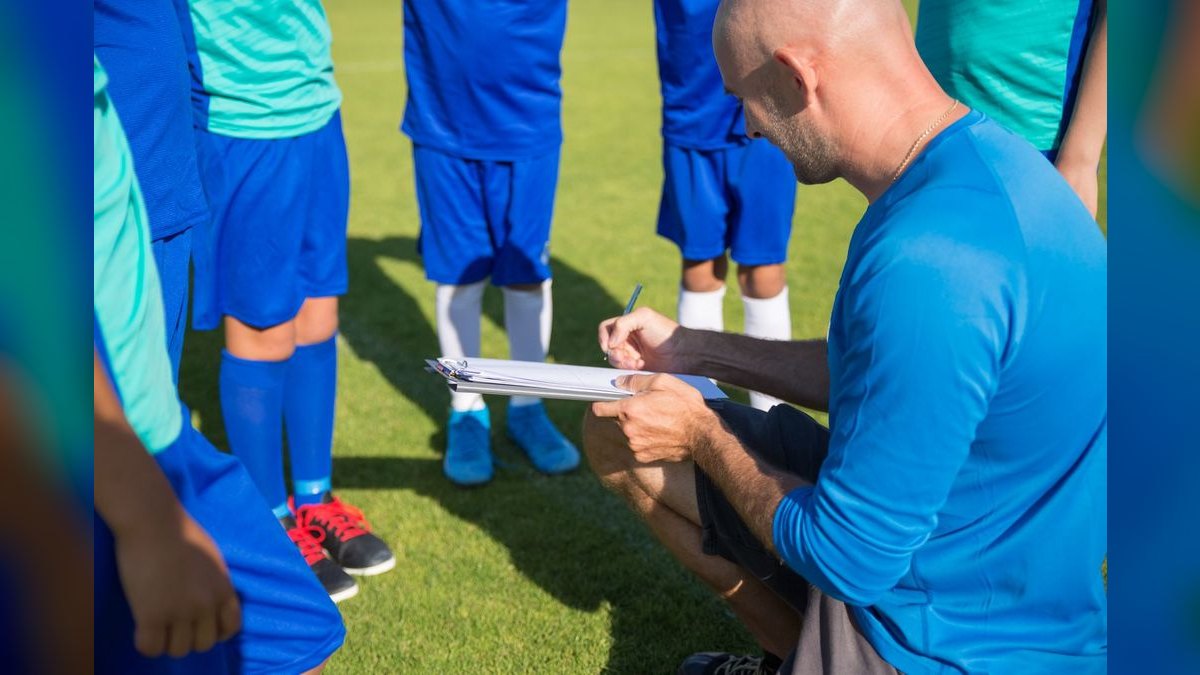
Option B — the async evidence model. You build a recording-first system. Every call lands in Gong, Chorus, Salesloft, or whatever conversation-intelligence tool you run. You review the actual work *before* you ever talk to the person, you arrive at the 1:1 with one specific timestamped observation instead of "how's it going," and you sustain momentum between live calls with a short recorded artifact — a 90-second Loom, a written thread, a snippet with a comment. Live time is reserved for skill and trust, never for status updates you could have read.
The honest trade-off is about ceilings and blind spots. Option A scales to maybe five or six reps before your week collapses, and it punishes the quiet performer because you end up coaching whoever pings you most, not whoever is silently drifting. It also confuses presence with productivity — you find yourself watching green status dots instead of recorded outcomes. Option B costs more setup, asks the rep to tolerate being recorded, and demands discipline you have to build. In return it scales to eight or ten reps, surfaces the rep who is fumbling discovery in silence, and produces objective, coachable artifacts you can point at. The best remote managers run Option B as the spine and borrow Option A's warmth only for the human beat at the end of each conversation. You never fully abandon live connection — you just stop making it carry the entire load.

How the incentive quietly changes rep behavior
The reason the async model wins is not the tooling — it is what each model rewards. Under the synchronous model, a rep learns fast that the way to get your attention is to be loud: escalate, ping, ask for a ride-along on the deal they already feel good about. The quiet rep with a stalling pipeline gets less of you at the exact moment they need more of you. You are being pulled toward the deals that surface themselves, which is precisely backward from coaching triage, where attention should flow to the biggest gap.
Under the evidence model, attention is allocated by the work itself. Because you watch the calls, the rep who never speaks up but is butchering the first three minutes of discovery becomes just as visible as the one flooding your DMs. That shifts rep behavior in a healthy direction. Reps stop performing busyness and start improving the recorded artifact, because they know the recording — not the Slack status, not who looked online at 7 a.m. — is what you actually judge. It also removes the temptation to rescue. On a live synchronous call the fastest move is to jump on the deal and close it for them; it feels helpful and it quietly destroys both their confidence and your read on their real skill. The async model forces you to coach the person to run the *next* call themselves, because you are reviewing their recording rather than co-piloting yours. You are never the one on the phone, so you can never be the crutch.

How to decide which model fits the rep
Do not pick by preference — pick by team shape, tenure mix, and how mature your recording stack is. A brand-new SDR on day three needs far more synchronous contact than a two-year AE who just needs a weekly evidence review and a place to think out loud. The decision also hinges on one hard prerequisite: if you cannot even see the work, no model matters yet. Fix visibility first. Get recordings flowing and basic CRM hygiene in place before you argue about cadence, because coaching without evidence on a remote team is coaching guesses.
The practical rule that falls out of the diagram: default every established rep to the async evidence model, and reserve heavy synchronous contact for the first 30 days and for genuine will-and-connection dips. And never try to coach a structural problem. A rep sitting on broken lead routing, an impossible territory, or leads that were dead before they arrived cannot be coached out of it, no matter how sharp the 1:1 is. That is a RevOps escalation, not a coaching moment, and mislabeling it burns the rep's trust faster than almost anything else you can do — because you are asking a person to fix with effort a thing that only the system owner can fix.
Concrete numbers behind each option
Give each model a real cadence so you can budget your week honestly. These are working ranges, not laws — tighten or loosen them to your team's tenure and your own bandwidth.
Synchronous model cost. Daily standups run 10–15 minutes. Live 1:1s run 30 minutes each; at five reps that is 2.5 hours a week before any shadowing. Add two ad-hoc ride-alongs at 45 minutes apiece and you are near four hours of pure live coaching for five people — and it does not stretch to eight without cannibalizing everything else you own. That ceiling is exactly why the synchronous-only model breaks on a growing distributed team: your calendar is the bottleneck, and it does not get bigger when the headcount does.
Async evidence model cost. Pre-1:1 call review is where the time goes, but it is time-shifted and compressible in ways live coaching never is. Watch calls at 1.5x, or review a 60-second conversation-intelligence snippet with the key moment already flagged instead of the full 40-minute recording. Budget 15–20 minutes of review per rep per week plus a 30-minute live 1:1, and a distributed manager can carry eight to ten reps inside the same four hours the synchronous model spent on five. The async midweek touch — a 90-second Loom referencing last week's commitment — costs you two minutes and buys a full week of sustained coaching across the gap between live calls.

A concrete 30/60/90 for a new remote rep:
- Days 1–30: a daily 10-minute async Loom or written check-in, plus two recorded-call reviews per week. The goal is a basic skill baseline plus early rapport, so this leans synchronous on purpose — a brand-new person in a home office with no team around them needs frequency more than depth.
- Days 31–60: one 30-minute live weekly 1:1 plus one async midweek nudge, and one deep call review a week. Introduce peer call-review pods here so the rep starts hearing feedback from someone other than the person who signs their reviews.
- Days 61–90: standard steady state — a weekly 1:1, one monthly skill deep-dive, and self-directed call review where the rep fills out their own scorecard *before* the 1:1 so the meeting starts from their read, not yours.
Leading indicators to track under either model, because on a remote team you cannot eyeball effort and login time tells you nothing: calls reviewed per week, discovery-to-demo and demo-to-close conversion, multi-threading rate (contacts per opportunity — a genuine predictor of whether a remote deal survives a champion going quiet), talk-to-listen ratio pulled straight from the recording tool, ramp time to first closed deal, and the single metric that proves the whole system is real rather than theater — commitment-to-evidence follow-through: did the specific thing the rep committed to last week actually show up in this week's recordings? If it never does, your cadence is decoration.

Implementation details and sequencing
Whichever balance you land on, the operating loop is identical, and it dies the moment you break the rhythm — nothing on a distributed team happens by accident or osmosis. Sequence it deliberately, and protect the sequence.
Start every coaching conversation with evidence, not vibes. "How's everything going?" produces "good, busy" and teaches you nothing about a rep you cannot see. Open instead with a specific recorded moment: "I watched your discovery call from Tuesday — the moment at minute 11 when they pushed back on price. What was your read on how that landed?" Then run GROW — Goal, Reality, Options, Will — because it is question-driven, forces the rep to talk more than you do, and travels perfectly over video where you cannot lean on body language. Resist handing over the answer even though it is faster on a busy afternoon; ask "if you ran that exact moment again, what two things would you try differently?" Lock the commitment in writing at the end, because async means it has to survive a seven-day gap with no hallway reminder, and then reference it out loud next week. Following through on last week's commitment is the single fastest trust-builder on a team where you never share a room. Close every call with one genuine non-work question — that connection beat is the warmth an office gives you for free, and remotely you have to schedule it or it never happens.
Scale yourself with structure so you are not the only coach in the system. Peer coaching pods of three to four reps at similar seniority review each other's calls weekly on a dead-simple rubric — "one thing I'd steal, one thing I'd tweak" — and you observe the pod's shared review once a month rather than running all of it yourself. Reps hear peer feedback as less threatening than a manager's, they learn faster by teaching, and pods directly fight the isolation that makes a remote rep drift. Make deliberate practice a scheduled ritual too: have reps record themselves handling your single hardest objection and send it async, so you review on your time and comment on theirs — the remote substitute for the desk-side rehearsal you can no longer run. And personalize the rhythm ruthlessly. Your isolated junior SDR and your veteran AE need wildly different cadences, and coaching everyone on the same fixed loop is exactly how you over-manage the strong performer and abandon the weak one. The whole system is really one discipline repeated: make the work visible, then coach the person, and let RevOps own the structural problems that coaching was never designed to solve.
Related questions
How do you coach a rep you have never met face to face?
Consistency over charisma. Show up to the same 1:1 slot every week, review their recorded calls before each one, and follow through on every mutual commitment. Rapport on a distributed team is the compound interest of small reliable touches, plus one genuine non-work question per call.
What if a remote rep goes quiet and disengaged?
Treat it as a will-and-connection problem, not a performance one, until proven otherwise. Open with a human check-in, never a metrics review. If disengagement persists after you have rebuilt connection and clarified purpose, it may be a wrong-fit issue that needs candor, not more coaching.
Do you need call-recording software to coach remote reps?
Practically, yes. Recordings are the remote substitute for sitting beside someone; without them you are coaching guesses. If budget blocks a platform, start with reps recording themselves on video and sharing 60-second clips, then formalize the tooling once the habit sticks.
How do you coach without micromanaging someone you cannot see?
Coach the skill and the outcome, never the hours. Review recorded calls and CRM results instead of login times or status dots. Hand the rep the same scorecard you use so they self-grade first — the gap between their grade and yours is the entire conversation.
FAQ
How do I build trust with a rep I've never met in person? Consistency beats charisma every time. Show up to the same slot weekly, watch their calls before each one, and keep every commitment you both make. Remote rapport is built through small, reliable, repeated touches — plus one genuine question per call that has nothing to do with the pipeline.
How often should I have 1:1s with remote reps? Weekly live at minimum, plus one async midweek check-in. New hires need daily lightweight touches for the first 30 days. The cadence matters more than the length — predictability is what an isolated rep actually craves, so protect the slot and never silently cancel it.
Should I default to the synchronous or the async model? Default established reps to the async evidence model — it scales, surfaces the quiet strugglers, and produces objective artifacts. Reserve heavy synchronous contact for the first 30 days and for genuine will-and-connection dips. Blend the two: async spine, live warmth at the close of each call.
Can AI tools coach remote reps for me? AI call-scoring in tools like Gong and Chorus flags moments and patterns at scale, a real force-multiplier on a distributed team. But it surfaces *what* to coach; the trust, judgment, and the human GROW conversation are still yours. Use AI to find the moment — you still have to have the conversation.
How is remote coaching a RevOps problem, not just a management one? Because half of what looks like a coaching gap is really a system gap — broken routing, dead leads, an unfair patch. RevOps owns visibility: the recording stack, CRM hygiene, and leading-indicator dashboards that let a manager tell a skill problem from a structural one and never waste a 1:1 coaching a bad territory.
What's the one metric that proves my remote coaching works? Commitment-to-evidence follow-through. If the specific thing the rep said they would try last week shows up in this week's recordings, the loop is functioning. If it never does, your cadence is theater — the observation, diagnosis, and follow-up are not actually connecting to behavior.
Sources
- Harvard Business Review: The Most Effective Way to Coach Salespeople
- Gong Labs: Sales research and call analytics
- RAIN Group: Sales Coaching Research and Best Practices
- Sales Hacker: Sales coaching resources
- Sandler: Coaching and training resources
- Salesforce Blog: Sales Coaching Techniques
- MIT Sloan Management Review: Managing Remote and Hybrid Teams
Related on PULSE
- [How do you coach an SDR who books meetings that never show up?](/knowledge/cg0201)
- [How do you coach reps across multiple time zones?](/knowledge/cg0186)
- [How do you coach reps to handle silence and pauses on calls?](/knowledge/cg0180)
- [How do you coach reps to sell to executives?](/knowledge/cg0178)
- [What is the most common mistake you see in your own demo recordings?](/knowledge/cg0948)
- [How do you validate that the person you are talking to actually has decision-making authority?](/knowledge/cg0953)
This page will be disappearing soon. Save it to your device for $1 — or read it free while it is here.
@Kory-White- · if Venmo asks, the last 4 of my number are 2012
 sales-coachingHow do you coach reps to get past gatekeepers?
 sales-coachingHow do you coach reps to use stage exit criteria correctly?
 sales-coachingHow do you coach reps to set their own development goals?
 sales-coachingHow do you coach a rep to improve their next-steps language?
 sales-coachingHow do you re-motivate a rep who's checked out?
 sales-coachingHow do you document and track coaching across your team?
 sales-coachingHow do you coach a rep moving from SMB to enterprise selling?
 sales-coachingHow do you coach a rep whose attitude is hurting the team?
 sales-coachingHow do you coach a rep who's upset about a territory change?
 sales-coachingHow do you structure a weekly sales coaching 1:1?