 Pulse Reviews and Analysis
How do you use the GROW model to coach salespeople?
 Curated by Kory White · Fractional CRO, CRO Syndicate
Direct Answer
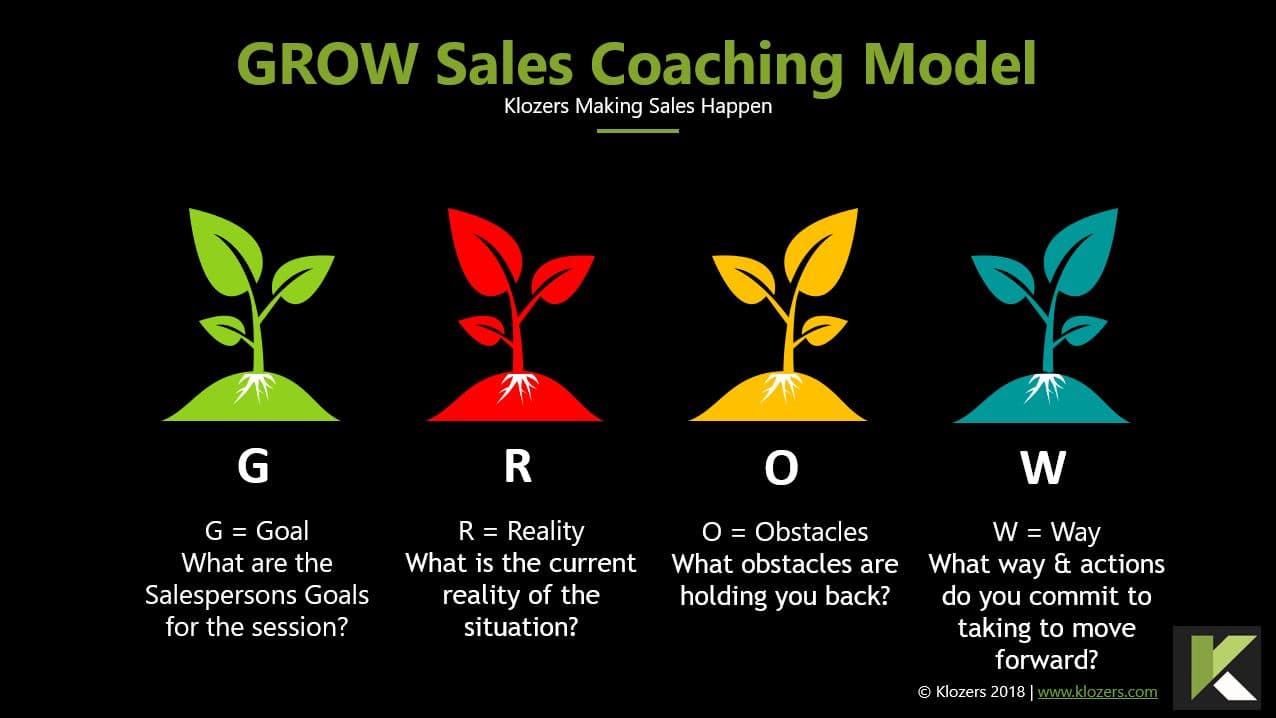
Use the GROW model — Goal, Reality, Options, Will — as a four-step questioning loop that turns a 1:1 into a coaching conversation instead of a status update. The core move: stop telling the rep what to do and instead ask sequenced questions that make *them* set the goal, face the current reality, generate their own options, and commit to a specific next action.
As a manager, you talk roughly 20% of the time and ask 80%. The GROW model (popularized by John Whitmore in *Coaching for Performance*) works for sales because reps own the plan they build themselves, which makes them far more likely to execute it. Use it weekly on one skill or one deal — not the whole pipeline at once.
Why This Happens — Diagnose Before You Coach
Most managers default to advice-giving because it feels faster: the rep is stuck, you know the answer, you hand it over. The problem is that advice creates dependence and rarely changes behavior. Before you reach for GROW, root-cause *why* the rep is underperforming, because GROW only fixes a skill or will gap.
It will not fix a knowledge gap (the rep doesn't know the product), a system gap (broken territory, bad comp, no leads), or a wrong-fit hire who needs a performance plan rather than another conversation.
The four-way split is **skill vs. Will vs. Knowledge vs.
System**. A rep who *can't* run discovery has a skill gap — GROW plus drills fixes it. A rep who *can* but *won't* prospect has a will gap — GROW surfaces the real blocker.
A rep who lacks product or buyer knowledge needs enablement, not questions. And a rep with a structural problem (no inbound, an impossible quota, a comp plan that punishes the right behavior) needs you to fix the system, not coach harder.
If the diagnosis points to skill or will, GROW is your tool. If it points to knowledge or system, fix that first — otherwise you are coaching a rep around an obstacle only you can remove.
The Coaching Conversation
Run GROW as a 25–30 minute conversation, ideally anchored to one real call or one real deal. Here is the verbatim flow. Bold lines are the questions you actually say out loud.
Goal — set the target for the session (3–5 min). Don't open with "how's the pipeline?" Open with intent:
"Before we dig in, what's the one thing about your selling you'd most want to be better at by the end of the quarter?" "If this 1:1 goes great, what will you walk away able to do that you can't do today?" "On the Henderson deal specifically — what does a win look like, and what's the next milestone you're trying to hit this week?"
You're getting the rep to name a goal they own. Write it down in their words.
Reality — get an honest, evidence-based picture (8–10 min). This is where most coaching fails, because managers accept the rep's summary. Push for specifics and, in 2027, pull up the actual call recording in Gong or Chorus so reality is the tape, not the rep's memory:
"Walk me through exactly what happened on the last call — what did the buyer say in their words?" "Let's listen to minute 14. What were you trying to do there, and what did you actually do?" "On a scale of 1 to 10, how close are you to your goal right now — and what makes it that number and not lower?" "What have you already tried, and what happened?"
The "why not lower" trick keeps it from becoming a complaint session — it forces the rep to name what's already working.
Options — generate paths before judging them (6–8 min). Resist solving it. Your job is to widen the field of choices the rep can see:
"What are all the things you could do here — give me three or four, even the bad ones?" "If quota and politics weren't a factor, what would you try?" "Who has run a deal like this well — what would they do differently?" "Would it help if I shared one option I've seen work? (Ask permission, then offer ONE.)"
Only after the rep has generated their own list do you add a single suggestion — and you ask before you do it.
Will — lock a specific, time-bound commitment (4–5 min). A vague "I'll follow up" is not a commitment:
"Of those options, which one will you actually do — and by when?" "What might get in the way, and how will you handle it?" "On a scale of 1 to 10, how committed are you to doing this by Thursday?" (If it's below 8, the action is wrong or too big — shrink it.) "How do you want me to hold you accountable — should I check in Thursday, or do you send me the recording?"
Close by having the rep summarize the action in their own words. If you summarize it, they don't own it.
The Coaching Plan / Cadence
GROW is not a one-time talk; it's a loop you run on a rhythm. A practical structure is a weekly 30-minute 1:1 focused on one skill, a monthly deal-coaching session on a live opportunity, and a quarterly 30/60/90 reset on the bigger development goal.
- Days 1–30: Pick ONE skill from the diagnosis (e.g., discovery questioning). Run GROW weekly on that single skill. Pair every session with one call review and one role-play rep.
- Days 31–60: Add measurement. Track the leading indicator for that skill and review the trend together each week using GROW's Reality step against real data.
- Days 61–90: Fade your involvement. The rep self-assesses against the scorecard first; you coach the gap. Set the next quarter's Goal.
The loop only works if the Will step from one week becomes the Reality input of the next. Always open the following session with "Last week you committed to X — what happened?"
Drills & Role-Play
Conversation alone doesn't build skill; reps need practice between sessions.
- Call review with a scorecard. Pick one recorded call per week. Have the rep self-score against 4–5 behaviors (open, discovery, quantify pain, next step) before you give input. Use Gong or Chorus so you're scoring the same evidence.
- Three-rep role-play. Run the same objection three times: first the rep tries it, then you model it, then the rep does it again. Skill is built on the third rep, not the first.
- Cold-script gauntlet. For prospecting will-gaps, role-play the opener and first three objections live, on camera, before the rep dials.
- Deal walk-through. Have the rep coach *you* through their deal using MEDDIC or a value framework — teaching it back exposes the gaps faster than you asking.
What to Measure
Coach the leading indicators, not just the lagging quota — quota tells you the rep missed *after* it's too late. Track the behavior the coaching is supposed to change:
- Activity inputs: dials, connects, meetings booked (for prospecting gaps).
- Conversion rates by stage: discovery-to-demo, demo-to-proposal — these prove a skill is improving.
- Talk-time ratio and question rate from Gong/Chorus — a falling talk ratio usually means discovery is improving.
- Multi-threading: number of contacts engaged per deal.
- Commitment follow-through: the percentage of GROW "Will" commitments the rep actually completed — the single best signal that coaching is sticking.
If the leading indicators move and quota follows over a quarter, the coaching is working. If indicators move but results don't, your diagnosis was wrong — revisit skill vs. System.
Common Mistakes Managers Make
- Rescuing the rep. You ask a question, the rep pauses, and you fill the silence with the answer. Let the silence sit — that's where thinking happens.
- Coaching the deal, not the skill. Saving one deal teaches nothing transferable. Tie every deal conversation back to the repeatable skill behind it.
- No follow-through. Running a great GROW session and never checking the Will commitment trains reps that commitments are optional.
- Coaching everyone the same. A new SDR needs more directive coaching; a tenured AE needs questions. Match your style to the rep's stage.
- Skipping Reality. Jumping from Goal straight to Options means the rep solves the wrong problem. The tape doesn't lie — use it.
- Coaching a system or hiring problem with more questions. If the territory is broken or it's a wrong-fit hire, GROW won't help — fix the structure or move to a performance plan.
FAQ
How is the GROW model different from just giving advice? Advice transfers your solution; GROW builds the rep's ability to find their own. Advice creates a rep who needs you in every deal; GROW creates a rep who can self-coach. You still share expertise — but at the Options step, as one choice among several, and only after asking permission.
How long should a GROW coaching session take? About 25–30 minutes for a focused weekly 1:1 on one skill or one deal. Longer than that and you're trying to cover too much; shorter and you usually skip the Reality step. Block it on the calendar so it doesn't get eaten by pipeline updates.
What if the rep just says "I don't know" at the Options step? Don't rescue them. Try "I know it's hard — if you *did* know, what might you try?" or "Give me even a bad option to start." If they're genuinely blank, it's usually a knowledge gap, which means enablement, not more questions.
Can I use the GROW model for prospecting and will-gap issues? Yes — that's where the Goal and Will steps earn their keep. For a rep who won't prospect, the Reality and Options steps surface the real blocker (fear of rejection, a clunky script, no list), and the Will step gets a small, scary-but-doable commitment they actually believe they'll keep.
How do I keep GROW from feeling like an interrogation? Share why you're asking, keep your tone curious not corrective, and use the "what makes it that number and not lower" framing so the rep names what's working too. If it feels like a test, the rep will perform answers instead of thinking. The goal is partnership, not cross-examination.
Does GROW work for remote and hybrid sales teams in 2027? It works better remotely when you anchor the Reality step to recorded calls in Gong or Chorus instead of relying on what the rep remembers. AI call summaries let you pre-read the deal before the session, so the live time is spent on coaching, not recapping.
Bottom Line
The GROW model turns coaching from telling into asking: set the Goal, face the Reality (ideally on the tape), generate Options, and lock a specific Will commitment you follow up on next week. Run it weekly on one skill, pair it with drills, and measure the leading indicator — not just quota.
The one move that matters: ask the question and shut up, because the rep executes the plan they build, not the one you hand them.
Sources
- John Whitmore, Coaching for Performance — the origin of the GROW model
- Harvard Business Review — The Leader as Coach
- Gong Labs — sales coaching and call analytics research
- RAIN Group — Sales Coaching research and frameworks
- Sandler — sales coaching methodology
- Sales Hacker — how to coach your sales team
- Winning by Design — sales coaching and enablement frameworks
*Sales coaching for the GROW model — how to coach salespeople with Goal, Reality, Options, Will, a sales manager coaching guide, rep coaching framework, and a GROW coaching playbook for 2027.*