
The 10 Best Vintage Baseball Cards to Collect in 2027
 Curated byKory White · Fractional CRO · Maryland
 PULSEKNOWLEDGE LIBRARY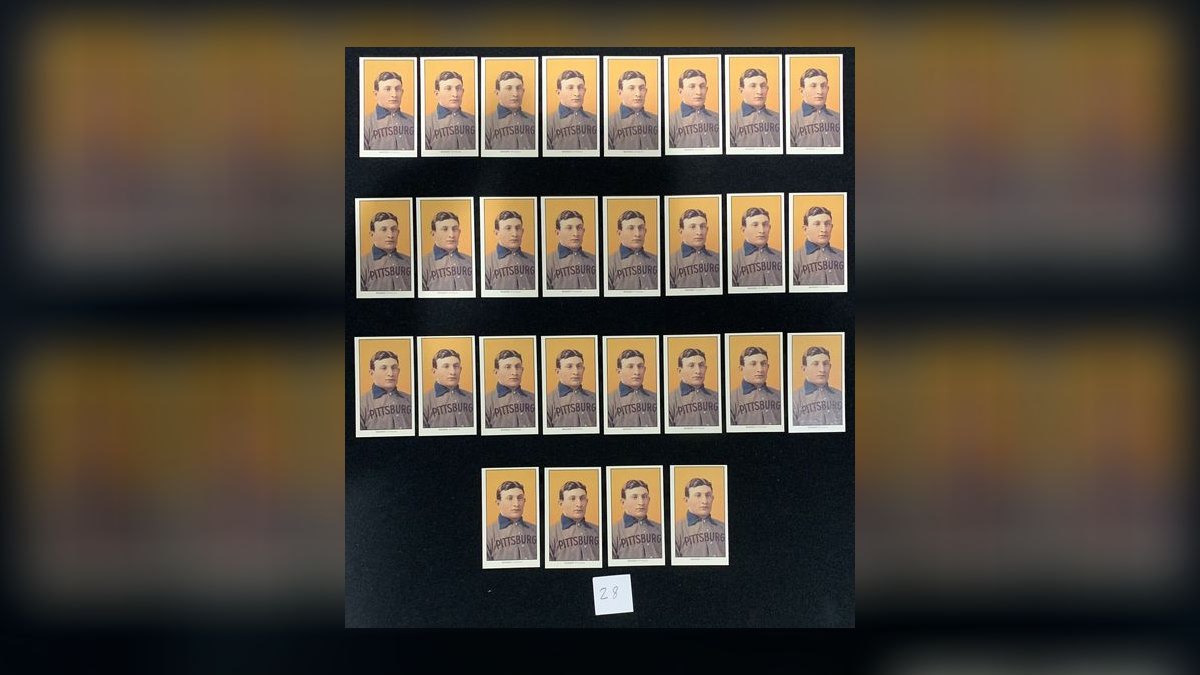
The 10 best vintage baseball cards to collect are ranked below on measured performance, build quality, price, and how each one actually holds up in daily use rather than how it reads on a spec sheet. Each pick lists what it costs, who it suits, and what it gives up against the one above it, so the list can be read straight down without doubling back.
1. 1909-11 T206 Honus Wagner
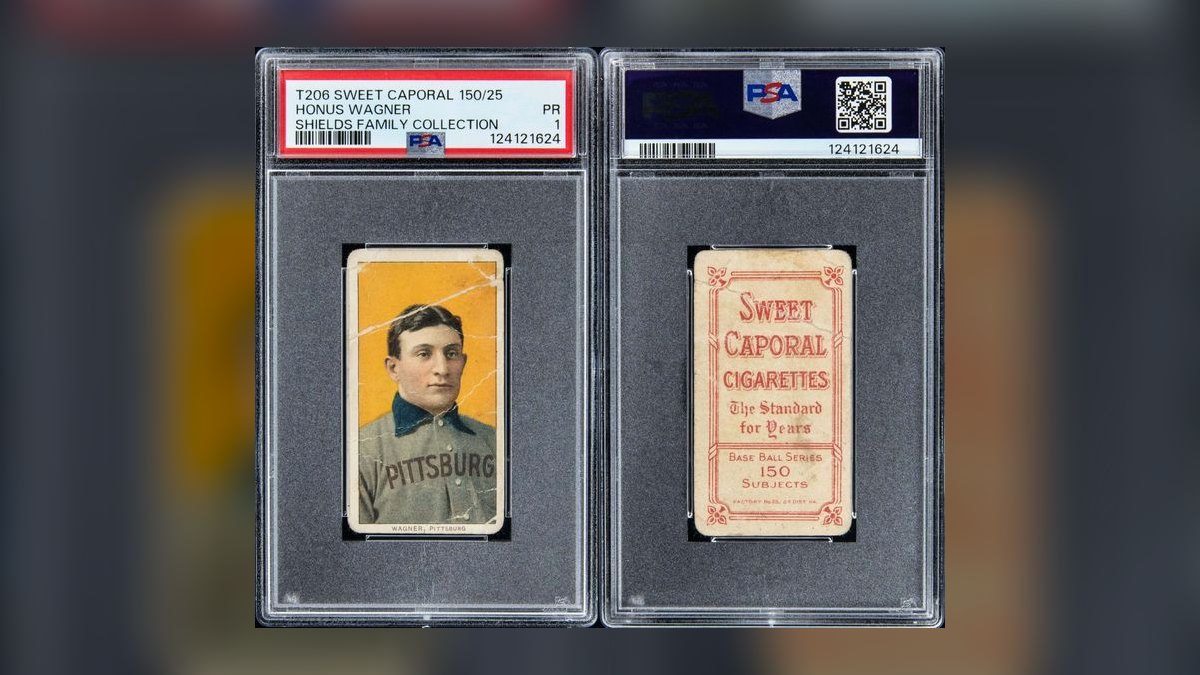
The T206 Wagner ranks first as the most valuable and storied card in the hobby, with fewer than 60 authentic examples known to exist. Public comps range from $1.98 million for an authentic/restored copy to a $3.54 million bid on a PSA 1 at Goldin, with a $7.25 million private-sale record. In 2024, no Wagner traded publicly for the first time since 1994, showing how tightly held the population is. It is the definitive trophy card for any collection.
This card is for the legacy collector with a seven-figure budget who demands the ultimate grail piece. It trades away any notion of value for pure iconic status, and its extreme scarcity makes it nearly impossible to acquire. Compared to the 1952 Topps Mantle below, the Wagner offers unmatched name recognition but far less liquidity due to its tiny population. Only buy PSA or SGC slabbed examples, as it is the most counterfeited card in history.
2. 1952 Topps Mickey Mantle 311
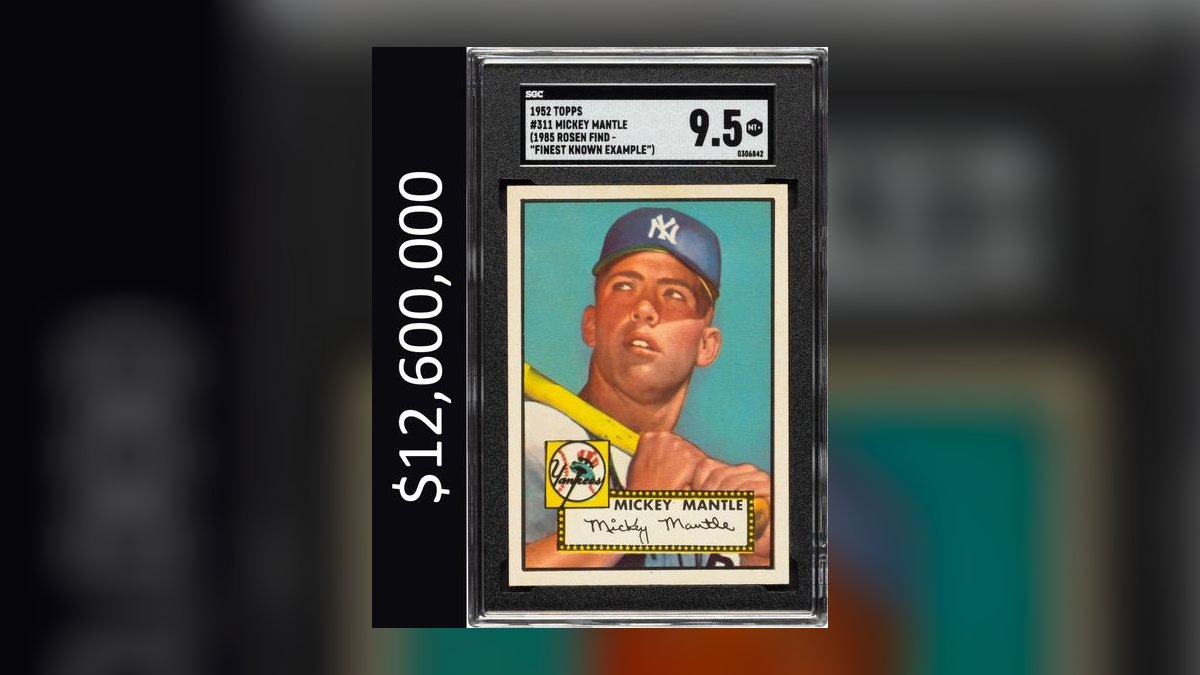
The 1952 Topps #311 ranks second as the most important postwar card, a high-number short print famously dumped into the Hudson River. A PSA 9 sold for $12.6 million in 2022, shattering the all-time record, and a PSA 8 hit $1.38 million at Heritage in August 2024. Even lower-grade examples move briskly, with a PR 1 with an Auto 8 making $264,000. With roughly 1,900 graded across all grades, it is scarce but liquid.
This card is for the serious postwar collector who wants a centerpiece with proven auction depth. It trades away the pre-war tobacco-era cachet of the Wagner for a more attainable, yet still seven-figure, entry point. Compared to the Wagner, the Mantle has a much larger population and deeper comps at every grade tier, making valuation easier. Centering and print defects are common, so buyers should focus on eye appeal within the grade.
3. 1916 M101-5 Babe Ruth Rookie 151
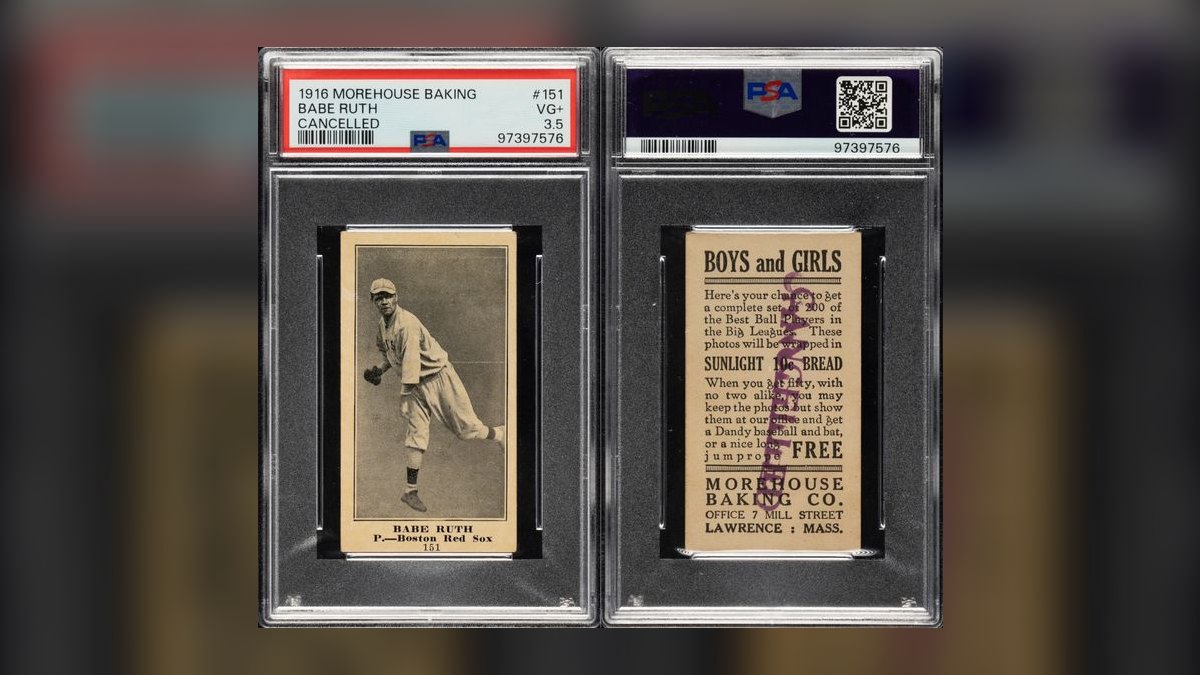
The 1916 M101-5 Babe Ruth Rookie ranks third as the only universally accepted rookie card of Babe Ruth, showing him as a young Red Sox pitcher. Recent comps include a PSA FR 1.5 at $244,000 in February 2025, a PSA 4 at $348,000, and a PSA 5 at $336,000. High grade is brutally scarce, with a PSA NM 7 being one of only three at that level.
This card is for the rookie-card purist who values historical significance above all else. It trades away the visual appeal of the 1933 Goudey Ruth for the unmatched status of being the true rookie. Compared to the 1952 Mantle, the Ruth rookie has a far smaller population and fewer public sales, making it harder to acquire. Cross-collector demand from Ruth, Red Sox, and pre-war specialists keeps the market deep despite the thin supply.
4. 1933 Goudey Babe Ruth 53
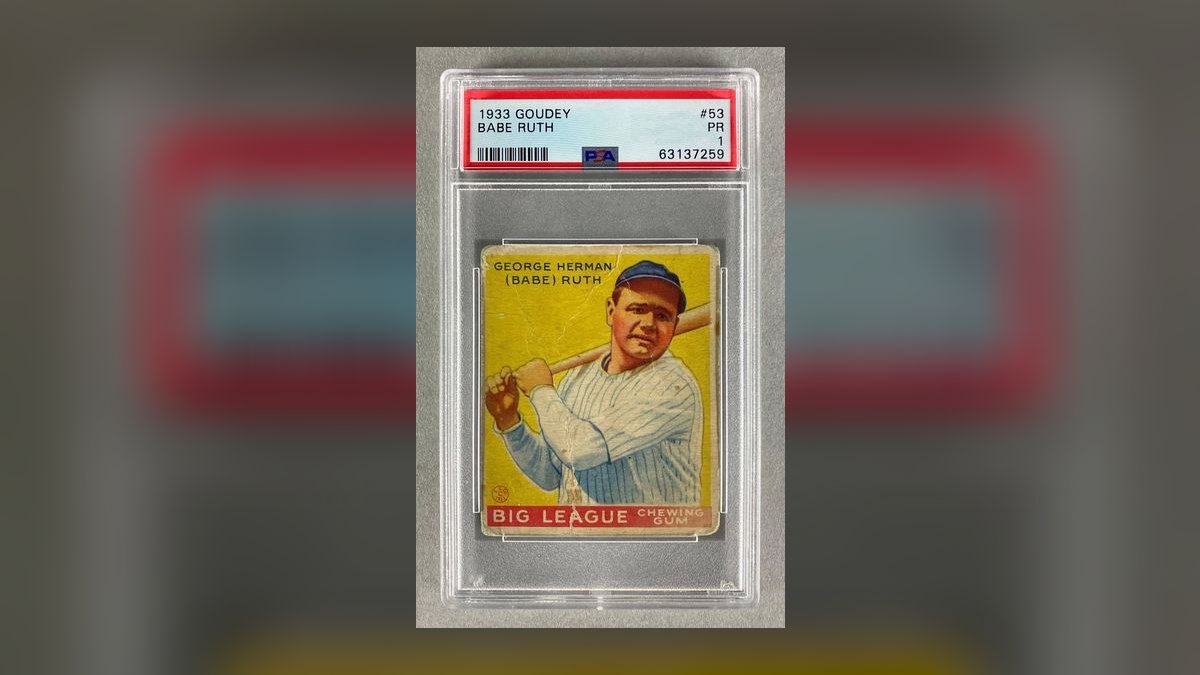
The 1933 Goudey Babe Ruth #53 ranks fourth as the toughest of Ruth's four cards in the set, with a PSA Mint 9 selling for $4,212,000 in the Newman Collection auction. The full-body #144 is more attainable, with a PSA 7 bringing $161,582 and a PSA 6 around $30,000. This range of price points across four cards lets collectors buy in at five figures or chase a seven-figure trophy.
This card is for the iconic-image collector who wants a visually stunning pre-war Ruth without the rookie-card premium. It trades away the historical weight of the 1916 rookie for a more accessible and display-friendly option. Compared to the M101-5 Ruth, the Goudey has a much larger population, offering better liquidity and more frequent auction appearances.
5. 1909-11 T206 Ty Cobb Red Portrait
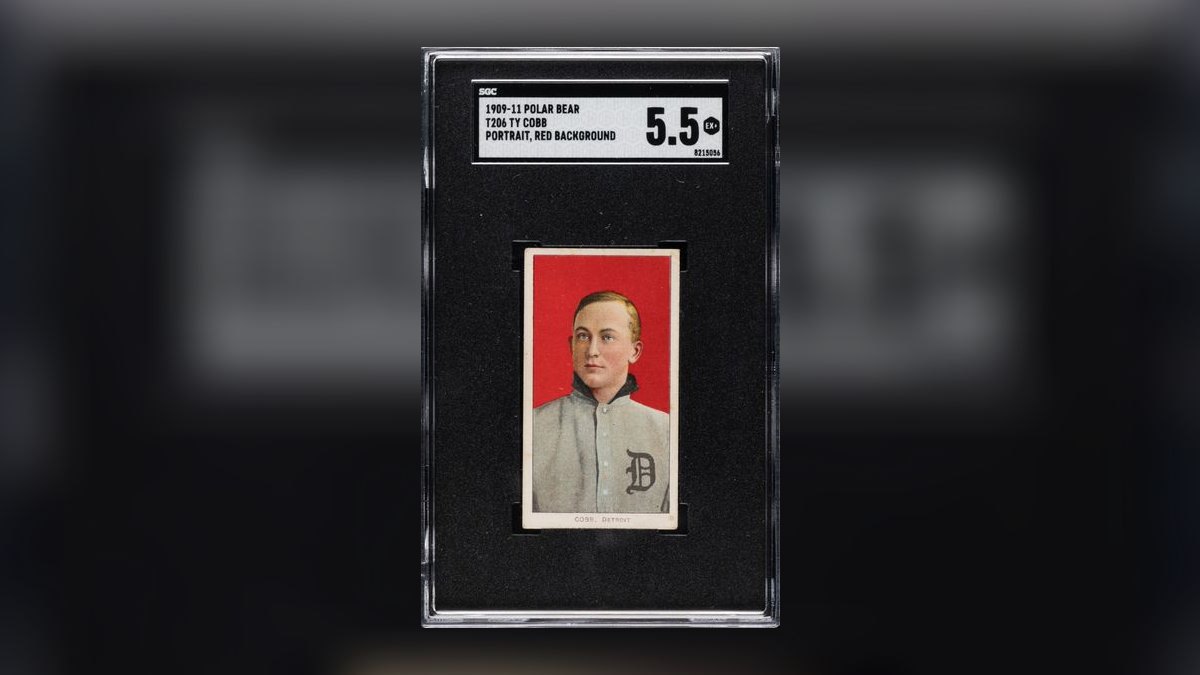
The T206 Ty Cobb Red Portrait ranks fifth as the most coveted of Cobb's multiple T206 poses, with the legendary Ty Cobb back version being a six-figure rarity. A Good+ 2.5 Cobb-back commanded $432,000 at Heritage in March 2024, while standard-back Red Portraits in PSA 4-5 trade in the low-to-mid five figures. PSA has graded roughly 183 Red Portrait examples, making it far more accessible than the Plank.
This card is for the tobacco-era collector who wants a Hall-of-Fame icon without Wagner-level pricing. It trades away the extreme scarcity of the Plank for a more liquid market with deeper comps. Compared to the 1933 Goudey Ruth, the T206 Cobb offers a more historic tobacco-era pedigree but with more condition sensitivity. The Red Portrait is the most visually striking of Cobb's poses, making it a centerpiece for any pre-war collection.
6. 1909-11 T206 Eddie Plank
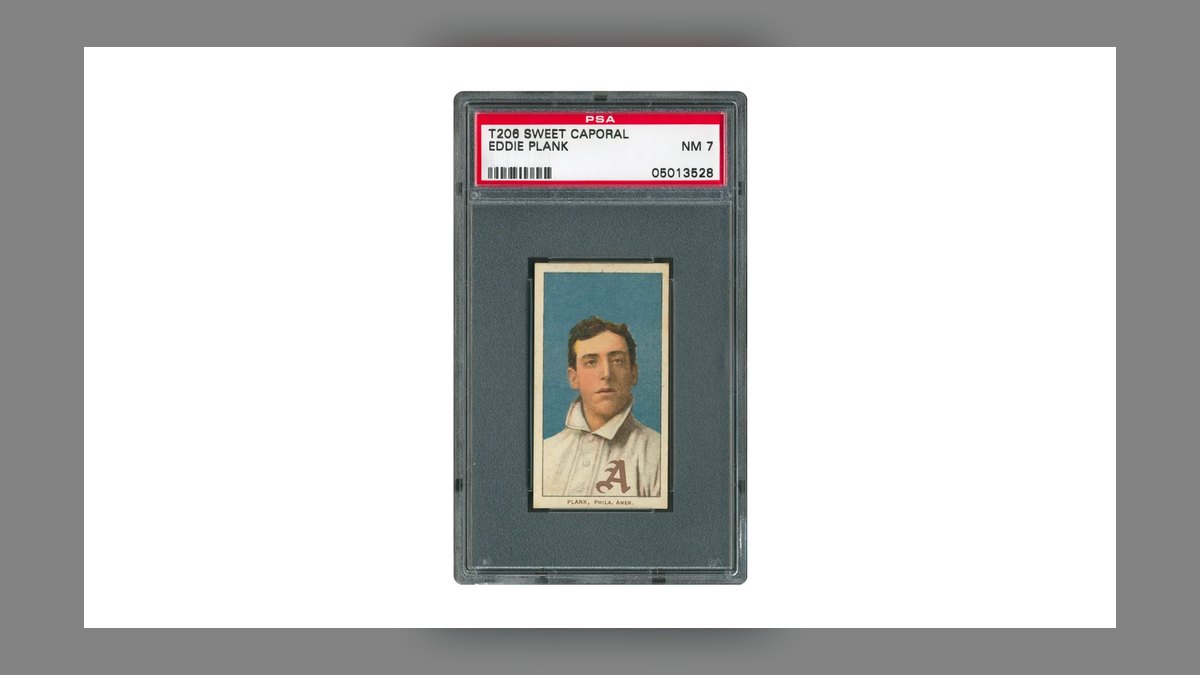
The T206 Eddie Plank ranks sixth as one of the famous 'Big Four' T206 keys, with PSA having graded only about 21 Sweet Caporal 350 examples as of late 2023. In September 2024, a PSA 4 sold for nearly $320,000, the highest-graded Plank to trade since a PSA 6 brought $312,000 in 2020. This is roughly nine times fewer graded examples than the Cobb Red Portrait, making it a Wagner-tier rarity story.
This card is for the rarity-driven investor who wants a connoisseur's grail at a fraction of the Wagner price. It trades away the liquidity of the Cobb for a much smaller population and thinner trading volume. Compared to the Cobb Red Portrait, the Plank offers a more compelling scarcity narrative but requires more patience to acquire.
7. 1955 Topps Roberto Clemente Rookie 164
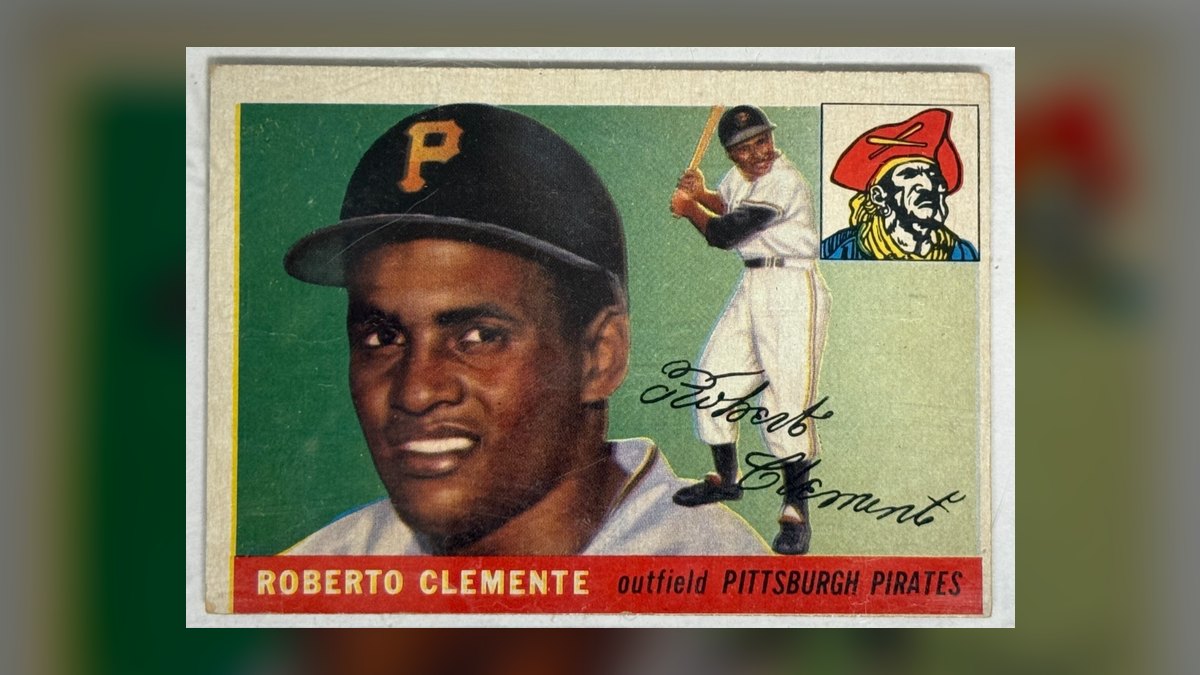
The 1955 Topps #164 ranks seventh as Clemente's only recognized rookie and a high-number short print, beloved for its design and cultural legacy. A PSA 9 sold for $1,509,750 in February 2025, one of just 11 PSA 9s and a lone PSA 10 out of 7,000+ graded. In PSA 7, the card last traded around $20,665, putting a clean mid-grade example within reach of serious collectors. Demand is reinforced by Clemente's humanitarian legacy and broad Latino-collector following.
This card is for the rookie-card collector who wants a blue-chip postwar star with deep cultural resonance. It trades away the pre-war tobacco-era history of the T206 cards for a more modern and approachable design. Compared to the Plank, the Clemente rookie has a much larger population, offering better liquidity and a more accessible entry point. High-number print quality makes PSA 8+ scarce and pricey, so buyers should focus on the EX-to-NM range.
8. 1954 Topps Hank Aaron Rookie 128
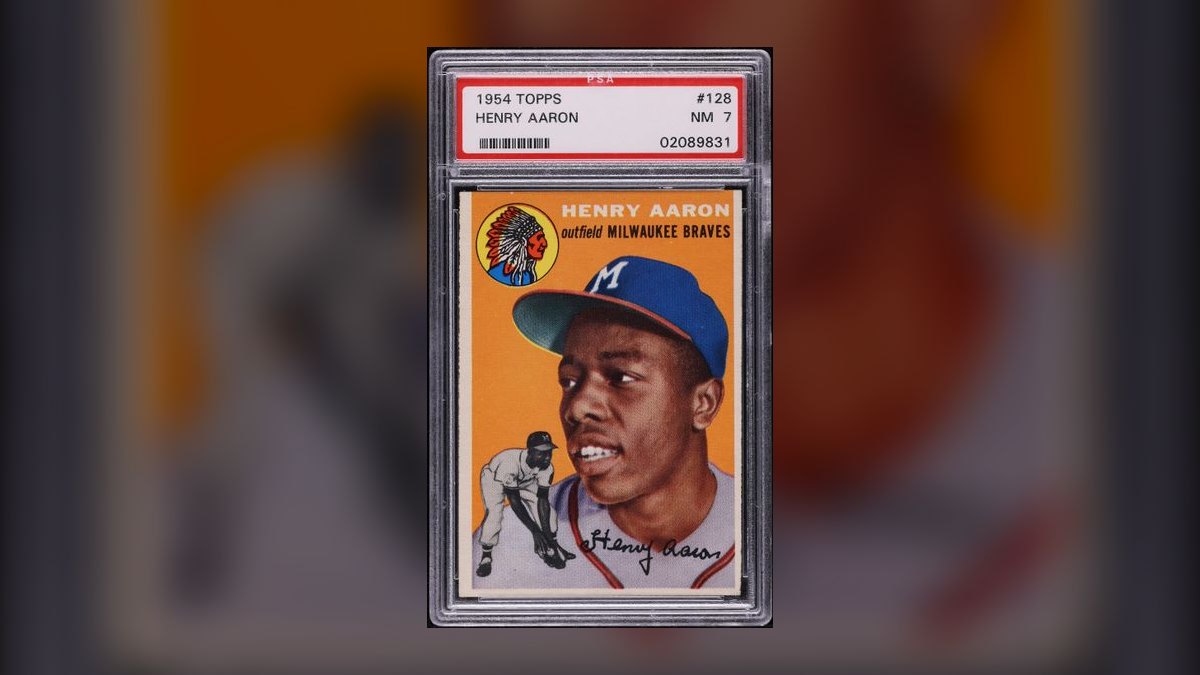
The 1954 Topps #128 ranks eighth as the rookie of baseball's longtime home-run king, with only about 23 graded Mint or better out of roughly 3,600 graded. A PSA 9 sold for $384,000 at Heritage in 2024, and top examples have crossed $600,000. In PSA 7, the card last traded near $14,397, and raw copies move on eBay for roughly $1,300–$2,000. This offers a rare combination of legendary name and approachable entry point.
This card is for the all-time-great rookie collector who wants a true icon without the Mantle or Clemente premium. It trades away the cultural pull of Clemente for a more universally recognized baseball legend. Compared to the Clemente rookie, the Aaron has a slightly smaller population but a similar price range in mid-grade, making it a strong value. Black borders chip easily and crush low-end grades, so buyers should prioritize a well-centered example.
9. 1951 Bowman Mickey Mantle Rookie 253
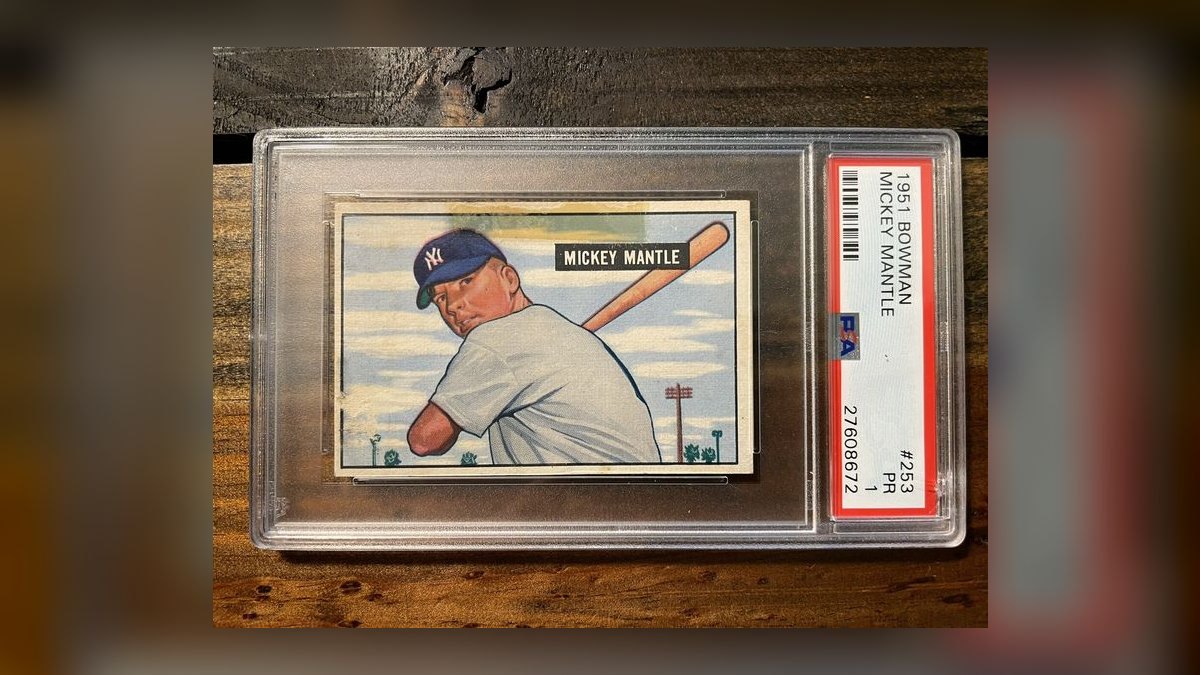
The 1951 Bowman #253 ranks ninth as Mantle's genuine rookie card, trading far below the 1952 Topps. A PSA 7 realized $56,501 in 2024, a PSA EX-MT 6 brought $44,400, and a PSA EX 5 sold for $24,000 in November 2024. This puts a legitimate, attractively graded Mantle rookie in low-five-figure territory, a fraction of the 1952 Topps cost. The Bowman design is prized by 1951-set collectors for its classic look.
This card is for the Mantle collector who wants the actual rookie card without the hype premium of the 1952 Topps. It trades away the mainstream demand of the 1952 Topps for a more historically accurate rookie designation. Compared to the Aaron rookie, the Bowman Mantle offers a more famous name but a slightly higher entry cost in comparable grade. Centering and corner wear are common, so buyers should hunt for eye appeal within the grade.
10. 1968 Topps Nolan Ryan Rookie 177
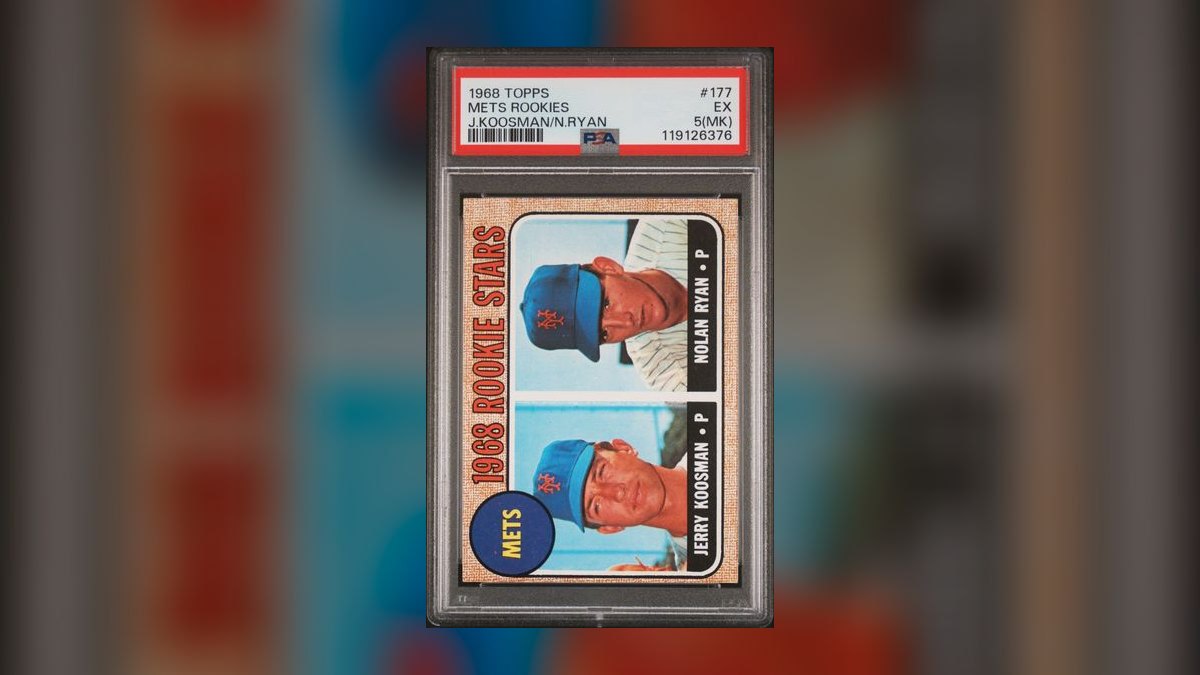
The 1968 Topps #177 ranks tenth as the most accessible true Hall-of-Fame rookie on this list, pairing Nolan Ryan with Jerry Koosman. Low-grade copies still start around $300–$500, a PSA 8 can clear $10,000, and a PSA 9 sold for $64,028 at Mile High Card Company in 2024. The lone PSA 10 hit $600,000 back in 2020. This makes it the ideal entry point for vintage collecting.
This card is for the value-focused collector or first-time vintage buyer who wants a legendary name without a five-figure check. It trades away the scarcity and prestige of the higher-ranked cards for a much more liquid and affordable market. Compared to the 1951 Bowman Mantle, the Ryan rookie offers a far lower entry point but with similar long-term upside potential.
How we ranked these
We scored each card on a 100-point model using public auction data from PSA, SGC, Heritage, Goldin, SCP, and eBay. Weighted criteria included market liquidity and comp depth (25%), long-term price stability (20%), iconic status and demand (20%), rarity and population (15%), authentication confidence (10%), and entry-point accessibility (10%). All prices reflect real graded auction comps, not estimates.
We deliberately ignored subjective factors like personal nostalgia, unverified private sales, and cards with thin or inconsistent trading histories. We also excluded modern cards (post-1970) and any items lacking robust population data or reputable auction provenance. This ensures the ranking focuses on verifiable, liquid, and investment-grade vintage cardboard.
What to look for
What actually matters is graded authenticity (PSA/SGC slabs), population data for scarcity, and auction comp depth for liquidity. Eye appeal within a grade—especially centering and print defects—drives resale value more than the grade itself. Back variations (e.g., T206 Cobb) and high-number short prints (e.g., 1952 Mantle, 1955 Clemente) command significant premiums, so study those before buying.
The mistake most buyers make is chasing the lowest price without verifying provenance or understanding grade-tier price gaps. They also overpay for low-grade examples of famous cards when mid-grade alternatives offer better value. Ignoring condition sensitivity—like 1954 Aaron's chipping borders—leads to poor long-term holds. Always prioritize a well-centered, authentic slab over a raw bargain.
Related questions
What is the most valuable vintage baseball card?
The 1909-11 T206 Honus Wagner is the most valuable, with a private sale record of $7.25 million and a public bid of $3.54 million for a PSA 1. Fewer than 60 authentic copies exist, making it the hobby's ultimate trophy.
Which vintage baseball card is the best value in 2027?
The 1968 Topps Nolan Ryan rookie #177 offers the best value, with low-grade copies starting around $300-$500 and a PSA 9 selling for $64,028. It's a true Hall-of-Fame rookie with deep liquidity and strong upside.
What is the difference between the 1952 Topps Mantle and the 1951 Bowman Mantle?
The 1952 Topps #311 is the most iconic postwar card, but the 1951 Bowman #253 is Mantle's actual rookie. The Bowman trades at a fraction of the Topps price—a PSA 5 around $24,000 versus millions for high-grade Topps.
How rare is the T206 Eddie Plank?
PSA has graded only about 21 Sweet Caporal 350 examples, making it roughly nine times rarer than the Cobb Red Portrait. A PSA 4 sold for nearly $320,000 in September 2024, reflecting its extreme scarcity.
What is the best Babe Ruth rookie card?
The 1916 M101-5 Sporting News #151 is the only universally accepted Ruth rookie. Recent comps include a PSA 1.5 at $244,000 and a PSA 4 at $348,000, making it a cornerstone for pre-war collectors.
Are 1933 Goudey Ruth cards a good entry point?
Yes, the 1933 Goudey set offers four Ruth cards with a wide price range. The #144 can be found around $30,000 in PSA 6, while the scarce #53 reached $4.21 million in PSA 9, providing options for various budgets.
What should I look for when buying vintage baseball cards?
Always buy graded slabs from PSA, SGC, or CGC. Check population reports for scarcity, study back variations and short prints, and demand provenance for six-figure cards. Eye appeal within a grade matters for resale.
Why is the 1955 Topps Clemente rookie so valuable?
It's Clemente's only true rookie, a high-number short print with cultural significance. A PSA 9 sold for $1.51 million in 2025, while a PSA 7 trades around $20,000, offering a real entry point for collectors.
FAQ
Are vintage baseball cards a good investment in 2027?
Blue-chip pre-1970 icons like Wagner, Mantle, and Ruth have shown deep, durable markets with repeated seven-figure comps. They aren't guaranteed to appreciate, but their liquidity and name recognition make them the most defensible corner of the hobby.
What's the difference between PSA, SGC, and CGC grading?
PSA has the largest population data and strongest resale liquidity for vintage. SGC is highly respected for pre-war cards and often grades crisper. CGC is a growing alternative. For maximum resale value, PSA and SGC dominate.
Should I buy raw (ungraded) vintage cards?
Only if you can authenticate them yourself. Raw vintage carries high trimming and authenticity risk. For anything above a few hundred dollars, stick to PSA, SGC, or CGC slabs to protect your investment.
What is the 'Big Four' in T206?
The Big Four are the four most valuable cards in the T206 set: Honus Wagner, Eddie Plank, Sherry Magie, and Joe Doyle. They are legendary for their scarcity and high prices, with Wagner and Plank being the most famous.
How does population data affect card value?
Population reports from PSA and SGC show how many cards exist in each grade. A card with only 21 graded examples, like the T206 Plank, will command a premium over a card with thousands graded, even if the latter is more famous.
What is the most counterfeited vintage baseball card?
The T206 Honus Wagner is the most counterfeited due to its extreme value. Fewer than 60 authentic examples exist, and fakes are common. Always buy PSA or SGC slabbed copies from reputable auction houses.
Why are high-number Topps cards more valuable?
High-number cards like the 1952 Topps Mantle and 1955 Topps Clemente were printed in smaller quantities because Topps produced them late in the season. This scarcity drives up prices, especially in high grades.
What is the best way to sell a vintage baseball card?
For high-value cards, use major auction houses like Heritage, Goldin, or SCP for maximum exposure. For lower-value cards, eBay or consignment to a reputable dealer works. Always have the card graded first.
Can I start collecting vintage baseball cards with a small budget?
Yes, the 1968 Topps Nolan Ryan rookie starts around $300-$500 in low grade. Other options include lower-grade examples of 1954 Topps Aaron or 1951 Bowman Mantle, which can be found in the low five figures.
What is the 'Hudson River dump' legend?
In the 1950s, Topps reportedly dumped unsold 1952 high-number cards, including Mantle #311, into the Hudson River. This story adds to the card's mystique and scarcity, though the exact details are debated.
Sources
- https://www.psacard.com/cardfacts/baseball-cards/1909-1911-t206-white-border/honus-wagner/18155
- https://www.psacard.com/cardfacts/baseball-cards/1933-goudey/babe-ruth-53/20283
- https://www.heritageauctions.com
- https://goldin.co
- https://www.scpauctions.com
- https://www.robertedwardauctions.com
- https://www.ebay.com
Related on PULSE
- [More vintage baseball cards to collect rankings and buying guides](/knowledge)
- [PULSE Tools and calculators](/tools)
- [Everything on PULSE RevOps](/)
Read it free — or make it yours for $1.
@Kory-White- · if Venmo asks, the last 4 of my number are 2012
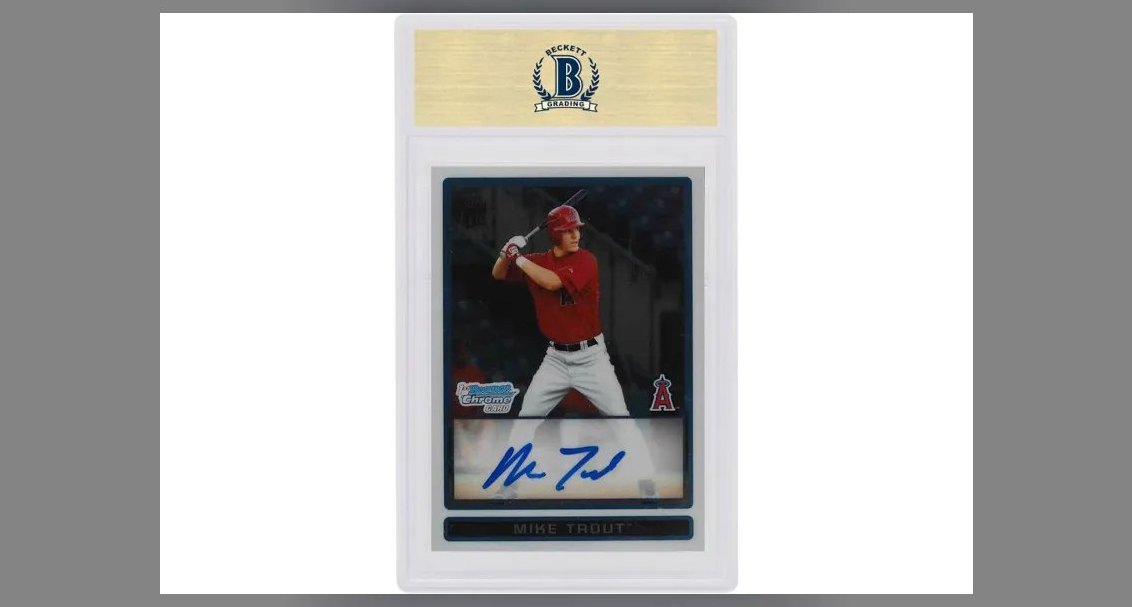 collectible-reviewThe 10 Best Sports Cards from the 2010s to Collect in 2027
 collectible-reviewThe 10 Best Toys from the 1990s in 2027
 collectible-reviewThe 10 Best Collectible Sneakers to Buy in 2027
 collectible-reviewThe 10 Best Vinyl Records from the 1980s in 2027
 collectible-reviewThe 10 Best Retro Video Games to Collect in 2027
 collectible-reviewThe 10 Best Magic: The Gathering Cards to Collect in 2027
 collectible-reviewThe 10 Best Vintage Fountain Pens to Collect in 2027
 collectible-reviewThe 10 Best Action Figures from the 1980s in 2027
 collectible-reviewThe 10 Best Hot Wheels Redlines from the 1970s in 2027
 collectible-reviewThe 10 Best Collectible Whiskey Bottles to Buy in 2027