 Pulse Reviews and Analysis
The 10 Best Hockey Cards to Collect in 2027
 Curated by Kory White · Fractional CRO, CRO Syndicate
Direct Answer
The best hockey card to collect in 2027 is the 1979-80 O-Pee-Chee Wayne Gretzky rookie #18, the single most important card in the sport and a blue-chip asset whose PSA 9 copies have traded between $100,000 and $140,000 while the lone PSA 10 famously brought $3.75 million.
If you want a card with real upside that still fits a normal budget, the best value is the 1990-91 Upper Deck Jaromir Jagr rookie #356, a future Hall of Famer's rookie that sells in PSA 10 for roughly $80 to $160 — a genuine gem-mint Hall of Fame rookie for the price of a nice dinner.
This list is for collectors building a vintage and modern-vintage hockey core in 2027, from the six-figure cornerstone cards down to affordable PSA 10 rookies you can actually buy this month. Every comp below is a real, recent sold result, not a wishlist number. Hockey remains the smallest of the four major-sport card markets, which keys both the risk (thinner liquidity) and the opportunity (these icons are still cheaper than their baseball and basketball equivalents).
How We Ranked the Top 10
We weighted six criteria, each tied to public data rather than opinion:
- Historical importance (25%) — is this the defining rookie or issue for an all-time great? Cross-checked against the Hockey Hall of Fame and set histories.
- Recent sold comps (25%) — actual realized prices from Heritage Auctions, Goldin, PSA Auction Prices Realized, and eBay sold listings, not asking prices.
- Population and scarcity (20%) — PSA and SGC pop reports; how many exist in collectible grades versus how many are wanted.
- Condition sensitivity (15%) — centering, print defects, and grade-premium math, because a one-grade jump can multiply value.
- Liquidity (10%) — how quickly the card sells and how tight the bid-ask spread runs.
- Authentication risk (5%) — trimming, recoloring, and counterfeit exposure that can wipe out a buyer.
Sources span PSA CardFacts and APR, Heritage Auctions sports archives, Goldin results, Sports Card Investor price guides, and Beckett. The ranking favors cards with deep, repeatable sales histories over one-off record headlines.
1. 1979-80 O-Pee-Chee Wayne Gretzky Rookie #18 🏆 BEST OVERALL
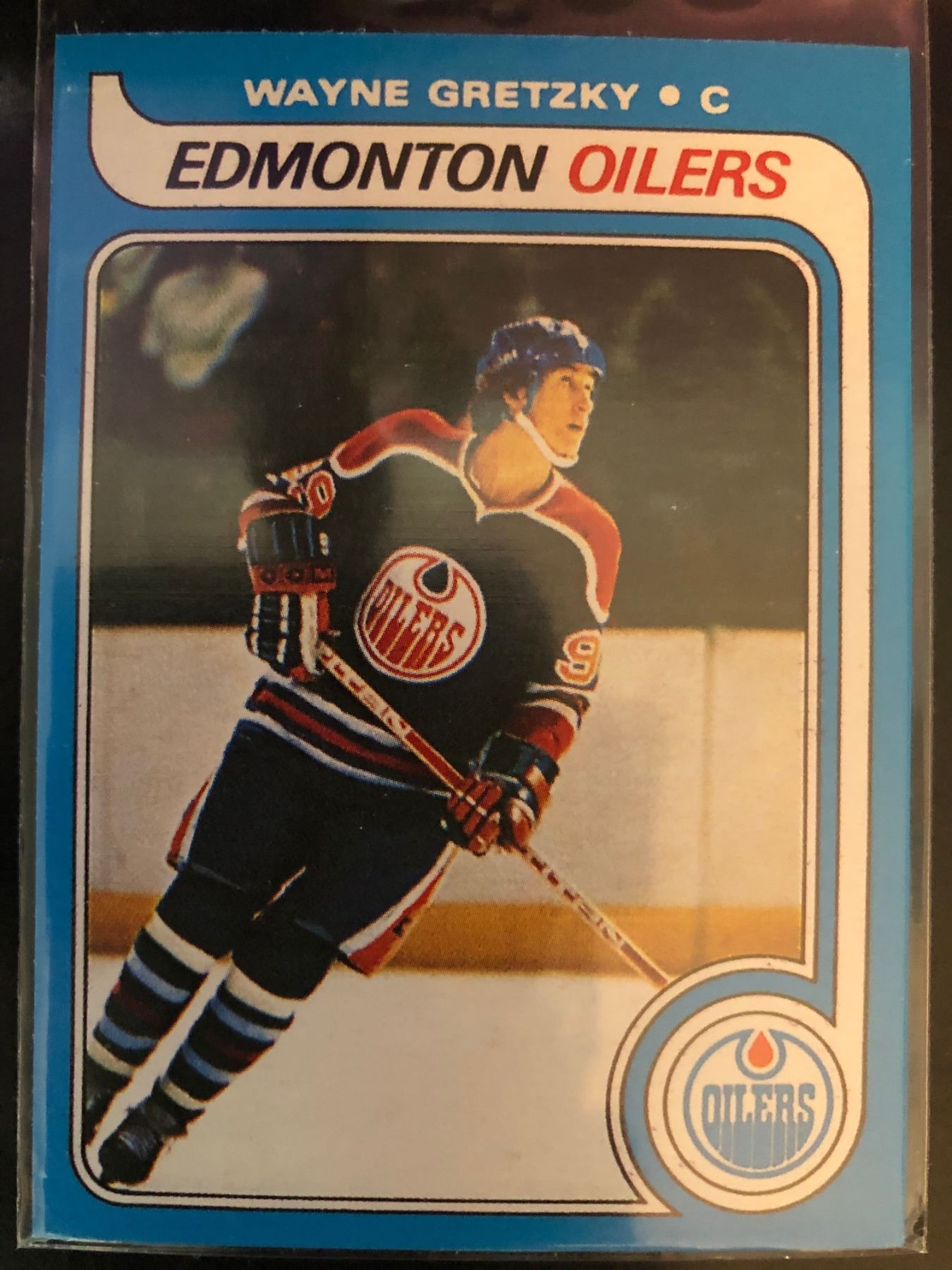
Era/Set: 1979-80 O-Pee-Chee | Typical price: ~$11,000 (PSA 8) to $140,000 (PSA 9) | Best for: the one card every serious hockey collector wants to own
This is the keystone of the entire hobby. The 1979-80 O-Pee-Chee #18 is The Great One's true rookie, and condition rarity drives its prices into rare air: PSA 9 examples have changed hands between $100,099 and roughly $140,000, while the only PSA 10 known sold for $3.75 million in 2021.
PSA 8 copies, far more attainable, have traded in the $11,000 to $16,000 band. The card is notoriously tough — soft O-Pee-Chee print, rough cut edges, and chronic centering issues mean clean copies are scarce relative to demand. Even with hockey lagging baseball and basketball in dollar volume, this card sets the ceiling for the sport.
Pros:
- The undisputed #1 hockey card — universal demand and instant liquidity at the top end.
- PSA 8 at $11K-$16K offers a real entry into a six-figure card family.
- Deep sales history across Heritage, Goldin, and PWCC makes pricing transparent.
- Strongest brand in hockey — Gretzky's name carries the whole market.
Cons:
- Centering and edge wear make high grades genuinely hard to find.
- Six-figure PSA 9 pricing is sensitive to broad market swings.
Verdict: The cornerstone of any hockey collection and the safest store of value in the sport.
2. 1951 Parkhurst Gordie Howe Rookie #66
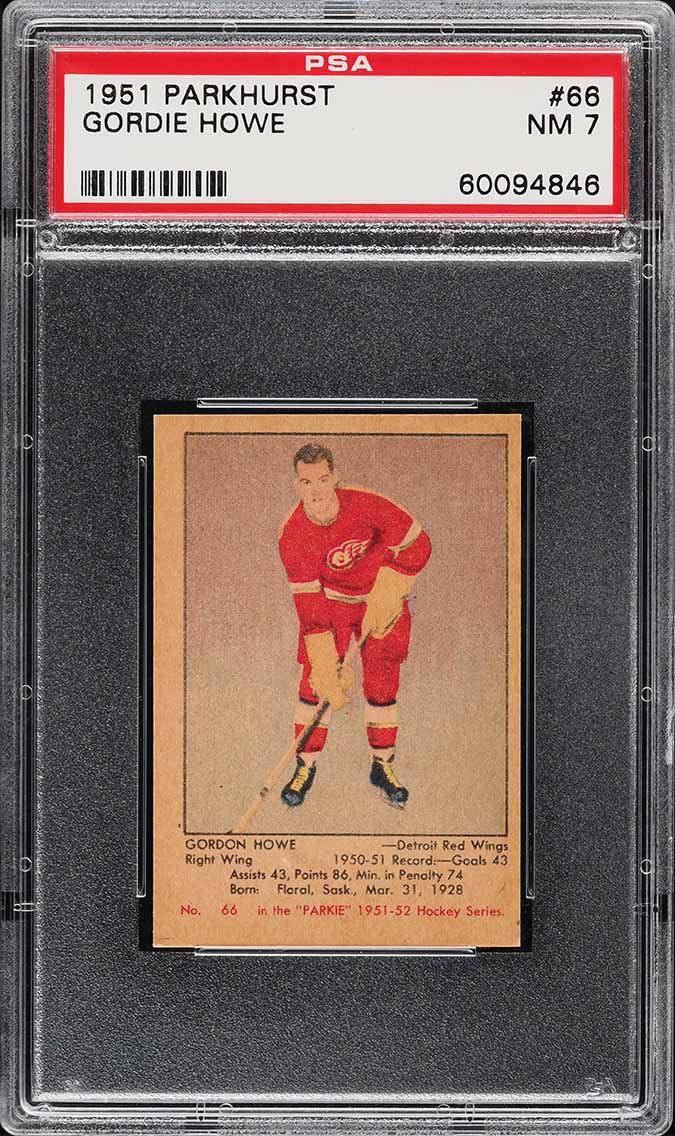
Era/Set: 1951-52 Parkhurst | Typical price: ~$8,000 (PSA 3) to $210,000 (PSA 8.5) | Best for: vintage purists who want the oldest blue chip in the set
Mr. Hockey's rookie anchors the legendary 1951-52 Parkhurst set, the first true postwar Canadian hockey issue. A PSA 8.5 example sold through Goldin for a record $210,330 in May, and a PSA 7 last traded near $30,000, while affordable PSA 3 copies list around $8,000.
The card's age and fragility make any problem-free example desirable — Parkhurst stock chips and the dark borders show every flaw. With only six PSA 10s reported across the entire vintage Howe catalog, condition census matters enormously here.
Pros:
- Oldest blue-chip rookie on this list — true postwar vintage pedigree.
- Record $210K Goldin sale confirms top-end strength.
- Mid-grade copies under $10K keep it within reach for patient buyers.
- Gordie Howe's name carries multigenerational collector demand.
Cons:
- 1950s cardboard is fragile; clean copies are genuinely scarce.
- Thin high-grade population makes pricing jumpy between grades.
Verdict: The vintage anchor — buy the best centered, crack-free copy your budget allows.
3. 1966-67 Topps Bobby Orr Rookie #35
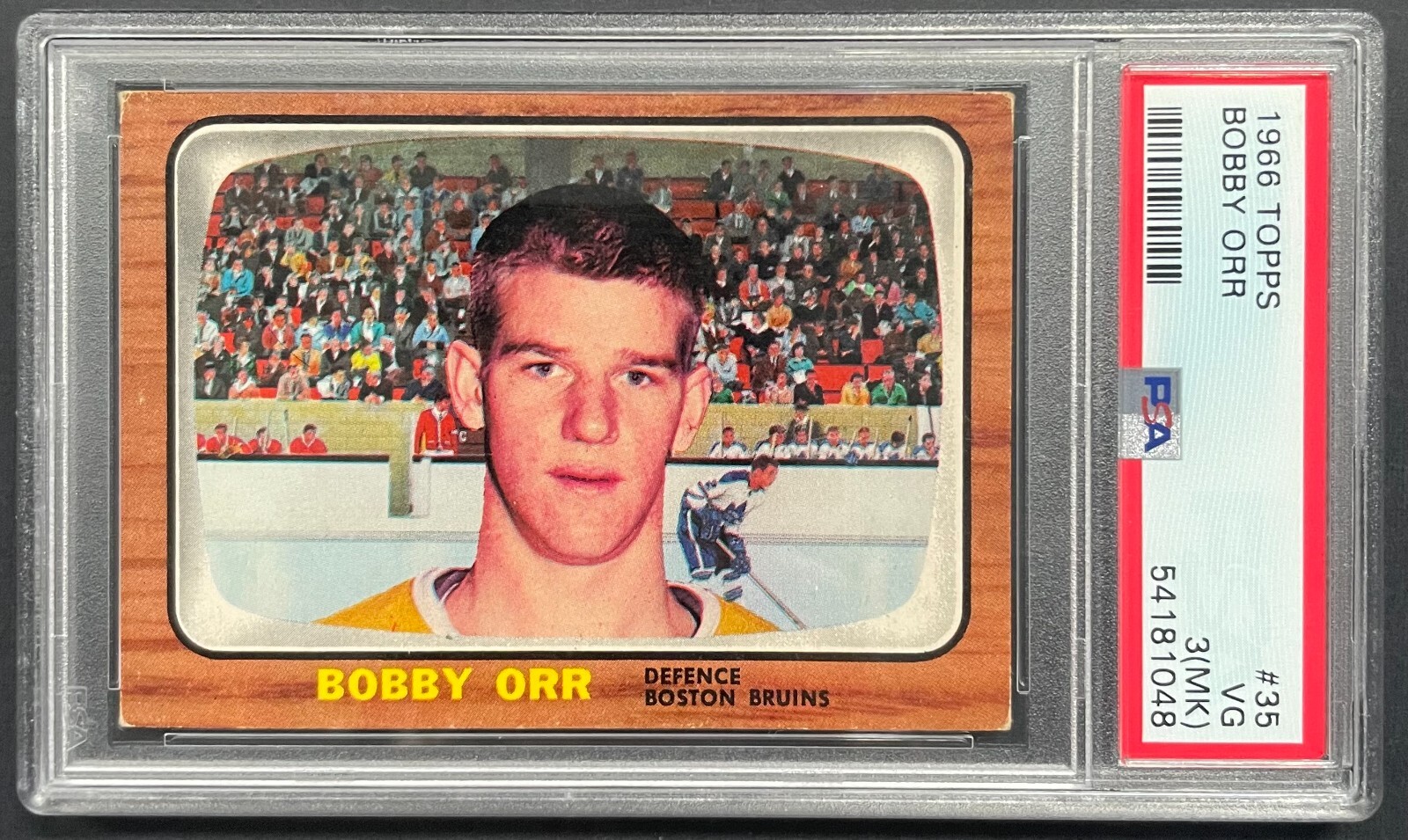
Era/Set: 1966-67 Topps | Typical price: ~$4,000 (PSA 3) to $40,000+ (PSA 7) | Best for: collectors chasing the defenseman who changed the game
Orr's 1966-67 Topps #35 rookie is one of the most beloved cards in hockey. Even a well-worn PSA 3 commands $4,000 or more, and the ultra-rare 1966-67 Topps USA Test parallel — just three known in PSA 9 — sold for $240,000. The standard issue suffers from gum staining and edge chipping, so eye appeal carries a premium beyond the numeric grade.
Orr's combination of on-ice revolution and a short, brilliant career keeps this card permanently in demand.
Pros:
- Iconic rookie of the most influential defenseman ever.
- Low-grade copies at ~$4K are accessible relative to the name.
- Test-issue parallel gives the card family a six-figure trophy ceiling.
- Eye-appeal premiums reward patient, selective buying.
Cons:
- Gum stains and chipping plague the standard issue.
- High grades are scarce and command steep premiums.
Verdict: A must-own vintage rookie; prioritize a clean, well-centered example over a marginally higher grade.
4. 1985-86 O-Pee-Chee Mario Lemieux Rookie #9

Era/Set: 1985-86 O-Pee-Chee | Typical price: ~$1,500 (PSA 8) to $45,000+ (PSA 10) | Best for: collectors who want a top-3 talent at a mid-vintage price
Super Mario's 1985-86 O-Pee-Chee #9 rookie is the best buy among the truly elite names. A PSA 10 last sold for $45,600, while the far more common PSA 9 and PSA 8 copies keep it accessible for collectors who don't need the perfect grade. Like all O-Pee-Chee issues, centering is the enemy — and at this scarcity level a centered, sharp-cornered copy pulls a clear premium.
Lemieux's two Cups and Hall of Fame résumé give the card durable demand.
Pros:
- Top-3 all-time talent at a fraction of Gretzky-rookie money.
- PSA 10 at ~$45K shows a strong, liquid high-grade market.
- PSA 8 copies offer an affordable foothold on a legendary rookie.
- Iconic '80s set with broad collector recognition.
Cons:
- O-Pee-Chee centering issues are pervasive.
- High-grade premiums escalate fast above PSA 9.
Verdict: The smartest blue-chip-name rookie for collectors who want pedigree without a six-figure check.
5. 1958-59 Topps Bobby Hull Rookie #66
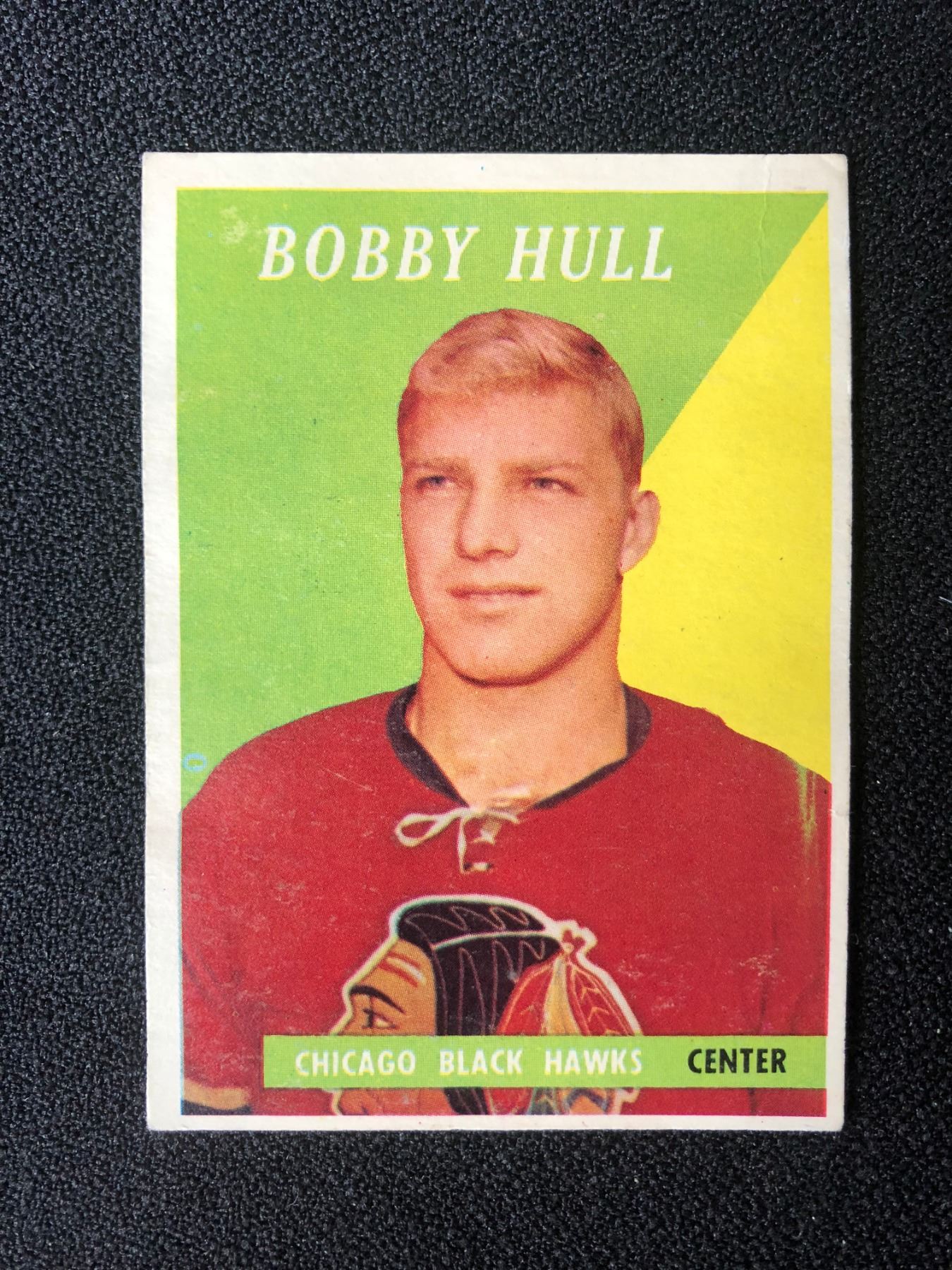
Era/Set: 1958-59 Topps | Typical price: ~$925 (PSA 4) to $14,400 (PSA 7) | Best for: vintage collectors who want a Golden Jet at a sane entry price
The Golden Jet's 1958-59 Topps #66 is one of the most underrated vintage rookies in the sport. A PSA 7 last sold for $14,400 and a PSA 6 for $4,938, while honest PSA 4 copies trade near $925. Hull's slap-shot legacy and Hall of Fame credentials make this a genuine 1950s blue chip that still costs a fraction of the Howe rookie.
As with all late-'50s Topps, centering and corner wear separate the strong copies from the rest.
Pros:
- 1950s Hall of Fame rookie at a mid-four-figure entry point.
- Strong PSA 7 demand at ~$14K confirms a real market.
- Affordable lower grades under $1,000 for budget vintage buyers.
- Underrated relative to Howe, leaving room for appreciation.
Cons:
- Late-'50s stock is prone to chipping and off-centering.
- Thinner demand than the marquee names limits top-end liquidity.
Verdict: The best-value true-vintage rookie on this list for collectors who want 1950s pedigree.
6. 1979-80 Topps Wayne Gretzky Rookie #18
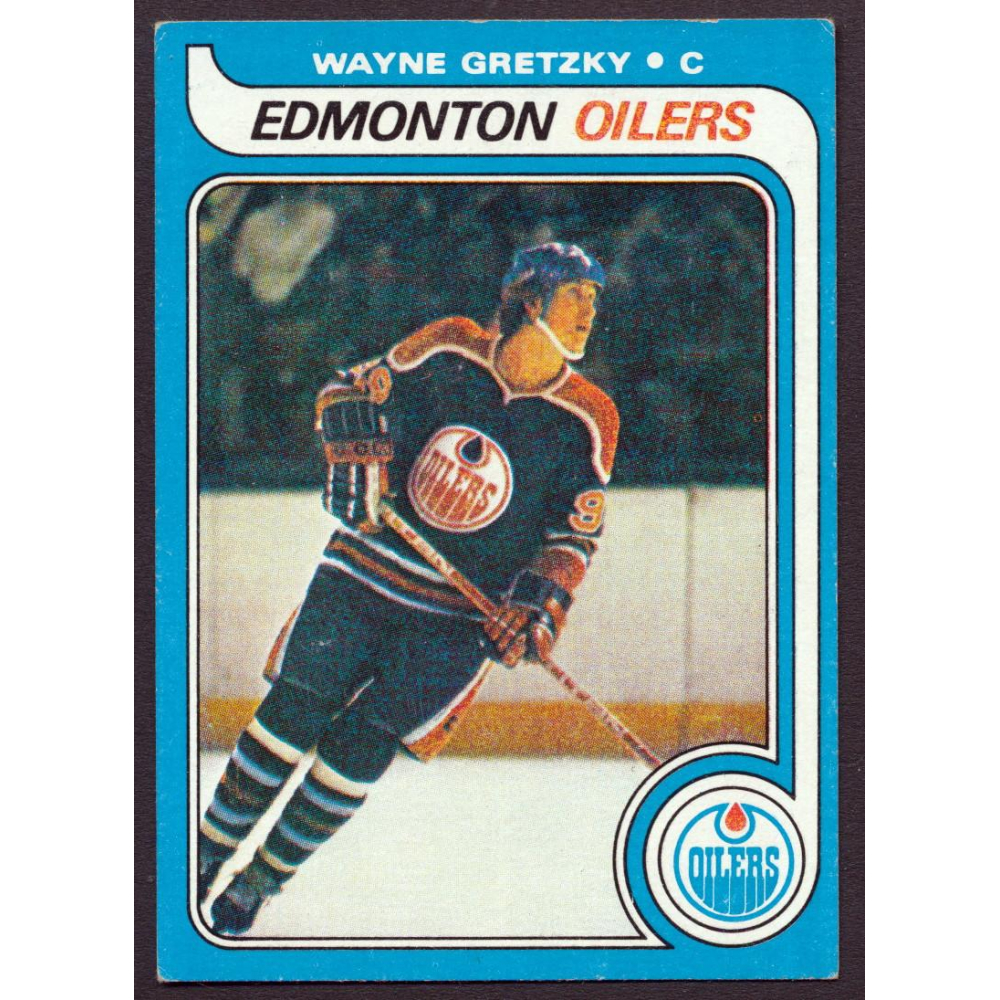
Era/Set: 1979-80 Topps | Typical price: ~$2,000 (PSA 7) to $30,500 (PSA 9) | Best for: Gretzky collectors who want the rookie at a far lower price than the O-Pee-Chee
The U.S.-market 1979-80 Topps #18 is the same iconic Gretzky rookie image at a meaningfully lower price than its O-Pee-Chee twin. A PSA 9 last sold for $30,500 — with Heritage noting only two copies grade higher — making it a relative bargain versus the OPC's six-figure PSA 9.
The Topps print is generally sharper than O-Pee-Chee, so gem candidates are slightly more attainable. For collectors who want the Gretzky rookie without the OPC premium, this is the card.
Pros:
- Same iconic Gretzky rookie at roughly a quarter of the OPC PSA 9 price.
- Sharper Topps print improves the odds of a high grade.
- PSA 9 at ~$30,500 is a strong, documented top-end comp.
- Deep Heritage and PWCC sales history for transparent pricing.
Cons:
- Always plays second fiddle to the O-Pee-Chee version.
- High-grade copies still carry meaningful condition premiums.
Verdict: The value path to owning the most important rookie in hockey.
7. 1986-87 O-Pee-Chee Patrick Roy Rookie #53

Era/Set: 1986-87 O-Pee-Chee | Typical price: ~$100 raw to $2,000+ (PSA 9/10) | Best for: collectors who want the greatest goaltender's rookie
St. Patrick's 1986-87 O-Pee-Chee #53 is the rookie of arguably the best goaltender ever and a four-time Cup winner. Raw copies trade near $100, while strong PSA 9 examples climb into the high hundreds and clean PSA 10s push past $2,000 given how brutally the OPC print punishes centering and corners.
Roy's four Stanley Cups and three Conn Smythe trophies give the card lasting demand among Canadiens and Avalanche collectors alike.
Pros:
- Best-goaltender-ever rookie with multigenerational fan demand.
- Raw copies near $100 make it an easy collection addition.
- PSA 10 scarcity rewards patient grade-hunting.
- Two-franchise fanbase (Montreal and Colorado) broadens demand.
Cons:
- OPC centering makes PSA 10 copies genuinely rare.
- Raw market is soft and can swing on supply.
Verdict: The definitive goaltender rookie — chase a centered copy and grade it yourself.
8. 1990-91 Upper Deck Jaromir Jagr Rookie #356 💎 BEST VALUE
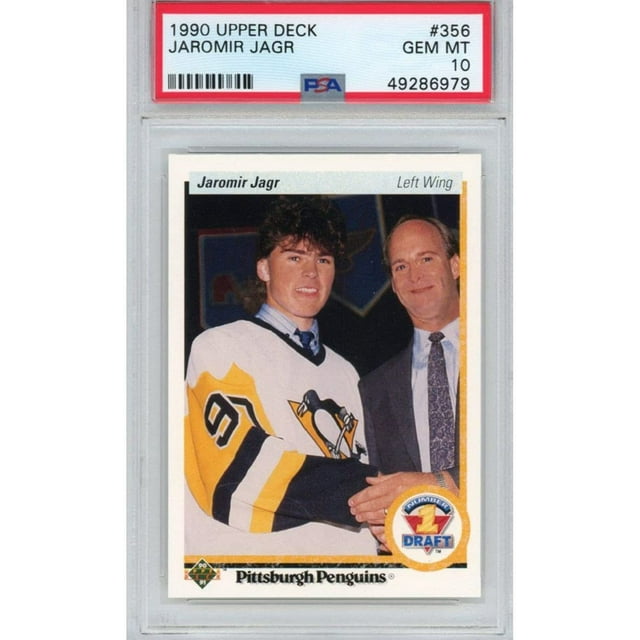
Era/Set: 1990-91 Upper Deck | Typical price: ~$80 to $160 (PSA 10) | Best for: anyone who wants a gem-mint Hall of Fame rookie on a budget
This is the value play of the entire list. Jagr is a Hall of Famer and one of the highest-scoring forwards in NHL history, yet his 1990-91 Upper Deck #356 rookie sells in PSA 10 for roughly $80 to $160. It's a junk-wax-era card, so supply is plentiful — but that is exactly why a perfect gem-mint Hall of Fame rookie costs a sliver of what the vintage names demand.
Upper Deck's sharp printing and tight registration make PSA 10s genuinely attainable, so you can own a flawless slab without chasing rare condition.
Pros:
- Hall of Fame rookie in PSA 10 for under $160 — unmatched price-to-pedigree.
- Upper Deck print quality makes gem-mint copies easy to find.
- Plentiful supply means instant liquidity and no centering hunt.
- Top-tier career stats give the name lasting collector interest.
Cons:
- Junk-wax-era supply caps appreciation potential.
- Low absolute price means dealer fees eat a larger share.
Verdict: The best value in hockey cards — a perfect Hall of Fame rookie for pocket change.
9. 1971-72 O-Pee-Chee Guy Lafleur Rookie #148

Era/Set: 1971-72 O-Pee-Chee | Typical price: ~$1,500 (PSA 7) to $5,000 (PSA 9) | Best for: vintage collectors who want a Habs legend with thin high-grade supply
The Flower's 1971-72 O-Pee-Chee #148 rookie (famously misspelled "La Fleur" on the front) is a true early-'70s vintage card with a tiny high-grade census. A PSA 9 last sold near $4,948, and with only six PSA 10s among more than 1,200 graded copies, condition scarcity is extreme.
The black borders on the '71-72 OPC set chip at the slightest handling, so even mid-grade examples with clean edges pull a premium. Lafleur's five Cups in Montreal keep demand steady.
Pros:
- Five-time Cup winner's rookie with deep Montreal demand.
- Only six PSA 10s make high grades a true rarity.
- PSA 7 around $1,500 is a reasonable vintage entry.
- Notorious black borders reward sharp-edged copies handsomely.
Cons:
- Black borders chip easily, so high grades are extremely scarce.
- Demand is more regional than the league-wide superstars.
Verdict: A condition-rarity vintage play — black-border scarcity is the whole thesis.
10. 1980-81 O-Pee-Chee Mark Messier Rookie #289
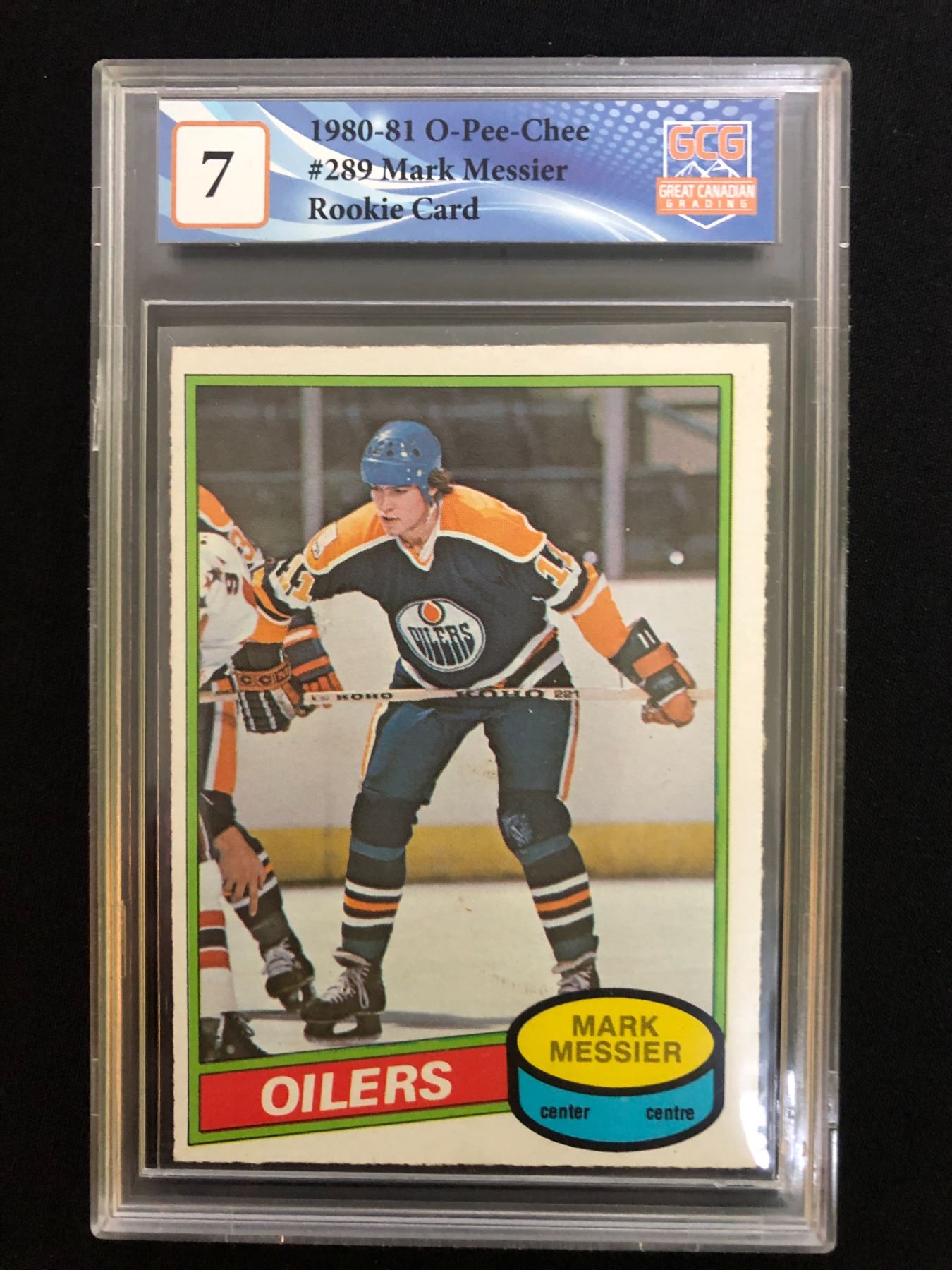
Era/Set: 1980-81 O-Pee-Chee | Typical price: ~$200 (PSA 7) to $1,225 (PSA 9) | Best for: collectors who want a six-time champion's rookie from the iconic 1980 set
The Moose's 1980-81 O-Pee-Chee #289 comes from one of the most celebrated junior-era hockey sets, the same '80-81 OPC issue loaded with Hall of Famers. A PSA 9 sold for $1,225 in late 2025, while raw and lower-graded copies run from $20 to a few hundred dollars. Messier's six Stanley Cups and dual Edmonton-New York legacy give the card a broad fanbase.
As with every OPC issue, centering and the soft cut make true PSA 9s tougher than the print run suggests.
Pros:
- Six-time Cup champion's rookie from a beloved set.
- PSA 9 at ~$1,225 with affordable raw copies under $100.
- Two-market legacy (Edmonton dynasty and 1994 Rangers) widens demand.
- Loaded 1980-81 OPC set carries collector cachet.
Cons:
- OPC centering caps high-grade supply.
- Less marquee than the elite scorers above it.
Verdict: An accessible Hall of Fame rookie from a classic set — buy raw and grade the centered ones.
Which One Is Right for You?
What to Look For
- Authenticate before you buy. Trimming and recoloring are the biggest threats on vintage hockey; insist on a current PSA, SGC, or BGS slab and verify the cert online before paying.
- Centering is everything on O-Pee-Chee. OPC and early-'70s black-border cards punish off-centering hard; a perfectly centered PSA 8 can out-earn a crooked PSA 9.
- Watch the edges and corners. Soft Canadian cardboard chips and frays; a clean, sharp-cornered copy in any grade carries an eye-appeal premium.
- Do the grading math. A raw Roy or Messier near $100 can become a four-figure slab — but only if it grades; budget the fee and the downside.
- Check the population report. Pop counts at PSA and SGC tell you whether a grade is genuinely scarce or merely uncommon, which drives the premium you should pay.
What matters less than the hype: chasing the absolute top grade on a common card. A centered, honest mid-grade copy of a great rookie beats a crooked higher grade nearly every time.
FAQ
Is the O-Pee-Chee or Topps Gretzky rookie the better buy? Both share the same image and number. The O-Pee-Chee is the true rookie and the trophy card, with PSA 9s in the $100K-$140K range; the Topps version offers the same icon at roughly $30,500 in PSA 9, making it the value path to the most important card in hockey.
Why are hockey cards cheaper than baseball or basketball? Hockey is the smallest of the four major-sport card markets by dollar volume, which means thinner liquidity but also that the sport's icons still trade below their baseball and basketball equivalents. That gap is the bull case and the risk at once.
What's the safest single hockey card to own? The 1979-80 O-Pee-Chee Gretzky rookie. It has the deepest sales history, the universal demand, and the tightest bid-ask spread of any card in the sport.
Should I grade my raw rookies? Only if a centered, clean copy can realistically hit PSA 8 or higher. For cards like the Roy or Messier rookies, a successful grade can multiply value several times over — but budget the fee and accept that off-center copies may not clear the cost.
Which card here has the best value relative to pedigree? The 1990-91 Upper Deck Jaromir Jagr rookie. It's a genuine Hall of Fame rookie available in flawless PSA 10 for roughly $80 to $160, an unmatched price-to-pedigree ratio.
Are reprints a common problem in hockey? Yes, especially for the marquee vintage rookies. Always buy graded copies from reputable auction houses and verify the certification number on the grader's site before sending payment.
Bottom Line
The 1979-80 O-Pee-Chee Wayne Gretzky rookie #18 is the best hockey card to collect in 2027 — the defining asset of the sport, with PSA 9 comps from $100,099 to ~$140,000 and a documented $3.75 million PSA 10 sale. For collectors who want real pedigree on a budget, the 1990-91 Upper Deck Jaromir Jagr rookie #356 is the best value, a Hall of Fame rookie in perfect PSA 10 for roughly $80 to $160.
Between those poles sit the Howe, Orr, Lemieux, Hull, Roy, Lafleur, and Messier rookies — every one a real card with a real, recent comp behind it.
Sources
- PSA CardFacts — 1979-80 O-Pee-Chee Wayne Gretzky #18
- Heritage Auctions — 1979 Topps Wayne Gretzky Rookie PSA 9
- Detroit Hockey Now — Gordie Howe 1951 Parkhurst rookie sells for record $210,330
- PSA Auction Prices Realized — 1966 Topps Bobby Orr
- Sports Card Investor — 1958 Topps Bobby Hull #66 price guide
- Sports Card Investor — 1985 O-Pee-Chee Mario Lemieux #9 price guide
- PSA Auction Prices Realized — 1980 O-Pee-Chee Mark Messier
- PSA Auction Prices Realized — 1971 O-Pee-Chee Guy Lafleur
*Hockey cards review — hockey cards reviews, ratings, best hockey cards to collect 2027, and a review of the top rookie cards for collectors.*