


How much should I tip for dining in 2027?
Quality
Certified
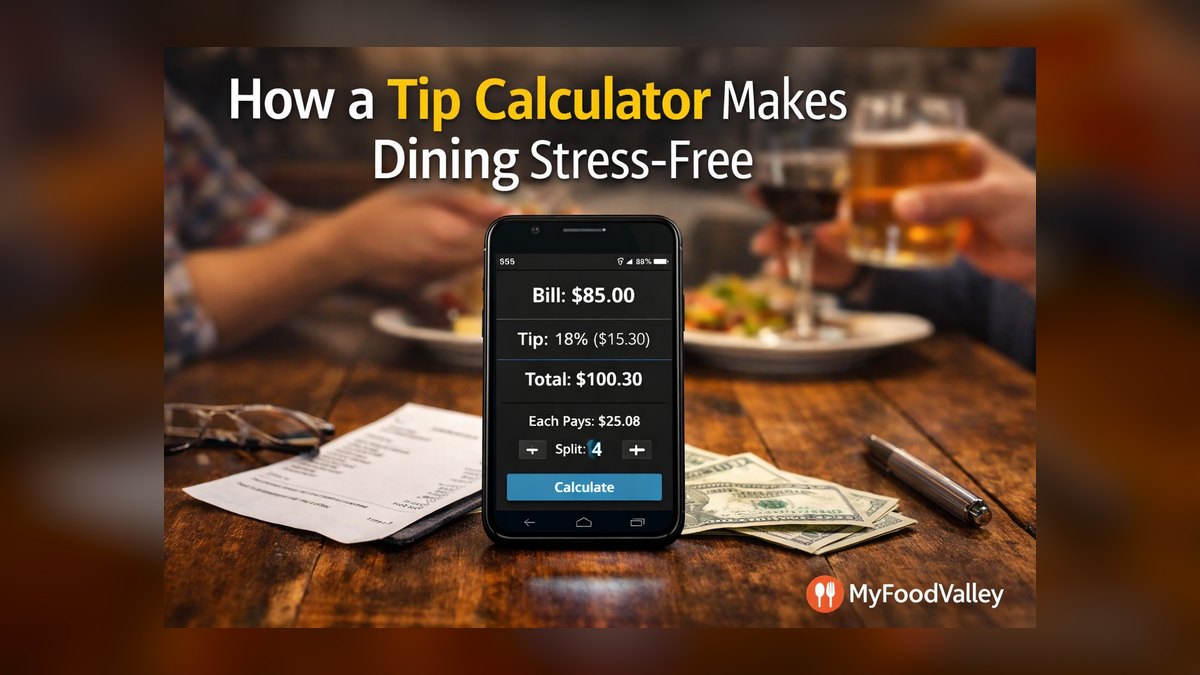
For dining in 2027, tip 18–22% of the pre-tax bill for full table service, 20% as your default. Counter service and takeout run 0–10%. Bars run $1–2 per drink or 20% of the tab. Delivery runs 15–20% with a $5 floor. Always check for an auto-added service charge first.
Service charges versus voluntary tipping — the two systems you'll actually encounter
Dining in 2027 means navigating two parallel compensation systems that look similar on the receipt but work completely differently underneath. Understanding which one you're in is the single highest-leverage thing you can do, because paying the wrong way either shortchanges a server or costs you 20% you already paid.
System one: the traditional voluntary tip. The restaurant pays the server a base wage — in many U.S. states this is a "tipped minimum wage" substantially below the standard minimum, with the tip legally counted toward making up the difference. The menu price covers food, rent, and kitchen labor. Your tip is what converts the server's shift from a floor wage into a living one. You control the amount, you decide after the meal, and the money mostly flows to the front-of-house staff through a tip pool. This is still the dominant model in casual and mid-tier American restaurants.
System two: the built-in service charge. The restaurant adds a fixed percentage — commonly 18%, 20%, or 22% — directly to the check, or bakes an equivalent premium into menu prices and prints "no tipping necessary" at the bottom. Legally, a mandatory service charge is restaurant revenue, not a tip. The house can distribute it however it wants: to servers, to the kitchen, to health insurance, or to margin. Some restaurants publish exactly where it goes. Many do not.
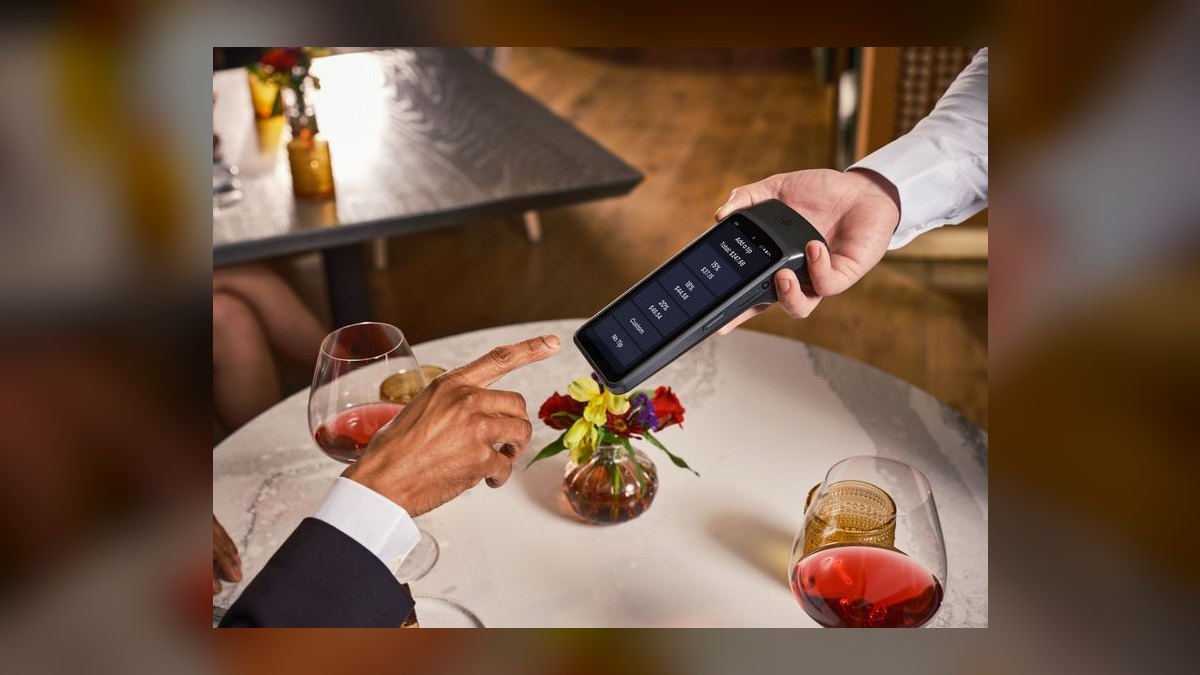
The practical differences are sharp:
| Voluntary tip | Service charge | |
|---|---|---|
| Who sets the amount | You | The restaurant |
| Legal classification | Employee's tip | Restaurant revenue |
| Can it fund kitchen staff | Only via a valid tip pool, with restrictions | Yes, freely |
| Removable if service was poor | Yes | Usually only by manager discretion |
| Shows on the receipt | A blank line you fill in | A pre-printed line item |
| Predictable for the worker | No — varies by night | Yes — smooths income |
There's a third hybrid that has spread fast and causes the most confusion: a smaller mandatory surcharge (3–5%) labeled "kitchen equity fee," "healthcare surcharge," "employee wellness," or "back-of-house fee," *plus* a still-blank tip line. That surcharge is not a tip. It typically funds benefits or kitchen wages, and the server's compensation still depends on what you write on the tip line. In that scenario, tip your normal percentage on the pre-tax subtotal and treat the surcharge as part of the cost of the meal, the way you'd treat a corkage fee.
The reason this matters more in 2027 than it did a decade ago is that the two systems now coexist inside the same neighborhood — sometimes inside the same restaurant group. One location of a concept may be no-tipping while its sibling across town is traditional. You cannot rely on category or price point to tell you which you're in. You have to read the check.
How to tell in under ten seconds. Scan the bottom third of the receipt for any line between the subtotal and the total that isn't tax. Read its label. If it says "service charge," "gratuity," "service fee," or "20% added," you are in system two for that portion. If the only additions are sales tax and the tip line is empty, you're in system one. Menus and table tents usually announce a no-tipping policy loudly, because restaurants that adopt it need customers to understand why the entrées cost more.

What to do when you genuinely can't tell. Ask. "Is service included?" is a normal, non-awkward question, and staff answer it dozens of times a shift. Servers would far rather answer it than watch you double-tip out of confusion or under-tip out of a wrong assumption. If you're mid-meal and don't want to ask, the safe fallback is to tip normally on the pre-tax subtotal and check the itemized receipt afterward — if a service charge was already applied and you tipped on top, most restaurants will adjust it if you flag it before the card batch closes that night.
Deciding what to leave, situation by situation
The percentage isn't a single number — it's a function of the service model, and the service model is what you're actually reading when you decide. The decision tree below is the compressed version of what a frequent diner does automatically.
A few of these branches deserve unpacking, because they're where people most often get it wrong.
Pre-tax versus post-tax. The convention is to calculate on the pre-tax subtotal. Sales tax is money the restaurant collects for the state; nobody who served you sees a cent of it. In a jurisdiction with 9% sales tax, tipping 20% post-tax means you actually paid about 21.8% — a real difference on a large check, and nothing at all on a $30 one. Nobody will notice or mind if you tip on the total. Do whichever keeps the arithmetic fast.

Comps and discounts. If a manager comps an entrée because it came out wrong, or you used a two-for-one promotion, the server did the same amount of work as if you'd paid full freight — and if the check drops from $90 to $50, a 20% tip drops from $18 to $10 for identical labor. Tip on what the meal *would* have cost. This is the single most common way well-intentioned diners accidentally under-tip, and it hits hardest at restaurants that lean on promotions to fill weeknights.
Large parties. Most restaurants add automatic gratuity for parties above a threshold — six or eight people is typical — at 18% or 20%. It should be disclosed on the menu and printed on the check. When it's there, you're done; adding another 20% on top is a genuine and expensive mistake. When you're the organizer of a large group, take thirty seconds to look before you announce a per-person split, because the difference between "the auto-grat is in there" and "we need to add tip" is real money spread across eight people.
Split checks. If four people split a $200 check evenly across four cards, each person tips 20% of their $50, which comes to $10 each and $40 total — the same as one person tipping 20% of $200. The percentage is scale-invariant. What breaks is when everyone rounds *down* to a clean number on their own slip; four people each rounding $10 to $8 turns a 20% tip into a 16% one without anyone feeling like they under-tipped.
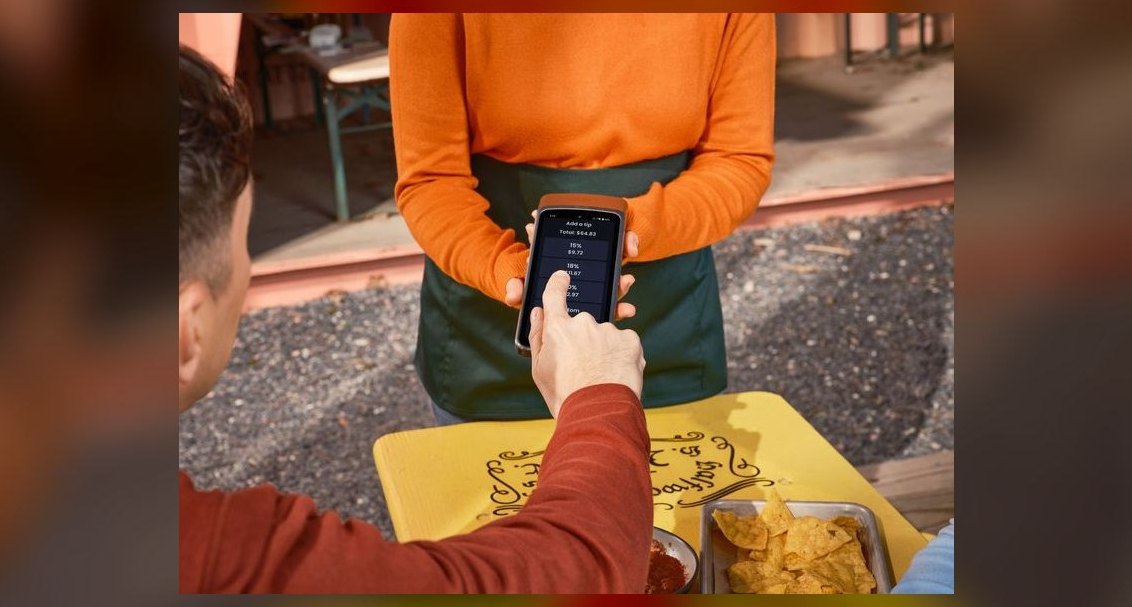
Coffee shops and counter service. The tablet that swivels around and offers 15/20/25% before you've received anything is the most-complained-about interaction in modern dining, and the honest answer is that it's genuinely optional. A drip coffee handed across a counter carries no service obligation. A drink that took real craft — a pour-over, a complex espresso drink, a made-to-order bowl assembled in front of you — reasonably earns a dollar or 10%. The "no tip" button exists and using it is not a moral failure. What separates counter service from table service is that nobody's wage structure at a counter presumes your tip in the way a tipped-minimum-wage server's does.
Buffets and self-serve. Someone still clears your plates, refills drinks, and resets the table. Ten percent is the standard, more if a server was attentive about drinks or brought courses to the table.
The actual numbers, and what they mean on a real check
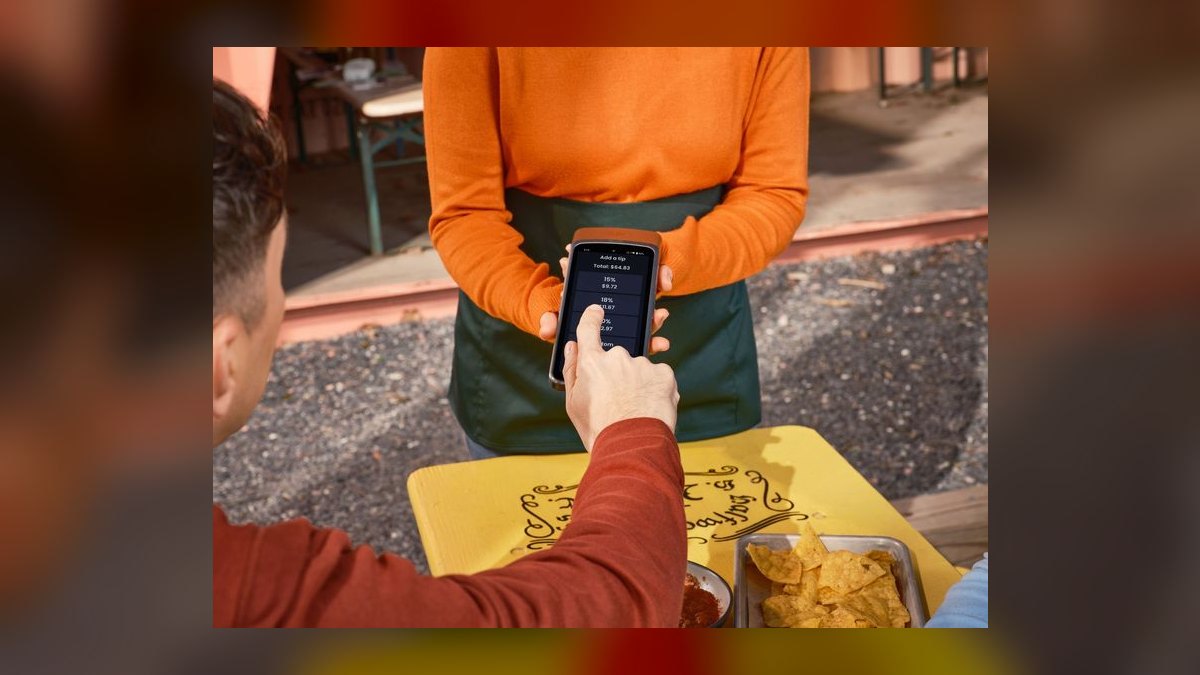
Percentages get abstract fast. Here's what each tier translates to in dollars across check sizes you'd plausibly encounter.
Full table service, tipping on the pre-tax subtotal:
| Subtotal | 15% | 18% | 20% | 22% | 25% |
|---|---|---|---|---|---|
| $25 | $3.75 | $4.50 | $5.00 | $5.50 | $6.25 |
| $50 | $7.50 | $9.00 | $10.00 | $11.00 | $12.50 |
| $80 | $12.00 | $14.40 | $16.00 | $17.60 | $20.00 |
| $120 | $18.00 | $21.60 | $24.00 | $26.40 | $30.00 |
| $200 | $30.00 | $36.00 | $40.00 | $44.00 | $50.00 |
| $350 | $52.50 | $63.00 | $70.00 | $77.00 | $87.50 |
The gap between 18% and 20% on a $50 check is one dollar. On a $350 check it's seven. For most everyday dining, the difference between "good tip" and "very good tip" is smaller than the price of a side dish — which is a useful thing to remember when you're agonizing over the arithmetic.
The fast mental math that actually works. Move the decimal one place left to get 10%, then double it for 20%. A $63.40 check → $6.34 → about $12.70. If you want 18%, take the 20% number and subtract a tenth of it. If you want 15%, take 10% and add half again. This is faster than any percentage button and lets you round to a number you like.
Other dining-adjacent situations, with the numbers:

- Bartender, per drink. $1 for a beer or a simple pour, $2 for a cocktail that required actual mixing. On a long night this often works out to more than 20% of the tab, which is why regulars who tip per drink tend to get taken care of.
- Bartender, running a tab. 20% of the total at close, same as table service.
- Delivery. 15–20%, but with a floor. A driver who spent 25 minutes on a $22 order earned more than $3.30. Five dollars is a reasonable minimum for any delivery; more in bad weather, more for a long distance, more for a walk-up to a fourth floor.
- Curbside pickup that you drive to. $2–5, or 5–10%. Someone assembled the order and walked it out to your car.
- Straight takeout you carry out yourself. Genuinely optional. If someone packed a large or complicated order, a few dollars is a kind gesture, not an obligation.
- Sommelier or wine service. Covered by the standard tip on the total. If a sommelier spent real time helping you choose, some diners add $10–20 directly. Not required.
- Coat check. $1–2 per coat.
- Valet at a restaurant. $2–5 on return.
- Host who genuinely rescued you — squeezed in a table on a full Friday, handled a seating problem gracefully. $10–20 handed directly, entirely optional and entirely noticed.
- Private dining or catered events. Read the contract. Most include a service charge of 18–25%; an additional cash tip to the captain or lead server is customary but not expected.
The tipping-out reality behind the number. In most full-service American restaurants, your server does not keep the whole tip. They "tip out" a percentage of sales — not of tips, of *sales* — to bussers, runners, bartenders, and sometimes hosts. The pool commonly runs 3–6% of that server's total sales. The practical consequence is counterintuitive and worth internalizing: if you leave nothing on a $200 check, the server frequently still owes the pool roughly $6–12 out of pocket on your table. A zero tip isn't neutral. It's negative. Which is why the right response to genuinely bad service is almost always to talk to a manager rather than to stiff a server who may not have been the cause.
When to go above the default. A server who handled a complicated allergy without making it a production, who paced a two-hour meal so it never dragged or rushed, who fixed a kitchen error before you had to mention it, or who let a table linger past close without hovering — 25% costs you a few dollars and is remembered. Regulars who tip well get better tables and better care, and that's not corruption, it's just how repeated human interaction works anywhere.
When to go below. Below 15% should communicate something specific, and it only communicates if the manager knows why. A slow kitchen isn't the server's fault. A cold dish isn't either — but a server who never came back to check, or who was dismissive when told, is. Distinguish the failure that belongs to the person from the failure that belongs to the building.
Putting it into practice — before, during, and after the meal
Most tipping stress comes from making the decision under time pressure with a card reader pointed at you. Almost all of it is avoidable by front-loading the parts that can be front-loaded.
Before you go. Restaurant websites almost always disclose a no-tipping or service-included policy, because they have to — it's the explanation for menu prices that look 20% high. Thirty seconds on the menu page tells you whether to budget $60 or $72 for the same meal. If you're organizing a group, call and ask two questions: what's the party size that triggers automatic gratuity, and what's the percentage. That one call prevents the most common group-dining argument there is.

Cash versus card. Servers are taxed on tips either way, and card tips are standard. The old advice that cash reaches the server faster is partially true — card tips often arrive with the next paycheck rather than at shift end, and in some houses a small card-processing cost gets absorbed somewhere. But cash tips still get pooled and tipped out under most house policies, so cash is a small courtesy, not a system-beating move. Tip however you're paying. Consistency matters more than method.
Handling the tablet. When a screen presents 20/25/30% at a counter, remember those defaults were configured by someone optimizing revenue, not by an etiquette authority. The "custom" and "no tip" buttons are always there, sometimes in smaller type. Deciding your number before the screen turns around removes the social pressure entirely, because the awkwardness lives in the hesitation, not in the amount.
Traveling — this is where American assumptions break hardest. Tipping norms are cultural, not universal, and exporting a 20% habit abroad is not generosity, it's noise. Broad patterns worth knowing before you fly:
- Much of Western Europe builds service into the price by law or convention. Rounding up, or leaving 5–10% for genuinely good service, is normal. Twenty percent is not.
- Japan does not have a tipping culture, and attempting to tip can create a confusing moment for a server who will often try to return the money. Excellent service is the baseline expectation, not a purchased upgrade.
- Australia and New Zealand pay full minimum wages to hospitality staff. Tipping exists but is modest and genuinely optional.
- Canada tracks American norms closely, generally 15–20%.
- Much of Latin America commonly adds a 10% service charge — *propina* — directly to the check, with anything additional at your discretion.
The general rule for travel: check the local convention for the specific country before the trip, and read the check for an included service line the way you would at home. A quick search on the plane is enough.

Upstream effects worth understanding. Tipping isn't only a transaction between you and one server — it shapes the economics of the restaurant you're eating in. Tipped compensation shifts labor cost from the operator's fixed expenses to the customer's variable spend, which lets a restaurant post lower menu prices than its true cost of service. That's why service-included restaurants look expensive on paper and often aren't once you total the check. It also creates a structural pay gap between front-of-house, whose income scales with check averages, and the kitchen, whose wages don't — which is exactly the gap that kitchen-equity surcharges and no-tipping models were invented to close. When you notice a restaurant has switched models, you're seeing an operator making a bet about staff retention, not just about pricing.
The one-line version to carry with you. Twenty percent, pre-tax, at any table where someone took your order and brought it to you — unless the check already added it. Everything else in this page is refinement on that sentence.
Related questions
Should I tip on the tax?
The convention is to tip on the pre-tax subtotal, since tax goes to the state and not to anyone who served you. On a $50 check the difference is under a dollar, so tipping on the total is fine if it makes the math faster.
Is it rude to leave no tip at a counter?
No. Counter service carries no tipping obligation, and the "no tip" option on the tablet exists for exactly this reason. A dollar or 10% is a nice gesture for a drink or dish that took real preparation, but it's a courtesy rather than an expectation.
What if there's a service charge and a tip line?

Read the service charge label. If it's a full 18–22% gratuity, the tip line is optional. If it's a smaller 3–5% kitchen or wellness fee, that money usually doesn't reach your server — tip your normal percentage on the subtotal anyway.
How much should I tip for delivery?
Fifteen to twenty percent, with a floor of about $5 regardless of order size. Add more for bad weather, long distances, or stairs. Percentage alone under-pays on small orders, because the driver's time and mileage don't shrink with the check.
Do I still tip if the food was bad?
Usually yes, and then tell a manager. Kitchen problems aren't the server's doing, and servers tip out a percentage of *sales* to bussers and bartenders — so a zero tip can leave them paying out of pocket on your table. Reserve a low tip for a genuine service failure.
FAQ
How much should I tip for dining in 2027?
Twenty percent of the pre-tax subtotal is the working default for full table service, with 18% for adequate service and 22–25% for service that was genuinely excellent. Counter service is 0–10% and truly optional. Bars run $1–2 per drink or 20% of the tab. Delivery is 15–20% with a roughly $5 minimum. The one step that matters most is reading the check for an already-added service charge before you write anything on the tip line.
How do I know if a service charge was already added?
Look at every line between the subtotal and the total. Anything that isn't sales tax deserves a read. Labels like "service charge," "gratuity," "service fee," or a printed percentage mean part or all of the tip is already in the total. Restaurants that have gone fully no-tipping usually say so on the menu, on the table, and at the bottom of the check, because they need customers to understand why entrée prices are higher.

Why do large parties get automatic gratuity?
Because a big table occupies a server for most of a shift while carrying a high risk that a split-up group under-tips collectively — everyone assumes someone else covered it. Automatic gratuity, typically 18–20% for parties of six or eight and up, makes the outcome predictable for the server. It has to be disclosed on the menu and printed on the check, so check for it before adding anything.
Should I tip on a discounted or comped meal?
Yes, on the pre-discount amount. If a manager comps a $40 entrée or you used a promotion, the server performed the same work as on a full-price check. Tipping on the reduced total quietly cuts their pay for identical labor, and it's the most common accidental under-tip there is — especially at restaurants that run weeknight promotions to fill seats.
Does tipping in cash help the server more?
A little, mostly on timing — cash is in hand at the end of the shift, while card tips typically arrive with the next paycheck. But tips are taxable income either way, and cash still gets pooled and tipped out under most house policies. It's a courtesy, not a workaround. Tip whatever way you're already paying.
What's the etiquette for tipping abroad?
Check the local norm before you travel, because 20% is an American convention, not a global one. Much of Western Europe includes service and treats rounding up or 5–10% as generous. Japan has no tipping culture at all. Australia and New Zealand pay full hospitality wages and treat tips as optional. Canada mirrors U.S. norms. Latin America often adds 10% directly to the check.
Sources
- https://www.dol.gov/agencies/whd/flsa/tips
- https://www.dol.gov/agencies/whd/state/minimum-wage/tipped
- https://www.irs.gov/businesses/small-businesses-self-employed/tip-recordkeeping-and-reporting
- https://www.bls.gov/oes/current/oes353031.htm
- https://www.consumerfinance.gov/
- https://www.emilypost.com/advice/general-tipping-guide
- https://www.restaurant.org/
- https://www.ftc.gov/business-guidance/resources/advertising-faqs-guide-small-business
- https://travel.state.gov/content/travel/en/international-travel.html
Related on PULSE
- How much should I tip for a haircut in 2027?
- How much should I tip a hotel housekeeper in 2027?
- How much should I tip for food delivery in 2027?
- How much should I tip a rideshare driver in 2027?
- How do restaurant service charges actually get distributed?
- What is a tipped minimum wage and where does it still apply?
This page will be disappearing soon. Save it to your device for $1 — or read it free while it is here.
@Kory-White- · if Venmo asks, the last 4 of my number are 2012
This page is gone.
This one is off the shelf now. $1 keeps it on your phone for good — the whole page, pictures and diagrams included.
 pulse-diningHow much does a reservation at Noma cost in 2027?
 pulse-diningTop 10 Places to Dine in Chattanooga in 2027
 diningHow much does a meal at a top-rated restaurant cost in 2027?
 pulse-diningTop 10 Places to Dine in Cleveland for Polish Boy Sausage Sandwiches in 2027
 pulse-diningTop 10 Places to Dine in Savannah for Lowcountry Boil in 2027
 pulse-diningTop 10 Places to Dine in Hartford in 2027
 pulse-diningTop 10 Places to Dine in New Orleans for Po' Boys in 2027
 pulse-diningTop 10 Places to Dine in Los Angeles for Korean BBQ in 2027
 pulse-diningTop 10 Places to Dine in New York for Classic New York-Style Pizza in 2027
 pulse-diningTop 10 Places to Dine in Portland for Lobster Rolls in 2027