


How much does a tasting menu cost in 2027?
Quality
Certified

In 2027, expect a restaurant tasting menu to cost roughly $75–$150 per person at casual and mid-tier spots, $150–$300 at ambitious independents, and $300–$600+ at fine-dining destinations. Wine pairings typically add 50–100% of the food price, and tax, service, and supplements can push the real total 30–45% higher.
What a tasting menu actually is and why the price looks the way it does
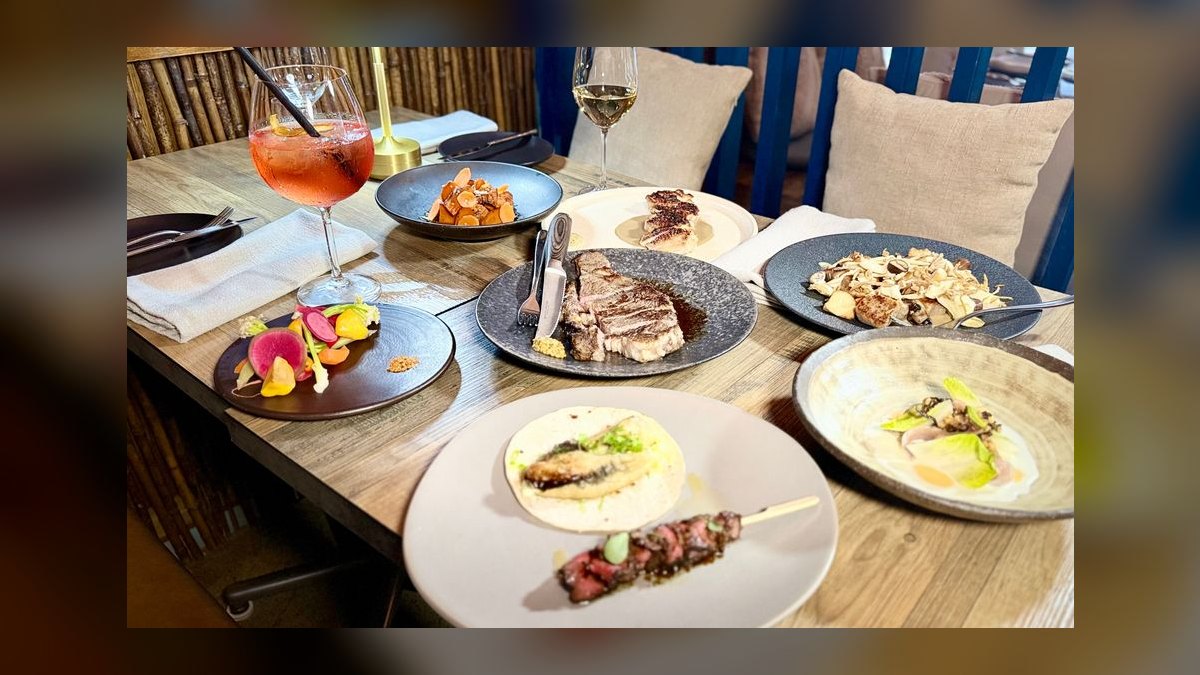
A tasting menu is a fixed, chef-directed sequence of small courses served in a set order, usually with no substitutions beyond dietary accommodations. Instead of ordering one appetizer and one entrée, you buy a single ticket to the whole progression: five, seven, ten, sometimes twenty-plus plates. The price you see quoted is almost always a per-person food price, and that distinction is the single biggest reason people underestimate the cost.
The economics differ sharply from à la carte. On a normal menu, a restaurant hedges: some guests order the pasta with a 78% margin, others order the ribeye with a 55% margin, and the blended food cost lands somewhere around 28–32% of menu price. A tasting menu removes that hedge. Every guest gets every course, so the kitchen knows exactly what it will spend per cover — but it also loses the ability to subsidize the expensive protein with the cheap starch. That predictability is why tasting-menu pricing tends to be set higher relative to raw ingredient cost than a comparable entrée would be: the restaurant is charging for labor and time density more than for food.
Labor is the driver most guests never see. A ten-course menu can require three to five times the prep hours per cover of a three-course à la carte service. Each plate has its own mise en place, its own garnish work, its own pickup timing. A kitchen running a tasting format frequently staffs one cook per two or three courses during service, plus a full prep brigade earlier in the day. Front of house scales too: pacing ten courses for a 40-seat room demands more servers, a dedicated runner team, and often a sommelier. When a menu costs $225 instead of $95, the delta is mostly headcount and hours, not truffles.
Seat turns compound this. An à la carte table might turn twice or even three times in an evening. A tasting menu of eight-plus courses occupies a table for two and a half to three and a half hours, meaning most tasting rooms turn once — occasionally 1.5 times with an early and late seating. The restaurant has to earn its entire nightly revenue per seat from that single occupancy. If a bistro nets $85 per cover across two turns, a tasting room needs roughly $170 per cover on one turn just to match, before accounting for the higher labor load.
Then there is the 2027 cost environment. Since 2020, restaurant operators have absorbed compounding increases across three lines simultaneously: wholesale food, wages, and occupancy. Beef, dairy, and imported seafood have all seen multi-year increases well above general inflation, and the U.S. Bureau of Labor Statistics food-away-from-home index has consistently outpaced the overall CPI since 2021. Minimum wage floors and tipped-wage reform in major markets — California, New York, Washington, D.C. — pushed base labor costs up in step changes rather than gradual drift. Commercial rents in restaurant-dense districts recovered and then exceeded pre-2020 levels in most top-tier cities. The net effect: a menu that read $145 in 2019 commonly reads $210–$250 in 2027 for a materially similar experience.
The anchor term matters here. "Tasting menu" is not a protected label. A neighborhood restaurant can call a five-course seasonal prix fixe a tasting menu and charge $85; a three-Michelin-star kitchen can call a twenty-course kaiseki-influenced progression a tasting menu and charge $525. Both are accurate uses of the phrase. When you are budgeting, the words on the website tell you almost nothing — the course count, the service model, and the city tell you nearly everything.
The step-by-step process of pricing out a tasting menu before you book
Working out what a given night will actually cost is a mechanical exercise, and doing it in order prevents almost every unpleasant surprise at the end of the meal.
Step one: find the base food price and confirm it is per person. Nearly all are. If a restaurant lists "$185" with no qualifier, assume per person. Some ticketed restaurants show the full prepaid amount including service at checkout, which is a different number entirely — read whether the figure is "menu price" or "total."
Step two: count the courses and identify the format. Five to seven courses is a short or "abbreviated" menu. Eight to twelve is a standard full progression. Fifteen-plus signals an extended chef's menu, usually with a counter seat. Some restaurants offer both a short and a long option; the long version is rarely proportionally priced — going from six courses at $145 to ten courses at $215 is common, meaning the marginal courses cost less than the average course.
Step three: check for supplements. These are the most common budget-breaker. A caviar course, an A5 wagyu upgrade, a white truffle shaving in season, or a langoustine substitution typically runs $30–$150 each. Some restaurants list them on the printed menu; others only mention them tableside, which makes them easy to accept reflexively. Two supplements for two people can add $200 to a bill silently.

Step four: decide on the beverage program. This is where the total genuinely doubles. A standard wine pairing usually costs 50–80% of the food price — a $180 menu pairs at roughly $100–$145. A "reserve" or "prestige" pairing can equal or exceed the food price. Non-alcoholic pairings, now standard at most serious restaurants, generally run $55–$95 and are a legitimate way to keep the beverage line under control. Ordering a single bottle for the table is frequently cheaper than two pairings, especially for two people: one $120 bottle against two $130 pairings saves $140.
Step five: apply tax and service. Sales tax ranges from about 4% to over 10% depending on jurisdiction, and some cities layer additional restaurant or district taxes. Service is the bigger variable. Three models exist in 2027: traditional tipping (18–22% expected), a mandatory service charge (typically 18–22%, sometimes 25% in a few markets), or fully inclusive pricing where the menu price is the price. Inclusive pricing looks expensive on the website and is often the better deal.
Step six: add the fixed extras. Booking deposits are usually credited toward the bill but occasionally are not. Cancellation windows of 48–72 hours are standard, with penalties of $50–$150 per person. Corkage, if the restaurant permits outside wine, runs $35–$100 per bottle. Coat check, parking, and valet add $10–$50.
Run those six steps and the number you get is usually 1.6× to 2.2× the price on the website. That multiplier is the honest planning figure.
Costs, timelines, and typical ranges across market tiers
Here is what the tiers actually look like in 2027, expressed as per-person food price before beverage, tax, and service.
Neighborhood and casual tasting menus: $65–$110. These are typically four to six courses, often at a wine bar, a small chef-owned storefront, or a restaurant running a tasting format one or two nights a week. Portion sizes are closer to real appetizers than to a single bite. Ingredient sourcing leans seasonal and domestic rather than luxury. Service is competent but not choreographed. Duration: 90 minutes to two hours. Total with a glass or two of wine, tax, and tip: roughly $110–$170 per person.
Ambitious independent restaurants: $125–$225. Seven to ten courses, a defined point of view, house-made bread and pasta, some imported components. This is the largest and fastest-growing band, and it is where most people encounter their first serious tasting menu. Duration: two to three hours. Wine pairing $85–$160. Realistic all-in per person: $250–$400.
High-end and Michelin-recognized: $225–$400. Ten to fifteen courses, dedicated sommelier, likely a service charge or inclusive pricing, frequently a ticketed reservation with prepayment. Duration: two and a half to three and a half hours. Pairings $150–$300. All-in per person: $425–$750.
Destination fine dining: $400–$700+. The top tier of three-star and equivalent restaurants. Fifteen to twenty-five courses or a highly refined shorter progression, luxury ingredients as a baseline rather than a supplement, and staffing ratios approaching one employee per guest. Many are fully prepaid and inclusive. All-in per person with pairings: $700–$1,400.
Geography moves these bands substantially. New York, San Francisco, and Los Angeles run 20–40% above the national midpoint. Chicago, Seattle, Boston, Washington, and Miami sit near or slightly above it. Secondary markets — Portland, Nashville, Austin, Charleston, Minneapolis — often deliver comparable cooking at 25–35% less, which is why food-focused travel to those cities has grown. Internationally, Tokyo and much of Spain remain notably better value at the high end than U.S. equivalents at the same quality level, while Copenhagen, Paris, and London price at or above New York.
Timing matters too. Lunch tasting menus, where offered, commonly run 30–50% below the dinner price for a shortened version of the same cooking — a $250 dinner menu might appear as a $135 lunch. Weekday seatings sometimes carry lower pricing or fewer supplements. Early seatings at 5:00 or 5:30 p.m. are the easiest reservations to get and occasionally the cheapest.
On timelines: book high-demand restaurants 30–60 days out, with reservations typically releasing at a fixed time on a fixed day of the month. Ticketed restaurants sell out in minutes. Cancellation windows of 48–72 hours mean you commit to the spend well before the meal. Budget the evening at three to four hours door to door, and note that a long tasting menu is genuinely a full evening's commitment, not a dinner you fit between other things.
Where diners and operators get the cost math wrong
Treating the menu price as the total. This is the dominant error. A couple sees $195 and budgets $400. With two pairings, tax, and a 20% tip, the actual bill is closer to $850. The reliable rule: multiply the menu price by two for a realistic per-person all-in with beverage, or by about 1.35 without.
Not asking about supplements before the meal starts. Supplements are presented as enhancements, in the moment, by a server you like, in front of your guest. Declining feels awkward. Decide before you sit down whether you are taking any, and how many.

Assuming the wine pairing is the good deal. Pairings are convenient and often genuinely well-curated, but they are priced at a healthy margin. For two people at a restaurant with a deep list, a single well-chosen bottle plus a glass of something to start frequently costs less and drinks better. For four people, a bottle almost always wins on value.
Misreading service-charge disclosures. A restaurant with inclusive pricing at $260 is cheaper than one at $215 plus a 22% service charge plus 8.875% tax. Compare final numbers, not headline numbers. Also note: on a mandatory service charge, an additional tip is not expected — many guests add one anyway out of habit and overpay by 15–20%.
Ignoring the short menu. When a restaurant offers both a six-course and a twelve-course version, the short menu is frequently 55–65% of the price for 70–80% of the experience. It is the single best value lever available.
On the operator side: underpricing the labor. Kitchens routinely build a tasting menu price off food cost percentage — take a $38 raw cost, divide by 0.30, price at $125 — and then discover they are losing money because that model never accounted for the prep hours or the single seat turn. Tasting menus must be priced off total cost per cover including allocated labor and occupancy, then sanity-checked against food cost, not the reverse.
Underestimating waste and yield. Tasting menus use precise portions of premium product, which generates trim. A kitchen buying whole fish for a 30-gram portion needs a real plan for the rest — staff meal, stock, a bar snack — or the effective food cost on that course runs double the calculated figure.
Failing to model no-shows. At $250 a cover with one turn, a single no-show four-top is $1,000 of unrecoverable revenue. This is exactly why deposits, prepayment, and tight cancellation windows became standard, and why they are not going away.
A decision framework for choosing the right tasting menu at the right price

The question is rarely "can I afford a tasting menu" — it is "which tier and format gives me what I actually want for what I want to spend." Work through it in this order.
Start from the occasion, not the restaurant. A milestone anniversary justifies the destination tier. A curious Tuesday does not. If the occasion is exploratory — you want to know whether you enjoy this style of dining at all — start in the $85–$150 band. The format is identical; only the intensity and duration change. Plenty of people discover they prefer six courses to fourteen, which is a genuinely useful thing to learn cheaply.
Set the all-in per-person ceiling first, then work backward. Decide you are spending $300 per person, then divide: at a 2× multiplier that points you toward a $150 menu with a pairing, or a $200 menu with a bottle split between two, or a $225 menu with no alcohol. Choosing the restaurant first and the budget second is how bills reach numbers nobody planned for.
Choose the beverage model deliberately. Two pairings is the most expensive option and the most convenient. One bottle for two is the best value at the mid tier. A non-alcoholic pairing at $65 is the best way to keep the experience complete while cutting $150 off the evening. By-the-glass ordering is fine but tends to drift upward once you are three courses in.
Prefer lunch and early seatings when the goal is the cooking. Same kitchen, same technique, materially less money. The trade-off is atmosphere and the shorter progression.

Check the service model before comparing prices. Inclusive pricing, a service charge, and tipping produce very different final numbers from similar-looking menu prices.
Finally, verify before you commit. Call or email and ask three questions: what is the current per-person price, are there supplements, and is service included. Two minutes of asking removes essentially all of the variance in what the evening will cost.
Related questions
Is a wine pairing worth the extra cost?
For one or two people at a mid-tier restaurant, a shared bottle usually costs less and drinks as well. Pairings earn their price when the list is unusual, the sommelier is strong, or you want the full designed experience without decisions. Non-alcoholic pairings at $55–$95 are consistently good value.
Why are tasting menus more expensive than ordering à la carte?
Labor density and seat turns. A ten-course menu takes three to five times the prep hours per guest and occupies the table for three hours, so the restaurant earns one turn instead of two or three. You are paying for staff time and table time, not primarily for ingredients.
Do I still tip if there is a service charge?
Generally no. A mandatory 18–22% service charge is intended to replace the tip. Adding another 20% on top is a common and expensive mistake. If service was exceptional, a modest additional amount is a gesture, not an expectation.
Are lunch tasting menus meaningfully cheaper?
Yes — commonly 30–50% less than dinner at the same restaurant, for a shortened version of the same cooking from the same kitchen. You give up some courses and evening atmosphere. It is the most reliable way to experience a high-tier restaurant at a mid-tier price.
How far ahead do I need to book?
Thirty to sixty days for high-demand restaurants, which typically release reservations at a set time on a set day each month. Ticketed restaurants can sell out in minutes. Mid-tier restaurants are usually bookable one to three weeks out, with early seatings easiest.
FAQ
What is the average cost of a tasting menu in 2027?
There is no single average, because the format spans an enormous range. The most common band in U.S. cities is $125–$225 per person for the food alone at an ambitious independent restaurant. Add beverage, tax, and service and the typical realistic all-in figure lands between $250 and $400 per person. Casual versions start near $65; destination fine dining exceeds $700 for food alone.
Does the quoted price include drinks, tax, and tip?
Almost never all three. The quoted price is normally food only. Beverage is separate and can double the cost. Tax always applies. Service is the variable: some restaurants include it in the menu price, some add a mandatory 18–22% charge, and some expect a traditional tip. Always confirm which model applies before booking — it changes the total by a fifth.

Can I request substitutions or skip courses?
Dietary restrictions and allergies are accommodated at essentially every serious restaurant, and you should disclose them at booking rather than at the table. Preference-based substitutions — swapping a course you simply do not want — are often declined, because the menu is designed as a sequence and the kitchen preps to exact counts. The price does not drop for skipped courses.
Why did tasting menu prices rise so much since 2019?
Three costs compounded: wholesale food, wages, and rent. The U.S. Bureau of Labor Statistics food-away-from-home index has outpaced overall CPI consistently since 2021. Minimum wage increases in major restaurant markets arrived as step changes rather than gradual drift. Commercial rent in restaurant districts recovered past pre-2020 levels. A $145 menu in 2019 commonly reads $210–$250 today.
Is prepayment or a deposit normal?
Yes, and increasingly so at the upper tiers. Ticketed models charge the full amount at booking; deposit models hold $50–$150 per person, usually credited to the final bill. Cancellation windows of 48–72 hours are standard. This exists because a no-show at a single-turn, high-cover-average restaurant is unrecoverable revenue, not because the restaurant distrusts you.
What is the cheapest legitimate way to try a serious tasting menu?
Book a lunch seating at a high-tier restaurant, take the short menu if one is offered, choose a non-alcoholic pairing or share one bottle, and decline all supplements. That combination routinely cuts an $800 evening for two to $300–$400 while preserving the actual cooking, which is the part you came for.
Sources
- https://www.bls.gov/cpi/ — U.S. Bureau of Labor Statistics, Consumer Price Index including food-away-from-home
- https://www.ers.usda.gov/data-products/food-price-outlook/ — USDA Economic Research Service, Food Price Outlook
- https://restaurant.org/research-and-media/research/ — National Restaurant Association research and industry data
- https://guide.michelin.com/ — MICHELIN Guide, restaurant listings and pricing indicators
- https://www.eater.com/ — Eater, restaurant industry and dining coverage
- https://www.nytimes.com/section/food — The New York Times, Food and restaurant criticism
- https://www.dol.gov/agencies/whd/minimum-wage/state — U.S. Department of Labor, state minimum wage rates
- https://www.jamesbeard.org/ — James Beard Foundation, industry programs and research
- https://www.theworlds50best.com/ — The World's 50 Best Restaurants
- https://www.opentable.com/ — OpenTable, reservation and dining availability data
Related on PULSE
- How much does a private chef cost?
- What is a chef's counter and is it worth the premium?
- How do restaurants price a prix fixe menu?
- Why do restaurants use ticketed reservations?
- How much should you tip when there is a service charge?
- What does a restaurant's food cost percentage actually mean?
This page will be disappearing soon. Save it to your device for $1 — or read it free while it is here.
@Kory-White- · if Venmo asks, the last 4 of my number are 2012
This page is gone.
This one is off the shelf now. $1 keeps it on your phone for good — the whole page, pictures and diagrams included.
 pulse-diningTop 10 Places to Dine in Chattanooga in 2027
 pulse-diningTop 10 Places to Dine in Baltimore for Crab Cakes in 2027
 pulse-diningTop 10 Places to Dine in Richmond for Pimento Cheese and Biscuits in 2027
 pulse-diningTop 10 Places to Dine in Fresno in 2027
 pulse-diningTop 10 Places to Dine in Syracuse in 2027
 pulse-diningTop 10 Places to Dine in Little Rock in 2027
 pulse-diningTop 10 Places to Dine in Seattle for Oysters and Chowder in 2027
 pulse-diningHow do you get started with Dining in 2027?
 pulse-diningTop 10 Places to Dine in Lincoln in 2027
 pulse-diningTop 10 Places to Dine in Istanbul in 2027