
How do you train teachers on new classroom software to ensure consistent usage across grade levels?
 Curated byKory White · Fractional CRO · Maryland
 PULSEKNOWLEDGE LIBRARY
Train teachers on new classroom software by opening with a short whole-staff launch, then splitting into grade-band cohorts led by peer coaches who work inside real lessons. Publish a one-page usage rubric defining non-negotiable features per band, track three or four shared metrics, and coach the lagging bands for six to eight weeks.
The training models districts actually choose between
Nearly every rollout collapses into three recognizable shapes, and the one you pick determines whether usage across grade levels converges or fractures. Understanding what each model is genuinely good at — and where it reliably fails — matters more than the brand of the platform you bought.
Centralized train-the-trainer. The district or the vendor trains a small group of lead teachers and instructional-technology coaches in real depth, and those coaches carry the training out building by building. The strength is compounding: after the initial investment, each additional teacher costs very little to train, and the coach who runs the session already understands your bell schedule, your rostering quirks, and the reading levels in your building. The weakness is drift. Ten coaches trained on the same content will emphasize different features, tolerate different shortcuts, and answer the same teacher question three different ways. Within a semester a first-grade team and a fifth-grade team can be using identical classroom software in ways that share almost no common workflow.
Decentralized everyone-at-once. Every teacher attends the same vendor-led workshop, or works through the same asynchronous course, with no intermediate coaching layer at all. Vendors love this model and push it hard, because it guarantees that every teacher hears identical instructions on day one and it consumes very little vendor labor. Its weakness is depth. A single two-hour session rarely survives contact with a live classroom of twenty-six eight-year-olds; the teacher who nodded along on Tuesday hits a rostering error on Thursday, has nobody to ask, and reverts to the worksheet by week three. Uniform instructions are not the same thing as uniform practice.

Self-paced certification. Teachers work through vendor micro-courses on their own time and earn a badge or a certificate. It is the cheapest option and the least consistent one. Optional online professional development posts weak completion rates unless completion is required, scheduled inside contract hours, and attached to something a teacher visibly values. Treat certification as reinforcement for the motivated third of your staff, never as the primary path to consistent usage.
Most districts that succeed do not pick one of these in its pure form. They blend: centralized content so the message is identical, decentralized coaching so the practice is grade-appropriate. The content flows down one channel; the support flows through many.
There is a fourth arrangement worth naming because it shows up constantly in schools without a technology department — the accidental expert model, where one enthusiastic teacher becomes everyone's unofficial help desk. It works surprisingly well for six months and then breaks, because that teacher was never given release time, never got paid for it, and burns out or transfers. If your rollout is quietly running on the goodwill of one person, you have an unfunded train-the-trainer model and should formalize it before it fails.
How to decide between the training models
The decision turns on four variables: staff size, budget, the variance between grade levels, and how much correct use of the tool actually matters to instruction. Leaders usually overweight the first two and dramatically underweight the third.
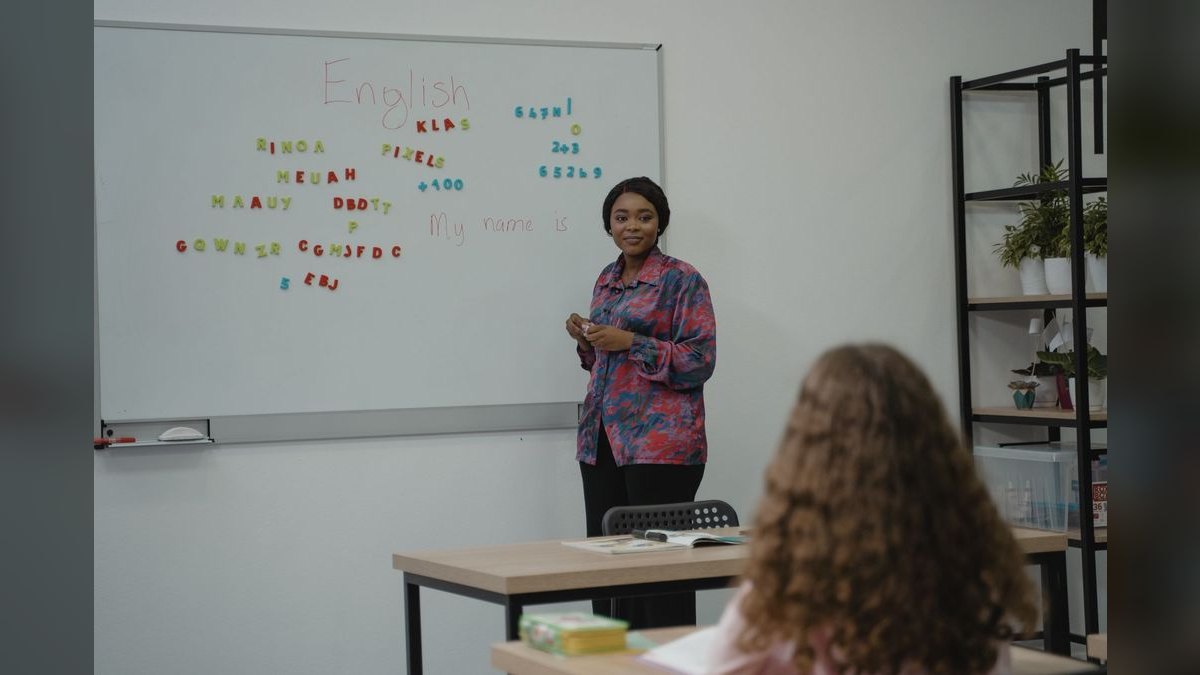
A forty-teacher elementary building adopting one shared platform can run everyone-at-once and be fine, because the K-5 workflows genuinely overlap. A three-hundred-teacher K-12 district running the same tool across kindergarten read-alouds and AP Calculus assessments cannot. That variance — not headcount — is what forces the blended model with grade-band cohorts. If your kindergarten teachers will use three features and your high-school teachers will use fourteen, no single generic workshop can make either group fluent, and attempting one wastes everybody's afternoon.
The fourth variable, instructional stakes, is the tiebreaker. If the software is a supplementary practice tool that some classes use twice a week, a light model is defensible. If it is the gradebook, the assessment platform, or the vehicle for a required intervention block, inconsistent usage is not an inconvenience — it produces incomparable data, unequal student experiences, and eventually a compliance problem. Match the training investment to the consequence of getting it wrong.
Run this routing once per building rather than once per district. A K-12 system frequently needs the everyone-at-once path at its small alternative campus and the full blended path at its comprehensive high school, and forcing one answer onto both wastes money at one end and guarantees failure at the other.

One more decision input is worth surfacing: what else is landing that year. If your teachers are simultaneously absorbing a new curriculum, a new evaluation rubric, and a new student information system, their capacity for a fourth change is close to zero regardless of which training model you choose. Districts that succeed sequence their initiatives; districts that fail launch four things in August and blame the software in November.
Concrete numbers behind each option
Put real planning figures against each path before the budget is committed. These are typical ranges rather than guarantees, and they scale with teacher count.
Train-the-trainer. Certify roughly one coach per 15 to 25 teachers. Deep coach training runs two to four days up front, and each coach then needs three to five hours per month of protected release time to co-teach and troubleshoot. That release time is the line item districts cut first and regret most — an uncompensated coach is a coach who answers email instead of entering classrooms. The up-front cost is high, but the marginal cost of the next teacher trained is low, which is why this model wins decisively at scale.
Everyone-at-once. A single vendor workshop runs 90 minutes to three hours. It is cheap per head and fast, but retention from one-shot professional development is poor: without follow-up, teachers implement only a fraction of what they saw, and usage decays sharply within the first month. Budget for at least two or three follow-up touches or the workshop is close to wasted money.

Self-paced certification. Micro-courses run 20 to 60 minutes each and cost almost nothing in facilitator time. Completion rates for optional online PD are frequently below half unless completion is required, scheduled during contract hours, and tied to a visible incentive such as recertification credit or a stipend.
Two numbers hold across all three models. Plan on six to eight weeks from launch before usage stabilizes — consistency is a lagging indicator, never a launch-day event. And protect at least four to six hours of hands-on practice per teacher across the rollout, working with their own real lessons rather than demo content. Under that threshold, adoption stalls regardless of which model you chose.
A useful budgeting frame: total first-year training cost commonly lands between 8% and 20% of the software license itself once you count coach release time, substitute coverage, and follow-up sessions. Districts that fund well below that band report that the tool "didn't stick," which is an adoption failure wearing a product failure's clothes.

Negotiate training into the contract before signing, not after. Vendors track active-usage rates because renewal depends on them, which means their commercial interest and your instructional interest genuinely align here — a vendor whose retention revenue rides on adoption will often co-fund coaching hours, extend onboarding windows, or supply grade-specific content libraries if you ask during procurement. After the purchase order clears, that leverage evaporates. The same dynamic plays out in enterprise software rollouts outside education: the seat count is billed on day one, but the renewal conversation is decided by whether people actually logged in, so buyers who bake enablement hours into the original agreement consistently pay less for better support.
Two costs get missed in nearly every first draft of a training budget. The first is substitute coverage: if coaching happens during the instructional day, somebody has to hold the class, and at four half-days per coach across a semester that adds up quickly. The second is the internal owner's time — the person who maintains the rubric, watches the dashboards, and answers the "why can't I see my roster" question. That role is real work whether or not anyone has budgeted for it.
Implementation details and sequencing
Sequence matters more than raw hours. The pattern that most reliably produces consistent usage across grade levels runs in five phases, and the order is not negotiable.
Phase 1 — Shared launch, week zero. Bring all teachers together once so everyone hears the same purpose, the same non-negotiables, and the same core workflow. Keep it to 60 to 90 minutes and demonstrate the tool live with real content — an actual lesson, an actual class roster — rather than slides about the tool. This is the only session where uniformity is the goal. After it, you deliberately diverge.

Phase 2 — Grade-band cohorts, weeks one and two. Split into K-2, 3-5, 6-8, and 9-12 groups, adjusted to your structure. Each cohort works only with the workflows their band actually uses, building the software into a lesson they will teach that same week. Leaving the session with something ready to run on Monday is the entire point; a cohort that leaves with notes has learned nothing durable.
Phase 3 — The usage rubric. Write a one-page "what consistent usage looks like" document per grade band: required features, optional features, what a good student-facing example looks like, and what to avoid. This artifact is what holds consistency together after the trainers go home. It converts "use the software" into observable, checkable behavior, and it gives an instructional coach something concrete to reference in a feedback conversation instead of a vague impression.
Phase 4 — Coaching cycle, weeks two through eight. Peer coaches run short cycles: model a lesson, co-teach one, then observe and give feedback. Fold this into existing professional learning community time so it does not create a new meeting on an already full calendar. Track three or four shared metrics — active teacher logins, required features used, student work submitted — and compare bands against each other. Where one band lags, re-coach that band specifically rather than re-training everyone, which punishes the teachers who already succeeded.

Phase 5 — Maintenance, ongoing. Once usage stabilizes, drop to a light cadence: a monthly tips message, a quarterly refresher tied to a real seasonal task, and onboarding built into the new-hire process so next year's teachers arrive already aligned with the same rubric.
Two sequencing traps sink otherwise sound plans. The first is training too early — running sessions weeks before teachers have devices, accounts, or rostered classes, so the learning decays before it can be applied. Train within days of go-live, never in the abstract. The second is skipping the rubric, which leaves consistency undefined; without a written standard every teacher's interpretation is technically defensible, and the conversation about improvement has nothing to stand on. Nail down accounts and rostering first, train close to launch, then hold the line with the rubric.
What consistent usage actually looks like when you measure it
"Consistent" is the word that quietly ruins these projects, because everyone assumes it means something different. Define it as three separable things and measure each one, or you will chase a target nobody has described.
Breadth is what share of teachers in a band use the tool at all in a given week. This is the easiest number to get and the least informative on its own — a 95% login rate tells you people opened the app, not that they taught with it.

Depth is whether the required features from the rubric are actually being used. If the rubric says every 6-8 teacher posts one assignment and returns feedback through the platform, depth is the percentage doing both. This is where grade bands diverge most sharply, and it is the number worth putting in front of principals.
Fidelity is whether the usage looks like what you intended. It cannot be pulled from a dashboard; it comes from the coach who sat in three classrooms and can say whether the exit ticket was used as formative assessment or as a digital worksheet. Sample it — five classrooms per band per month is enough to know.
Set thresholds in advance and write them down. Something like: by week eight, 80% breadth and 60% depth in every band, with no band more than 20 points below the highest. Deciding what "good" means after you see the data invites everyone to argue that whatever happened is fine.

Watch for the two dashboard illusions. Login inflation happens when single sign-on quietly authenticates teachers into the platform whenever they open the portal, producing high login counts and no instruction. Student-side substitution happens when students are active because a paraprofessional or a substitute assigned work, while the classroom teacher has never opened the gradebook. Both make a stalled rollout look healthy for weeks.
The adjacent problems that decide whether training holds
Training rarely fails on its own merits. It fails because something upstream or downstream was left unhandled, and the training gets blamed. Three neighboring workstreams deserve an owner before your launch date.
Rostering and identity. If accounts do not provision cleanly, or class lists arrive a week late, or a teacher's sections appear under a colleague's name, your carefully sequenced training happens against a broken instance. Teachers do not distinguish between "the software is confusing" and "my roster is wrong"; both register as the tool not working. Validate rostering with a small pilot group two weeks before the shared launch and fix the sync before a single training session runs.
Device and access reality. A cohort trained on a workflow that assumes one device per student cannot execute it in a room with a shared cart on a two-week rotation. Build the grade-band sessions around the access each band actually has. Where the gap is real, adapt the rubric for that band rather than pretending the constraint away — a rubric no one can meet teaches teachers that the rubric is decorative.

Data privacy and vendor review. Any tool touching student records sits inside a review process, and teachers notice when the rules are unclear. Cover, in the shared launch, what student information may go into the platform, what may not, and who approves an integration or an add-on. This takes four minutes and prevents the class of incidents where a well-meaning teacher connects a third-party extension that was never vetted.
Two downstream effects also deserve planning. The first is the substitute and paraprofessional gap — the people most likely to be handed a class and least likely to have been trained. A single laminated half-page of the three things a substitute needs to do in the platform solves most of it. The second is teacher turnover: if 12% of your staff turns over annually, then a year after launch roughly one in eight classrooms is run by someone who never attended any of your sessions. Onboarding that reuses the same rubric and the same grade-band content is what keeps consistency from eroding on its own.
Finally, watch for tool sprawl in the surrounding ecosystem. Consistent usage of one platform is much harder when three overlapping tools solve the same problem and different grade bands picked different favorites. Rationalizing the stack is a separate project, but it is often the real reason a well-run training plan produces uneven results — the teachers were not resistant, they were simply already committed elsewhere.
Related questions
How long before usage across grade levels actually becomes consistent?
Plan on six to eight weeks from go-live before usage stabilizes, and a full semester before it feels routine. Consistency is a lagging indicator that follows sustained coaching, so measure at week eight rather than launch day, and re-coach the bands that trail.
Should the software vendor run the training or should we?
Use the vendor for the shared-launch content and deep product knowledge, and keep coaching internal. Your own coaches understand your grade levels, schedule, and students, so they translate generic features into grade-appropriate practice far better than an outside trainer can.
What do we do about teachers who resist the new software?
Separate "won't" from "can't." Most resistance is a skill or time gap, solved with side-by-side coaching and protected practice hours. For genuine holdouts, keep the non-negotiable list small and observable, and pair them with a fluent peer in the same grade band.
How do we keep consistency after the initial rollout ends?
Bake the tool into new-hire onboarding, run quarterly refreshers tied to real seasonal tasks, and keep the per-grade usage rubric alive as the published standard. Without a named owner and a light cadence, usage drifts toward pre-rollout habits within a year.
Does this approach change for a single school versus a whole district?
The phases stay identical; the coaching layer shrinks. A single school can often run one launch, two cohort sessions, and an informal coach. A district needs formal coach certification, per-building owners, and metric comparison across buildings as well as grade bands.
FAQ
How many teachers should each coach support? Aim for one peer coach per 15 to 25 teachers. Fewer than that and coaching becomes expensive relative to its return; many more and the coach cannot get into classrooms often enough to keep grade bands aligned. Adjust downward when the software is complex or when grade-level needs diverge sharply.
Is one big workshop enough to get consistent usage? No. A single session decays quickly without follow-up, and teachers implement only part of what they saw. Pair any launch workshop with at least two or three follow-up coaching touches, or most of the training investment is lost within the first month.
How do we measure whether usage is actually consistent across grades? Track a small shared set: active teacher logins, which required rubric features are used, and student work submitted through the tool. Compare by grade band and watch for divergence between bands — that gap is your signal to re-coach the lagging group specifically.
Should training be during contract hours or on teachers' own time? Core training belongs inside contract hours. Self-paced reinforcement can be optional. Anything you genuinely need every teacher to do must be scheduled, protected, and ideally folded into existing professional learning community time rather than added on top of it.
What is the single biggest predictor of a failed rollout? Too little hands-on practice with the teacher's own real lessons. Districts that protect four to six practice hours per teacher and coach through six to eight weeks succeed; those that stop at a vendor demo watch the classroom software quietly fall out of use by midterm.
How much should we budget for training relative to the software license? First-year training commonly runs 8% to 20% of the license cost once coach release time, substitute coverage, and follow-up sessions are counted. Below that band, adoption typically stalls, and the product gets blamed for what is really an under-resourced training plan.
Sources
- https://www.edutopia.org/technology-integration
- https://iste.org/professional-learning
- https://learningpolicyinstitute.org/product/effective-teacher-professional-development-report
- https://nces.ed.gov/
- https://www.rand.org/topics/education-and-literacy.html
- https://www.the74million.org/
- https://tech.ed.gov/
- https://studentprivacy.ed.gov/
Related on PULSE
- [How do you ensure student data privacy when using third-party classroom software?](/knowledge/et3)
- [What is the best strategy for phasing out outdated classroom software without disrupting instruction?](/knowledge/et13)
- [How do you develop a district-wide edtech inventory audit process in 2027?](/knowledge/et17)
- [What is the best way to involve stakeholders in district edtech procurement decisions?](/knowledge/et15)
@Kory-White- · if Venmo asks, the last 4 of my number are 2012
 pulse-edtechWhat is the best way to forecast annual edtech operational costs for a district-wide program in 2027?
 pulse-edtechWhat is the best way to create a district-wide edtech usage dashboard that visualizes real-time adoption across schools in 2027?
 pulse-edtechHow do you estimate the total cost of a district-wide edtech program including hardware, software, and training in 2027?
 pulse-edtechWhat is the best way to create a district-wide edtech data dictionary that standardizes terms across all platforms in 2027?
 pulse-edtechWhat is the best way to create a district-wide edtech implementation roadmap that sequences software rollouts by grade level in 2027?
 pulse-edtechWhat is the best way to create a district-wide edtech replacement schedule that aligns with device warranties in 2027?
 pulse-edtechWhat is the best way to evaluate the efficacy of adaptive learning software for struggling readers in 2027?
 pulse-edtechWhat is the best way to calculate the total cost of ownership for a 1:1 device program over five years in 2027?
 pulse-edtechHow do you build a district-wide edtech curriculum mapping that ties every software purchase to specific learning standards in 2027?
 pulse-edtechWhat is the best way to build a district-wide edtech budget that accounts for hardware, software, and training costs in 2027?