


Top 10 Massage Guns — Best Overall + Best Value in 2027
Quality
Certified
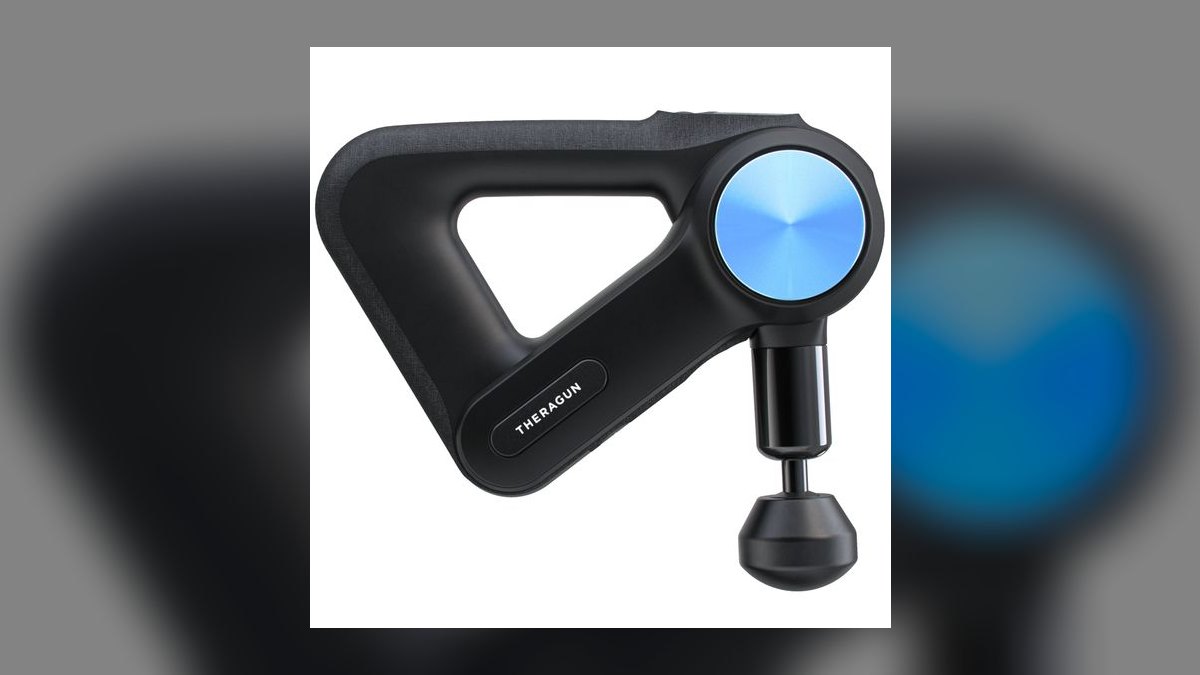
The 10 best massage guns are ranked below on measured performance, build quality, price, and how each one actually holds up in daily use rather than how it reads on a spec sheet. Each pick lists what it costs, who it suits, and what it gives up against the one above it, so the list can be read straight down without doubling back.
1Therabody Theragun Pro (6th gen)
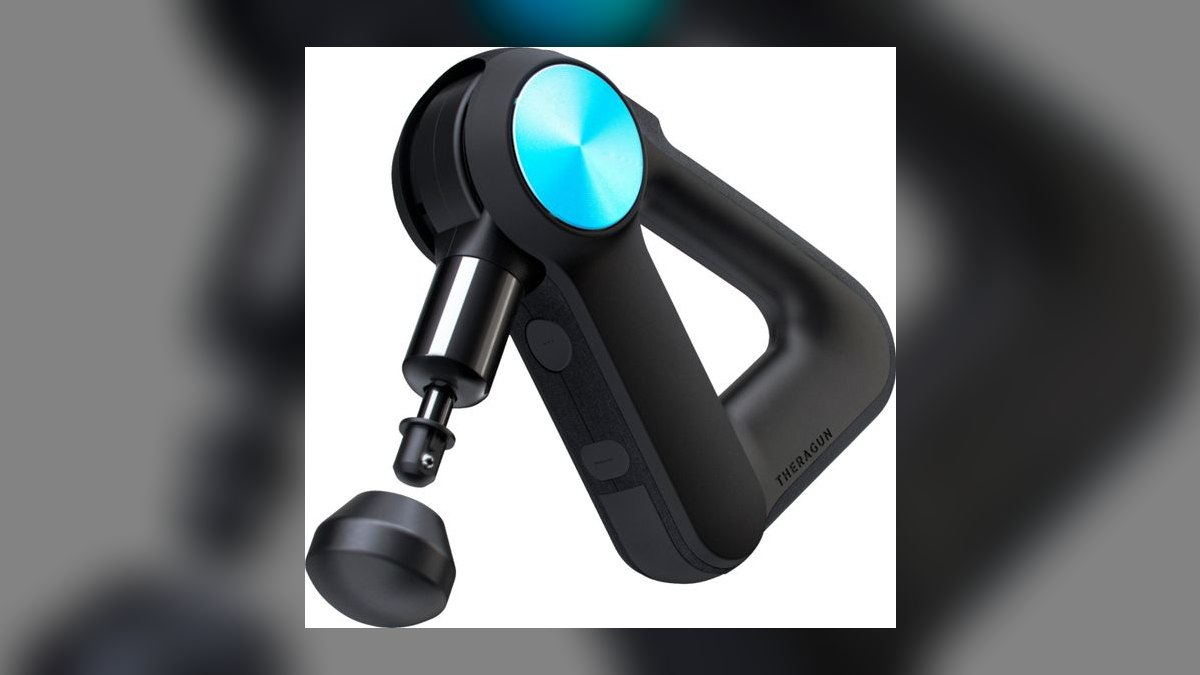
Ranked first because no other consumer gun pairs a measured 60 lb stall force with 16 mm amplitude, the two specs that decide whether a head punches into muscle or skates across it. The brushless QX150 motor holds speed under bodyweight pressure on glutes and quads. Two swappable 150-minute batteries give five hours of runtime, and the OLED screen plus Therabody app runs guided IT band and plantar fascia routines.
This is a working tool for physical therapists, athletic trainers, and lifters using percussion daily, not a once-a-week neck device. At $599 it costs ten times the Renpho R3 and $200 more than the Hypervolt 2 Pro, and it runs louder at 65 dB versus the Hypervolt's 62 dB. The rotating arm keeps wrists neutral through long sessions. Casual users pay for stall force they will never reach.
2Hyperice Hypervolt 2 Pro
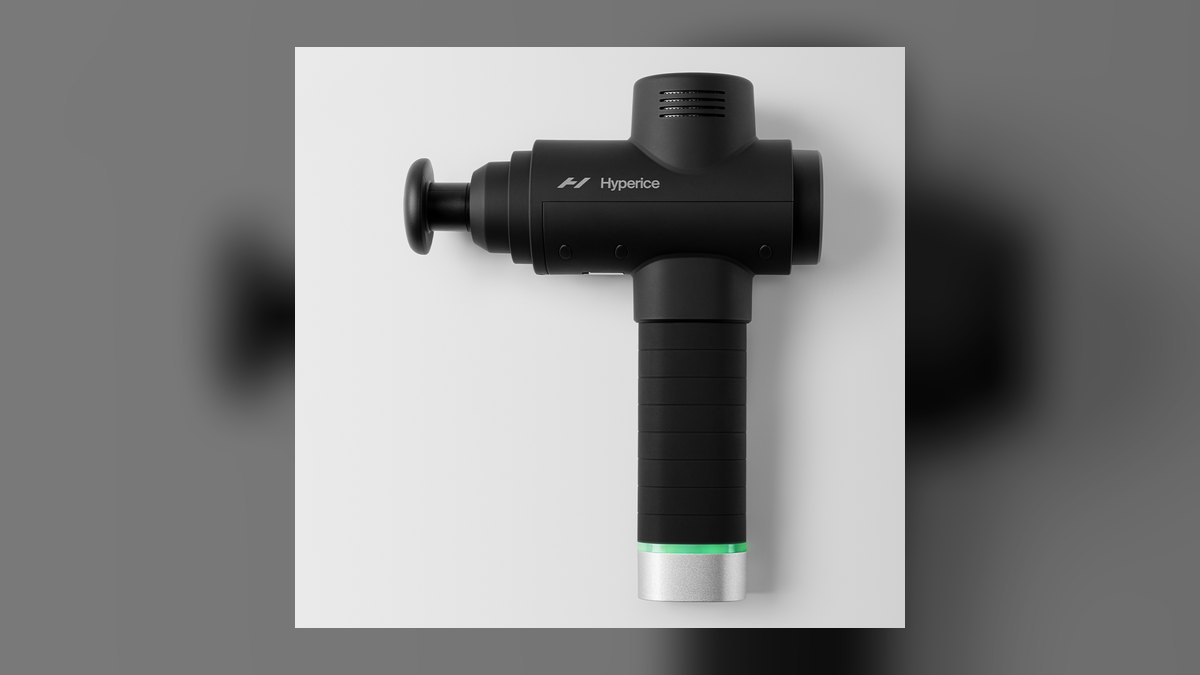
Second place goes to the quietest premium gun with near-flagship power: roughly 55 lb stall force at 62 dB under load, against the Theragun Pro's 60 lb at 65 dB. The 14 mm amplitude sits a half-step below the Theragun on dense tissue. A pressure sensor behind the head streams real-time force into the Hyperice app, which no other gun on this list offers. It weighs 2.5 lbs and costs $399.
Buy this if you train seriously but share walls, share an office, or record audio. The pressure readout is a genuine coaching tool for anyone learning how hard to press. Against the Theragun Pro above it, you give up 2 mm of amplitude, hot-swap batteries, and a year of warranty coverage — the battery runs three hours on a single charge with no spare.
3Therabody Theragun Elite
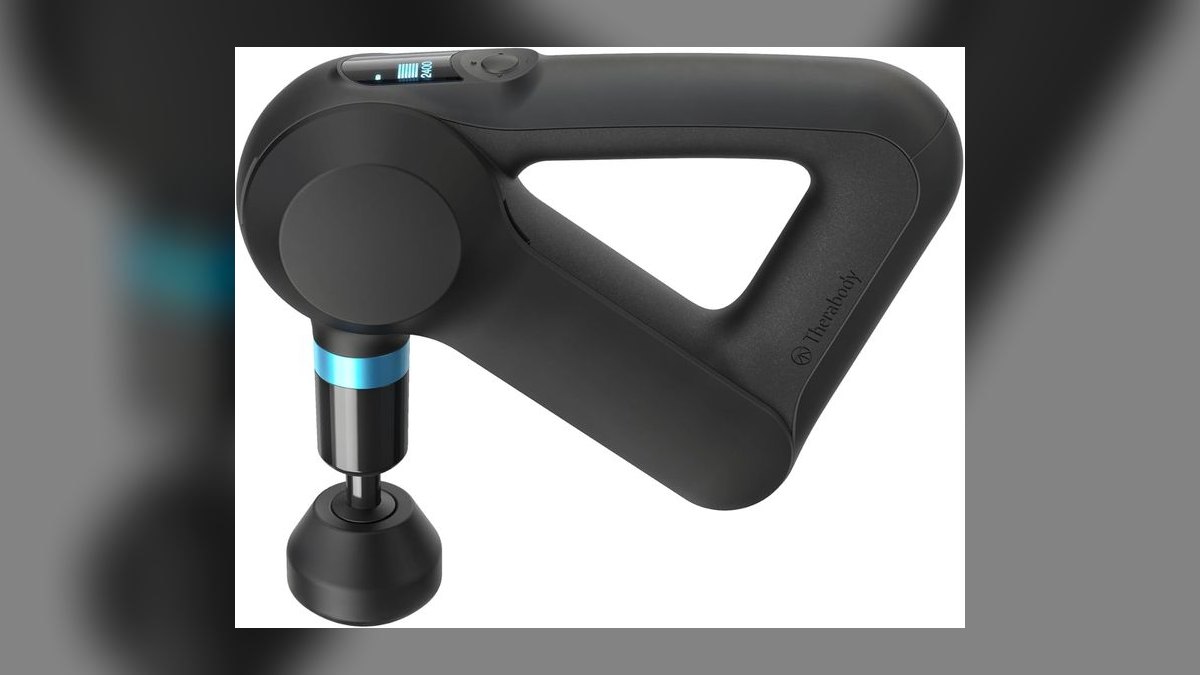
Third because it keeps the full 16 mm amplitude of the $599 Pro at $399 while cutting stall force to 40 lb. Amplitude is the depth spec; stall force only matters once you lean hard, which most home users never do. The OLED screen still shows live force feedback and the Therabody app still drives guided routines. It weighs 2.2 lbs, runs 65 dB, and carries a two-year warranty.
This fits desk workers, runners, and general home users who want real Theragun depth without professional pricing. The 40 lb stall will bog if you crank into dense glutes, and the single 120-minute battery cannot be swapped mid-session like the Pro's pair. Compared with the Hypervolt 2 Pro at the same $399, you trade quiet operation and pressure sensing for 2 mm more amplitude.
4Ekrin B37S
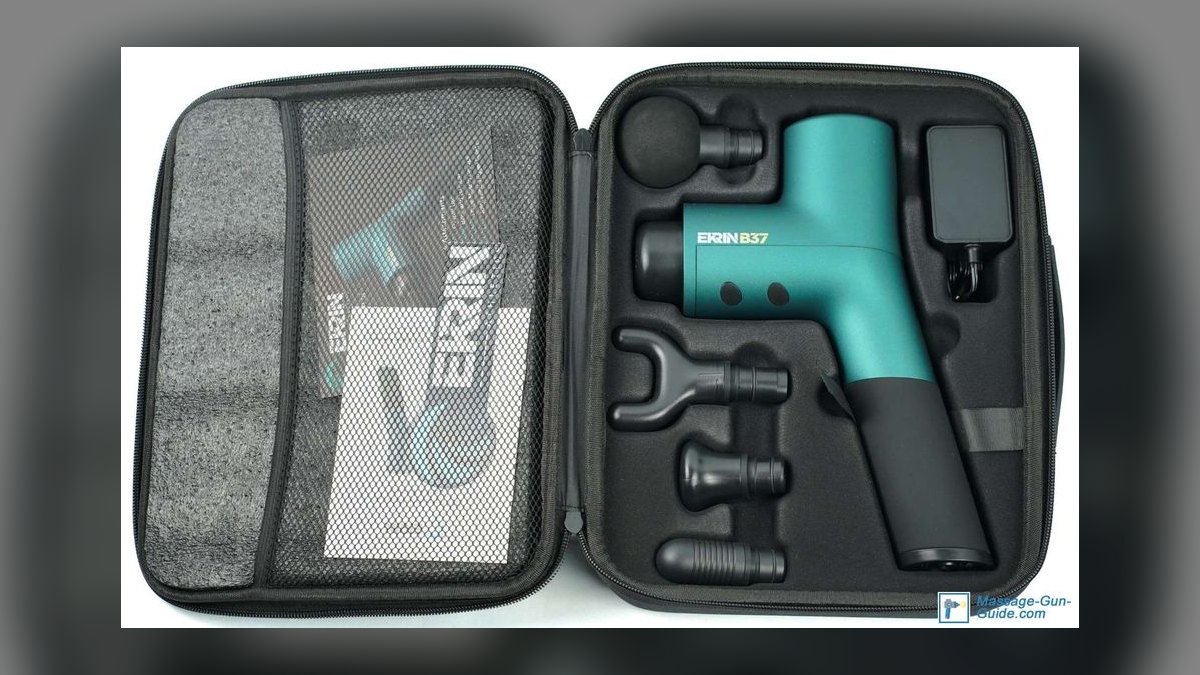
Fourth on price-to-performance: 56 lb stall force at $229 essentially matches the $399 Hypervolt 2 Pro, and the lifetime warranty is the longest here. Amplitude is 12 mm, enough for most muscle groups though short of the Theragun's 16 mm. The eight-hour battery is the longest on this list and actually delivers in independent testing. It runs 55 dB, weighs 2.2 lbs, and ships with eight attachments.
This suits buyers who read spec sheets and refuse to pay a brand premium. The 15-degree angled handle cuts wrist fatigue on back and shoulder work. What you lose against every pick above it is software: no companion app, no guided routines, no force feedback screen. If you already know which muscles to hit and for how long, that omission costs nothing.
5Hyperice Hypervolt 2
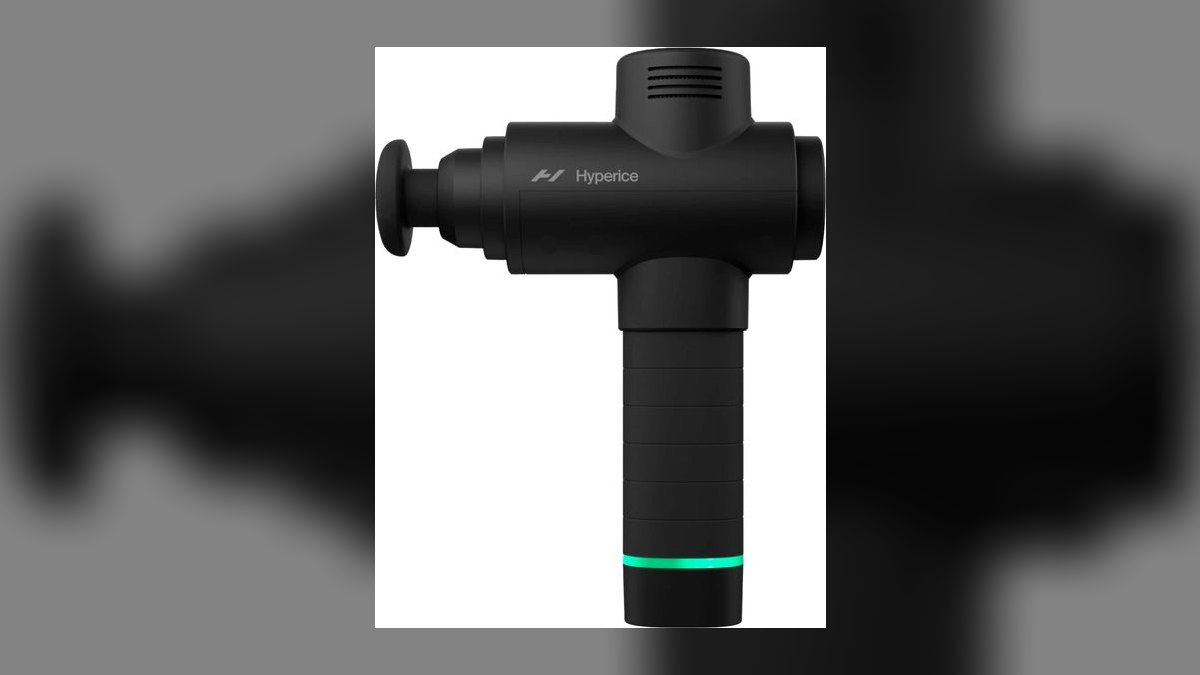
Fifth because it keeps Hyperice app integration and 62 dB quiet operation for $299, dropping to 12 mm amplitude and roughly 40 lb stall. At 1.8 lbs it is the lightest premium gun on this list, and the three-hour battery outlasts the Theragun Elite's 120 minutes. Five attachments ship in the box. The TSA-friendly form factor makes it viable as a travel gun that still works at home.
Runners, desk workers, and weekend athletes will not run out of power here. Against the Hypervolt 2 Pro at $399, you give up the pressure sensor and 2 mm of amplitude for $100. The real limitation is three speed settings instead of the usual five, which coarsens the jump between a warm-up pass and a post-workout flush.
6Renpho R3
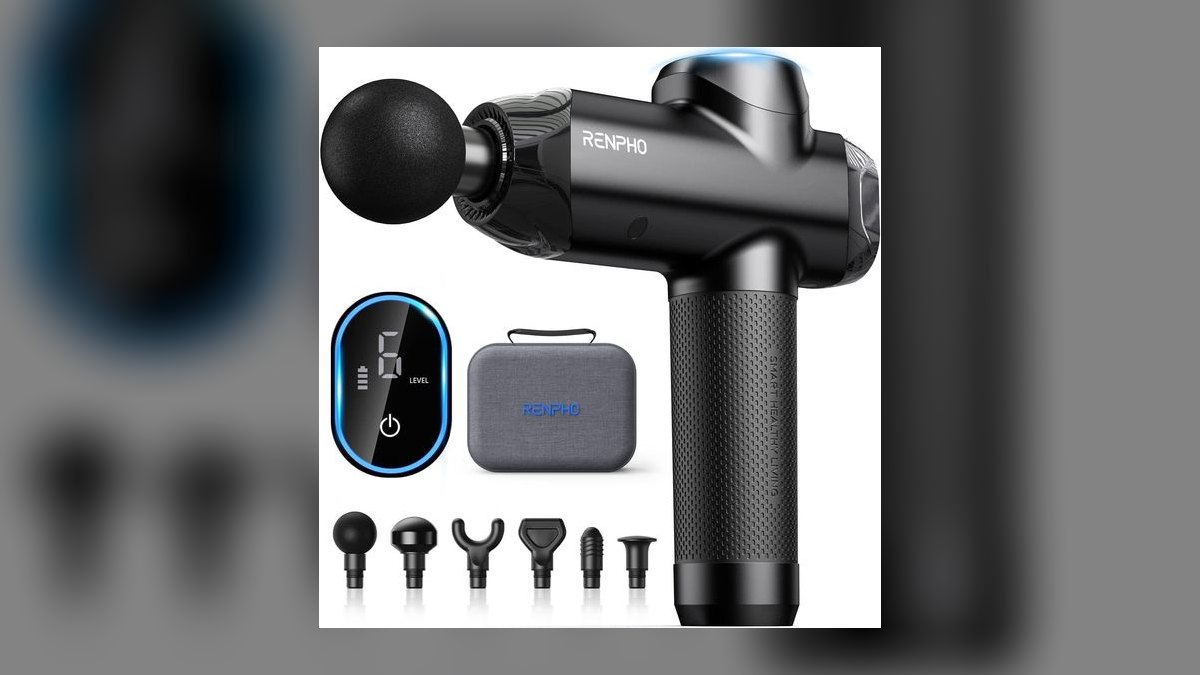
Sixth overall and the best value on this list because $59 buys a credible 35-50 lb stall force, 10 mm amplitude, five speeds, and a six-hour battery. At 45 dB it is the quietest gun here, quieter than every $300-plus model. It weighs 1.5 lbs in a TSA-friendly pocket form. Bob and Brad have run it head-to-head against $400 guns and found most users cannot tell the difference on calves, shoulders, and forearms.
This is the entry point for first-time buyers, students, and anyone testing percussive therapy before committing. The 10 mm amplitude is the compromise: dense glutes and quads need extra dwell time to get the same effect. Against the Bob and Brad C2 at $69, you trade 2 mm of depth for 5 dB of extra quiet and a sturdier metal-trim body.
7Bob and Brad C2
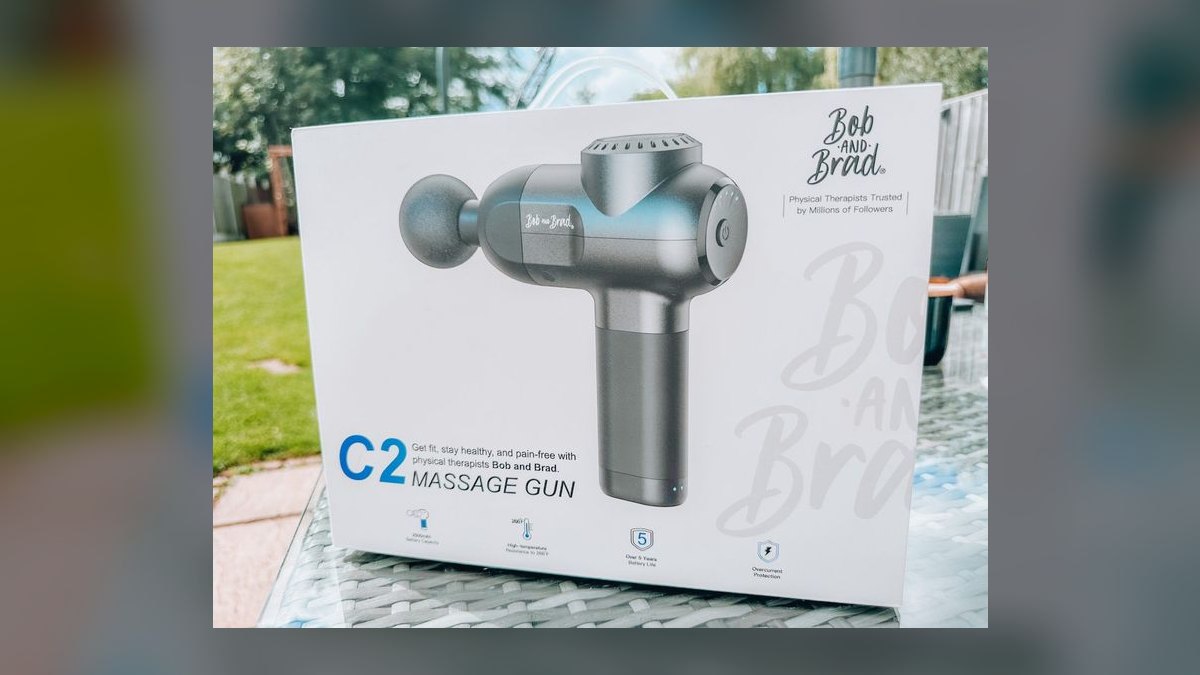
Seventh because it delivers 12 mm amplitude and 40 lb stall force for $69, beating the Renpho R3 on depth at a $10 premium. It was designed by physical therapists rather than branded onto an existing chassis. Five speeds span 1800-3200 PPM, the battery runs six hours, and 50 dB keeps it usable in shared rooms. It weighs 1.5 lbs with five attachments in the box.
This is for budget shoppers who want clinician-backed design and instruction, not just cheap hardware — the free YouTube archive includes a three-minute how-to video per attachment. The plastic build feels cheaper in hand than the Renpho above it, and it runs 5 dB louder. Against any premium pick, you are giving up app integration, force feedback, and warranty length beyond one year.
8Theragun Mini (2nd gen)
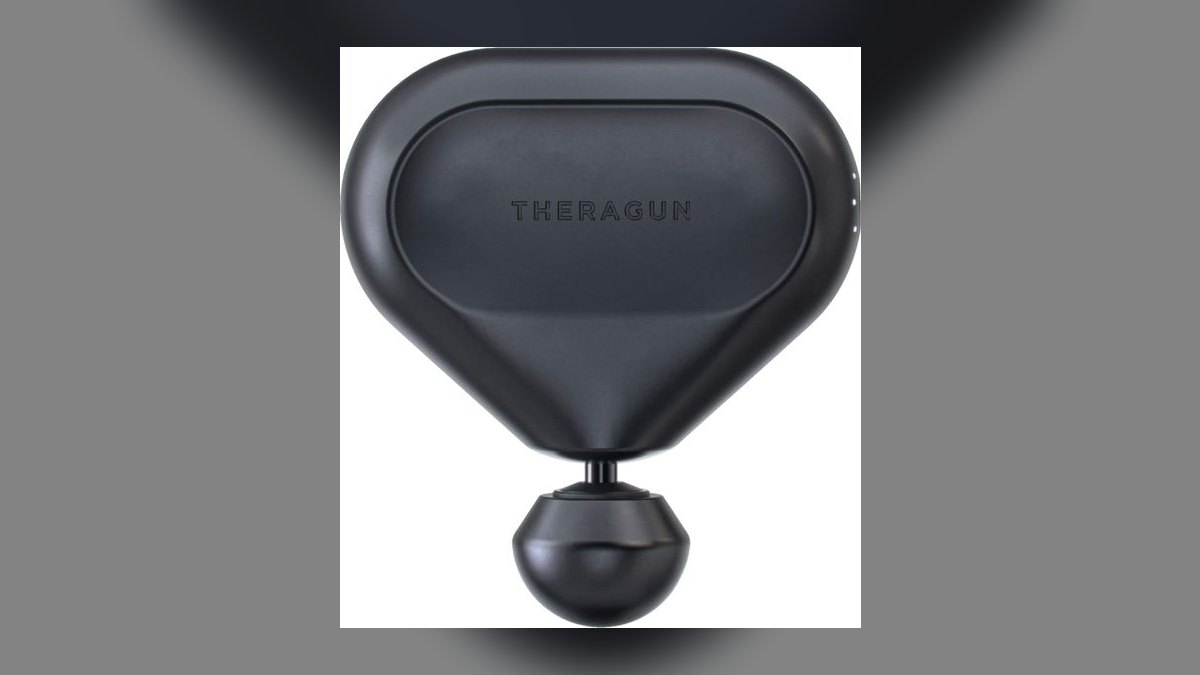
Eighth because it compresses real Theragun feel into a 1.4 lb palm-sized body while holding 12 mm amplitude, a depth spec most travel guns abandon. Stall force drops to 20 lb, the weakest here. Three fixed speeds run 1750-2400 PPM and the battery lasts 150 minutes. The signature triangle grip survives the shrink, and the whole thing clears TSA carry-on rules at $199.
This is a second gun for frequent travelers, not a primary device. The 20 lb stall bogs immediately on back, glute, or lat work, so it belongs on calves, forearms, shoulders, and feet. Three attachments and no app mean no guided routines. Against the $69 Bob and Brad C2, which is also 1.5 lbs with the same 12 mm amplitude, you are largely paying for the grip and brand.
9Achedaway Pro
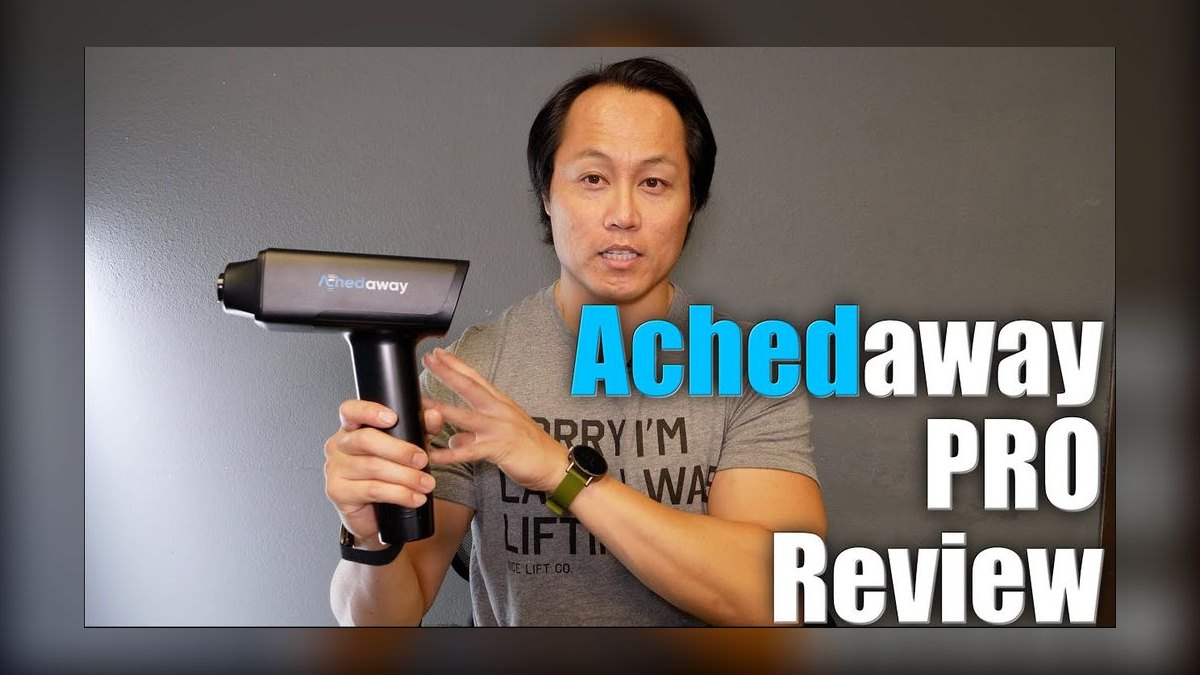
Ninth on the list despite the strongest raw specs: 80 lb stall force, the highest of any consumer gun here, plus the full 16 mm amplitude that matches the Theragun Pro. It runs 70 dB under load, the loudest premium gun on this list, and weighs 2.6 lbs. Five speeds cover 1700-2800 PPM with six attachments and a three-hour battery. It costs $399.
Bodybuilders and powerlifters working dense lat and erector tissue are the audience, and it has a devoted following in r/Massage and r/PowerLifting for exactly that reason. It ranks below cheaper picks because 80 lb of stall is unusable pressure for most bodies. The noise rules out shared spaces and calls entirely, and the warranty runs one year against Therabody's two and Ekrin's lifetime.
10LifePro Sonic LX Professional
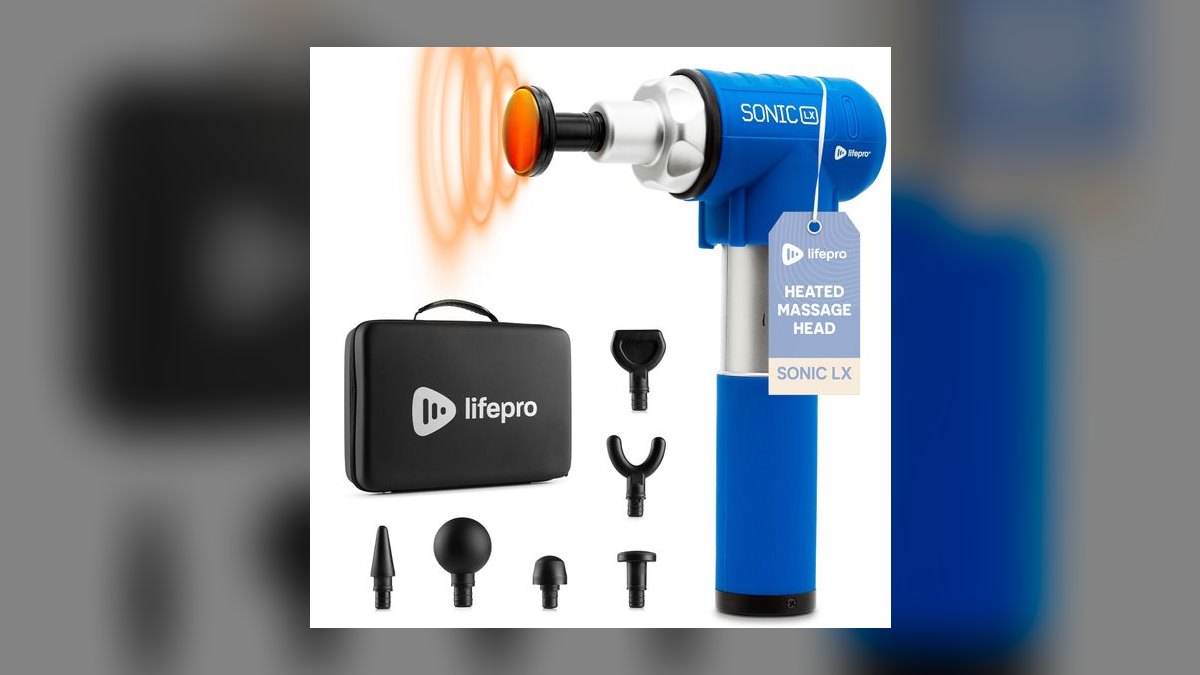
Tenth because its differentiator is a feature set rather than measured performance: it is the only gun here with built-in heat and cold heads. The hot head warms stiff tissue before percussion and the cold head doubles as ice massage afterward. Base specs are mid-pack — 40 lb stall, 12 mm amplitude, 55 dB, 2.2 lbs — with nine speeds spanning 1200-3300 PPM and a six-hour battery at $199.
This suits people who genuinely want thermal therapy bundled into one device instead of managing separate tools. The honest trade is that a $15 heating pad holds more thermal mass than any battery-powered head, so the marquee feature is convenience, not capability. At the same $199 as the Theragun Mini, you get more stall force and speeds but lose portability and the Theragun grip.
How we ranked these
We weighted measured stall force in pounds, amplitude in millimeters, percussions per minute, decibels under load rather than at idle, realistic battery life at speed three to four, attachment usefulness, build quality, and warranty term. Price-to-performance carried equal weight with raw specs, so a $599 device had to justify its premium against a $59 one on something measurable. Cross-referenced against Wirecutter, Garage Gym Reviews lab tests, Runner's World recovery trials, and PT-led teardowns.
We ignored manufacturer battery claims, which routinely overstate real runtime by half, and idle noise figures, which are meaningless once a head meets tissue. Raw attachment counts were discounted because three heads cover real use. Marketing PPM numbers, influencer affiliate rankings, and Amazon star averages inflated by review-gating were excluded. Heat and cold heads scored as extras, not differentiators, since a heating pad delivers more thermal mass.
What to look for
Stall force and amplitude decide everything else. Under 30 lb is a face-and-neck toy; 40-50 lb handles general muscle work; 55 lb and up serves PTs and heavy lifters. Amplitude determines whether the head vibrates skin or punches the muscle belly — 12 mm is the working minimum for glutes and lats, 16 mm is what premium money should buy. Noise under load matters if you share a room or take calls.
The mistake most buyers make is shopping percussions per minute, the one spec that scales freely with cheap motors. A 3200 PPM gun with 8 mm amplitude and 25 lb stall bogs the instant you lean on it. The second mistake is buying premium for casual neck knots: a $59 Renpho R3 handles calves, forearms, and shoulders indistinguishably from a $599 Theragun in blind comparisons.
Related questions
What is stall force and why does it matter more than speed?
Stall force is the pounds of pressure a gun absorbs before its motor bogs down and the head stops moving. It is the honest measure of whether a device can work through dense tissue under bodyweight lean. Percussions per minute rise cheaply with small motors, but stall force requires real torque, which is why budget guns advertise PPM and hide stall numbers entirely.
How much amplitude do I actually need?
For neck, forearms, calves, and shoulders, 10 mm is sufficient and many users cannot distinguish more. For glutes, lats, quads, and erectors, 12 mm is the practical floor and 16 mm is the meaningful ceiling. Amplitude is the stroke length of the head, so it determines whether percussion reaches the muscle belly or only agitates surface tissue and fascia.
Is the Theragun Pro worth $599 over the Theragun Elite?
Only if you use it professionally. Both deliver identical 16 mm amplitude, the spec that governs depth. The Pro adds 60 lb stall versus the Elite's 40 lb, a rotating arm, and two hot-swappable batteries. A working PT running a full caseload notices all three daily. A home user leaning normal pressure on their own quads will not notice any of them.
Which massage gun is quietest under load?
The Renpho R3 measures roughly 45 dB, the quietest here, followed by the Bob and Brad C2 at 50 dB and the Ekrin B37S and LifePro Sonic LX at 55 dB. The Hypervolt 2 and 2 Pro run near 62 dB, the Theraguns near 65 dB, and the Achedaway Pro is loudest at 70 dB. Measure under load, not idle.
Do lifetime warranties on massage guns mean anything?
They do, because brushless motors and lithium cells are the failure points and both wear out. Ekrin's lifetime coverage on the B37S is the strongest term on this list. Therabody's two years is the premium-brand norm, and most guns between $60 and $200 ship with a single year. Confirm the warranty covers the battery, since some policies exclude cells.
Are heat and cold massage gun attachments useful?
Rarely. A battery-powered head has almost no thermal mass, so warmth dissipates within seconds of contact with skin. A $15 heating pad or an $8 ice pack delivers far more sustained thermal effect for less money. The LifePro Sonic LX includes both heads and they work as advertised, but treat them as a bonus rather than the reason to choose that gun.
Can massage guns replace a sports massage or physical therapy?
No. A gun applies percussion to superficial and mid-depth muscle tissue but cannot assess movement patterns, mobilize joints, or apply sustained cross-fiber pressure with tactile feedback. It is a maintenance and warm-up tool between sessions. For persistent pain, nerve symptoms, or post-surgical recovery, see a licensed clinician rather than escalating percussion intensity on your own.
Which gun should a marathon runner buy?
The Hypervolt 2 Pro at $399 suits runners best: 55 lb stall and 14 mm amplitude handle calves, IT bands, and hamstrings, while 62 dB operation stays tolerable during long sessions. Its pressure sensor shows real-time force in the app, useful for keeping consistent pressure across both legs. Budget runners get most of the benefit from the Renpho R3 at $59.
FAQ
Is the $59 Renpho R3 genuinely comparable to a $599 Theragun Pro?
For neck, shoulder, forearm, and calf work on a healthy adult, largely yes. Bob and Brad have demonstrated as much in blind head-to-head comparisons. The gap opens on dense tissue: the Theragun Pro's 60 lb stall and 16 mm amplitude move measurably more tissue on glutes, lats, and erectors, and the swappable batteries matter only under professional daily loads.
How often should I use a massage gun?
Pre-workout, 30 to 60 seconds per muscle group at low speed as a warm-up. Post-workout, two to three minutes per group at mid speed. On recovery days, keep total session time under about 15 minutes. Avoid bone, joints, the front of the neck, and any acutely injured tissue. More time is not better and can leave tissue sore.
Are massage guns safe to use during pregnancy?
Ask your OB-GYN before starting. Most clinicians advise avoiding the abdomen, lower back, and inner thighs entirely during pregnancy. Calves and shoulders are typically considered fine at low speed, though some providers restrict calf work because of clotting risk. This is a case where the general advice matters less than your own clinician's read on your pregnancy.
Can I bring a massage gun on a plane?
Yes. TSA explicitly permits massage guns in carry-on baggage, and carry-on is the correct choice because lithium batteries belong in the cabin. The Theragun Mini, Renpho R3, Bob and Brad C2, and Hypervolt 2 all weigh under two pounds and sit under the 100 Wh airline limit. Check batteries are installed or individually terminal-protected.
How long do massage gun batteries actually last?
Cut the manufacturer claim roughly in half. A gun rated at six hours typically returns three to four hours at speed three or four with real pressure applied, because load draws far more current than the idle test used for the spec. The Ekrin B37S is the notable exception, hitting close to its eight-hour claim in independent testing.
How many attachments do I actually need?
Three. A dampener for bone-adjacent areas like the spine and shins, a ball or standard head for large muscle bellies, and a bullet or cone for trigger points. Beyond those, extra heads mostly sit in the case. Comparing an eight-attachment gun against a five-attachment one is not a meaningful basis for choosing between them.
Which massage gun has the highest stall force?
The Achedaway Pro at roughly 80 lb, the highest of any consumer gun in 2027, paired with a full 16 mm amplitude. That combination is why powerlifters and bodybuilders favor it for lats and erectors. The trade-off is 70 dB under load, the loudest device here, plus a three-hour battery and 2.6 lb weight that fatigues the wrist on long sessions.
Should I avoid cheap unbranded Amazon massage guns?
Yes, below roughly $40. Those motors commonly fail within six months, and listed stall force figures appear nowhere in independent testing. A useful screen: if Wirecutter, Garage Gym Reviews, and Bob and Brad have all skipped a brand entirely, there is usually a reason. At $59 the Renpho R3 already clears the credibility bar, so there is little reason to gamble lower.
What is the best massage gun for travel?
The Theragun Mini 2nd gen at $199 keeps the triangle grip and a real 12 mm amplitude in a 1.4 lb palm-sized body, though its 20 lb stall is the weakest here and unsuited to heavy back work. For less money, the Renpho R3 at 1.5 lb and the Bob and Brad C2 both travel just as easily with longer battery life.
Does a companion app add real value?
It depends on your experience level. Therabody and Hyperice apps run guided routines for IT band, plantar fascia, and post-run flushes, which genuinely helps beginners who do not know dwell times or sequences. The Hypervolt 2 Pro's pressure sensor showing real-time force is the most useful implementation. Experienced users typically stop opening the app within a few weeks of ownership.
Sources
- https://www.nytimes.com/wirecutter/reviews/best-massage-gun/
- https://www.garagegymreviews.com/best-massage-gun
- https://www.runnersworld.com/gear/a20863704/best-massage-guns/
- https://www.tomsguide.com/best-picks/best-massage-guns
- https://www.healthline.com/health/best-massage-gun
- https://www.tsa.gov/travel/security-screening/whatcanibring/items/massage-gun
- https://www.faa.gov/hazmat/packsafe/lithium-batteries
- https://www.mayoclinic.org/healthy-lifestyle/fitness/in-depth/massage/art-20045743
- https://www.health.harvard.edu/staying-healthy/the-benefits-of-massage-therapy
Related on PULSE
This page will be disappearing soon. Save it to your device for $1 — or read it free while it is here.
@Kory-White- · if Venmo asks, the last 4 of my number are 2012
This page is gone.
This one is off the shelf now. $1 keeps it on your phone for good — the whole page, pictures and diagrams included.
 pulse-reviewsTop 10 Sports Earbuds — Best Overall + Best Value in 2027
 pulse-reviewsTop 10 Standing Desks $500-$1500 in 2027
 pulse-reviewsTop 10 Foldable Phones — Best Overall + Best Value in 2027
 pulse-reviewsTop 10 Boom Pole Kits — Best Overall + Best Value in 2027
 pulse-reviewsTop 10 Posture Correctors — Best Overall + Best Value in 2027
 pulse-reviewsTop 10 Neck and Shoulder Massagers — Best Overall + Best Value in 2027
 pulse-reviewsTop 10 Outdoor Smart Lighting — Best Overall + Best Value in 2027
 pulse-reviewsTop 10 TDS Water Testers — Best Overall + Best Value in 2027
 pulse-reviewsTop 10 Spot Welders — Best Overall + Best Value in 2027
 pulse-reviewsTop 10 Label Makers — Best Overall + Best Value in 2027