


Top 10 Portable Solar Panels — Best Overall + Best Value in 2027
Quality
Certified
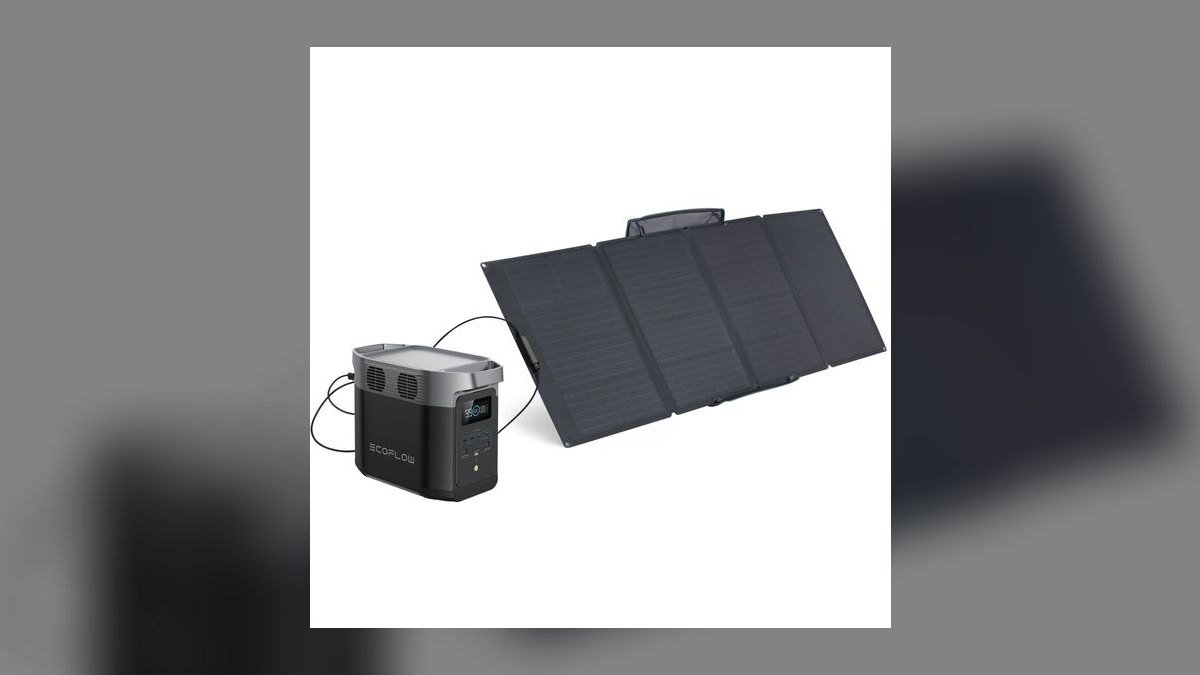
The 10 best portable solar panels are ranked below on measured performance, build quality, price, and how each one actually holds up in daily use rather than how it reads on a spec sheet. Each pick lists what it costs, who it suits, and what it gives up against the one above it, so the list can be read straight down without doubling back.
1EcoFlow 400W Portable
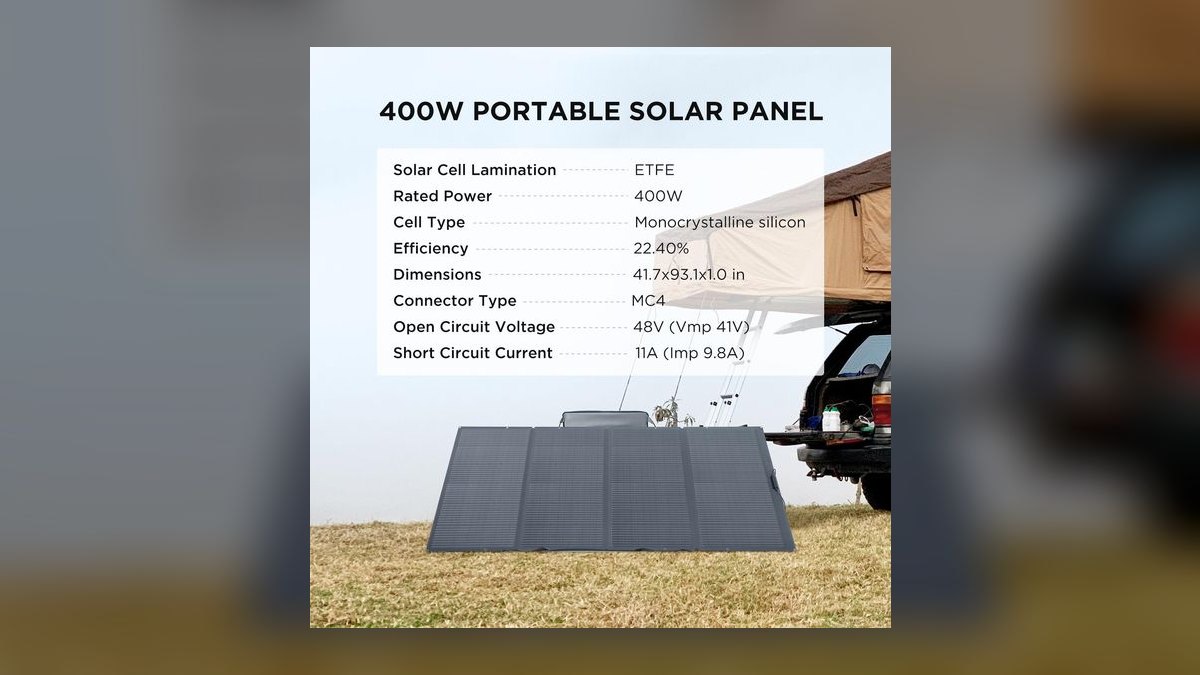
It ranks first as the highest-output single foldable panel on this list, combining 22.4% monocrystalline efficiency with an IP68-rated ETFE laminate shell and a zippered case that doubles as a kickstand with marked tilt angles. Will Prowse's bench tests measured 340-365W in midday sun, among the best rated-versus-real ratios of any consumer foldable. Output runs through MC4 with XT60 and Anderson adapters included.
This suits EcoFlow Delta or River owners who want maximum harvest from one panel instead of chaining two smaller units. It trades away portability and price: 35.3 lbs and $1199, the heaviest-per-dollar entry near the top of the list. Unfolded it spans 94.1 by 41.7 inches, folding to 41.7 by 24.4 inches. The Bluetti PV350 below saves 5 lbs and $200 but gives up roughly 50W of real output.
2Bluetti PV350 350W Foldable
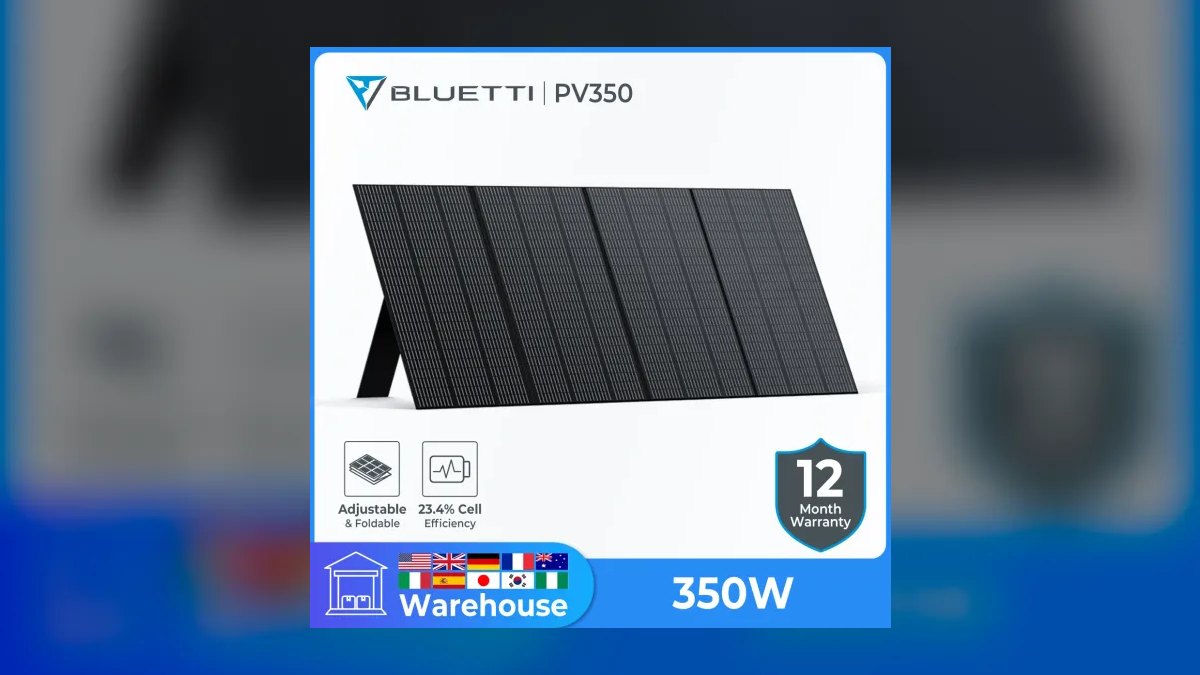
It ranks second by delivering near-flagship harvest at $999 with the highest cell efficiency on this list, 23.4% on monocrystalline SunPower-style cells under an ETFE laminate rated IP65. DIY Solar Power Forum logs put real-world output at 295-320W. Unfolded it measures 89.2 by 35.2 inches and folds to 24.4 by 24 inches at 30.3 lbs, with MC4 output on a 9.84-ft cable.
This fits AC200P, AC200MAX, and AC300 owners who want a lighter, cheaper alternative to the EcoFlow above. The four-panel kickstand uses magnetic catches that hold in moderate wind, and the 24-month warranty doubles EcoFlow's coverage. The shell scratches more easily than EcoFlow's, and real output runs roughly 45W lower. Against the PV200 below, it doubles both harvest and price.
3Bluetti PV200 200W Foldable
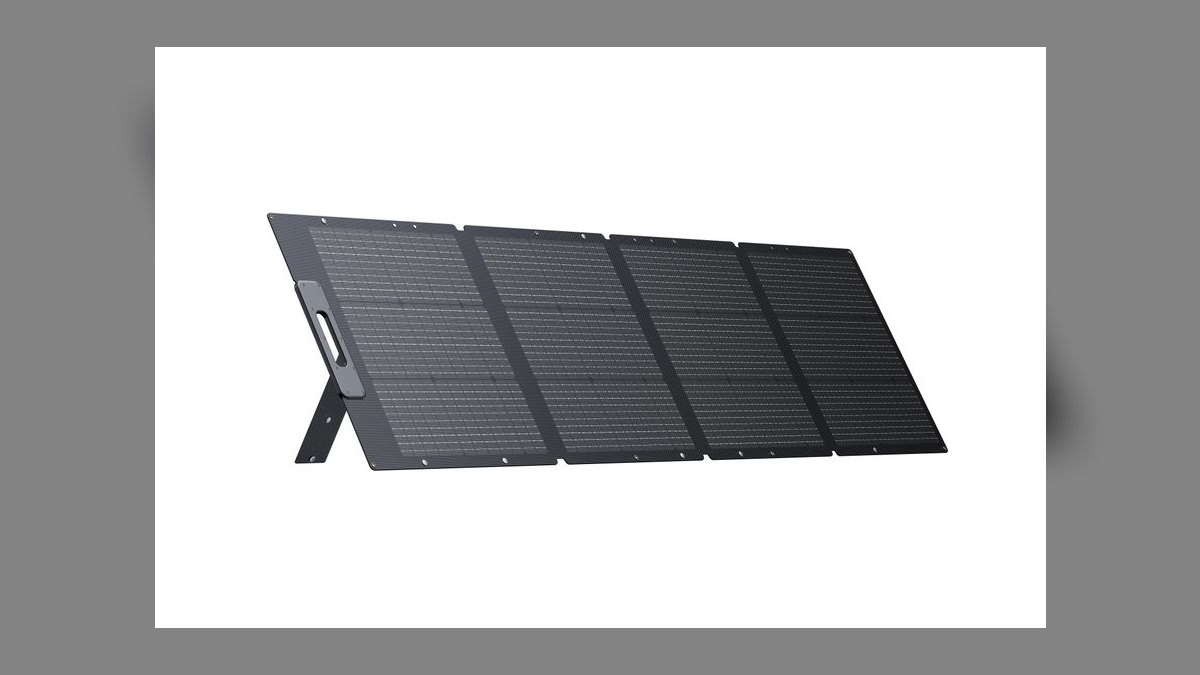
It ranks third as the best build quality per pound on this list, sharing the PV350's 23.4% efficiency and ETFE laminate at IP65 but weighing only 16.1 lbs for $499. Real-world output runs 165-185W in good sun. Unfolded it spans 23 by 89.2 inches and folds to 23 by 22.4 inches, small enough for a hatchback trunk, with a honeycomb-textured cell coating that measurably improves low-angle output.
This is the solo camper and van-lifer pick, especially for daily deploy-and-stow use. Two units daisy-chain through included MC4 branch connectors to feed 400W into an AC200MAX. It ships with no onboard USB, MC4-out only, so a power station is mandatory. Against the PV350 above, it halves both the weight and the price.
4Jackery SolarSaga 200W
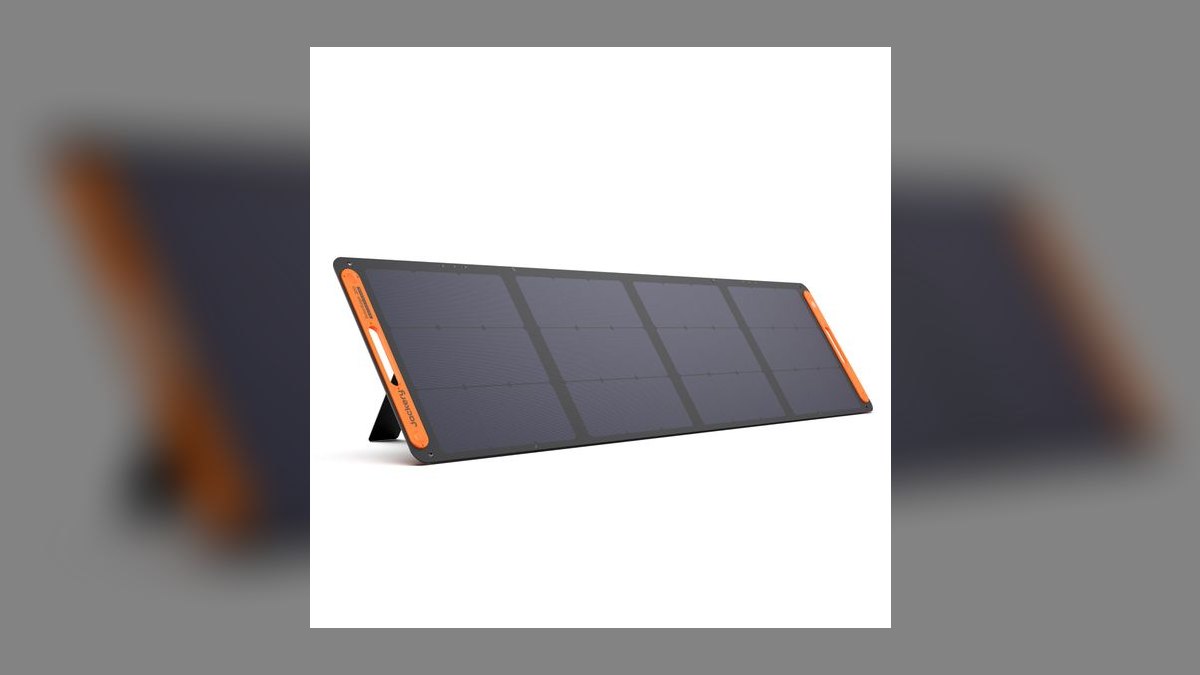
It ranks fourth on the strength of the highest cell efficiency here, 24.3% monocrystalline, plus a 3-year warranty that leads the 200W class. Outdoor Gear Lab measured 170-185W real-world output under an ETFE laminate rated IP65. At $599 it weighs 17.6 lbs, unfolds to 21 by 90 inches, and folds to 24 by 21 inches, with kickstand legs built into reinforced rear hinges.
This is built for Jackery Explorer 1000, 1500, and 2000 owners who want to plug in without hunting adapters, since output uses Jackery's proprietary DC8020 connector with an MC4-to-DC8020 adapter included. That same connector is the cost: outside the Jackery ecosystem you carry the adapter everywhere. The Bluetti PV200 above costs $100 less for comparable output.
5Anker SOLIX PS400
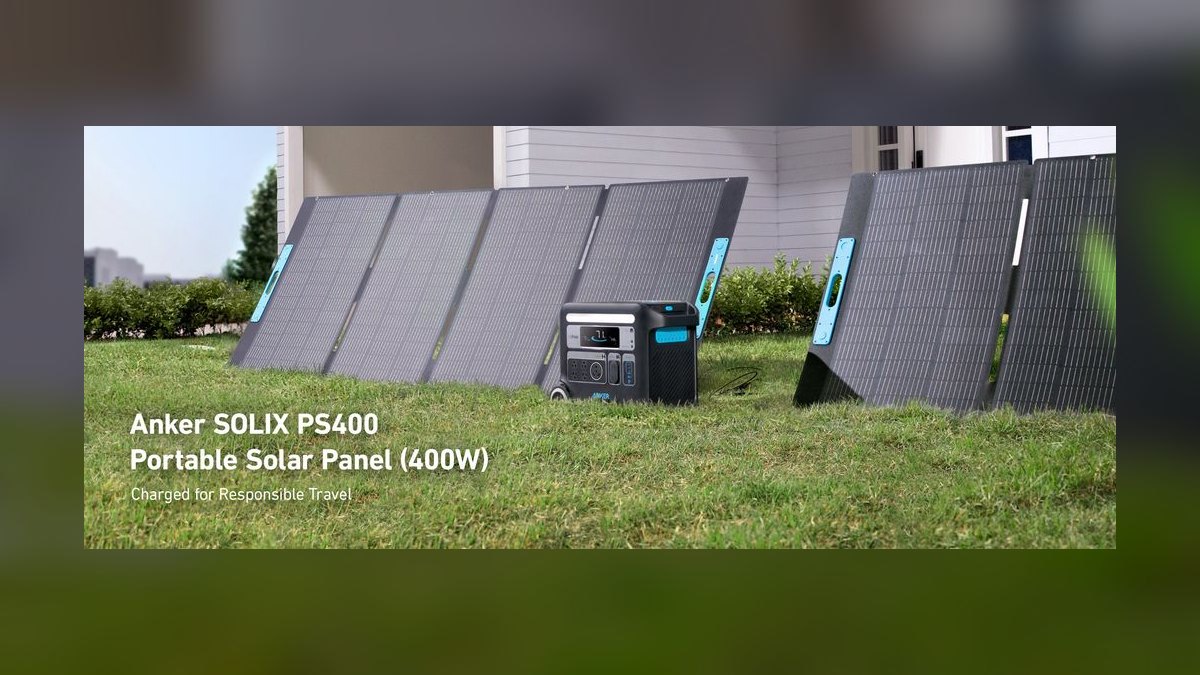
It ranks fifth because it matches the top tier on output but pays for it in weight. The 23% monocrystalline cells sit under an ETFE laminate rated IP67 and produce 315-345W real-world. At $1099 it unfolds to 89 by 30 inches, folds to 30 by 24 inches, and weighs 36.4 lbs, the heaviest single panel on this list.
This fits Anker SOLIX F1500 and F2000 owners who charge from a fixed basecamp and value app-based MPPT monitoring showing live wattage. The 5-year warranty ties the segment's longest, and the aluminum kickstand is the sturdiest here. What it gives up is haulability. The EcoFlow 400W above costs $100 more but returns roughly 25W more output at a pound less weight.
6Renogy 100W 12V Foldable
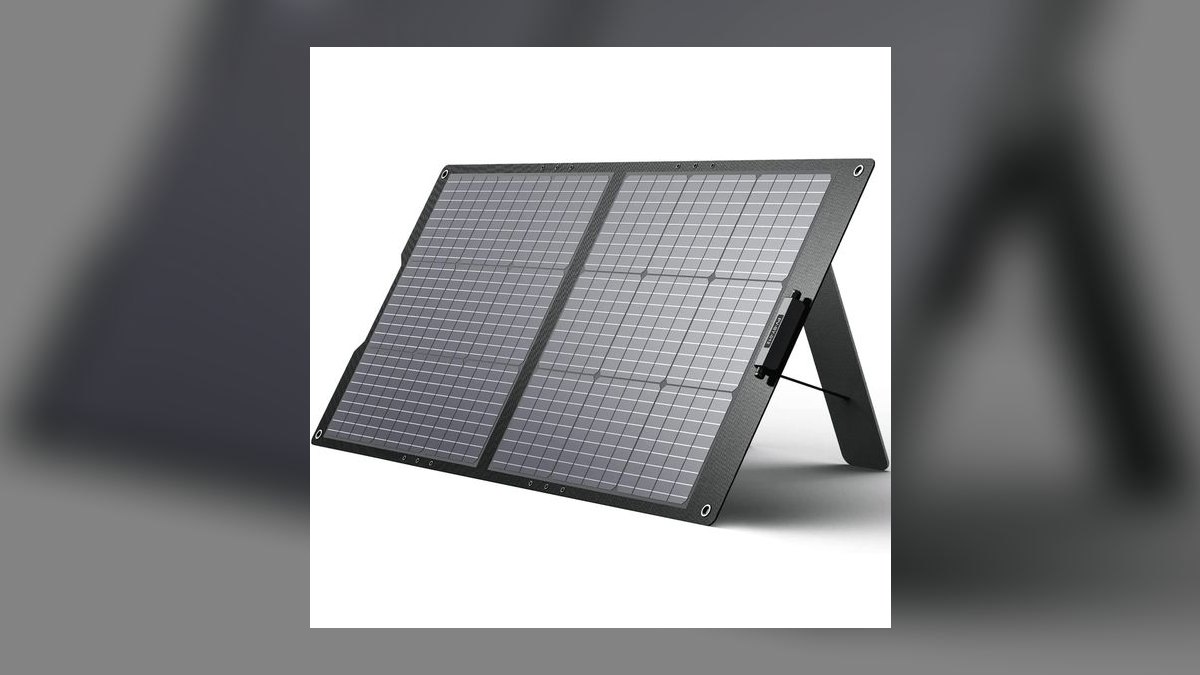
It ranks sixth overall but wins on price per watt at $1.99, the lowest here. The $199 suitcase uses 22% monocrystalline PERC cells rated IP65 and produces 80-92W in good sun per Will Prowse's bench logs. It unfolds to 40.2 by 20.5 inches, folds to 20.5 by 20.1 inches, and weighs 10.3 lbs, with a removable 20A Voyager PWM controller built in.
This suits anyone wanting universal compatibility, since MC4 output plugs into virtually any power station with a cheap adapter and no ecosystem lock-in. Two units daisy-chain into a 200W array for under $400. The tradeoff is a TPE protective fabric instead of ETFE, which degrades faster under UV despite the 5-year material warranty. It sits well below the PV200 above on raw output.
7Jackery SolarSaga 100W
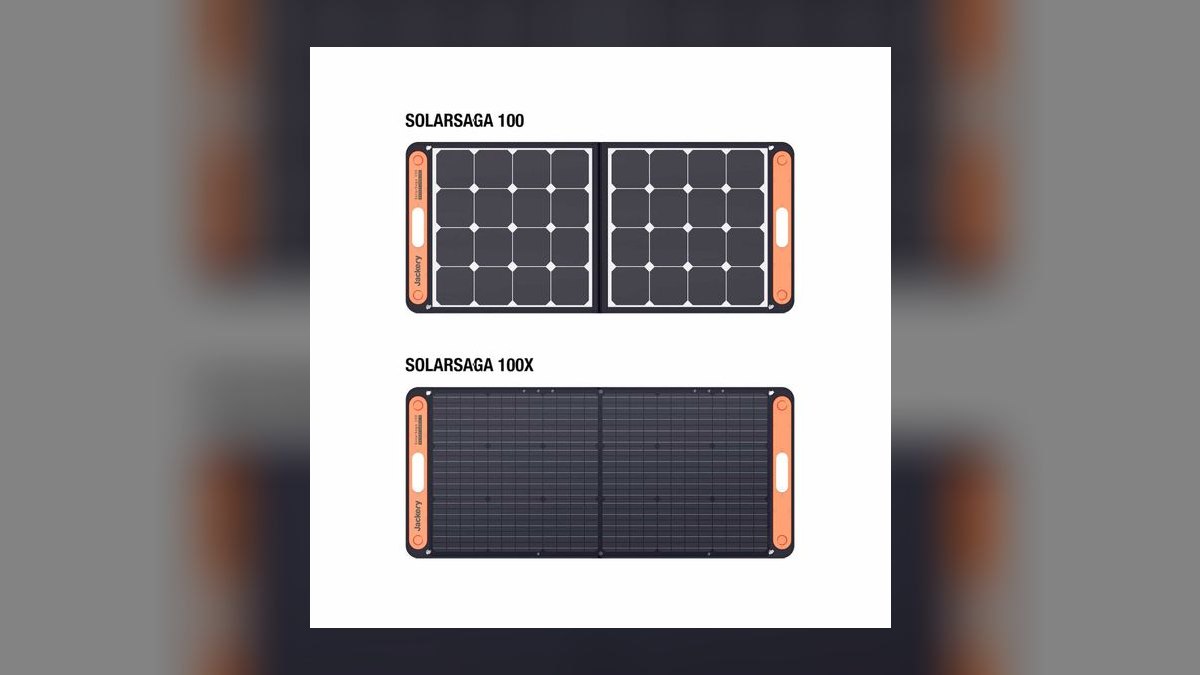
It ranks seventh as the most versatile 100W panel here, with 23% monocrystalline efficiency, ETFE laminate, and an IP65 rating. Real-world output is 75-88W at $299. It unfolds to 48 by 21 inches, folds to 24 by 21 inches, and weighs 9.1 lbs, the lightest 100W panel on the list, with a DC8020 plug plus 5V USB-A and USB-C ports built into the housing.
This serves weekend campers running a Jackery Explorer 500 or 1000 who want one panel and no accessories. The onboard USB ports charge phones and tablets directly off the panel with no power station in line. The cost is output running under nameplate, and at $299 it is $100 more than the Renogy above for similar real watts.
8Goal Zero Boulder 200 Briefcase
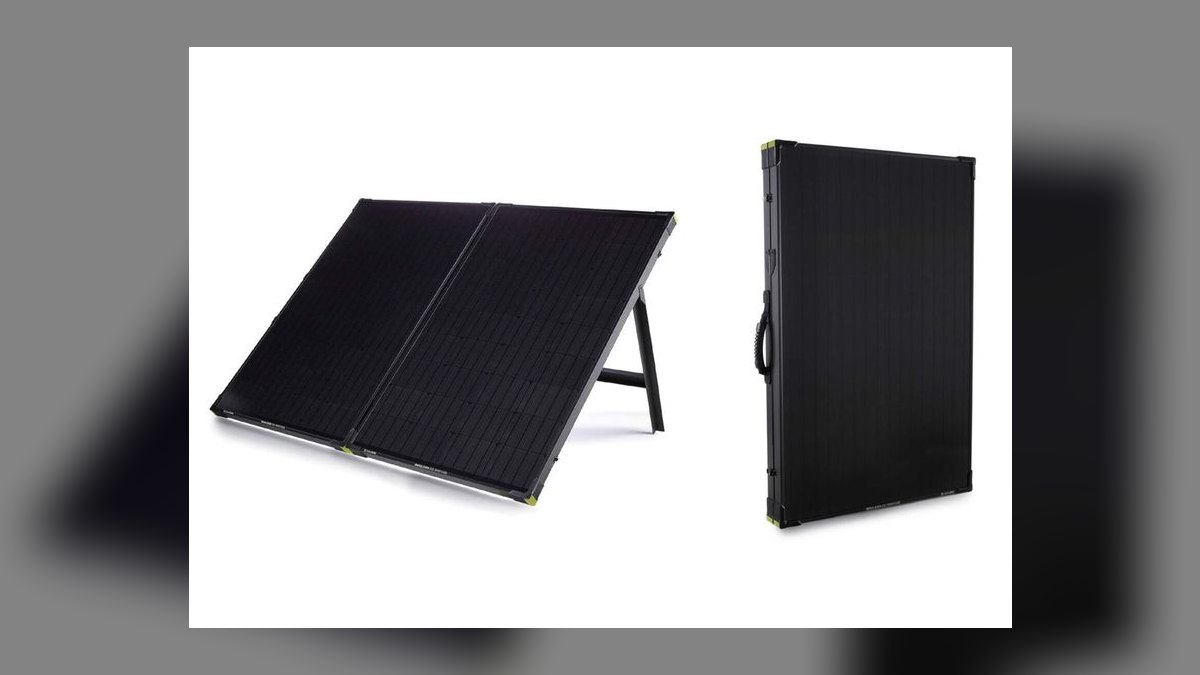
It ranks eighth as the only rigid glass-front suitcase here, two 100W monocrystalline panels in tempered glass with anodized aluminum frames hinged into a briefcase. Cell efficiency is 18-19%, lower than the ETFE foldables, but real output still hits 170-190W because the rigid form does not flex under load. It folds to 40 by 26.75 inches, deploys to 40 by 53.5 inches, and weighs 42 lbs.
This is for Yeti 1500X and 3000X owners parked at a site, not moving. The tempered glass face is the most durable surface on this list and the heavy-duty kickstand legs are integrated. At 42 lbs in a hard case, it is car-camping and RV gear only. The Bluetti PV200 above matches its $499 price and output at 16.1 lbs.
9BigBlue 80W Solar Charger
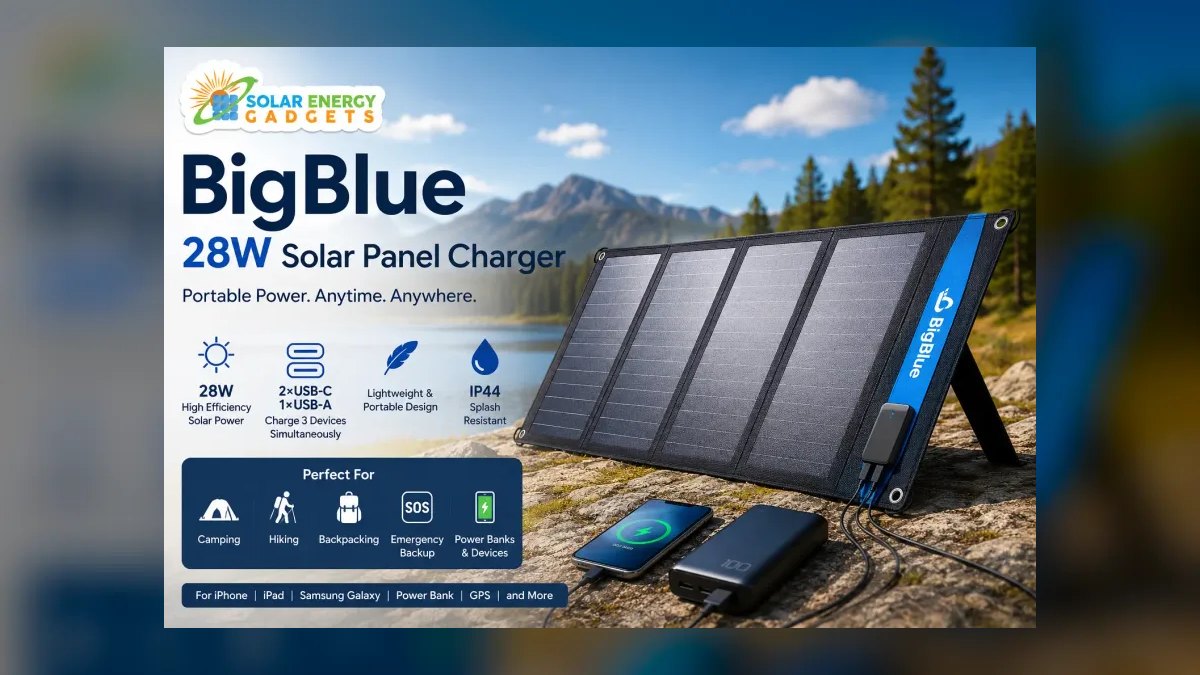
It ranks ninth as the ultralight USB-only option, not a battery feeder. Four monocrystalline panels sit under PET laminate rated IP65, folding to a magazine-sized 13 by 8 inches at just 4.6 lbs. Ports are two USB-A at 5V/2.4A, one USB-C PD at 45W, and a DC18V output for select power stations. Real-world total across the ports lands at 55-70W for $199 with a 24-month warranty.
This is hiker and bug-out-bag gear, since the 45W USB-C PD port runs a MacBook Air directly off the sun and 4.6 lbs packs smaller than anything else here. The hard limit is the missing MC4 output, so it cannot feed an EcoFlow, Bluetti, or Jackery station. The Renogy above costs the same and feeds a real battery, but weighs more than double.
10Dokio 110W Portable Foldable
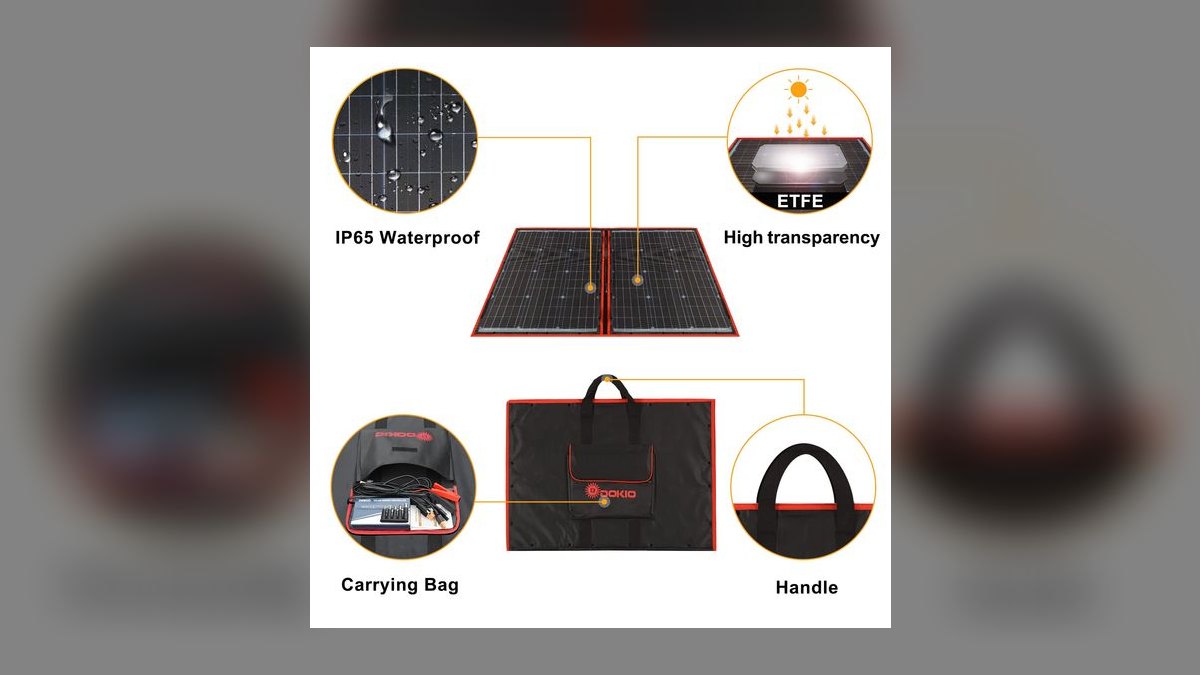
It ranks tenth as the rock-bottom budget entry at $129, the only sub-$130 panel here. Efficiency is 18-19% monocrystalline under a PET shell rated IP65, with real-world output of 75-90W. It unfolds to 42 by 21 inches, folds to 21 by 11 inches, and weighs 5.5 lbs, with a single DC connector shipping MC4, Anderson, and alligator-clip adapters plus USB-A and USB-C ports on a built-in junction box.
This is for hard-budget shoppers who need a working 100W-class panel now and accept a shorter service life. Reddit r/SolarDIY owners report 3-4 years before output drops noticeably, since the PET shell yellows faster than ETFE. Against the Renogy above, you save $70 and 4.8 lbs but give up the built-in PWM controller and the 5-year material warranty.
How we ranked these
Rankings weighted real-world output against nameplate wattage heaviest, since most foldable panels underperform their label by 15 to 25 percent in clear midday sun. Cell efficiency counted second, build quality — ETFE laminate, IP rating, kickstand hinges — counted third, and connector compatibility, daisy-chain flexibility, folded weight, and price-with-warranty split the remainder. Bench data came from Will Prowse, DIY Solar Power Forum logs, Outdoor Gear Lab, and Mortons on the Move.
Rigid roof-mount panels, flexible adhesive marine panels, and anything requiring permanent installation were excluded outright — different buyers, different math entirely. IP68-versus-IP65 marketing got discounted too, since both survive rain and both fail at the junction box under standing water. Bundled carry bags, branded stickers, and vendor-supplied wattage screenshots carried zero weight, and solar-noon peak numbers from manufacturer pages were disregarded unless an independent bench test confirmed them.
Related questions
How much real output should I expect from a 200W foldable panel?
Expect 155 to 185 watts at solar noon under clear sky, roughly 15 to 25 percent under nameplate. The Bluetti PV200 logs 165-185W, the Jackery SolarSaga 200W hits 170-185W, and the rigid Goal Zero Boulder 200 reaches 170-190W because its glass form doesn't flex. Cloud cover, heat, and off-angle placement drop these numbers further still.
What is the difference between ETFE and PET panel shells?
ETFE, or ethylene tetrafluoroethylene, resists UV for ten-plus years with minimal yellowing and is what EcoFlow, Bluetti, Jackery, and Anker all use on their shells. PET is a cheaper laminate found on the Dokio 110W and BigBlue 80W; it yellows within three to four years and output falls faster. Renogy's value pick uses TPE fabric, a middle ground trading some UV life for price.
Can I daisy-chain two portable solar panels together?
Yes, but check your power station's MPPT voltage and amperage ceiling first. Two Bluetti PV200 panels chain in series through included MC4 branch connectors to feed 400W into an AC200MAX, which accepts 145V at 12A. Two EcoFlow 400W panels parallel into a Delta Pro rated at 150V and 15A. Exceeding either limit shuts the controller down or damages it outright.
Which panel works if I do not own a power station yet?
The Renogy 100W 12V Foldable ships with a removable 20A Voyager PWM controller, so it charges a 12V battery directly with no separate MPPT or power station needed. The BigBlue 80W goes the opposite direction with two USB-A ports and a 45W USB-C PD output that runs a laptop straight off the sun. Neither one requires a battery box to be useful.
Why does partial shade hurt foldable panels so badly?
Foldable panels wire their cell sections in series, so one shaded section throttles the whole string — forum logs show 30 to 50 percent total output loss from a single shadowed panel. Bluetti's honeycomb cell coating and EcoFlow's bypass diodes reduce that penalty noticeably. Budget panels without bypass diodes take the full hit instead. Reposition the panel rather than accepting any partial shade.
Is a rigid glass briefcase panel better than a folding fabric one?
The Goal Zero Boulder 200 uses tempered glass over anodized aluminum frames, the most durable surface on this list, and its rigidity keeps output at 170-190W despite lower 18-19 percent cell efficiency. The tradeoff is weight: 42 pounds, the heaviest single unit here, which makes it car-camping and RV gear only. Folding ETFE panels win on efficiency per pound and pack far smaller.
What adapters should I carry to avoid ecosystem lock-in?
An MC4-to-XT60-to-Anderson kit covers most cases and runs about $15. MC4 is the industry-standard output on serious panels. EcoFlow accepts XT60 or MC4, Bluetti uses XT60 or Aviation, Anker is XT60 native, Jackery uses a proprietary DC8020 plug, and Goal Zero uses an 8mm barrel connector. Most panels on this list already ship with at least two adapters in the box.
FAQ
Which portable solar panel is best overall in 2027?
The EcoFlow 400W Portable Solar Panel at $1199. It pairs 22.4 percent monocrystalline efficiency with an IP68-rated ETFE shell and a zippered case that doubles as an angle-marked kickstand. Will Prowse's bench tests recorded 340-365W real output, among the best rated-versus-real ratios for any consumer foldable. It weighs 35.3 pounds, folding to 41.7 by 24.4 inches — genuinely heavy to carry solo.
What is the best value portable solar panel?
The Renogy 100W 12V Foldable at $199, or $1.99 per rated watt, the lowest here. It uses 22 percent monocrystalline PERC cells under a TPE shell rated IP65, delivers 80-92W real, weighs 10.3 pounds, and includes a removable 20A PWM controller. Two units chain into a 200W array for under $400, backed by a five-year material warranty.
Can I leave a portable solar panel out in the rain?
Panels rated IP65 or above handle rain without issue. The vulnerable point is the junction box where MC4 cables exit — keep it elevated or tucked beneath the panel so water never pools there. Never submerge any panel, including IP68-rated units like the EcoFlow 400W; leave one sitting in standing water long enough and the junction box fails regardless of its rating.
How long do portable solar panels actually last?
ETFE-shelled panels hold 80 percent or more of rated output for ten to twelve years, per manufacturer warranties and long-term DIY Solar Power Forum threads. PET-shelled panels typically hit that same 80 percent mark at four to six years instead. The photovoltaic cells themselves last 25-plus years — it's the protective shell that degrades and fails first, which is why shell material matters more than raw cell spec.
Which panel has the longest warranty?
The Anker SOLIX PS400 and the Renogy 100W both carry five years, the longest coverage on this list. Jackery's SolarSaga 200W offers three years. Bluetti's PV350, PV200, the BigBlue 80W, Jackery's 100W, and the Goal Zero Boulder all run two years. EcoFlow's 400W and the Dokio 110W offer only twelve months, the shortest coverage here despite EcoFlow's premium price tag.
What is the lightest portable solar panel here?
The BigBlue 80W SolarPowa at 4.6 pounds, folding down to a magazine-sized 13 by 8 inches. It's USB-only — two USB-A ports at 5V/2.4A, one 45W USB-C PD port, and a DC18V output — with no MC4, so it can't feed an EcoFlow, Bluetti, or Jackery battery directly. The Dokio 110W is next lightest at 5.5 pounds and does include MC4 output.
Are portable solar panels worth it compared to a generator?
For multi-day off-grid trips, yes — silent operation, no fuel to haul, and no exhaust fumes near a campsite. For a once-a-year hurricane outage, a propane generator costs less upfront and starts more reliably in bad weather. The rough break-even sits around 15 to 20 days of off-grid use per year; below that threshold, the generator wins on cost per usable watt-hour.
Should I buy one large panel or two smaller ones?
Two smaller panels generally win on usability — you can deploy one in full sun while repositioning the other, or chase the sun through the afternoon without hauling the whole array. One large panel is simpler to set up and slightly lighter in total. For a 400W target, two 200W foldables at roughly 17 pounds each beat one 35-pound slab you have to carry solo.
Does higher cell efficiency actually matter for camping?
It matters most when deployment space is limited — a van roof, a small campsite clearing, or a narrow balcony. Above 23 percent, as on the Jackery SolarSaga 200W at 24.3 percent and Bluetti's 23.4 percent, you get more watts per square foot of surface. If you have open ground and can spread panels out, a lower-efficiency but cheaper option delivers the same watts for less money.
Sources
- https://www.nrel.gov/solar/
- https://www.energy.gov/energysaver/planning-home-solar-electric-system
- https://www.consumerreports.org/home-garden/solar-panels/
- https://www.rei.com/learn/expert-advice/solar-power.html
- https://www.outdoorgearlab.com/topics/camping-and-hiking/best-solar-charger
- https://www.nytimes.com/wirecutter/reviews/best-portable-power-station/
- https://www.solarreviews.com/
- https://www.iec.ch/ip-ratings
Related on PULSE
This page will be disappearing soon. Save it to your device for $1 — or read it free while it is here.
@Kory-White- · if Venmo asks, the last 4 of my number are 2012
This page is gone.
This one is off the shelf now. $1 keeps it on your phone for good — the whole page, pictures and diagrams included.
 pulse-reviewsTop 10 Battery Chainsaws — Best Overall + Best Value in 2027
 pulse-reviewsTop 10 Red Light Therapy Devices — Best Overall + Best Value in 2027
 pulse-reviewsTop 10 Drone Cases — Best Overall + Best Value in 2027
 pulse-reviewsTop 10 DVD Players — Best Overall + Best Value in 2027
 pulse-reviewsTop 10 Neck and Shoulder Massagers — Best Overall + Best Value in 2027
 pulse-reviewsTop 10 LG TVs — Best Overall + Best Value in 2027
 pulse-reviewsTop 10 Standing Desks $500-$1500 in 2027
 pulse-reviewsTop 10 VR Headsets — Best Overall + Best Value in 2027
 pulse-reviewsTop 10 Outdoor Smart Lighting — Best Overall + Best Value in 2027
 pulse-reviewsTop 10 Blue Light Glasses for Sales Reps in 2027