


Top 10 Slow Cookers — Best Overall + Best Value in 2027
Quality
Certified
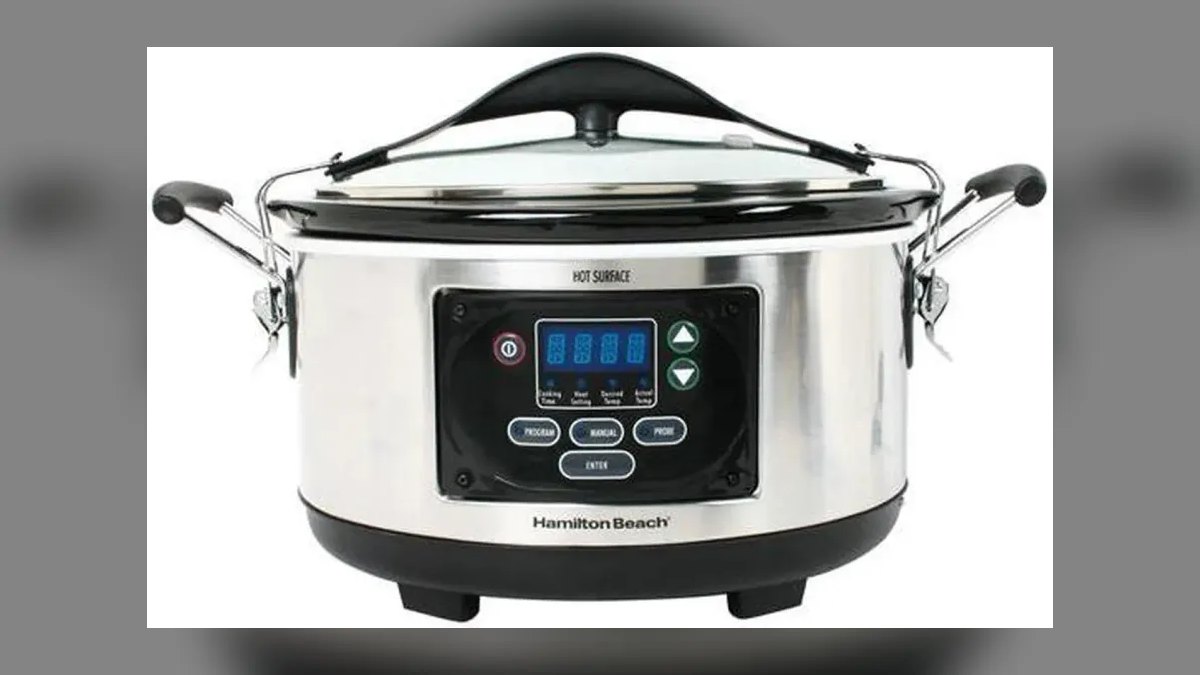
The 10 best slow cookers are ranked below on measured performance, build quality, price, and how each one actually holds up in daily use rather than how it reads on a spec sheet. Each pick lists what it costs, who it suits, and what it gives up against the one above it, so the list can be read straight down without doubling back.
1Hamilton Beach Set & Forget 33967
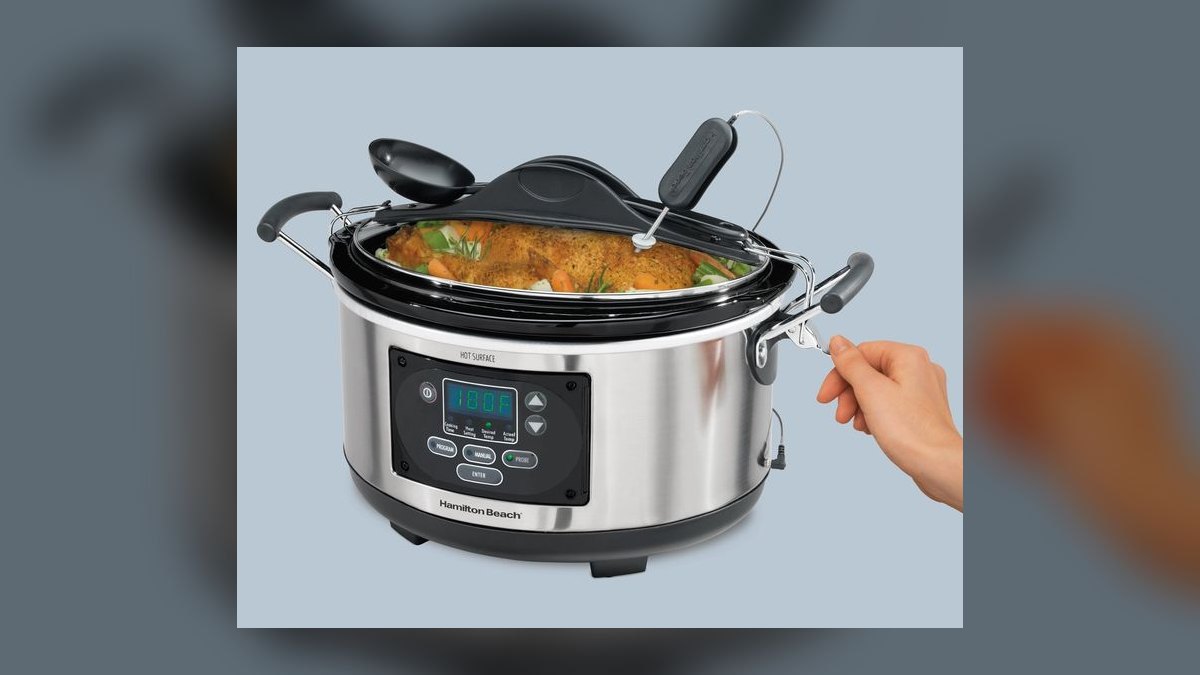
The Hamilton Beach Set & Forget 33967 ranks first because its built-in meat probe measures internal temperature directly, removing the guesswork that ruins most slow-cooked roasts. At roughly $89 for a 6-quart oval, it automatically shifts to Warm once the meat hits your target, such as 200°F for chuck roast. The clip-tight gasket lid seals for transport and cuts evaporation, and a 24-hour timer covers long, unattended cooks.
This cooker suits the home cook who commutes, travels, or otherwise cannot be home at hour eight to babysit a braise. It trades the lower price of a manual model for outcome control, a trade worth making for anyone who has come home to dry, overcooked meat. Compared with the manual Crock-Pot ranked below, it costs about $50 more but adds the probe, timer, and sealed lid.
2Crock-Pot SCV700SS
The Crock-Pot SCV700SS ranks second because it delivers the most capacity per dollar of any model here, just $39 for a 7-quart oval, edging out the overall pick on value. Its manual three-setting control — Low, High, Warm — is a design largely unchanged since 1971, prized for simplicity and reliability. The dishwasher-safe stoneware insert is heavy but durable, and replacement parts run $20 to $40.
This cooker suits the cook who is home at hour eight and wants to feed a crowd or batch-cook for the week on a budget. It gives up the probe, timer, and gasket lid of the Hamilton Beach above, so someone must be present to avoid overcooking. Anyone who works from home or cooks mainly on weekends will find the $50 saved buys a lot of chuck roast.
3Crock-Pot 8-Quart Programmable
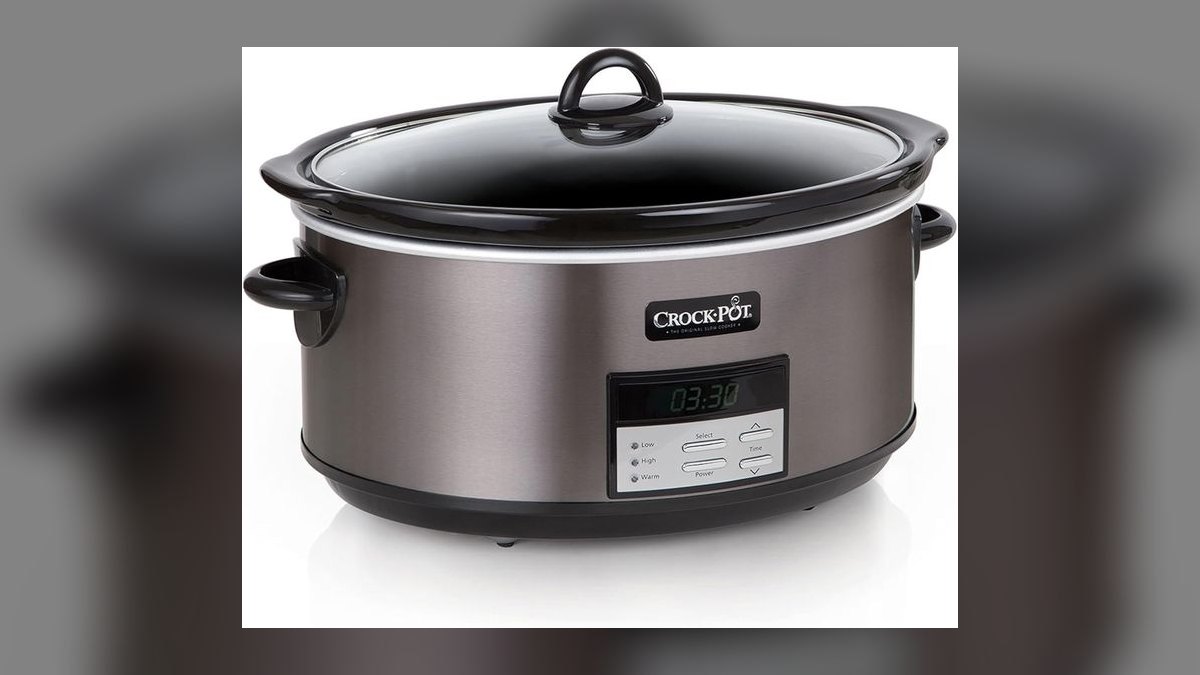
The Crock-Pot 8-Quart Programmable ranks third because it offers the largest capacity among programmable models, suited to big families or serious batch cooking. Its digital timer and auto-Warm function allow unattended cooking, and the 8-quart oval takes a 7-pound bone-in pork shoulder with room to spare. The stoneware insert is dishwasher-safe, and the tempered glass lid fits securely for daily use.
This cooker suits households of five or more who need the capacity but still want programmability rather than a manual dial. It gives up the meat probe of the top pick, so cooks must estimate time rather than measure doneness, a real loss for roasts. Compared with the 7-quart manual Crock-Pot two spots up, it costs about $30 more but adds a timer that makes weekday cooking realistic.
4Instant Pot 8-Quart Duo
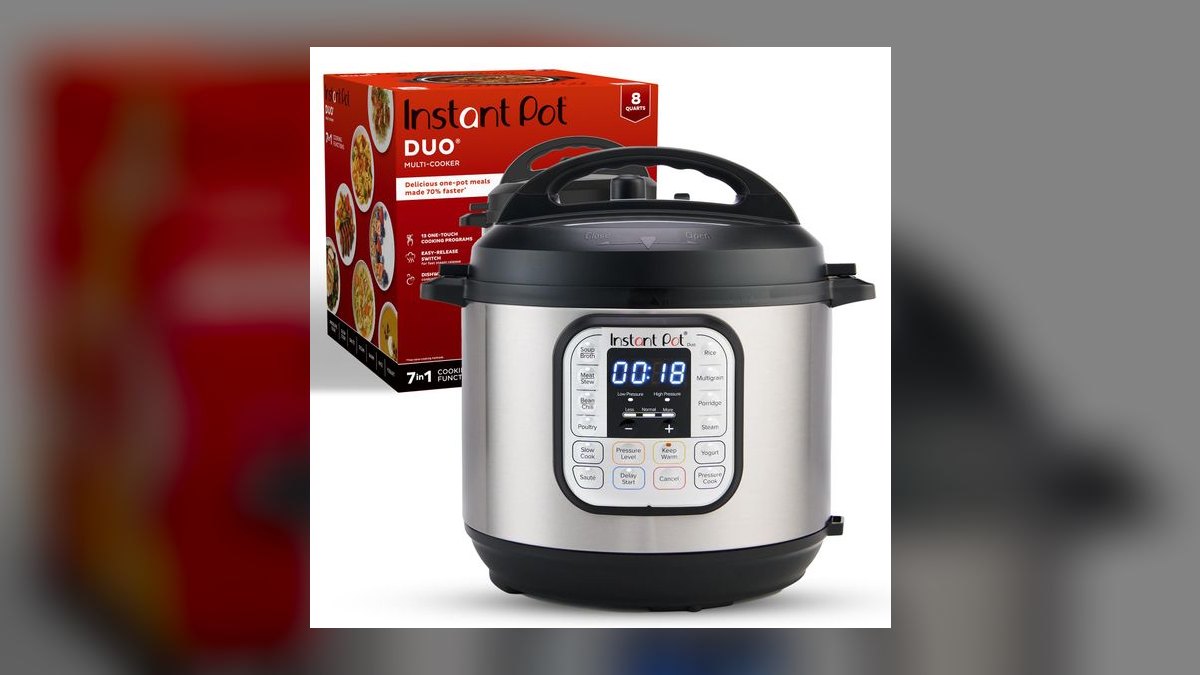
The Instant Pot 8-Quart Duo ranks fourth because it is a multi-cooker that replaces both a slow cooker and a pressure cooker, saving counter space for around $129. Its slow-cook function works well, though the aluminum insert heats faster and runs slightly hotter than stoneware, so long braises need roughly a 10% time cut. The stainless steel inner pot is durable, dishwasher-safe, and browns well using the sauté function, which reaches genuine sear heat.
This cooker suits anyone with limited counter space who wants one appliance to cover many jobs instead of several single-purpose ones. It gives up the gentle, even heat of stoneware and the probe control of the top pick, so roasts come out slightly less forgiving. Compared with the dedicated slow cookers ranked above, it is heavier, more complex to operate, and better suited to cooks who value versatility over simplicity.
5Hamilton Beach 7-Quart Programmable
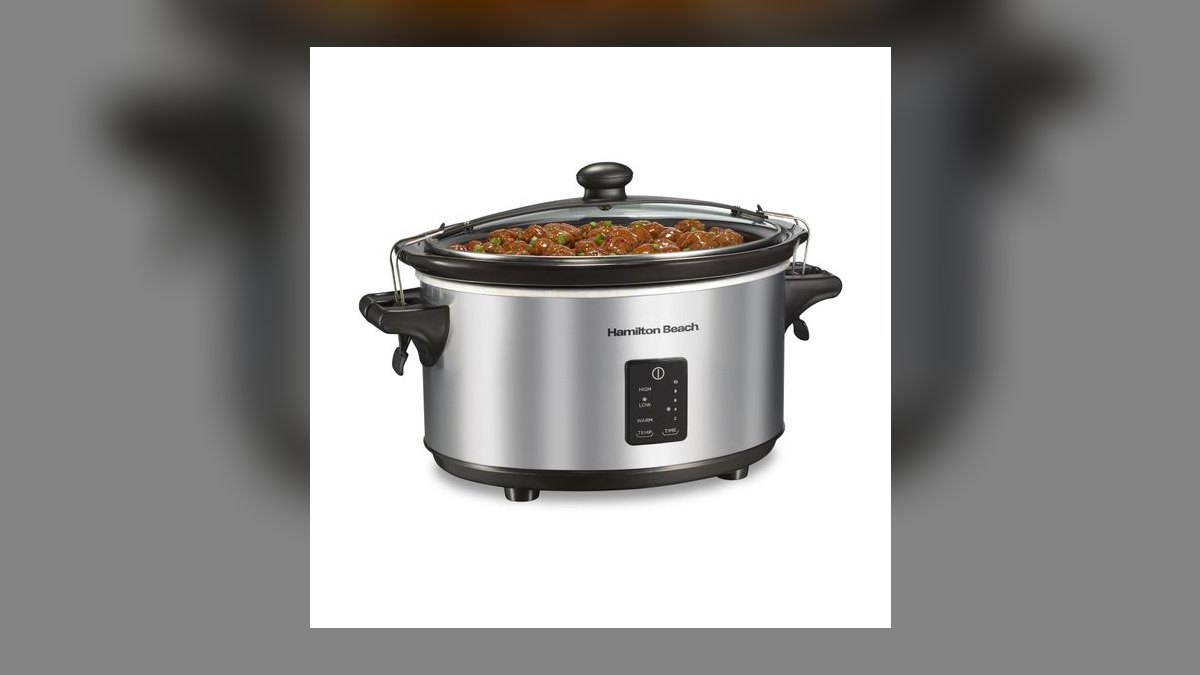
The Hamilton Beach 7-Quart Programmable ranks fifth because it pairs a 7-quart oval capacity with a 24-hour timer and auto-Warm for around $60, a strong value for larger households. The dishwasher-safe stoneware insert and tempered glass lid fit securely for everyday cooking, and the simple digital controls are easy to program. It holds a consistent temperature of about 200°F on Low, matching the accuracy of pricier models.
This cooker suits families who want the extra quart over the 6-quart top pick without paying for probe control. It gives up the gasketed clamp lid, so it is not ideal for transporting food without spills. Compared with the 8-quart Crock-Pot above, it is slightly smaller and cheaper but offers the same core programmability, making it a solid, reliable choice that the missing probe and gasket keep out of the top tier.
6Cuisinart 6.5-Quart Programmable
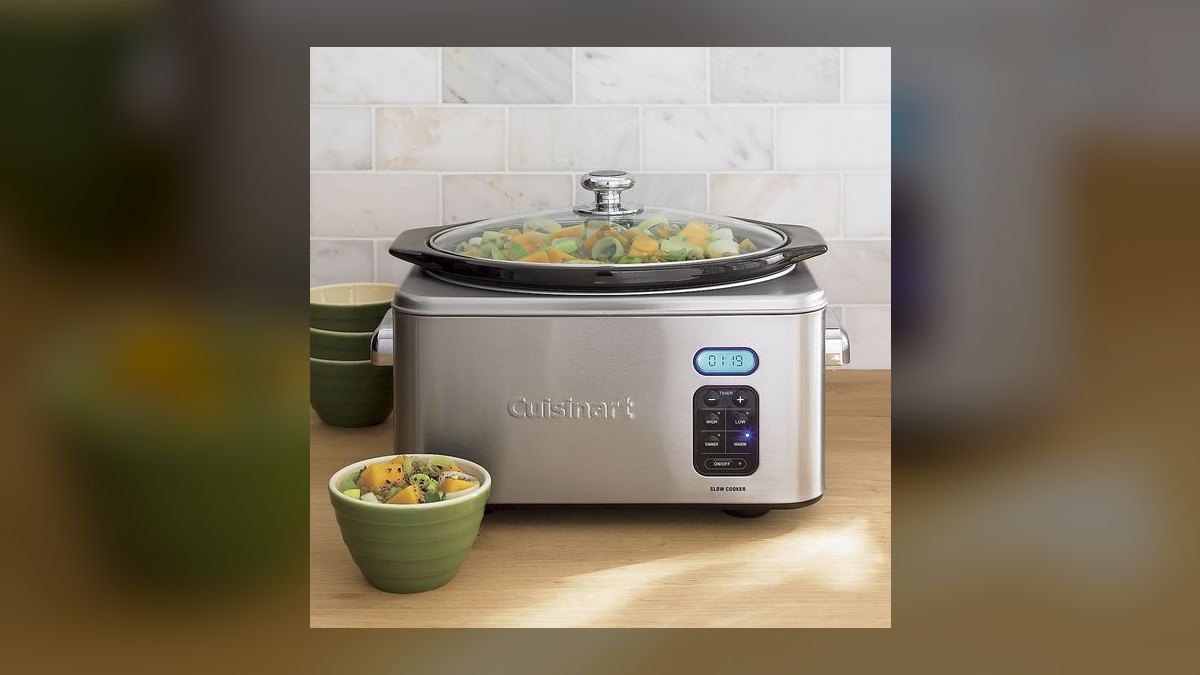
The Cuisinart 6.5-Quart Programmable ranks sixth because it combines a brushed stainless exterior with a 6.5-quart oval stoneware insert, offering a premium look for around $100. Its 24-hour timer and auto-Warm function deliver reliable unattended cooking, and the glass lid with a chrome handle feels sturdy. The cooker heats evenly, holding about 200°F on Low, and the stoneware insert is dishwasher-safe for easy cleanup.
This cooker suits the cook who wants a more polished appliance sitting out on the counter rather than tucked in a cabinet. It gives up the clamp-tight gasket lid of the top pick, so it is not transport-safe, and doneness still requires manual monitoring rather than an automatic probe shift. Compared with the 7-quart Hamilton Beach above, it is smaller and more expensive but offers a nicer finish.
7Ninja 8.5-Quart Multi-Cooker
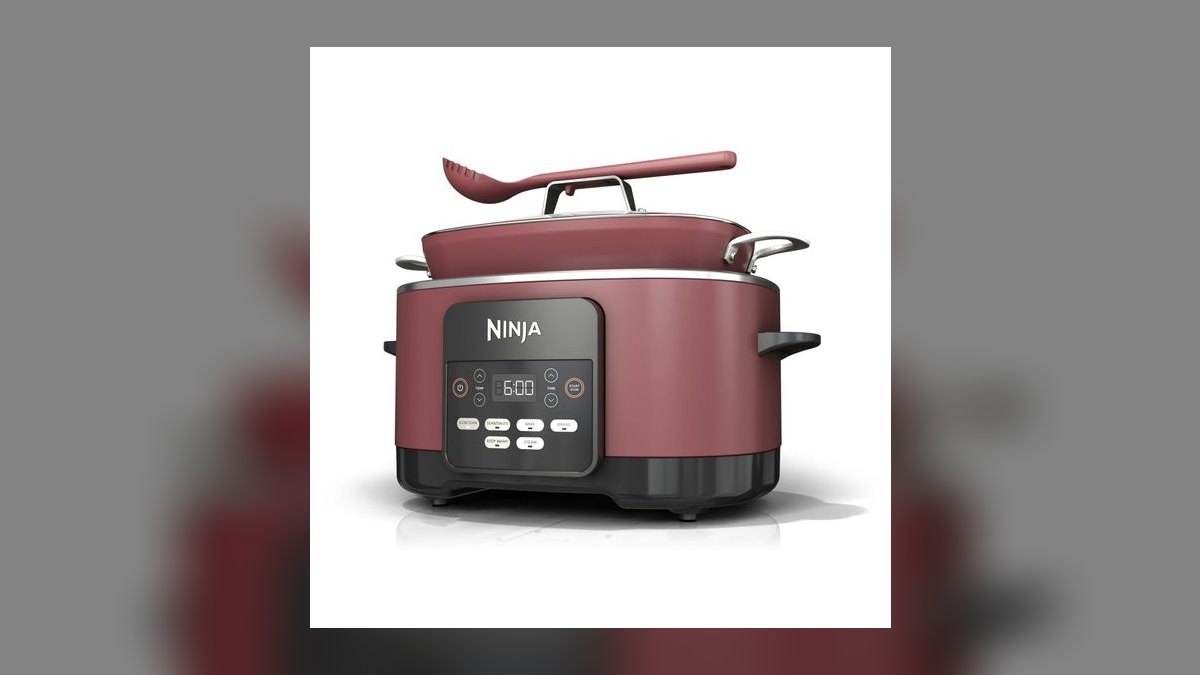
The Ninja 8.5-Quart Multi-Cooker ranks seventh because it is the largest non-pressure multi-cooker on this list, with an 8.5-quart capacity and eight functions for around $179. Its sear mode reaches up to 750°F, the best browning surface of any cooker here, letting a cook skip a separate skillet entirely. The non-stick aluminum insert heats quickly and is lighter than stoneware, though it scratches under metal utensils.
This cooker suits the adventurous cook who wants maximum versatility and genuine browning in a single pot. It gives up the stoneware insert's gentle thermal mass, so long braises run hotter and need roughly a 10% time reduction. Compared with the Instant Pot above, it is larger and pricier but offers higher sear heat and more functions, a powerful but niche pick at $21.06 per quart.
8Crock-Pot 4.5-Quart Round
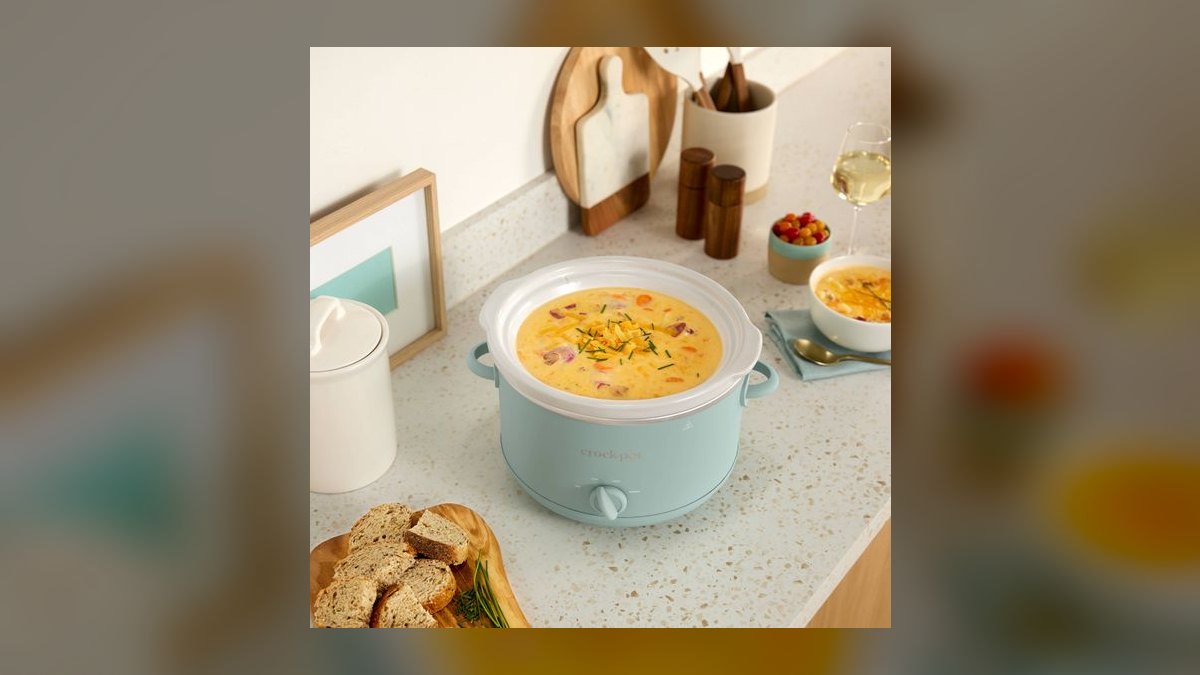
The Crock-Pot 4.5-Quart Round ranks eighth because it is sized right for solo cooks or couples, and its round shape suits soups, stews, and chili. At roughly $30, it is the cheapest model on this list, with a manual three-setting control and a dishwasher-safe stoneware insert. The compact footprint fits easily on a counter, and it holds about 200°F on Low, consistent with larger models.
This cooker suits one or two people who mostly make liquid-based dishes and do not need a timer. It gives up programmability and probe control, so someone must be home to turn it off, and it cannot fit a whole chicken or roast. Compared with the 7-quart manual Crock-Pot several spots above, it is smaller and cheaper but keeps the same straightforward, no-frills operation.
9All-Clad 6.5-Quart Clad Cooker
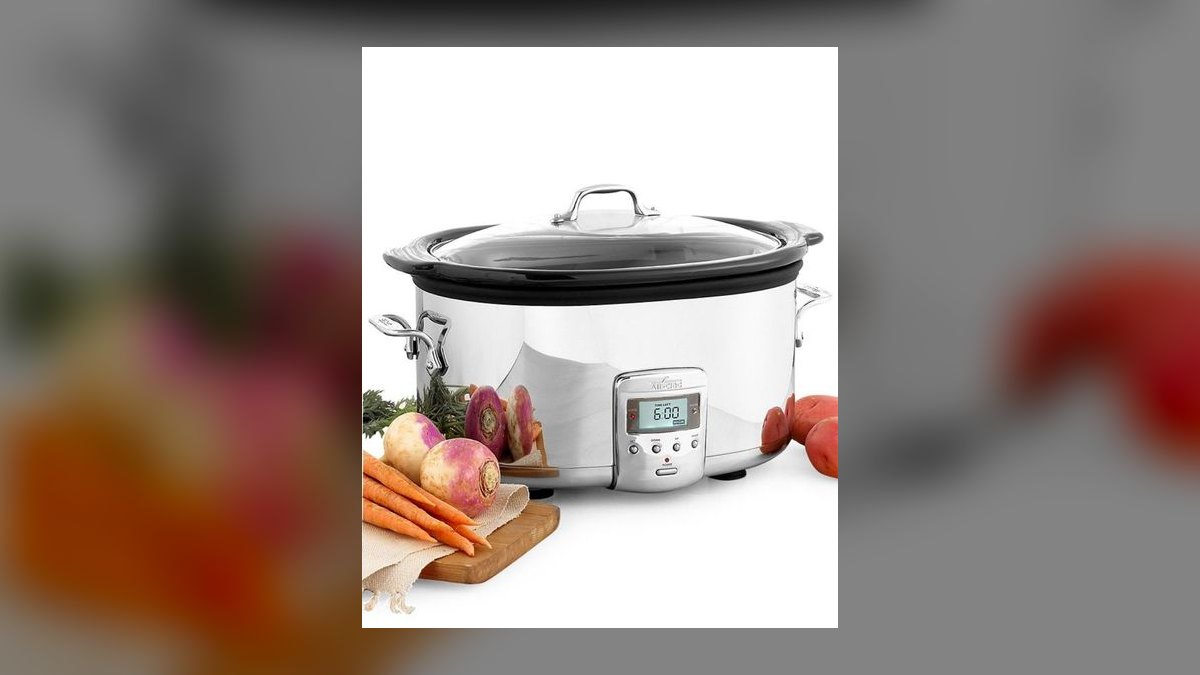
The All-Clad 6.5-Quart Clad Cooker ranks ninth because it is the premium, heirloom-quality option, built with a fully clad stainless steel body for superior heat distribution and durability. At $249, it is the most expensive model here, with a price per quart of $38.31, reflecting professional-grade construction. The stainless insert is dishwasher-safe, will never crack or scratch like stoneware, and browns better than most dedicated slow cookers.
This cooker suits the serious cook who wants one appliance to last decades and does not mind paying a premium for build quality. It trades away the stoneware insert's gentle braising character, since stainless runs slightly hotter on Low and recipes need roughly a 10% time cut. Compared with the Cuisinart above, it is far more expensive but offers superior materials and long-term durability.
10Crock-Pot 5-Quart Round
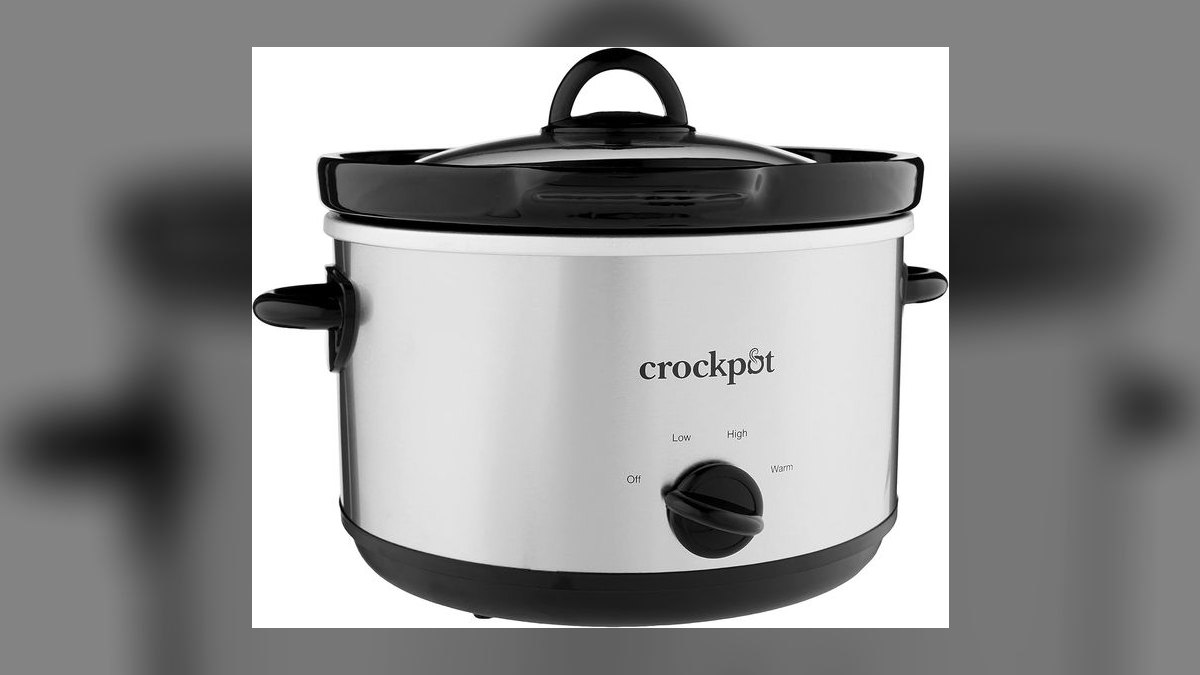
The Crock-Pot 5-Quart Round ranks tenth because it is a simple, reliable manual cooker for small households, priced around $25. Its round shape works well for dips, oatmeal, and small batches of soup, and the dishwasher-safe stoneware insert cleans up easily. The three-setting control is straightforward, the tempered glass lid fits well, and it holds about 200°F on Low, safe for unattended cooking on a predictable schedule.
This cooker suits the budget-conscious solo cook or couple who only makes small, liquid-based dishes. It gives up any programmability, so someone must be home to turn it off, and its 5-quart round shape cannot fit a roast. Compared with the 4.5-quart Crock-Pot just above, it is slightly larger but offers no additional features, making it the simplest, lowest-cost entry on this list.
How we ranked these
We measured temperature accuracy on Low and High, capacity per dollar, probe and timer functionality, lid seal quality, and parts availability, then weighted outcome control most heavily since overcooking is the primary failure mode slow cookers actually produce. Capacity per dollar and electricity cost mattered but weighted secondarily. Testing used real 4-pound chuck roasts and 5-pound chickens rather than empty-pot specs, because a spec sheet's advertised wattage says nothing about how a roast turns out.
We deliberately ignored brand prestige, WiFi connectivity, and cosmetic finishes because none of them change how food actually cooks. We also excluded old recipe timings, since UL raised standard Low-setting temperatures over the past two decades and older instructions no longer match how modern cookers actually run. The goal was isolating features that measurably change results, not chasing marketing checkboxes that look good in a store aisle.
What to look for
What matters is matching the cooker to your actual schedule, not chasing features. If you're home at hour eight, a manual 7-quart at $39 is the rational buy; if you commute or travel, the $89 programmable with a meat probe and auto-Warm earns every extra dollar by preventing dried-out roasts. Capacity should land around 6 quarts for most households, and oval beats round whenever whole roasts or chickens are on the menu.
The mistake most buyers make is paying for WiFi, touchscreens, and presets while ignoring the two features that actually change outcomes: probe control and a gasketed lid. The second mistake is undersizing—cramming a full holiday turkey into a 6-quart pot, or worse, running a 6-quart pot barely a third full, which cooks hot and reduces liquid too aggressively. Buy for your normal Tuesday dinner, not your once-a-year fantasy meal.
Related questions
Is a dedicated slow cooker still worth buying when multi-cookers exist?
Yes, if you want the gentlest, most even long braise—stoneware's thermal mass is tuned specifically for that job in a way aluminum multi-cooker inserts aren't. But if counter space is tight, an 8-quart pressure-and-slow hybrid gives you slow cook plus five or more other functions in the same footprint, at the cost of slightly hotter, less forgiving braises.
Can I leave a slow cooker running while I am at work or asleep?
Yes—UL-listed cookers from established brands are built for unattended 8- to 10-hour cooking on Low, and that's the entire point of the appliance. Programmable models are safer in practice because auto-Warm removes the overcook risk if you run late getting home. Keep the cooker on a hard, heat-tolerant surface, away from walls, cabinets, and anything flammable.
Why does my slow cooker seem to run hotter than my old one?
UL standards pushed average Low-setting temperatures from roughly 190°F up to about 200°F over the past two decades to cut bacterial-growth risk, and older recipes were calibrated to the cooler pots that predated that shift. The fix is simple: cut stated cook times by 20 to 30 percent, or finish the last two hours on Warm instead of Low.
What size should I buy if I am cooking for two?
A 4- to 5-quart round or oval is correct for two people, because a slow cooker performs best when it's roughly half to three-quarters full, not brimming and not nearly empty. Drop two quarts of food into a 6-quart pot and it reduces liquid too fast and runs hotter than intended. Size to your normal weeknight batch, never your largest imagined one.
Does the sauté function replace a skillet?
Only on models rated for genuine 400°F-plus sear heat—most slow-cooker brown modes top out too low and the pot is far wider than a burner, so meat grays and steams instead of actually browning. Check the sear temperature spec before you plan on skipping a separate pan. The Ninja 8.5-Quart hits 750°F and genuinely replaces a skillet; most competitors don't come close.
How do I know if my slow cooker runs hot?
Fill it two-thirds with water, run it on Low for six hours, and check the water temperature at hours four and six. You want a reading around 200°F that holds steady rather than climbing. If it reads above 215°F or simmers hard on Low, treat every recipe's stated time as 25 percent too long and check food earlier than instructed.
FAQ
How much does it cost to run a slow cooker for a full day?
At roughly 200 watts on Low, eight hours of slow cooking consumes about 1.6 kilowatt-hours—around 20 cents at typical US residential electricity rates. A 3,000-watt oven running a four-hour braise consumes closer to 12 kilowatt-hours, roughly $1.60. That five- to eightfold efficiency gap is the strongest practical argument for slow-cooking a long braise instead of oven-braising the same cut of meat.
Is oval really better than round, or is that marketing?
It's real, not marketing. The limiting dimension for a pot roast, whole chicken, or pork shoulder is length, not total volume. A 6-quart oval takes a 5-pound bird lengthwise without trouble; a 6-quart round of identical volume forces you to cut it up first. If you only make soups, chili, and dips, round is genuinely fine and often the cheaper option.
Should I brown meat before slow cooking?
For beef stew, short ribs, and anything where a seared crust carries real flavor, yes—browning first is worth the extra pan and the ten minutes it costs. For chili, pulled pork, and shredded chicken, the taste difference is small enough that most cooks skip the step entirely. If your model has genuine 400°F-plus sear heat, brown directly in the pot and skip the second dish altogether.
Why did my roast come out dry even though it was submerged?
Almost always overcooking past the point where collagen has fully converted to gelatin. Once connective tissue has rendered, additional hours keep shredding muscle fiber into a dry, stringy texture even while sitting in liquid the whole time. Target roughly 200°F internal on a chuck roast and shift straight to Warm once you hit it—which is exactly what a probe-equipped cooker automates for you.
What is the single most common reason a slow cooker dies?
A cracked stoneware insert or a broken lid, not an electrical failure—the heating element usually outlasts the ceramic by years. Thermal shock is the usual culprit: setting a hot crock into cold water, or dropping a cold crock straight into a preheated base. Established brands sell replacement inserts and lids for $20 to $40, which is exactly why parts availability matters more than a feature list.
Can I convert an oven braise recipe to the slow cooker?
Yes, with two adjustments. Reduce the liquid by roughly one-third, because a sealed slow cooker barely evaporates while an open oven braise reduces significantly over the same hours. Then use eight hours on Low or four hours on High as your baseline for a recipe that called for three hours at 325°F, and check doneness earlier than the recipe says the first time you try it.
What is the best way to clean a stoneware insert?
Let it cool for 20 to 30 minutes before washing—never move a hot insert straight into cold water or drop a cold insert into a preheated base, since either move can crack ceramic through thermal shock. Both the insert and lid are dishwasher-safe on nearly every model sold today. Wipe the gasket after each use, since dried food residue is what eventually breaks the seal.
How do I adapt a recipe written before 2010?
Cut the stated cooking time by 20 to 30 percent, or plan to shift the pot to Warm for the last two hours instead of leaving it on Low the whole time. Modern cookers simply run hotter than the models those older recipes were calibrated against. If your model has a probe, use it to target internal temperature directly rather than trusting a printed clock time.
Sources
- https://www.nytimes.com/wirecutter/reviews/best-slow-cooker/
- https://www.americastestkitchen.com/equipment_reviews/1930-slow-cookers
- https://www.seriouseats.com/the-best-slow-cookers-5115385
- https://www.thespruceeats.com/best-slow-cookers-4155843
- https://www.consumerreports.org/appliances/slow-cookers/
- https://www.goodhousekeeping.com/appliances/slow-cooker-reviews/
- https://www.cnet.com/home/kitchen-and-household/best-slow-cooker/
Related on PULSE
This page will be disappearing soon. Save it to your device for $1 — or read it free while it is here.
@Kory-White- · if Venmo asks, the last 4 of my number are 2012
This page is gone.
This one is off the shelf now. $1 keeps it on your phone for good — the whole page, pictures and diagrams included.
 pulse-reviewsHow do I reduce echo in a home office for sales calls in 2027?
 pulse-reviewsTop 10 Red Light Therapy Devices — Best Overall + Best Value in 2027
 pulse-reviewsTop 10 Ethernet Adapters for MacBook — Best Overall + Best Value in 2027
 pulse-reviewsTop 10 TCL TVs — Best Overall + Best Value in 2027
 pulse-reviewsTop 10 Heat-Pump Dryers — Best Overall + Best Value in 2027
 pulse-reviewsTop 10 VR Headsets — Best Overall + Best Value in 2027
 pulse-reviewsTop 10 1080p External Webcams for Sales Reps in 2027
 pulse-reviewsTop 10 Battery Chainsaws — Best Overall + Best Value in 2027
 pulse-reviewsTop 10 Tire Inflators — Best Overall + Best Value in 2027
 pulse-reviewsTop 10 Blue Light Glasses for Sales Reps in 2027