


Top 10 Rice Cookers — Best Overall + Best Value in 2027
Quality
Certified
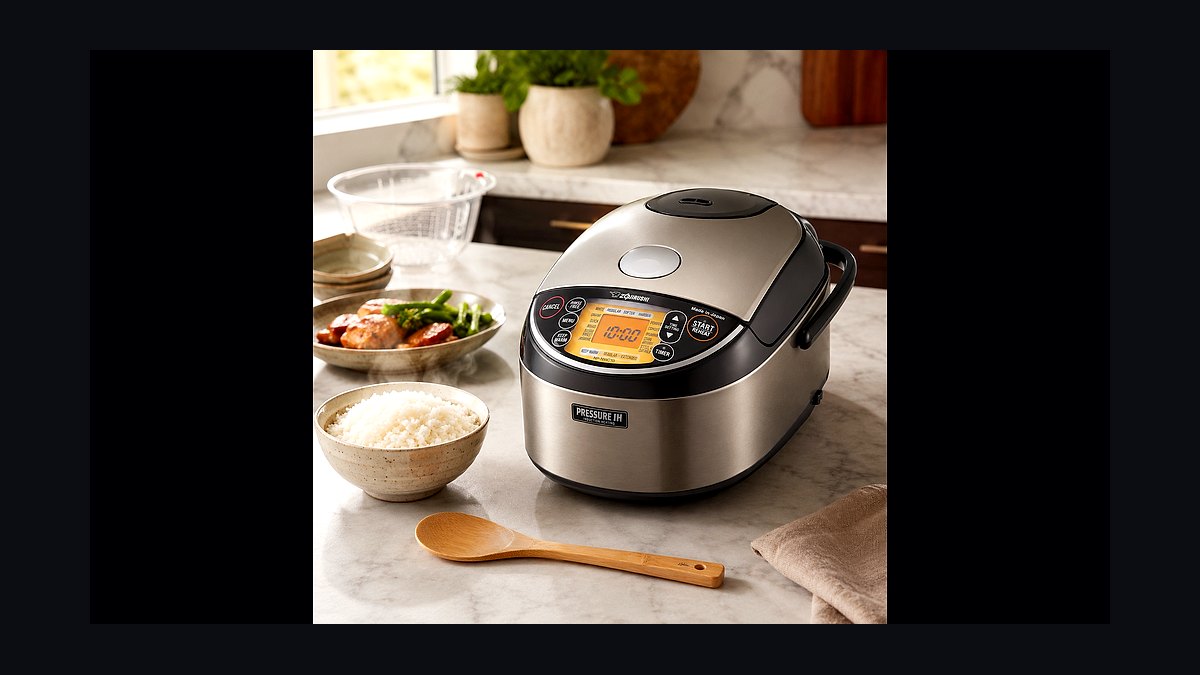
The 10 best rice cookers are ranked below on measured performance, build quality, price, and how each one actually holds up in daily use rather than how it reads on a spec sheet. Each pick lists what it costs, who it suits, and what it gives up against the one above it, so the list can be read straight down without doubling back.
1Zojirushi NP-NWC10 Pressure Induction
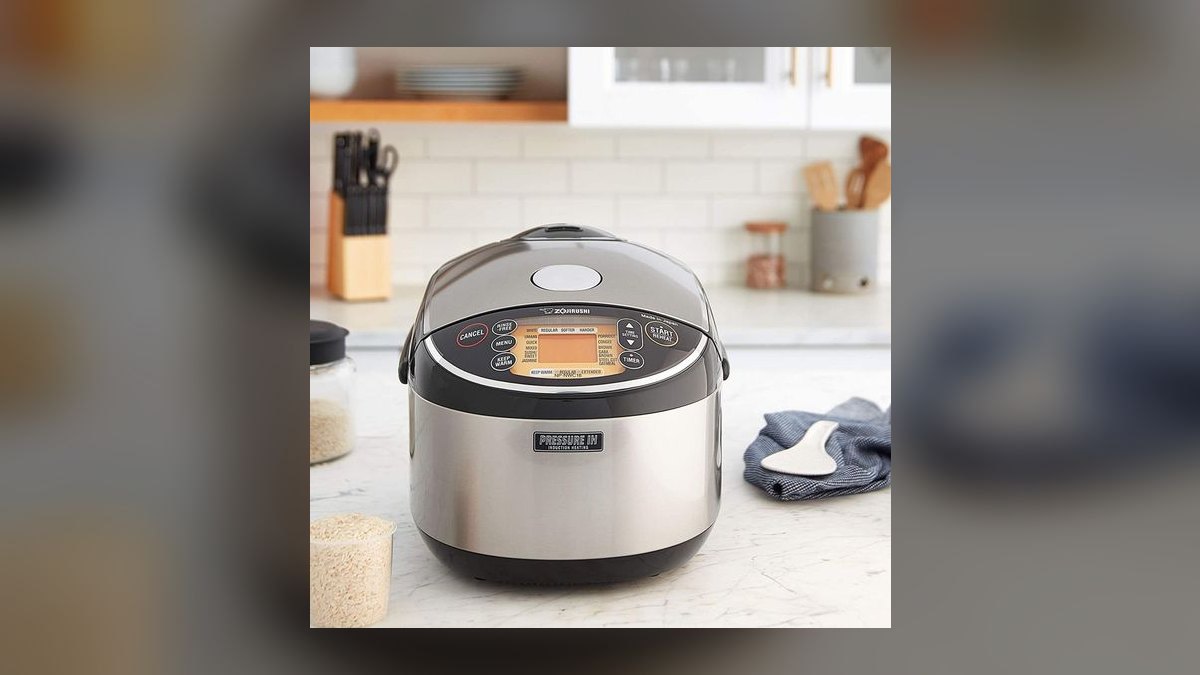
Pressure plus induction heating is what puts this at the top: the entire 5.5-cup inner pan becomes the heating element, and 1.2-atmosphere pressure drives water into each grain for plump, glossy, individually separated kernels. It runs separately tuned programs for white, sushi, mixed, brown, GABA-activated brown, porridge, scorched okoge, steam, and cake. The stainless-clad nonstick pan is rated for 10-plus years of daily use, and 24-hour keep-warm holds rice without yellowing.
This is for households eating rice three or more times a week who want one machine for a decade, not a clearance pot that warps in eighteen months. At $659 it costs roughly fifteen times the Aroma budget pick, and that money buys texture and pan longevity rather than capacity. Made in Japan. If you eat rice twice a month, the money is wasted; the Tiger JKT-D10U gets you most of the way for $379.
2Tiger JKT-D10U 5.5-Cup IH
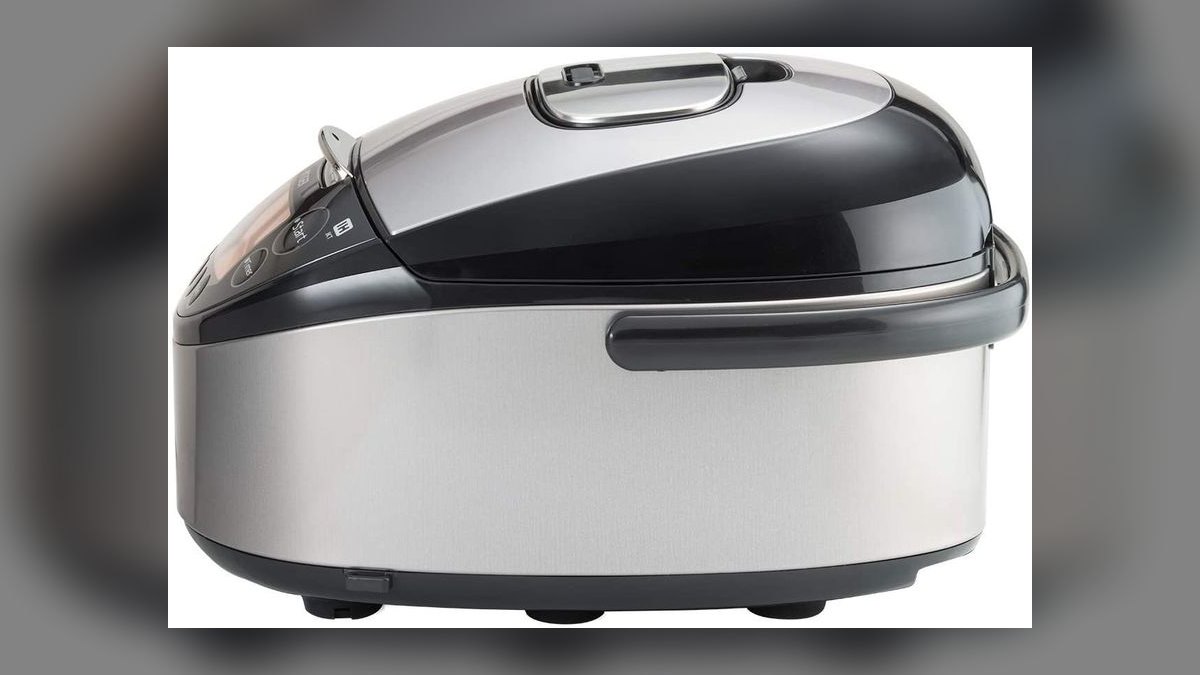
Induction heating at $379 makes this the value leader within the IH class, and Serious Eats and Japan Centre reviewers repeatedly rank it within a hair of the NP-NWC10 on plain white rice at roughly half the price. Its synchro-cooking insert steams fish or vegetables on the same heat cycle as the rice below. The stainless-and-charcoal-coated inner pot is built in Japan, with 12-hour keep-warm and a 24-hour delay timer.
Buy this if you want Japanese build and induction-even heat but cannot justify $659. What you give up is pressure: short-grain sushi finish lands around 90 percent of the top pick, not 100. Presets cover plain, quick, brown, mixed, porridge, sushi, and slow-cook, and the clear text LCD beats cryptic icon panels. Texture is a visible step above any micom unit, including the $249 NS-ZCC10 below.
3Zojirushi NS-ZCC10 Neuro Fuzzy
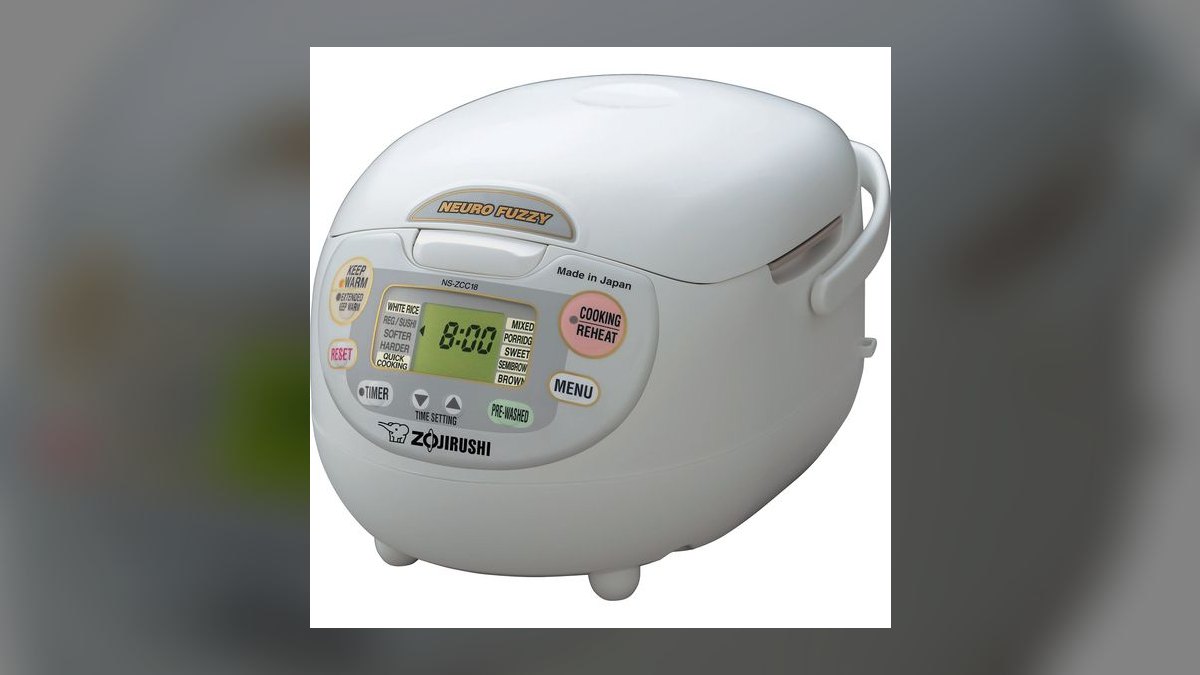
Fifteen years of reliability reputation earns this spot at $249. Neuro Fuzzy logic adjusts temperature curves dynamically for weight, moisture, and ambient temperature, so a half batch and a full batch both come out right. Heating is micom at the base rather than full induction, but the spherical inner pan with thick black coating spreads heat well enough that most home cooks cannot distinguish it from a $400 machine. Made in Japan.
This is the set-it-and-forget-it Zojirushi for people who do not want to spend Tiger JKT-D10U money. Presets run white in three firmnesses, mixed, sushi, porridge, sweet, brown, and rinse-free, with 12-hour keep-warm, 13-hour delay, and a detachable inner lid. Two measuring cups and a spatula are included. Power users who care about short-grain texture will eventually want the NP-NWC10 instead.
4Cuckoo CRP-EHSS0309F Twin Pressure
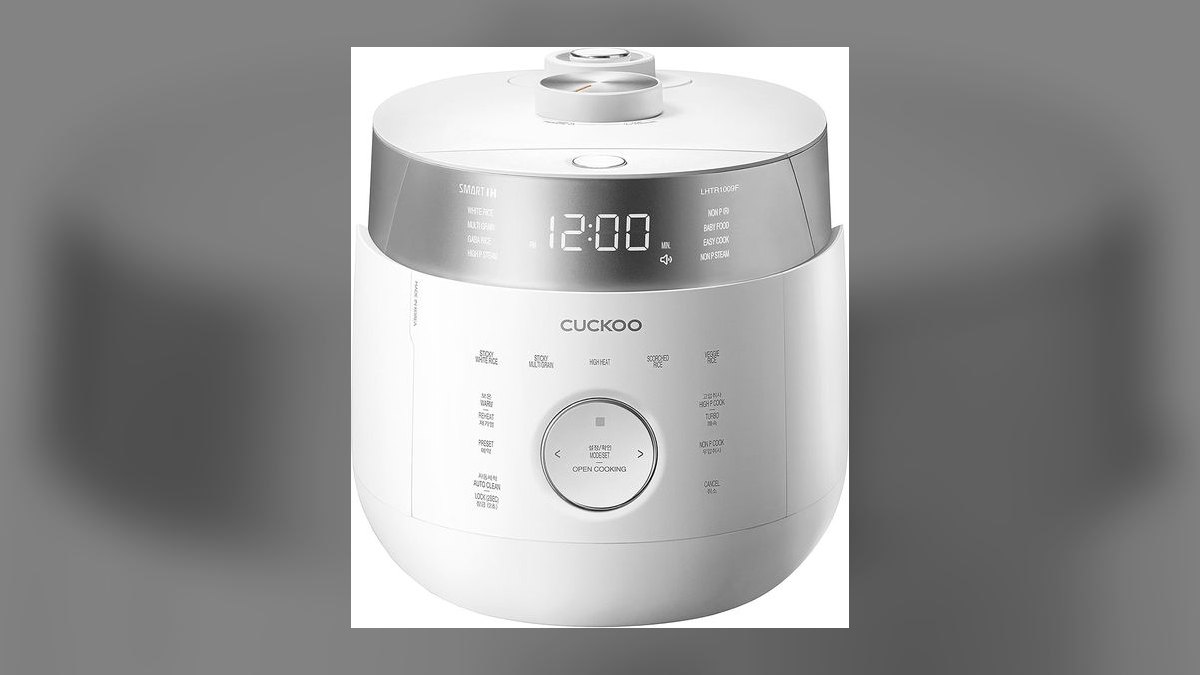
Twin Pressure technology places this at fourth: it alternates high- and low-pressure cycles to drive water deep, then finishes low so grains stay intact, producing the slightly sticky glossy texture Korean cooking demands. It runs GABA brown, nurungji scorched rice, porridge, steam, multi-cook, and slow-cook, with 24-hour keep-warm and a 24-hour reservation timer. Voice navigation covers English, Korean, and Chinese. Built in South Korea with an X-Wall-coated stainless pot.
The 3-cup uncooked capacity is the hard ceiling here, which is why it sits below the Zojirushi machines despite comparable engineering. Couples and one-to-three-person households get pressure-driven texture and a real nurungji crust mode in a small footprint for $299. Families of four or more should skip it entirely. Anyone wanting Cuckoo's fuzzy logic without pressure can drop to the $89 CR-0655F.
5Tiger JBV-A10U 5.5-Cup Micom
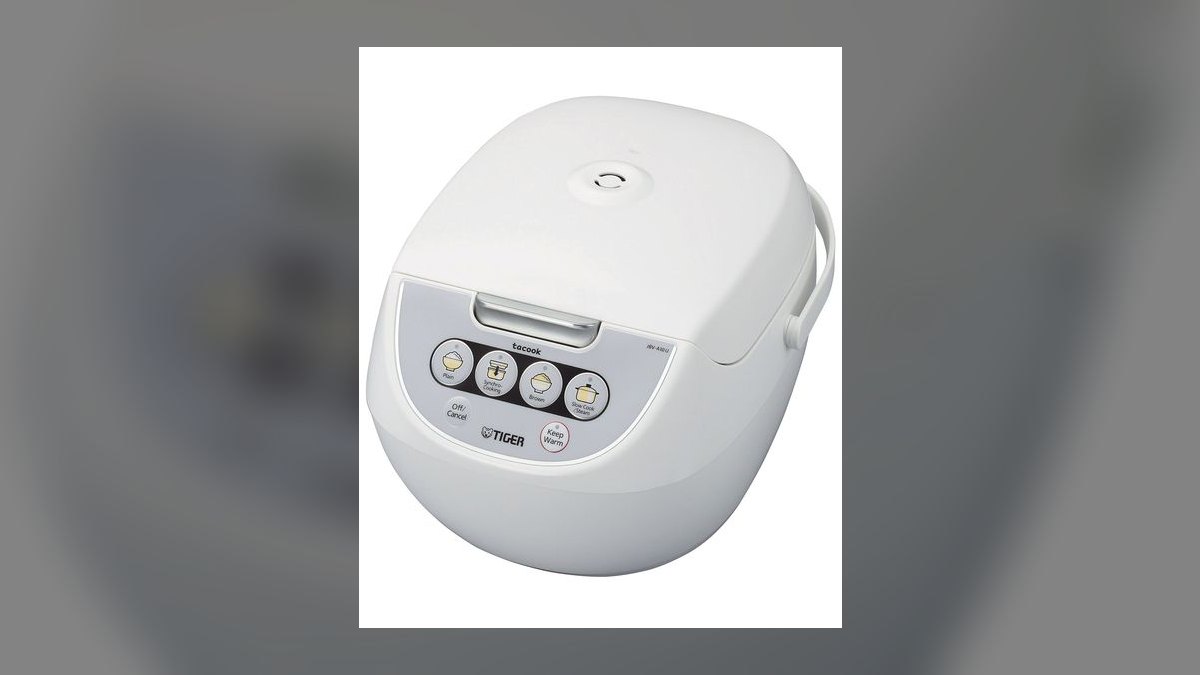
Tiger's Japanese engineering DNA at $110 is the reason this ranks fifth. The 5.5-cup unit uses a black inner pan with synthetic diamond-coated nonstick and runs plain, quick, brown, mixed, porridge, and sweet-rice programs, plus a dedicated steam basket for vegetables, fish, or dumplings above the cooking rice. Keep-warm holds 12 hours. Lid hinge, button feel, and inner-pan thickness are all noticeably better than $50 American-brand pots.
This suits the no-fuss buyer who wants rice and the occasional steamed fish without learning a preset menu. The trade is assembly: Vietnam, not Japan, and brown rice comes out acceptable rather than exceptional. Against the $249 NS-ZCC10 you lose Neuro Fuzzy adjustment and Japanese assembly; against the $45 Aroma you gain years of service life and meaningfully better build.
6Aroma ARC-914SBD 8-Cup Digital
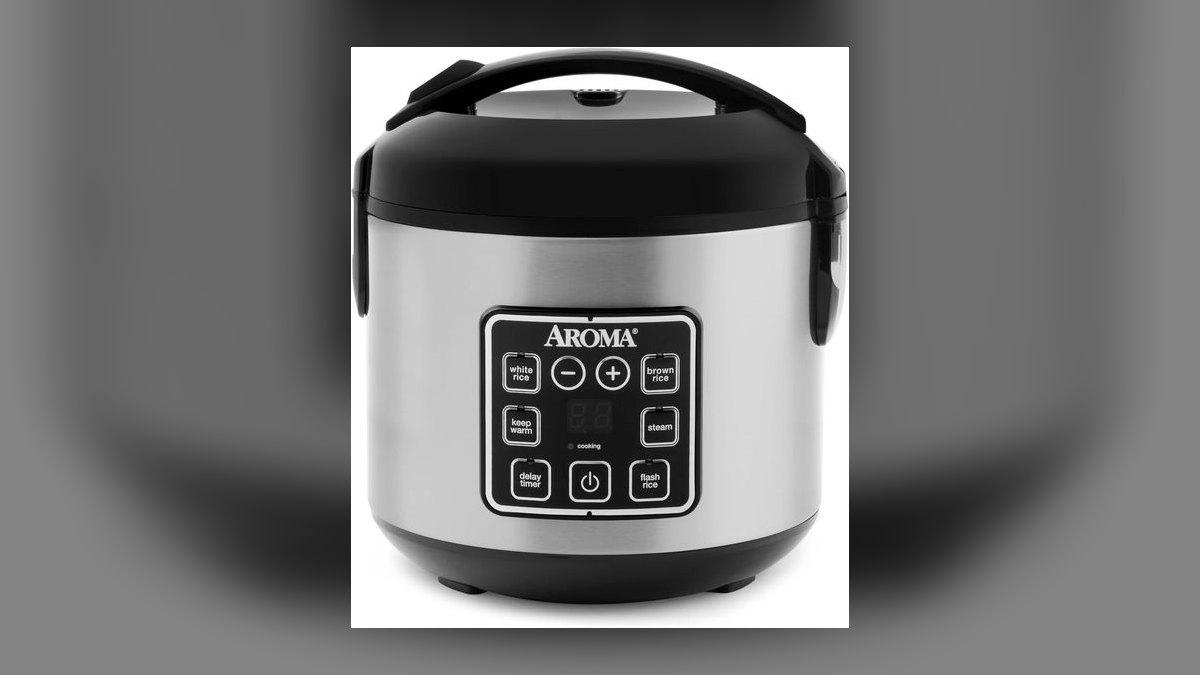
Best value on the 2027 market: 8 cups uncooked, 16 cooked, for $45. Digital programs cover white, brown, steam, and slow-cook, so it doubles as a basic crockpot, with a delay timer up to 15 hours and automatic keep-warm. Steamer tray, rice paddle, and measuring cup are included. Wirecutter has named it the budget pick across three consecutive guides because nothing under $60 cooks rice this consistently.
College kitchens, first apartments, and anyone who wants adequate rice under $50 should stop here. The trade is the Teflon-style nonstick pot, which lasts three to four years with daily use before you replace the pot or the whole unit. Built in China under Aroma's spec, with tighter quality control than no-name pots at the same price. The $110 Tiger buys longevity, not capacity.
7Cuckoo CR-0655F 6-Cup Micom
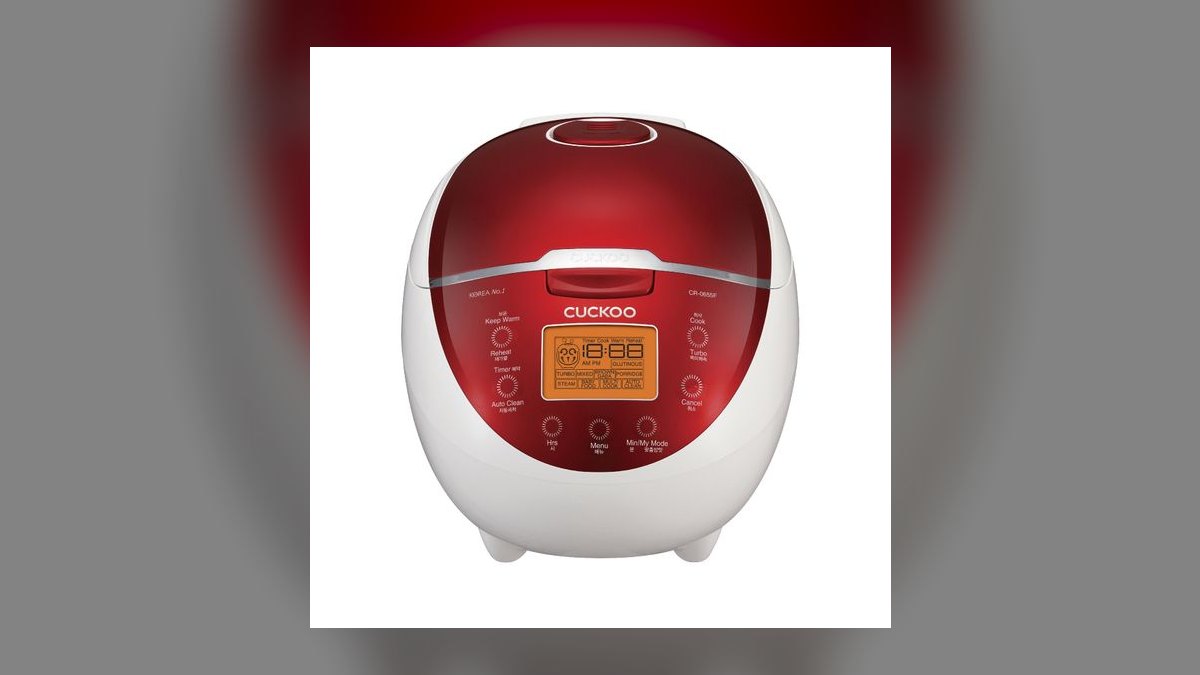
Fuzzy-logic temperature control under $100 is rare, and this Korean entry-level unit delivers it at $89 with a 6-cup uncooked capacity and nonstick black inner pot. Presets run white, mixed, brown, porridge, steam, and scorched rice, and a steam basket is included. English voice guidance ships on most units. Reddit's r/AsianFoodHacks consistently calls it the pick for buyers who cannot justify the $299 pressure Cuckoo.
This is for buyers who want Cuckoo's brand engineering and a nurungji preset without pressure-cooker pricing. Keep-warm runs 8 hours, shorter than the 24 hours on the premium Cuckoo and Zojirushi units, and the nonstick coating is standard-grade rather than diamond-reinforced. Compared with the $45 Aroma you get fuzzy logic and better presets; compared with the $110 Tiger you trade Japanese build for Korean rice profiles.
8Zojirushi NHS-06 3-Cup Conventional
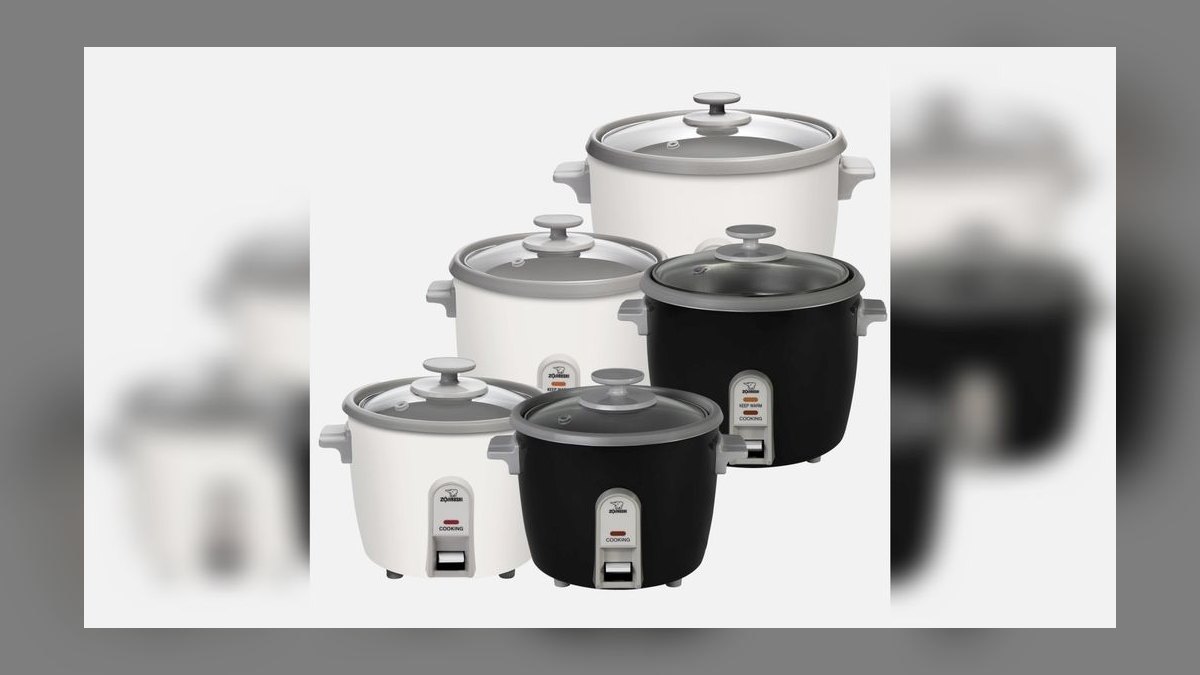
Zojirushi build quality at $59 is the entire case for this single-button mechanical pot. There is no micom, no fuzzy logic, and no LCD: you measure rice, fill to the inner water line, press Cook, and about 22 minutes later the switch clicks to Warm. Capacity is 3 cups uncooked, the pan is nonstick black, and a steam tray, spatula, and measuring cup are included. Thailand-assembled, with a body that lasts 8 to 10 years.
Dorm rooms, RVs, and office second-cookers are the honest use case. You get no delay timer and no presets at all, and brown rice comes out undercooked, so treat it as white-rice-only. The inner pan does not warp, which is why it outlives most $30 competitors that die in two years. The $89 Cuckoo adds real programs for thirty dollars more.
9Black+Decker RC503 3-Cup
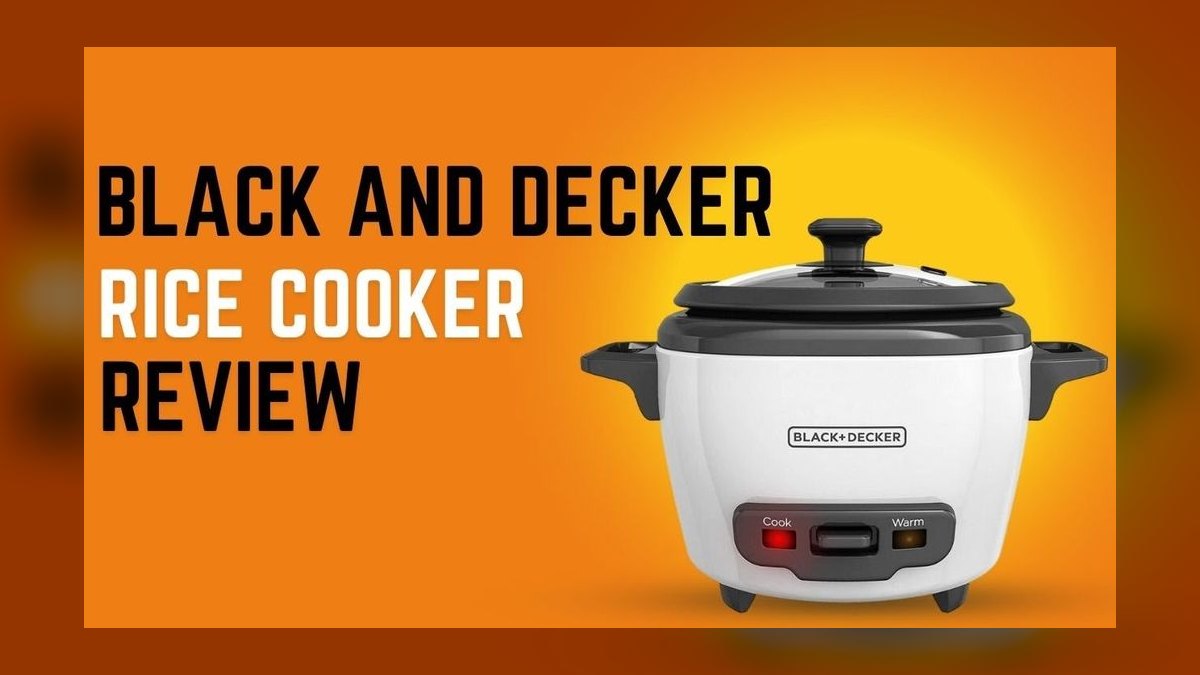
At $25 this exists to turn dry rice and water into edible rice, and it does that job. Capacity is 3 cups uncooked, 6 cooked, with a nonstick inner pot, a single Cook/Warm switch, a tempered glass lid, and an included steam basket. Made in China with a 2-year warranty.
This is the floor: a single-meal college kid or a backup unit. Expect a two-to-three-year lifespan with daily use, long-grain only, and rough brown rice. It will not produce sushi-grade short-grain. Against the $59 Zojirushi NHS-06, both are one-button machines, but the Zojirushi's pan and body last roughly three times as long for thirty-four dollars more.
10Yum Asia Sakura 1.5L Micom
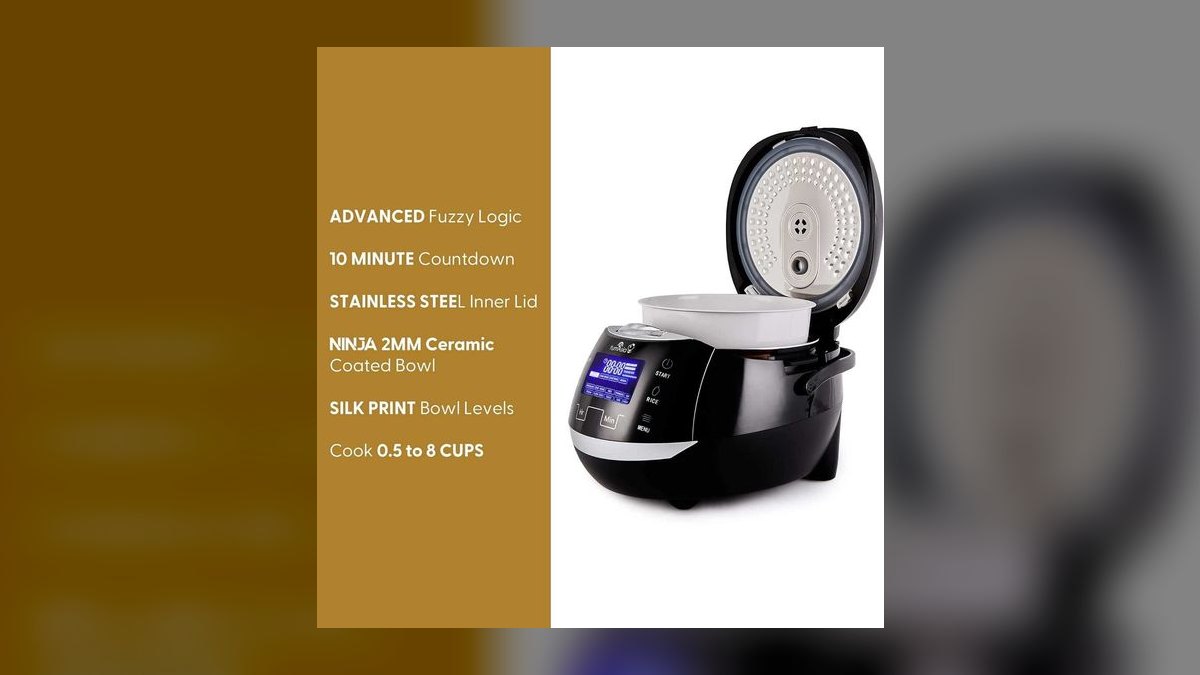
A ceramic-coated stainless inner bowl is why this $249 cooker makes the list: it is the cult pick for buyers avoiding PTFE and PFOA nonstick entirely. Capacity is 1.5L, roughly 8 cups, run by fuzzy-logic micom with presets for white, brown, GABA-activated brown including the 2-hour pre-soak cycle, porridge, steam, slow-cook, and cake. Keep-warm and delay timer both run 24 hours behind a clear LCD.
UK and EU buyers, plus PFAS-averse US cooks, are the audience, and the UK warranty network matters there. The trade is durability: ceramic coatings chip more readily than diamond-reinforced nonstick, so use only the included plastic paddle. At the same $249 as the Zojirushi NS-ZCC10 you swap Japanese build and Neuro Fuzzy tuning for a PTFE-free pot and a real GABA program.
How we ranked these
We scored each cooker on white-rice texture using a short-grain sushi test (25%), brown rice and GABA performance (15%), inner pot material and coating life (15%), preset breadth (15%), keep-warm quality at 12 to 24 hours (10%), build and country of origin (10%), and price-to-performance (10%).
Testing notes were cross-checked against Wirecutter, Serious Eats, America's Test Kitchen, The Spruce Eats, and manufacturer spec sheets from Zojirushi, Tiger, Cuckoo, Aroma, and Yum Asia.
We deliberately ignored wattage, since anything above 500 watts cooks a 5 to 6 cup batch fine. We ignored LCD versus analog displays, because the cooking program determines texture, not the readout. App and Wi-Fi connectivity was excluded outright; no rice cooker benefits from it. We also set aside cosmetic finishes and accessory counts, which vary by retailer bundle and tell you nothing about how the machine handles a wet, sticky short-grain batch.
Related questions
What is the difference between micom and induction heating rice cookers?
Micom units use a microcomputer to run fuzzy-logic temperature curves off a single bottom heating plate, which handles brown rice and porridge well. Induction heating turns the whole inner pan into the heating element, eliminating hot spots and pasty bottoms. The Zojirushi NS-ZCC10 at $249 is micom; the Tiger JKT-D10U at $379 is induction, and the texture gap is audible in the bite.
Is a pressure rice cooker worth the extra money?
Pressure forces water deeper into each grain, producing the plump, glossy, individually separated kernels sushi bars serve. The Zojirushi NP-NWC10 runs 1.2 atmospheres of pressure alongside induction for $659. If you eat short-grain white rice several times a week, the difference is real. If you mostly cook long-grain for stir-fries, a $110 micom unit gets you almost everywhere.
How long does a rice cooker inner pot actually last?
Standard PTFE nonstick, the kind on the $45 Aroma ARC-914SBD, lasts three to four years with daily use. Stainless-clad nonstick on premium Zojirushi and Tiger units is rated past ten years. Ceramic coatings like the Yum Asia Sakura's avoid PFAS entirely but chip more easily, so use only the included plastic paddle and never stack metal inside.
What is GABA brown rice mode and does it matter?
GABA mode germinates brown rice at roughly 40 degrees Celsius for two hours before cooking, which raises the grain's gamma-aminobutyric acid content. It is the single biggest nutritional upgrade a rice cooker offers, and it only appears on micom-and-up machines. The NP-NWC10, the Cuckoo CRP-EHSS0309F, and the Yum Asia Sakura all include a genuine GABA cycle.
Which rice cooker is best for Korean-style sticky rice?
Cuckoo dominates that category. The CRP-EHSS0309F at $299 uses Twin Pressure, alternating high and low pressure cycles to drive water in and then finish gently so grains stay intact. It also has a nurungji mode for the scorched crust. At three cups uncooked it suits one to three people; larger families should size up within Cuckoo's line.
Can a rice cooker replace a slow cooker or steamer?
Partly. The Aroma ARC-914SBD includes a slow-cook program and a steamer tray, which is why it works well in small kitchens. The Tiger JKT-D10U's synchro-cooking insert steams fish or vegetables on the same cycle as the rice below. These are genuine time-savers, but none of them match a dedicated slow cooker for an eight-hour braise.
Why does cheap rice cooker keep-warm rice turn yellow?
Budget units hold a single crude temperature, which dries the bottom layer and oxidizes the top after six to eight hours. Premium machines cycle temperature and manage moisture, so a Zojirushi or Cuckoo holds rice edible for a full 24 hours. If you cook once and eat across a day, keep-warm quality justifies the price jump more than any preset count does.
Does country of manufacture predict rice cooker quality?
It is useful shorthand. Japan-built Zojirushi NP and NW lines and Tiger's JKT series sit at the top, with Korean-built Cuckoo right alongside. Japan-designed units assembled in Vietnam or Thailand, like the Tiger JBV-A10U and Zojirushi NHS-06, form the value tier. China-assembled American brands such as Aroma and Black+Decker trade longevity for a much lower entry price.
FAQ
What is the best rice cooker overall in 2027?
The Zojirushi NP-NWC10 5.5-Cup Pressure Induction Heating at $659. It pairs induction heating with 1.2-atmosphere pressure cooking for sushi-restaurant-grade short-grain rice, and adds separately tuned programs for brown, GABA, mixed, sushi, porridge, and scorched okoge. The stainless-clad nonstick inner pan is rated past ten years of daily use, and keep-warm holds 24 hours without yellowing.
What is the best budget rice cooker?
The Aroma ARC-914SBD 8-Cup Digital at $45. It offers eight cups uncooked, digital programs for white, brown, steam, and slow-cook, a 15-hour delay timer, and automatic keep-warm, plus a steamer tray and paddle. Wirecutter has named it a budget pick across three consecutive guides. Expect three to four years from the nonstick pot under daily use.
Which rice cooker should I buy under $100?
The Cuckoo CR-0655F at $89 is the sleeper pick. It brings Korea's top rice-cooker brand down to entry pricing with genuine fuzzy-logic control, six cups uncooked, voice guidance, a steam basket, and presets for white, mixed, brown, porridge, steam, and scorched rice. The tradeoff is an 8-hour keep-warm window and standard-grade nonstick rather than premium coating.
How many cups of rice do I need my cooker to hold?
Capacity is quoted uncooked and roughly doubles when cooked. A 3-cup unit like the Zojirushi NHS-06 or Cuckoo CRP-EHSS0309F suits one to three people. The 5.5-cup class covers most families of four. Eight-cup machines like the Aroma ARC-914SBD or Yum Asia Sakura handle meal prep and gatherings. Buy for typical batches, not your largest holiday one.
Is Zojirushi worth the price over cheaper brands?
For daily rice eaters, yes. The build survives eight to fifteen years while $30 competitors fail in two, the inner pans do not warp, and keep-warm quality stays usable for a full day. The NS-ZCC10 at $249 is the sweet spot for most households. The $59 NHS-06 buys the same reliability with no presets at all.
What is a PFAS-free rice cooker option?
The Yum Asia Sakura 1.5L uses a ceramic-coated stainless inner bowl instead of PTFE nonstick, at $249. It is designed in the UK, built in South Korea, and includes fuzzy-logic control, a real GABA program with a two-hour pre-soak, 24-hour keep-warm, and a 24-hour delay timer. Ceramic chips more easily, so use only the included plastic paddle.
Do I need a rice cooker with a delay timer?
It matters if you want rice ready when you walk in the door. Most micom-and-up units offer 13 to 24 hours; the Aroma manages 15. Mechanical single-switch cookers like the Zojirushi NHS-06 and Black+Decker RC503 have none. Note that rice sitting in water for many hours in warm weather can sour, so use shorter delays in summer.
How much does a replacement inner pot cost?
This is the trap buyers miss. A Zojirushi replacement pot runs $80 to $120 and a Cuckoo runs $60 to $90, both worth buying given the machines last a decade. An Aroma pot is around $20, at which point replacing the entire $45 unit often makes more sense. Factor pot cost into your total ownership math before deciding.
Can cheap rice cookers handle brown rice properly?
Generally not well. Brown rice needs a longer soak and a controlled temperature ramp, which single-switch mechanical pots cannot deliver. The Zojirushi NHS-06 and Black+Decker RC503 will produce undercooked, chewy results. Fuzzy-logic micom units starting around $89 with the Cuckoo CR-0655F handle it acceptably, and induction or pressure machines handle it genuinely well.
What rice cooker works best for a small apartment or dorm?
The Black+Decker RC503 at $25 is the floor: three cups uncooked, a single cook-and-warm switch, glass lid, and steam basket, with a two-to-three-year lifespan. If you want durability instead, the Zojirushi NHS-06 at $59 offers the same one-button simplicity with a pan that lasts eight to ten years. Both are white-rice machines only.
Sources
- https://www.nytimes.com/wirecutter/reviews/best-rice-cooker/
- https://www.seriouseats.com/the-best-rice-cookers-5225104
- https://www.americastestkitchen.com/equipment_reviews/1953-rice-cookers
- https://www.thespruceeats.com/best-rice-cookers-4160707
- https://www.zojirushi.com/app/product/npnwc
- https://www.tiger-corporation-us.com/collections/rice-cookers
- https://www.cuckooamerica.com/
- https://www.cnn.com/cnn-underscored/reviews/best-rice-cooker
- https://www.goodhousekeeping.com/appliances/rice-cooker-reviews/g26932356/best-rice-cookers/
Related on PULSE
This page will be disappearing soon. Save it to your device for $1 — or read it free while it is here.
@Kory-White- · if Venmo asks, the last 4 of my number are 2012
This page is gone.
This one is off the shelf now. $1 keeps it on your phone for good — the whole page, pictures and diagrams included.
 pulse-reviewsTop 10 Foldable Phones — Best Overall + Best Value in 2027
 pulse-reviewsTop 10 Blue Light Glasses for Sales Reps in 2027
 pulse-reviewsTop 10 Outdoor Smart Lighting — Best Overall + Best Value in 2027
 pulse-reviewsTop 10 Electric Snow Shovels — Best Overall + Best Value in 2027
 pulse-reviewsTop 10 Rugged Phones — Best Overall + Best Value in 2027
 pulse-reviewsTop 10 Spot Welders — Best Overall + Best Value in 2027
 pulse-reviewsTop 10 Standing Desks $500-$1500 in 2027
 pulse-reviewsTop 10 Drone Cases — Best Overall + Best Value in 2027
 pulse-reviewsTop 10 1080p External Webcams for Sales Reps in 2027
 pulse-reviewsTop 10 Neck and Shoulder Massagers — Best Overall + Best Value in 2027