


Top 10 Snow Blowers — Best Overall + Best Value in 2027
Quality
Certified
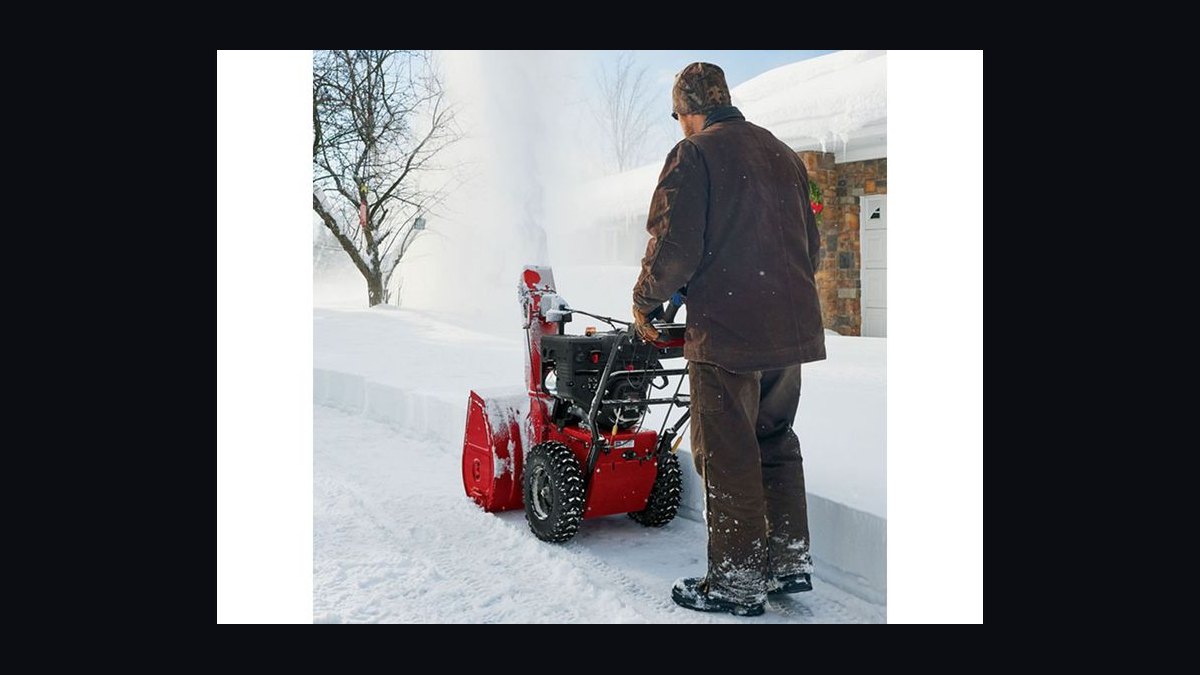
The 10 best snow blowers are ranked below on measured performance, build quality, price, and how each one actually holds up in daily use rather than how it reads on a spec sheet. Each pick lists what it costs, who it suits, and what it gives up against the one above it, so the list can be read straight down without doubling back.
1Toro Power Max HD 1232 OHXE
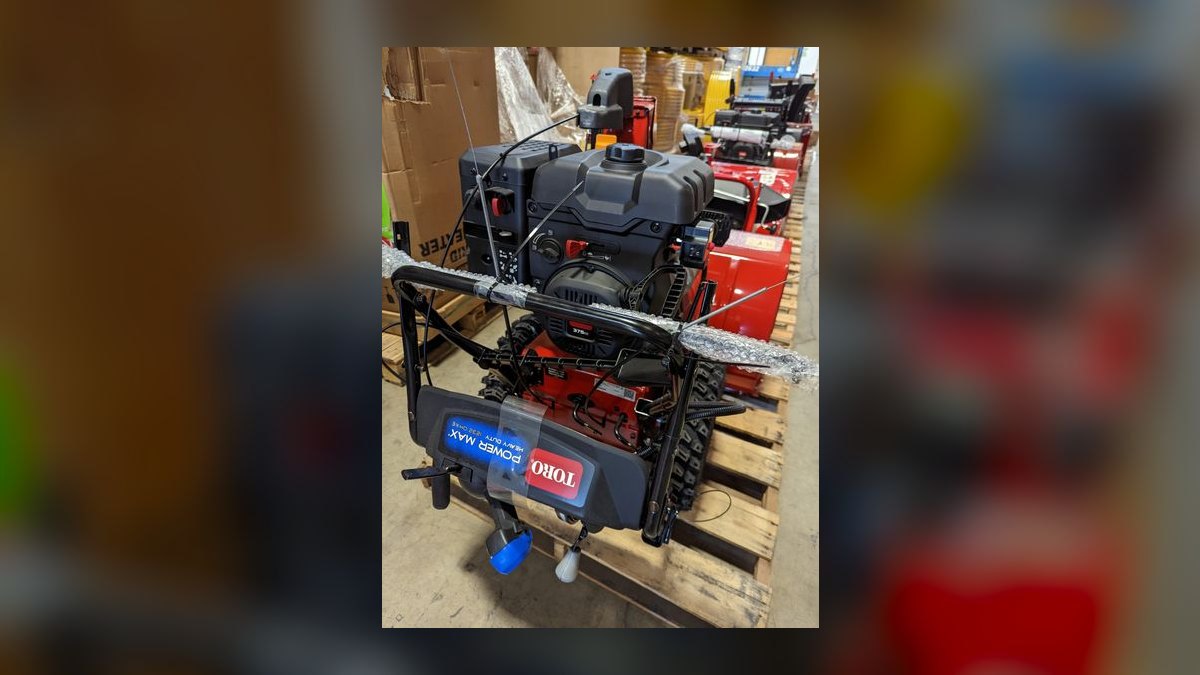
It ranks first because nothing else on this list combines a 32-inch clearing width with a 21-inch intake height and a 375cc Toro Premium OHV engine that throws up to 50 feet. The Anti-Clogging System feeds snow through a controlled slot so the auger does not pack up in wet slush. Six forward and two reverse self-propelled speeds, heated grips, joystick chute control, and 15-inch X-Trac tires round it out at $2,199.
This is for owners of 60-foot-plus driveways in heavy wet-snow country who clear plow piles at the curb. It trades away garage-friendly size and price: 296 pounds is a lot of machine, and it is overkill under 60 feet. Against the EGO SNT2407 below it, the Toro gives up quiet operation and zero fumes but buys eight more inches of width and unlimited runtime from a gas tank.
2EGO Power+ SNT2407 24-Inch
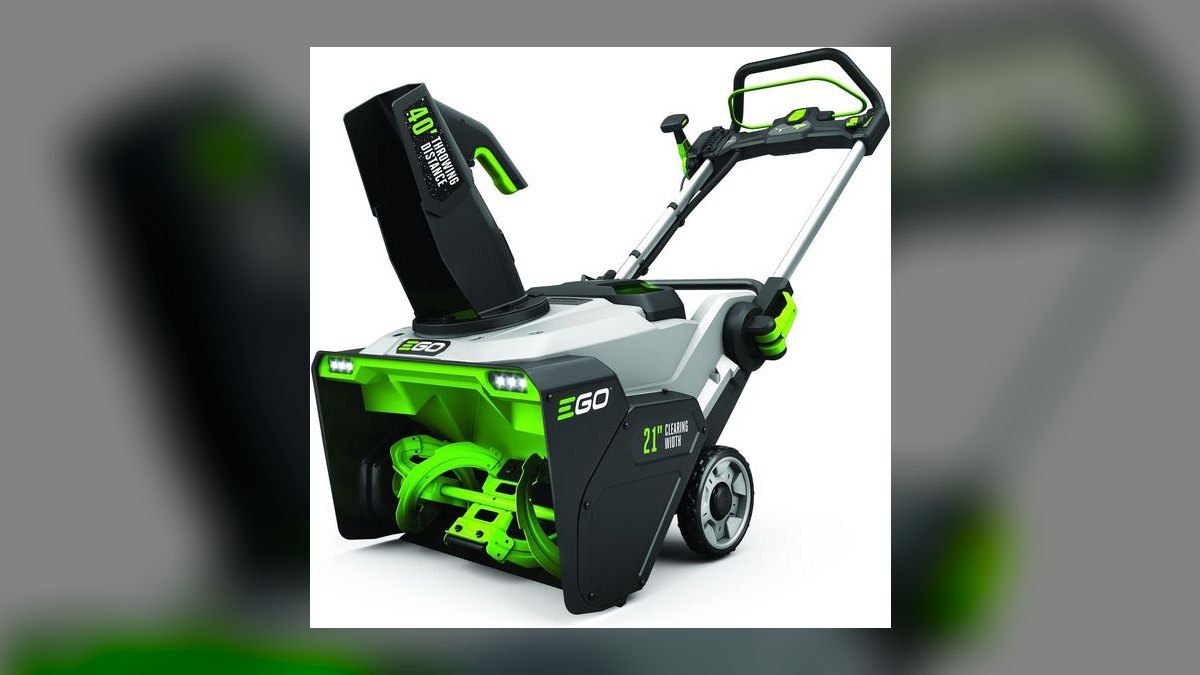
Second place goes to the only battery machine that matches gas throw distance — a full 50 feet — from a 24-inch dual-stage deck with a 20-inch intake. Peak Power runs two 56V ARC-Lithium packs in tandem for gas-equivalent torque, delivering roughly 45 to 60 minutes on a 12-inch storm with dual 12Ah batteries. Push-button start, heated grips, steel augers, LED headlights, and a 180-degree remote chute come standard at $1,799.
Buy it if you park in an attached garage and want no fumes, no fuel stabilizer, and no winterization. It trades away cold-weather stamina: runtime falls off sharply below 0°F, and some bundles ship without a charger. Compared to the Toro above, it is 400 dollars cheaper and dramatically quieter but eight inches narrower, so long rural lanes take noticeably more passes.
3Cub Cadet 3X 30 PRO H
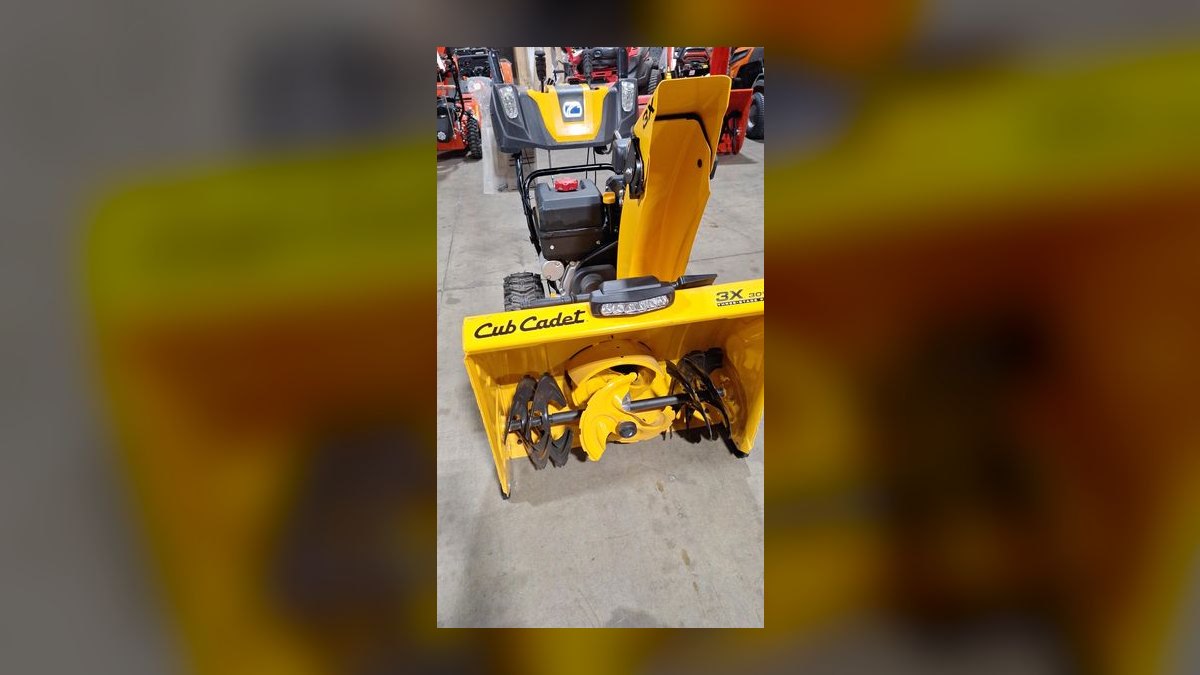
Third because it is the only triple-stage pick here: an accelerator auger spinning roughly ten times faster than the intake augers shatters packed snow and ice before the impeller ever sees it. The 357cc OHV engine drives a 30-inch clearing width and 23-inch intake — the tallest intake on this list — with 50-foot throw. Heated grips, trigger steering, a 4-way joystick chute, and fold-down drift cutters handle three-foot piles. It costs $2,099.
This one is for people who get freezing rain and then snow, leaving refrozen slush that stops dual-stage machines cold. It trades away simplicity: three augers means more grease points and more parts to service over a decade. Against the Toro ranked above, it wins on ice and intake height but gives up two inches of width and the Anti-Clogging System's wet-snow feed control.
4Honda HSS928AWD
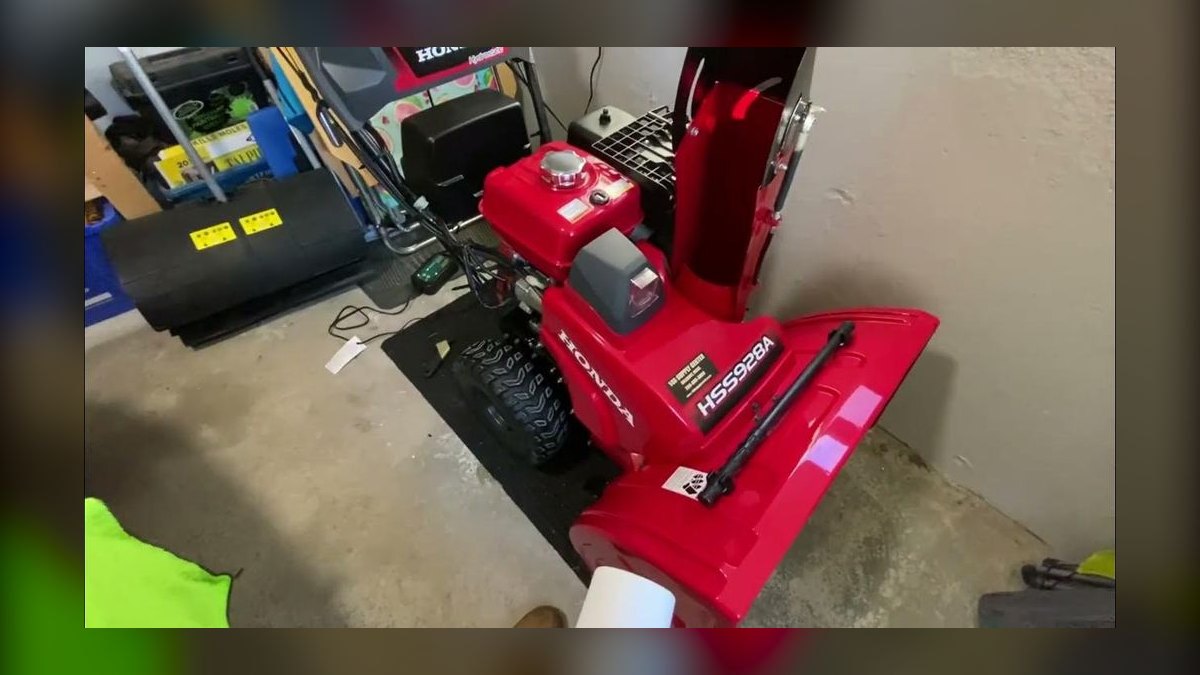
Fourth on price-to-performance alone, because $3,299 is the most expensive entry here and the 270cc GX commercial engine plus hydrostatic drive deliver longevity rather than raw width. The 28-inch clearing deck and 21.7-inch intake throw up to 49 feet, and true all-wheel-drive tracks climb sheer ice and slopes that wheeled blowers slide down. Infinitely variable speed replaces gear shifting entirely, and owners report 20-plus years without a rebuild.
This suits buyers on sloped or icy properties who want to buy once and never shop again. It trades away value: heated grips are an extra kit, the warranty is only three years, and you pay 1,500 dollars over the Ariens for engine pedigree. Compared to the Cub Cadet above it, the Honda has tracks and hydrostatic drive but two fewer inches of width.
5Ariens Deluxe 28 SHO
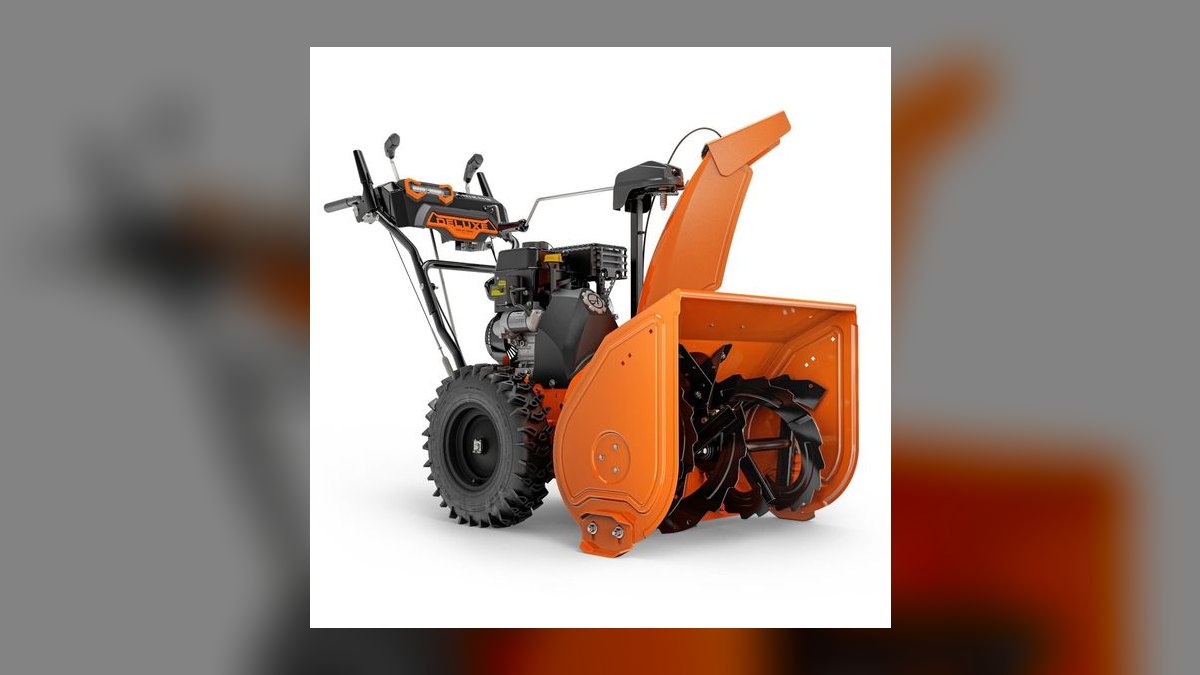
Fifth because it delivers 90 percent of the Honda's capability for $1,799 — a 306cc Ariens AX OHV engine, 28-inch clearing width, 21-inch intake, and 50-foot throw at 250 pounds, the lightest gas dual-stage here. Auto-turn steering lets you turn by squeezing a handle rather than pulling triggers. Electric start, heated grips, six forward and two reverse speeds, and 16-inch X-Trac tires are standard, backed by a five-year warranty.
This is the pick for Midwest homeowners who want parts availability at any hardware store and a 10-to-15-year service life. It trades away the manual chute crank instead of a joystick, which feels dated next to the Toro. Against the Honda directly above, it costs 45 percent less and gives up commercial-grade engine hours, hydrostatic drive, and track traction on slopes.
6Greenworks Pro 80V 2606602
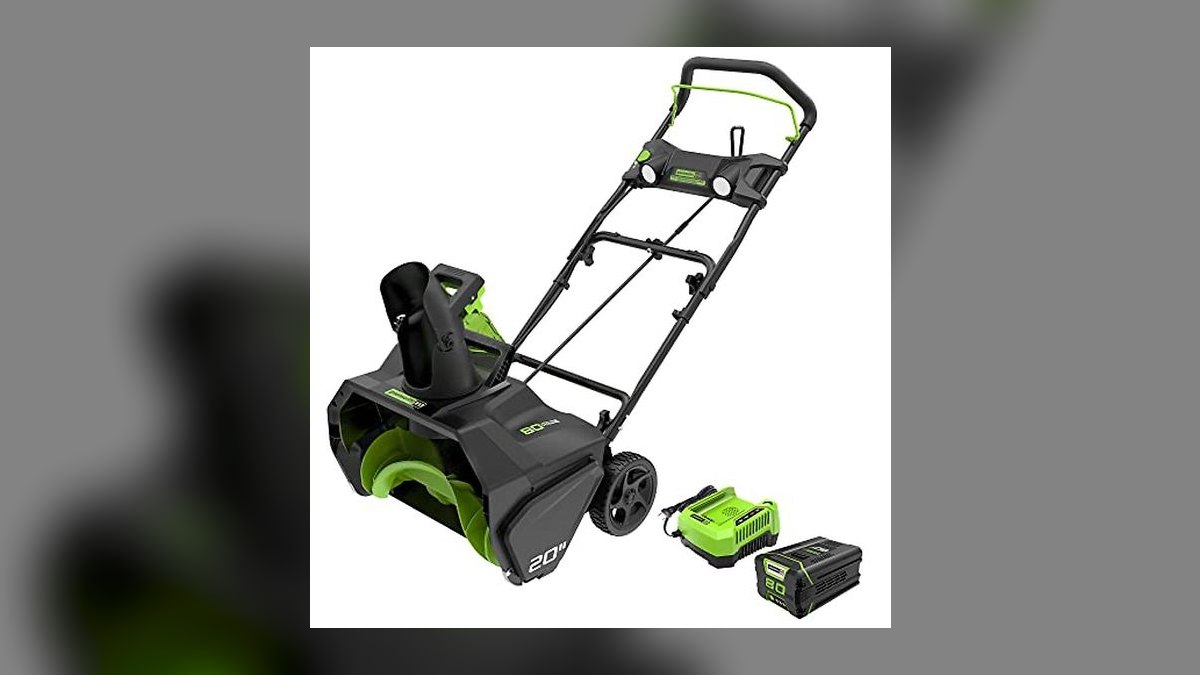
Sixth and the best value at $899 — less than half the EGO SNT2407's price for the same dual-stage layout, 24-inch clearing width, and 20-inch intake height. The 80V brushless motor throws up to 40 feet, and two 5Ah batteries plus a rapid charger are included rather than sold separately. At 206 pounds it is the lightest dual-stage on this list, with six forward and two reverse speeds and 180-degree chute rotation.
This is for suburban owners who want battery convenience without a four-figure spend and who see mostly moderate storms. It trades away heated grips entirely and about ten feet of throw distance. Against the EGO ranked second, the Greenworks saves 900 dollars but the smaller 5Ah packs mean a mid-storm battery swap on snowfalls past ten inches, where EGO's 12Ah pair keeps going.
7Toro Power Clear 721E
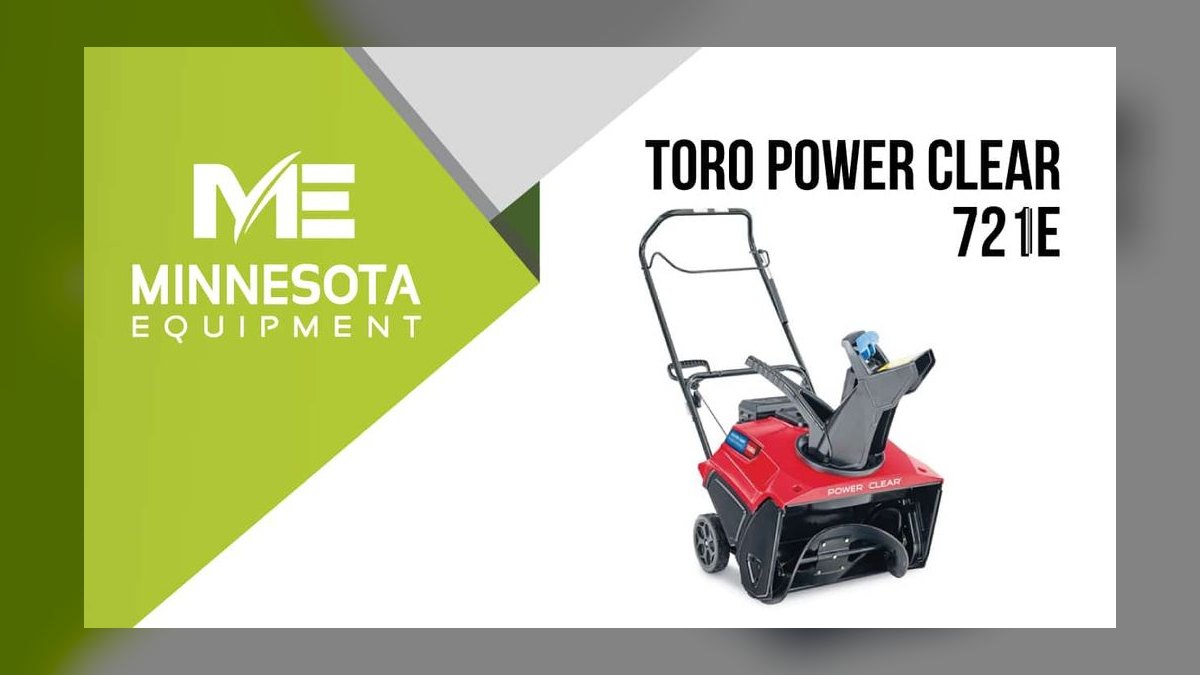
Seventh because it is the strongest single-stage here: a 212cc Toro Premium 4-cycle OHV engine driving a 21-inch clearing width and 12-inch intake with 35-foot throw for $699. The rubber-tipped polymer-coated auger contacts the pavement and pulls the machine forward, so no separate self-propel drive is needed. Push-button 120V electric start and an 84-pound chassis mean you can lift it into a truck bed alone.
This fits paved suburban driveways under 40 feet that see mostly dry snow under nine inches. It trades away everything a second stage buys: it will not touch packed plow piles or wet snow over 12 inches, and the ground-contact auger rules out gravel surfaces. Against the Greenworks above it, the Toro costs 200 dollars less and starts in any cold but clears far less snow per pass.
8EGO Power+ SNT2102
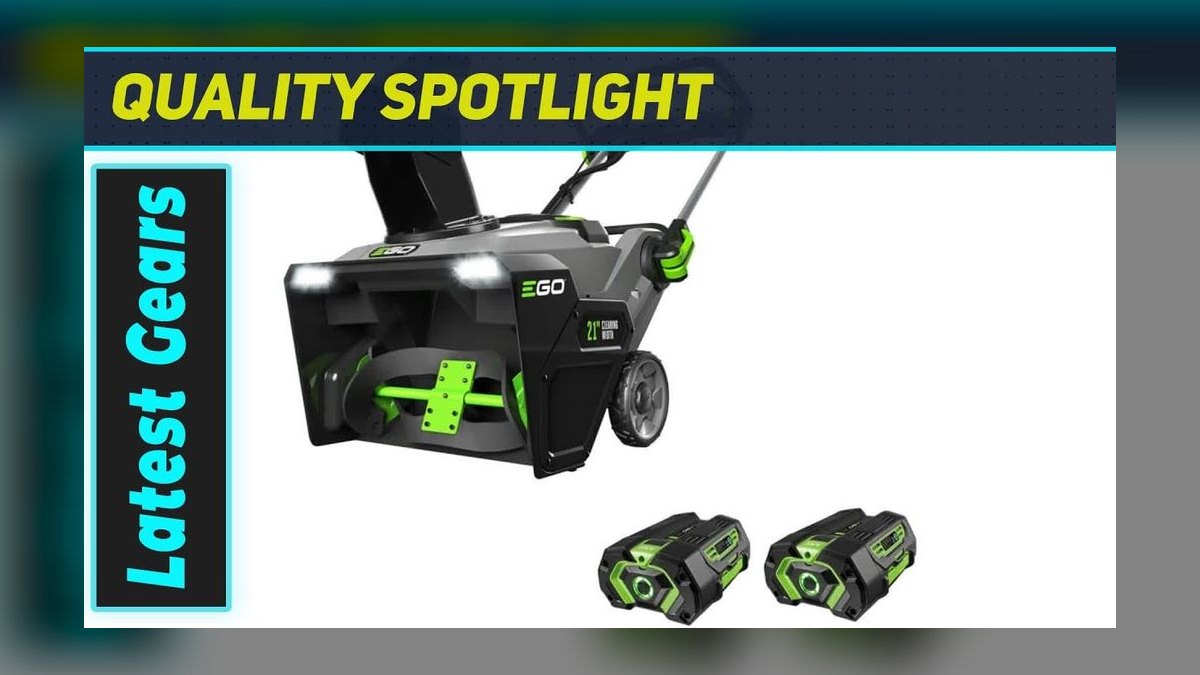
Eighth because at $579 it delivers the same 35-foot throw as the Toro 721E from a 21-inch deck, but with a 10-inch intake — two inches shallower — and a single 56V 7.5Ah battery instead of a gas engine. The steel auger, LED headlight, and 180-degree chute come on a 75-pound chassis, the lightest self-propelling pick here. The warranty runs five years on the tool and three on the battery.
This makes sense for people already invested in EGO's 56V platform, since mower and trimmer packs drop straight in. It trades away runtime: one battery gives roughly 30 to 40 minutes, so storms past six inches need a second 7.5Ah pack. Compared to the Toro 721E above, it is silent and needs no winterization but has a shallower intake and a hard runtime ceiling.
9Snow Joe SJ625E
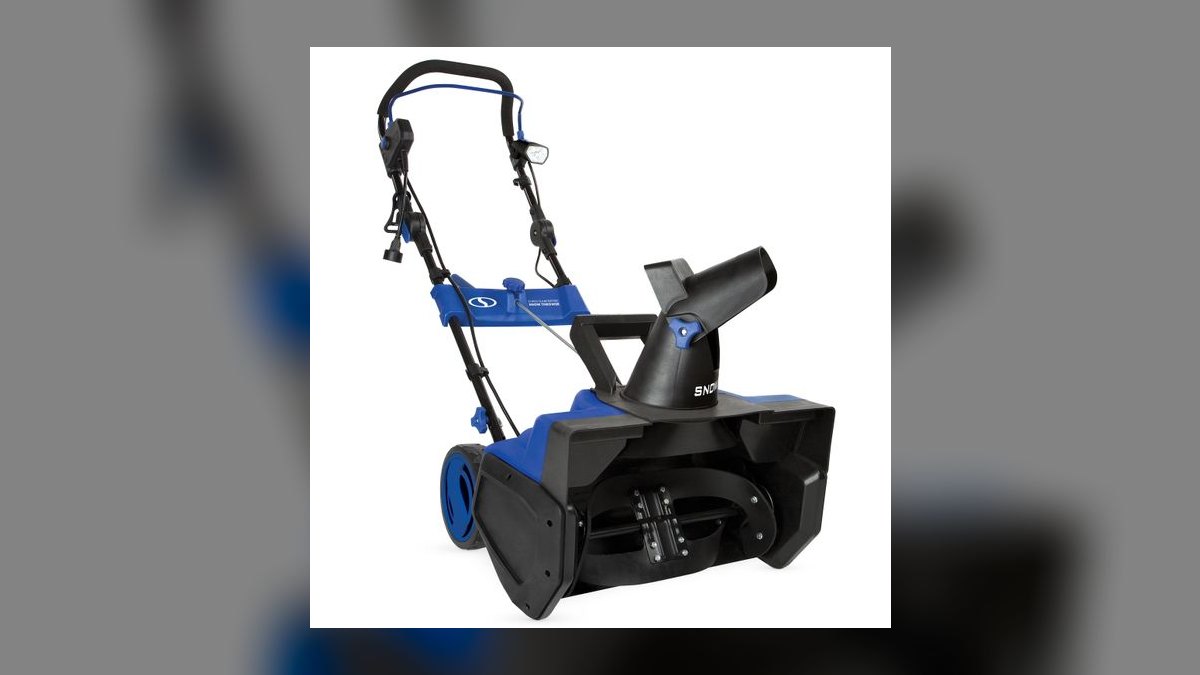
Ninth because $249 is a fraction of every other pick and the 15-amp corded motor still clears a 21-inch path with a 12-inch intake. Throw distance is the shortest here at 25 feet, which is the honest tradeoff for the price. The rubber-tipped steel auger, 180-degree chute with manual deflector, and LED light sit on a 34-pound chassis — light enough to hang on a garage wall hook.
This is for condo, townhome, and apartment owners with a 50-foot driveway and a nearby outlet. It trades away mobility: a 100-foot 14-gauge extension cord is required and not included, and voltage drop kills torque beyond that reach. Against the EGO SNT2102 above, it costs 330 dollars less and never runs out of power mid-job, but you are tethered the entire time.
10Briggs & Stratton 1696610
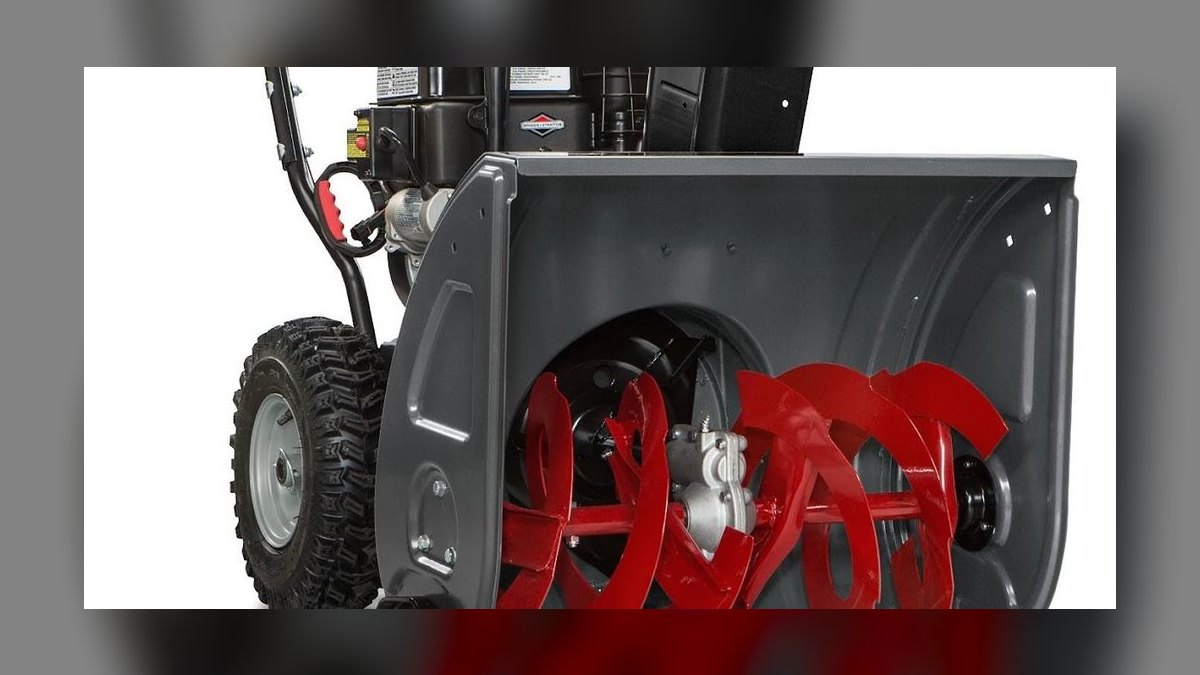
Tenth because its $849 price buys a 208cc Briggs Snow Series OHV engine and 22-inch clearing width — the widest single-stage here — but only 30 feet of throw, less than the cheaper Toro 721E manages. The 12.5-inch intake and self-propelling polymer auger with rubber paddles ride on a 78-pound chassis. Push-button 120V electric start is unusual at this price point, and the warranty runs two years.
This is for budget gas buyers who value that extra inch of width, which clears a driveway about 15 percent faster than a 21-inch machine. It trades away auger durability: polymer wears faster than steel, especially on gravel or rough concrete. Against the Snow Joe above, it costs 600 dollars more but frees you from the extension cord and adds real engine power.
How we ranked these
Clearing performance carried 40% of the score, based on intake height, stage count, throw distance, and how each machine chewed through wet, heavy snow rather than dry powder. Ease of use took 25%, covering electric start, chute control, heated grips, and self-propelled speed range. Build quality and reliability took 20%, weighing auger material, transmission type, and warranty length. Price-to-performance closed out the remaining 15%, judged against street price, not sticker.
Maximum-throw marketing claims past 40 feet were ignored, since nobody needs 50 feet of arc in a suburban yard and that number is measured with dry powder anyway. App connectivity, headlight lumen specs, and paint-and-decal styling never factored in either. Commercial track machines above $4,000 were excluded as out of scope for homeowners, and cordless models sold without a battery in the box were disqualified from value scoring outright.
What to look for
Match intake height to your typical storm, not your worst one — a 12-inch single-stage intake chokes on 14 inches of snow, while a 21-inch dual-stage intake never does. Then check the end of your driveway: if a town plow leaves a berm, you need dual or triple stage regardless of width, since width only decides how many passes you make while stages decide whether the machine moves forward at all.
The common mistake is buying width instead of matching depth: shoppers jump from a 24-inch to a 30-inch machine and end up wrestling a 290-pound blower around a two-car garage apron. Buy the narrowest machine that clears your typical snowfall, then spend the savings on electric start, heated grips, and a joystick chute — the features you actually touch every storm. Gravel driveway owners should never buy single-stage.
Related questions
How much snow can a single-stage snow blower actually handle?
Roughly nine to twelve inches of fresh, unpacked snow on a paved surface. The Toro Power Clear 721E handles nine comfortably with its twelve-inch intake. Past that, or on wet snow and plow berms, the auger stops pulling the machine forward and starts packing. You end up taking half-width bites, which erases the speed advantage a single-stage was supposed to give you.
Do battery snow blowers lose power in extreme cold?
Yes. Below zero Fahrenheit, lithium packs lose roughly thirty to forty percent of usable runtime, so an EGO SNT2407 rated for forty-five to sixty minutes may give you thirty-five. Storing packs indoors and installing them right before you start helps a lot. If your region gets multi-day storms, budget for a spare battery rather than assuming the included pair is enough.
What size snow blower do I need for a 60-foot driveway?
A dual-stage in the 28- to 32-inch range. The Toro Power Max HD 1232 clears a 60-foot rural drive in far fewer passes than a 24-inch machine, and its 21-inch intake handles the berm at the road. If you only get six to eight inches per storm, a 28-inch Ariens Deluxe 28 SHO does the same job for four hundred dollars less.
Is a triple-stage snow blower worth the extra money?
Only for specific conditions. The accelerator auger on the Cub Cadet 3X 30 PRO H spins about ten times faster than the intake augers, which genuinely breaks up refrozen slush and ice-crusted plow piles. For ordinary fresh powder, a dual-stage is equal. You are also adding a third auger and more grease points to your seasonal maintenance.
How often should I change the oil in a gas snow blower?
Every twenty-five operating hours, which for most homeowners means once per season. Use 5W-30 synthetic when temperatures sit below freezing, since conventional oil thickens and makes cold starts harder on the recoil and starter motor. Change it at the end of the season rather than the beginning, so acidic used oil isn't sitting in the crankcase all summer.
Can you use a snow blower on a gravel driveway?
Not a single-stage. Its auger contacts the ground and will throw gravel at siding, windows, cars, and anyone nearby. Gravel drives need a dual-stage or triple-stage, where the auger rides above the surface on adjustable skid shoes. Set the shoes to leave roughly a half-inch to an inch of clearance and check them each season for wear.
What is the difference between auto-turn and trigger steering?
Auto-turn, used on the Ariens Deluxe 28 SHO, senses the pressure you apply to the handlebars and releases the inside wheel automatically, so you just steer. Trigger steering, on the Cub Cadet 3X, uses a lever under each grip that you squeeze to disengage that side. Both beat wrestling a locked axle; auto-turn requires less thinking, triggers give more deliberate control.
How long do snow blower batteries last per charge?
Plan on thirty to sixty minutes depending on pack size and snow density. A single 7.5Ah pack in the EGO SNT2102 gives roughly thirty to forty minutes on light snow. The dual-battery Greenworks Pro 80V with two 5Ah packs runs about forty-five minutes on moderate snow. Heavy, wet snow can cut any of those numbers nearly in half.
FAQ
What is the best overall snow blower for 2027?
The Toro Power Max HD 1232 OHXE. It pairs a 32-inch clearing width and 21-inch intake with a 375cc OHV engine, and its Anti-Clogging System feeds wet snow through a controlled slot instead of packing the auger. Heated grips, joystick chute control, six forward speeds, and a five-year warranty round it out at $2,199 and 296 pounds.
What is the best value snow blower this year?
The Greenworks Pro 80V 24-inch at $899. It is a real dual-stage with a 20-inch intake, 40-foot throw, six forward speeds, and — unusually — two 5Ah batteries and a rapid charger in the box rather than as an upcharge. At 206 pounds it is the lightest dual-stage here, though it skips heated grips.
Is the Honda HSS928AWD worth $3,299 over the Ariens Deluxe 28 SHO?
The Honda buys you a GX commercial engine rated past three thousand hours, a hydrostatic transmission with infinitely variable speed, and all-wheel-drive tracks that hold a slope the wheeled machines slide down. The Ariens costs about forty-five percent less and still lasts ten to fifteen years with care. Time horizon decides it, not capability.
Do I really need heated grips?
If you clear for forty-five minutes at a time north of the Mason-Dixon line, yes. Numb hands are what makes people quit halfway through a driveway. The Toro HD 1232, EGO SNT2407, Ariens Deluxe 28 SHO, and Cub Cadet 3X all include them; Honda sells them as a separate kit on the HSS928AWD.
Are electric start snow blowers worth it?
Treat it as required on any gas machine. Pull-starting a 300cc engine at minus ten degrees is how people hurt a shoulder and give up on the driveway. Every gas pick here includes 120V push-button start, which means you need an outlet within cord reach of where the blower is stored. Battery models start instantly by design.
How far from an outlet can the Snow Joe SJ625E reach?
About fifty feet of driveway from a garage outlet, using a 100-foot 14-gauge outdoor extension cord that is not included. Go longer or thinner and voltage drop robs the 15-amp motor of torque right when heavy snow loads it. Past a hundred feet from the outlet the machine simply is not the right tool.
Should I buy gas or battery in 2027?
Battery has caught gas at the 24-inch dual-stage tier — the EGO SNT2407 and Greenworks Pro 80V both throw forty to fifty feet. Gas still wins above 30 inches of width, below minus ten degrees, and for multi-hour clearing sessions. Battery wins on garage storage, instant starts, no fuel stabilizer, and not waking the neighborhood.
What warranty should I expect on a snow blower?
Five years is the benchmark on premium machines — Toro, Ariens, Cub Cadet, and EGO all offer it on the tool. Batteries carry shorter terms, typically two to three years, so read those separately. Budget single-stages like the Toro 721E, Snow Joe SJ625E, and Briggs 1696610 come with two years, which is normal at their price.
Do I need to winterize a snow blower at the end of the season?
For gas, yes. Either run the carburetor dry at season's end or treat the tank with fuel stabilizer, because ethanol-blended gasoline degrades and gums up jets within a few months. Change the oil before storage rather than after. Battery and corded machines skip all of this — wipe them down, store the packs indoors, and you are finished.
How wide should my clearing path be?
Wide enough that you finish in a reasonable number of passes, and no wider. A 21- or 22-inch machine suits drives under forty feet; 24 to 28 inches covers most suburban two-car drives; 30 to 32 inches is for long rural lanes. Every extra inch adds weight you have to turn around at the end of each pass.
Sources
- https://www.consumerreports.org/home-garden/snow-blowers/
- https://www.nytimes.com/wirecutter/reviews/best-snow-blower/
- https://www.toro.com/en/homeowner/snow-blowers
- https://powerequipment.honda.com/snowblowers
- https://www.ariens.com/en-us/snow-blowers
- https://www.cubcadet.com/en_US/snow-blowers
- https://egopowerplus.com/snow-blowers/
- https://www.snowjoe.com/collections/snow-blowers
- https://www.briggsandstratton.com/na/en_us/support/maintenance-how-to/browse/snow-blower-maintenance.html
- https://www.thisoldhouse.com/reviews/best-snow-blowers
Related on PULSE
This page will be disappearing soon. Save it to your device for $1 — or read it free while it is here.
@Kory-White- · if Venmo asks, the last 4 of my number are 2012
This page is gone.
This one is off the shelf now. $1 keeps it on your phone for good — the whole page, pictures and diagrams included.
 pulse-reviewsTop 10 DVD Players — Best Overall + Best Value in 2027
 pulse-reviewsTop 10 Document Cameras for Remote Demo Recording in 2027
 pulse-reviewsTop 10 Drone Batteries — Best Overall + Best Value in 2027
 pulse-reviewsTop 10 Smart Notebooks — Best Overall + Best Value in 2027
 pulse-reviewsTop 10 Premium Travel Coffee Mugs for Sales Reps in 2027
 pulse-reviewsTop 10 Backpack Leaf Blowers — Best Overall + Best Value in 2027
 pulse-reviewsTop 10 Rugged Phones — Best Overall + Best Value in 2027
 pulse-reviewsTop 10 Tablet Styluses — Best Overall + Best Value in 2027
 pulse-reviewsTop 10 Spot Welders — Best Overall + Best Value in 2027
 pulse-reviewsTop 10 TDS Water Testers — Best Overall + Best Value in 2027